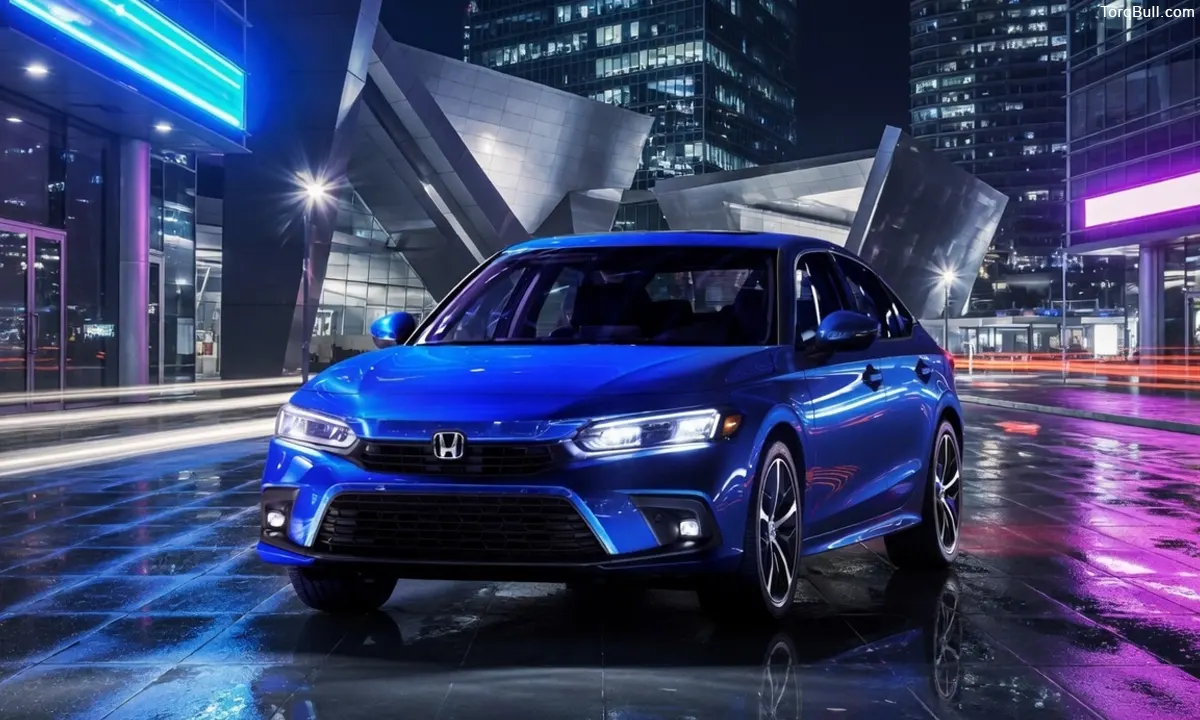
- Sixty-five percent of verified 2026 Honda Civic owners recommend the vehicle, with reliability and styling receiving the highest praise.
- Owners frequently highlight the Civic’s dependability, modern design and overall ownership satisfaction.
- Common complaints include front-seat comfort issues, highway noise, Android Auto connectivity problems and limited value from higher-trim upgrades.
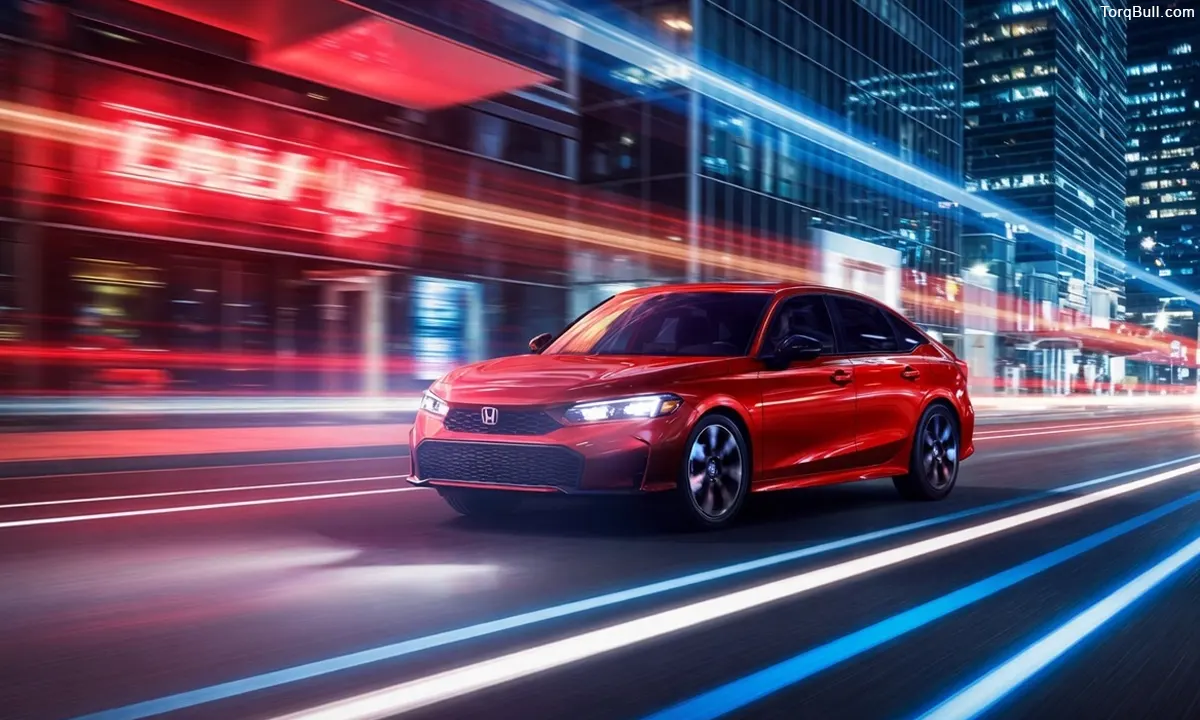
The 2026 Honda Civic occupies one of the most examined positions in the compact car segment — a vehicle with a decades-long reliability heritage, strong residual value retention and a genuine sporting option in the Si and Type R that few compact rivals can claim. The current generation earns Honda’s best-selling compact car status not through blind brand loyalty but through objective competitive credentials: the highest-ranked model in its segment in the ALG Residual Value Awards, a JD Power quality score of 84 out of 100 and a RepairPal annual maintenance cost of $368 well below the segment average. But the 2026 Civic’s owner review landscape — 65 to 68 percent recommendation rates across verified platforms — tells a more complicated story than these professional accolades capture. The same owner community that praises bulletproof Honda reliability also documents front seat discomfort that has caused genuine back pain for some buyers, a cabin that gets loud at highway speeds and upper trim pricing that multiple owners describe as not worth the money for what those trims actually add. This guide documents both sides with equal rigour.
The Real Ownership Context: Who Is Buying the 2026 Civic and Why
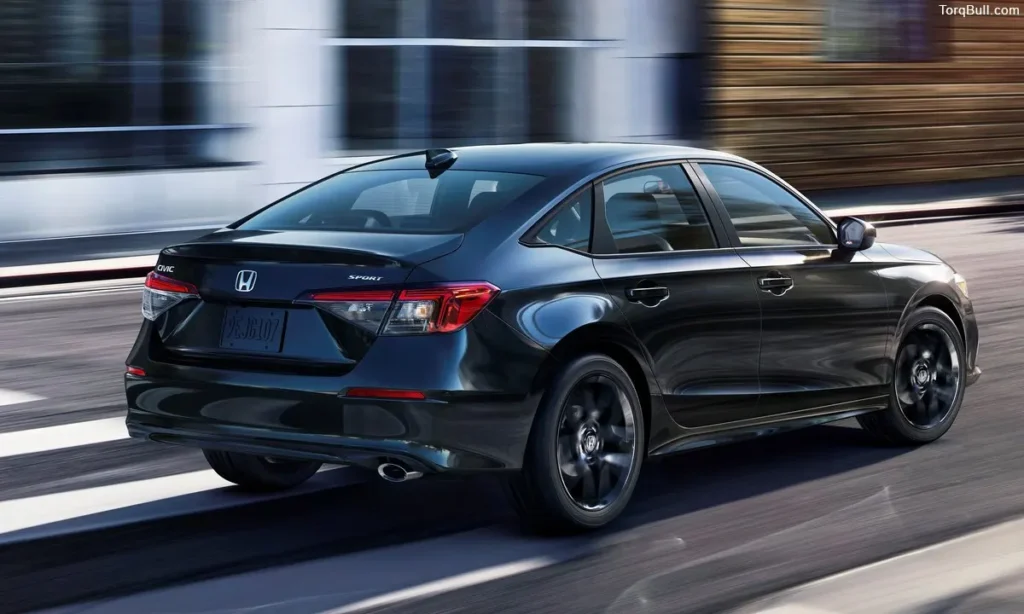
The typical 2026 Civic buyer falls into one of two distinct profiles based on KBB owner review patterns. The first is the longtime Honda loyal owner who has driven multiple Civics or Accords across years of ownership and who purchases primarily on the basis of Honda’s established reliability reputation and resale value. These buyers generally report high satisfaction. One owner who describes always having owned Hondas calls the current Civic the best she has ever owned, praising the handling as unreal for a small sedan and giving all five-star ratings across every category.
The second profile is the buyer coming from a different brand who selected the Civic based on its reputation without prior Civic ownership experience — and this buyer group produces a higher proportion of disappointed reviews. Their expectations about cabin quiet, seat comfort and value for money at upper trim prices are set against their previous vehicles rather than against the Civic’s own history, and the gap between expectation and reality generates the critical reviews that constitute the 32 to 35 percent of owners who would not recommend the vehicle.
Read: Should I Buy Honda Civic or Toyota Corolla? Ultimate Comparison for 2026
The Pros: What Real Civic Owners Consistently Praise
Pro 1: Bulletproof Honda Reliability — The Most Universally Praised Attribute
Reliability is the highest-rated consumer attribute across every verified 2026 Civic review dataset — scoring 4.1 to 4.2 out of 5 and consistently cited ahead of performance, comfort and even the styling that many owners praise in their opening sentences. One owner describes Honda reliability as the primary purchase motivation, specifically citing bulletproof reliability alongside excellent climate controls and a great infotainment system as the purchase justification. The ALG Residual Value Award designation confirms this perception in financial terms — the Civic retains its value better than any other vehicle in its segment, reflecting sustained consumer demand driven by the reliability reputation that long-term ownership data consistently validates.
RepairPal’s independent repair data places the Civic third out of 36 compact cars for overall reliability with an annual average repair cost of $368 — well below the $526 compact car average. For owners planning seven to ten-year ownership horizons, this below-average maintenance cost accumulates into meaningful financial savings compared to competing vehicles whose annual repair costs run higher.
Pro 2: Fuel Economy Across All Configurations
Fuel economy earns consistent owner praise across the entire Civic lineup — particularly from Hybrid buyers whose real-world efficiency exceeds even the excellent non-hybrid base model’s 36 MPG combined. Multiple Hybrid owners document 40 to 41 MPG in warmer months and high 30s in winter conditions, with the most enthusiastic reporting their best tank at 64 MPG. One Hybrid Blue buyer describes getting 546 miles on a full tank, with almost a quarter tank remaining after 350 miles. For commuters whose primary daily operating cost concern is fuel, the Civic Hybrid’s efficiency credentials are genuinely extraordinary and consistently delivered in real ownership rather than only in EPA test cycle conditions.
The base 2.0-litre engine’s 36 MPG combined is itself competitive at the top of the non-hybrid compact class — generating real annual fuel cost savings of $300 to $500 against 30 MPG alternatives that owners in the compact segment regularly compare against.
Pro 3: Styling That Generates Genuine Enthusiasm
Styling is the second highest-rated owner attribute alongside reliability — scoring 4.1 out of 5 across verified reviews and generating some of the most enthusiastic language in the owner community. The current Elantra-generation Civic’s angular, fast-backed exterior profile generates stronger positive owner sentiment than any previous Civic generation. Owners regularly describe the exterior as attractive, sporty and distinctive among compact sedan alternatives. The exterior styling is a daily quality-of-life attribute for buyers who see and interact with the vehicle multiple times per day — and the Civic’s design generates consistent positive driver associations that less visually distinguished competitors cannot replicate.
Pro 4: Honda Sensing Standard on Every Trim
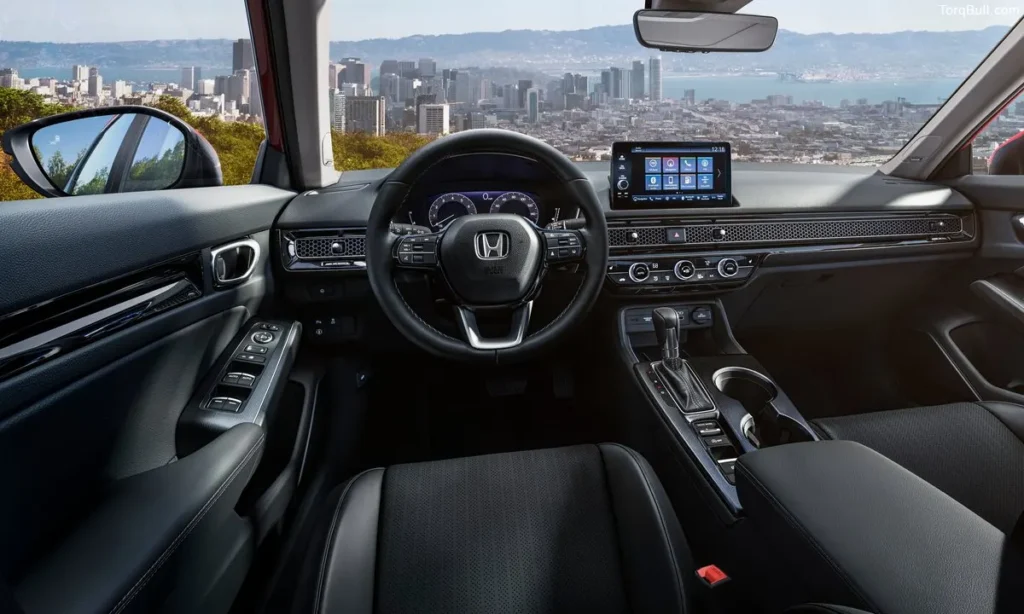
Every 2026 Civic, from the base LX through the Sport Touring Hybrid, includes Honda Sensing as standard equipment without requiring option package selection. This comprehensive driver assistance suite — automatic emergency braking with pedestrian detection, lane keeping assist, adaptive cruise control with stop-and-go traffic management, road departure mitigation and traffic sign recognition — is available to every Civic buyer at every budget level. Professional evaluation specifically highlights the physical knobs for stereo volume and tuning alongside the digital interface as a specific design decision that reduces distraction during adjustment, and the overall Honda Sensing implementation earns consistent praise from owners who use its features daily.
Read: Honda Civic Engine Performance. Every Powertrain Tested and Compared
The Cons: Where Real Owners Document Genuine Frustrations
Con 1: Front Seat Comfort — The Most Concerning Owner Complaint
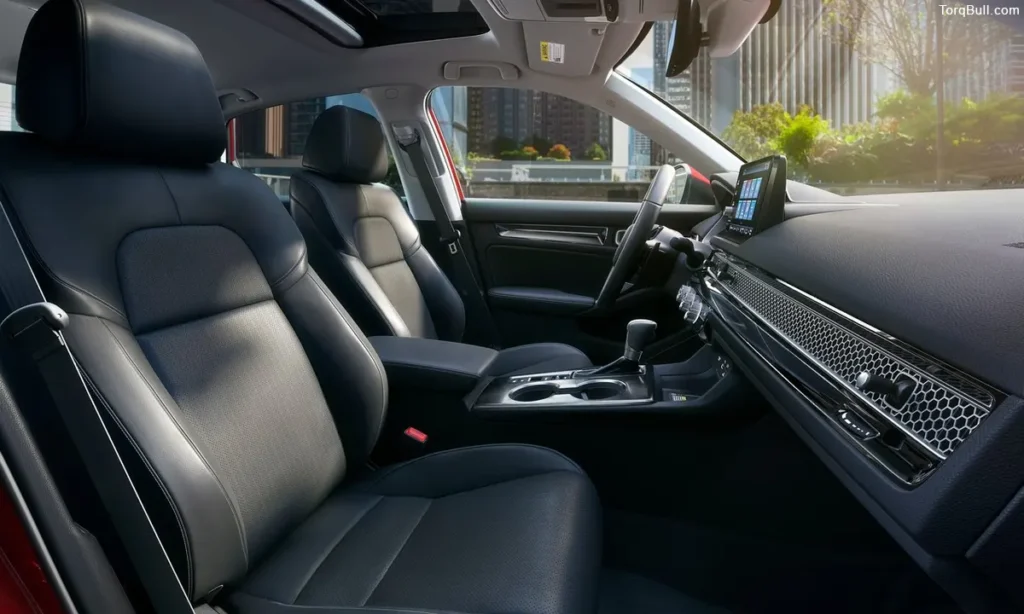
Seat comfort is the single weakest consumer-rated attribute across every verified 2026 Civic review dataset — scoring 3.7 to 3.8 out of 5 and generating the most severe individual owner complaints of any category. The concerns divide into two specific design characteristics.
The first is seat height. The Civic’s low-slung sporting design places occupants close to the road — a characteristic that one owner describes as a bit low to the ground as a minor observation, but that another owner describes as the vehicle’s most serious deficiency. A verified owner who purchased the vehicle after falling in love with the exterior describes the seats as very low, where the hip is lower than the knee, causing a lot of pressure on the lumbar spine and horrible back pain every time she gets in the car. This owner specifically reports that the seat position causes her pain to worsen rather than simply be present — a health-relevant finding rather than a preference note.
The second is lumbar support absence. The base and mid-range Civic trims lack adjustable lumbar support, providing fixed seatback positioning that fits some body types well and others poorly. The Limited trim’s power seat with adjustable lumbar is specifically called out as the solution — but it requires selecting the most expensive mainstream trim to access a feature that addresses a genuine ergonomic design limitation in the lower configurations.
Con 2: Cabin Noise at Highway Speeds
The Civic’s cabin acoustic treatment at highway speeds is a recurring criticism across owner reviews — described across multiple accounts as the cabin getting loud, with noticeable road noise at sustained highway cruise. One verified owner specifically lists the cabin as too loud to have hands-free phone conversations at highway speeds — a practical daily limitation for drivers who conduct business calls during commutes. Professional road test evaluation confirms this finding: the cabin can get loud with noticeable road noise, and the base engine sounds boisterous when pushed hard.
The acoustic treatment improves with upper trim levels — specific sound-deadening package additions reduce the highway noise profile — but the base and Sport trims’ cabin acoustics are a consistent ownership disappointment for buyers who expected a quieter car based on the vehicle’s premium presentation.
Con 3: Android Auto Disconnection Issues
Technology reliability concerns appear across multiple verified 2026 Civic owner accounts — specifically Android Auto connectivity that drops intermittently during connected sessions. One detailed owner review specifically lists infotainment centre update errors and Android Auto keeps disconnecting — both wired and wireless — as specific documented cons. This connectivity issue appears alongside the broader wireless CarPlay concerns that Honda’s infotainment integration has carried across recent model years. For buyers who depend on smartphone connectivity as a primary daily navigation and audio interface, this documented reliability pattern is a genuine daily friction point that Honda has not fully resolved through software updates across affected production years.
Con 4: Upper Trim Value — Extras Not Worth the Price
The most consistent and most specifically worded value criticism in the 2026 Civic owner community concerns the upper trim pricing — specifically the Sport Touring and Limited’s price-to-feature relationship. Multiple verified owners specifically recommend the EX model over the Sport Touring, stating that the extras on the Sport Touring are not worth the price tag and that the buyer would not be missing out on anything that would go unnoticed. This owner-to-owner guidance reflects a genuine assessment that the incremental features of the highest mainstream trims — wireless charging, premium audio and additional convenience items — do not produce daily value commensurate with the additional purchase cost relative to the EX’s comprehensive feature set at a lower price.
Read: Honda Civic Worth Buying in 2026? Does Honda Still Lead the Segment?
Honda Civic 2026 Pros and Cons — Real Owner Summary Chart
| Category | Verdict | Owner Evidence |
| Reliability | Strong Pro | Highest owner-rated attribute; RepairPal 4.5 of 5, 3rd of 36 compact cars |
| Styling | Strong Pro | Second highest owner-rated attribute; 53 percent five-star rate |
| Fuel economy (base) | Pro | 36 MPG combined; consistently delivered in real ownership |
| Fuel economy (Hybrid) | Exceptional Pro | 40 to 41 MPG real world; 546 miles per tank documented |
| Honda Sensing standard | Pro | All trims; physical knobs praised; daily safety value |
| Front seat height and lumbar | Real Con | Back pain documented; hip lower than knee for some buyers |
| Highway cabin noise | Real Con | Multiple accounts: too loud for phone calls; boisterous engine |
| Android Auto connectivity | Documented Con | Disconnects wired and wireless; software not fully resolved |
| Upper trim value | Con | Multiple owners: EX recommended; Sport Touring extras not worth it |
| Comfort rating overall | Weakest category | 3.7 to 3.8 of 5; weakest consumer-rated attribute |
The Honest Verdict
The 2026 Honda Civic is genuinely excellent for buyers who prioritise Honda’s established reliability track record, competitive residual value, exceptional fuel economy — particularly in Hybrid form — and comprehensive standard safety technology at every trim level. For these buyers, the 65 to 68 percent recommendation rate reflects a satisfying ownership experience.
It is a more careful consideration for buyers who are sensitive to seat comfort or lumbar support issues, who conduct regular hands-free calls at highway speeds or who plan to purchase above the EX trim level. The specific seat design that causes back pain for some owners is a structural feature rather than a defect — it will not improve through dealer adjustment. Prospective buyers should conduct an extended test drive of at least 30 minutes in the specific trim being considered to evaluate the seat geometry’s compatibility with their specific body type before committing to purchase.