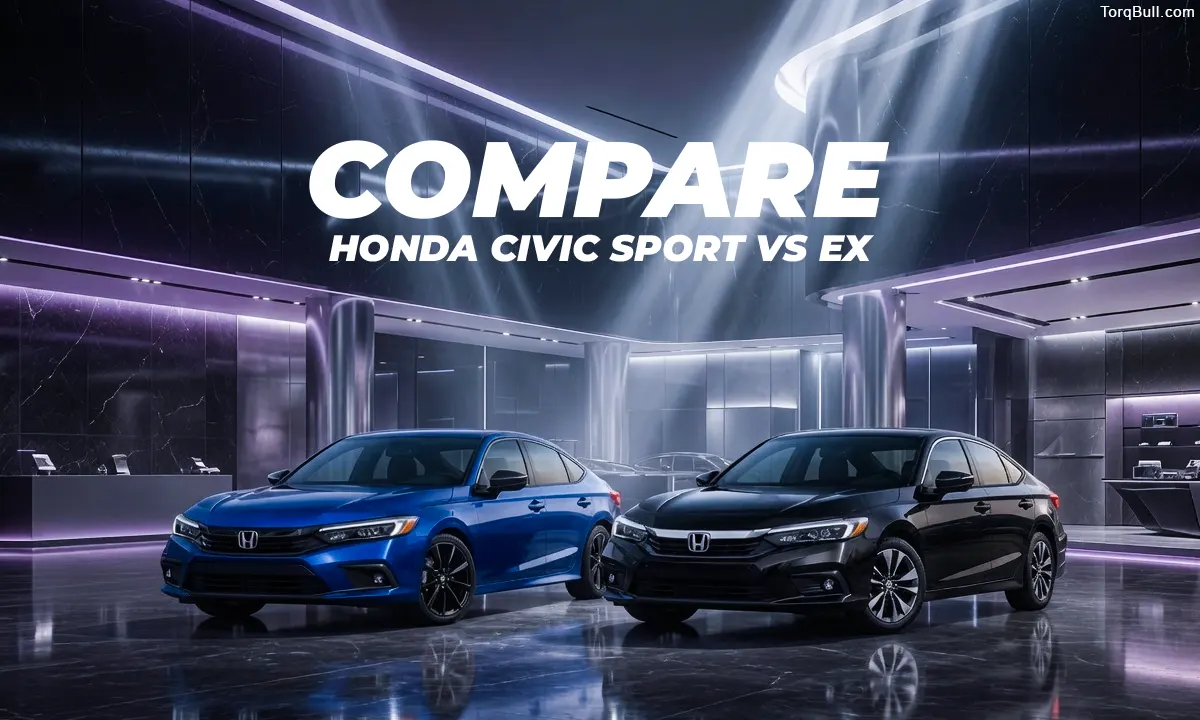
- The 2026 Honda Civic Sport emphasizes sporty styling and driving character with a 150-horsepower engine, 18-inch wheels and paddle shifters.
- The EX upgrades to a 186-horsepower turbocharged engine while adding a sunroof, enhanced comfort features and additional technology.
- Choose the Sport for value and athletic styling, while the EX is the better option for buyers prioritizing performance, comfort and everyday convenience.
The Honda Civic Sport versus EX comparison is one of the most commonly researched compact sedan trim decisions — and for good reason. These two Civic configurations represent genuinely different product philosophies within the same nameplate: the Sport delivers athletic styling, sporty hardware and a more engaging visual identity at a lower price point, while the EX prioritises comfort-oriented technology, a more powerful turbocharged engine and the daily convenience features that make each journey more pleasant. Understanding exactly what each trim provides — and what each trim specifically lacks — is the foundation of a clear purchase decision. This complete guide covers every meaningful difference between the 2026 Civic Sport and EX across every relevant category.
The Critical Context: The 2026 Civic’s Trim Structure
Before the Sport versus EX comparison can be made clearly, a critical structural note about the 2026 Honda Civic lineup must be established. The EX trim is not present in the 2025 Civic sedan lineup — Honda simplified the 2025 sedan to LX, Sport, Sport Hybrid and Sport Touring Hybrid. The EX designation returns for the 2026 model year as Honda refreshes the Civic lineup with updated trim structure.
For buyers researching the 2026 Civic specifically, the trim levels are LX, Sport, EX and Sport Touring Hybrid — with the EX returning as the comfort and technology oriented mid-tier configuration positioned between the Sport’s sporty character and the Sport Touring Hybrid’s premium hybrid content. This guide specifically compares the 2026 Sport and EX for buyers who are choosing between these specific configurations.
Read: Honda Civic Common Problems. What Owners Need to Know Before Buying
The Powertrain Difference: The Most Significant Specification Gap
The most important and least discussed difference between the Sport and EX is the engine — because these two trims use different powertrains that produce meaningfully different driving characters.
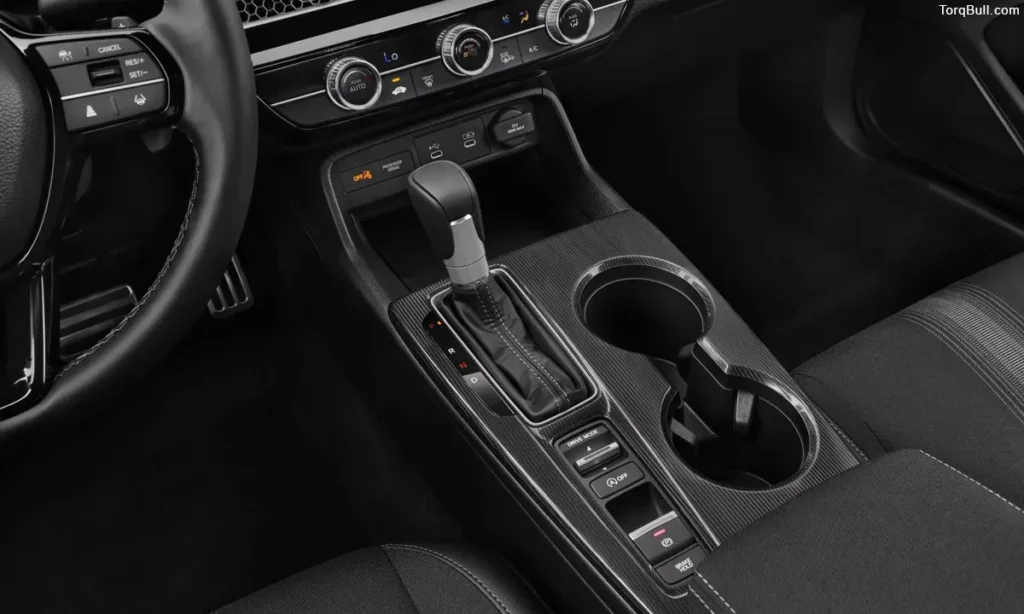
The Sport uses Honda’s 2.0-litre naturally aspirated four-cylinder engine producing 150 horsepower. This engine provides adequate daily commuting performance but without the stronger torque and more responsive acceleration that a turbocharged application delivers. The CVT transmission paired with the 2.0-litre provides smooth low-speed operation and competitive fuel economy, with paddle shifters on the steering wheel for simulated gear-step driving engagement.
The EX upgrades to the 1.5-litre turbocharged four-cylinder engine producing 186 horsepower — 36 horsepower more than the Sport’s 150-horsepower naturally aspirated engine. The turbocharged engine delivers this power advantage with the specific low-RPM torque character that turbocharged engines provide — available power earlier in the rev range rather than requiring high revs to produce useful acceleration. The result is a meaningfully more confident daily driving experience, particularly during highway merges, passing manoeuvres and incline climbing where the extra 36 horsepower translates into seconds of real response time difference.
The 2026 EX’s turbocharged engine has also received a power increase over the previous 2025 EX specification — producing 186 horsepower in the 2026 EX versus 180 horsepower in the 2025 equivalent configuration. This 6-horsepower increase from engineering refinements provides marginally sharper response alongside the established turbocharged engine’s existing torque advantage over the Sport’s naturally aspirated application.
Exterior Differences: Sport’s Visual Identity vs EX’s Restrained Elegance
The Sport’s most immediately visible differentiation from the EX involves specific exterior styling choices that communicate athleticism through visual elements rather than through mechanical performance additions.
The Sport’s 18-inch gloss-black alloy wheels are the most visually impactful single element — the dark finish creating a sporty, purposeful appearance that complements the Sport’s aggressive front fascia treatment. The chrome exhaust finisher provides a subtle performance reference at the Sport’s rear. These Sport-exclusive exterior elements produce a visual character that many buyers respond to before they consider any specification differences between trims.
The EX uses a different wheel design that communicates refinement rather than sport — appropriate for a trim whose priorities are comfort and technology over visual athletic aggression. Buyers who specifically want the 18-inch gloss-black wheel aesthetic must choose the Sport to access it within the standard sedan lineup.
Interior Differences: Sport Functionality vs EX Comfort Technology
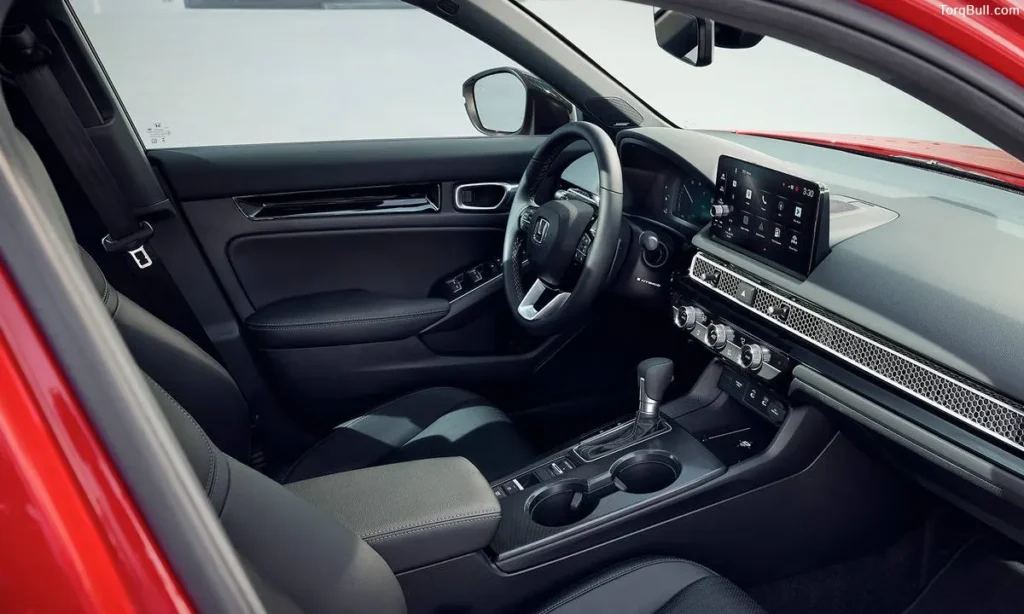
Inside the cabin, the Sport and EX represent different priority sets rather than simply different quality tiers — the Sport providing the performance-oriented interior elements that its exterior suggests, the EX adding the comfort and convenience technology that daily family use specifically values.
The Sport’s interior delivers sport pedals for a performance-oriented footwell aesthetic, a leather-wrapped steering wheel and paddle shifters that maintain the performance theme throughout the cabin. The 7-inch touchscreen provides basic infotainment connectivity with wireless Apple CarPlay and Android Auto. Standard Honda Sensing includes automatic emergency braking, adaptive cruise control and lane keeping assist.
The EX expands the technology content meaningfully. The 9-inch touchscreen — larger than the Sport’s 7-inch display by 2 inches — provides more mapping detail for navigation, more media management space and a more impressive visual presence. This screen size increase is immediately and consistently noticeable to any owner who uses navigation regularly — the 9-inch provides a substantially better navigation experience than the 7-inch in daily use.
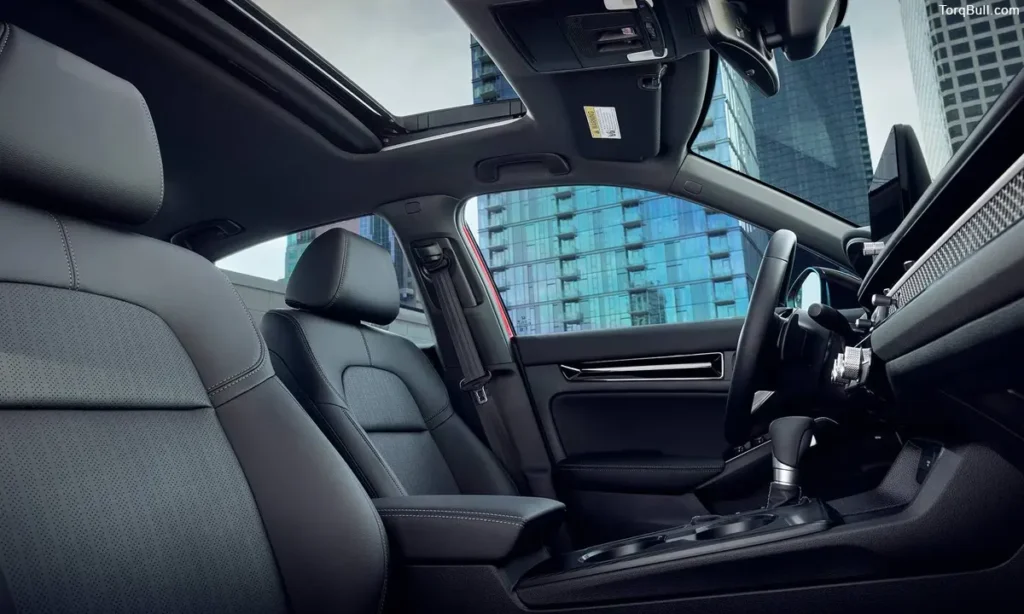
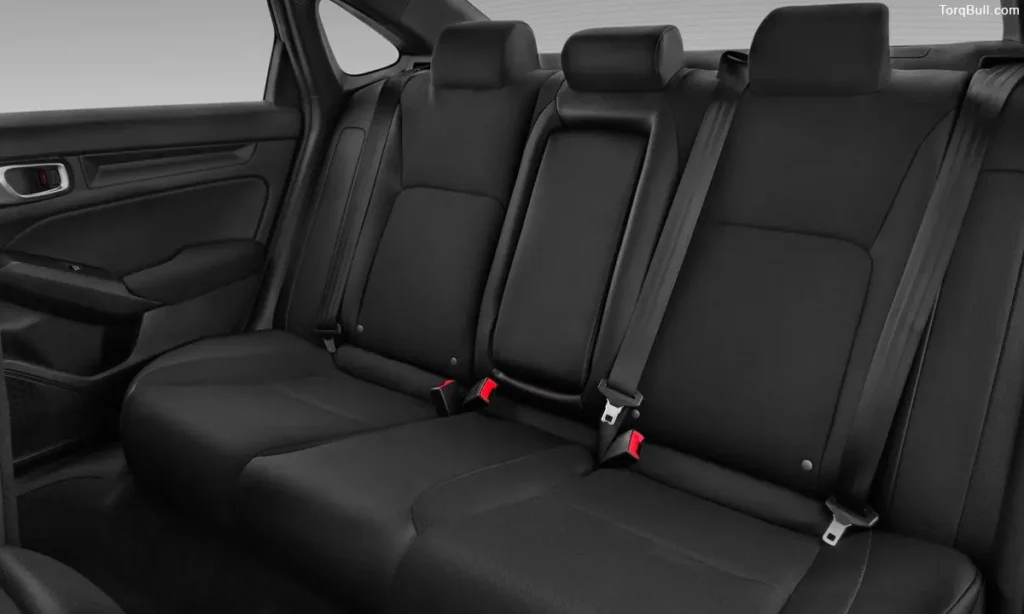
The EX’s sunroof brings natural light and open-sky character to the cabin that the Sport does not offer — the feature most commonly cited by buyers who specifically chose the EX over the Sport as the daily ownership benefit that most consistently improves the driving experience. The 60/40 split-folding rear seats provide cargo flexibility that the Sport’s rear seat does not offer — allowing long items to be carried through the cabin without requiring all rear passenger space to be surrendered.
The 2026 EX adds Rear Cross Traffic Alert as standard — a safety system that warns when reversing into traffic from a parking space. This rear cross traffic alert addition is specifically listed as a 2026 update that expands upon the Honda Sensing suite available on previous EX configurations.
Read: Honda Civic Reliability After 100,000 Miles. Here’s What Long-Term Owners Report
Fuel Economy: Sport’s Slight City Advantage vs EX’s Turbo Efficiency
The fuel economy comparison between Sport and EX produces a more nuanced result than the straightforward turbocharged-versus-naturally-aspirated characterisation might suggest.
The Sport with its 2.0-litre naturally aspirated engine achieves approximately 32 MPG city and 42 MPG highway. The EX with the 1.5-litre turbocharged engine achieves comparable highway efficiency — the turbocharged engine’s direct injection and efficiency optimisation producing results similar to the larger naturally aspirated engine at sustained highway cruise speeds despite different technology approaches to achieving them.
At 15,000 annual miles and $3.08 per gallon, the fuel economy difference between Sport and EX is modest enough that it is not a significant financial factor in the Sport versus EX decision — both configurations are among the most fuel-efficient compact sedans available at their respective price points, and neither represents a meaningful fuel cost penalty relative to the other in typical mixed driving conditions.
2026 Honda Civic Sport vs EX — Complete Comparison Chart
| Feature | Sport | EX | Winner |
| Starting Price | approximately $26,000 | approximately $29,000 | Sport (approximately $3,000 less) |
| Engine | 2.0L naturally aspirated, 150 hp | 1.5L Turbocharged, 186 hp | EX (36 more horsepower, turbo torque) |
| Transmission | CVT with paddle shifters | CVT | Sport (paddle shifters standard) |
| Wheels | 18-inch gloss-black alloy | Different design | Sport (more aggressive aesthetic) |
| Sport Pedals | Standard | Not included | Sport |
| Sunroof | Not included | Standard | EX |
| Touchscreen Size | 7 inches | 9 inches | EX (substantially larger) |
| 60/40 Split-Fold Rear Seats | Not included | Standard | EX |
| Rear Cross Traffic Alert | Standard (2026) | Standard (2026) | Tie |
| Honda Sensing | Standard | Standard | Tie |
| Wireless Apple CarPlay | Standard | Standard | Tie |
| Fuel Economy (city) | approximately 32 MPG | Comparable | Similar |
| Chrome Exhaust Finisher | Standard | Not included | Sport (exterior sport detail) |
| Professional Recommendation | Bolder design, athletic feel | Added comfort, modern tech | Context-dependent |
Read: Honda Civic Long Term Ownership Review. Why It Remains One of America’s Favorite Cars
The Honest Verdict: Sport for Style, EX for Daily Substance
Professional guidance on this specific decision is direct: choose the Sport if you crave a bolder design, a more athletic feel and stylish upgrades inside and out — choose the EX if you value added comfort, modern technology and premium features that make daily driving more enjoyable.
The Sport is the correct choice for buyers who specifically respond to the 18-inch gloss-black wheels, who want the sport pedals and paddle shifters that maintain the performance theme inside the cabin and who are comfortable with the 150-horsepower engine’s performance for their specific daily use. The Sport’s approximately $3,000 lower starting price preserves budget for other ownership priorities without compromising the Honda Civic’s fundamental reliability, safety technology or fuel economy credentials.
The EX is the correct choice for buyers who will consistently use the sunroof — the daily ownership benefit that most distinguishes the EX experience for owners who specifically value the open-sky character it provides. The 9-inch touchscreen’s navigation improvement over the Sport’s 7-inch is the technology upgrade that most consistently improves daily driving experience for owners who use the navigation system regularly. The turbocharged engine’s 36-horsepower advantage produces meaningful daily confidence for buyers who frequently merge onto highways, navigate mountain grades or carry passengers and cargo that reduce power-to-weight ratio.