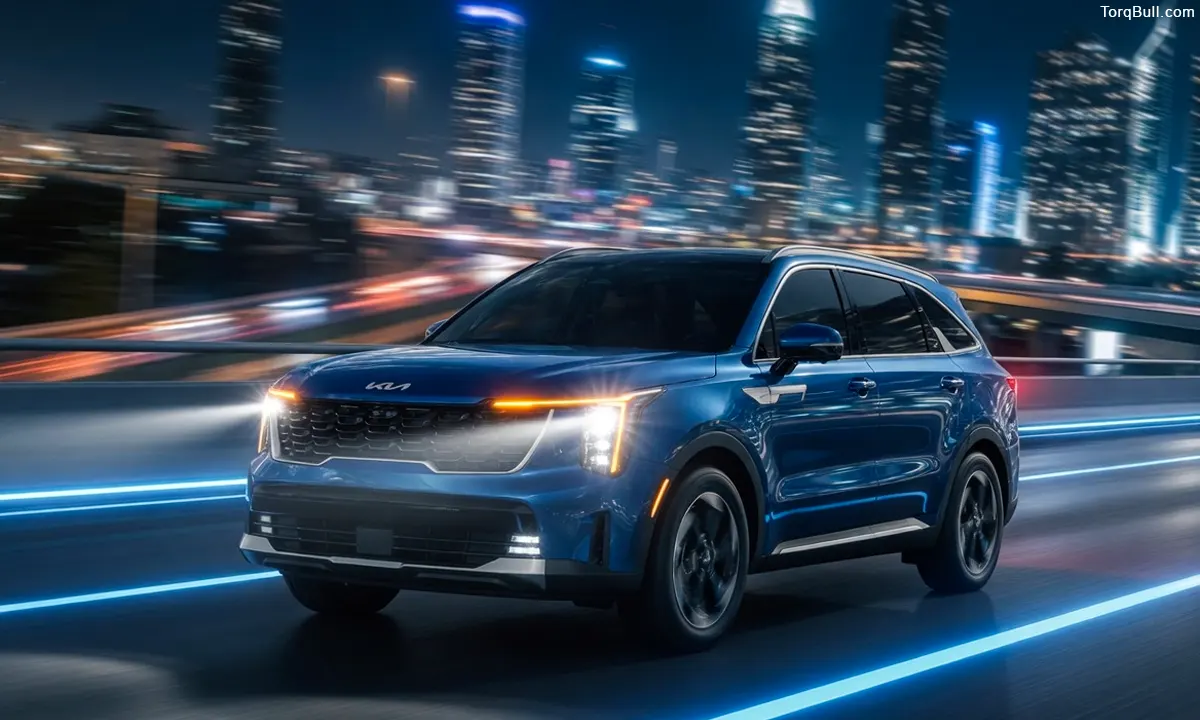
- 2026 Kia Sorento PHEV delivers ~31 miles of all-electric range, with real-world testing at ~31.3 miles
- Level 2 charging takes approximately 3.5–4 hours for a full recharge
- In hybrid mode: ~33 MPG combined and up to ~655 miles total driving range
The Kia Sorento Plug-In Hybrid occupies a unique position in the midsize three-row SUV segment — as one of the very few PHEVs available that provides three rows of seating, standard all-wheel drive and meaningful electric-only range for daily commuting without sacrificing the full-tank highway range that families need for road trips. The 2026 model carries forward the powertrain and battery specifications from the thoroughly tested 2025 update, with Kia’s real-world battery range data now confirmed by independent automotive media through extended ownership tests. This guide provides every charging and range figure a prospective buyer needs — from EPA estimates to JD Power’s real-world confirmation and every charging scenario from a standard household outlet to a Level 2 home charger.
The Battery and Powertrain: What Powers the Electric Range
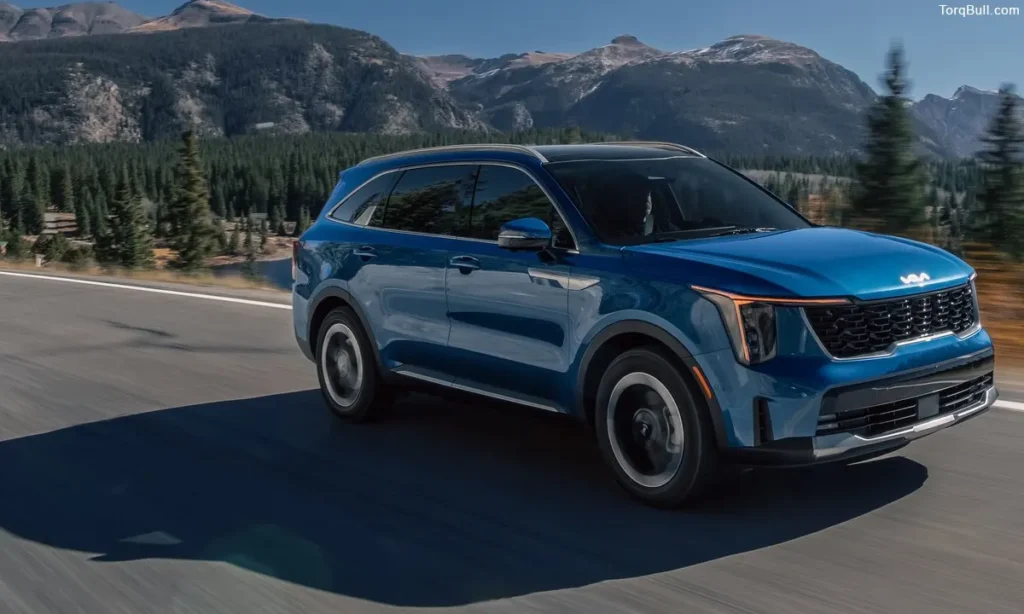
The 2026 Kia Sorento PHEV is powered by a 1.6-litre turbocharged four-cylinder gasoline engine combined with an electric motor producing 91 horsepower and 224 pound-feet of torque independently. The electric motor draws from a 14-kilowatt-hour lithium-ion polymer battery pack. Combined system output is 261 horsepower and 258 pound-feet of torque, routed through a six-speed automatic transmission to all four wheels through standard all-wheel drive.
The 14 kWh battery pack is the foundation of the PHEV’s electric range capability. Unlike the standard Sorento Hybrid’s smaller battery that is charged only through regenerative braking and never needs plugging in, the PHEV’s larger pack requires external charging to deliver its full electric-only range advantage. Kia’s 10-year, 100,000-mile hybrid battery warranty covers the pack — the most comprehensive battery warranty in the segment and a meaningful long-term ownership confidence factor.
Read: Kia Sorento vs Hyundai Santa Fe: Which Is Better in 2026?
Electric Range: EPA Estimate and Real-World Confirmation
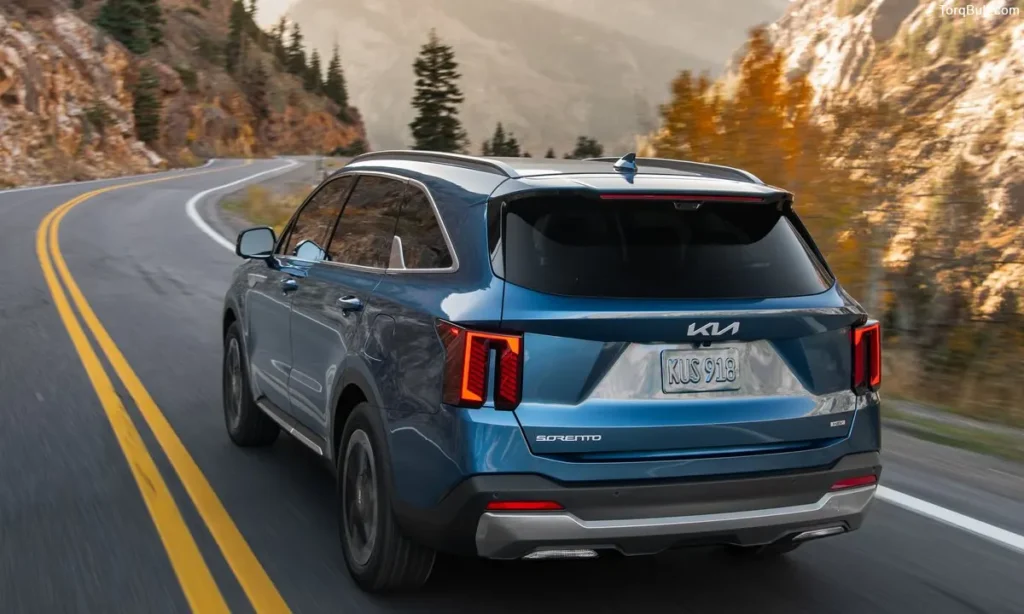
The EPA-estimated all-electric range for the 2026 Kia Sorento PHEV is 31 miles — the distance the vehicle travels on electricity alone before the gasoline engine engages. Edmunds confirms this figure at 31 miles for the 2026 model. This 31-mile EPA figure is the most practically relevant number for daily-use planning, as it defines how far the Sorento PHEV can travel without consuming any gasoline in ideal conditions.
JD Power’s extended 2025 review provides the most credible real-world validation available. The reviewer departed on a road trip with a fully charged battery — the range indicator showing 31 miles of electric-only driving — and with four adult passengers and carry-on luggage, the vehicle delivered exactly 31.3 miles before the gasoline engine activated. This is one of the most precise real-world-to-EPA correlations documented for any PHEV — confirming that the Sorento PHEV’s 31-mile EPA figure is accurate rather than optimistic under normal loading conditions.
After the electric range is depleted, the Sorento PHEV transitions seamlessly to hybrid operation using the gasoline engine with continued electric motor assistance. In this mode, the EPA estimates 33 MPG combined — confirmed at 29.8 MPG during JD Power’s road trip test, which included four occupants and luggage on a continuous highway route. Kia advertises a total driving range of 655 miles on select trims before refuelling — combining the electric range with the gasoline range from the 12.4-gallon fuel tank.
Charging Time: Every Scenario Explained

Charging time is the second most practically important specification for any PHEV buyer — because it determines whether the battery can be reliably fully charged between daily use cycles, which in turn determines how much of the owner’s annual mileage is covered on electricity rather than gasoline.
Level 2 Charging (240-Volt Home Charger or Public Station)
U.S. News confirms the standard Level 2 charging time at approximately 3.5 hours from empty to full on a 240-volt outlet. JD Power’s reviewer, testing under real home conditions, reported a four-hour full charge on a 240-volt home charging station. The slight difference between these figures likely reflects variation in charger output — a 7.2 kW Level 2 charger charges faster than a 3.3 kW unit, and the Sorento PHEV’s onboard charger accepts the higher rate when available. For buyers who install a Level 2 home charger — the most common PHEV setup — a full overnight charge of 3.5 to 4 hours means that any evening plug-in provides a complete full charge before the following morning’s commute.
Level 1 Charging (120-Volt Standard Household Outlet)
U.S. News confirms that the Sorento PHEV’s battery charges overnight using a 120-volt household-style outlet — the standard outlet found in any American garage or parking area. JD Power’s reviewer specifically tested Level 1 charging for local errands: a standard household outlet easily kept the SUV topped off for local errands, running on nothing but electricity. The full charge time on Level 1 is typically 8 to 10 hours — making overnight Level 1 charging fully adequate for drivers covering fewer than 31 miles daily, as the battery will be fully replenished during any normal overnight parking period.
DC Fast Charging
The 2026 Kia Sorento PHEV does not support DC fast charging — consistent with virtually all PHEV vehicles in its class, which use the charging hardware primarily for Level 1 and Level 2 residential and destination charging rather than high-speed public charging. DC fast charging at the voltage levels that EVs use is not compatible with the Sorento PHEV’s onboard charging architecture.
Read: Cheapest Hybrid SUVs In USA 2026. The Complete Affordable Hybrid SUV Comparison
Kia Sorento PHEV Range and Charging — Complete Reference Chart
| Specification | Detail | Source |
| Battery capacity | 14 kWh lithium-ion polymer | Kia / JD Power |
| EPA electric-only range | 31 miles | EPA |
| Real-world electric range (tested) | 31.3 miles (4 passengers + luggage) | JD Power |
| EPA combined (electric/hybrid mode) | 74 MPGe | EPA |
| EPA combined (gas/hybrid mode) | 33 MPG | EPA |
| Real-world gas/hybrid MPG (highway) | 29.8 MPG | JD Power road trip test |
| Total range before refuel (select trims) | 655 miles | Kia official |
| Level 2 charge time (full charge) | ~3.5–4 hours | U.S. News / JD Power |
| Level 1 charge time (full charge) | Overnight (~8–10 hours) | U.S. News |
| DC fast charging | Not supported | N/A |
| Combined system power | 261 hp / 258 lb-ft | Kia official |
| 0-60 MPH | 7.6–8.5 sec | Car and Driver / Kia |
| Starting price (EX trim, 2026) | ~$48,290 | Edmunds |
| Battery warranty | 10 yr / 100,000 miles | Kia |
Read: Most Reliable Car Brands In USA for Long-Term Ownership 2026
Who the Sorento PHEV’s Range and Charging Serves Best
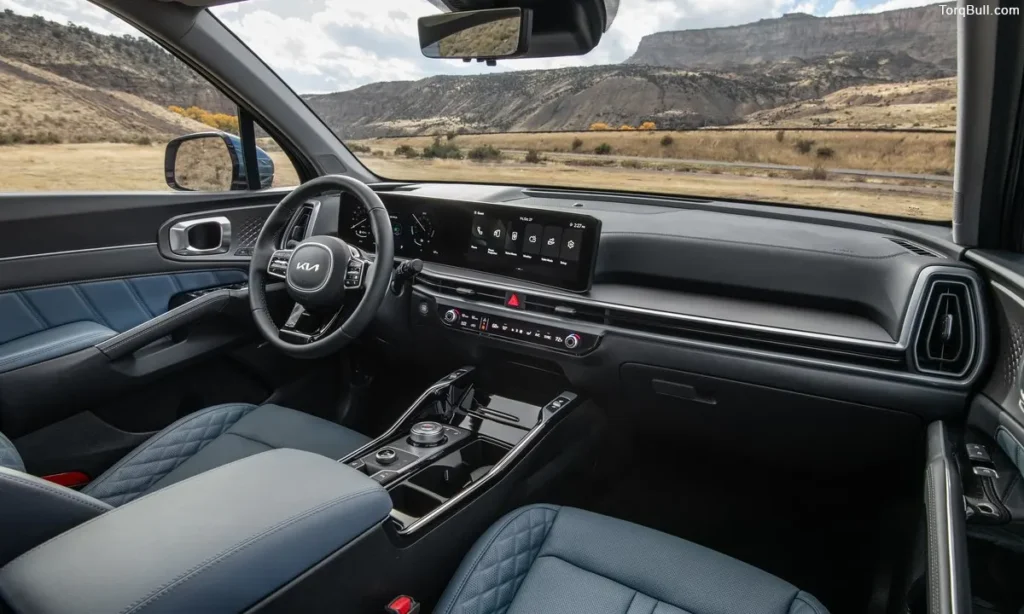
The 31-mile electric range and 3.5 to 4-hour Level 2 charging time align precisely with the most financially rewarding PHEV ownership scenario: a daily commute of 30 miles or fewer with access to home Level 2 charging. Edmunds specifically confirms this use case: if you have the ability to frequently charge at home and make a lot of short commutes, you can potentially go a long time before having to fill up with gas.
For this buyer profile — a family whose daily driving typically falls within 31 miles and who can plug in at home each evening — the Sorento PHEV’s electric range covers virtually all weekday driving on electricity, producing annual fuel savings that can substantially offset the PHEV’s approximately $10,000 to $15,000 premium over the standard Sorento. At $0.17 per kilowatt-hour home charging rates versus $3.08 per gallon gasoline, covering 12,000 annual miles primarily on electricity costs approximately $600 in electricity versus approximately $1,200 in gasoline for an equivalent hybrid — an annual saving of approximately $600 that accumulates meaningfully over a five-year ownership period.
For buyers without home charging access or whose daily commute exceeds 60 miles, the PHEV premium is more difficult to justify — the gas-hybrid mode’s 33 MPG combined is excellent but available at lower cost from the standard Sorento Hybrid.