Ask any mechanic to name the cars they see rolling into the shop with 250,000 miles on the clock and barely a complaint, and Toyota will dominate that list every single time. We all know it instinctively. The Camry that refuses to die. The 4Runner your uncle has driven since the Clinton administration. The Tacoma that holds its value so well you could almost sell it for what you paid.
But here is the question nobody really stops to answer: why? What is it about Toyota specifically that turned the brand into a byword for bulletproof dependability? It would be easy to wave it off as marketing, and plenty of skeptics do. Then you look at the actual data, the independent surveys, the mechanic interviews, the ownership cost studies, and the picture gets a lot harder to dismiss.
The truth is that Toyota’s reliability is not an accident or a happy fluke. It is the deliberate result of a decades-long philosophy baked into every step of how these cars are designed and built. Let me walk you through the real reasons, because once you understand them, the legend makes complete sense.
First, the Receipts Are Real
Before we get into the why, let’s establish that this reputation is genuinely earned and not just folklore. The numbers back it up hard. Consumer Reports’ 2026 brand rankings placed Toyota first with a score of 66, ahead of Subaru and Lexus, drawn from data covering over 380,000 vehicles spanning the 2000 to 2025 model years. First place, out of everyone.
The dependability studies agree. J.D. Power’s 2025 Vehicle Dependability Study showed Toyota averaging just 147 to 162 problems per 100 vehicles, well below the industry average of 202. And it pays off in your wallet. While the average annual ownership cost across all brands sits around $936 per year, Toyota remains considerably below average at $633. Fewer problems, lower costs, top rankings. This is the foundation everything else is built on.
The Secret Sauce: The Toyota Production System
So where does it come from? It starts on the factory floor with something called the Toyota Production System, or TPS, a manufacturing philosophy so influential that companies in healthcare, aerospace, and tech have copied it. The foundation of Toyota quality lies in the Toyota Production System, which, unlike traditional assembly lines focused solely on speed, prioritizes efficiency and quality equally.
The genius of TPS is that it catches problems at the source rather than at the end of the line. That mindset has roots in the postwar years, when the system was developed to eliminate waste and catch defects at the source rather than after the car is already built. Born out of necessity after World War II, when Japan faced severe resource scarcity, Toyota had to build better products using fewer materials, less time, and minimal waste. Hardship forged a discipline that never went away.
Kaizen: Getting a Little Better, Forever
If TPS is the system, Kaizen is the soul of it. The word translates to continuous improvement, and it is the single most important concept behind Toyota’s reliability. Kaizen empowers every Toyota employee, from assembly line workers to top executives, to constantly seek ways to improve processes and products through small, incremental changes that accumulate over time into significant quality gains.
Here is why this matters so much for the car you eventually buy. Each improvement becomes the new baseline, and teams immediately begin hunting for the next one. A factory worker might suggest a tiny adjustment to reduce a defect, an engineer refines a part based on real-world field data, and the lessons compound year after year. For the consumer, Kaizen means buying a vehicle that benefits from countless refinements, with each model year addressing minor issues before they become widespread problems. The Corolla you buy today is the product of decades of relentless little fixes. That is why it just works.
Jidoka: Machines That Know When to Stop
The third pillar is a tongue-twister worth knowing: Jidoka, which Toyota describes as automation with a human touch. It is the clever marriage of robotic precision and human judgment. Machines can detect a range of defects and halt production immediately while alerting a human operator, so a misaligned panel or an over-torqued bolt instantly stops the line for a person to assess.
But here is the part I love. The trust runs both ways. Toyota also empowers individual line workers to stop the entire production line themselves the moment they spot a quality issue. Think about that. A single worker on the floor has the authority to halt a multimillion-dollar production line because something looks off. That is a company treating quality as non-negotiable, not as a suggestion.
Conservative Engineering: Boring on Purpose
Now for the philosophy that frustrates spec-sheet chasers but delights owners: Toyota is deliberately, strategically conservative. Toyota favors proven components and gradually introduces new technology only after extensive real-world testing, prioritizing simplicity, efficiency, and durability over glitz.
This is the quiet superpower. Toyota deliberately delays rolling out new, unproven technology, a cautious approach that keeps owners out of the dealership service bay. While rivals rush to cram in the latest gimmick, Toyota waits until a technology is bulletproof before deploying it widely. It is why these cars can feel a half-step behind on flashy features, and it is the exact same reason they last forever. The testing is brutal, too. Before any engine reaches a production vehicle, it endures cold starts in extreme temperatures, sustained high-load runs, and simulated years of stop-and-go commuting. Expensive to do, but far cheaper than a recall.
The Proof Is in the Mileage
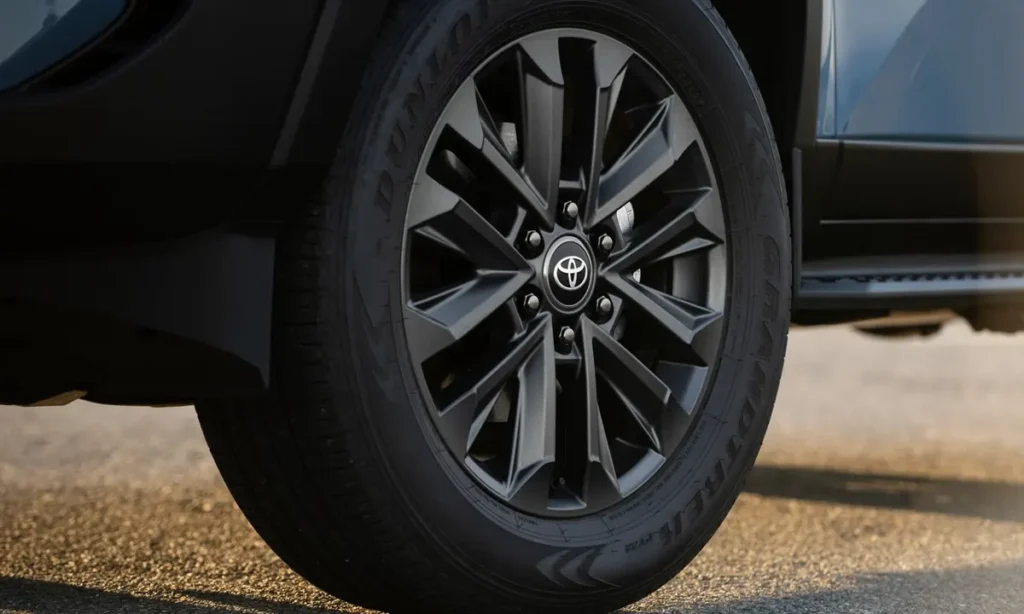
All of this philosophy converges into one jaw-dropping result: Toyotas refuse to die. The longevity data is genuinely staggering. The Toyota Tundra has the highest probability, at 36.6 percent, of reaching 250,000 miles, with the Sequoia, 4Runner, Tacoma, and Highlander Hybrid rounding out the top five.
It goes further. Toyota claims 9 of the 30 spots on the list of longest-lasting models, more than any other brand, and eight of the 12 vehicles on Consumer Reports’ 2025 long-lasting list were modern Toyotas. The Land Cruiser, 4Runner, Tacoma, and Sequoia are legendary for breezing past 300,000 miles, and owners who simply keep up with basic maintenance routinely report crossing 200,000 miles without major mechanical work. These are not unicorns. They are everywhere, and that ubiquity is the whole point.
Read: 35 MPG and 600 Miles of Range? The 2027 Kia Telluride Hybrid Is Insane
How Toyota’s Reliability Pillars Work Together
Here is a quick breakdown of the philosophy that builds these cars.
| Principle | What It Means | Why It Boosts Reliability |
| Toyota Production System | Quality and efficiency valued equally | Catches defects at the source, not the end |
| Kaizen | Continuous small improvements | Each model year fixes the last one’s flaws |
| Jidoka | Automation with human oversight | Stops the line the instant a defect appears |
| Conservative engineering | Proven parts, delayed new tech | Owners avoid unproven, failure-prone systems |
| Exhaustive testing | Extreme pre-production trials | Weaknesses found before you ever buy the car |
The magic is not any single one of these. It is how they reinforce each other into a culture. As one expert who has studied Toyota for decades at the University of Michigan put it, the organization is deeply systematic in a way he does not expect to change. Insiders even describe the internal mindset as a productive paranoia, a constant awareness that today’s success guarantees nothing tomorrow. A former Toyota North America executive summed it up: the company never stops asking what could go wrong, even when everything looks fine.
Let Me Be Honest: The Halo Has a Few Scratches
I would be doing you a disservice if I painted Toyota as flawless, because even the king has stumbled lately, and honesty matters here. The reputation has taken some real hits recently. The brand’s image has been dinged by problems with its i-FORCE engines and the electric bZ4X, proof that even Toyota is not immune to the occasional misstep, especially as it pushes into new powertrains and technology.
It is also worth remembering what conservative engineering costs you. Toyota’s caution means you sometimes give up cutting-edge tech, the latest infotainment wizardry, or the sharpest performance figures in the class. If you want the flashiest, most feature-packed gadget on wheels, a Toyota may occasionally feel a step behind by design.
Here is my honest read, though. A couple of high-profile engine and EV issues, while genuine, stand out precisely because they are exceptions to an otherwise extraordinary track record. And the tech-conservatism trade-off is exactly what buys you the 300,000-mile dependability in the first place. You cannot fully separate the two. For the vast majority of buyers who want a car that simply starts every morning for 15 years, that trade is a no-brainer.
Verdict: The Reputation Is Earned, Engineering by Engineering
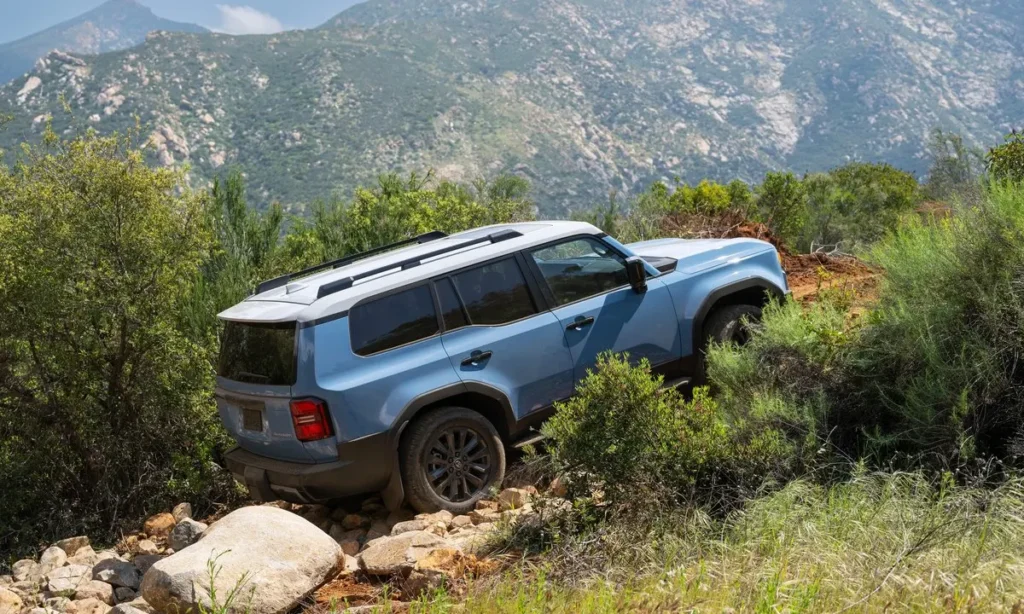
So why are Toyotas known for bulletproof reliability? Because the company built an entire culture around making it true, then refused to get complacent for over half a century.
It is the Toyota Production System catching flaws before they leave the factory. It is Kaizen refining every model through thousands of tiny improvements year after year. It is Jidoka letting a single worker halt the line to protect quality. It is conservative engineering that waits until technology is proven before trusting it to customers, backed by testing so punishing that weaknesses surface long before you ever turn the key. None of it is glamorous. All of it works.
The recent hiccups with the i-FORCE engines and the bZ4X are worth watching, and a smart buyer keeps an eye on how Toyota handles its leap into hybrids and EVs. But the fundamental formula that earned the reputation is still firmly in place, and the independent data still crowns Toyota at or near the very top, year after year.
So the next time you see a battered old Tacoma with a quarter-million miles still hauling lumber, or a Camry with paint faded from two decades of sun still purring along, know that you are not looking at luck. You are looking at the visible result of a philosophy that treats quality like a survival instinct. That is the secret. There is no magic, just relentless, disciplined, almost obsessive dedication to getting a little bit better every single day. And honestly? That is far more impressive than magic ever could be.