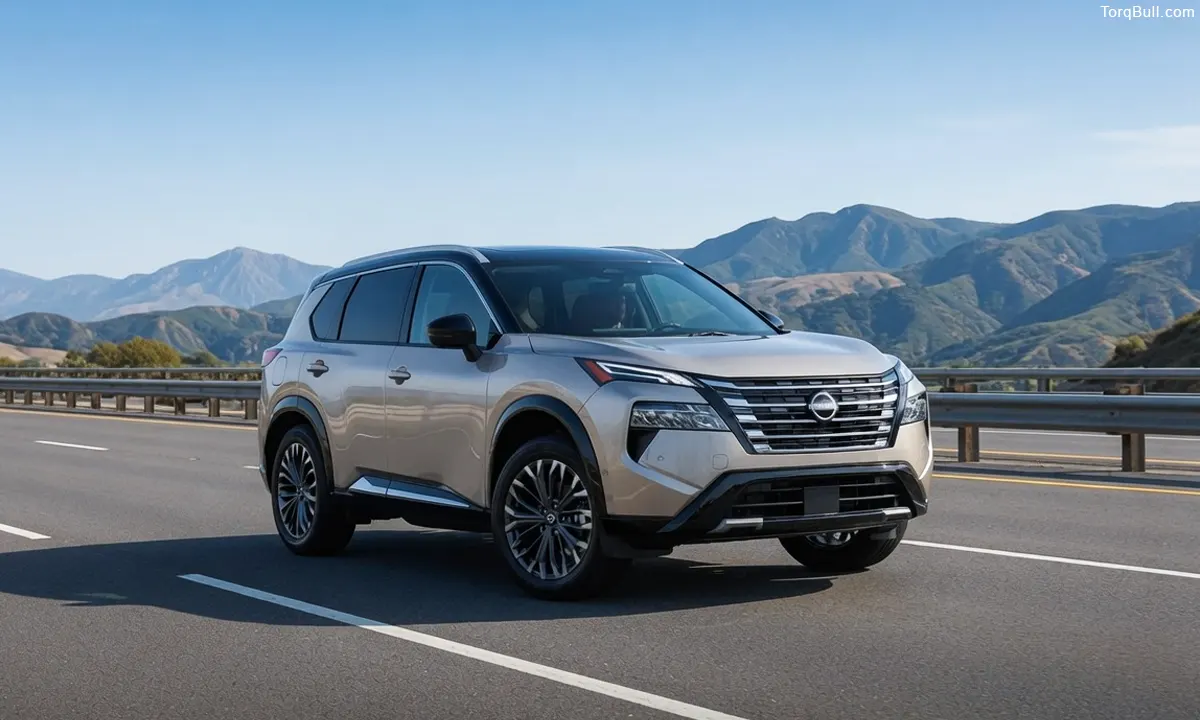
- The 2026 Nissan Rogue Intelligent AWD delivers an impressive 31 MPG combined, just 1 MPG below the front-wheel-drive version.
- The system can automatically send up to 50% of available torque to the rear wheels when additional traction is needed.
- AWD-exclusive Snow and Off-Road drive modes enhance capability in challenging conditions while maintaining excellent fuel efficiency for daily driving.
The Nissan Rogue’s Intelligent AWD system is the specific reason that many compact crossover buyers choose the Rogue over the competing alternatives that either charge substantially more for all-wheel drive or reduce fuel economy more significantly when AWD is added. At only 1 MPG combined below the front-wheel-drive model — 31 MPG AWD versus 32 MPG FWD — the Rogue’s AWD penalty is among the lowest available in the non-hybrid compact SUV segment, preserving the fuel economy leadership position that makes the Rogue the most efficient non-hybrid compact SUV available regardless of whether FWD or AWD is chosen. This complete review examines how the Intelligent AWD system works, what it delivers in real-world traction, what the five drive modes specifically provide and which buyers most benefit from choosing AWD.
How the Rogue Intelligent AWD System Works: The Technology
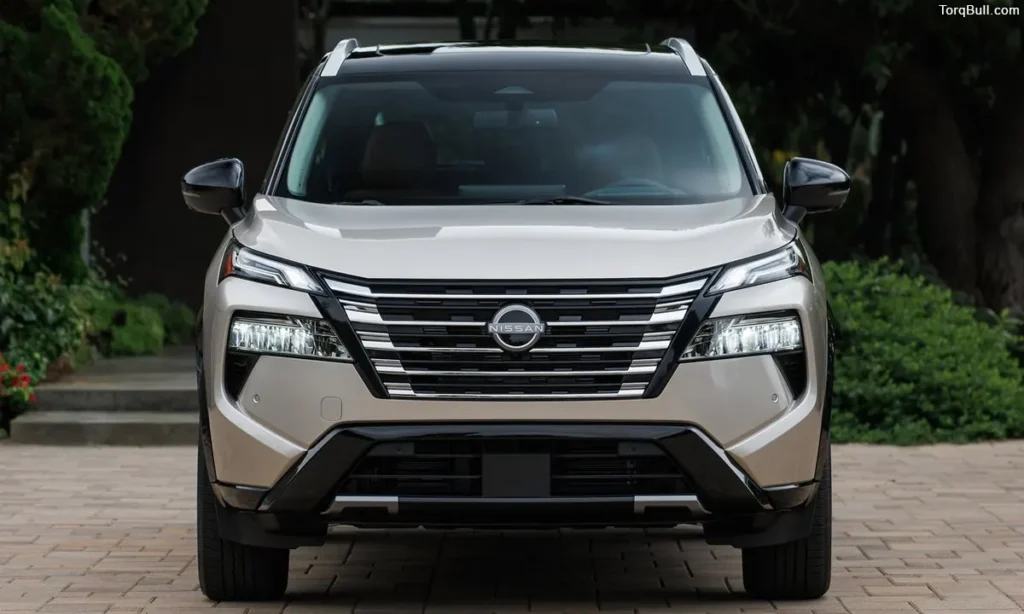
The Nissan Rogue’s Intelligent AWD system is an electronically controlled on-demand all-wheel-drive architecture — fundamentally different from the mechanical full-time AWD systems in some competing crossovers in a way that explains both its efficiency advantage and its specific performance character.
Under normal dry-pavement driving conditions, the Intelligent AWD system defaults to front-wheel drive — directing all available torque from the 1.5-litre VC-Turbo turbocharged engine to the front wheels through the Xtronic CVT. This default front-wheel-drive operation eliminates the parasitic drivetrain losses that constant mechanical AWD systems incur regardless of traction conditions — losses that produce the larger fuel economy reductions that some competing AWD systems impose.
When the electronic management system detects front-wheel slip — through wheel speed sensors monitoring the rotational difference between front and rear wheel sets — it activates the rear drive clutch and transfers torque to the rear wheels. The system can direct up to 50 percent of total torque to the rear wheels in maximum slip conditions, providing meaningful rear-axle engagement that improves traction without the driver needing to take any action. The transition from FWD to AWD operation is described by professional evaluation as seamless — occurring without perceptible shift, hesitation or driver notification other than the vehicle’s improved forward progress on slippery surfaces.
The system also includes an AWD Lock mode available at lower speeds — typically up to approximately 25 MPH — that maintains a fixed torque distribution between front and rear wheels regardless of detected slip. This Lock mode provides the consistently distributed torque that very low-speed traction situations require — particularly useful in deep snow where wheel spin occurs predictably rather than intermittently, or during slow-speed off-camber manoeuvring where momentary slip detection response may lag the traction requirement.
Read: Nissan Rogue Long Term Ownership Review. Full Ownership Breakdown
The Five Drive Modes: What Each One Does
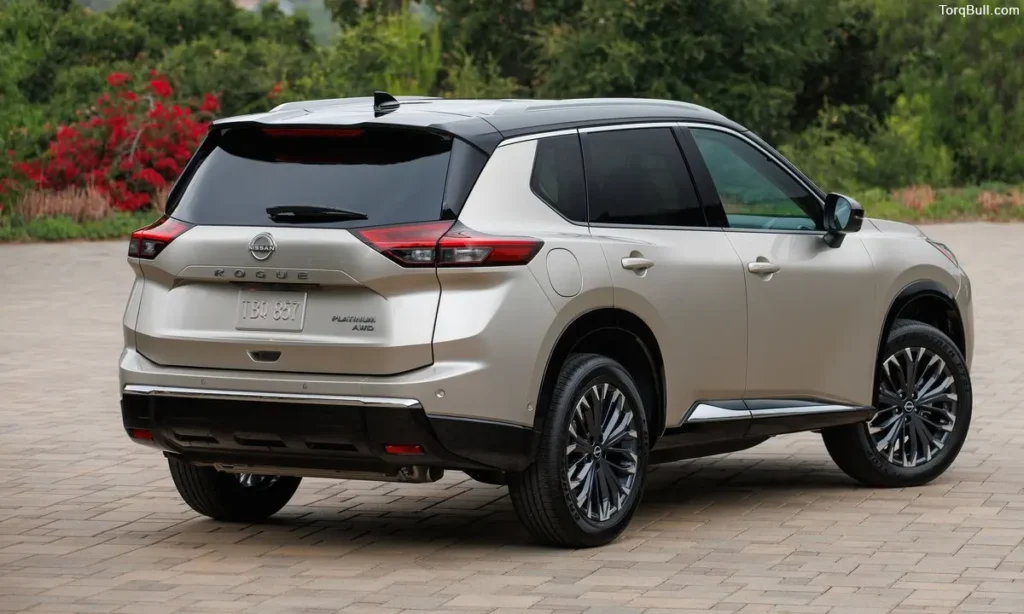
The 2026 Rogue AWD includes five distinct drive modes — Auto, Eco, Sport, Snow and Off-Road — with Snow and Off-Road exclusive to AWD-equipped configurations. Each mode adjusts the vehicle’s throttle response, CVT behaviour and AWD torque distribution strategy for its specific target use case.
Auto mode provides the everyday calibration — balanced throttle response, CVT optimised for typical mixed city and highway driving and AWD system in its standard on-demand rear-engagement strategy. This is the mode that the Rogue occupies across most of its driving life for most owners.
Eco mode prioritises fuel efficiency — reducing the throttle’s immediate responsiveness to encourage gradual acceleration, managing CVT ratios for engine operation at lower RPM and minimising AWD rear engagement by setting a higher slip threshold before rear torque transfer activates. Professional evaluation confirms that the Rogue is happiest when treated gently, and Eco mode is the calibration that most specifically rewards this driving approach.
Sport mode increases throttle sensitivity and modifies CVT behaviour for more assertive response — holding gear ratios at higher RPM to maintain engine output during sustained acceleration. In Sport mode, the AWD system’s rear engagement threshold decreases — providing earlier traction support during the more aggressive acceleration inputs that Sport mode encourages.
Snow mode is available exclusively with AWD and specifically calibrates the system for low-traction winter conditions. Snow mode reduces throttle response sensitivity — preventing the aggressive throttle inputs that cause wheel spin on low-traction surfaces — and configures the AWD system to engage rear torque distribution more quickly and more proactively than Auto mode’s standard slip-detection threshold. The result is a more confident and more predictable traction management strategy in conditions where any wheel spin events should be minimised.
Off-Road mode is the second AWD-exclusive calibration — modifying throttle response and AWD distribution for the sustained low-traction conditions that unpaved surfaces produce. Off-Road mode does not transform the Rogue into a serious off-road vehicle — the Rogue’s ground clearance, suspension geometry and approach angle remain those of a road-biased compact crossover — but it provides more capable traction management across the gravel roads, light dirt access and mild unpaved terrain that many Rogue buyers encounter on weekend camping and outdoor recreation use.
The Rock Creek: AWD Standard With Off-Road Hardware
The Rock Creek is the 2026 Rogue configuration where AWD is standard rather than optional — and where the AWD system’s capability is extended by specific off-road-oriented hardware that no other Rogue configuration provides.
The Rock Creek adds all-terrain tyres that provide the traction compound and aggressive tread pattern that unpaved surfaces require for grip — the most practically impactful single off-road addition, because the AWD system’s electronic management can only distribute the torque that the tyres can convert into forward motion. Better tyres specifically produce better AWD system performance on low-traction surfaces.
The Rock Creek’s all-terrain tyres also produce the fuel economy reduction below standard AWD configurations — achieving 27 MPG city, 32 MPG highway and 29 MPG combined, compared to the standard AWD’s 28 MPG city, 35 MPG highway and 31 MPG combined. The 2 MPG combined reduction from all-terrain tyres is the specific trade-off that Rock Creek buyers accept for meaningfully improved traction capability on unpaved surfaces.
Read: Nissan Rogue Fuel Cost Per Year. The Real Cost of Daily Driving
Real World AWD Performance: What the Professional Evaluations Confirm

The Rogue Platinum AWD’s real-world fuel economy consistently matched EPA estimates — one professional evaluation’s specific finding that confirms the AWD Rogue’s 31 MPG combined EPA estimate as achievable rather than optimistic in normal driving conditions. A separate professional evaluation of AWD configurations at a steady 75 MPH highway cruise produced 31 MPG — directly matching the EPA highway estimate for the AWD trim and confirming the efficiency at real-world highway speeds.
The AWD system’s traction performance on low-traction surfaces is described as providing the confidence and power to get out there — the characterisation that captures the system’s practical benefit for buyers who specifically purchase AWD for winter and wet-weather confidence rather than for off-road applications.
2026 Nissan Rogue AWD — Complete Specification and Drive Mode Chart
| Specification or Mode | FWD Configuration | Standard AWD | Rock Creek AWD | Notes |
| EPA City MPG | 29 MPG | 28 MPG | 27 MPG | 1 MPG city penalty for AWD |
| EPA Highway MPG | 36 MPG | 35 MPG | 32 MPG | All-terrain tyres reduce Rock Creek highway |
| EPA Combined MPG | 32 MPG | 31 MPG | 29 MPG | Among best AWD compact SUV |
| Annual Fuel Cost (15K miles) | approximately $1,444 | approximately $1,493 | approximately $1,593 | At $3.08 per gallon |
| Max Rear Torque Transfer | N/A | Up to 50 percent | Up to 50 percent | On-demand electronic activation |
| AWD Lock Mode | N/A | Available (low speed) | Available (low speed) | Fixed front-rear distribution |
| Auto Mode | Standard | Standard | Standard | Default everyday calibration |
| Eco Mode | Standard | Standard | Standard | Fuel efficiency priority |
| Sport Mode | Standard | Standard | Standard | More responsive throttle |
| Snow Mode | N/A | Standard | Standard | AWD exclusive; low-traction winter |
| Off-Road Mode | N/A | Standard | Standard | AWD exclusive; unpaved terrain |
| Tyre Type | All-season | All-season | All-terrain | Rock Creek all-terrain adds traction |
| AWD Activation | N/A | Automatic slip detection | Automatic plus Lock | Seamless transition confirmed |
| AWD Premium vs FWD (price) | Baseline | approximately $1,400 to $1,700 | Higher | Varies by trim |
Read: Nissan Rogue Common Problems. What Long-Term Owners Report
FWD or AWD: The Practical Decision Framework
The AWD decision for the Rogue is simpler than it is for competing alternatives where the efficiency penalty is larger and the capability difference is more significant — because the Rogue’s 1 MPG combined AWD penalty is small enough that it rarely tips the financial calculation decisively toward FWD.
At 15,000 annual miles and $3.08 per gallon, the annual fuel cost difference between the Rogue FWD at 32 MPG and the Rogue AWD at 31 MPG is approximately $49 — less than $5 per month. Over five years, this fuel cost difference accumulates to approximately $245 — substantially less than the AWD option’s purchase premium of approximately $1,400 to $1,700 but also substantially less than the fuel cost difference that competing AWD systems impose with 2 to 4 MPG combined reductions.
AWD is the correct choice for Rogue buyers in northern states where winter precipitation, ice and slippery road surfaces are regular seasonal occurrences, buyers who regularly drive on unpaved access roads for recreational or rural use and buyers for whom the confidence and capability of rear-torque engagement in low-traction situations provides meaningful peace of mind that influences how they use the vehicle. FWD is the correct choice for buyers in consistently mild-climate markets where low-traction conditions are genuinely rare and for buyers who specifically prioritise the marginally higher fuel economy and lower purchase price that FWD provides.