Rimac Nevera: The Hyper-EV That Redefined Electric Performance Engineering
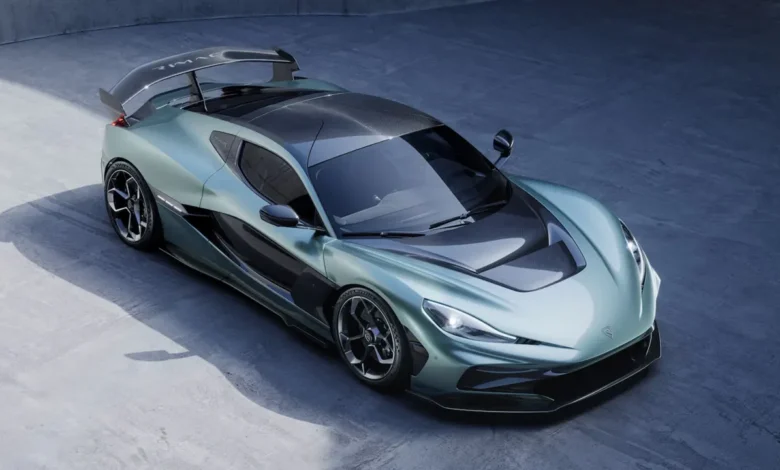
The Rimac Nevera stands as one of the most groundbreaking vehicles ever created, a hypercar that redefines the limits of electric performance and challenges the very foundations of supercar engineering. Developed by the Croatian manufacturer Rimac Automobili, the Nevera represents the pinnacle of modern EV innovation, blending extraordinary power, meticulous craftsmanship and advanced battery technologies into a machine that has reshaped global perceptions of what electric cars can achieve.
Named after a Mediterranean storm known for its sudden intensity, the Nevera lives up to its title by delivering explosive acceleration, staggering power output and electrifying dynamics that overshadow many traditional combustion-powered hypercars. From its 120 kWh battery pack to its quad-motor powertrain and carbon-fiber monocoque, the Nevera embodies the spirit of technological revolution. It is not simply an electric hypercar—it is a demonstration of the future of automotive performance.
The Nevera’s arrival marked a historic moment in automotive history, establishing new benchmarks for acceleration, handling, engineering precision and EV capability. Rimac’s mission has always been to demonstrate how electrification can elevate performance, and the Nevera stands as the ultimate realization of that philosophy. With every component engineered in-house, the Nevera showcases what is possible when innovation is pursued without compromise.
Gallery: Rimac Nevera
A Sculpted Exterior Designed for Aerodynamic Perfection
The Rimac Nevera’s exterior design is a harmonious blend of art and aerodynamics, shaped extensively through wind-tunnel development and computational fluid dynamics. The bodywork is sculpted to maximize downforce, cooling efficiency and stability at extreme speeds, achieving aerodynamic performance that matches its immense power.
At the front, the Nevera features a low, aggressive stance with large air channels sculpted into the bumper to cool the motors, radiators and front brakes. The slim LED headlights integrate seamlessly into the curves of the front panel, guiding airflow toward the sides of the car. Active aerodynamic elements, including flaps and intakes, adapt continuously to the vehicle’s speed and performance demands.
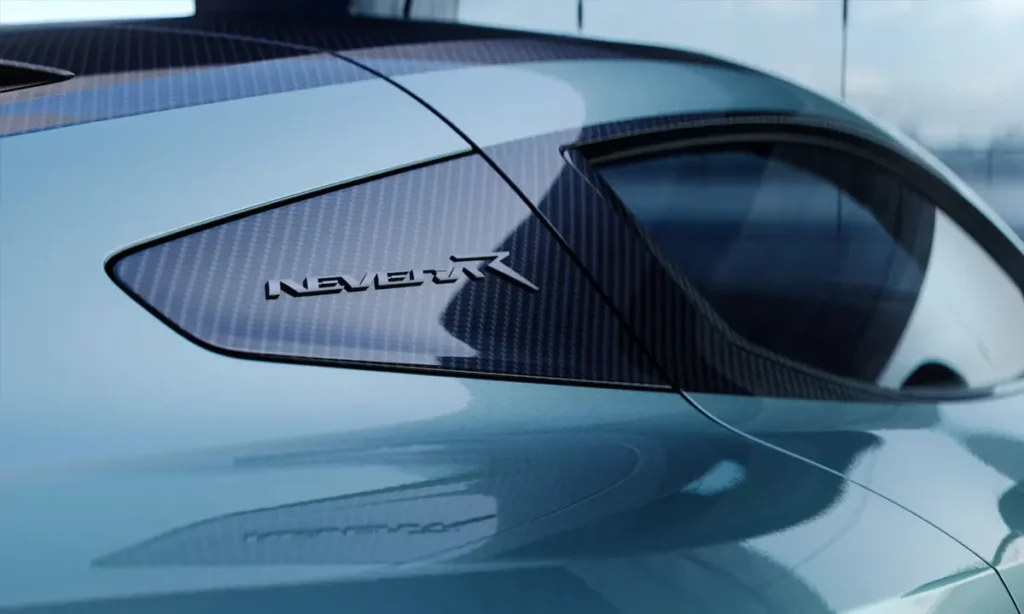
The side profile showcases sweeping sculptural lines that flow naturally toward the rear haunches, highlighting the car’s muscular silhouette. The deep side intakes channel air efficiently to the rear cooling systems, and the carbon-fiber body panels provide both visual drama and critical weight reduction.
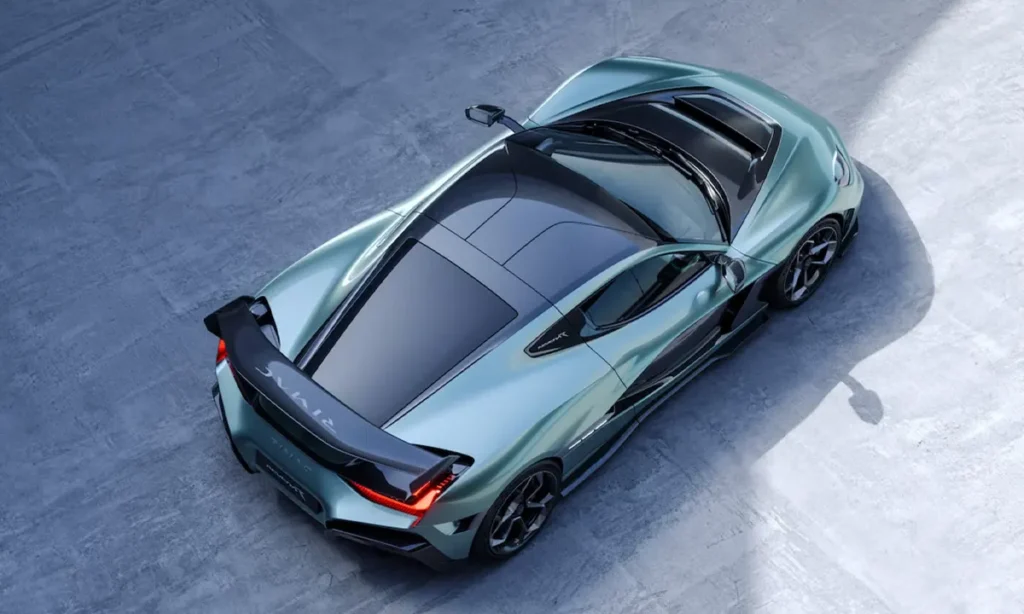
At the rear, the Nevera incorporates an active wing, a large diffuser and slim LED taillights that emphasize width and precision. The rear end functions as a major aerodynamic and cooling hub, ensuring that the electric powertrain remains thermally stable even under maximum load. Every curve and contour plays a role in shaping the Nevera’s aerodynamic authority.
The result is a hypercar that balances elegance with aerodynamic aggression. The Nevera’s exterior is not merely a visual statement—it is a functional masterpiece designed to extract maximum performance from every watt of its electric powertrain.
A Powertrain That Redefines What Electric Vehicles Can Do
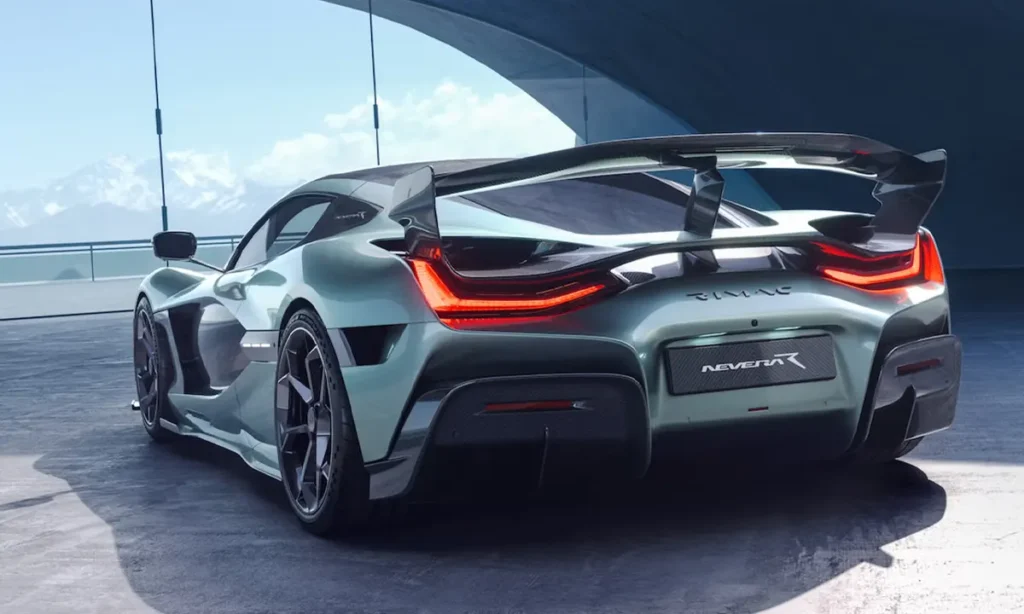
The Rimac Nevera is powered by one of the most advanced electric powertrains in the world. Four liquid-cooled permanent-magnet electric motors—one powering each wheel—deliver a combined output of 1,914 horsepower and 2,360 Nm of torque. This power delivery is instantaneous, controlled with millisecond precision by sophisticated torque-vectoring systems.
Its performance figures remain unmatched by most combustion hypercars. The Nevera achieves 0 to 100 km/h in just 1.9 seconds and 0 to 300 km/h in under 9 seconds. These staggering numbers speak not only to raw power but also to the efficiency of its all-electric architecture. Rimac’s proprietary All-Wheel Torque Vectoring system analyses the driver’s inputs, road conditions and vehicle dynamics, allocating power to each wheel independently for maximum traction and agility.
The Nevera’s 120 kWh lithium-manganese-nickel battery pack is centrally integrated into the carbon-fiber structure, contributing to exceptional rigidity and optimal weight distribution. This battery not only provides immense power but also supports high-performance driving for extended sessions without dramatic thermal degradation.
Unlike traditional hypercars, the Nevera’s powertrain has no gears, no lag and no mechanical complexity typical of combustion engines. Instead, it delivers a seamless, uninterrupted surge of acceleration that feels unreal and addictive. The Nevera proves that electric propulsion can achieve levels of performance that combustion engines can no longer rival.
A Breakthrough Carbon Monocoque and Engineering Architecture
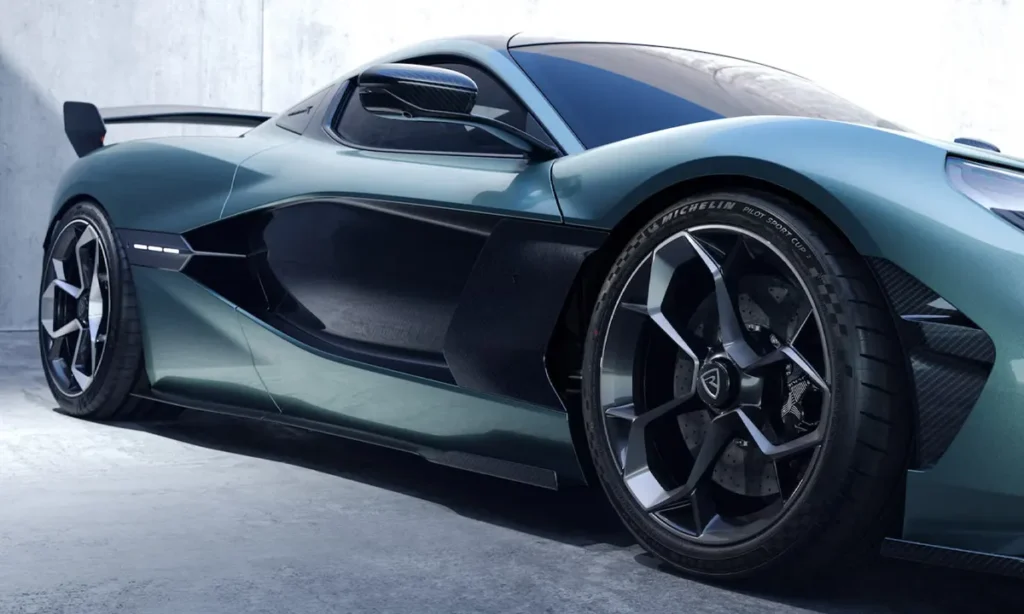
The Rimac Nevera is constructed around one of the strongest and most advanced carbon-fiber monocoque structures ever engineered for a production vehicle. Rimac designed the monocoque, battery housing and roof structure as a single integrated piece, achieving unprecedented torsional rigidity.
This ultra-rigid architecture enhances the Nevera’s handling precision, allowing its suspension system to operate with greater accuracy. The double-wishbone suspension, adaptive dampers and active ride control work together to provide remarkable composure at high speeds and outstanding stability through corners.
Lightweight construction plays a central role in the Nevera’s engineering philosophy. Extensive use of carbon fiber, composite materials and aluminum helps manage overall weight despite the complexity of its electric systems. The aerodynamic integration of the battery within the chassis lowers the car’s center of gravity, dramatically improving balance.
From its structural engineering to its thermal management systems, the Nevera stands as a technological marvel—one that pushes the boundaries of EV architecture and performance-focused design.
A Driver-Focused Interior Blending Luxury and Technology
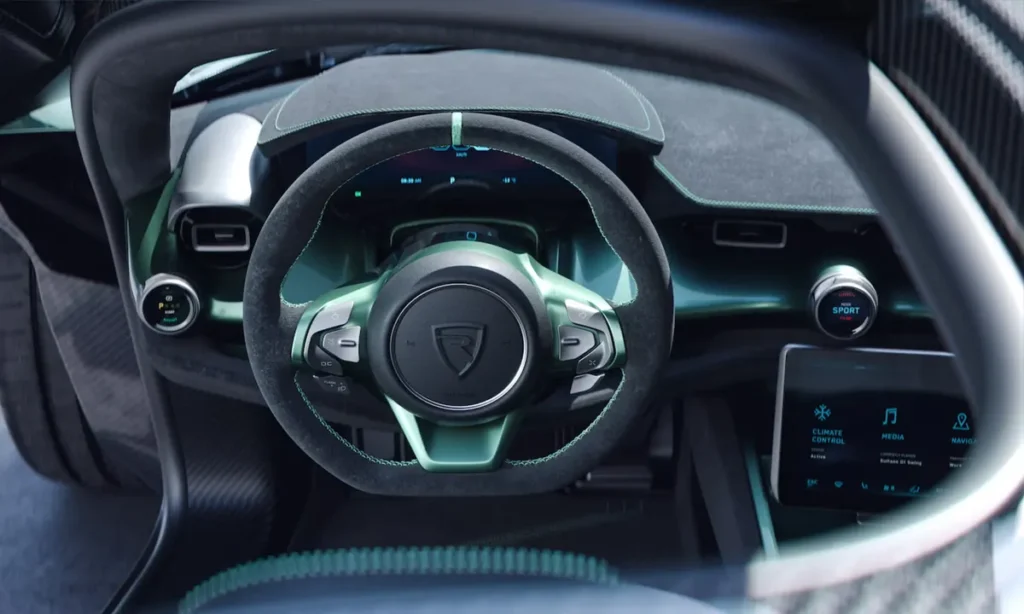
Inside the Rimac Nevera, the cabin reflects a balance of modern luxury and advanced digital technology. The cockpit is designed to immerse the driver in the car’s performance capabilities while providing comfort and refinement suitable for long-distance travel.
Premium materials such as carbon fiber, Alcantara and leather dominate the interior, giving it both a futuristic and artisanal feel. The layout is clean and driver-oriented, with three displays providing information for vehicle performance, navigation and controls.
The steering wheel integrates performance mode controls, allowing drivers to switch instantly between driving modes that tailor the car’s behavior to different conditions, from comfort cruising to all-out track performance. The digital instrument cluster is customizable, reflecting different performance metrics based on the selected mode.
Despite its extreme power and speed, the Nevera offers a surprisingly spacious and ergonomic cabin. The seats are supportive, the visibility is admirable for a hypercar, and the infotainment system provides modern amenities such as smartphone integration, telemetry data, and real-time performance analytics.
The interior of the Nevera feels like a fusion of aerospace engineering and luxury craftsmanship. It embodies Rimac’s unique philosophy: blending cutting-edge technology with driver-focused design.
Handling, Track Performance and Driving Dynamics
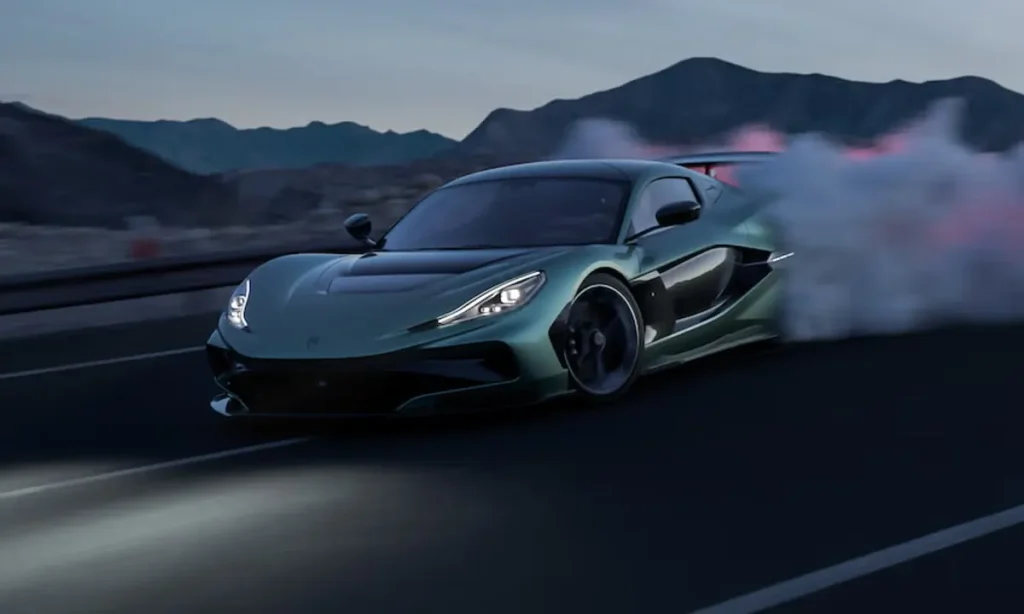
The Rimac Nevera is engineered not only for straight-line speed but also for dynamic excellence. Its torque-vectoring system gives it extraordinary agility despite its weight, enabling the car to carve corners with precision.
The adjustable suspension and adaptive damping systems create a platform capable of handling both smooth road cruising and aggressive track sessions. Drivers can fine-tune various aspects of the car’s behavior, including regenerative braking strength, steering sensitivity, accelerator response and traction control thresholds.
On the track, the Nevera demonstrates exceptional consistency. Its powerful cooling systems manage battery and motor temperatures efficiently, allowing extended high-performance driving without significant loss of power—an achievement rarely seen in electric hypercars.
The Nevera feels incredibly planted thanks to its all-wheel-drive torque distribution, low center of gravity and aerodynamic stability. Even at extreme speeds, the car remains composed, predictable and safe. It is engineered to give the driver confidence, even when exploring performance levels once considered impossible for electric vehicles.
Charging, Range and Real-World Usability
Despite being a hypercar, the Rimac Nevera is surprisingly usable for everyday driving. Its 120 kWh battery provides a WLTP-estimated range of around 550 kilometers, making it suitable for long highway journeys.
The Nevera supports ultra-fast charging up to 500 kW, allowing rapid charging that significantly reduces downtime. While such high-output chargers are not yet widespread, the car’s capability ensures future compatibility as global infrastructure expands.
Regenerative braking improves efficiency and offers a unique driving sensation, allowing drivers to adjust the intensity for their personal preference. Even with its massive performance potential, the Nevera remains practical, smooth and quiet in everyday conditions.
Rimac has engineered a hypercar that is not merely fast but also civilized, efficient and usable—attributes that redefine what a performance EV can be.
A Symbol of the Future of Hypercars
The Rimac Nevera is not only a technological achievement but also a symbol of the direction in which hypercar engineering is moving. It challenges long-held assumptions about electric vehicles and proves that electrification is not a limitation but an opportunity.
By delivering performance that rivals or surpasses the most iconic combustion hypercars, the Nevera solidifies Rimac’s reputation as a pioneer in EV engineering. It sets new benchmarks for speed, innovation and driver engagement.
The Nevera represents the future of automotive performance—one shaped by electrification, software-driven engineering, aerodynamic intelligence and sustainable innovation. It will be remembered as a landmark vehicle that changed the trajectory of the hypercar world.
Read: 2023 Lamborghini Huracán Sterrato Breaks Boundaries as an Off-Road Supercar
Rimac Nevera – Specifications & Performance Chart
| Category | Specification |
| Powertrain | Quad Permanent-Magnet Electric Motors |
| Total Power | 1,914 hp |
| Total Torque | 2,360 Nm |
| Battery Capacity | 120 kWh Lithium-Manganese-Nickel Pack |
| 0–100 km/h | 1.9 seconds |
| 0–300 km/h | Under 9 seconds |
| Top Speed | 412 km/h (limited) |
| Drive Type | All-Wheel Drive with Torque Vectoring |
| Charging Capability | Up to 500 kW DC Fast Charging |
| Range | Approx. 550 km (WLTP) |
| Chassis | Carbon-Fiber Monocoque with Integrated Battery |
| Suspension | Adaptive Dampers with Double Wishbone Design |
| Body Material | Carbon Fiber and Composite Construction |
| Brakes | Carbon-Ceramic Braking System |
| Interior | Carbon Fiber, Alcantara, Digital Displays |
| Seating | Two-Seat Hypercar Layout |
| Aerodynamics | Active Aero with Adjustable Rear Wing and Flaps |