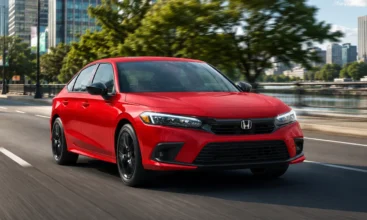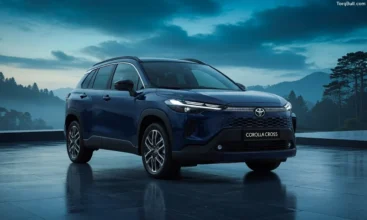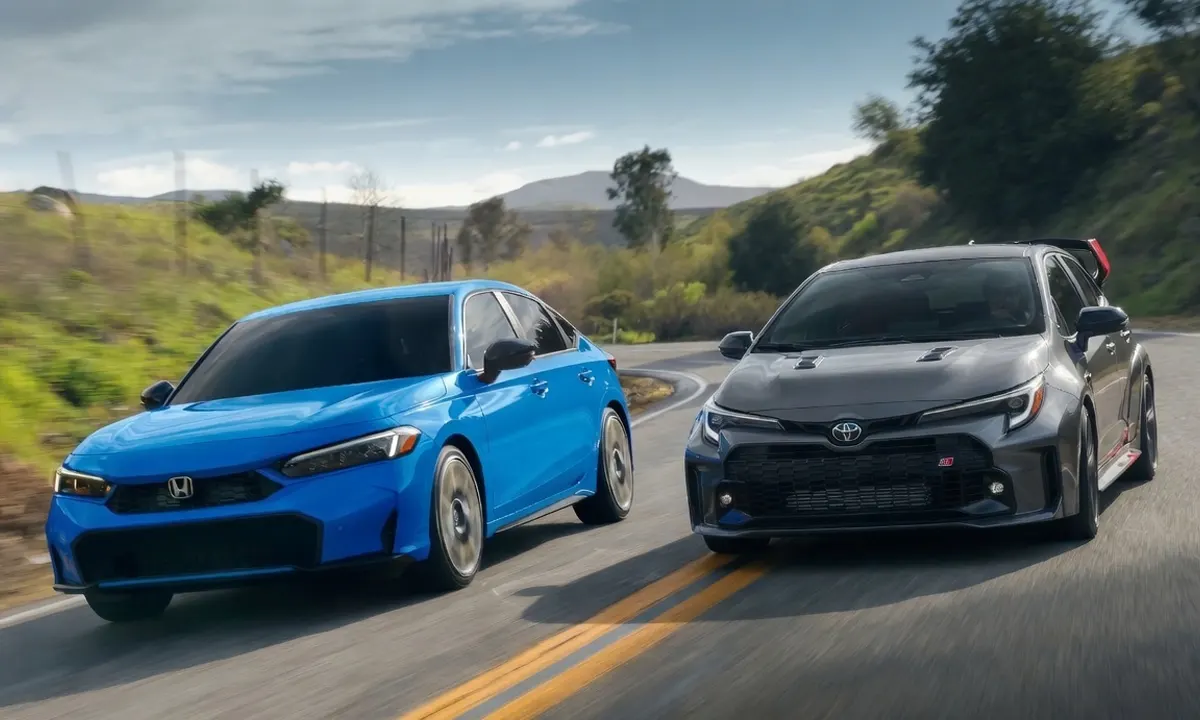
- The 2026 Toyota Corolla starts at $22,925, undercutting the Honda Civic by nearly $2,000 and offering available AWD.
- The Honda Civic provides more rear-seat space, stronger safety ratings and a 200-horsepower hybrid powertrain with up to 49 MPG.
- Choose the Corolla for value and AWD capability, or the Civic for performance, efficiency and a more engaging driving experience.
The Honda Civic versus Toyota Corolla is the compact sedan comparison that has defined the affordable car segment for decades — and in 2026, it remains one of the most genuinely contested buyer decisions in the entire American car market. Both vehicles earn Excellent 4.5 out of 5 reliability ratings. Both offer gas and hybrid powertrains. Both sell in enormous volumes year after year because both are genuinely good cars. The professional automotive community is divided: one extended evaluation concluded the Civic consistently justifies its higher prices with significantly more driving fun and a much nicer interior, while another analysis noted that the Corolla prioritises affordability and optional AWD as specific competitive advantages the Civic cannot offer. This guide resolves the comparison with the specificity that each buyer profile requires.
Price: Corolla’s Most Immediate Advantage
The 2026 Toyota Corolla starts at $22,925 for the LE trim — approximately $1,770 less than the Honda Civic LX’s $24,695 starting price. Nearly across every equivalently equipped configuration, the Corolla is less expensive than the comparable Civic, with the sole exception occurring at the high performance GR Corolla which can reach the Civic Type R’s territory in top specification.
This entry price gap is the Corolla’s most immediately compelling advantage for buyers whose primary criterion is acquiring reliable, efficient transportation at the lowest possible purchase price. The lower starting price also affects the monthly payment at equivalent financing terms and the insurance premium in markets where the vehicle’s value drives the premium calculation.
For buyers who specifically want the most affordable compact sedan available from a reliable manufacturer, the Corolla’s consistent price advantage across all non performance configurations makes it the clearer financial choice. The fuel economy difference between equivalently priced configurations is marginal — the Corolla is slightly more fuel efficient in some specific non hybrid comparisons, but the margin is very slim rather than transformative.
Read: Honda Civic Engine Performance. Every Powertrain Tested and Compared
AWD Availability: The Corolla’s Most Decisive Technical Advantage
The 2026 Toyota Corolla offers optional all wheel drive across multiple trim levels — a capability the Honda Civic does not provide in any configuration at any price. No Civic trim, from base LX through Sport Touring Hybrid, offers AWD. Front wheel drive is the sole drivetrain available across the entire Civic lineup.
For buyers in northern states, mountain regions, the Pacific Northwest and any area where winter precipitation, ice and slippery road conditions are regular occurrences rather than occasional events, AWD provides a specific and meaningful safety and traction advantage that the Civic fundamentally cannot offer. The Corolla SE AWD and XSE AWD configurations provide this capability at prices where the Civic has no equivalent to offer — making the Corolla the only choice for compact sedan buyers who specifically require AWD in a vehicle within this price range.
The Corolla AWD system adds meaningful all weather confidence for daily commuting in challenging climates — the automatic torque distribution that responds to wheel slip improving traction on snow, wet roads and icy surfaces in ways that front wheel drive with stability control cannot fully replicate. For this specific buyer profile, the AWD availability is not a minor footnote in the comparison but the decisive factor that settles the choice before any other specification is considered.
Interior Space: Civic’s Clear Advantage for Rear Passengers
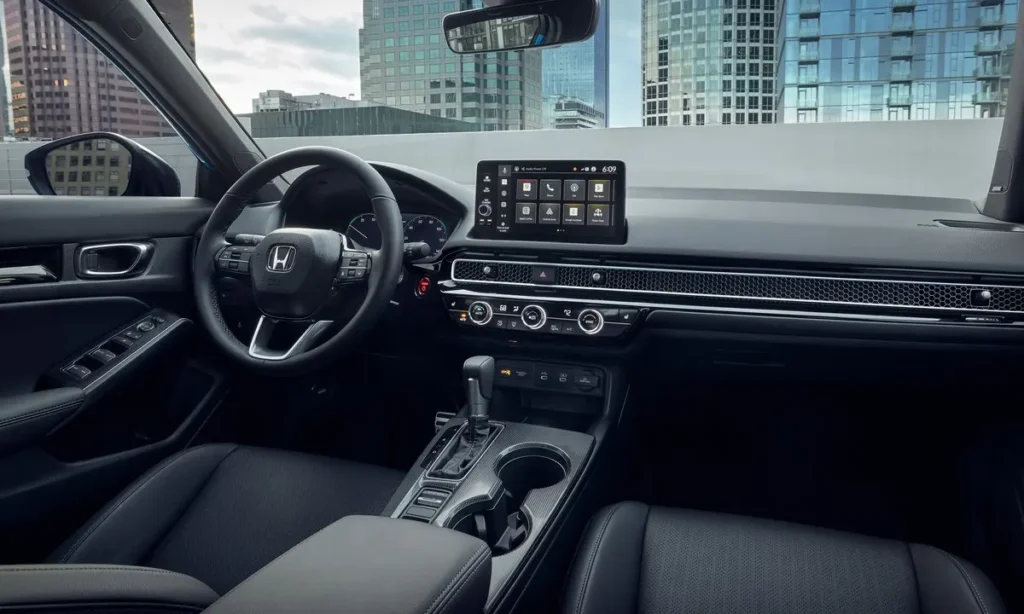
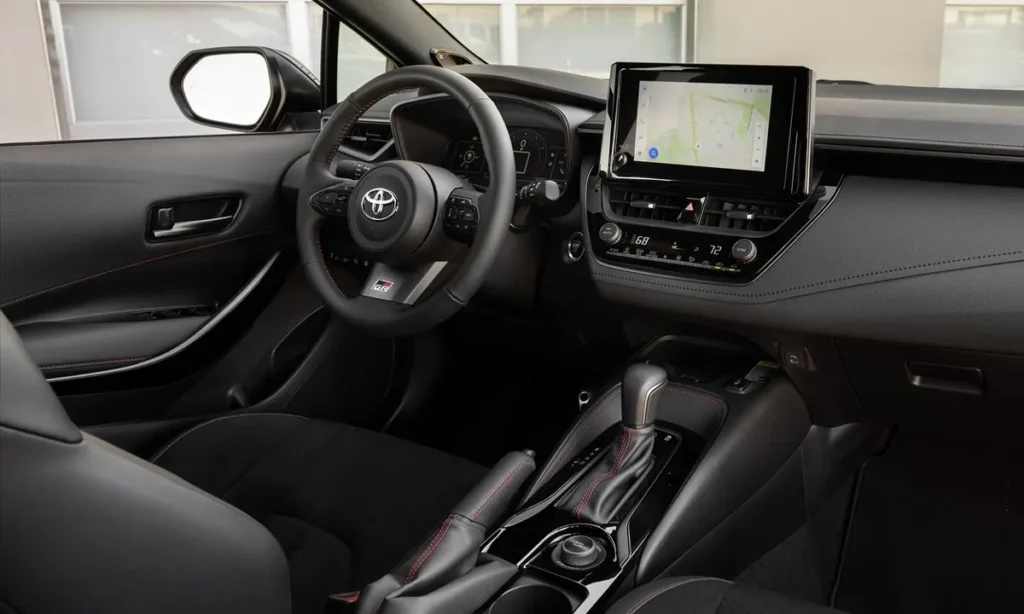
The 2026 Honda Civic is physically larger than the Toyota Corolla — longer, slightly wider and providing more interior passenger volume as a direct result. The Civic provides 2.6 more inches of rear seat legroom than the Corolla — a difference that determines whether an adult in the back seat is comfortable or cramped across a moderate distance trip.
Total passenger volume further confirms the Civic’s interior packaging advantage: the Civic provides approximately 99.4 cubic feet of passenger volume against the Corolla’s 88.6 cubic feet — 10.8 additional cubic feet that translates to a noticeably more spacious feeling interior for everyone who sits in the vehicle, not just the front row occupants. Cargo space in the trunk follows the same pattern, with the Civic providing slightly more trunk volume than the Corolla.
For families who regularly carry adult passengers in the back seat, for tall drivers who find compact cars cramped, and for buyers who prioritise interior spaciousness as a daily quality metric, the Civic’s size advantage is a consistent and meaningful daily ownership benefit that the Corolla’s lower price does not neutralise.
Read: Honda Civic Worth Buying in 2026? Does Honda Still Lead the Segment?
Safety Ratings: Civic’s Current Advantage
The 2026 Honda Civic Hatchback earned an IIHS Top Safety Pick Plus designation — the Insurance Institute for Highway Safety’s highest safety honour. The Civic sedan earned the slightly lower Top Safety Pick designation. The 2026 Toyota Corolla does not hold IIHS safety award designations for the 2026 model year — a distinction that reflects the IIHS’s stringent and evolving test criteria rather than an inherently unsafe vehicle, but that represents a measurable safety credentials gap at the time of comparison.
JD Power quality and reliability ratings place the Civic at 84 out of 100 and the Corolla at 81 out of 100 for the 2026 model year — both in the Great category but with the Civic holding a 3 point advantage that reflects its stronger current generation quality assessment. Both vehicles earn RepairPal Excellent ratings of 4.5 out of 5 — confirming that long term reliability confidence is broadly equal between these two competitors with decades of combined production history supporting both assessments.
Hybrid Performance: Civic’s Most Dramatic Competitive Advantage
The 2026 Honda Civic Hybrid produces 200 combined horsepower from its two motor hybrid system at 49 MPG combined — a performance and efficiency combination that the Toyota Corolla Hybrid cannot match in either dimension simultaneously.
The Corolla Hybrid achieves exceptional efficiency — 50 MPG city and 44 MPG highway for certain configurations — but produces approximately 134 combined horsepower, substantially less than the Civic Hybrid’s 200 horsepower. The Corolla Hybrid’s efficiency advantage in city driving is real, but its performance deficit relative to the Civic Hybrid is equally real and equally measurable. Professional evaluation describes the Civic Hybrid’s combination as delivering better performance and efficiency than its non hybrid sibling — confirming that the two motor system produces a genuinely engaging daily driving experience alongside its efficiency credentials.
For buyers choosing between the two vehicles specifically based on the hybrid powertrain, the decision depends on whether the priority is maximum city fuel economy — where the Corolla Hybrid wins on the EPA figure — or maximum combined performance and efficiency — where the Civic Hybrid’s 200 horsepower at 49 MPG combined produces a package the Corolla Hybrid cannot replicate.
Read: Hyundai Elantra vs Toyota Corolla: Which Compact Sedan Is the Better Buy In 2026?
Honda Civic vs Toyota Corolla 2026 — Complete Comparison Chart
| Category | Honda Civic (2026) | Toyota Corolla (2026) | Winner |
| Starting Price | $24,695 (LX) | $22,925 (LE) | Corolla ($1,770 less) |
| Rear Legroom | More (2.6 inches more than Corolla) | Less | Civic |
| Total Passenger Volume | 99.4 cu ft | 88.6 cu ft | Civic |
| AWD Availability | Not available | Yes (optional) | Corolla |
| Gas Engine Power (base) | 150 hp, 133 lb ft | 169 hp, 151 lb ft | Corolla |
| Hybrid Horsepower | 200 hp combined | 134 hp combined | Civic |
| Hybrid Combined MPG | 49 MPG | 50 MPG city (some configs) | Near tie |
| IIHS Safety Rating (2026) | Top Safety Pick Plus (hatch) | No current designation | Civic |
| JD Power Quality Rating | 84 out of 100 | 81 out of 100 | Civic |
| RepairPal Reliability | 4.5 out of 5 | 4.5 out of 5 | Tie |
| Powertrain Warranty | 5 yr, 60,000 mi | 5 yr, 60,000 mi | Tie |
| Driving Enjoyment | Higher rated by evaluators | More sedate character | Civic |
| Interior Material Quality | Better materials per evaluators | Functional quality | Civic |
| Performance Variants | Si, Type R | GR Corolla, FX | Depends on preference |
The Honest Verdict: Which Should You Buy?
The Toyota Corolla is the better choice for buyers who prioritise the lowest purchase price, who live in winter weather states where the optional AWD is a meaningful safety priority and who specifically value Toyota’s longest established reliability heritage in a compact sedan format. The Corolla’s lower entry price, AWD availability and consistent reliability record make it the right choice for value focused buyers whose primary requirement is affordable, dependable transportation rather than driving engagement or maximum interior space.
The Honda Civic is the better choice for buyers who carry adult rear passengers regularly and need the 2.6 additional inches of rear legroom, who want the Hybrid’s 200 horsepower alongside 49 MPG efficiency rather than having to choose between one and the other, who prioritise the highest available IIHS safety rating and who value a more engaging driving character that professional evaluators consistently describe as significantly more fun than the Corolla. One evaluator’s assessment was direct: it consistently justifies its higher prices with significantly more driving fun and a much nicer interior. Another who personally chose a hatchback describes the Civic as driving much better than the Corolla.
The price difference between these vehicles — approximately $1,770 at entry level — is the number that most clearly defines the buyer who should choose each vehicle. A buyer for whom $1,770 across a five year ownership period is meaningfully important is the Corolla buyer. A buyer who plans to keep the vehicle for seven or more years, values interior space and driving quality and finds the Civic’s feature advantage worth its modest premium is the Civic buyer.