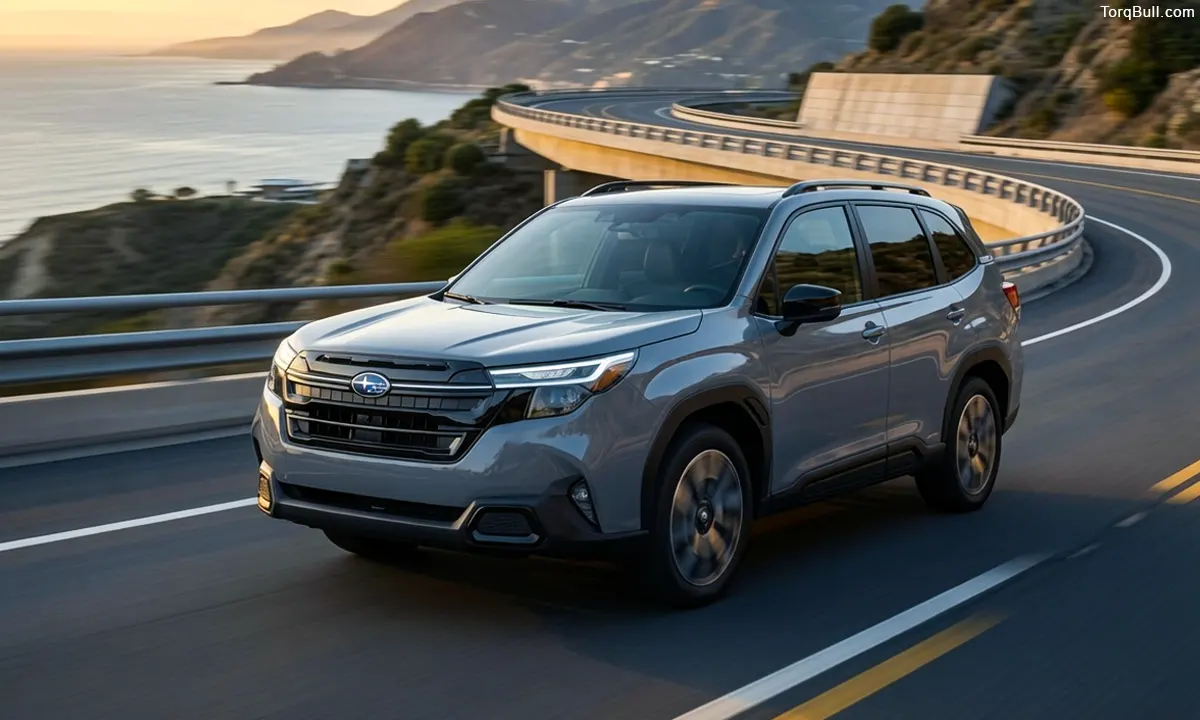
- The 2026 Subaru Forester gas model delivers up to 26 MPG city and 33 MPG highway with standard AWD.
- Real-world owner data shows the Forester averaging about 28.3 MPG in everyday driving.
- The new 2026 Forester Hybrid achieves 35 MPG combined, offering a significant efficiency improvement over the standard gas model.
The Subaru Forester’s fuel economy story in 2026 is the most significant in the nameplate’s production history — because the sixth-generation Forester introduces a hybrid powertrain for the first time, creating two distinct efficiency profiles within the same model family and establishing the Forester as a more serious contender in the efficiency conversation that has previously been dominated by Toyota and Honda hybrid alternatives. The gas Forester’s 29 MPG combined with standard all-wheel drive is already competitive within the compact crossover segment — a meaningful achievement given that the all-wheel drive that comes standard on every Forester typically costs competing buyers an additional $1,500 and a 2 to 3 MPG combined penalty versus their FWD base configuration. The Forester Hybrid’s 35 MPG combined extends this advantage further while maintaining the standard all-wheel drive that every Forester includes from the base trim. This complete guide provides every real-world fuel economy figure available — from the EPA estimates through the owner-tracked fleet data that represents 1.1 million miles of actual Forester driving.
The Gas Forester: EPA Estimates and Real-World Tracking Data
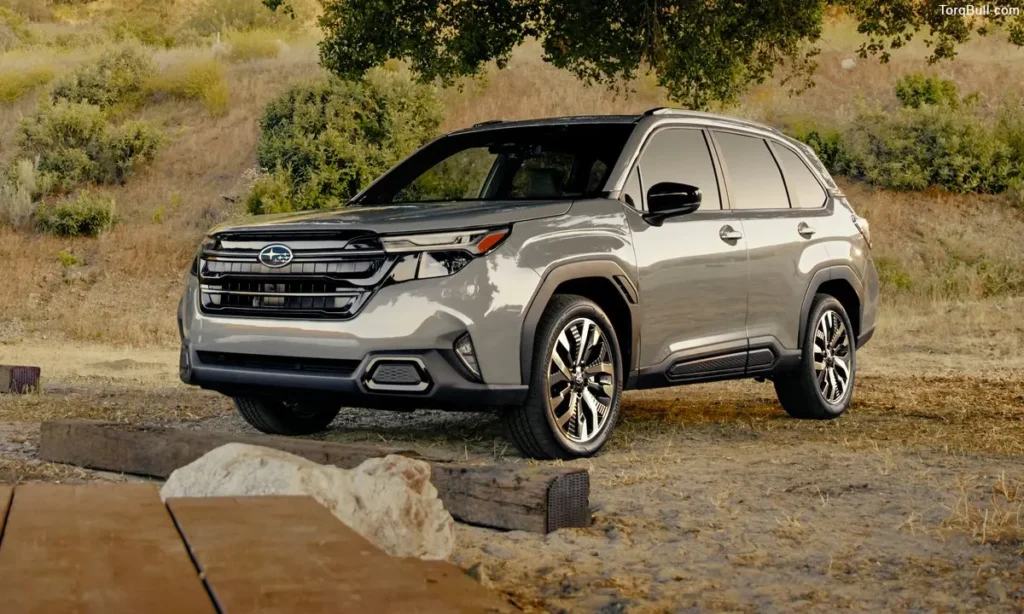
The 2026 Subaru Forester with the standard 2.5-litre boxer four-cylinder engine achieves EPA-estimated fuel economy of 26 MPG city, 33 MPG highway and 29 MPG combined across most trim configurations. These figures apply to the standard all-wheel drive configuration that comes standard on every Forester — making the 29 MPG combined result directly comparable to FWD-only EPA figures from competing vehicles that require all-wheel drive as a paid option at equivalent efficiency.
The 33 MPG highway figure represents the Forester’s most consistent real-world achievement — the EPA highway estimate that most owners approach when maintaining moderate highway speeds in the 60 to 70 MPH range with cruise control engaged. Subaru’s own marketing positions this as excellent gas mileage that the Toyota RAV4, Honda CR-V and Hyundai Tucson cannot match with standard capability — referencing the standard AWD inclusion that makes the Forester’s efficiency result all-wheel-drive-inclusive rather than requiring the FWD-only baseline that competitors use for their headline efficiency claims.
The most comprehensive real-world fuel economy data available for the current Forester comes from owner-submitted fuel tracking across a large fleet sample. The 2025 Forester in fleet tracking across 156 vehicles and 1.1 million miles produces an average real-world result of 28.3 MPG — within 0.7 MPG of the 29 MPG EPA combined estimate and representing one of the more accurate EPA-to-real-world correlations available in the compact crossover segment. This 28.3 MPG real-world average confirms that the Forester’s EPA combined estimate is achievable rather than optimistic in typical owner driving conditions.
The 2024 Forester fleet tracking data — from 112 vehicles and 1.6 million miles across a full ownership cycle — produces an average of 25.6 MPG. This lower figure compared to the 2025 fleet average reflects both the larger sample’s inclusion of more diverse driving conditions and potentially different trim mix in the tracked fleet, rather than a meaningful real-world efficiency difference between the 2024 and 2025 models.
Read: Subaru Forester Long Term Ownership Review 2026. Why It Remains a Favorite Among SUV Buyers
The 2026 Forester Hybrid: The 35 MPG Combined Breakthrough
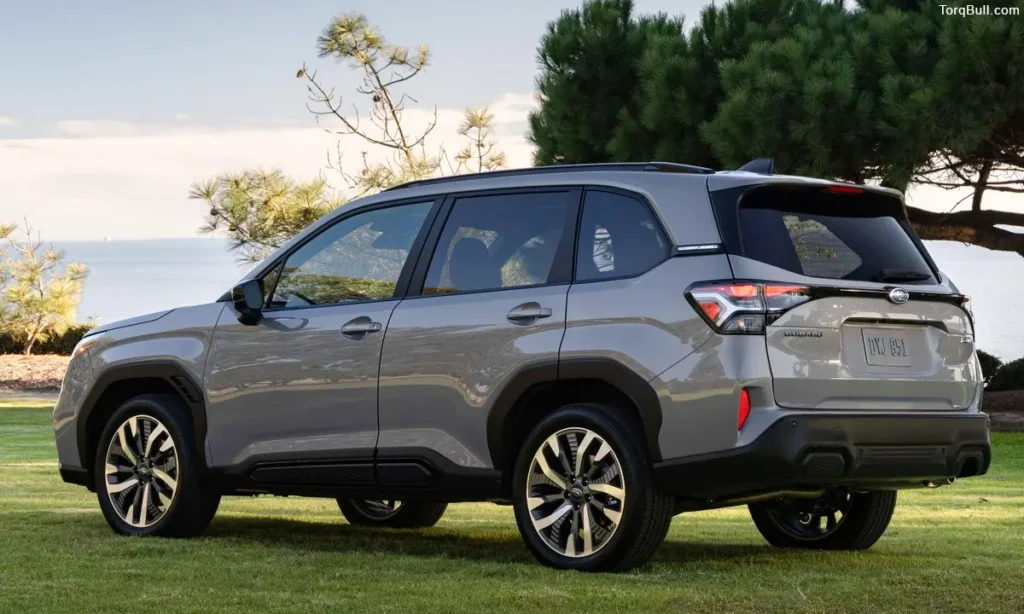
The 2026 Subaru Forester Hybrid introduces a hybrid powertrain that represents nearly a 40 percent improvement in fuel efficiency compared to the non-hybrid Forester — a transformation that significantly changes the Forester’s competitive positioning in the efficiency-focused compact crossover conversation.
The Forester Hybrid achieves EPA-estimated fuel economy of approximately 35 MPG city and 34 MPG highway for a 35 MPG combined rating — the most fuel-efficient Forester ever produced. The hybrid’s standard all-wheel drive configuration produces this 35 MPG combined figure with the same traction capability that every non-hybrid Forester provides — confirming that the efficiency improvement comes without any all-weather capability compromise.
The hybrid’s city fuel economy of 35 MPG compared to the gas Forester’s 26 MPG city represents a 9 MPG city improvement — the largest dimension of the efficiency gap between the two powertrains. This city advantage reflects the hybrid’s regenerative braking recovery that returns energy from every deceleration event in stop-and-go urban driving. For owners whose commute consists primarily of city and suburban driving with frequent traffic signals, the hybrid’s city advantage produces proportionally larger annual fuel savings than the combined efficiency comparison suggests for mixed-driving buyers.
The hybrid system pairs the gas Forester’s 2.5-litre boxer engine with an electric motor that produces 14 additional horsepower over the non-hybrid application — bringing combined output to 194 horsepower. The electric motor’s torque contribution at low speeds is specifically described as greatly improving around-town drivability with largely seamless hand-off between electric and gas power. This daily driving character improvement accompanies the efficiency improvement rather than representing a trade-off against it.
At 15,000 annual miles and $3.08 per gallon, the gas Forester at 29 MPG combined costs approximately $1,593 per year in fuel. The hybrid at 35 MPG combined costs approximately $1,320 per year — an annual saving of approximately $273. Over five years, the hybrid saves approximately $1,365 in fuel costs compared to the gas model. The Forester Hybrid starts at $36,180 — approximately $4,735 more than the gas Forester’s $31,445 starting price — producing a fuel-cost-only break-even point at approximately 17 years at average mileage. The hybrid’s value case is stronger for high-mileage commuters and improves substantially if fuel prices rise above the $3.08 per gallon national average calculation basis.
Real-World Driving Conditions: What Affects the Forester’s MPG
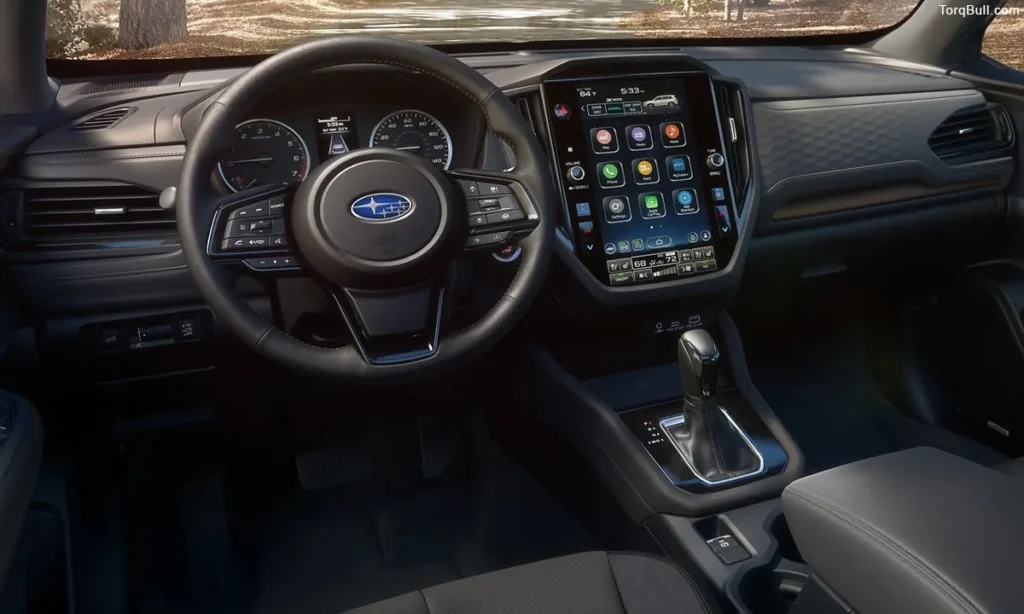
The Subaru Forester’s real-world fuel economy is influenced by several specific driving condition variables that owners can partially control and partially accommodate through understanding their impact.
Driving Style and Speed
Speed is the most significant single variable affecting the Forester’s real-world highway fuel economy — because aerodynamic drag increases as the square of speed, and the Forester’s tall-body, high-clearance design is more aerodynamically compromised than sleeker crossover alternatives. At 65 MPH with cruise control, most Forester owners achieve results approaching the 33 MPG highway EPA estimate. At 75 to 80 MPH, real-world highway economy typically falls to 28 to 30 MPG as aerodynamic drag penalty increases substantially. Cruise control use at moderate highway speeds is the most consistently recommended technique for owners who specifically want to approach the EPA highway estimate.
X-Mode and Off-Road Use
X-Mode engagement during off-road driving increases fuel consumption substantially relative to highway and suburban driving — as the system’s low-speed torque management and differential locking add drivetrain loading that increases fuel consumption per mile. Owners who regularly use X-Mode on off-road trails should expect real-world efficiency results well below the highway EPA estimate during these sessions.
Temperature Effects
Cold weather reduces the Forester’s real-world fuel economy through three mechanisms — the engine requiring extended warm-up time before reaching optimal operating temperature, cabin heating using engine heat rather than passive ventilation and tyres operating at lower inflation pressures in cold ambient temperatures before warming to their specified pressure. Winter fuel economy reductions of 10 to 15 percent below the summer results are typical for Forester owners in northern states during sustained cold weather operation.
Read: Subaru Forester Maintenance Cost. Is This Popular SUV Budget-Friendly?
2026 Subaru Forester Real World MPG — Complete Reference Chart
| Configuration | EPA City | EPA Highway | EPA Combined | Real-World Owner Average | Annual Fuel Cost (15K miles) | Notes |
| Gas Forester (most trims) | 26 MPG | 33 MPG | 29 MPG | 28.3 MPG (2025 fleet data) | approximately $1,593 | Standard AWD included |
| Gas Forester Wilderness | 26 MPG | 30 MPG | 28 MPG | Approximately 26 to 27 MPG | approximately $1,700 | All-terrain tyres reduce highway |
| Hybrid Forester (2026) | 35 MPG | 34 MPG | 35 MPG | Data accumulating | approximately $1,320 | First Forester hybrid |
| Hybrid vs Gas Annual Saving | 6 MPG combined | approximately $273 | At $3.08 per gallon, 15K miles | |||
| Toyota RAV4 Hybrid (comparison) | 41 MPG | 38 MPG | 39 MPG | Widely documented | approximately $1,185 | Significantly more efficient |
| Honda CR-V Hybrid (comparison) | 43 MPG | 36 MPG | 40 MPG | Widely documented | approximately $1,155 | More efficient with AWD |
Read: 2026 Subaru Forester Wilderness Review. Is This the Ultimate Adventure SUV?
The Honest Comparison: Where the Forester’s MPG Stands
The gas Forester’s 29 MPG combined with standard AWD is genuinely competitive against non-hybrid compact crossover alternatives that require AWD as a paid option — but it trails the Toyota RAV4 Hybrid’s 39 MPG combined and the Honda CR-V Hybrid’s 40 MPG combined by 10 MPG or more, confirming that the gas Forester operates in a different efficiency tier from the segment’s hybrid leaders.
The Forester Hybrid’s 35 MPG combined improves this comparison meaningfully — trailing the RAV4 Hybrid by 4 MPG combined and the CR-V Hybrid by 5 MPG combined rather than the 10 MPG gap the gas Forester faces. At this reduced gap, the Forester Hybrid’s specific combination of standard AWD capability, X-Mode off-road traction and the Subaru driving character becomes a more credible alternative to hybrid efficiency leaders for buyers who value these specific Forester attributes alongside improved efficiency.
The Subaru Forester’s real-world owner average of 28.3 MPG is the most practically useful planning figure for buyers choosing between the gas Forester and alternatives — an honest reflection of what 156 owners across 1.1 million real miles actually achieved rather than the idealised EPA test cycle conditions.