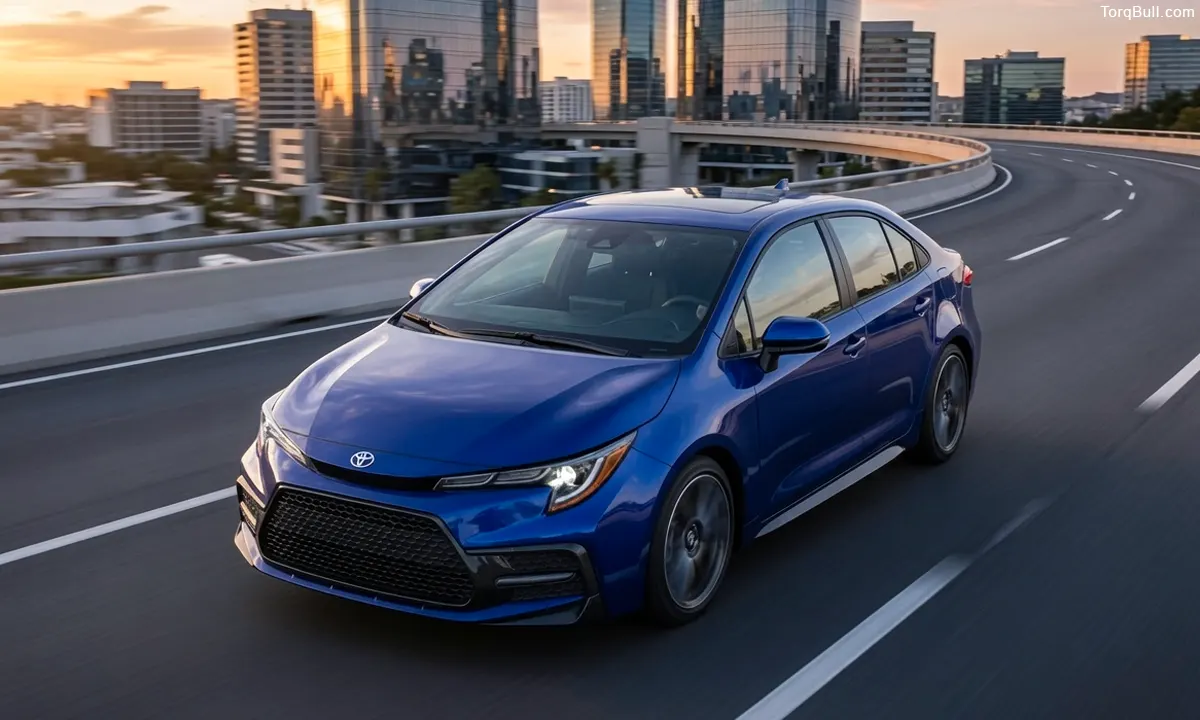
- The Toyota Corolla retains value exceptionally well, depreciating only about 33% over five years.
- A 2026 Corolla is projected to retain roughly $11,394 in value after five years, making it one of the strongest performers in the compact car segment.
- The 2024 Corolla stands out as a top used-car value, offering most of the vehicle’s useful life while costing significantly less than a new model.
The Toyota Corolla’s resale value story is one of the most consistently positive in the compact car segment — and among the most financially significant reasons that cost-conscious buyers choose the Corolla over competing compact alternatives at similar purchase prices. The Corolla does very well in holding its value, scoring in the top 20 percent for value retention at years five and seven across the broader vehicle market — and surprisingly outperforming its larger Camry sibling in resale value retention despite the Camry’s higher profile in the Toyota lineup. This complete guide covers the depreciation numbers, the best model years for used buyers, the year-by-year depreciation curve and the specific factors that explain why the Corolla holds its value more effectively than most competing compact cars.
The Five Year Depreciation Number: Two Perspectives
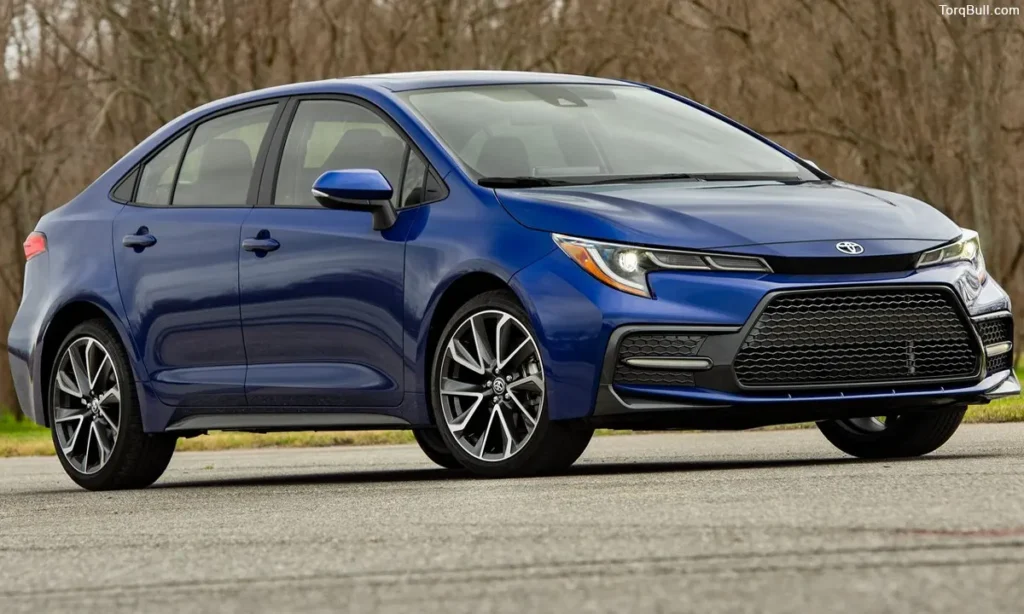
The Toyota Corolla’s five year depreciation is documented from two complementary datasets that each reflect a different aspect of the vehicle’s value retention.
The broader market analysis places five-year Corolla depreciation at 33 percent of original value — leaving a five-year residual of approximately $18,582 based on the typical used Corolla transaction in the broader market. This 33 percent retention rate positions the Corolla in the top 20 percent of all vehicles for five-year value retention — a competitive advantage that compounds into meaningful financial difference when comparing the true ownership cost of the Corolla against competing compact alternatives that depreciate faster from equivalent purchase prices.
The specific 2026 Corolla ownership cost data places five-year depreciation at $12,926 from a typically equipped purchase price — leaving a residual value of $11,394 after five years of typical ownership. The difference between this figure and the broader market’s $18,582 estimate reflects the specific purchase price assumption of each dataset: the $12,926 figure is calculated from a higher-trim, more expensive equipped Corolla while the $18,582 figure reflects a broader sample of Corolla transactions across multiple trim levels and equipment configurations.
Both datasets confirm the same fundamental depreciation reality: the Corolla’s value retention is genuinely strong by compact car standards, and buyers who purchase Corollas — new or used — benefit from the Toyota brand’s sustained demand in the used vehicle market that supports transaction prices above what competing compact alternatives command at equivalent age and mileage.
Read: Toyota Corolla LE vs SE. Is the Sportier Trim Worth The Extra Cost?
The Year by Year Depreciation Curve: Front-Loaded Losses and a Gradual Tail
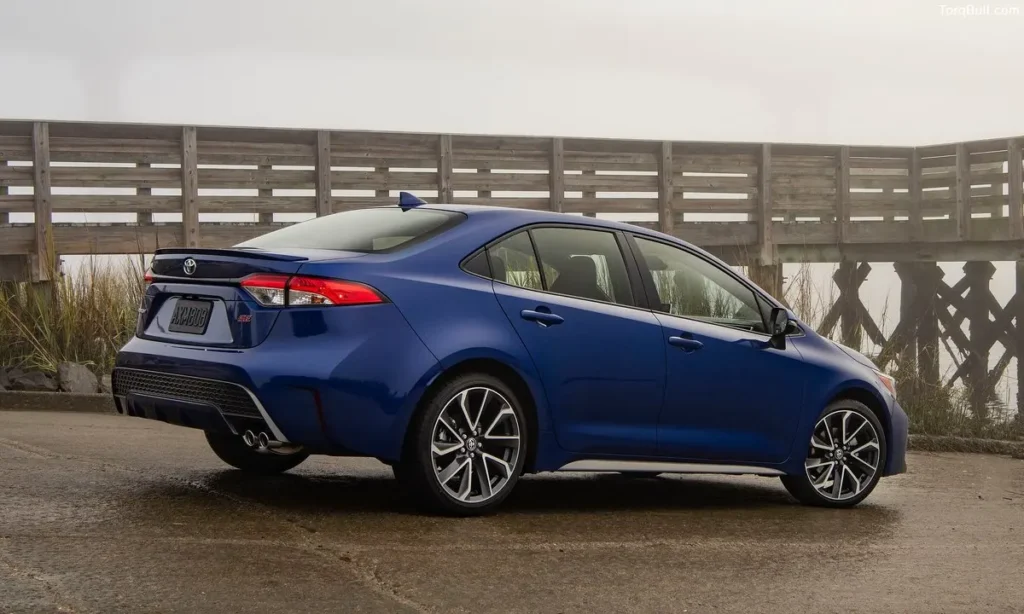
Understanding how the Corolla’s depreciation distributes across the five-year ownership period is more financially actionable than the five-year total alone — because the depreciation is heavily concentrated in the first two years when the vehicle transitions from new to used in the market’s valuation framework.
Year 1 produces the largest single-year depreciation loss — typically representing 15 to 20 percent of the original purchase price in the initial 12 months as the vehicle loses its new car premium and the buyer absorbs both the first-year mechanical depreciation and the market’s perception shift from showroom-fresh to used. For a Corolla purchased at $25,000, Year 1 depreciation of approximately $3,750 to $5,000 represents the highest single annual loss across the entire five-year ownership period.
Years 2 and 3 produce progressively smaller annual losses as the steepest new-to-used transition is complete and the vehicle enters the mature used car valuation range where the Corolla’s reliability reputation most actively supports its transaction price. Toyota’s documented reliability sustains demand for Corolla examples at two and three years of age because used buyers specifically seek reliable compact cars at this age and the Toyota brand’s track record is the primary factor that drives this demand.
Years 4 and 5 produce the smallest annual depreciation losses — typically under $2,000 per year — as the vehicle approaches the point where age and mileage are the primary valuation factors rather than the new-to-used premium loss that dominates the first two years.
The 2024 Corolla: The Best Used Value Available Right Now
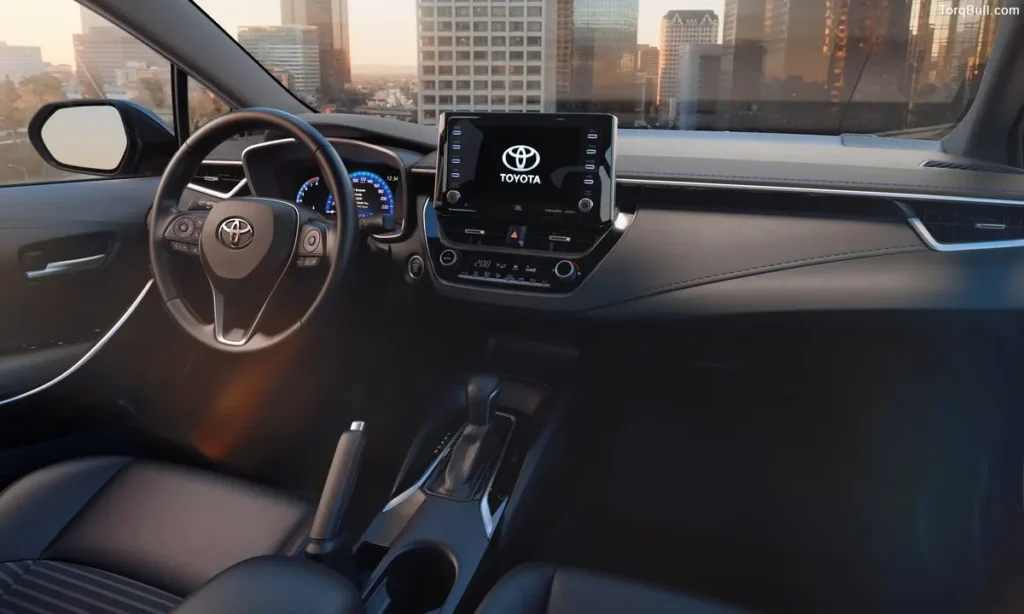
The Toyota Corolla’s used market value analysis specifically identifies the 2024 model year as the top pick for best used value — paying only 85 percent of the original new purchase price while retaining 92 percent of the vehicle’s useful life remaining. This near-new value proposition represents the steepest first-year depreciation absorption that the original buyer absorbed, leaving the used buyer to acquire 92 percent of useful life at 85 percent of new cost.
This value calculation — paying 85 cents for 92 cents of value — is the specific financial argument for purchasing the 2024 Corolla rather than either a new 2026 example or an older 2021 or 2022 example. The 2023 and 2025 model years are also identified as providing relatively strong used value, with slightly different price-to-remaining-life ratios that buyers can evaluate based on their specific budget and condition preferences.
For buyers whose primary financial criterion is maximising value per dollar spent — acquiring the most Corolla capability and remaining life for the least total investment — the 2024 used example provides the optimal balance of having absorbed the steepest first-year loss while retaining modern features, technology and the remaining powertrain warranty that provides financial protection against unexpected repairs.
Read: Toyota Corolla Cross Hybrid vs Gas. Which SUV Saves You More Money Over Time?
Why the Corolla Outperforms the Camry on Resale Value
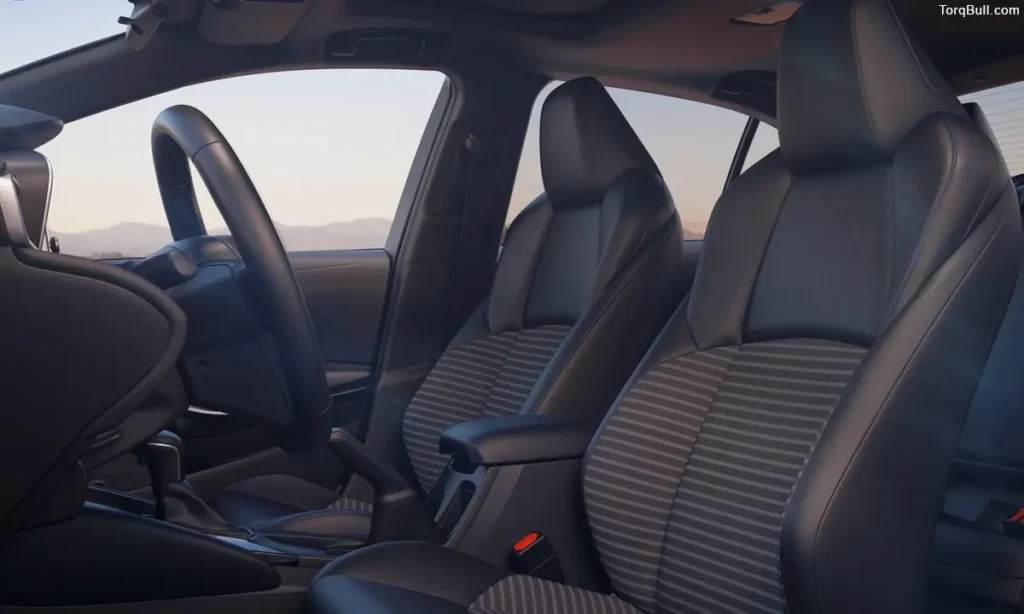
The Toyota Corolla’s resale value superiority over the Toyota Camry is counterintuitive to buyers who assume the larger, more expensive Camry would retain more value — and understanding why the Corolla outperforms is relevant to both the purchase decision and the ownership cost calculation.
The Corolla’s resale value advantage over the Camry reflects the specific dynamics of compact car demand versus midsize sedan demand in the used vehicle market. Compact cars are the most accessible used vehicle category for first-time buyers, budget-conscious commuters, new drivers and emerging-market buyers — the broadest and most price-resilient buyer population in the used car ecosystem. This broad demand base sustains Corolla transaction prices across a wider geographic and demographic buying pool than midsize sedan alternatives face.
The Camry’s midsize sedan positioning places it in competition with crossover and SUV alternatives in the used market — where buyers who could afford a used Camry may instead choose a used compact crossover — reducing the effective buyer population and creating more downward price pressure at the time of sale.
Toyota Corolla Five Year Resale Value — Complete Reference Chart
| Year of Ownership | Estimated Residual Value | Annual Depreciation | Cumulative Depreciation | Retention Rate |
| New purchase (2026) | $24,325 (typical equipped) | N/A | N/A | 100% |
| After Year 1 | approximately $20,000 to $21,000 | approximately $3,325 to $4,325 | approximately $3,325 to $4,325 | 82 to 86% |
| After Year 2 | approximately $18,500 to $19,500 | approximately $1,500 | approximately $4,825 to $5,825 | 76 to 80% |
| After Year 3 | approximately $17,000 to $18,000 | approximately $1,500 | approximately $6,325 to $7,325 | 70 to 74% |
| After Year 4 | approximately $15,500 to $16,500 | approximately $1,500 | approximately $7,825 to $8,825 | 64 to 68% |
| After Year 5 | approximately $11,394 to $18,582 | approximately $1,500 to $4,000 | approximately $12,926 to $18,582 | 47 to 67% |
| Best used value year | 2024 model | 85% of new, 92% life remaining |
Residual values reflect private party sale price range. Trade-in values typically run 10 to 20 percent lower. Values assume good condition at approximately 13,500 annual miles. The range reflects different trim levels and equipped configurations.
Read: Toyota Corolla Cross Reliability Review 2026. What Makes This SUV a Smart Buy?
Corolla Versus Competitors: The Resale Value Advantage in Financial Terms
The Toyota Corolla’s 33 percent five-year depreciation compares against competing compact sedans as follows in the most directly relevant comparisons. The Honda Civic’s five-year depreciation is broadly comparable to the Corolla’s — both benefit from Japanese manufacturer reliability reputations that sustain used market demand. The Hyundai Elantra typically depreciates faster than either Toyota or Honda alternative — reflecting the established perception gap in reliability confidence that affects used market transaction prices even when the actual reliability difference is modest.
The practical financial consequence of the Corolla’s top 20 percent depreciation positioning across all vehicles — not just its compact segment — is most clearly expressed over a five-year ownership period. A buyer who purchases a Corolla at $25,000 and sells after five years with $18,582 in residual value has absorbed a $6,418 depreciation loss at the market average retention rate. A competing compact car buyer who purchases at the same price but absorbs 45 percent five-year depreciation sells for approximately $13,750 — a depreciation loss of $11,250. The $4,832 difference in net depreciation loss across five years represents real money that the Corolla’s resale value advantage preserves in the seller’s pocket rather than surrendering to the used car market.