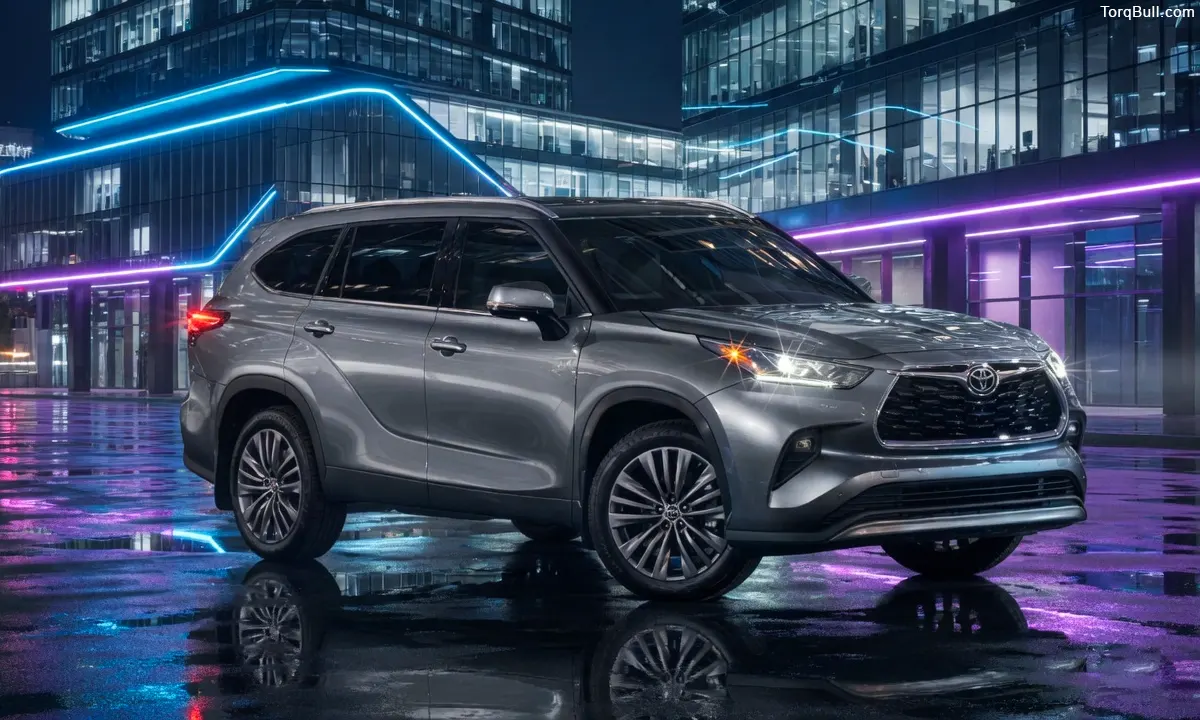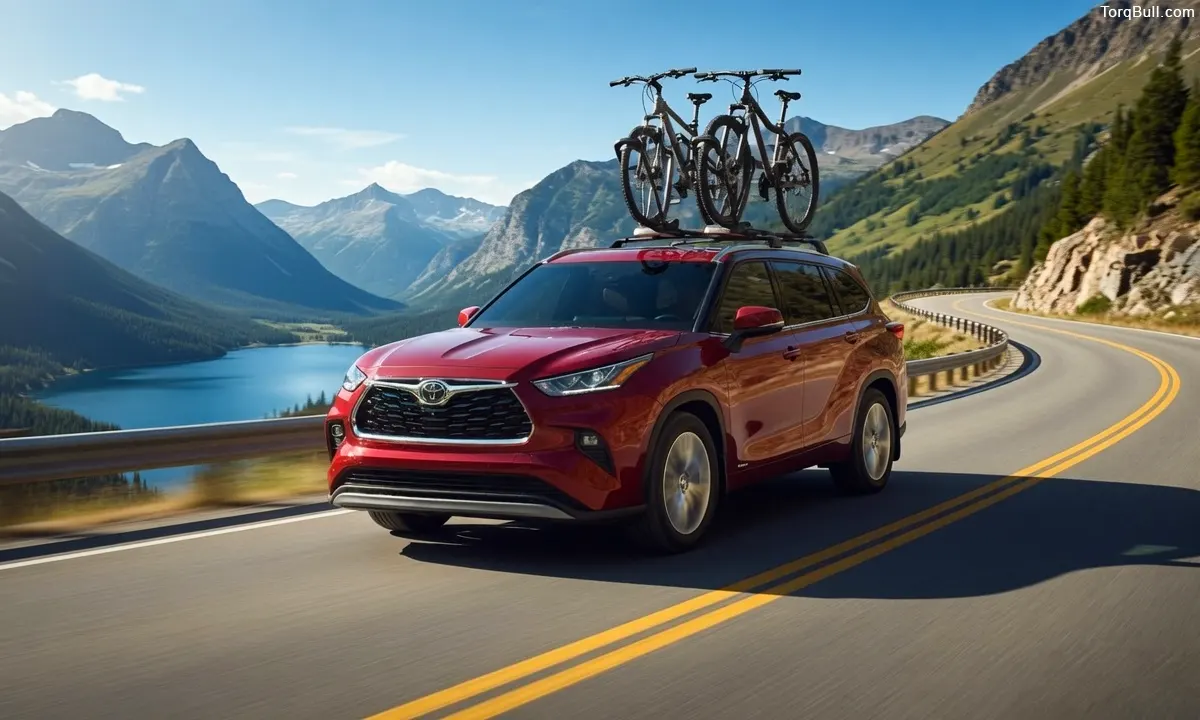
- The 2026 Toyota Highlander delivers excellent long-distance comfort, with supportive seats, a quiet cabin and minimal road or wind noise at highway speeds.
- Tri-zone climate control and a spacious interior make it well suited for family road trips and extended travel.
- The Highlander Hybrid combines approximately 35 MPG fuel economy with a driving range approaching 600 miles, making it one of the most practical three-row SUVs for long-distance use.
The 2026 Toyota Highlander enters the road trip conversation as the final model year of the gas-powered and hybrid Highlander before the nameplate transitions to all-electric for 2027. This context adds specific urgency for family buyers who are evaluating a last opportunity to purchase the Highlander they know, with the conventional powertrain refinement that multiple generations of engineering have delivered. For families whose primary vehicle evaluation involves road trip capability — long stretches of quiet highway miles, consistent fuel stops, passengers comfortable across multiple hours and the cargo space to carry everything the destination requires — the 2026 Highlander earns professional praise for its long-distance composure, its silence at highway speeds and the Hybrid’s genuinely impressive 600-mile cruising range that makes fuel stop planning far less intrusive than most three-row alternatives require. This complete road trip review covers every dimension families need to assess before committing.
Highway Ride Quality: The Highlander’s Road Trip Foundation
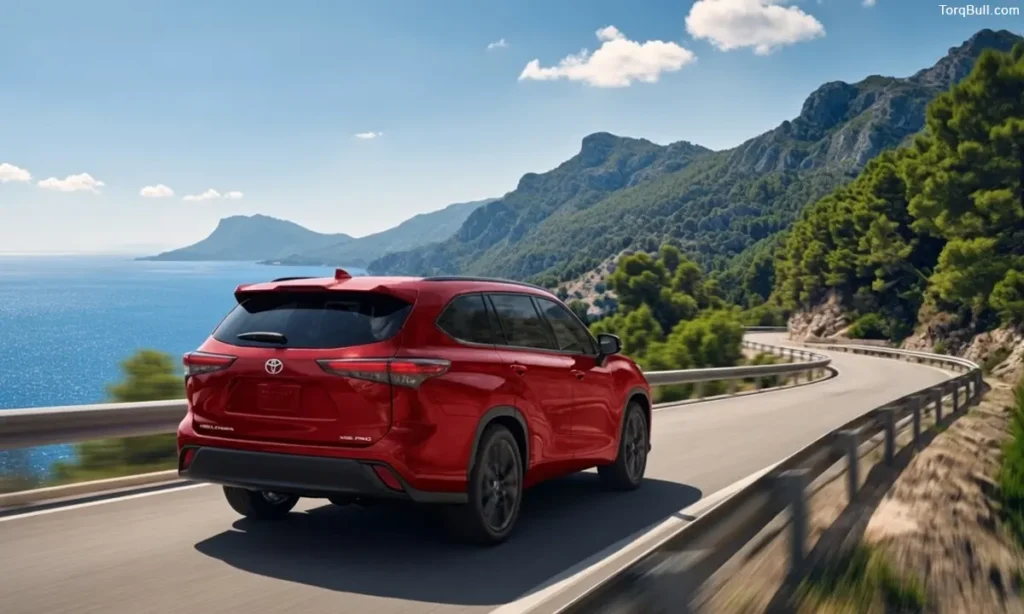
The 2026 Toyota Highlander’s ride quality on the highway is the foundational road trip characteristic — and professional extended testing confirms a specifically relevant finding for families planning long journeys: no vibrations, squeaks or wind noise to speak of, even at highway speeds.
This noise-free highway character is the specific comfort achievement that distinguishes a genuinely road-trip-capable vehicle from one that merely tolerates extended highway distances. A cabin free from wind noise, road vibrations and structural creaks at 70-plus MPH allows conversation to flow naturally, audio entertainment to be heard clearly at moderate volume and the accumulated fatigue that constant background noise produces to be significantly reduced across a multi-hour journey.
The suspension is characterised as more firm than plush, but proved capable of keeping occupants isolated from bumps in most road surface conditions — the balanced calibration that serves family road trips more effectively than either too-soft suspension (which creates float and instability at highway speeds) or too-firm suspension (which transmits every road irregularity to occupants). Families with children who sleep during highway drives specifically benefit from the Highlander’s smooth isolation character, which allows sleeping passengers to remain undisturbed across the highway miles that mark the productive core of any long trip.
Read: Is Toyota Highlander Hybrid Worth Buying? Truth About Ownership Costs and Benefits
Front Seat Comfort: The Driver’s Long-Distance Experience
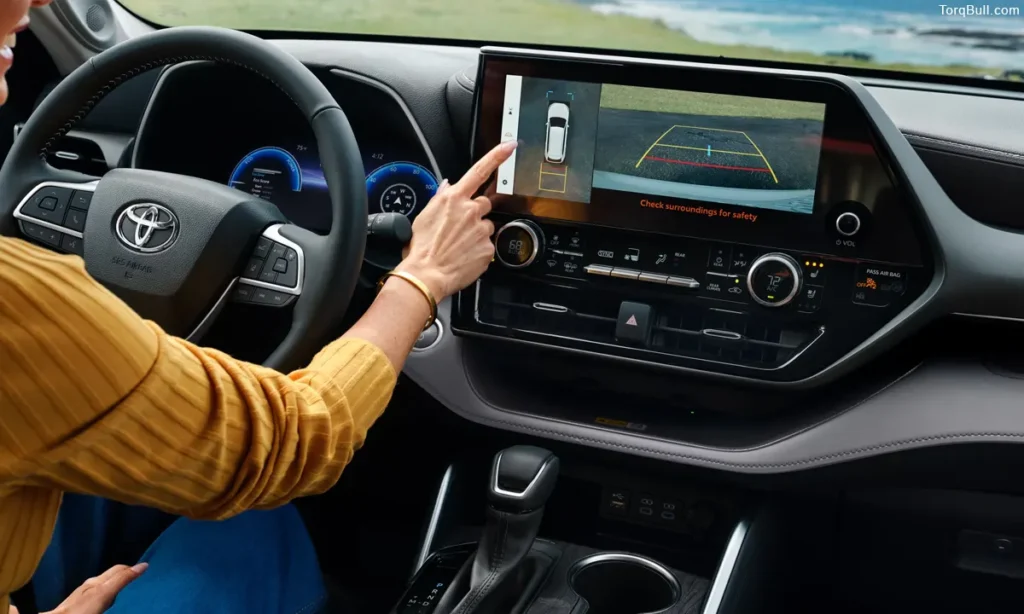
The front seats of the 2026 Toyota Highlander are comfortable even on long drives, with plenty of adjustments and long-lasting support — the professional characterisation that most directly validates the Highlander for road trip family use, because the driver’s front seat comfort across multiple hours of sustained highway driving determines whether the journey arrives at its destination refreshed or fatigued.
Plenty of adjustments means the driver can find an ergonomically appropriate position for their specific body dimensions, and long-lasting support means the cushioning and lumbar support maintain their comfort quality across the full journey rather than degrading within the first hour. These characteristics are not universal across the midsize three-row SUV segment — and the Highlander’s specific confirmation of them from extended professional testing represents meaningful differentiation.
Taller drivers should note that the telescoping steering wheel extension range may feel limiting on some examples — a specific ergonomic concern for drivers above approximately 6 feet 2 inches who may find the maximum extended position still slightly shorter than their preferred steering wheel distance. The plastic centre console also limits the driver’s right knee space in a way that some road trip drivers find uncomfortable across extended sessions — a design characteristic worth noting before committing to a multi-hour driving day.
Passenger Comfort Across All Three Rows: The Honest Road Trip Assessment
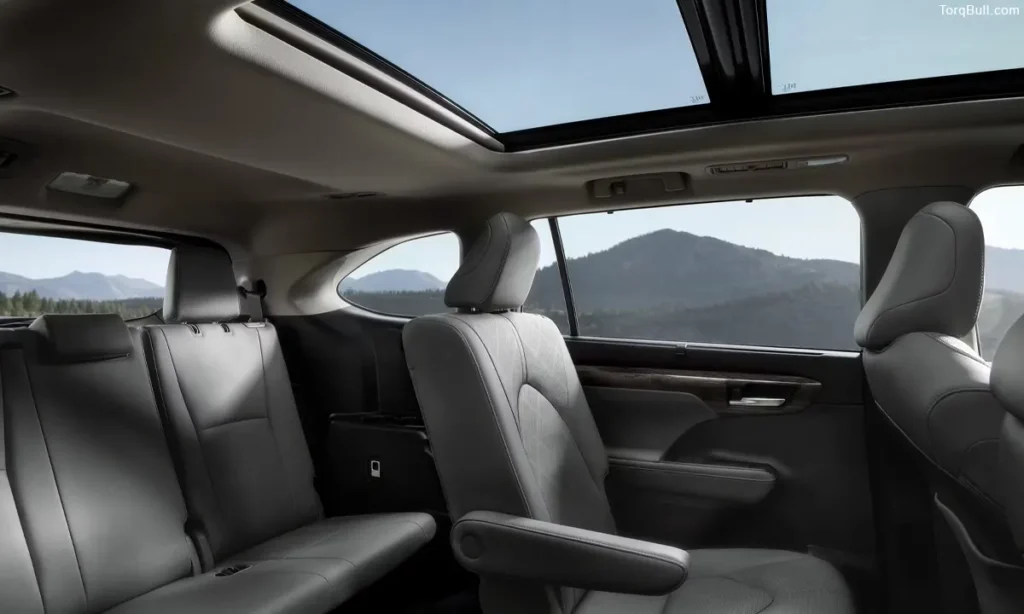
The second-row captain’s chairs available on XLE and above provide nearly the same comfort level as the front seats, making the Highlander’s second row genuinely adult-friendly for the multi-hour road trip distances that family travel produces. The captain’s chairs’ individual comfort and the space they provide for each passenger to shift position, stretch legs and settle into personal comfort preferences is the primary reason professional evaluation confirms both first and second-row comfort for long drives.
The third row is one of the Highlander’s greatest liabilities on road trips — thin padding, a narrow space and a cushion mounted low to the floor make the third row ill-suited for adults on extended journeys. Families whose third-row passengers are children can use this row confidently for typical family trip distances. Families who regularly transport adults in the third row across extended distances will find the Highlander’s limitation here specifically relevant — and should evaluate the Grand Highlander, which addresses this limitation with its significantly roomier third-row accommodation providing 33.5 inches of legroom against the standard Highlander’s 28 inches.
Read: Best Toyota Highlander Trim to Buy 2026. Finding the Perfect SUV for Your Family
Fuel Economy on the Road: Where the Hybrid Makes Its Case
The 2026 Toyota Highlander Hybrid achieves 35 MPG overall in professional road testing — the figure that most compellingly separates the Highlander Hybrid from the gas model for road trip buyers who plan frequent long-distance travel.
At 35 MPG combined with a full fuel tank, the Highlander Hybrid’s cruising range approaches 600 miles between fuel stops — a cruising range that fundamentally changes the road trip experience by reducing the frequency of fuel stops that interrupt journey flow. A family that previously made three to four fuel stops across a 900-mile road trip in a 24-MPG gas alternative can complete the same journey in two stops or fewer in the Hybrid, saving approximately 30 to 45 minutes of total journey time across a typical long-distance family trip.
For context, the gas Highlander’s fuel economy is the area that receives the most nuanced professional assessment: the 265-horsepower turbocharged 2.4-litre four-cylinder provides plenty of power for highway merging and passing, but the turbo engine sounds rougher under load than the previous generation’s V6 and some wind noise on the highway detracts from overall refinement. The Hybrid avoids this specific criticism — the hybrid system’s electric motor contribution smooths power delivery and reduces the engine’s workload, producing a quieter and more refined highway cruising character than the gas model’s turbo-alone configuration.
Tri-Zone Climate Control: Road Trip Temperature Management
The standard tri-zone automatic climate control system provides ample heating and cooling capacity across all three cabin zones — allowing the driver, front passenger and rear passengers to each manage their temperature preferences independently during long trips where the afternoon sun angle, passenger cold sensitivity and children’s temperature comfort preferences all diverge from a single-zone setting.
The climate controls are easy to use, a specific professional confirmation that matters for road trips where the driver periodically needs to adjust climate settings while maintaining highway speed and attention. User-friendly controls that can be operated intuitively reduce the distraction that complex menu-driven climate adjustment produces in vehicles with less accessible climate management.
Read: Toyota Highlander Towing Capacity Review. Is It Enough for Your Lifestyle and Travel Needs?
2026 Toyota Highlander Road Trip Assessment — Complete Summary Chart
| Road Trip Category | Standard Gas Highlander | Highlander Hybrid | Notes |
| Highway noise at speed | Excellent — no vibrations or wind noise confirmed | Excellent | Same quiet character for both powertrains |
| Front seat comfort for long drives | Comfortable with plenty of adjustment | Comfortable with plenty of adjustment | Long-lasting support professionally confirmed |
| Second row comfort | Very good with captain’s chairs | Very good | Captain’s chairs nearly as comfortable as front |
| Third row for adult passengers | Limited — thin padding, low cushion | Limited | Grand Highlander recommended for adult third row |
| Third row for children | Adequate for family distances | Adequate | Standard family trip use confirmed |
| Combined fuel economy | 24 MPG | 35 MPG | Hybrid’s most decisive road trip advantage |
| Cruising range per tank | Approximately 370 to 390 miles | Nearly 600 miles | Fewer fuel stops on long journeys |
| Ride quality characterisation | More firm than plush | Similar | Suspension isolates from road bumps effectively |
| Climate control | Tri-zone automatic | Tri-zone automatic | User-friendly controls confirmed |
| Active safety for highway driving | Full Toyota Safety Sense 3.0 | Full Toyota Safety Sense 3.0 | Adaptive cruise, lane keeping, AEB standard |
| Professional road trip verdict | Very sensible | Smart choice for families | Do-it-all super functional vehicle characterisation |
The Hybrid’s 600-Mile Range — The Road Trip Game Changer
The Highlander Hybrid’s cruising range of nearly 600 miles is the single specification that most specifically changes the road trip experience compared to the gas model and compared to most competing three-row alternatives in the segment.
At 15,000 annual miles, the Hybrid’s 35 MPG combined produces approximately $1,320 in annual fuel costs — approximately $602 less per year than the gas model at 24 MPG combined. Over a family that keeps the vehicle for eight years, this fuel saving accumulates to approximately $4,816. Combined with the Hybrid’s fewer fuel stops per long trip and the quieter, smoother highway driving character that the electric motor’s contribution provides, the Hybrid is the consistently recommended choice for families whose use includes regular long-distance travel alongside daily commuting.
The Highlander is described as a smart choice for families looking for a do-it-all super functional vehicle — a characterisation that the road trip capability assessment confirms in practice across the dimensions that matter most for family long-distance use.