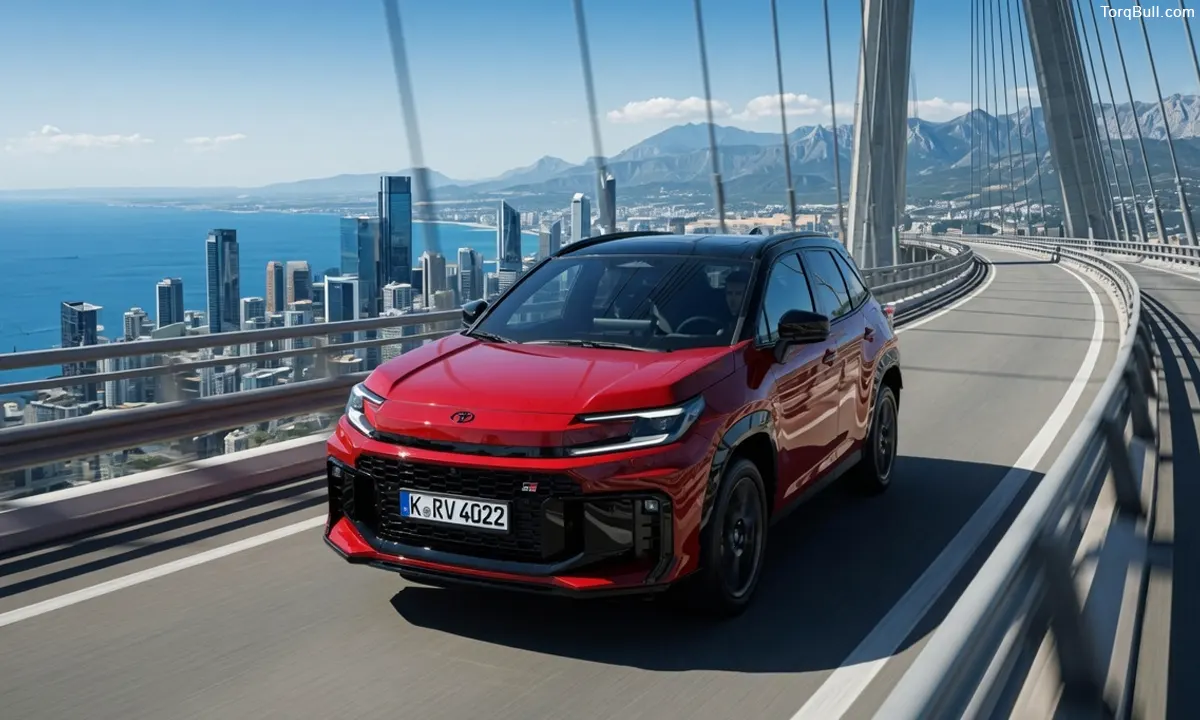
- The 2026 Toyota RAV4 is now offered exclusively with hybrid-based powertrains, eliminating the traditional gas-versus-hybrid decision for new buyers.
- Compared with a typical gas-powered RAV4, the hybrid’s 39 MPG combined fuel economy can save approximately $600–$700 per year in fuel costs.
- For buyers comparing older gas and hybrid models, the hybrid’s higher purchase price is generally recovered after roughly 75,000–80,000 miles of driving.
The Toyota RAV4’s transition to an all-hybrid lineup for the 2026 model year resolves one of the most researched purchase decisions in the compact crossover segment by eliminating it entirely — every 2026 RAV4 now uses a hybrid powertrain, and the gas-only option that defined previous RAV4 generations is gone. For buyers choosing between a 2025 gas RAV4 and a 2025 or 2026 hybrid, or for anyone evaluating the financial case for hybrid technology in the RAV4, this complete guide provides every cost figure, every annual saving calculation and the honest break-even analysis that determines whether the hybrid’s higher upfront cost is financially justified for their specific annual mileage and ownership timeline.
The Fuel Economy Gap: 30 MPG vs 39 MPG Combined
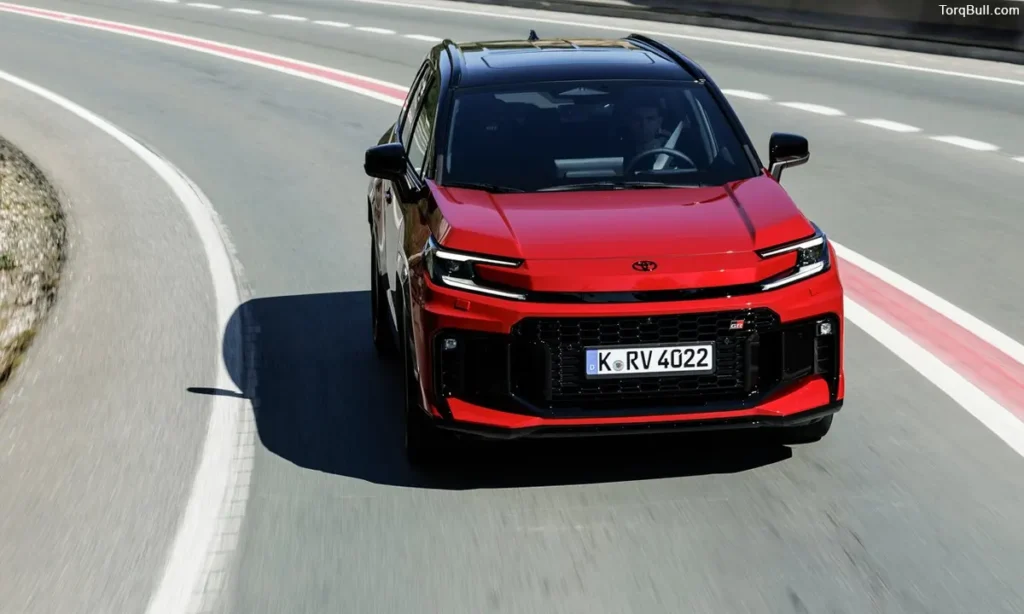
The most important number in the RAV4 hybrid versus gas cost comparison is the fuel economy difference — and the gap is substantial enough to produce meaningful annual savings at typical family driving mileage.
The 2025 Toyota RAV4 gas model achieves approximately 27 MPG city and 34 MPG highway, producing approximately 30 MPG combined in the standard front-wheel-drive configuration. The AWD gas RAV4 achieves approximately 27 MPG city and 33 MPG highway combined.
The 2025 Toyota RAV4 Hybrid achieves 41 MPG city and 38 MPG highway for approximately 39 MPG combined in AWD configuration — the standard drivetrain for the hybrid lineup, since all RAV4 Hybrids come with AWD included. The 2026 RAV4 Hybrid LE FWD achieves an improved 47 MPG city and 40 MPG highway for a 43 MPG combined rating under Toyota’s fifth-generation hybrid system, reflecting the technology upgrade that the 2026 redesign delivers over the 2025 hybrid’s already strong figure.
The real-world fuel economy difference is consistent with the EPA gap: most RAV4 Hybrid owners report 33 to 36 MPG in real-world mixed driving conditions, while gas model owners report results close to the 30 MPG EPA combined estimate. For cost comparison purposes, 39 MPG combined versus 30 MPG combined represents the most reliable pairing for the 2025 model year comparison.
Read: Toyota RAV4 Hidden Features That Make Everyday Driving Easier in 2026
Annual Fuel Cost Savings: The Financial Calculation at Every Mileage Level
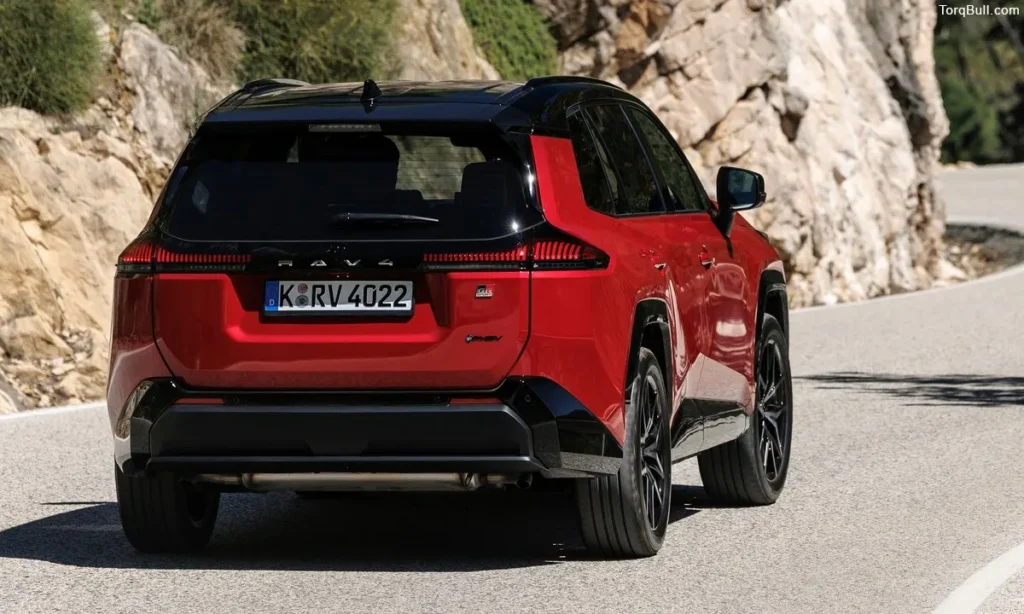
Converting the fuel economy difference into actual annual savings provides the most practically useful planning number for any buyer evaluating the RAV4 hybrid’s financial case.
At $3.08 per gallon and 15,000 annual miles, the gas RAV4 at 30 MPG combined costs approximately $1,540 per year in fuel. The hybrid RAV4 at 39 MPG combined costs approximately $1,185 per year. The annual saving from choosing the hybrid is approximately $355 at this mileage and fuel price assumption.
At $3.50 per gallon — the threshold where the hybrid’s payback period shortens meaningfully — the annual savings increase to approximately $404 at 15,000 miles. At higher mileage of 20,000 miles per year, the annual saving reaches approximately $473 at $3.08 per gallon and approximately $538 at $3.50 per gallon.
For the 2026 RAV4 Hybrid’s improved 43 MPG combined versus the equivalent prior gas model’s 30 MPG baseline, the annual fuel cost at 15,000 miles and $3.08 per gallon is approximately $1,074 — saving approximately $466 per year over the equivalent gas configuration.
The Hybrid Price Premium: What You Pay Upfront
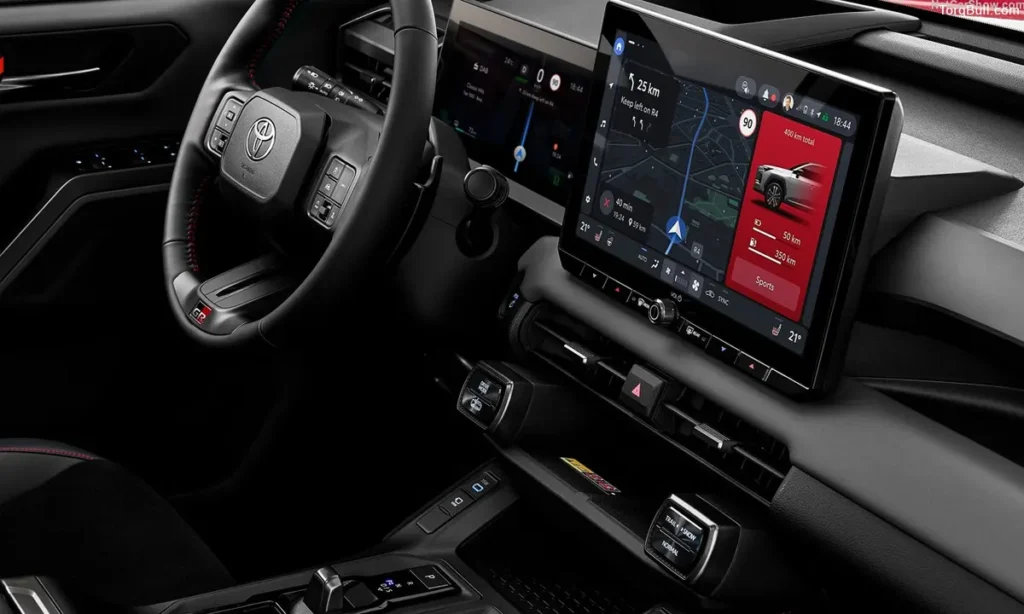
The 2025 Toyota RAV4 gas model starts at approximately $29,250 for the base LE configuration. The 2025 RAV4 Hybrid starts at approximately $32,300 — a $3,050 premium over the gas LE. However, the hybrid includes AWD as standard, while adding AWD to the gas RAV4 costs approximately $1,400. The effective hybrid premium after accounting for the included AWD is therefore approximately $1,650 to $2,000 rather than the full $3,050 headline difference.
This adjusted premium of approximately $1,650 to $2,000 produces a substantially shorter break-even calculation than the full $3,050 figure suggests. If the hybrid costs $1,200 to $1,500 more than the equivalent-content gas version after AWD cost adjustment, fuel savings alone can offset most of the price difference within five years for buyers covering typical annual mileage.
The 2026 RAV4 is all-hybrid standard, eliminating the price premium comparison entirely for new vehicle buyers — every 2026 RAV4 buyer pays the hybrid-equipped price regardless of whether they specifically wanted hybrid technology.
Read: Toyota RAV4 Reliability After 100,000 Miles. Common Issues, Maintenance and Longevity
The Break-Even Analysis: When Does the Hybrid Pay Off?

The break-even point — the accumulated mileage at which the hybrid’s fuel savings equal or exceed its purchase price premium — depends on three variables: the actual price premium paid, the annual mileage covered and the fuel price paid across the ownership period.
At the adjusted premium of approximately $1,650 (accounting for AWD standard on hybrid) and the annual fuel saving of approximately $355 at 15,000 miles and $3.08 per gallon, the break-even mileage is approximately 70,000 miles. At higher fuel prices of $3.50 per gallon producing $404 annual savings, the break-even drops to approximately 61,500 miles.
The published break-even estimate of 75,000 to 80,000 miles at fuel prices below $3.50 per gallon reflects the full $3,050 headline price premium rather than the AWD-adjusted figure. For buyers who specifically compare a gas AWD RAV4 against a hybrid AWD RAV4 — the most relevant direct comparison since both include AWD — the break-even arrives meaningfully earlier than the headline figure suggests.
At 12,000 annual miles, the break-even arrives at approximately 83,000 miles from the adjusted premium baseline — representing approximately seven years of average mileage ownership. At 20,000 annual miles, the break-even arrives at approximately 52,500 miles from the adjusted premium baseline — representing approximately 2.6 years of high-mileage ownership.
Toyota RAV4 Hybrid vs Gas Cost Savings — Complete Financial Chart
| Category | 2025 RAV4 Gas FWD | 2025 RAV4 Gas AWD | 2025 RAV4 Hybrid AWD | 2026 RAV4 Hybrid FWD | Notes |
| Starting Price | $29,250 | $30,650 | $32,300 | approximately $31,900 | Gas AWD and Hybrid AWD most comparable |
| Effective Hybrid Premium (AWD to AWD) | Baseline | approximately $1,650 | N/A | After AWD cost equalisation | |
| EPA Combined MPG | 30 MPG | 28 MPG | 39 MPG | 43 MPG | 2026 Hybrid improved over 2025 |
| Annual Fuel Cost (15K miles, $3.08/gal) | $1,540 | $1,650 | $1,185 | $1,074 | Hybrid saves significantly |
| Annual Saving vs Gas AWD | Baseline | approximately $465 | approximately $576 | Higher mileage amplifies savings | |
| Five Year Fuel Saving | Baseline | approximately $2,325 | approximately $2,880 | Significant total accumulation | |
| Break-Even Mileage (adjusted premium) | N/A | approximately 70,000 miles | N/A | At $3.08/gal, 15K miles/year | |
| Break-Even Timeline (at 15K miles/yr) | N/A | approximately 4.7 years | N/A | At adjusted AWD-to-AWD premium | |
| Break-Even Timeline (at 20K miles/yr) | N/A | approximately 2.6 years | N/A | High-mileage significantly faster | |
| Cruising Range Per Tank | 391 to 493 miles | Similar | 551 to 595 miles | Higher | Fewer fuel stops on hybrid |
| AWD Standard | Optional ($1,400) | Standard | Standard | Standard | Hybrid includes AWD at all trims |
Beyond Fuel: Additional Hybrid Cost Advantages
The financial case for the RAV4 Hybrid extends beyond fuel savings alone to include two additional cost advantages that the annual fuel saving calculation does not capture.
Brake wear reduction is a specific hybrid ownership benefit that accumulates quietly across the ownership period. The regenerative braking system recovers energy during deceleration rather than dissipating it as heat through the friction brakes. This regenerative recovery reduces the wear rate on brake pads and rotors — meaning RAV4 Hybrid owners typically extend their brake service intervals beyond what equivalent gas model owners experience. Brake service costs of approximately $450 to $700 per event, deferred by one or more complete service cycles across an extended ownership period, represent real savings that complement the fuel cost advantage.
The hybrid battery warranty coverage of 10 years or 150,000 miles provides specific financial protection against the component that most buyers identify as the hybrid’s greatest ownership risk. Within this warranty window — which covers the primary family ownership period for most buyers — battery replacement is covered at no cost, eliminating the most significant potential hybrid-specific expense from the financial risk calculation.
Read: Best Toyota RAV4 Trim to Buy 2026. Finding the Perfect SUV for Your Needs
Who Should Choose the Hybrid: The Clear Recommendation
Drivers who cover 12,000 miles or more per year and plan to keep the vehicle for five or more years will see the hybrid’s cost advantage grow meaningfully across the ownership period. At higher annual mileage, the break-even arrives quickly enough that the hybrid produces net financial benefit — beyond the premium recovery — during the later years of a standard ownership cycle.
The case for the gas model, in the contexts where it applies, is straightforward: buyers on a strict financial budget where the upfront price difference constrains the purchase, buyers planning to sell within three years before the break-even is reached and buyers whose driving is predominantly highway rather than city — where the hybrid’s regenerative braking advantage is less available and the fuel economy gap narrows relative to EPA combined figures.
For the 2026 model year, this decision is resolved by Toyota’s all-hybrid standard lineup — every new RAV4 buyer receives hybrid technology as standard, making the cost comparison a guide for used-car buyers evaluating 2025 and older examples rather than a new vehicle purchase decision.