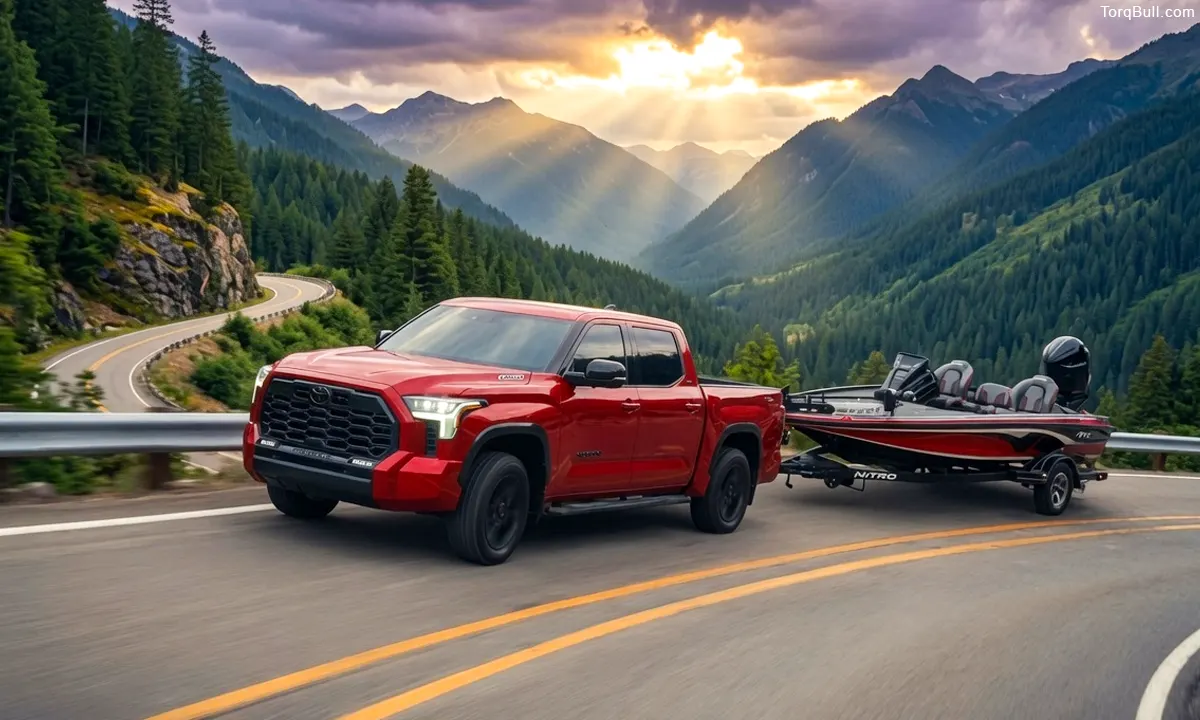
- The 2026 Toyota Tundra gas model delivers EPA ratings of up to 18 MPG city and 23 MPG highway, with annual fuel costs estimated at roughly $2,500 for 15,000 miles of driving.
- The i-Force MAX Hybrid improves efficiency modestly, saving approximately $230 per year in fuel costs compared with the standard gas-powered truck.
- While EPA figures are competitive for a full-size pickup, real-world owner reports commonly show fuel economy in the 15–17 MPG range during mixed driving conditions.
The Toyota Tundra’s fuel economy conversation is grounded in the honest reality that applies to every full-size pickup truck in the American market: this class of vehicle is not purchased for its efficiency credentials, and its fuel costs reflect the physics of moving a 5,000-plus pound truck with large-displacement engines designed around towing and payload capability rather than commuter fuel economy. What makes the Tundra’s fuel cost specifically interesting in 2026 is the specific comparison between the standard twin-turbocharged gas engine and the i-Force MAX hybrid system — a 2 MPG combined difference that costs more to equip upfront but produces a meaningful annual saving across years of ownership for high-mileage drivers. This complete guide provides every fuel cost figure across every drivetrain configuration, at every mileage level, with honest real-world owner data alongside the EPA estimates.
The EPA Fuel Economy Figures: Every 2026 Configuration
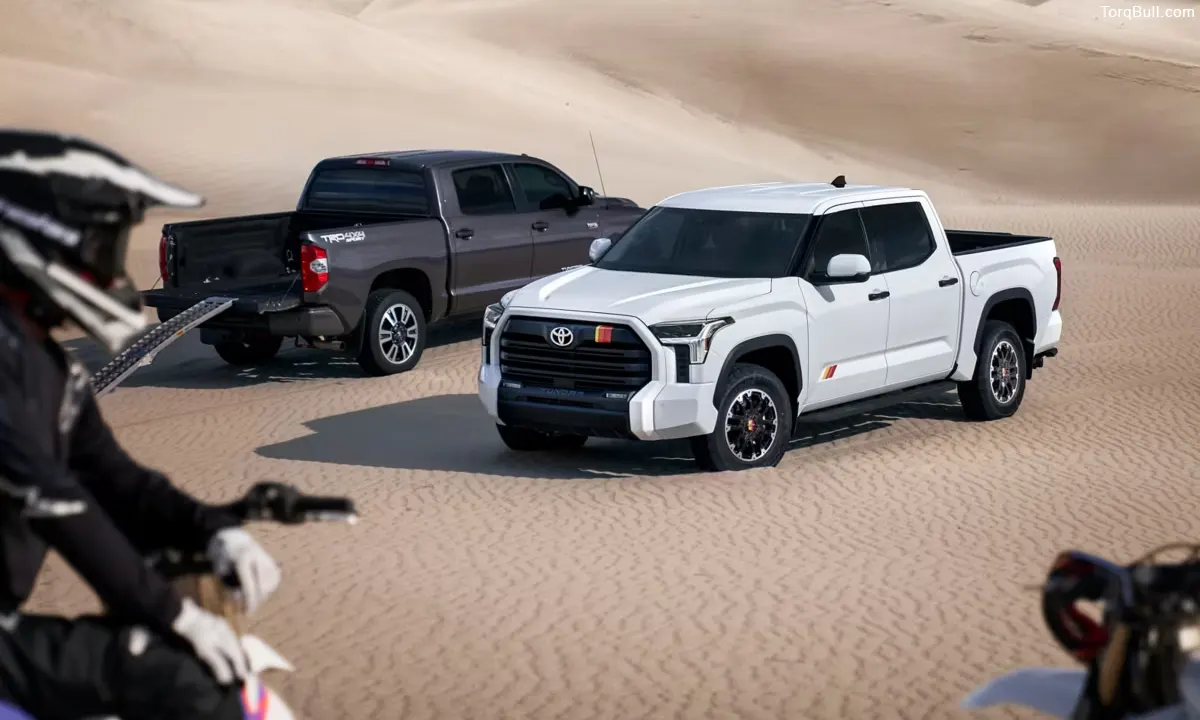
The 2026 Toyota Tundra’s fuel economy distributes across four primary configurations — gas RWD, gas 4WD, hybrid RWD and hybrid 4WD — each producing distinct efficiency figures that translate into meaningfully different annual fuel costs at typical full-size truck driving mileage.
The gas-only Tundra in RWD configuration achieves approximately 18 MPG city and 23 MPG highway for an estimated 20 MPG combined. This is the efficiency ceiling of the standard twin-turbocharged 3.4-litre V6 without hybrid assistance, representing a respectable result for a full-size pickup at this capability level but one that still falls well short of the segment’s efficiency leaders in the compact and midsize truck classes.
The gas Tundra in 4WD configuration reduces fuel economy by approximately 1 MPG across city and highway cycles — achieving 17 MPG city and 22 MPG highway. This 4WD efficiency penalty is modest and consistent with what most 4WD full-size trucks produce relative to their 2WD equivalents at equivalent displacement.
The i-Force MAX Hybrid in RWD configuration achieves 20 MPG city and 24 MPG highway — the Tundra’s highest available fuel economy for any configuration. The Limited, Platinum and 1794 Edition hybrid trims in RWD deliver this best-in-class Tundra efficiency.
The i-Force MAX Hybrid in 4WD configuration achieves 19 MPG city and 22 MPG highway. The TRD Pro hybrid variant — also 4WD — achieves 18 MPG city and 23 MPG highway, producing the performance-oriented configuration’s expected slight efficiency reduction from its specific suspension, tyre and equipment specification.
Read: Toyota Tundra vs Ford F-150 Reliability 2026. Which Pickup Offers Better Peace of Mind?
Annual Fuel Cost: The Real Numbers at Every Mileage Level

Converting the Tundra’s EPA fuel economy figures into annual fuel costs provides the most practically useful planning information for any prospective or current Tundra owner.
At $3.08 per gallon and 15,000 annual miles, the gas Tundra RWD at 20 MPG combined costs approximately $2,310 per year in fuel. The gas 4WD at approximately 19 MPG combined costs approximately $2,432 per year. The i-Force MAX Hybrid RWD at approximately 22 MPG combined costs approximately $2,100 per year. The Hybrid 4WD at approximately 20 MPG combined costs approximately $2,310 per year.
The annual fuel saving of the Hybrid RWD over the gas RWD at 15,000 miles is approximately $210 per year. This modest saving reflects the relatively small EPA combined efficiency gap between the gas and hybrid Tundra configurations — a 2 MPG combined difference that produces a smaller percentage fuel saving than the efficiency gap between hybrid and gas alternatives in the car and compact SUV segments where the underlying fuel economy gap is proportionally larger.
At higher annual mileage of 20,000 miles, the annual fuel costs increase proportionally and the hybrid’s saving grows to approximately $280 per year. For fleet operators or high-mileage commercial users who cover 25,000 to 30,000 miles annually, the hybrid’s annual saving approaches $350 to $420 — meaningful enough to shorten the break-even period on the hybrid premium considerably.
Real-World Owner Fuel Economy: The Honest Numbers

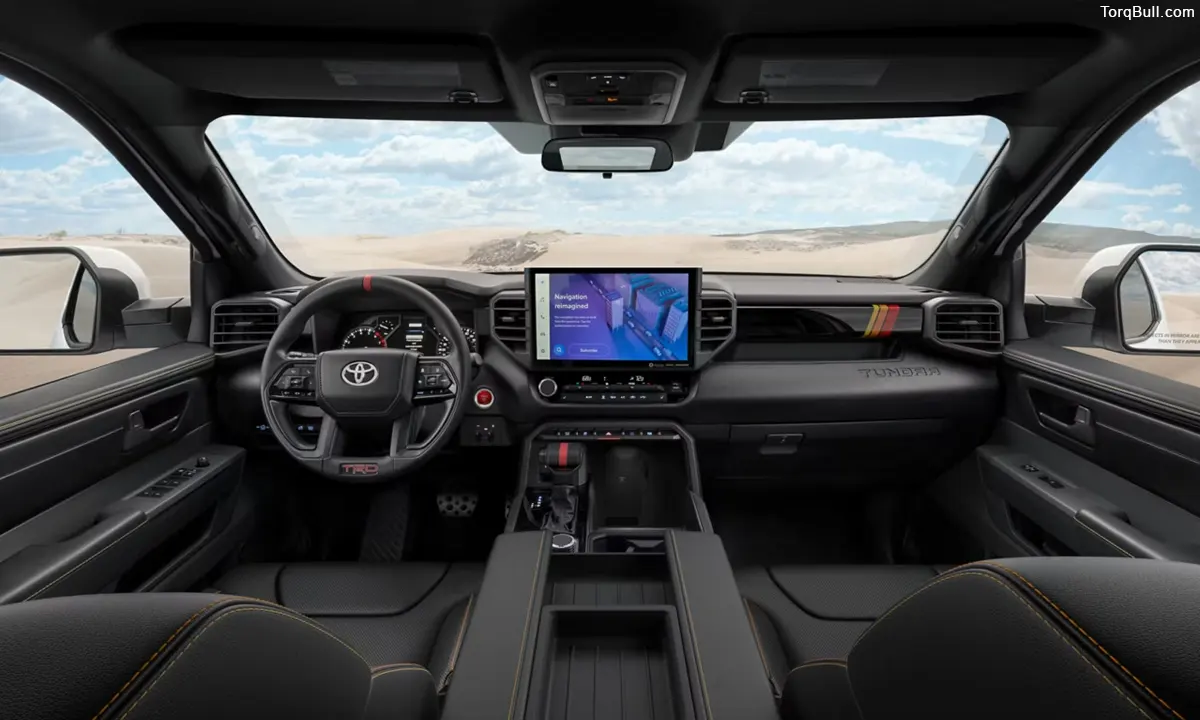
The most important context for the Tundra’s EPA fuel economy figures is what real owner tracking data reveals about the gap between standardised test cycle results and actual mixed-driving consumption.
Owner fuel tracking data from thousands of Tundra fill-up records consistently shows real-world averages significantly below the EPA combined estimates. Mixed driving results for the standard gas Tundra frequently range from 15 to 17 MPG — 3 to 5 MPG below the 20 MPG EPA combined estimate. This gap is larger than the equivalent gap in many passenger car applications, specifically reflecting the Tundra’s sensitivity to the heavy acceleration demands, frequent towing and hauling use, urban stop-and-go conditions and higher average speeds that full-size truck owners typically generate relative to the EPA test cycle’s moderate driving patterns.
For annual fuel cost planning that reflects actual ownership rather than EPA test conditions, a realistic budget figure uses 16 MPG for typical mixed gas Tundra driving — producing an annual fuel cost of approximately $2,888 at 15,000 miles and $3.08 per gallon rather than the $2,310 that the EPA 20 MPG combined estimate implies.
The hybrid Tundra owner tracking data shows similar real-world patterns, with actual results typically in the 17 to 19 MPG range under typical mixed-use truck conditions — still better than the gas model but narrowing the gap relative to EPA estimates in both configurations.
Read: Toyota Tundra Maintenance Cost Breakdown. Is This Full-Size Truck Affordable to Own 2026?
2026 Toyota Tundra Annual Fuel Cost — Complete Configuration Chart
| Configuration | EPA City MPG | EPA Highway MPG | EPA Combined MPG | Annual Fuel Cost (15K miles, $3.08/gal) | Annual Fuel Cost (20K miles, $3.08/gal) | Real-World Estimate | Annual Cost Real-World (15K miles) |
| Gas RWD (SR, SR5, Limited base) | 18 MPG | 23 MPG | 20 MPG | approximately $2,310 | approximately $3,080 | 15 to 17 MPG | approximately $2,718 to $3,080 |
| Gas 4WD (most configurations) | 17 MPG | 22 MPG | 19 MPG | approximately $2,432 | approximately $3,242 | 14 to 16 MPG | approximately $2,888 to $3,300 |
| Hybrid RWD (Limited, Platinum, 1794 Edition) | 20 MPG | 24 MPG | 22 MPG | approximately $2,100 | approximately $2,800 | 17 to 19 MPG | approximately $2,432 to $2,718 |
| Hybrid 4WD (Limited, Platinum, Capstone) | 19 MPG | 22 MPG | 20 MPG | approximately $2,310 | approximately $3,080 | 16 to 18 MPG | approximately $2,567 to $2,888 |
| TRD Pro Hybrid 4WD | 18 MPG | 23 MPG | 19 MPG | approximately $2,432 | approximately $3,242 | 15 to 17 MPG | approximately $2,718 to $3,080 |
| Hybrid RWD vs Gas RWD annual saving | 2 MPG | approximately $210 saving | approximately $280 saving | Real-world gap smaller | Approximately $100 to $200 saving | ||
| Ford F-150 5.0L V8 comparison | 16 MPG | 23 MPG | 18 MPG | approximately $2,567 | approximately $3,422 | Similar range | Comparable full-size truck costs |
The Hybrid Premium Payback: Is It Worth It?

The i-Force MAX hybrid system adds a meaningful purchase premium over the equivalent gas Tundra configuration — the specifically relevant financial question for buyers who are weighing the hybrid’s efficiency saving against its higher upfront cost.
Comparing the Limited gas Tundra against the Limited i-Force MAX — the most direct equivalent-content comparison — the hybrid commands a purchase premium of approximately $4,500 to $5,000 above the gas model’s price at equivalent trim. At the approximately $210 annual fuel saving that the EPA figures produce and $3.08 per gallon, the fuel-cost-only break-even arrives at approximately 21 to 24 years of average-mileage ownership — a timeframe that no owner reasonably plans for a single vehicle.
Using real-world fuel economy figures that reduce the hybrid’s effective annual saving to approximately $100 to $200, the break-even extends further. This extended break-even is why the hybrid premium is most financially justified for commercial users and fleet operators who cover 25,000 or more annual miles, and for buyers who specifically value the 437 combined horsepower and 583 pound-feet of torque that the i-Force MAX delivers alongside its efficiency benefit — the performance improvement that represents value independent of the fuel saving calculation.
The 5-year fuel saving at 15,000 annual miles from the EPA estimates is approximately $1,050 — the specific figure from direct comparison analysis of the Limited and Limited i-Force MAX models. While this saving is real, it represents only a partial payback of the hybrid premium across five years of typical ownership.
Read: Toyota Tundra TRD Pro Review 2026. Is This the Ultimate Off-Road Full-Size Truck?
Maximising Tundra Fuel Economy: Practical Owner Strategies
The gap between the Tundra’s EPA figures and real-world owner tracking results is bridgeable through specific driving and ownership habits that consistently produce fuel economy closer to the EPA combined estimate.
Highway speed management produces the largest single improvement opportunity. At 75 to 80 MPH, the Tundra’s fuel consumption increases substantially from aerodynamic drag compared to 65 to 70 MPH cruise. Owners who cover significant highway mileage at moderate cruise speeds consistently report real-world highway fuel economy approaching the EPA highway figure — the operating condition where the EPA estimate is most achievable.
Tyre pressure at the door-jamb specification reduces rolling resistance and produces consistent fuel economy improvement. Full-size truck tyres at proper specification versus progressively underinflated tyres produce a measurable efficiency difference across the annual mileage that most owners never quantify but consistently benefit from addressing.
Minimising unnecessary idling — particularly extended warm-up idling in cold weather that many truck owners practice out of habit — eliminates fuel consumption that produces no useful mileage. Modern engine management systems warm the Tundra’s engine more efficiently through gentle driving than through extended stationary idling.