2025 Ducati Panigale V4 World’s Greatest Superbike Gets Faster, Smarter and More Extraordinary Than Ever
A Redesigned Chassis With 37 Percent Less Lateral Stiffness, 209 Horsepower of MotoGP-Derived Desmosedici Stradale Power, Revolutionary DVO Electronics and an All-New Double-Sided Swingarm Make the Seventh-Generation Panigale V4 the Most Complete and Most Exciting Superbike Ever Built in Bologna
There is a moment in the evolution of any iconic motorcycle when incremental refinement gives way to something altogether more profound — when the engineers, emboldened by the accumulated knowledge of a decade of development, a world championship programme and the freedom to abandon tradition entirely in the pursuit of pure performance, deliver something that redefines not merely the model but the entire category. That moment has arrived with the 2025 Ducati Panigale V4. The seventh generation of Ducati’s flagship superbike is the most significantly redesigned Panigale since the original V4 replaced the twin-cylinder 1299 Panigale in 2018, and it represents a fundamental philosophical shift in how Ducati believes a production superbike should behave — one that prioritises rider communication, confidence and consistency over the raw, savage intensity that characterised earlier iterations of the V4 platform. The result is a motorcycle that is simultaneously the fastest, the most technologically advanced and the most accessible Panigale V4 ever produced — a combination that, in the hands of riders at every skill level, translates directly and measurably into faster lap times and a more deeply rewarding riding experience.
Gallery: 2025 Ducati Panigale V4
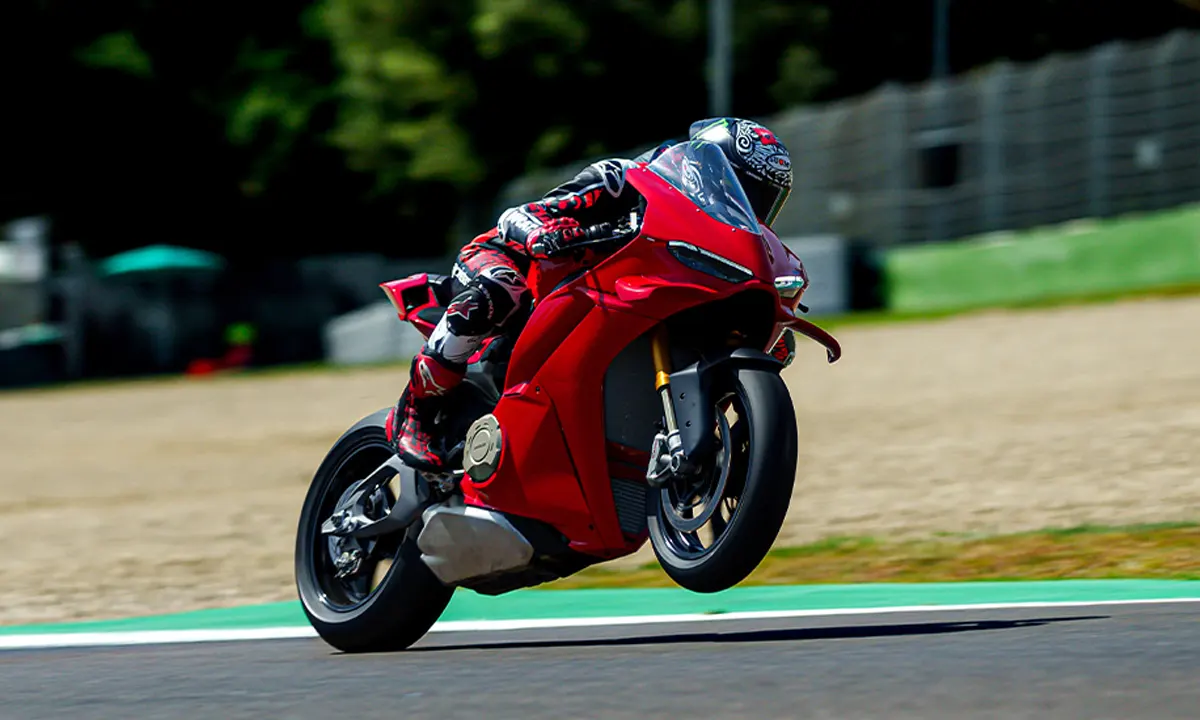
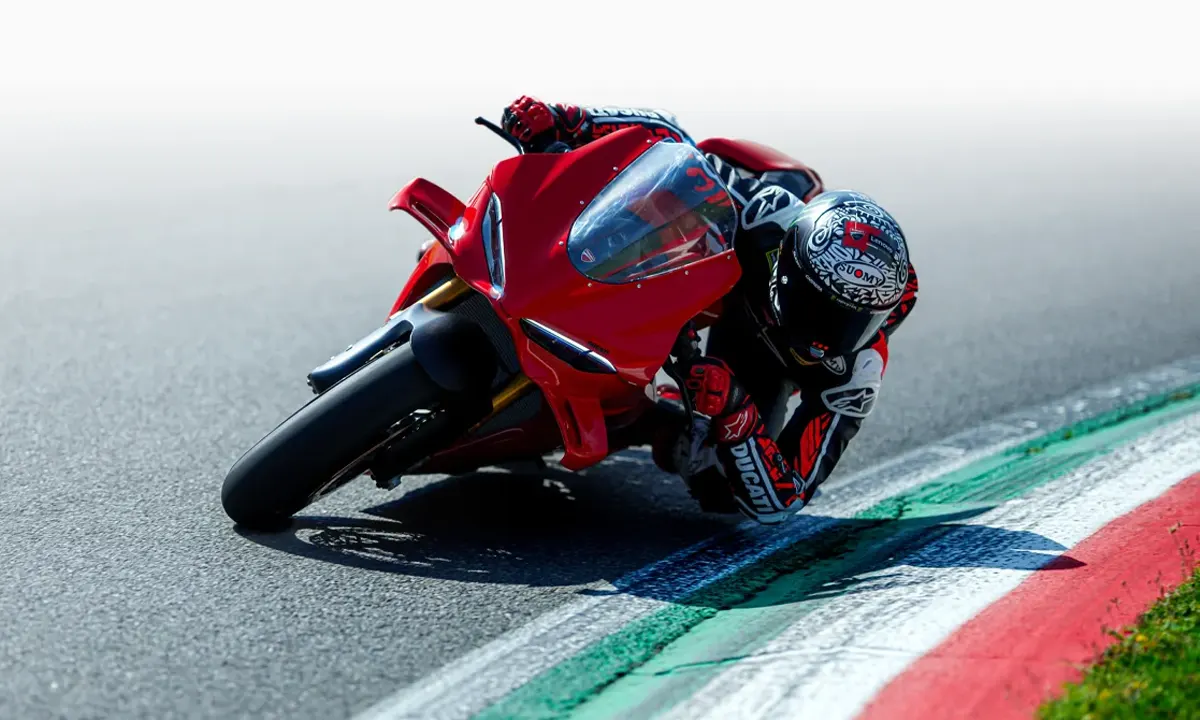
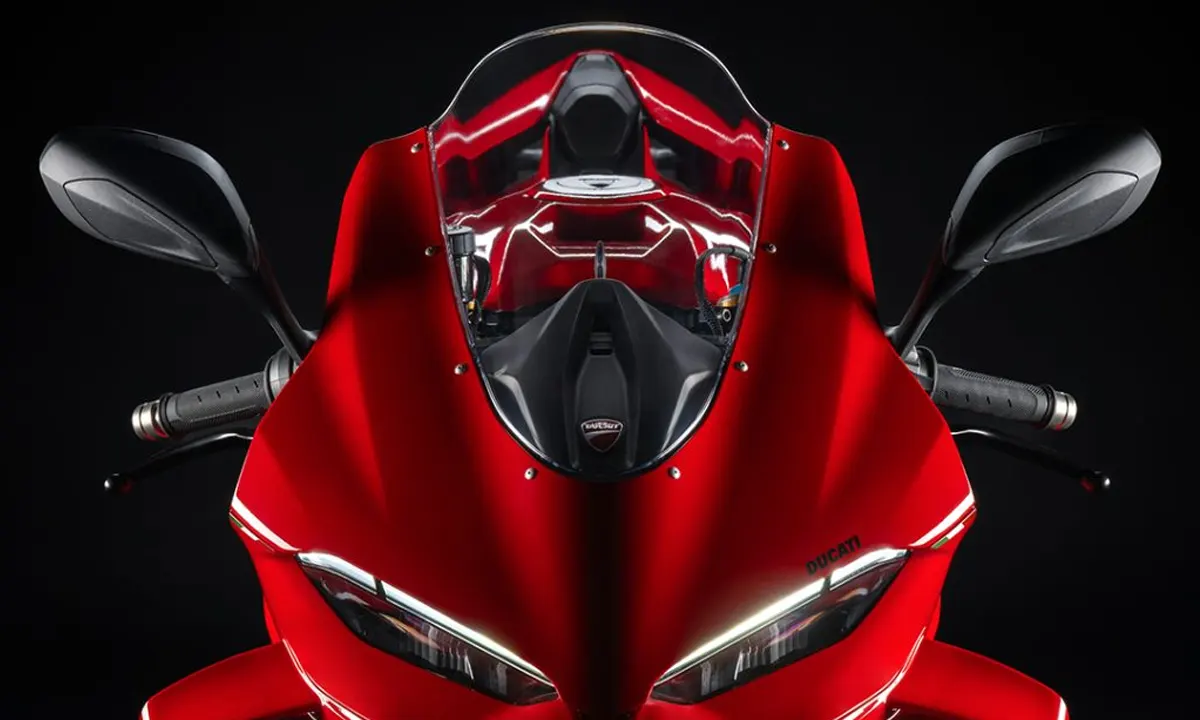
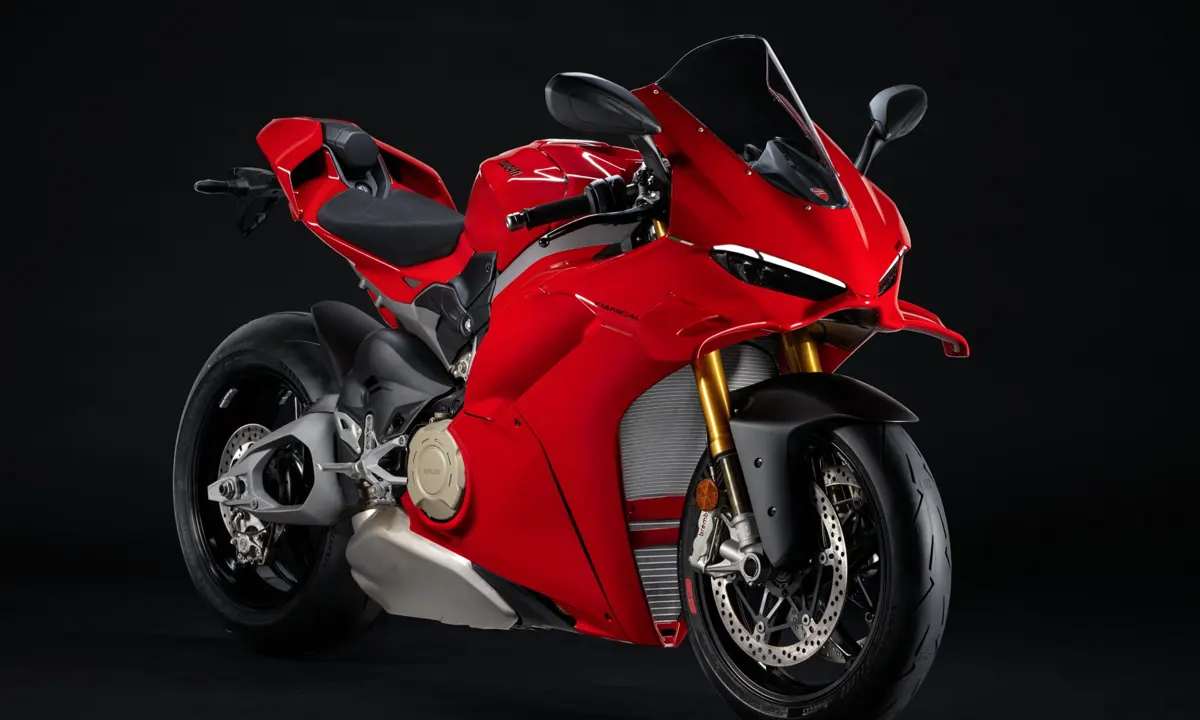
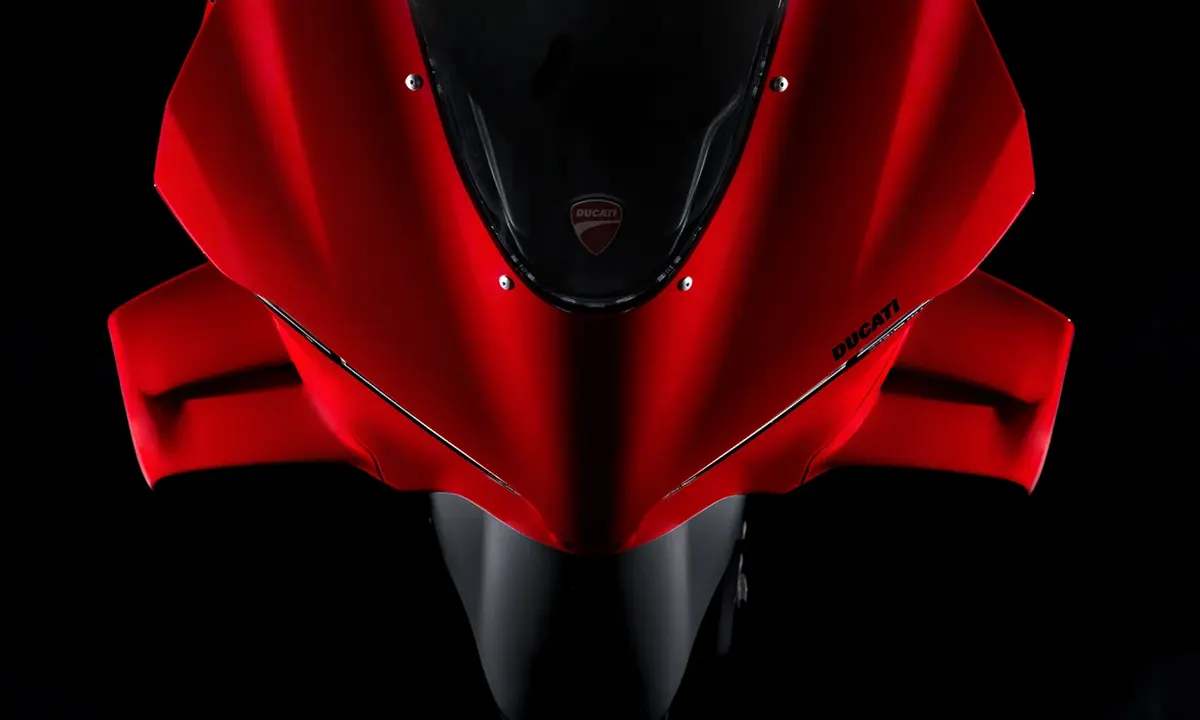
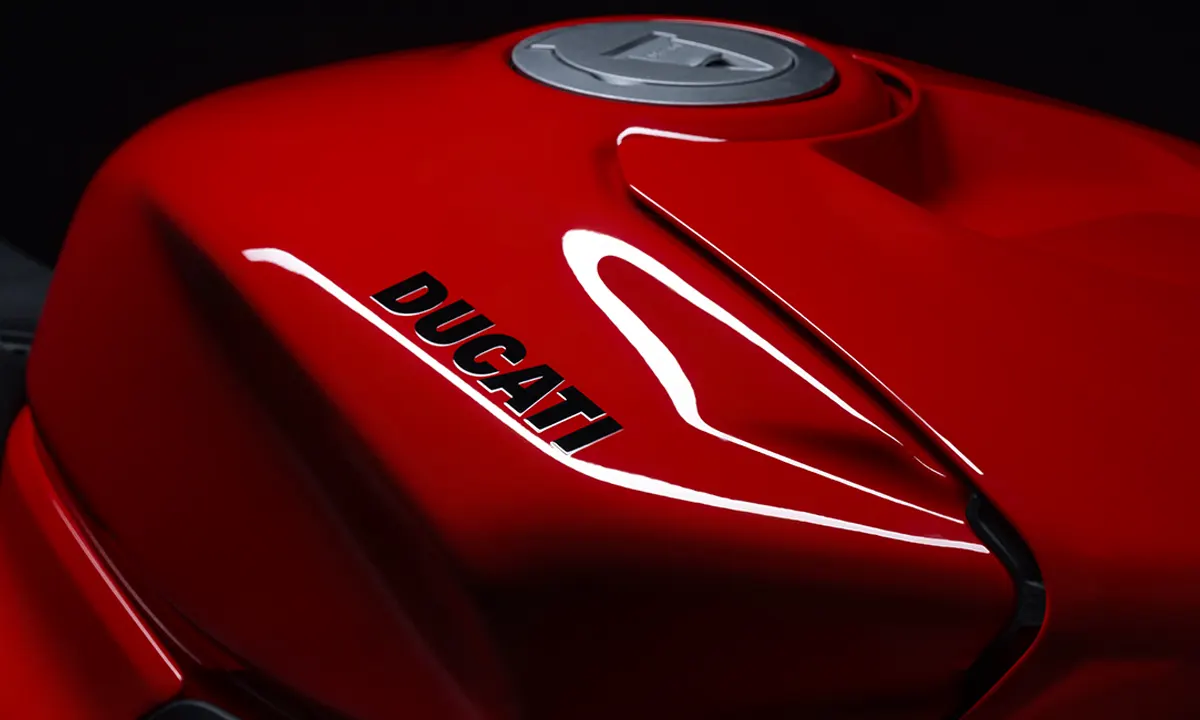
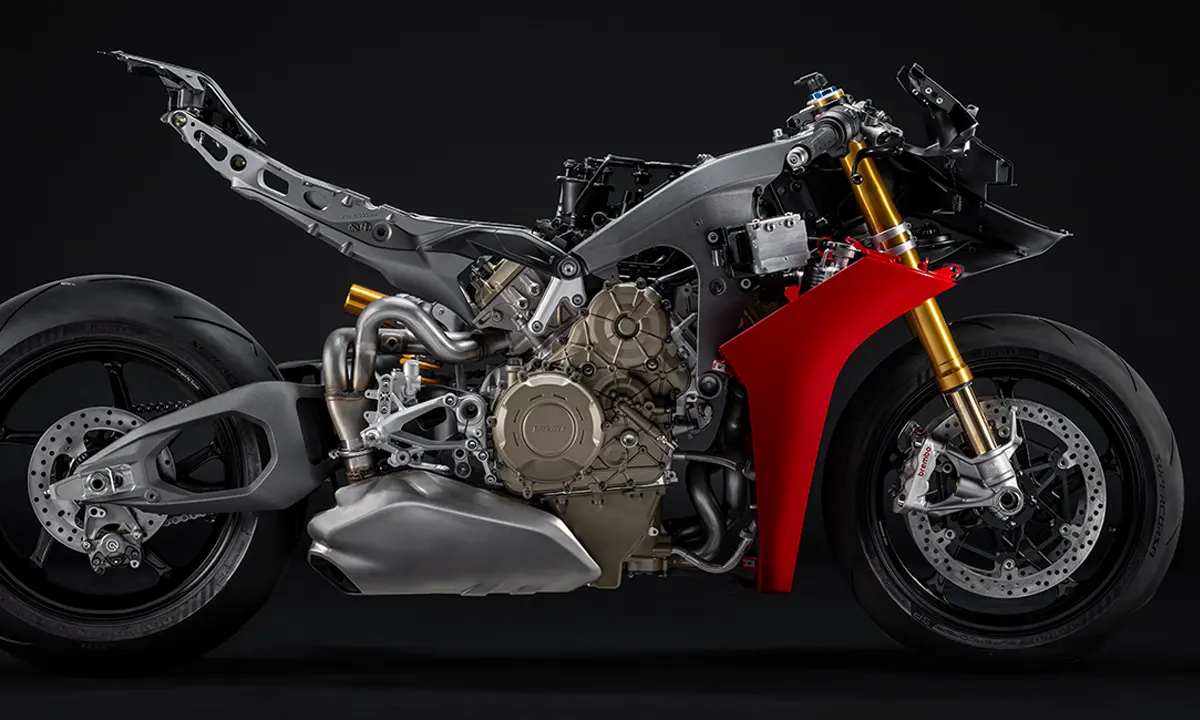
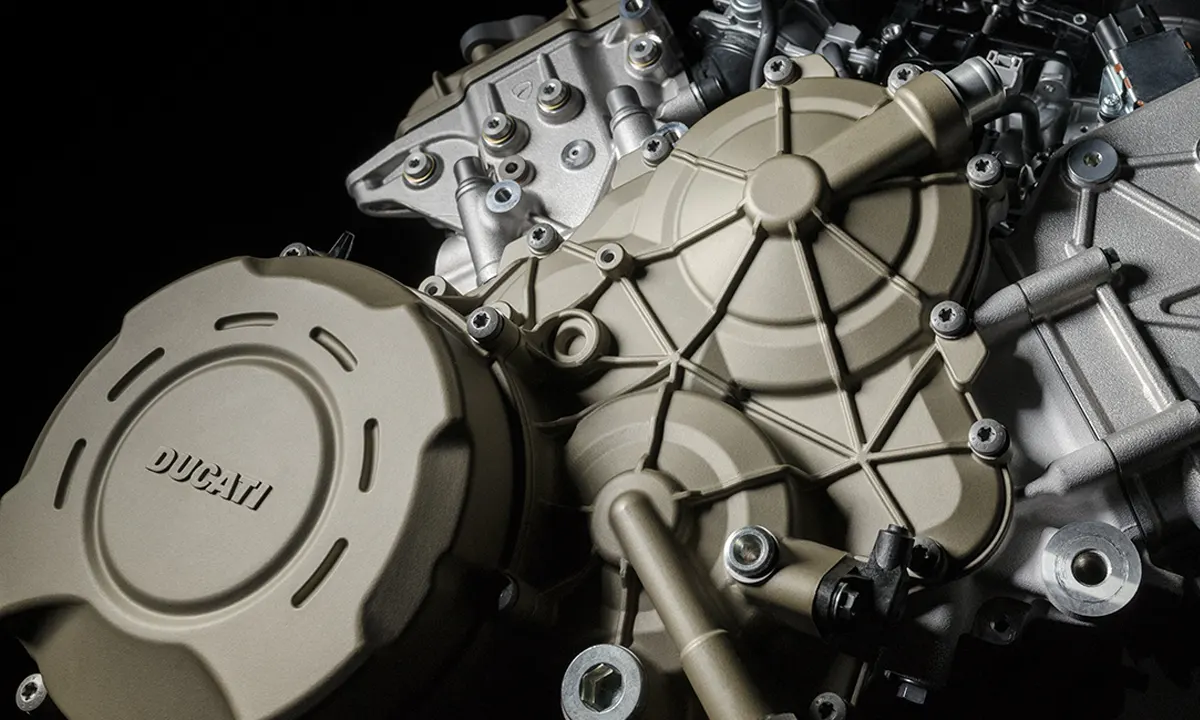
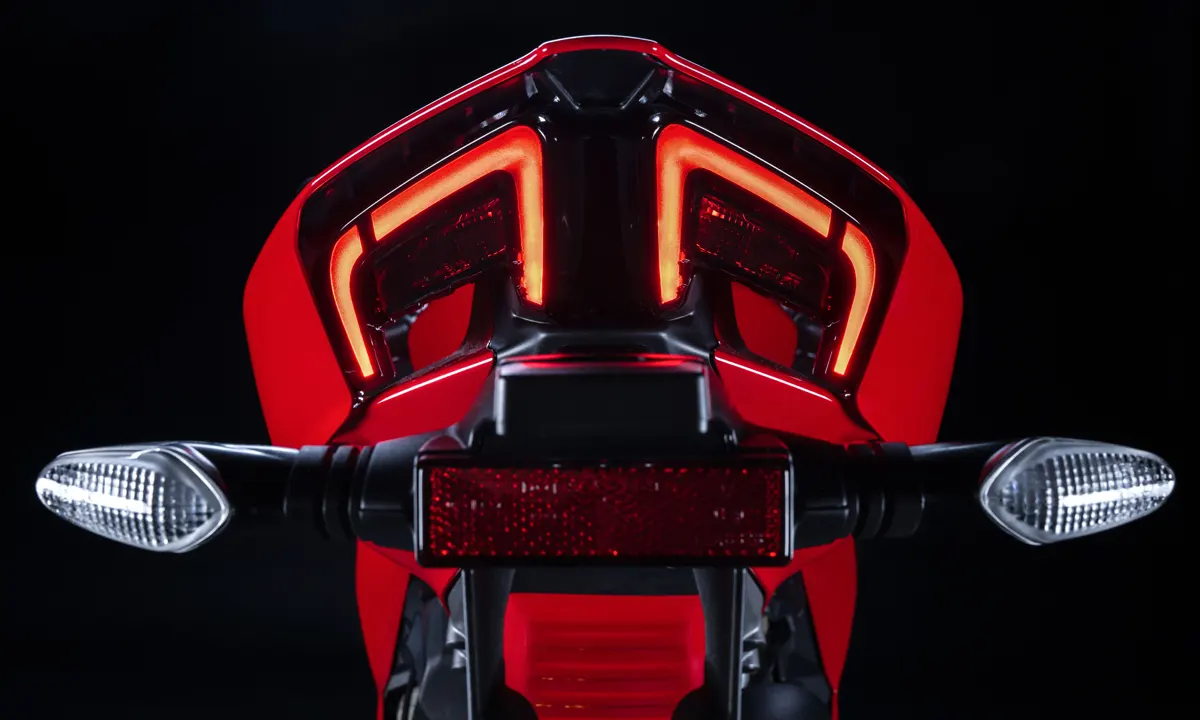
The 2025 Panigale V4 is available in two specifications for the American market. The base V4 retails at $25,995 and provides access to the full powertrain, chassis and electronics architecture with standard suspension and cast alloy wheels. The V4 S, priced at $33,895, adds electronically controlled Öhlins NPX Smart EC 3.0 suspension, forged aluminium wheels and a lithium-ion battery that reduces overall mass and improves charge acceptance. Both variants share the same fundamental engineering story — a story of chassis flexibility, predictive electronics and MotoGP-derived technology translated with remarkable completeness to a road-registered production motorcycle.
A Design That Integrates Aerodynamics Into Its Very Identity
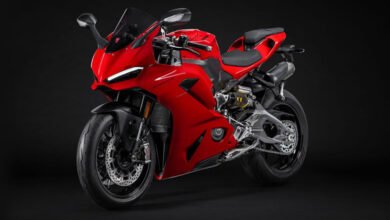
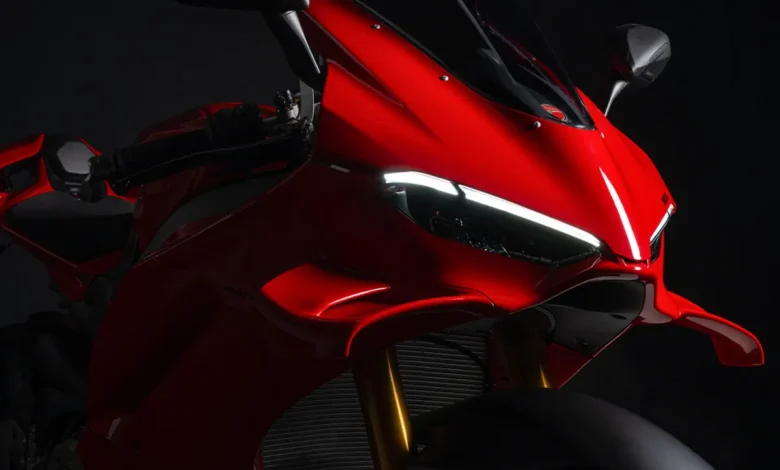
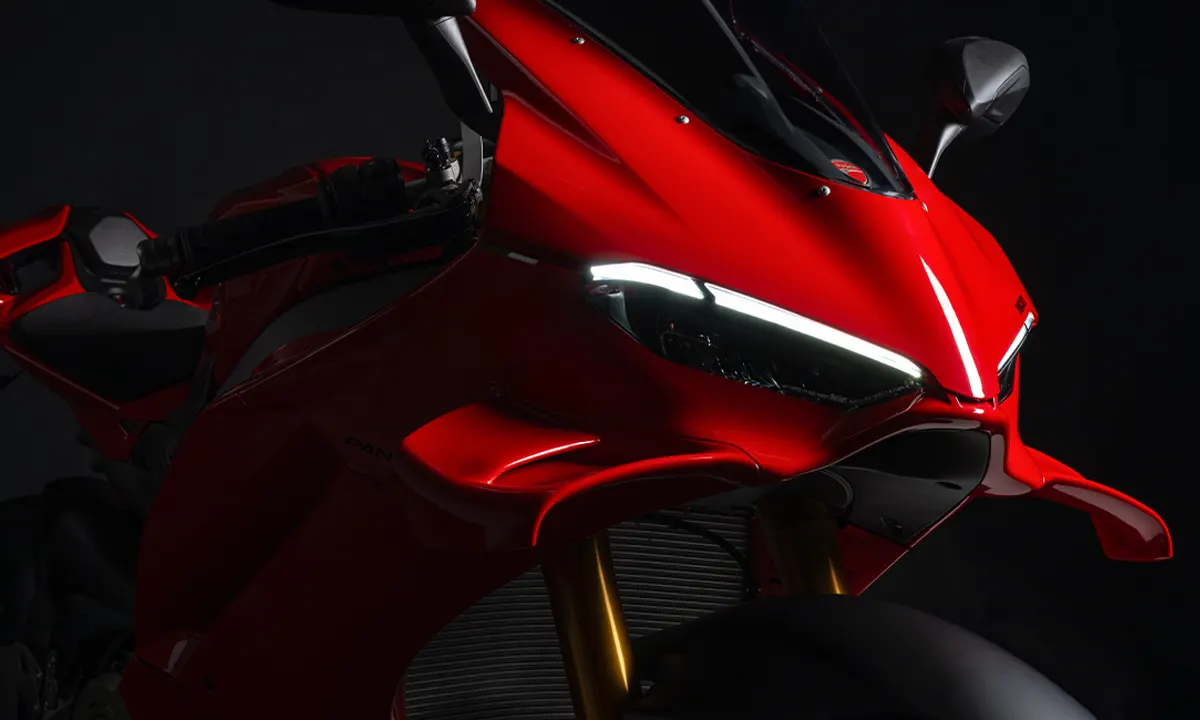
The exterior design of the 2025 Ducati Panigale V4 is the most cohesive and most aerodynamically resolved in the model’s history, representing a complete visual departure from the previous generation while maintaining the essential character that makes a Panigale instantly recognisable from any angle. The fairing has been fully redesigned, with winglets integrated directly into the bodywork rather than applied as separate elements — an approach that gives the 2025 model a cleaner, more sculptural appearance while maintaining the aerodynamic functionality that downforce-generating winglets provide at circuit speeds. The headlight cluster is slimmer and more sharply defined than its predecessor, with a more aggressive and forward-leaning aesthetic that communicates the bike’s intent at a glance.
The integration of aerodynamic winglets into the fairing’s structure rather than treating them as bolt-on additions is a detail of considerable engineering significance. These integrated wings generate meaningful front-end downforce at speed, counteracting the wheelie-inducing torque of 209 horsepower and maintaining the front tyre’s contact with the track surface during aggressive acceleration out of slow corners. The result is improved front-end stability under power — a characteristic that directly complements the 2025 model’s new chassis philosophy of reduced stiffness and improved rider feedback. The fairing’s air intake geometry has also been revised, with narrower openings that reduce aerodynamic drag while maintaining the airflow volume required by the engine’s intake system.
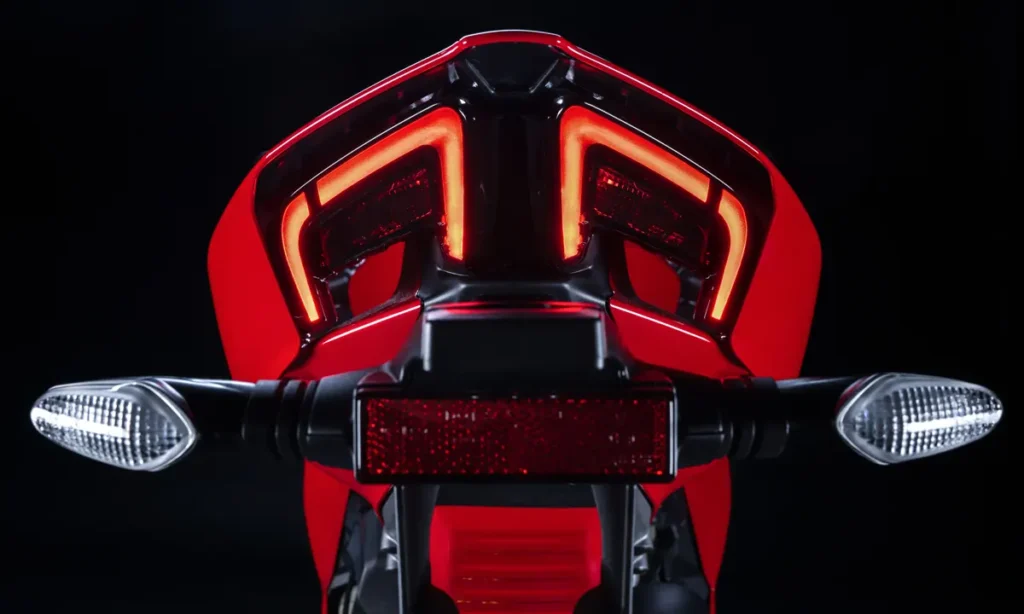
The tail section is more compact than the previous generation, contributing to the bike’s overall visual tightness and helping concentrate the rider’s eye on the front section’s dramatic aerodynamic presence. Available in Ducati Red as the sole colour option for the standard specification, the 2025 Panigale V4 presents itself as a motorcycle that has arrived at an aesthetic of singular purpose — a two-wheeled object of desire that wears its performance credentials with the same unself-conscious authority as a MotoGP machine on a qualifying lap.
The Desmosedici Stradale Evolves: 209 Horsepower of MotoGP Lineage
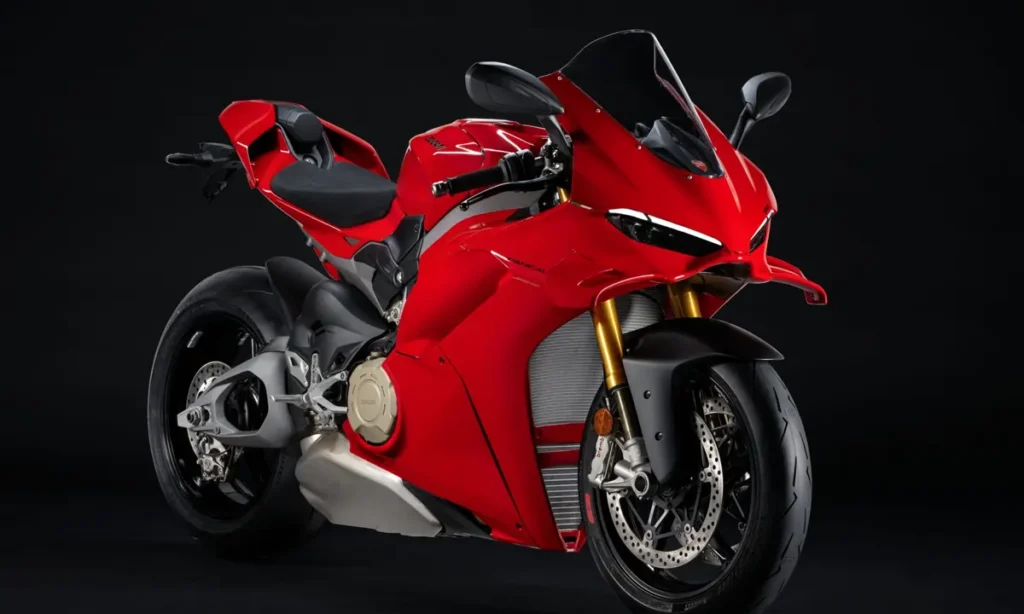
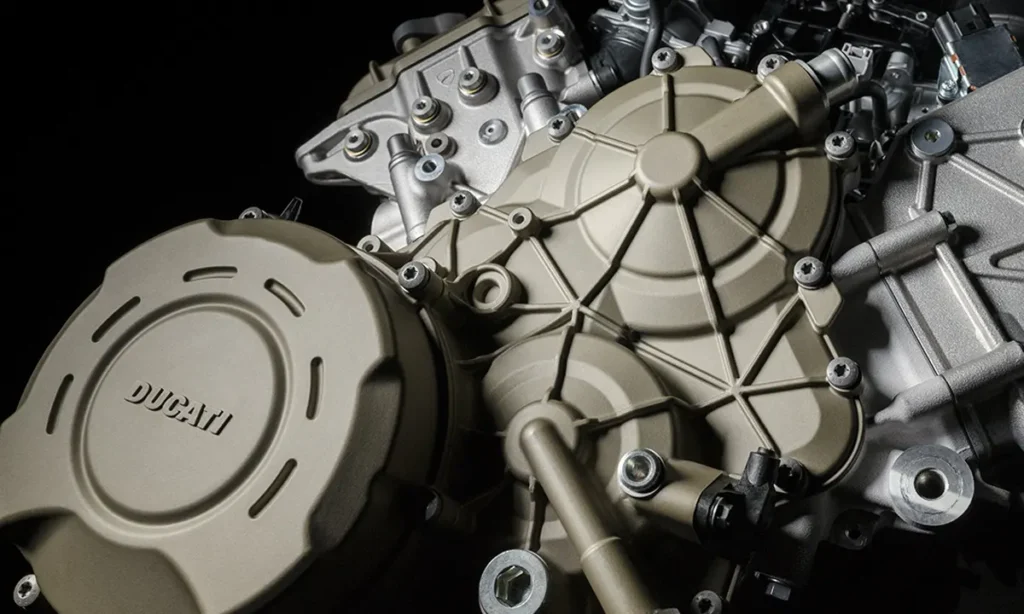
The engine powering the 2025 Ducati Panigale V4 is the latest evolution of the Desmosedici Stradale — a 1,103cc 90-degree V4 with Ducati’s signature desmodromic valve actuation system, a counter-rotating crankshaft and twin-pulse firing order that draws direct technical lineage from the MotoGP Desmosedici GP race engine. This powerplant has been the defining technical achievement of the Panigale V4 since the model’s introduction, and for 2025, Ducati’s engineers have extracted further capability from an already extraordinary foundation through targeted internal development.
New inlet and exhaust camshafts with higher lift values than the previous generation, combined with a revised intake manifold incorporating variable-length intake trumpets, allow the engine to breathe more effectively across its operating range. The variable-length trumpets adopt a shorter profile at high revs to maximise power and switch to a longer configuration at lower rpm to improve torque delivery and rideability in everyday conditions — a system that serves both circuit performance and real-world usability simultaneously. The alternator and oil pump have been sourced from the track-oriented Panigale V4 R, and the gearbox drum is borrowed from the Superleggera V4 — component choices that reflect Ducati’s willingness to incorporate the best available internal hardware regardless of the model it originates from. The net result of these revisions is a weight reduction of approximately one kilogram compared to the outgoing engine while peak power climbs to 209 horsepower at 12,750 rpm in US specification, with torque peaking at 89 pound-feet at 11,250 rpm.
One of the most practically significant engine features introduced for 2025 is the rear cylinder deactivation system, which disables the two rear cylinders of the V4 configuration when engine temperature exceeds 75 degrees Celsius during low-speed urban riding. This system dramatically reduces the heat generated by the engine in stop-and-go traffic — one of the most consistently cited discomforts of high-performance superbike ownership in everyday conditions — without any driver input required and without affecting the motorcycle’s behaviour when riding resumes. The six-speed gearbox, operated through a bi-directional quickshifter as standard, provides clean and immediate gear changes in both directions, and the slipper clutch prevents rear wheel lock-up during aggressive downshifts with the consistency and transparency that track use demands.
The Revolutionary Double-Sided Swingarm and a Chassis Philosophy Transformed
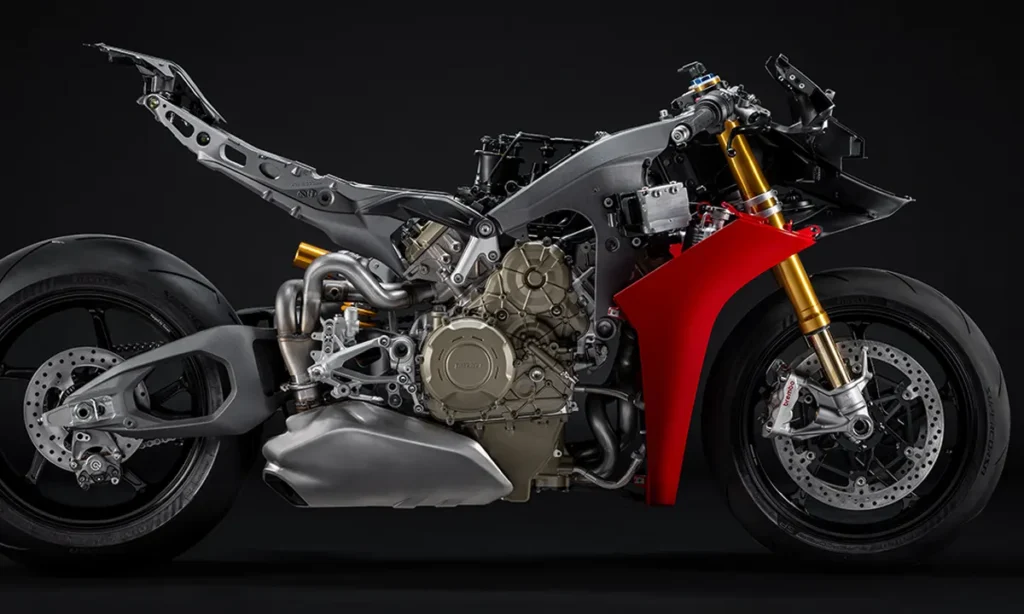
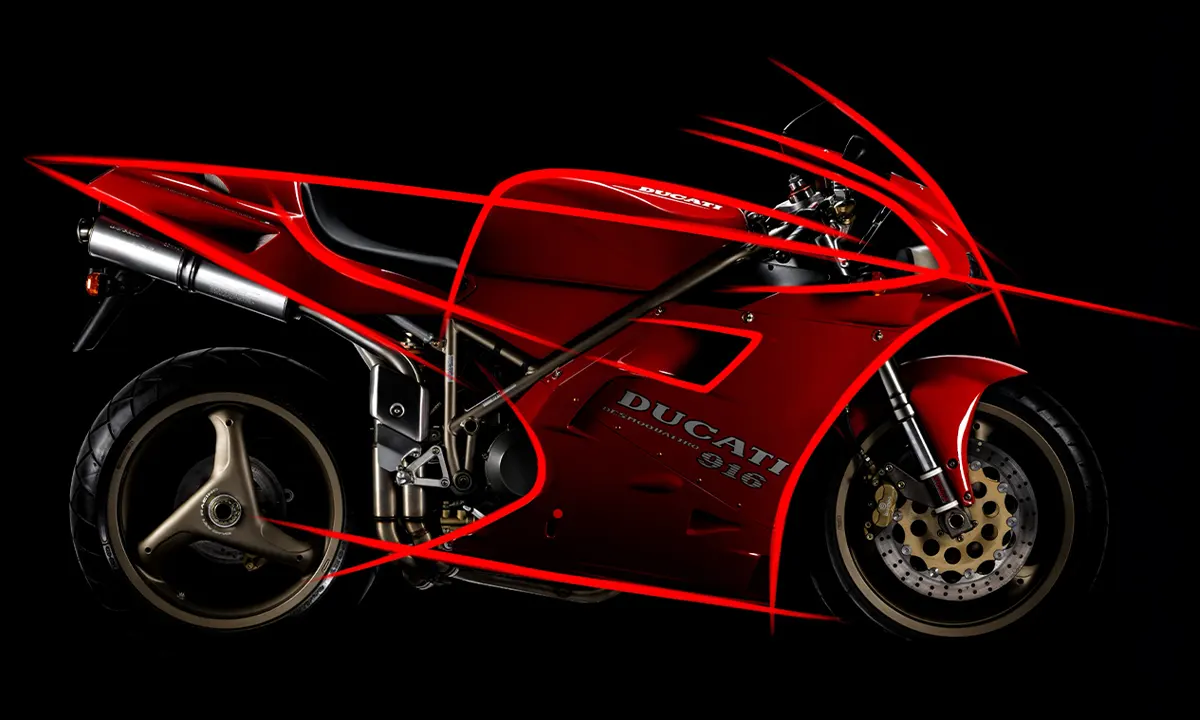
The most discussed, most debated and ultimately most significant engineering decision of the 2025 Panigale V4’s development is the replacement of the iconic single-sided swingarm — a continuous feature of Ducati superbikes since the legendary 916 established the template in 1994 — with a new Ducati Hollow Symmetrical double-sided swingarm. This decision provoked immediate reaction from the Ducati community, where the single-sided arm’s elegant visual simplicity and decades of heritage carry powerful emotional associations. The engineering case for the change is, however, overwhelming — and the validation of that engineering case in every independent test conducted since the bike’s introduction has been comprehensive and unambiguous.
The new double-sided swingarm achieves a 37 percent reduction in lateral stiffness compared to the previous single-sided unit, a change of fundamental significance for how the motorcycle communicates with its rider. In a superbike operating at the extreme lean angles that modern tyres and circuit surfaces permit — up to 65 degrees from vertical in the hands of professional riders — the swingarm’s lateral compliance determines how much information about tyre deformation, grip level and loading reaches the rider through the chassis and footpegs. A stiffer swingarm transmits less of this information, requiring the rider to interpret chassis behaviour at a higher level of abstraction and with less real-time feedback. The new swingarm’s reduced stiffness increases the resolution of information available to the rider, allowing earlier, more precise and more confident responses to changes in grip and loading — qualities that translate directly into faster, more consistent lap times for riders at every skill level.
The front frame has been simultaneously revised with reduced lateral stiffness, creating a chassis that is more compliant and more communicative at both ends simultaneously. The combined effect of these stiffness reductions is a motorcycle that feels more planted, more predictable and more forgiving at the limit than any previous Panigale — a characteristic that Ducati’s own internal testing validated when seven riders of varying skill levels all recorded faster lap times on the 2025 model than on the bike it replaces. World MotoGP champion Francesco Bagnaia, riding the 2025 Panigale V4 at Misano’s World Ducati Week reveal event, set a lap time one full second faster than he had ever achieved on the 2024 model — a result that speaks with complete authority to the magnitude of the chassis improvement.
DVO: The Most Sophisticated Production Motorcycle Electronics Ever Developed
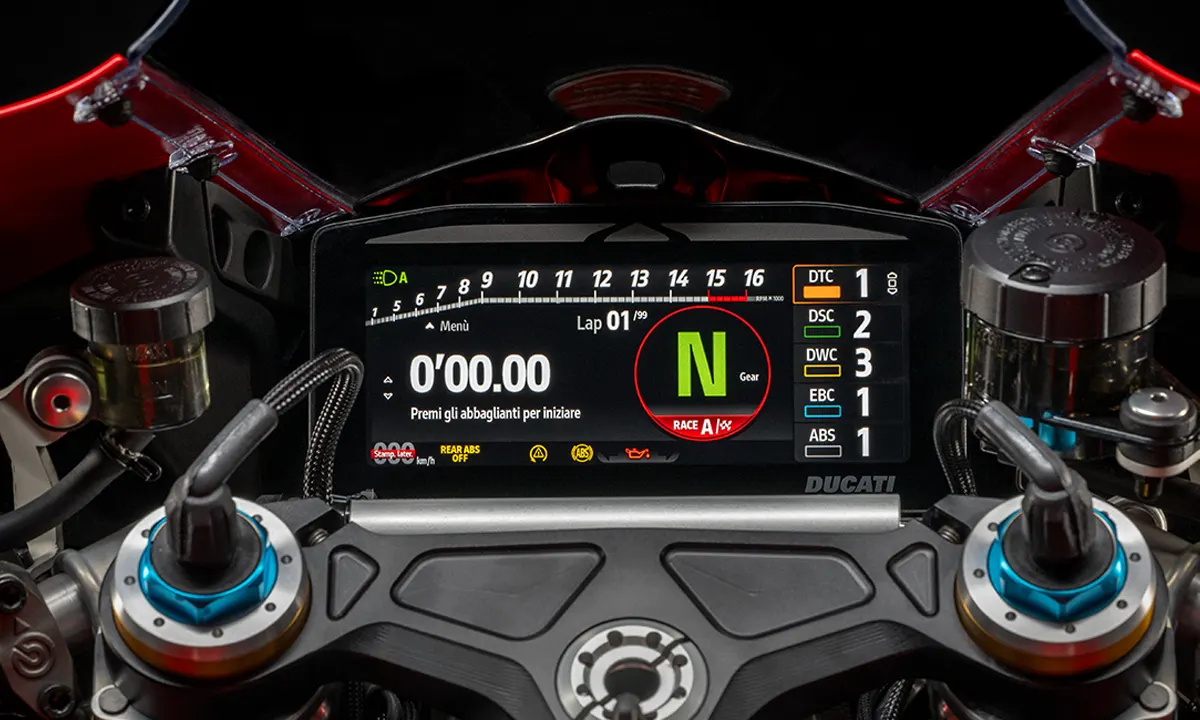
The electronics architecture of the 2025 Ducati Panigale V4 represents the most ambitious and the most technically advanced control systems ever fitted to a production motorcycle, centred on the newly introduced Ducati Vehicle Observer technology that fundamentally changes how the bike’s rider assistance systems understand and respond to the motorcycle’s dynamic state. The DVO system monitors 70 physical quantities in addition to those measured by the bike’s Inertial Measurement Unit, using sensor fusion and predictive algorithms to estimate ground forces, grip levels and tyre loading conditions in real time. This information allows the traction control and wheelie control systems to define acceptable slip and wheelie angles with a precision that conventional sensor-only systems cannot approach — intervening with greater accuracy, more appropriate force and less disruption to the rider’s intended trajectory than any previous Ducati electronic system.
The practical effect of DVO is to make the Panigale V4’s throttle progressively more accessible and more exploitable. The system’s precise understanding of what the rear tyre can tolerate at any given moment allows it to permit greater slip before intervening, provide earlier restoration of throttle authority after intervention and calibrate the intensity of correction more accurately to the actual dynamic situation. The rider experiences this as a system that feels less like a safety net and more like an intelligent partner — one that amplifies the rider’s inputs rather than simply limiting them, and one that builds confidence in a genuinely progressive and satisfying manner.
Race eCBS, co-developed by Ducati and Bosch and introduced on the 2025 Panigale V4, is an equally significant innovation. The system activates the rear brake automatically when the front brake is released at corner entry — a technique employed by professional riders to stabilise the chassis and allow later braking markers — applying the rear brake independently of the rider’s input to maintain the composure and stability that this technique provides without requiring the physical coordination that human riders find demanding to execute consistently. The system makes corner entry more stable, allows deeper braking and reduces the cognitive and physical load on the rider during the most demanding phase of circuit riding. Combined with the newly introduced Brembo Hypure front brake calipers — lighter by approximately two ounces per unit than their predecessors, with improved heat dissipation and more consistent pad retention — the braking package of the 2025 Panigale V4 is the most capable and the most precisely modulated ever fitted to a production Ducati road motorcycle.
The Panigale V4 S: When Standard Excellence Is Not Sufficient
While the base Panigale V4 provides access to the full engineering achievement of the seventh generation at $25,995, the V4 S variant at $33,895 adds a collection of components that elevate the motorcycle’s dynamic capability and rider feedback to a level that approaches factory race preparation. The centrepiece of the V4 S specification is the Öhlins Smart EC 3.0 electronically controlled suspension, which provides comprehensive electronic adjustment of both compression and rebound at the fork and rear shock, with dedicated settings for road and track use that can be reconfigured through the bike’s onboard interface without tools or physical adjustment. This system integrates with the bike’s IMU and the DVO platform to make suspension adjustments in response to dynamic conditions — a capability that maintains consistent handling behaviour as tyre wear, fuel load and track conditions change over the course of an extended track session.
Forged aluminium wheels on the V4 S reduce unsprung and rotating mass compared to the cast alloy items fitted to the base model, with benefits for acceleration, braking response and cornering agility that are measurable in both lap times and rider feel. The lithium-ion battery replaces the conventional lead-acid unit, saving further weight from a location high on the motorcycle where mass reduction has a disproportionately positive effect on handling dynamics. Together, these additions make the V4 S a substantially more capable machine in circuit environments while maintaining the same fundamental character and riding philosophy as the base V4 — ensuring that the additional investment is rewarded with genuine, usable performance enhancement rather than mere specification improvement.
Living With the World’s Greatest Superbike
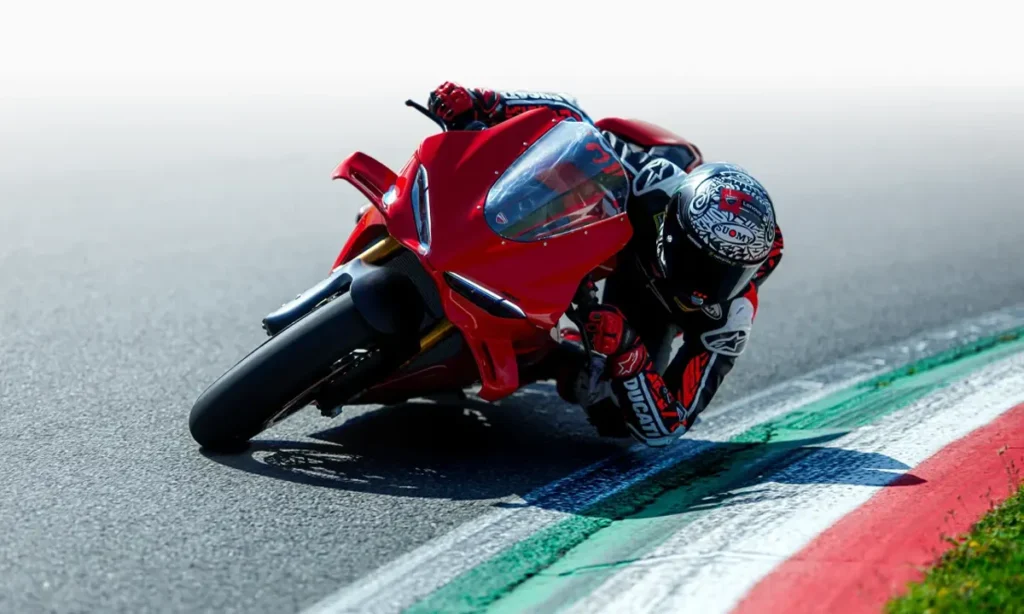
Any honest assessment of the 2025 Ducati Panigale V4 as a daily riding proposition must acknowledge the considerable physical demands it places on its rider. The riding position is committed and forward-leaning — not punishing in isolation, but requiring physical engagement that accumulates meaningfully over long distances. The engine’s thermal management improvements, including rear cylinder deactivation, have reduced one of the most practically significant discomforts of previous Panigale ownership, and the 2025 model’s improved chassis communication makes urban riding more manageable than its raw performance figures might suggest. Fuel economy under spirited riding returns approximately 25 miles per gallon in mixed conditions, with a modest fuel tank requiring attention on longer journeys.
For riders who approach the Panigale V4 as its designers intended — as a track-focused instrument that is road-registered rather than a road motorcycle that happens to be trackable — these considerations are secondary to the extraordinary sensory and dynamic experience that the motorcycle provides. At speed, on a circuit, with the DVO system calibrated for the session and the suspension set for the track, the 2025 Panigale V4 delivers an experience that is genuinely, qualitatively different from any other production motorcycle currently available. It is faster, more communicative and more deeply satisfying than its predecessor. It is, by the judgement of every credible publication that has tested it at the level it deserves, the greatest production superbike ever manufactured — and it carries that distinction with the same unapologetic intensity and the same absolute commitment to performance that has defined the Panigale name since the very beginning.
Read: 10 Sport Motorcycles Known for Legendary Reliability and Longevity
2025 Ducati Panigale V4 – Specifications & Performance Chart
| Category | Specification |
| Vehicle Type | 1,103cc Inline Superbike (Road-Legal) |
| Engine | Desmosedici Stradale 90° V4, Desmodromic Valve Actuation |
| Displacement | 1,103cc |
| Power Output (US Spec) | 209 hp @ 12,750 rpm |
| Power Output (Euro5+ Spec) | 216 hp @ 13,500 rpm |
| Torque | 89 lb-ft @ 11,250 rpm |
| Crankshaft | Counter-Rotating, Twin-Pulse Firing Order |
| Valve System | Desmodromic (4 Desmo Valves per Cylinder) |
| Gearbox | 6-Speed with Bi-Directional Quickshifter (DQS 2.0) |
| Clutch | Wet Multi-Plate with Slipper Function |
| Cylinder Deactivation | Rear Two Cylinders (Above 75°C, Low Speed) |
| Frame | Aluminium Front Frame (Reduced Lateral Stiffness) |
| Swingarm | Ducati Hollow Symmetrical Double-Sided (37% Less Stiffness) |
| Front Suspension (V4) | 43mm Fully Adjustable Showa Fork |
| Front Suspension (V4 S) | Öhlins NPX Smart EC 3.0 Electronic Fork |
| Rear Suspension (V4 S) | Öhlins TTX Smart EC 3.0 Electronic Shock |
| Front Brake | Brembo Hypure 4-Piston Monobloc Calipers / 330mm Discs |
| Rear Brake | Brembo 2-Piston Caliper / 245mm Disc |
| Braking System | Race eCBS (Ducati / Bosch Co-Development) |
| ABS System | Bosch Cornering ABS – 9 Levels |
| Wheels (V4) | Cast Aluminium |
| Wheels (V4 S) | Forged Aluminium |
| Battery (V4 S) | Lithium-Ion |
| Electronics Platform | Ducati Vehicle Observer (DVO) |
| Rider Aids | DTC, DSC, DWC, DPL, DQS, EBC, Race eCBS |
| IMU | 6-Axis Bosch Inertial Measurement Unit |
| Aerodynamics | Integrated Winglets (Fairing-Mounted) |
| Dry Weight | 190.5 kg (V4) / 188.0 kg (V4 S) |
| Seat Height | 845 mm |
| Fuel Tank | 16 Litres |
| Starting MSRP – V4 | $25,995 (US) |
| Starting MSRP – V4 S | $33,895 (US) |
| Assembly | Borgo Panigale, Bologna, Italy |
| Award | MCN Best Superbike 2025 |