2026 Kawasaki Ninja ZX-10R and ZX-10RR: The Future of Speed
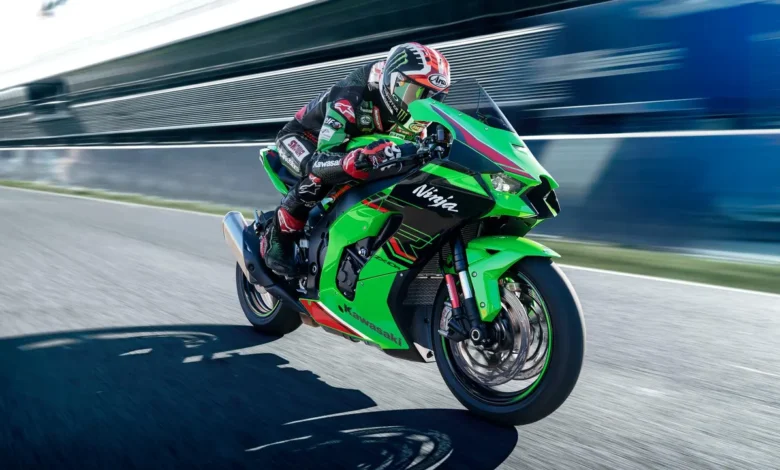
Few motorcycles have defined the modern superbike era as completely as the Kawasaki Ninja ZX-10R. For over two decades, it has stood as a technological marvel — a bridge between road performance and World Superbike championship DNA. Now, for 2026, Kawasaki has taken its track-bred icon and re-engineered it for the next generation of riders with the new Ninja ZX-10R and ZX-10RR.
The 2026 models represent more than a routine update. They’re Kawasaki’s bold reaffirmation that engineering, aerodynamics, and electronics can still define the future of pure motorcycling — even in an age shifting toward electric mobility. With revised aerodynamics, advanced electronics, and race-focused precision, the new ZX-10R and ZX-10RR are ready to take on the world’s fastest superbikes.
A Legacy of Racing Excellence
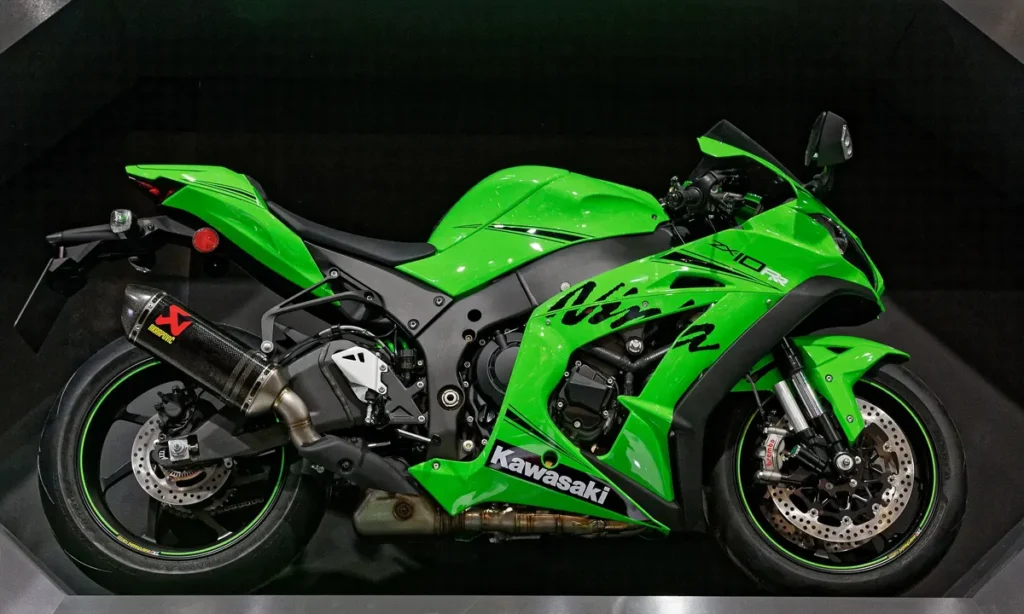
The Ninja ZX-10R has deep roots in racing. Since its debut in 2004, it has consistently evolved alongside Kawasaki’s championship-winning World Superbike (WSBK) program. With six WSBK titles under Jonathan Rea’s mastery, the ZX-10R’s DNA is steeped in championship performance.
The 2026 generation continues this legacy. Both the ZX-10R and the limited-production ZX-10RR inherit direct race technology, with fine-tuned aerodynamics, sharper handling, and upgraded electronics derived from Kawasaki’s factory racing division.
Kawasaki engineers describe the new generation as “the most aerodynamically efficient Ninja ever made.” Every vent, panel, and winglet has been designed to serve a purpose: stability, cooling, and speed.
Design & Aerodynamics: Function Meets Fury
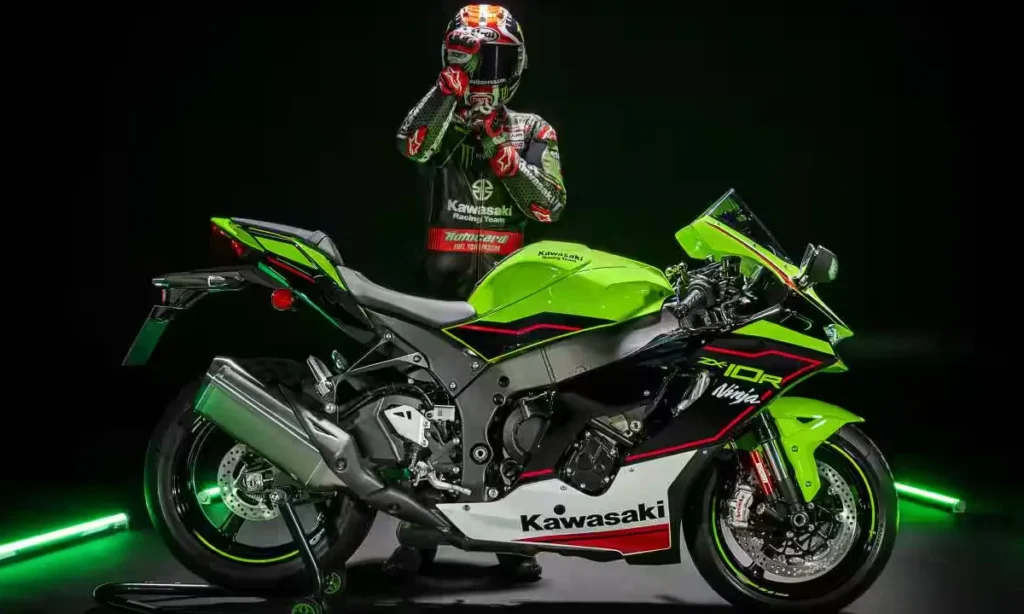
At first glance, the 2026 Ninja ZX-10R looks familiar yet more aggressive. The visual changes go beyond aesthetics — they are wind-tunnel-tested enhancements. The new bodywork incorporates integrated aerodynamic winglets that generate up to 25% more downforce than the previous generation, keeping the front wheel planted during extreme acceleration and high-speed cornering.
The front fairing is sleeker, with reprofiled intakes that not only reduce drag but also channel more air into the engine and cooling systems. The dual LED headlamps are sharper and positioned lower for better aerodynamics.
On the ZX-10RR, the aerodynamic package is even more track-focused — with a lightweight single-seat tail section, race-ready mirrors, and subtle modifications that prioritize stability at race pace.
Dimensions & Form
- Length: 2,085 mm
- Width: 740 mm
- Height: 1,185 mm
- Wheelbase: 1,450 mm
- Curb Weight: Approx. 207 kg (ZX-10R), 201 kg (ZX-10RR)
The overall design emphasizes compactness — a sharper tail, a muscular midsection, and a narrower waist for improved rider ergonomics.
Kawasaki calls it “Functional Aggression” — and it fits perfectly.
Engine & Performance: Precision-Engineered Power
Under the fairing, the 2026 Kawasaki Ninja ZX-10R continues to employ its proven 998 cc inline-four engine, but with significant internal updates. The engine retains its DOHC 16-valve architecture, but Kawasaki has reworked the valve timing, intake ducts, and ECU mapping to improve mid-range torque and throttle response.
Performance Specs (2026 ZX-10R)
- Engine Type: 998 cc liquid-cooled, inline 4-cylinder
- Horsepower: ~210 hp @ 13,000 rpm (with ram-air effect)
- Torque: 114 Nm @ 11,500 rpm
- Transmission: 6-speed, quickshifter (up/down)
- Top Speed: Electronically limited to around 299 km/h (186 mph)
- 0–100 km/h (0–62 mph): 2.8 seconds
These aren’t just numbers — they’re the result of Kawasaki’s relentless refinement. The throttle response is now smoother yet sharper, and the new ride-by-wire system ensures precise power delivery at any RPM.
The ZX-10RR pushes boundaries even further. This homologation special is built for racing purists. It features lightweight titanium connecting rods from Pankl, a revised cylinder head for higher revving capability, and forged Marchesini wheels for reduced unsprung weight.
The RR’s engine tuning allows it to rev higher, producing slightly more peak power — pushing it close to 215 horsepower with race exhaust.
Electronics: Smarter, Faster, Safer
The 2026 Ninja lineup benefits from Kawasaki’s latest electronic wizardry. The Kawasaki Intelligent Anti-lock Brake System (KIBS), Kawasaki Traction Control (KTRC), and Cornering Management Function are now more advanced than ever.
These systems work through an IMU (Inertial Measurement Unit) that monitors pitch, roll, yaw, and acceleration in real-time, adjusting power, braking, and traction in milliseconds.
New Tech Additions:
- Launch Control Mode (KLCM) for optimal starts.
- Cornering ABS for improved stability under lean.
- Engine Brake Control for adjustable deceleration response.
- Quickshifter (up/down) standard on both models.
- Power Modes: Full, Middle, and Low — customizable via the TFT display.
- Kawasaki Rideology App: Connects smartphone to bike for real-time ride data, GPS logs, and system updates.
The centerpiece of the cockpit is the new 5-inch full-color TFT display with Bluetooth connectivity. It features customizable layouts, real-time telemetry, and turn-by-turn navigation support — a major upgrade over the older LCD interface.
Chassis & Handling: Race-Ready Balance
Kawasaki’s engineers have fine-tuned the chassis geometry for the 2026 models to enhance agility without sacrificing high-speed stability. The aluminum twin-spar frame remains the backbone, but new mounting points and rigidity adjustments make the bike more responsive.
The suspension setup continues to impress:
- Front: Showa Balance Free Fork (BFF)
- Rear: Showa Balance Free Rear Cushion (BFRC)
- Brakes: Dual 330 mm Brembo discs up front with M50 calipers, 220 mm rear disc
For the ZX-10RR, the setup is even more exclusive — featuring lighter components, a track-tuned suspension calibration, and a dedicated Öhlins steering damper.
Riders report improved feedback from the front end and a more predictable feel through corners. The refined suspension absorbs imperfections well without compromising the precise handling the ZX-10R is known for.
Riding Experience: The Beast Refined
The 2026 Ninja ZX-10R isn’t just faster — it’s more confidence-inspiring. Kawasaki’s engineers have achieved a rare balance between aggression and control.
At low speeds, the clutch action is smooth, throttle response linear, and ergonomics surprisingly manageable for an aggressive superbike. But unleash it on a racetrack, and the ZX-10R transforms into a precision missile — razor-sharp steering, immediate acceleration, and incredible mid-corner stability.
The ZX-10RR, meanwhile, is noticeably firmer and rawer. It feels more alive — demanding rider commitment but rewarding with unmatched precision. It’s designed to win races, not just track days.
Kawasaki’s integration of aerodynamic downforce plays a major role here. Even at 250+ km/h, the front wheel remains grounded, giving riders unparalleled stability and confidence.
Aerodynamics and Cooling Efficiency
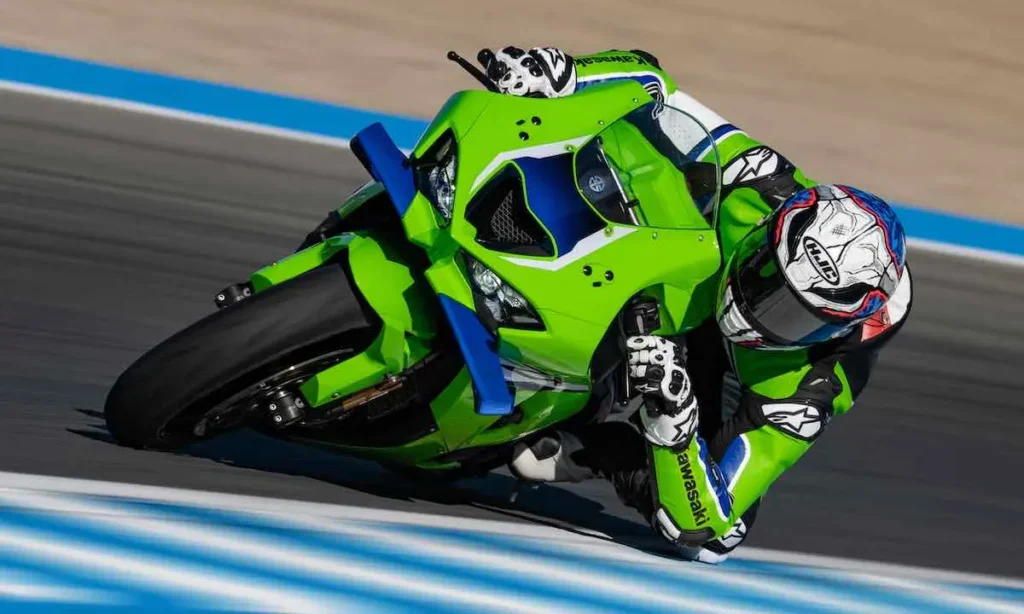
One of the unsung heroes of the 2026 redesign is the reworked cooling and airflow system. The radiator and oil cooler receive improved airflow channels, allowing consistent performance during aggressive riding or in hot climates.
The bodywork includes new heat extraction vents, which pull hot air away from the engine and prevent heat buildup under the fairing. This not only helps performance but also increases rider comfort during prolonged track sessions.
Price, Variants & Availability
Kawasaki will offer both the 2026 Ninja ZX-10R and ZX-10RR globally, with availability starting mid-2025 in Japan, Europe, and North America before expanding to Asian markets.
Estimated Pricing (Global)
- ZX-10R: Starting at around $18,499 USD
- ZX-10RR: Around $26,999 USD (limited production)
In markets like India, the ZX-10R is expected to carry a premium due to import duties, potentially priced near ₹19–21 lakh (ex-showroom), while the RR could exceed ₹28 lakh.
Competitors and Market Outlook
The 2026 Kawasaki Ninja ZX-10R and ZX-10RR enter a highly competitive field dominated by the Ducati Panigale V4, BMW M 1000 RR, Yamaha YZF-R1, and Honda CBR1000RR-R Fireblade SP.
Where the Ducati leads in raw power, and BMW excels in electronics, Kawasaki fights back with balance — combining real-world usability, mechanical precision, and racing-grade durability.
It’s this equilibrium that makes the ZX-10R special: a superbike you can ride to work, then dominate a racetrack on the weekend.
2026 Kawasaki Ninja ZX-10R vs ZX-10RR – Complete Comparison Chart
| Category | 2026 Kawasaki Ninja ZX-10R | 2026 Kawasaki Ninja ZX-10RR |
| Engine Type | 998 cc, inline 4-cylinder, liquid-cooled, DOHC | 998 cc, inline 4-cylinder (race-tuned), liquid-cooled, DOHC |
| Power Output | ~210 hp @ 13,000 rpm (with Ram Air) | ~215 hp @ 13,200 rpm (with Ram Air & race ECU) |
| Torque | 114 Nm @ 11,500 rpm | 115 Nm @ 11,800 rpm |
| Transmission | 6-speed, quickshifter (up/down) | 6-speed, quickshifter (up/down) with race ratios |
| Compression Ratio | 13.0:1 | 13.5:1 (higher for race tuning) |
| Fuel System | DFI® with 47 mm throttle bodies | High-flow DFI® system with race injectors |
| Frame Type | Aluminum twin-spar frame | Same as ZX-10R with optimized rigidity balance |
| Suspension (Front) | Showa Balance Free Fork (BFF) | Showa BFF with race-spec internal valving |
| Suspension (Rear) | Showa Balance Free Rear Cushion (BFRC) | Showa BFRC lite tuned for racing |
| Brakes (Front) | Dual 330 mm Brembo discs, M50 calipers | Dual 330 mm Brembo Stylema® calipers |
| Brakes (Rear) | 220 mm disc | 220 mm disc with upgraded race pad compound |
| Wheels | Cast aluminum | Forged Marchesini aluminum wheels (lightweight) |
| Tires | Pirelli Diablo Supercorsa SP | Pirelli Diablo Superbike SC2 (track compound) |
| Aerodynamics | Integrated winglets (25% more downforce) | Track-optimized aero with single-seat tail |
| Dashboard | 5-inch full-color TFT with Bluetooth | 5-inch TFT with additional track telemetry options |
| Electronics Suite | IMU-based traction, cornering ABS, wheelie & launch control | Same features + race telemetry calibration & track modes |
| Riding Modes | Full / Middle / Low (customizable) | Full / Track / Race (customizable) |
| Connectivity | Kawasaki Rideology App, Bluetooth | Kawasaki Rideology App + data logging |
| Weight (Curb) | 207 kg (approx.) | 201 kg (approx.) |
| Top Speed | ~299 km/h (electronically limited) | ~305 km/h (track conditions) |
| 0–100 km/h (0–62 mph) | ~2.8 seconds | ~2.6 seconds |
| Fuel Tank Capacity | 17 liters | 17 liters |
| Seat Height | 835 mm | 835 mm |
| Lighting | Full LED setup | Full LED setup (lighter housings) |
| Color Options | Kawasaki Racing Green, Metallic Black | KRT Edition Green / Racing Lime |
| Production Type | Mass production | Limited production (homologation model) |
| Best For | Road riders, weekend track users | Professional racers, serious track enthusiasts |
| Price (Global) | ~$18,499 USD | ~$26,999 USD |
| Expected Price (India) | ₹19–21 lakh (ex-showroom) | ₹28–30 lakh (ex-showroom) |
| Availability | Global markets (mid-2025) | Limited units worldwide (mid-2025) |
Verdict: Kawasaki’s Modern Masterpiece
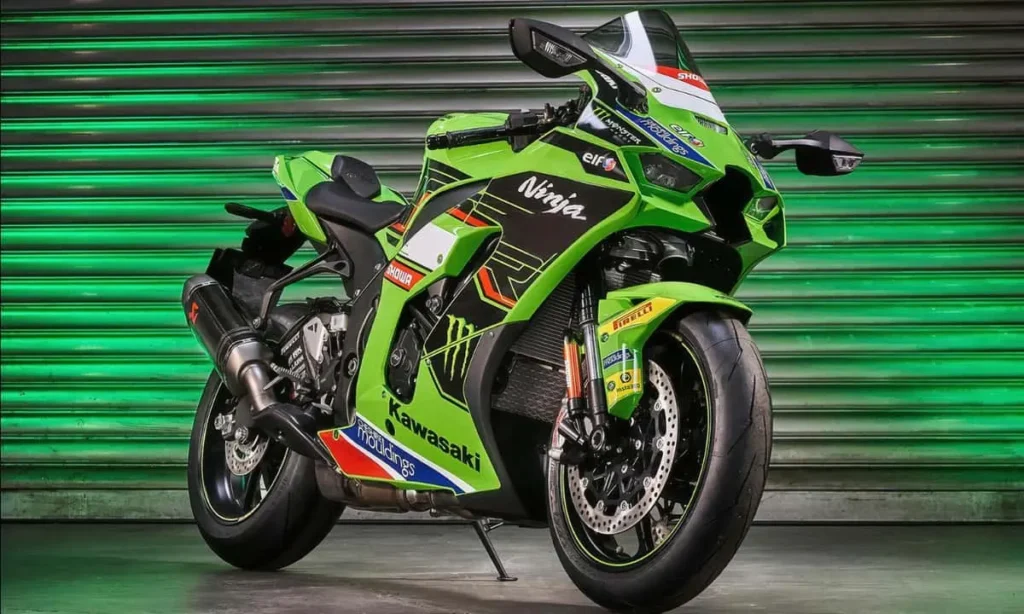
The 2026 Kawasaki Ninja ZX-10R is not a radical revolution — it’s a refinement of a legend. Every update serves a purpose: better aerodynamics, improved control, smarter electronics, and sharper performance.
Meanwhile, the ZX-10RR solidifies Kawasaki’s supremacy on the track — lighter, faster, and designed to crush lap records. It’s a purebred machine for purists who live and breathe racing.
In an era where superbikes risk becoming overly complex or sanitized, Kawasaki has stayed true to its philosophy: “Built to Win.”
For riders seeking the perfect balance between everyday usability and track-ready fury, the 2026 Ninja ZX-10R and ZX-10RR stand tall as the evolution of Kawasaki’s green legend.
Read: Ducati Monster 2026: The 890cc Icon Reborn With a Modern Edge
Frequently Asked Questions (FAQ)
Q1: What’s the main difference between the ZX-10R and ZX-10RR?
The ZX-10RR is a limited-edition, track-focused variant featuring lighter components, exclusive tuning, and racing hardware for superior performance.
Q2: Has the 2026 ZX-10R received a power increase?
While peak horsepower remains similar (~210 hp), the power curve and throttle response have been refined for smoother, more linear acceleration.
Q3: Are the winglets functional?
Yes — they provide genuine aerodynamic downforce, increasing front-end stability at high speeds.
Q4: Does it feature Bluetooth connectivity?
Yes — both models now feature a 5-inch TFT display with smartphone pairing via the Kawasaki Rideology app.
Q5: Is the ZX-10R street-legal?
Absolutely. Despite its race DNA, it’s fully road-legal and equipped with headlights, ABS, and emissions compliance.