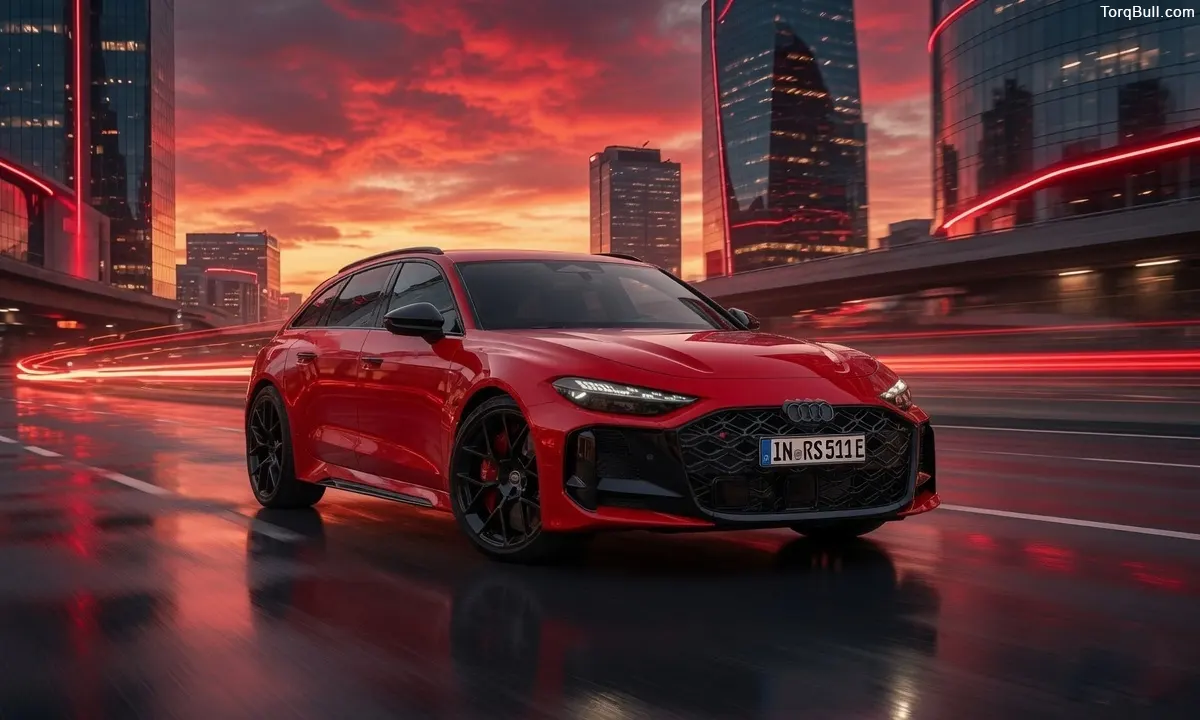
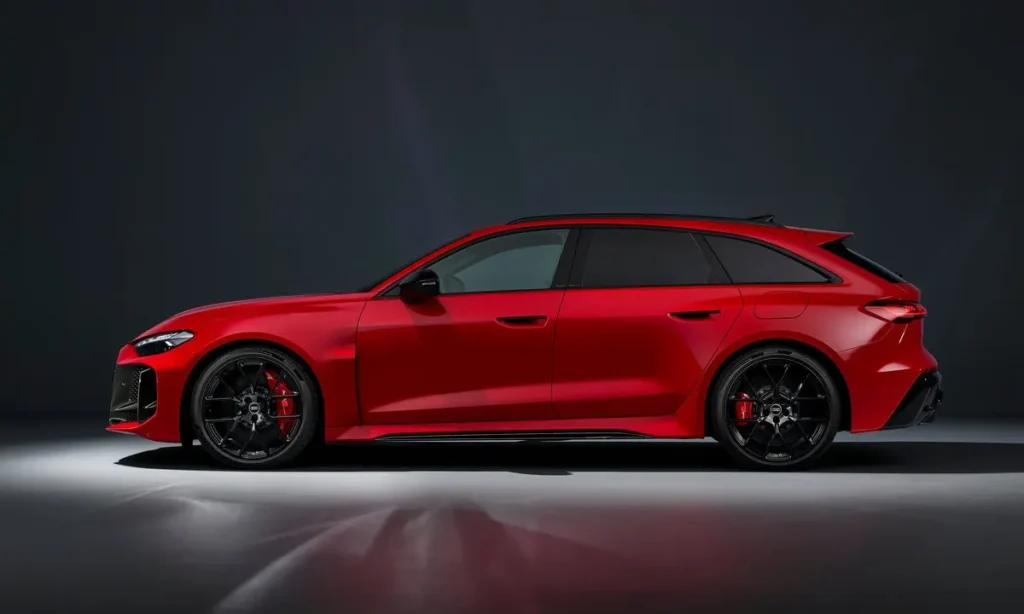
I need you to look at a picture of the 2027 Audi RS5 Avant before you read another word. Go ahead, I will wait. Done? Good. Now you understand why I have been staring at my screen making involuntary noises for the past hour.
This is the wagon enthusiasts have been begging for, the one that takes everything brutal about the new RS5 and pours it into the single most practical, most beautiful body style ever invented. The rear fenders have the stoked tension of a crouching Ninja Turtle, the long light bar across the back makes it look futuristic, and the gigantic exhaust outlets remind me of rocket boosters. I absolutely love it.
It is fast enough to terrify a sports car, clever enough to drift on command, and roomy enough to haul a Labrador and a Costco run. It is, by my reckoning, about as violent as a station wagon has ever been allowed to get.
And then there is the gut punch, which I will get to. But first, let me tell you why this thing is so glorious.
A Twin Turbo V6 With an Electric Sidekick

The heart of the RS5 Avant is the kind of powertrain that makes you forget the world is going sensible. For the first time at Audi Sport, the setup pairs a 2.9 liter twin turbo V6 making 510 metric horsepower with a 130 kW electric motor, joined by bespoke RS sport suspension and a completely new quattro drivetrain.
Combine the two and you get a number that should not exist in a family wagon. Total output is 630 horsepower and 608 pound feet of torque, way up from the 444 hp and 443 lb-ft of the outgoing model. The result is brutal. Audi claims 0 to 62 mph in 3.6 seconds and a top speed of 177 mph with the Sport package, and since it is a plug in hybrid, it also offers about 52 miles of electric only range.
Read that again. This wagon will commute to work on pure electricity all week, then detonate to 62 mph in 3.6 seconds on the weekend. That is a genuinely absurd spread of talents, and it is exactly why the Avant is the dream.
The Drift Mode Is Real, and So Is the Wizardry
Here is where the violence gets technical, and genuinely groundbreaking. Audi built an entirely new rear end for this thing. The rear transaxle features the world first large scale introduction of electro mechanical torque vectoring, taking handling to a new level.
How clever is it? Almost suspiciously so. Instead of a mechanical locking differential, the RS5 pairs an open diff with a small electric motor and a planetary gearset, and while that motor only makes 30 pound feet on its own, applied through the gearset it results in a surge of up to 1,475 pound feet to the outside tire when turning. That is the kind of number that rearranges physics.
And yes, there is a proper hooligan setting. The RS Torque Rear mode biases power to the outside rear wheel, allowing for user friendly sideways flying tire frying. A widebody super wagon that drifts on demand. We are truly living in the golden age, folks. Just budget for it. Good tires in the RS5’s factory size run about 2,000 dollars a set, so the smoke show is not cheap.
Wait Until You Hear About the Brakes


I have to single this out because it stopped me cold, pun fully intended. Audi says the RS5 can go from 62 mph to 0 in 100 feet using the ceramic brakes. For context, a McLaren 765LT supercar only beats that by two feet, and that car has a freaking air brake.
Let me put that in perspective. A practical family wagon that hauls firewood and toddlers stops within two feet of a half million dollar McLaren hypercar. That is not just impressive, that is borderline rude. The braking alone tells you Audi was not messing around when it built this thing.
Read: 630 HP and a Drift Mode: The 2027 Audi RS5 Reinvents the Sports Sedan
How It Stacks Up
Here is where the RS5 Avant lands among the fast wagon elite.
| Model | Power | 0 to 60 | Electrified | Body |
| 2027 Audi RS5 Avant | 630 hp | 3.6 sec | PHEV, 52 mi EV | Widebody wagon |
| Audi RS6 Avant | Around 621 hp | Around 3.3 sec | Mild hybrid | Bigger wagon |
| Mercedes-AMG E63 S Wagon | Around 603 hp | Around 3.4 sec | Mild hybrid | Wagon |
| BMW M3 Touring | Around 523 hp | Around 3.5 sec | No | Wagon |
Now, I will be honest, calling it the single most violent wagon ever is a bold claim when the bigger RS6 Avant exists and makes similar power. But here is my case. The RS5 Avant packs nearly the same punch in a smaller, more advanced, widebody package, adds a genuine drift mode, and brings that world first torque vectoring trickery the RS6 does not have. One reviewer flatly called the new RS5 the most engaging front engined RS model Audi has built since the legendary B7 RS4. For sheer ferocity per square inch, the Avant makes a serious argument.
The Heartbreak: We Don’t Get It
Alright. Deep breath. Here comes the part that physically pains me to type.
The RS5 Avant is not coming to America. Audi has sadly confirmed the long roofed RS5 Avant is not destined for American shores. We get the sedan, technically a five door liftback, and Audi has confirmed that version arrives stateside in 2027. But the wagon, the best looking, most desirable shape of the bunch? Forbidden fruit. European buyers get it for about 127,000 dollars starting this summer, while the American market offering remains the sedan only.
This is the eternal tragedy of being a wagon lover in the United States. The rest of the world gets the good stuff, and we get told nobody here would buy it. I refuse to accept this quietly. The RS5 Avant is proof that the perfect car exists, it is just being kept on the other side of an ocean to spite us.
A Couple of Honest Asterisks
I would be a bad reviewer if I did not mention the catches, even on a car I am clearly smitten with. First, it is heavy. Really heavy. The Avant tips the scales at 2,370 kilograms, which is over 5,200 pounds. That is a lot of mass, and all those clever systems are working overtime to disguise it.
Second, the interior leans hard into the modern Audi touchscreen religion. The cabin relies heavily on the central 14.5 inch touchscreen plus a bunch of touch sensitive controls, and it desperately needs more physical buttons, especially one for toggling drive modes. The shiny red Boost button is fantastic, but I want a real knob for the modes, not a menu dive.
Here is my read, though. The weight is masked beautifully by the engineering, and the touchscreen gripe is a quibble against a car that gets the important stuff so spectacularly right. Neither flaw dims the fantasy even slightly.
Verdict: The One That Got Away

So where does that leave us? With a love letter and a eulogy, written at the same time.
The 2027 Audi RS5 Avant is, to my eyes, close to the perfect car. It has supercar speed, a drift mode, braking that embarrasses a McLaren, world first handling tech, plug in commuting range, and the timeless, dog hauling, gear swallowing practicality of a proper wagon, all wrapped in a widebody so good it makes me a little emotional. One reviewer who drove it called it eye opening, magical, and shockingly fun, summing it up as Audi over engineering fun while the competition just chased specs.
If you live in Europe, do yourself a favor and go drive one, then send me pictures so I can weep gently into my keyboard. If you live here in the States, well, you can buy the RS5 sedan, which is still a phenomenal machine, and you can dream about the wagon we were denied.
The most violent wagon ever built just said hello to the world. It just is not saying hello to us. And that, my friends, is a genuine American tragedy. Audi, if you are listening, bring us the Avant. We are begging.