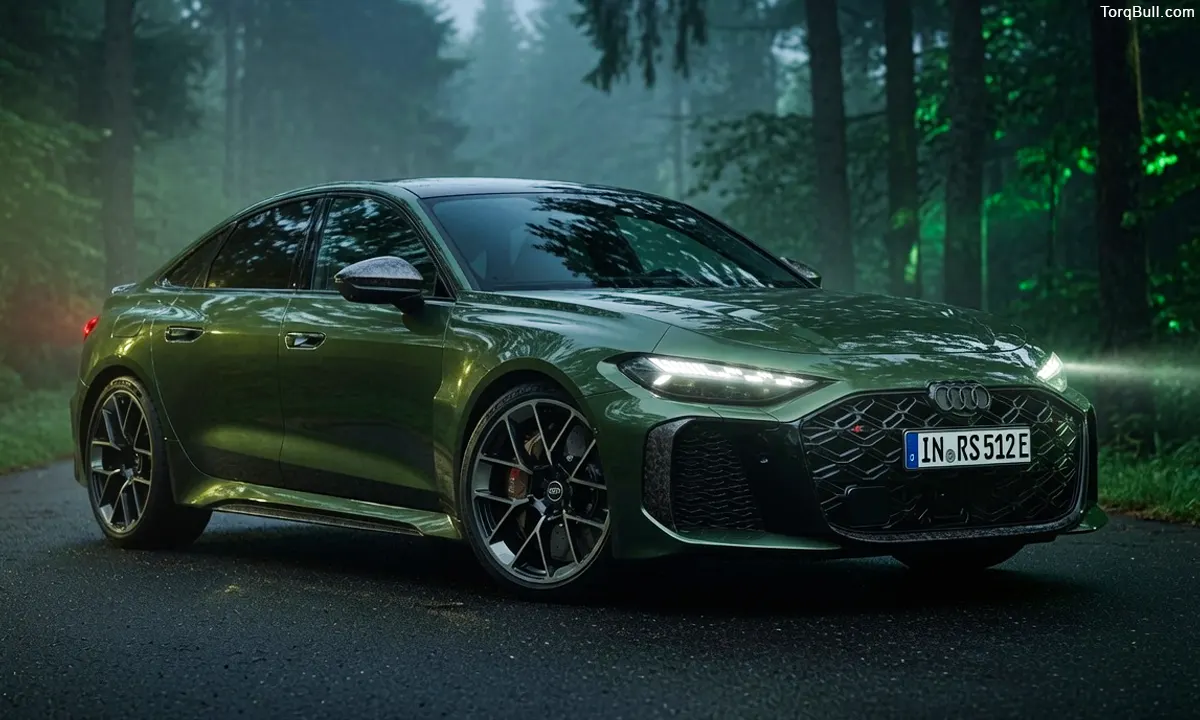
Let me tell you about the old Audi RS5. It was fast, it was comfortable, it was beautifully built, and it was about as exciting as a really nice dishwasher. For years, that was the knock on Audi Sport. Sure, the cars were quick, but they were clinical. Surgical. The kind of fast that impressed your accountant more than your inner child. If you wanted a sports sedan with actual personality, you bought the BMW M3 and lived with its tantrums.
Well, buckle up, because the 2027 RS5 just kicked that reputation to the curb and lit it on fire.
This is the first plug in hybrid RS Audi has ever built, and on paper that sounds like a recipe for a heavier, more sanitized luxury barge. Instead, Audi used the electrification to do something genuinely wild. It built what might just be the easiest drifting 600 plus horsepower car on the market. A drift mode. In an Audi. The world has officially turned upside down, and I could not be happier about it.
The Heart Is Still a Glorious V6
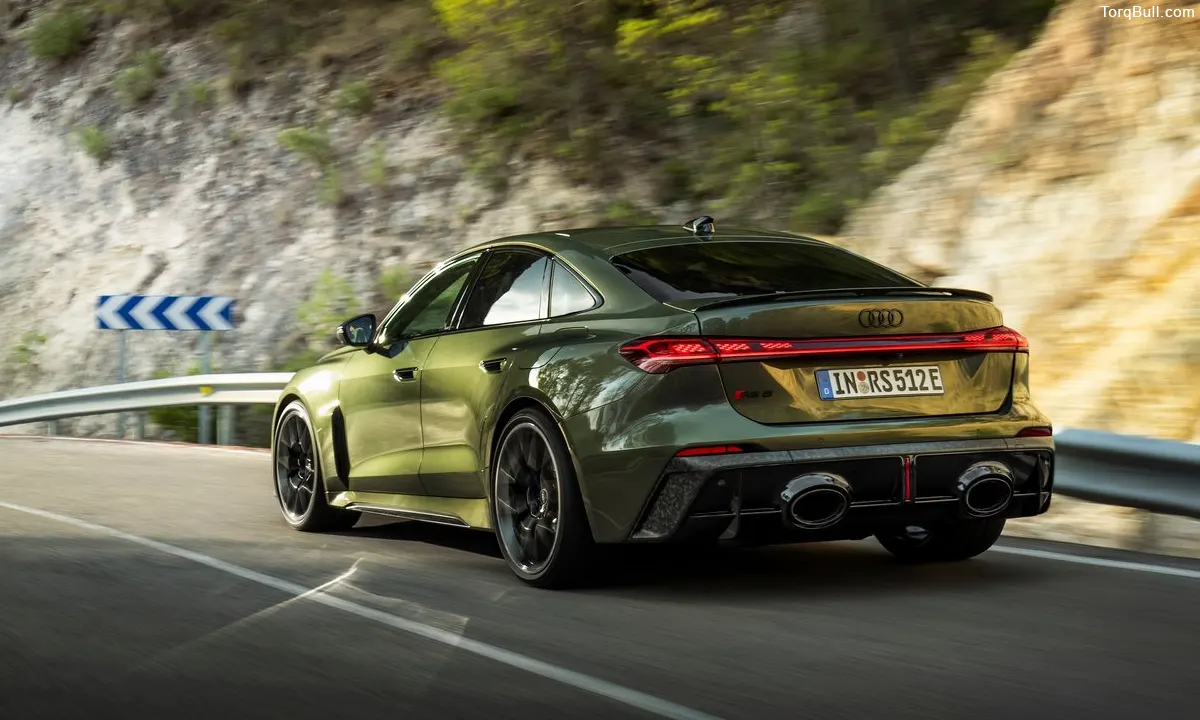
First, the good news for anyone worried that electrification means soulless four cylinders. Audi did not downsize. It doubled down.
The familiar twin turbocharged 2.9 liter V6 has been revised for more power, now making 503 horsepower on its own, a nearly 60 horsepower gain thanks to a revised fuel system, new intake, and the first use of water to air intercoolers on the model. Then comes the electric assist. An electric motor producing 174 horsepower and 339 pound feet sits between the engine and transmission, with full access to all eight gears, and it can drive all four wheels on its own at speeds up to 87 mph.
Stack it all up and the numbers are bonkers. Combined output is 630 horsepower and 608 pound feet, more than any BMW M3 ever made and even outmuscling the 621 horsepower RS6 Avant. Let that sink in. This compact sedan now out punches Audi’s own big bruiser wagon. The old RS5 made 444 horsepower. This thing makes 630. That is not an upgrade, that is a generational leap.
That Red Boost Button Is Pure Theater
Here is a detail that made me laugh out loud with delight. Audi put a big red Boost button on the steering wheel, and it does exactly what you hope.
Toggle the shiny red Boost button sitting close to your left thumb and you get 10 seconds of maximum warp speed for quick passing while terrifying your passengers. It deploys full output in any driving mode, opens the exhaust flaps, and then everything returns to normal once the 10 seconds are up. It is gloriously childish and I love it. A literal “go faster now” button. Every car should have one.
And the straight line results back up the theater. Audi claims 0 to 62 mph in 3.6 seconds and a top speed of 177 mph with the Sport package. One reviewer who drove it thinks Audi is sandbagging. That 3.6 second figure honestly seems a bit conservative, and the car feels far more urgent on throttle thanks to the electric motor filling in while the turbos spool.
Now Let’s Talk About the Drift Mode
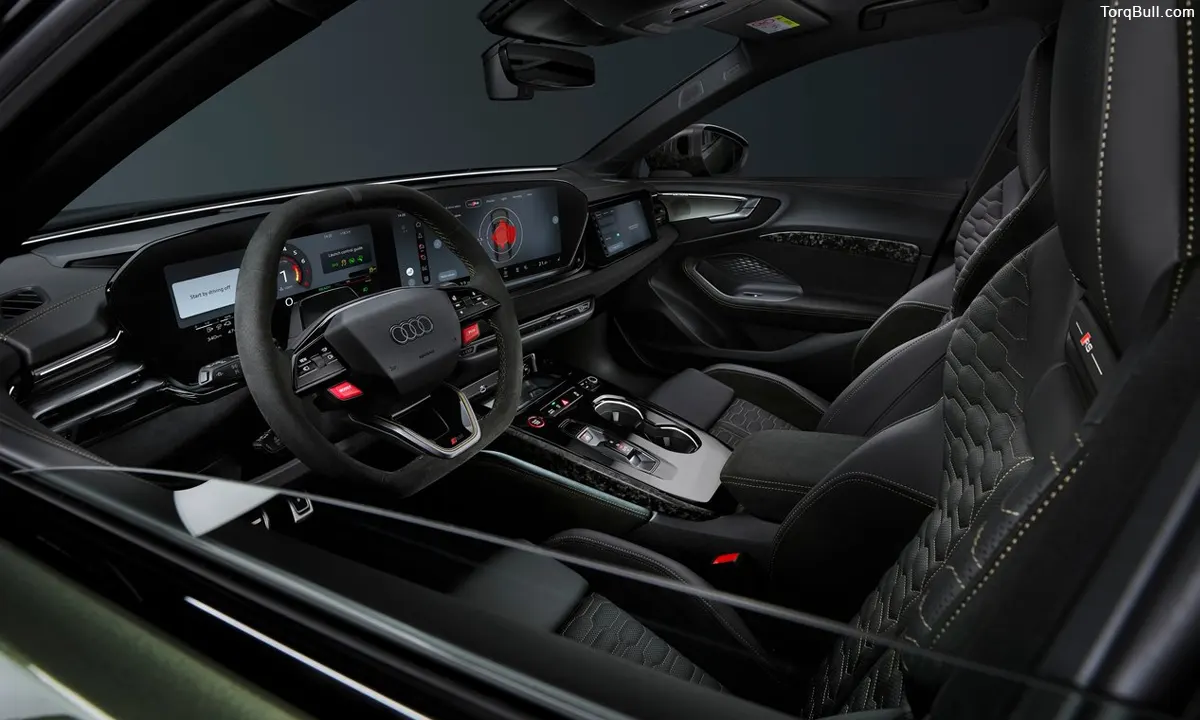
This is the headline. This is the reinvention. This is the part that genuinely changes what an RS5 is.
Audi built an entirely new rear differential to make it happen, and it is clever stuff. There is an all new rear transaxle with electromechanical torque vectoring, which Audi claims is a world first for a production model. Paired with a revised center differential, the torque split gets dramatic. The front to rear power split can vary between 70/30 and a tail happy 15/85, sending up to 85 percent of torque to the rear wheels.
Then you flip the magic switch. The new Torque Rear mode immediately disables stability control and configures that rear differential to be as aggressive as possible, turning the RS5 into a drifting machine. And the best part is how accessible it is. After a smoky launch, the reviewer was effortlessly skidding through a closed course and doing a perfect slide around a central cone, calling it possibly the easiest drifting 600 plus horsepower car on the market.
That is the reinvention in a nutshell. The old RS5 would never. This one hangs its tail out like a proper hooligan, and it makes you look like a hero doing it. Just keep it on a track, please. Audi is very clear this drift mode is intended only for non public roads.
It Is Not Just a One Trick Hooligan
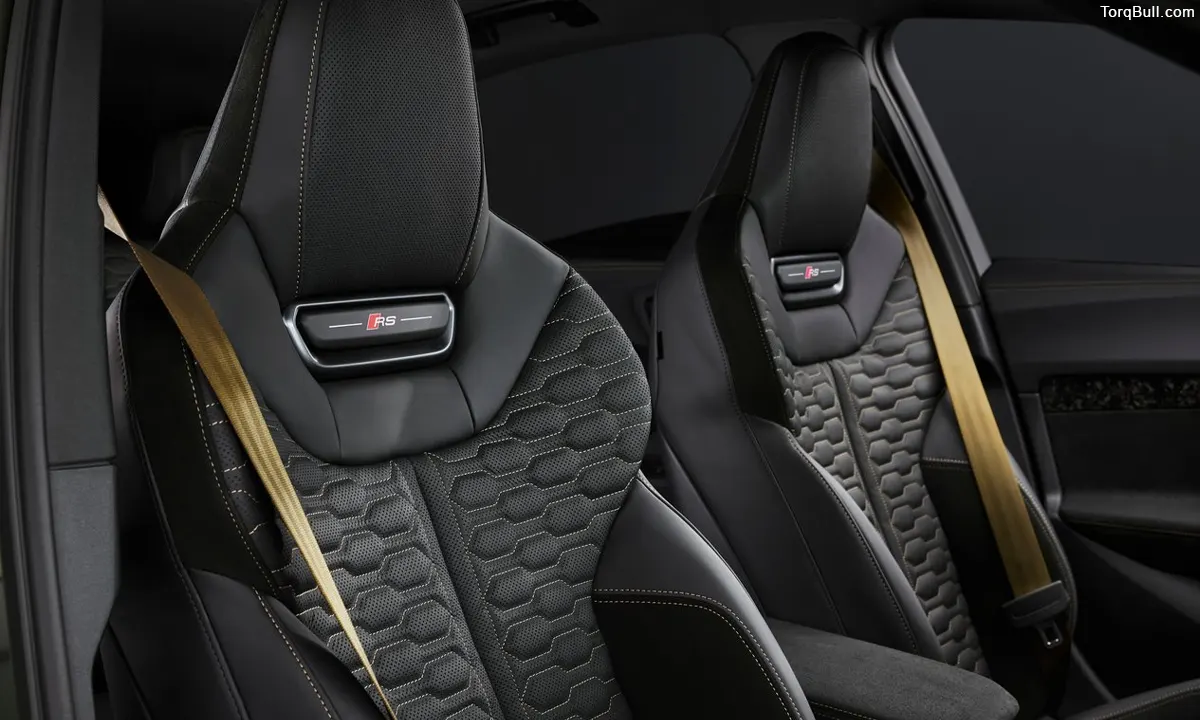
Here is what seals it for me. The RS5 is not just a smoke show. Dial it back and it is a serious track weapon too. Switch to RS Sport mode and the personality totally changes, with that rear differential now chasing maximum grip, exhibiting huge confidence around the tight Marrakesh racetrack infield.
There is real engineering brilliance keeping you safe while you play. The driving dynamics controller calculates longitudinal and transverse G forces, yaw rate, slip angle, speed, and road grip every five milliseconds to pull you out of lairy situations nearly instantly. And like its rival, it lets you relive your glory. There is a drift recorder and analyzer, the body is 10 percent stiffer than the A5 it is based on, and it is a full 3.5 inches wider. That widebody stance is not just for show. It means business.
Read: BMW X3 M50 xDrive Packs Serious Sports Car Speed in a Family SUV
How It Stacks Up
Here is where the new RS5 lands against its archrivals.
| Model | Power | 0 to 60 | Electrified | Drift Mode |
| 2027 Audi RS5 | 630 hp | 3.6 sec | PHEV, 52 mi EV | Yes, Torque Rear |
| BMW M3 Competition | Around 523 hp | 3.4 sec | No | Yes |
| Mercedes-AMG C63 S E Perf | Around 671 hp | 3.3 sec | PHEV, short range | Yes (Drift) |
A couple of honest notes here. The Mercedes-AMG C63 still bests the Audi by around 40 horsepower and over 100 pound feet, and both the M3 Competition at 3.4 seconds and the C63 at 3.3 are a touch quicker to 60 on paper. But the RS5 has a trump card over the Merc. Unlike the C63, the Audi has truly usable battery capacity, roughly four times the size, good for up to 52 miles of fully electric driving. The C63 went the controversial four cylinder route. Audi kept the soulful V6 and added real EV range. I know which approach I respect more.
Let Me Be Honest About the Weight
I promised you my real opinion, so here is the catch, and it is a notable one. All those batteries weigh a ton. Almost literally.
The new RS5 weighs over 1,000 pounds more than its predecessor, mostly thanks to the 25.9 kWh battery situated beneath the trunk. That is a lot of mass, and physics does not care how clever your differential is. There is a practical cost too. Cargo space drops by about a third, from 16.3 cubic feet in the old Sportback to 11.7 cubes now.
And the cruelest blow for enthusiasts? The long roofed RS5 Avant wagon would be the obvious cargo solution, but Audi has sadly confirmed it is not coming to America. Wagon fans, I feel your pain. Pour one out.
Here is my read on the weight, though. Yes, it is heavy. But Audi clearly engineered around it, putting the battery low to optimize balance, and by every account the car drives lighter than the scales suggest. The electrification giveth far more than it taketh away.
Verdict: The RS5 Finally Has a Soul
So has the 2027 Audi RS5 reinvented the sports sedan? For Audi, absolutely, and that is the whole point.
This is the car that finally answers the years of complaints that Audi Sport built fast appliances. The previous RS5 lacked the aggressive look and feel true RS enthusiasts craved, and the new one’s radical look and edgier character leave you smiling. It keeps the glorious V6 instead of chickening out with a four cylinder, adds genuine plug in hybrid commuting range, and tops it off with a drift mode so good it turns amateurs into heroes. That is having your cake, eating it, and then doing a smoky donut in the parking lot afterward. Is it heavier than I would like? Yes. Do I wish we got the wagon? Desperately. But none of that dampens my enthusiasm, because Audi did the one thing I never thought it would. It built an RS car with a sense of humor. The 2027 RS5 is fast, it is clever, it is electrified, and for the first time in ages, it is genuinely, tail out, grin inducing fun. The dishwasher is dead. Long live the hooligan. Now somebody hand me the keys and point me to a closed course.