Design Excellence Recognised on the World Stage. Mazda 6e Just Won World Car Design of the Year. See Photos
A Sweeping Fastback Silhouette, Kodo Design Philosophy Elevated to Its Most Refined Production Expression, Premium Electric Sedan Proportions That Defeated Every European and Korean Rival in the Room — The Mazda 6e Has Achieved What No Previous Mazda Has Managed at the World Car Awards and Announced to the Global Automotive Industry That Japanese Design Mastery Has Entered a New Era
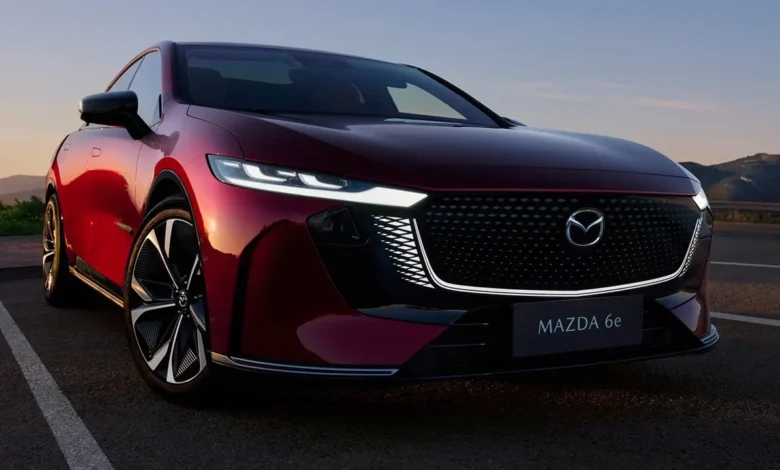
Mazda 6e: There are awards that validate commercial success — trophies presented to the vehicles that sold the most units, captured the most market share or generated the most revenue across a given period. And then there are awards that validate something more difficult to quantify and more enduring in its significance — recognition that a design team, working within the constraints of production feasibility, regulatory compliance and commercial reality, produced something genuinely beautiful. The World Car Design of the Year award is the second kind of recognition. Judged by an international jury of automotive journalists whose collective expertise spans every major design tradition in the global industry, it is the automotive design community’s most prestigious acknowledgement that a production vehicle has achieved aesthetic distinction that transcends its competitive category and merits recognition on purely design terms. The Mazda 6e has just received that recognition — and the automotive world’s response to the announcement has confirmed that the jury’s verdict was not merely defensible but obvious to anyone who had spent meaningful time with the car.
Gallery: Mazda 6e
What the Mazda 6e Is and Where It Comes From
The Mazda 6e is a fully electric premium sedan that represents both a continuation of the beloved Mazda 6 nameplate’s legacy and a fundamental reinvention of what that nameplate means in the electric vehicle era. Developed in collaboration with Changan Automobile for the Chinese market — where the vehicle entered production and achieved its initial commercial launch — the 6e brings Mazda’s Kodo design philosophy, which the Japanese manufacturer has developed and refined across more than a decade of production vehicles, to its most sophisticated and most visually resolved expression in a production car to date.
The Kodo design language — whose name translates from Japanese as Soul of Motion — was introduced by Mazda’s design team under the direction of Ikuo Maeda as a philosophy of capturing dynamic tension and the suggestion of latent movement in static form. Where many automotive design philosophies pursue visual complexity, surface ornamentation or technological signalling through exterior detailing, Kodo pursues the opposite — a reduction of surface complexity to the point where light itself becomes the primary design element, reflecting across carefully studied curves and transitions to create the impression of movement and life in a stationary object. The Mazda 6e represents the most complete execution of that philosophy in a production car, achieving a level of surface coherence and sculptural integrity that the jury of the World Car Awards assessed as superior to every competing design in the 2025 award cycle.
The Design That Won the Award
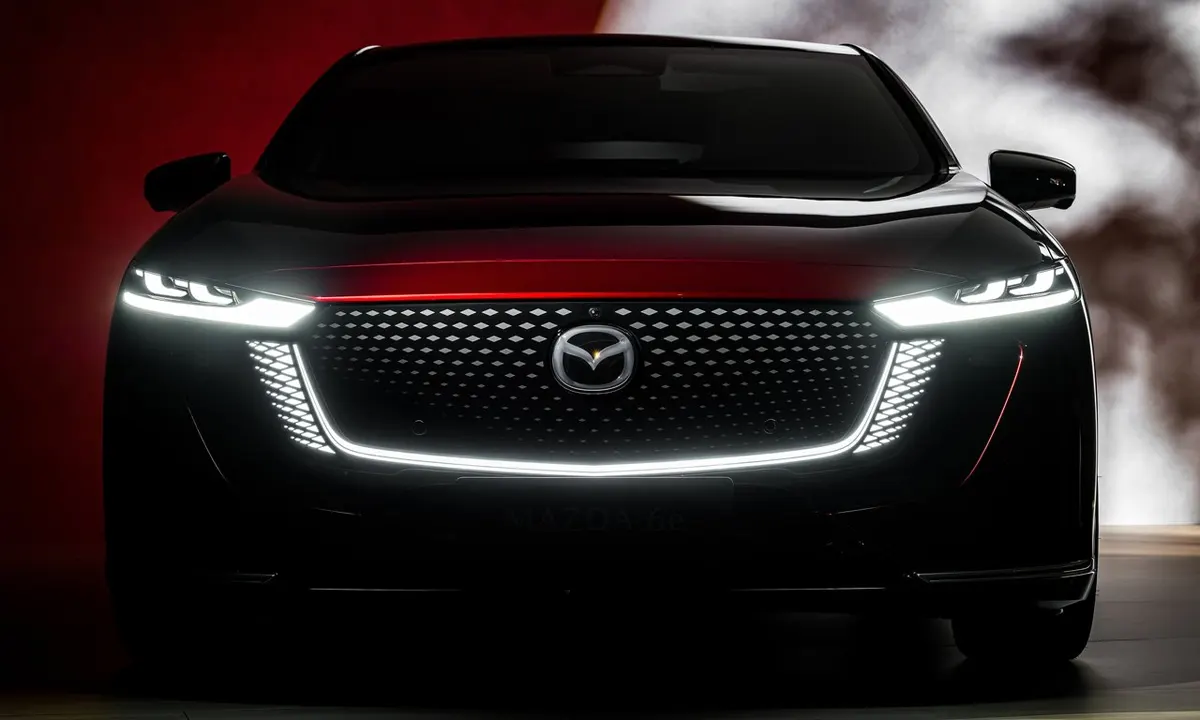
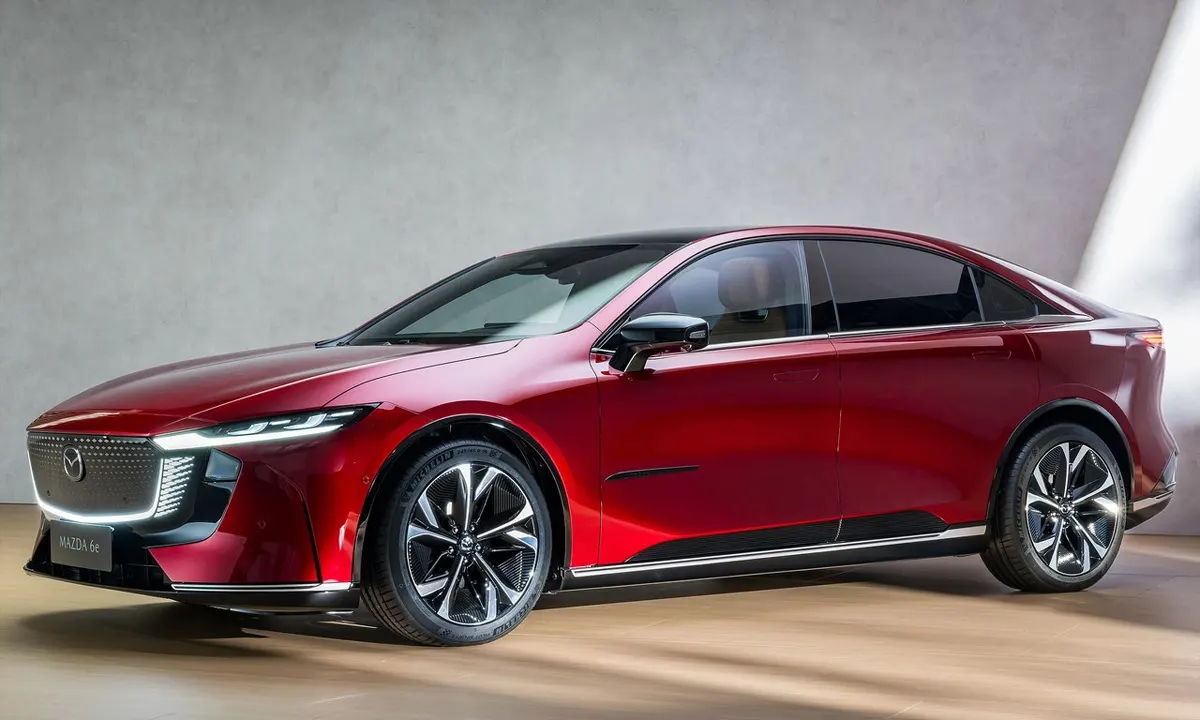
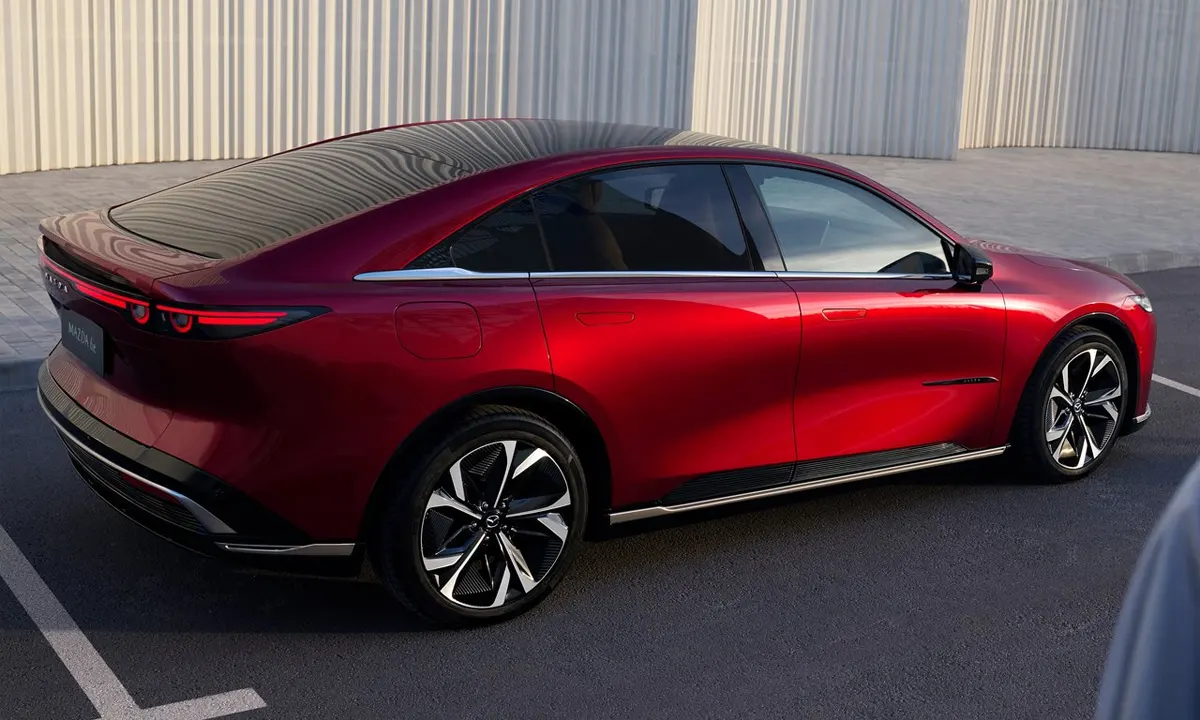
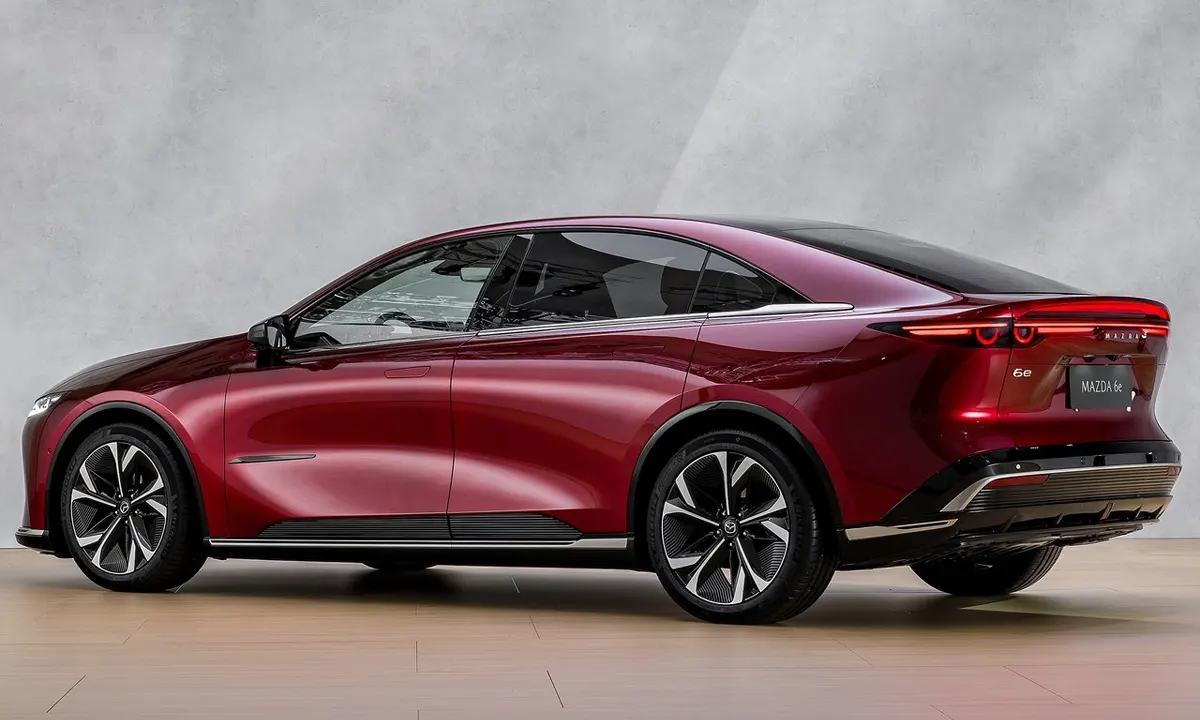
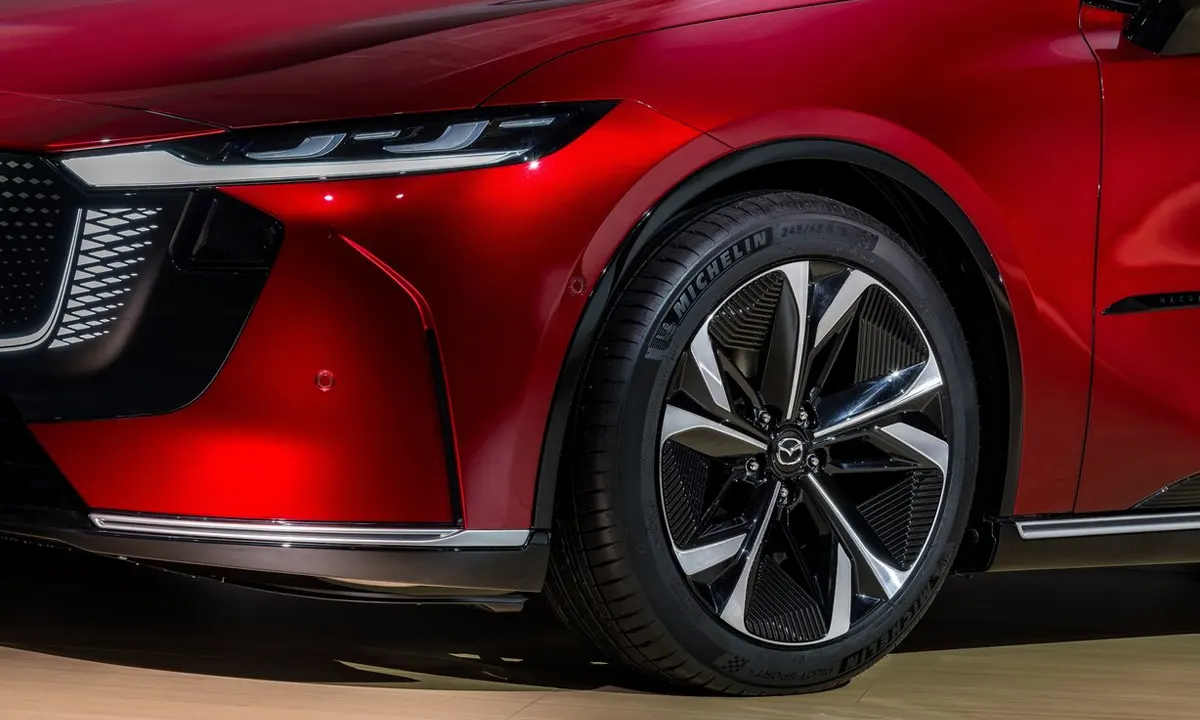
The Mazda 6e’s exterior design is centred on a fastback silhouette whose roofline flows from the windscreen base in a single uninterrupted arc to the tail — a proportion that simultaneously maximises aerodynamic efficiency, creates a dynamic visual character and provides the interior headroom that a pure coupe roofline would sacrifice. The front face eliminates the traditional grille opening that combustion-powered Mazdas require for engine cooling, replacing it with a closed surface whose sculptural treatment creates visual depth and presence without the decorative complexity that many electric vehicle designers have used to fill the space that the absent grille creates.
The side profile is where the 6e’s design achievement is most evident and most difficult to replicate. A single character line — beginning at the front wheel arch and flowing rearward in a gentle rising arc to the tail — organises the entire side surface around a tension point that creates the impression of compressed energy waiting for release. The surfaces above and below this line are not flat or simply curved but carefully compound-surfaced to catch and release light differently at different viewing angles and in different lighting conditions — producing a visual dynamism that changes the car’s appearance fundamentally between overcast conditions and direct sunlight in a manner that photographs cannot fully capture and that rewards extended visual engagement in a way that simpler surface treatments cannot approach.
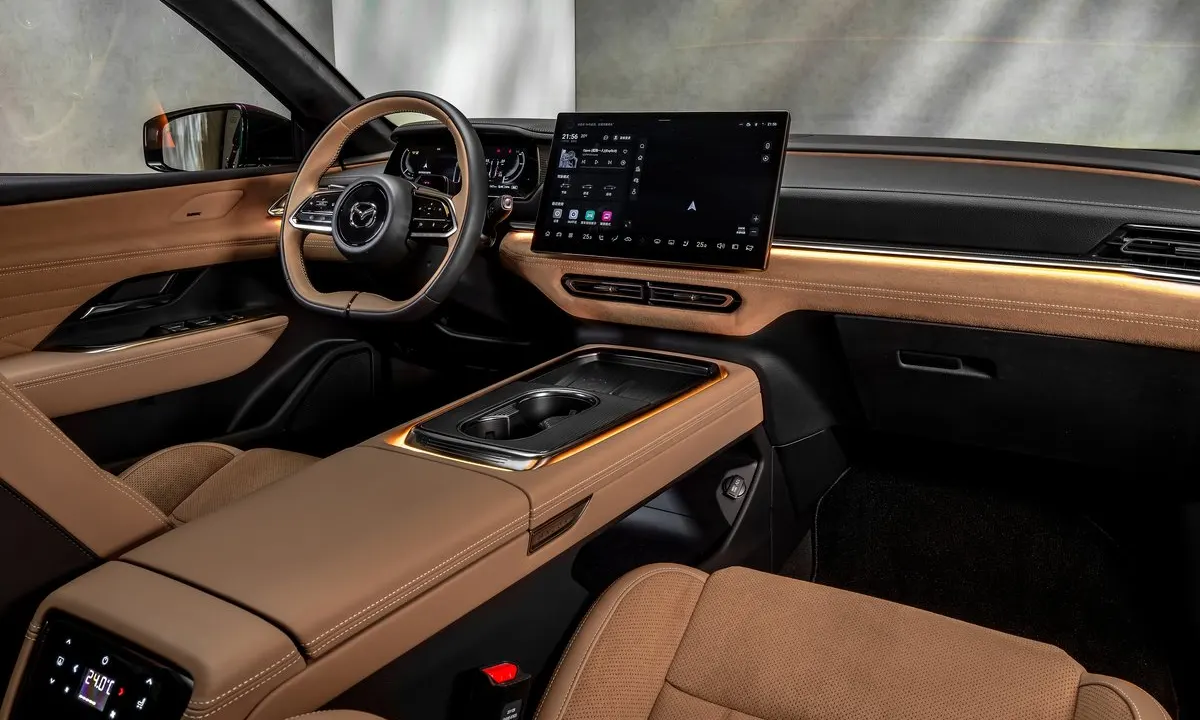
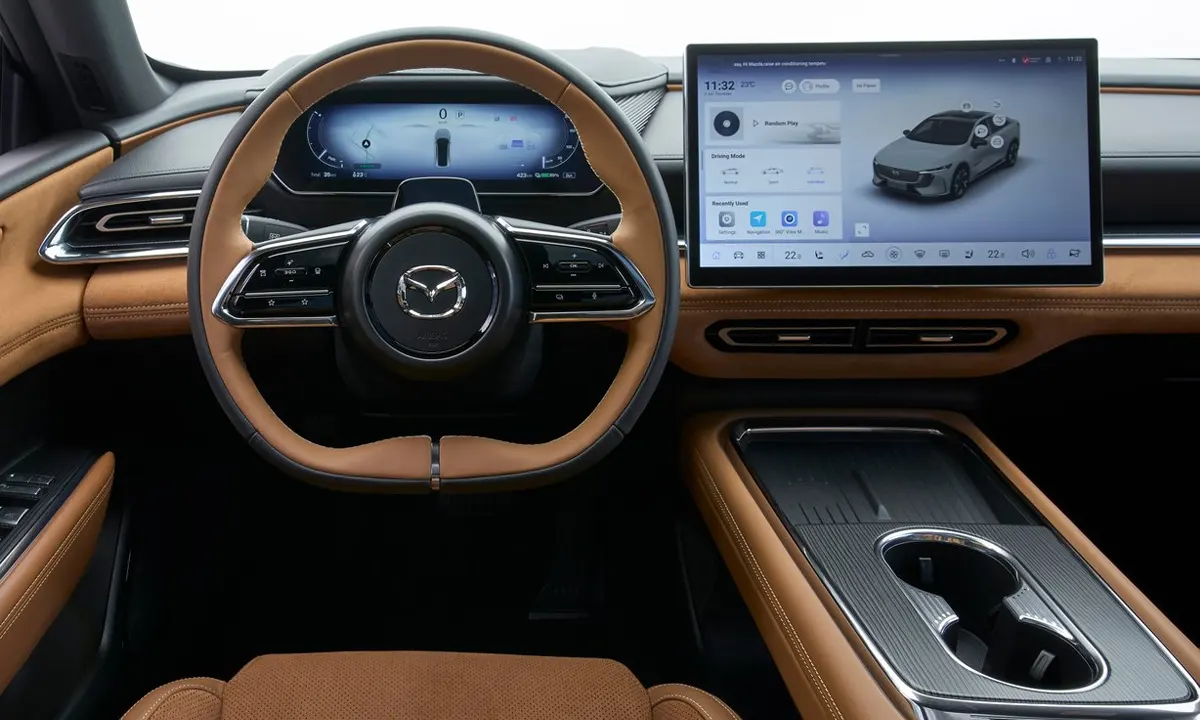
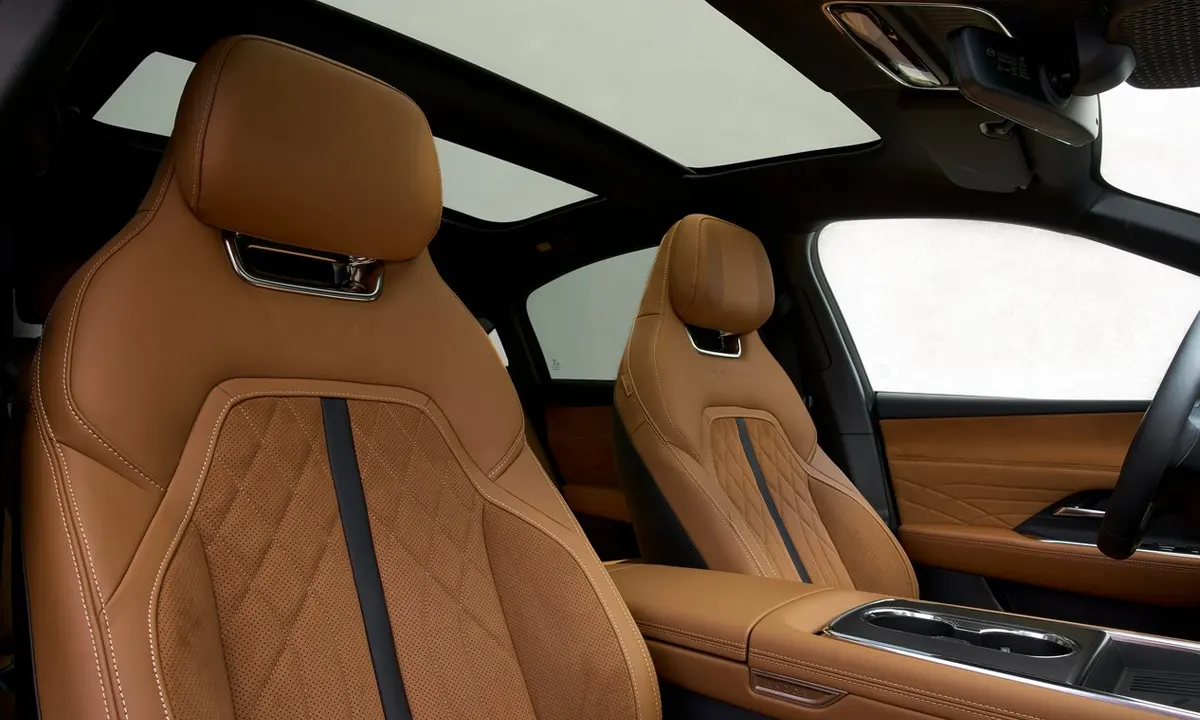
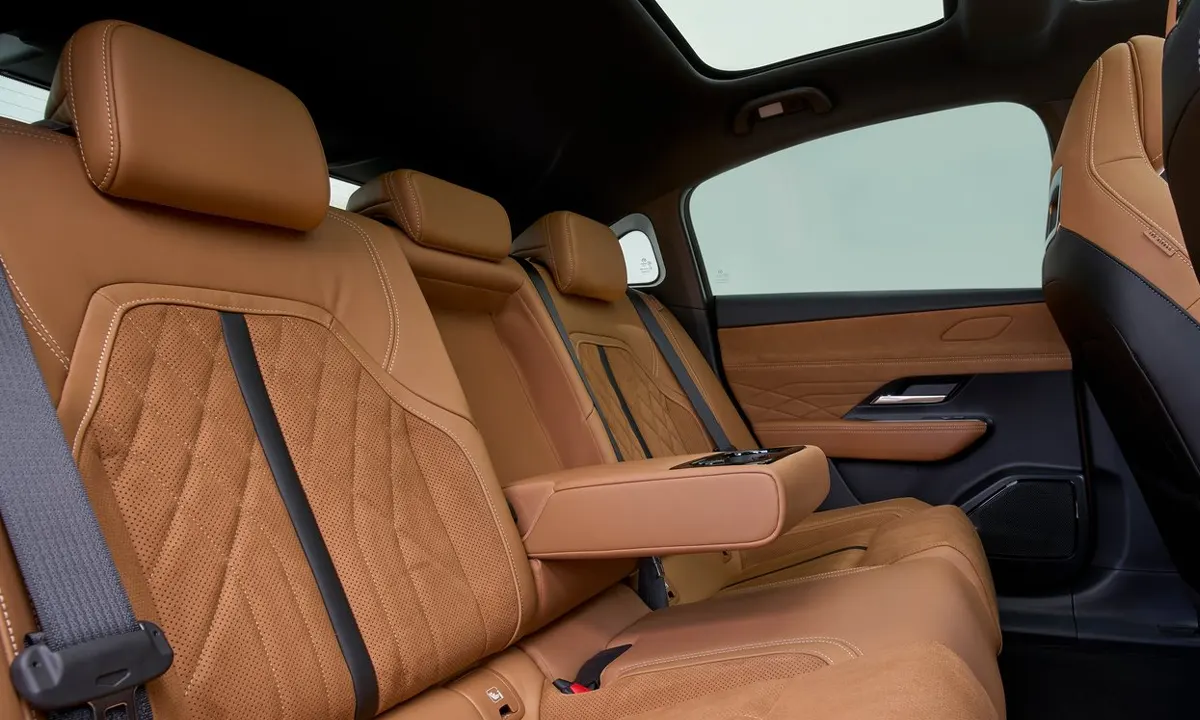
The interior continues the exterior’s discipline. The dashboard architecture is organised around a horizontal emphasis that visually widens the cabin, with a floating centre console, a driver-oriented instrument display and a material palette that combines genuine leather, open-pore wood trim and brushed metal accents in proportions that communicate premium intent without the maximalist approach that equates material quantity with luxury quality. Every surface that an occupant touches has been considered for its tactile quality alongside its visual contribution — a holistic approach to interior design that Mazda’s design team has pursued consistently across its recent product range and that achieves its fullest expression in the 6e’s cabin.
What the Award Means for Mazda’s Global Strategy
The World Car Design of the Year recognition arrives at a moment of strategic significance for Mazda that extends beyond the design department’s deserved celebration. The Japanese manufacturer has navigated the industry’s electrification transition with a degree of caution that its larger competitors have criticised and that its most devoted advocates have defended — maintaining a commitment to internal combustion engine development, including the rotary engine’s revival as a range extender in the MX-30 R-EV, while developing its electric vehicle portfolio at a pace that prioritised engineering integrity over first-mover commercial positioning.
The 6e’s design award validates a central element of Mazda’s competitive strategy — the conviction that design excellence and brand identity can constitute a sustainable competitive differentiation in a market where technology parity between manufacturers is increasing and where the traditional performance and efficiency distinctions between competing vehicles are narrowing. In the electric vehicle segment specifically, where powertrain differentiation is less immediately perceptible to buyers than in the combustion era and where the experiential distinctions between competing products are subtler and harder to communicate through specification comparisons, the ability to produce a vehicle that people find genuinely beautiful provides a commercial advantage whose value compounds across the ownership period and whose impact on brand perception extends beyond the 6e’s direct buyers to the broader audience that encounters the car in traffic, in media coverage and in the cultural conversation that a design award of this prominence generates.
Read: Audi Q8 e-tron vs. Porsche Cayenne Electric, Which German Electric SUV Is Better in 2026?
How the 6e Defeated Its World Car Design Rivals
The World Car Design of the Year shortlist for the 2025 award cycle included vehicles from manufacturers whose design resources, brand heritage and global market positions substantially exceed Mazda’s — making the 6e’s victory a genuinely competitive achievement rather than a recognition of a field without strong alternatives. European premium manufacturers, Korean design teams whose recent work has attracted consistent critical praise and established Japanese competitors all presented vehicles for jury consideration whose design credentials were substantive and whose commercial backing gave their design teams resources that Mazda’s more constrained budget does not match.
The jury’s selection of the 6e over these alternatives reflects a design philosophy assessment — a collective judgment that the coherence, restraint and sculptural integrity of Mazda’s approach produced a more genuinely beautiful result than the more technically complex, more visually busy or more deliberately dramatic alternatives presented by better-resourced competitors. It is a verdict that prioritises design quality over design ambition — and in doing so, confirms that Mazda’s patient, disciplined development of the Kodo philosophy across more than a decade of production vehicles has produced a design capability that can compete with and defeat the global industry’s best on the world stage’s most prestigious platform.
The 6e’s World Car Design of the Year award is not a surprise to anyone who looked at the car carefully. It is simply the formal confirmation of what careful looking revealed.
Read: The Most Powerful Audi Ever Built Runs Entirely on Electricity and It’s Breathtaking
Mazda 6e Key Specifications & Design Details
| Category | Specification |
| Vehicle Type | Fully Electric Premium Fastback Sedan |
| Design Philosophy | Kodo — Soul of Motion |
| Award Received | World Car Design of the Year 2025 |
| Development Partnership | Changan Automobile (China) |
| Primary Launch Market | China |
| Powertrain | Single / Dual Motor Electric |
| Estimated Range | Approx. 600 km (CLTC) |
| Charging Architecture | DC Fast Charging Compatible |
| Seating | Five |
| Body Style | Four-Door Fastback |
| Key Exterior Feature | Single Flowing Roofline / Closed Front Face |
| Interior Theme | Horizontal Dashboard / Floating Console |
| Design Director Heritage | Ikuo Maeda — Kodo Language Originator |
| Competitor Designs Defeated | European / Korean / Japanese Premium Rivals |