Beyond Engineering. What Makes Pagani Different From Every Other Hypercar Brand?
A Hypercar Manufacturer Built on Philosophy, Not Volume
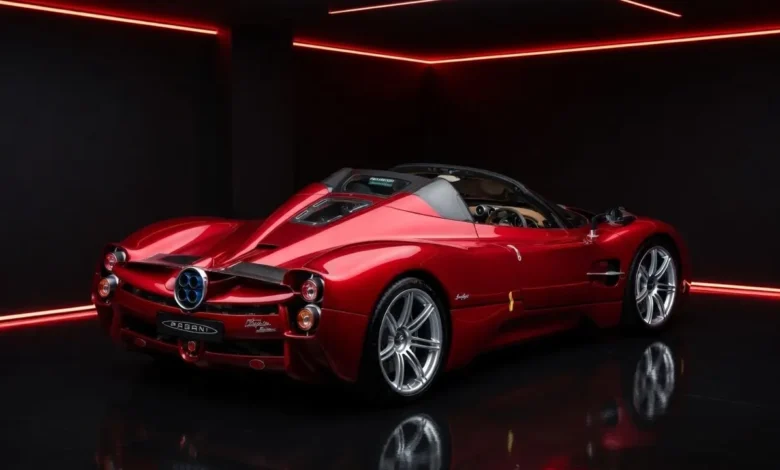
- Proprietary Carbotanium construction with closely guarded formula
- Engineering meets art in every component and design detail
- Deep Mercedes-AMG powertrain partnership
- Founder-driven vision blending science and artistry
- Ultra-low production yet outsized global influence
There are hypercar manufacturers and then there is Pagani — a distinction that sounds like brand advocacy but is, on examination, a structural observation about the category. Ferrari builds extraordinary cars. Lamborghini builds dramatic ones. Koenigsegg builds technically audacious ones. McLaren builds dynamically focused ones. Each of these manufacturers has defined a recognisable philosophy whose expression in their vehicles is consistent, coherent and commercially successful at volumes that sustain the engineering investment their ambitions demand. Pagani builds something different from all of them — not merely in specification or in price but in the fundamental relationship between the object produced and the human being who experiences it. Understanding what makes Pagani different from every other hypercar brand requires examining not merely what the company builds but why it builds the way it does and what Horacio Pagani believes a car, at its most extraordinary, is actually for.
The Founder’s Philosophy: Where Science Meets Art
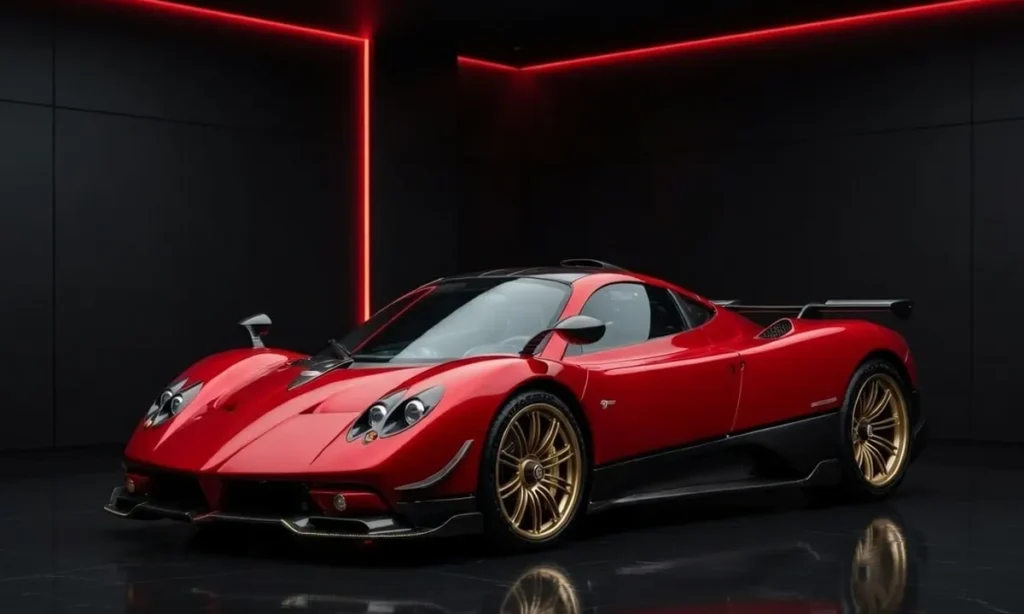
Every Pagani vehicle begins not with a performance target or a market positioning brief but with a philosophical conviction that Horacio Pagani has articulated consistently across three decades of production — the belief that a car can and should be simultaneously a work of engineering and a work of art, that the dichotomy between the two that most manufacturers accept as inherent is a false constraint whose elimination produces objects of a quality that neither pure engineering nor pure aesthetic ambition achieves independently.
This philosophy is not marketing language dressed in philosophical clothing — it is a production reality whose evidence is visible in every component of every Pagani vehicle ever built. The titanium bolts that secure the Utopia’s body panels are not merely fasteners — they are machined to a tolerance and finished to a quality that no structural requirement demands but that Pagani’s aesthetic standard considers as non-negotiable as the torque specification they must achieve. The exposed carbon fibre weave whose pattern Pagani specifies with the precision of a textile designer rather than the practicality of a structural engineer reflects the same philosophy — that the material whose engineering properties justify its use should also reward the visual engagement of every person who examines the finished object.
Horacio Pagani’s background — a self-taught engineer whose formal education was supplemented by the obsessive study of both Leonardo da Vinci’s notebooks and aerospace composite manufacturing — produced a manufacturer whose founder genuinely inhabits the intersection of disciplines that most manufacturers treat as separate departments. When Pagani describes a suspension component as beautiful, the description is not metaphorical. When an engineer at the Sant’Agata Bolognese atelier is asked to redesign a bracket because its proportions are visually unsatisfactory despite its structural adequacy, the instruction is neither unusual nor resented. It is the operational standard of a company whose founder’s values have permeated its culture completely.
Carbotanium: The Material That Is Uniquely Pagani
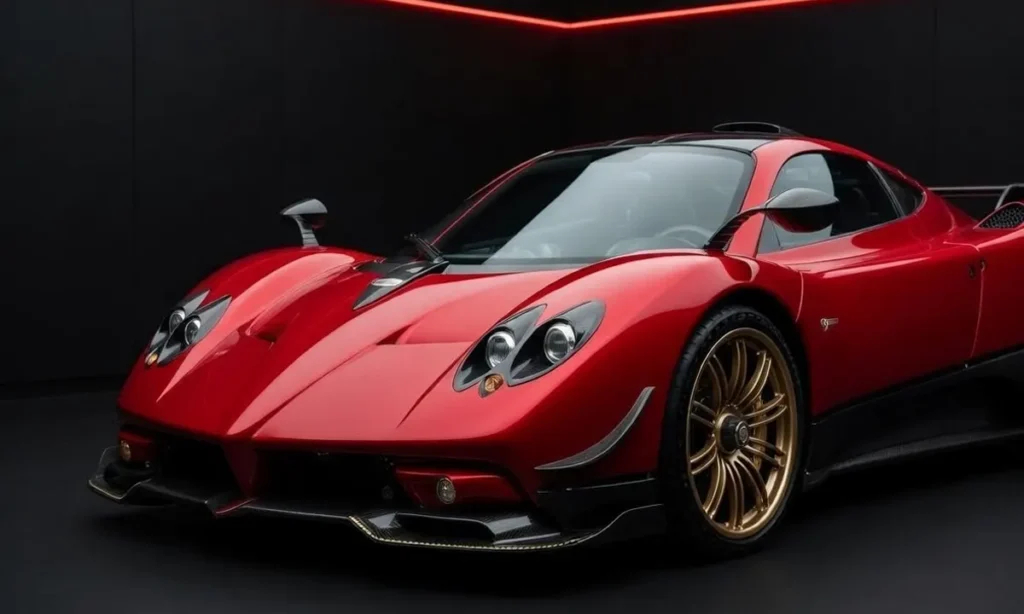
The clearest expression of Pagani’s engineering-art philosophy in material form is Carbotanium — the proprietary composite that combines carbon fibre with titanium in a weave whose specific formula, fibre orientation and resin system Pagani has never disclosed and whose production process remains the company’s most closely guarded intellectual property. Carbotanium provides a strength-to-weight ratio that neither carbon fibre alone nor titanium alone achieves — producing structural components whose lightness exceeds conventional carbon fibre applications and whose impact resistance and temperature stability exceed what standard carbon fibre provides.
The material’s visual character — whose metallic lustre distinguishes it immediately from conventional carbon fibre’s matte or glossy surface — provides the aesthetic quality that Pagani’s philosophy requires alongside the engineering properties that the performance brief demands. No other manufacturer uses Carbotanium. No other manufacturer can — the formula is proprietary, the production process is unique to Pagani’s atelier and the years of development whose investment produced the material represent an intellectual property asset whose value to the company extends beyond any single application.
The Mercedes-AMG Partnership: A Powertrain Relationship Unlike Any Other
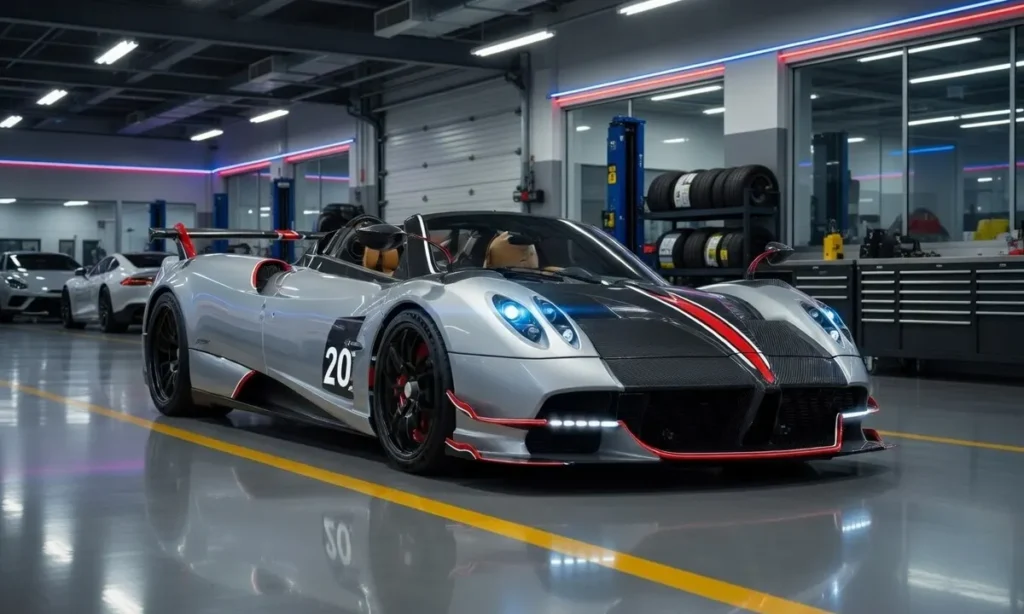
One of Pagani’s most strategically significant and most misunderstood distinctions from its hypercar competitors is the depth and duration of its powertrain relationship with Mercedes-AMG — a partnership that began with the original Zonda in 1999 and has continued across every Pagani production vehicle since, representing a collaboration whose intimacy, technical depth and mutual investment far exceed the supplier relationship that the term partnership might conventionally imply.
The relationship’s origin reflects the personal dimension that characterises so much of Pagani’s history — Horacio Pagani’s direct approach to Mercedes-AMG’s engineering leadership, whose persuasion required the kind of founder-to-engineer conversation that a larger, more institutionally structured manufacturer could not have conducted with equivalent directness or equivalent outcome. AMG supplied the 6.0-litre naturally aspirated V12 for the original Zonda — an engine whose availability to a then-unknown Argentine manufacturer building cars in a Sant’Agata Bolognese workshop reflected AMG’s assessment that the engineering vision behind the Zonda warranted the partnership risk that conventional supplier evaluation would not have sanctioned.
The relationship has deepened with each successive Pagani model. For the Huayra, AMG developed a twin-turbocharged version of the V12 specifically for Pagani’s application — an engine that did not exist in any other AMG vehicle and whose development cost represented a genuine investment in the partnership rather than a simple parts supply arrangement. The Utopia’s 6.0-litre twin-turbocharged AMG V12 producing 829 horsepower represents the most powerful and most extensively developed iteration of the collaboration — an engine tuned, calibrated and thermally managed to Pagani’s specific requirements in ways that the standard AMG application of the same basic architecture does not approach.
What makes this partnership genuinely different from the powertrain supply relationships that other small-volume manufacturers maintain with larger engine suppliers is the collaborative engineering investment that both parties bring. Pagani does not select from AMG’s catalogue — it co-develops with AMG’s engineers, specifying requirements that drive genuine engine development and receiving powertrains whose characteristics reflect Pagani’s input as much as AMG’s engineering. The result is a powertrain identity that is recognisably Pagani as much as it is recognisably AMG — a co-authored mechanical statement whose authorship neither party could claim exclusively.
The partnership’s significance extends beyond the technical dimension into the cultural one — because the AMG V12’s discontinuation from Mercedes-AMG’s own production vehicles makes the Pagani application increasingly the last active expression of an engine architecture whose history spans some of the most celebrated performance cars of the modern era. Every Utopia produced is therefore not merely a Pagani — it is the custodian of an AMG engineering legacy whose survival in production form depends entirely on the continuation of a partnership that began with a founder’s personal conviction and has been sustained by mutual respect across a quarter century of collaboration.
The Atelier Manufacturing Model: How Pagani Builds Cars
Pagani’s manufacturing philosophy is the operational expression of its founding philosophy — a production model whose characteristics are so fundamentally different from every other hypercar manufacturer’s approach that the word manufacturing, with its implications of process, volume and efficiency, barely applies to what happens in the Sant’Agata Bolognese facility.
Each Pagani vehicle requires between 8,000 and 10,000 hours of skilled human labour to complete — a figure that reflects not inefficiency but intent. The craftspeople who build Pagani cars are not assembly line workers following standardised processes — they are skilled artisans whose individual contribution to each vehicle is measurable in the hand-finished quality of surfaces, the precision of component fit and the cumulative effect of thousands of small decisions whose correctness cannot be specified in a process document but must be understood by the person making them.
The production rate that this philosophy enables — approximately 40 to 50 vehicles per year across the entire Pagani production facility — is not a commercial limitation that the company is working to overcome. It is the production rate that the manufacturing philosophy requires and that the ownership experience demands. A Pagani whose production volume doubled would not be twice as valuable to its owners. It would be less valuable — because the scarcity that the atelier production model creates is not merely a commercial benefit but a reflection of the genuine human investment that each vehicle represents.
The Ownership Community: Pagani’s Most Distinctive Asset
What separates Pagani from every other hypercar manufacturer whose product quality is high and whose production volume is low is the ownership community whose relationship with the brand transcends conventional automotive enthusiasm into something more closely resembling a cultural membership whose privileges extend far beyond the vehicle itself.
Pagani owners are invited into the production process of their vehicles — visiting the atelier during build, participating in specification decisions whose depth no other manufacturer’s bespoke programme approaches and developing personal relationships with Horacio Pagani himself whose accessibility to his customers is extraordinary for the founder of a company whose vehicles command eight-figure auction results. The Pagani customer is not a buyer — they are a collaborator in the creation of an object that will bear their influence alongside the company’s signature.
This relationship produces the most devoted owner community in the hypercar segment — owners who do not merely drive and display their Paganis but who advocate for the brand with a passion that reflects genuine personal investment in what the company represents. The Pagani Raduno — the annual gathering of owners whose participation reflects the community dimension of Pagani ownership — produces a concentration of automotive passion that no other manufacturer’s owner event approaches in the intensity of its participants’ commitment.
Read: Inside the Pagani Utopia’s AMG V12 and Why It Rejects Hybrid Power
Why No Other Brand Replicates the Pagani Formula
The question of why no other manufacturer has replicated Pagani’s approach — given its evident commercial success and the enthusiastic reception its vehicles receive — reveals the specific conditions whose combination makes the Pagani formula unique rather than merely superior.
The formula requires a founder whose genuine personal obsession with the art-engineering intersection permeates the company’s culture at every operational level. It requires the Mercedes-AMG partnership whose quarter-century of co-development has produced powertrain solutions that no alternative supplier relationship could replicate. It requires a production volume whose limitation is philosophical rather than commercial. And it requires the patience of a manufacturer whose development timelines are determined by the standard the finished object must achieve rather than the market window the competitive landscape demands.
Ferrari cannot replicate this formula at Ferrari’s scale. Lamborghini cannot replicate it at Lamborghini’s volume. The formula is not a strategy that a sufficiently motivated large manufacturer could adopt — it is the organic expression of a specific founder’s specific values, built into a specific company’s specific culture across three decades of consistent application. That irreplicability is, ultimately, what makes Pagani different from every other hypercar brand — and what ensures it will remain so.
Read: Why the Pagani Utopia Will Be a Future Multi-Million Dollar Collectible
Pagani vs Rivals — Brand Philosophy Comparison
| Category | Pagani | Ferrari | Lamborghini | Koenigsegg | McLaren |
| Annual Production | ~40–50 Units | ~14,000 Units | ~10,000 Units | ~100–150 Units | ~3,000 Units |
| Core Philosophy | Art + Engineering Unity | Racing Heritage / Emotion | Drama / Spectacle | Technical Extremity | Dynamic Purity |
| Proprietary Material | Carbotanium | Carbon Fibre (Standard) | Forged Composites | Carbon Fibre (Standard) | Carbon Fibre (Standard) |
| Build Hours Per Car | 8,000–10,000 Hours | 3,000–4,000 Hours | 2,000–3,000 Hours | 5,000–7,000 Hours | 2,000–3,000 Hours |
| Powertrain Partnership | Mercedes-AMG (Co-Dev) | In-House | In-House / Audi | In-House / Ford | In-House |
| Founder Involvement | Daily / Personal | Institutional | Institutional | Daily / Personal | Institutional |
| Owner Relationship | Collaborative / Personal | Premium Service | Premium Service | Collaborative | Premium Service |
| Starting Price | ~$2,200,000 | ~$250,000+ | ~$230,000+ | ~$3,000,000+ | ~$215,000+ |
| Heritage Duration | 1992–Present | 1947–Present | 1963–Present | 1994–Present | 1963–Present |