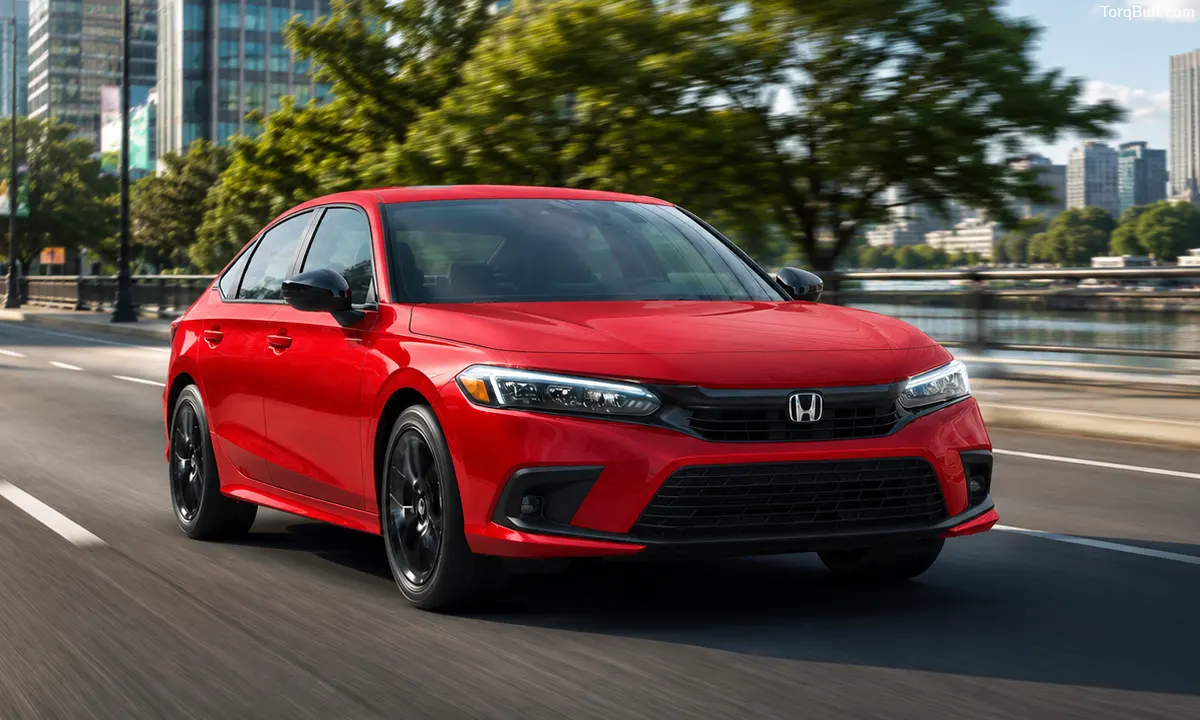
- The 2026 Honda Civic Hybrid makes 200 horsepower, delivers 49 MPG and accelerates quicker than the Civic Si.
- The Civic Si offers 200 horsepower with a six-speed manual and limited-slip differential.
- The Civic Type R produces 315 horsepower and reaches 60 MPH in under five seconds.
The Honda Civic’s engine lineup in 2026 is more performance-diverse than at any previous point in the nameplate’s history — spanning from a 150-horsepower naturally aspirated four-cylinder in base commuter trim through a 200-horsepower hybrid system that outperforms the dedicated performance Si variant in acceleration, to the 315-horsepower Type R turbocharged hatchback that reaches 60 MPH in the sub-five-second range. Understanding exactly what each engine delivers — not just in EPA estimates and factory specifications but in the real-world tested performance numbers that professional evaluations produce — is the most practically useful knowledge for any Civic buyer comparing configurations. This guide covers every 2026 Civic engine in complete detail.
The Base 2.0-Litre Naturally Aspirated Engine: Adequate, Not Inspiring
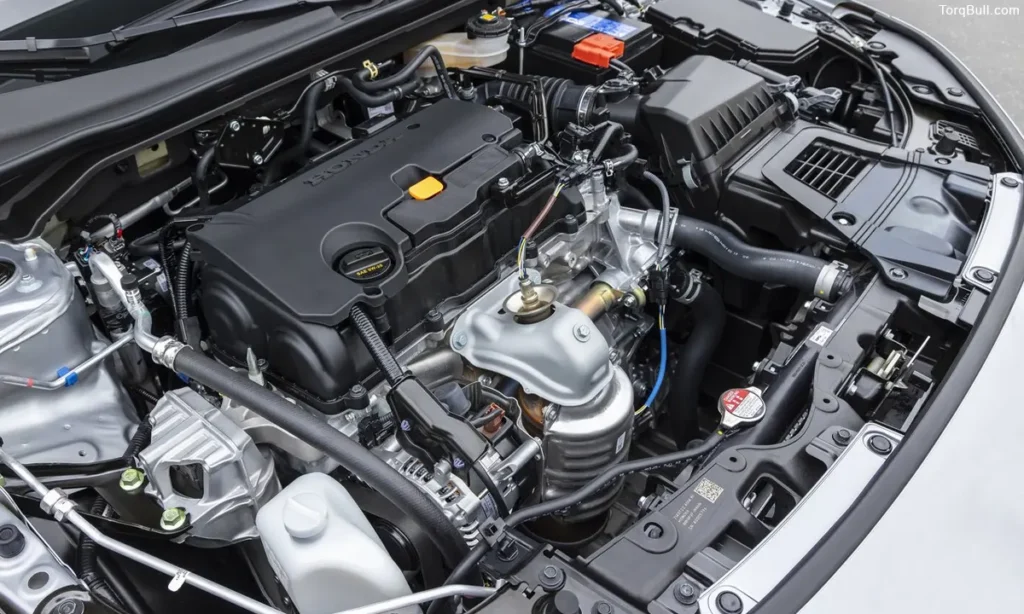
The 2026 Honda Civic SE and Sport trims use a 2.0-litre naturally aspirated four-cylinder engine producing 150 horsepower and 133 pound-feet of torque — the entry-level powertrain specification and the most modest performance offering in the Civic lineup.
The 150-horsepower output is paired exclusively with a Continuously Variable Transmission across all base configurations, with no manual transmission option available for this engine. The performance character produced by this combination is best described as adequate for daily commuting tasks rather than engaging or rewarding for drivers who value active participation in the driving experience. Professional evaluation is direct on this point: acceleration is merely adequate, and the base Civic would benefit significantly from a turbocharger to reach its full potential as a compact sedan.
The CVT’s specific behaviour under hard acceleration produces the characteristic rubber-band sensation — where engine RPM climbs rapidly while vehicle speed builds more gradually — that CVT designs have historically been criticised for. Simulated gear steps programme into the CVT to mimic conventional automatic transmission behaviour, partially addressing the sensation but not eliminating it in full-throttle situations. The Sport trim adds a Sport mode and steering wheel paddle shifters that provide more driver control over the CVT’s programmed ratios, making the powertrain feel more engaged during spirited driving without fundamentally altering the engine’s performance character.
Fuel economy is the base engine’s primary competitive credential: 32 MPG city, 41 MPG highway and 36 MPG combined — figures that lead the non-hybrid compact segment and represent a genuine operating cost advantage for buyers whose primary criterion is minimising annual fuel expenditure. For daily commuters covering predictable routes with minimal acceleration demands, the 150-horsepower engine and CVT combination is a sensible and economical choice. For drivers who find any pleasure in the act of driving, the Si or Hybrid powertrain warrants serious consideration despite higher purchase prices.
Read: Honda Civic Worth Buying in 2026? Does Honda Still Lead the Segment?
The Civic Hybrid: The Most Compelling Performance-Per-Efficiency Powertrain
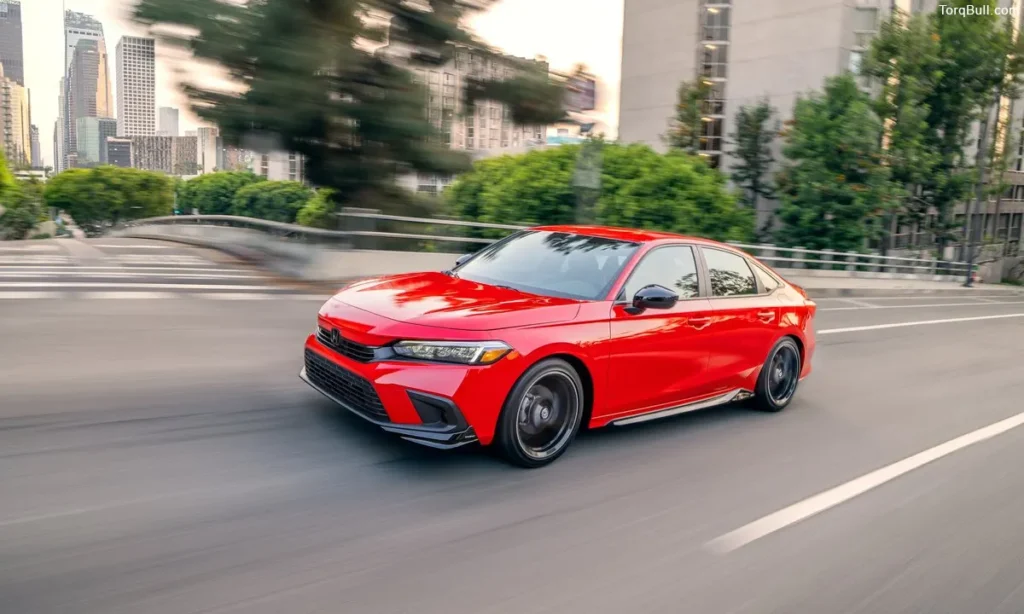
The 2026 Honda Civic Hybrid represents the most significant powertrain development in the Civic lineup’s recent history — a hybrid system that is not merely efficient but specifically more performance-capable than the turbocharged Si variant it most directly compares against on price.
The Hybrid combines a 2.0-litre naturally aspirated Atkinson-cycle engine with two electric motors — one drive motor and one generator — producing 200 combined horsepower and 232 pound-feet of torque. It is described as the most powerful non-Type R Civic ever produced, and this claim is validated by independent track testing that produced a 0-60 MPH time of 6.2 to 6.6 seconds — figures that are faster than the turbocharged Civic Si’s acceleration across multiple evaluations.
The electric motor’s contribution to this performance is the fundamental reason the Hybrid outperforms the turbocharged Si despite equivalent peak horsepower ratings. Electric motors deliver maximum torque instantaneously from zero RPM — no turbocharger spool time, no CVT ratio management, no power curve buildup. The moment a Hybrid driver requests maximum acceleration, full torque is available immediately, producing the strong off-the-line surge that independent testing consistently confirms as faster than the Si’s turbo-dependent power delivery. One independent evaluation described the electric motors as making the Civic feel torquey and strong off the line in a way that is surprising for a vehicle whose primary design priority is fuel economy.
Fuel economy figures confirm the Hybrid delivers its performance advantage without sacrificing efficiency: 50 MPG city, 47 MPG highway and 49 MPG combined for the sedan — among the most efficient non-plug-in compact sedans available in the American market. The hatchback body achieves 50 MPG city, 45 MPG highway and 48 MPG combined — marginally lower highway efficiency from the hatchback body’s slightly higher aerodynamic drag compared to the sedan’s cleaner rear profile.
The Hybrid’s driving character in daily use is described across professional evaluations as easygoing and enjoyable — not performance-focused in the way the Si or Type R are but genuinely fun to drive around town, handling well and impressing with smoothness. The transition between electric and gasoline power operation is seamless in normal conditions, producing the quiet, effortless acceleration character that hybrid systems at their best deliver.
The Civic Si: The Driver’s Car in the Standard Lineup
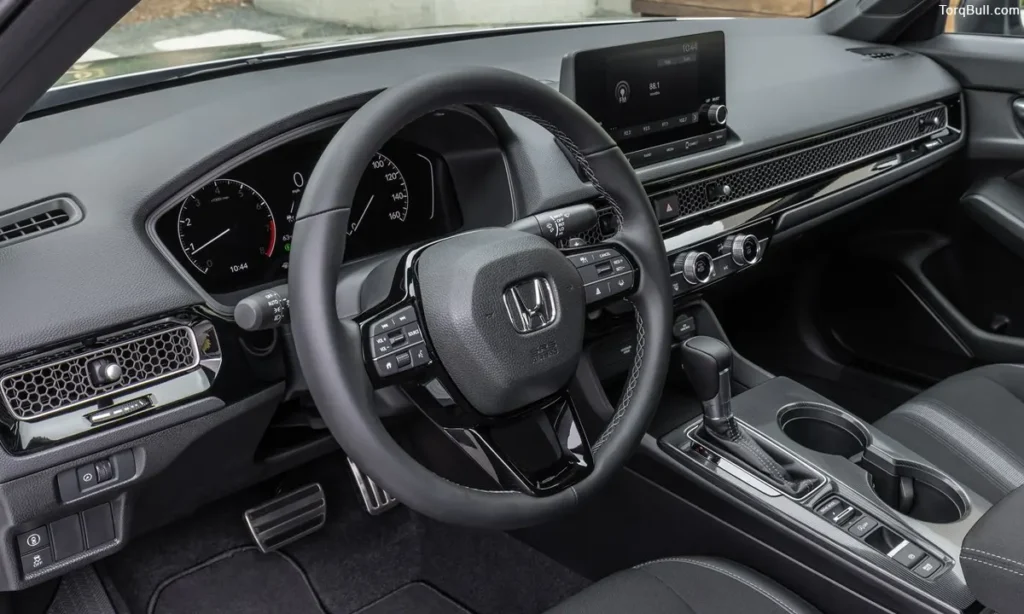
The 2026 Honda Civic Si is the configuration specifically engineered for driving engagement — the Civic variant where the powertrain hardware prioritises how the car feels to operate rather than what the EPA estimates after standardised testing.
The Si uses a turbocharged 1.5-litre four-cylinder engine producing 200 horsepower at 6,000 RPM and 192 pound-feet of torque beginning at 1,800 RPM. Maximum boost pressure of 20.3 PSI and a 10.3:1 compression ratio reflect a tuned turbocharged application rather than a base-spec unit carried from the standard 1.5-litre lineage. The Si is paired exclusively with a six-speed manual transmission — no automatic option exists — and front-wheel drive with a limited-slip differential that enables more confident corner exits under power than an open differential allows.
Instrumented testing confirmed a 0-60 MPH time of 6.6 seconds — marginally behind the Hybrid’s 6.2 to 6.6-second result but quicker than most compact sedan alternatives at any price. Quarter-mile time is 14.9 seconds. The Si’s stopping performance is equally impressive: 156 feet from 70 to 0 MPH, enabled by larger brake rotors than non-Si Civic configurations. Cornering capability measured at 0.97 Gs on the skidpad — a figure that exceeds most dedicated sports cars from previous decades and confirms the Si’s chassis as genuinely capable rather than merely styled for performance.
The six-speed manual transmission is the Si’s most celebrated specific attribute — described as one of the best in the business by professional evaluations, with precise throw, well-defined gate spacing and a clutch action that communicates road surface information to the driver’s foot rather than dampening it. The rev-matching function automatically blips the throttle during downshifts to match engine speed to the incoming gear ratio — enabling smooth aggressive downshifts without requiring the driver to perform the technique manually while managing braking and steering simultaneously.
Top speed is 135 MPH — a figure that reflects the Si’s performance intent rather than its daily driving application. Fuel economy of 32 MPG overall from extended real-world testing is commendable for a performance variant with a six-speed manual and a track-tuned suspension calibration. The Si demonstrates that performance and efficiency are not mutually exclusive in the Civic platform.
The Civic Type R: The Pinnacle of Civic Performance Engineering
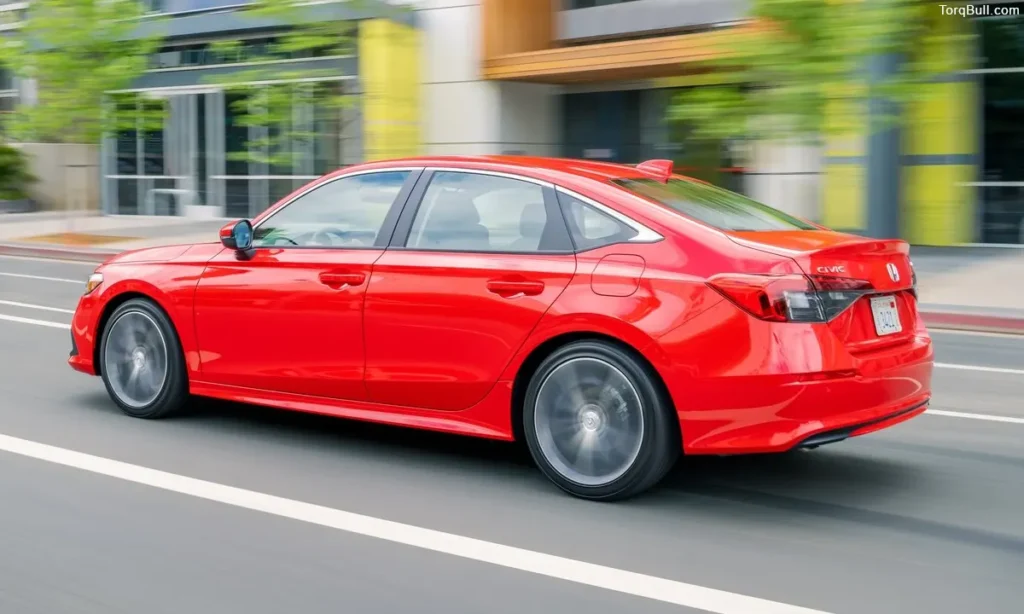
The 2026 Honda Civic Type R represents the maximum performance expression of the Civic platform — a vehicle that shares the Civic nameplate and basic dimensions but whose engineering priorities are oriented toward track performance, high-speed stability and driver involvement at levels that no other production compact sedan approaches.
The Type R uses a turbocharged 2.0-litre VTEC four-cylinder engine producing 315 horsepower — 115 horsepower more than both the Si and the Hybrid, and a figure that exceeds most dedicated sports car engines from five to ten years ago. The 0-60 MPH time is confirmed in the sub-five-second range — a result that places the Type R in competition with sports cars costing two to three times its purchase price rather than with other compact sedans. The six-speed manual transmission is the sole gearbox option, and its calibration specifically for the Type R’s power output produces shift characteristics that professional evaluators consistently describe as exceptional.
Adaptive suspension — available only on the Type R within the Civic lineup — adjusts damper rates based on driving mode selection and road condition inputs, enabling the Type R to function as a comfortable daily driver in Comfort mode and transform into a track-capable performance hatchback in Sport and Sport+ modes. The aerodynamic package — including functional front splitter, side air curtains and rear wing — generates meaningful downforce at higher speeds, contributing to the cornering stability that enables the Type R’s dynamic performance.
Honda Civic Engine Performance — Complete Comparison Chart
| Configuration | Engine | Horsepower | Torque | 0-60 MPH | EPA Combined | Transmission | Drive |
| SE / Sport (base) | 2.0L NA 4-cyl | 150 hp | 133 lb-ft | ~8.0 sec | 36 MPG | CVT | FWD |
| Sport Hybrid | 2.0L + dual electric motors | 200 hp combined | 232 lb-ft | 6.2–6.6 sec | 49 MPG | e-CVT | FWD |
| Sport Touring Hybrid | 2.0L + dual electric motors | 200 hp combined | 232 lb-ft | 6.2–6.6 sec | 48 MPG (hatch) | e-CVT | FWD |
| Civic Si | 1.5L Turbo 4-cyl | 200 hp | 192 lb-ft | 6.6 sec | 32 MPG | 6-speed manual | FWD + LSD |
| Civic Type R | 2.0L Turbo VTEC 4-cyl | 315 hp | 310 lb-ft | Sub-5.0 sec | 26 MPG | 6-speed manual | FWD + LSD |
Read: Is the Honda Civic Good for Long-Term Ownership? What It Costs and What The Risks Are In 2026
Which Civic Engine Is Right for Your Priorities?
The 150-horsepower base engine serves buyers for whom fuel economy and daily commuting simplicity are the primary criteria — drivers who cover predictable routes and for whom the act of driving is a transportation necessity rather than an activity they engage with actively.
The Hybrid is the most compelling all-round powertrain choice for the majority of Civic buyers — delivering the segment’s fastest acceleration among non-performance configurations, a 6.2 to 6.6-second 0-60 time that beats the dedicated Si on the track, 49 MPG combined efficiency that leads the non-plug-in compact class and an easygoing, enjoyable daily character. The Hybrid’s combination of performance and efficiency is genuinely unique in the compact segment and represents the case for choosing the Civic over every competing non-hybrid compact sedan most comprehensively.
The Si is the correct choice for buyers who specifically value the six-speed manual gearbox’s engagement, the limited-slip differential’s cornering confidence and the involved driving character that only a properly sorted manual transmission with a communicative chassis provides. The Si’s performance is genuinely impressive on a twisting back road in a way that the Hybrid’s faster 0-60 time does not fully capture.
The Type R is the correct choice for buyers who want the most capable front-wheel drive performance vehicle available at any price — a vehicle that competes with dedicated sports cars on track metrics while functioning as a practical hatchback in daily use.