- Above-average reliability predicted by Consumer Reports
- J.D. Power quality score: 84/100
- Potential lifespan up to ~300,000 miles
- Concerns: 1.5L turbo oil consumption
- CVT durability and recent steering recall to consider
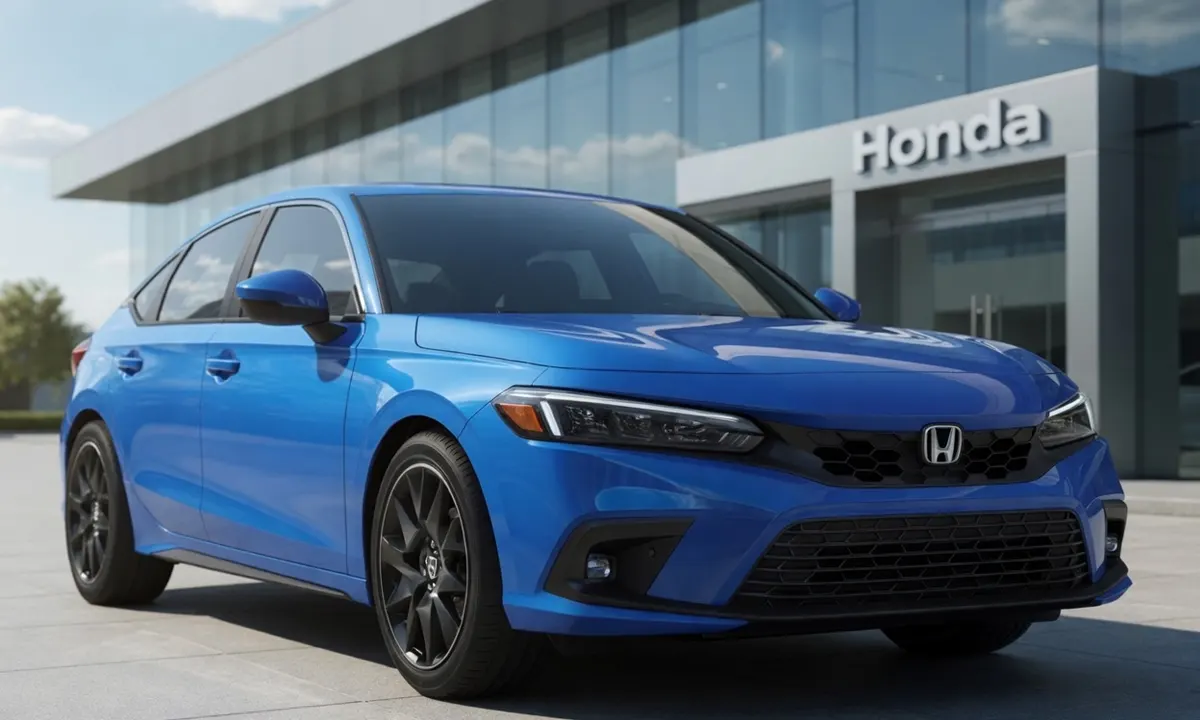
The Honda Civic’s reputation for long-term reliability is among the most consistently validated in the compact car segment — built across eleven generations of production, millions of high-mileage examples on American roads and decades of owner data that consistently confirm the Civic’s ability to accumulate 150,000, 200,000 and in many documented cases 300,000 miles with disciplined maintenance and without major powertrain failure. Consumer Reports predicts the 2026 Honda Civic will be more reliable than the average new car, based on data from 2023, 2024 and 2025 models. JD Power awards the 2025 model — which carries over unchanged for 2026 — a quality and reliability score of 84 out of 100, placing it among the most reliable cars on the road. Every 2023 and later model year earns a minimum of four stars out of five for reliability from verified owners on Cars.com. These credentials make the Civic one of the most defensible long-term ownership choices in the compact segment — but the specific powertrain configuration, maintenance history and model year choices that produce these positive outcomes deserve careful examination for any buyer planning to own the car for seven to fifteen years.
The Long-Term Mileage Reality: What Civics Actually Achieve
The most practically useful measure of any vehicle’s long-term ownership suitability is its documented mileage capability in real-world ownership — the answer to the question of how many miles a well-maintained example is likely to reach before requiring expensive powertrain repair or replacement.
For the Honda Civic, this answer is genuinely impressive and well-documented across multiple generations of production. With proper maintenance — regular oil changes performed at or before the manufacturer’s specified interval, CVT fluid changes at the recommended 60,000-mile mark, cooling system maintenance and brake service — many Honda Civics have historically reached 300,000 miles or more. Multiple automotive reliability sources, including the Honda dealer network and independent owner community data, confirm 200,000-mile Civic ownership as common and 300,000-mile ownership as documented if exceptional.
The specific driver of this longevity is Honda’s engineering philosophy for the Civic’s powertrain: the naturally aspirated 2.0-litre engine used in base LX and Sport trims is a largely carryover design from previous Civic generations that has proven to run reliably past 150,000 miles with basic maintenance. The absence of turbocharging in this configuration means fewer heat-related stresses, no intercooler or high-boost plumbing to fail and a simpler combustion system whose fundamental architecture has been refined across years of production rather than recently introduced as new technology. For buyers specifically prioritising maximum long-term mileage with minimum complexity, the naturally aspirated 2.0-litre Civic represents the Civic’s historically strongest long-term ownership proposition.
The Turbocharged 1.5-Litre Engine: Capable but Requiring More Attention
The 2026 Honda Civic’s upper Sport, Sport Touring and EX trims use the 1.5-litre turbocharged engine that has been in production since 2016 and has undergone several revisions across its production history. The current 2025 to 2026 iteration includes updated turbocharger hardware, revised oil cooler routing and improved cylinder head gasket materials — all specifically intended to address concerns from earlier production years.
The long-term reliability picture for the 1.5-litre turbocharged Civic is positive but requires more active maintenance management than the naturally aspirated alternative. Owner reports on Honda-Tech forums and community platforms indicate that some 2024 to 2026 1.5-litre examples exhibit excessive oil consumption at higher mileage — with some owners reporting the need to top off oil between scheduled changes at rates exceeding Honda’s recommended interval. Honda has documented this concern in technical service bulletins advising dealers to inspect and replace the turbocharger oil seal if necessary, though no formal recall has been issued. For long-term owners, monitoring oil level between changes and maintaining meticulous service records is more important with the 1.5-litre turbo than with the naturally aspirated alternative.
The performance advantage of the 1.5-litre is real — its additional low-rpm torque and higher peak output produce a more engaging everyday driving experience — but buyers who prioritise maximum simplicity and minimum maintenance attention for a ten-to-fifteen year ownership period should weigh the naturally aspirated 2.0-litre’s greater mechanical simplicity as a meaningful long-term advantage.
The Hybrid powertrain — available in the Civic Sport Hybrid and Sport Touring Hybrid — adds Honda’s proven hybrid system architecture to the Civic platform. Honda’s hybrid system has been in service for years in the Accord Hybrid and CR-V Hybrid with a strong reliability record. The liquid-cooled battery pack provides consistent performance across temperature extremes, and most owners should expect eight to ten years of life from the pack before any capacity decline becomes noticeable. The hybrid’s 8-year, 100,000-mile battery and electric motor warranty provides meaningful additional coverage beyond the standard powertrain warranty. Regenerative braking extends brake pad life significantly, reducing one of the most frequent maintenance costs. For buyers planning seven to ten year ownership with significant annual mileage, the Hybrid’s lower fuel costs and extended brake service intervals make it a compelling long-term ownership choice despite the higher upfront price.
CVT Reliability: The Most Important Long-Term Maintenance Variable
The CVT transmission — standard across all non-performance Civic trims — is the component whose long-term reliability most directly depends on owner maintenance discipline, and it is the single most important maintenance consideration for any buyer planning extended Civic ownership.
Honda’s CVT has been in use since 2013 and has evolved significantly through the current generation, with the 2025 to 2026 model incorporating a revised torque converter and updated software calibration. Despite these improvements, the CVT remains the most maintenance-sensitive component in the Civic’s long-term ownership profile. Honda recommends changing the CVT fluid every 60,000 miles. This interval is not discretionary for long-term ownership — owners who neglect this service, or who purchase a used Civic with undocumented maintenance history, face meaningfully higher risk of premature CVT wear and potential failure at higher mileage. A CVT replacement costs approximately $3,500 at a Honda dealer or qualified independent shop — the most expensive single repair scenario in normal Civic ownership outside of engine or accident damage.
The practical guidance for any long-term Civic owner is direct: change the CVT fluid at or before the 60,000-mile mark, maintain complete service documentation and verify CVT fluid change history before purchasing any used example over 60,000 miles. Buyers who make this service a non-negotiable priority and verify it in the purchase of any used Civic substantially reduce their long-term transmission risk relative to owners who treat the CVT fluid change as optional.
For manual transmission Civic Si owners — the performance variant whose six-speed manual is both its driving engagement advantage and its mechanical advantage for long-term durability — the transmission concerns that apply to the CVT are largely irrelevant. The manual transmission’s simpler mechanical architecture and established long-term durability make the Civic Si a particularly attractive long-term ownership proposition for buyers who are comfortable with manual operation and who value the additional driving engagement.
Read: Honda CR-V Real World Range. How Far It Actually Goes Per Tank vs EPA Estimates
Warranty Coverage and Recall History: The Foundation of Confidence
Honda covers the 2026 Civic with a 3-year, 36,000-mile basic warranty and a 5-year, 60,000-mile powertrain warranty — figures that are average for the compact segment and comparable to the Toyota Corolla’s coverage. The Hybrid powertrain’s 8-year, 100,000-mile battery and electric drive system warranty provides additional long-term assurance for hybrid buyers who plan extended ownership beyond the standard powertrain warranty period.
The current generation Civic has experienced one significant recall — a 2024 steering gearbox recall covering 2022 to 2025 model year Civics, where a manufacturing error in the steering gearbox assembly can cause excessive internal friction and steering difficulty. Honda resolved this through dealer replacement of the worm gear spring and lubrication adjustment at no cost. Consumer Reports confirms the 2026 model has been recalled once by NHTSA at the time of publication. For buyers purchasing 2022 to 2025 examples, confirming this recall has been completed against the vehicle’s VIN through the NHTSA database is a straightforward and essential pre-purchase step.
Annual Maintenance Cost: What Long-Term Ownership Actually Costs
RepairPal’s data across all Civic model years places average annual repair and maintenance costs at approximately $368 — well below the $526 compact car average and ranking the Civic sixth out of 36 compact cars for overall reliability. This below-average maintenance cost profile reflects the combination of reliable basic engineering, Honda parts availability through a broad dealer and independent service network, and the inherent simplicity of the naturally aspirated variants.
The typical annual maintenance schedule for a well-maintained Civic at 10,000 to 12,000 annual miles includes: oil and filter changes every 7,500 to 10,000 miles at approximately $50 to $80 at an independent shop, tyre rotation at every oil change at $20 to $35, one cabin air filter replacement annually at $15 to $30 DIY or $60 to $90 at a service centre, and the 60,000-mile CVT fluid service at approximately $150 to $200 as the single most significant planned expense within the first five years of ownership. Total five-year routine maintenance cost for a well-maintained Civic at 12,000 annual miles typically falls between $2,000 and $3,500 — among the lowest in the compact segment and substantially below equivalent maintenance costs for European compact alternatives at comparable price points.
Read: Average Lifespan of Honda CR-V Battery in Hot Climates. What Every Owner Should Know About
Honda Civic Long-Term Ownership — Complete Assessment Chart
| Category | Rating | Specific Finding |
| Engine longevity (2.0L NA) | Excellent | 300,000 miles documented with maintenance |
| Engine longevity (1.5L Turbo) | Good | More maintenance-sensitive; monitor oil |
| Hybrid powertrain durability | Very Good | Proven platform; 8-yr battery warranty |
| CVT transmission | Good (with maintenance) | 60K fluid change is essential |
| Annual repair cost | Excellent | ~$368/yr (RepairPal); well below $526 avg |
| JD Power quality score | Very Good | 84/100 for 2025/2026 |
| Consumer Reports prediction | Above Average | More reliable than average new car |
| Resale value | Good | Above-average retention vs segment average |
| IIHS safety rating | Top Safety Pick+ | 2024–2025; strongest in segment |
| Recall status | One recall (2022–2025) | Steering gearbox; dealer fix at no cost |
| Parts availability | Excellent | Broad dealer + independent network |
| 5-year warranty coverage | Average | 3 yr basic / 5 yr powertrain; hybrid 8 yr |
| 200K+ mile capability | Highly documented | With disciplined maintenance schedule |
The Long-Term Ownership Verdict
The Honda Civic is one of the most genuinely well-suited vehicles for long-term ownership in the American compact segment — supported by Consumer Reports’ above-average reliability prediction, JD Power’s 84-out-of-100 quality score, RepairPal’s below-average annual repair cost and decades of documented high-mileage ownership data that confirms 200,000 to 300,000-mile capability with appropriate maintenance discipline.
The buyer who maximises the Civic’s long-term value is the one who makes oil changes non-negotiable at the specified interval, prioritises the 60,000-mile CVT fluid change without exception, verifies the steering gearbox recall completion on 2022 to 2025 used examples and monitors oil consumption on 1.5-litre turbocharged variants. These are not extraordinary maintenance requirements — they are the straightforward practices that any disciplined owner can follow and that collectively produce the Civic’s documented longevity record.
For buyers who want maximum mechanical simplicity for a seven to fifteen year ownership horizon, the naturally aspirated 2.0-litre is the most conservative powertrain choice. For buyers who want the best combination of fuel efficiency, performance and long-term running cost, the Hybrid’s proven Honda hybrid architecture and extended battery warranty make it the most compelling long-term ownership proposition at the cost of higher upfront investment. The Civic earns its long-term ownership reputation through every quality metric available — and sustains it through disciplined maintenance rather than luck.