- The 2026 Honda Accord starts at $28,700 and offers strong safety credentials, 192 horsepower and class-leading rear-seat space.
- The 2026 Hyundai Sonata starts at $26,900, offers up to 290 horsepower in N Line form and features available AWD.
- The Accord excels in refinement and overall balance, while the Sonata stands out for value, technology and warranty coverage.
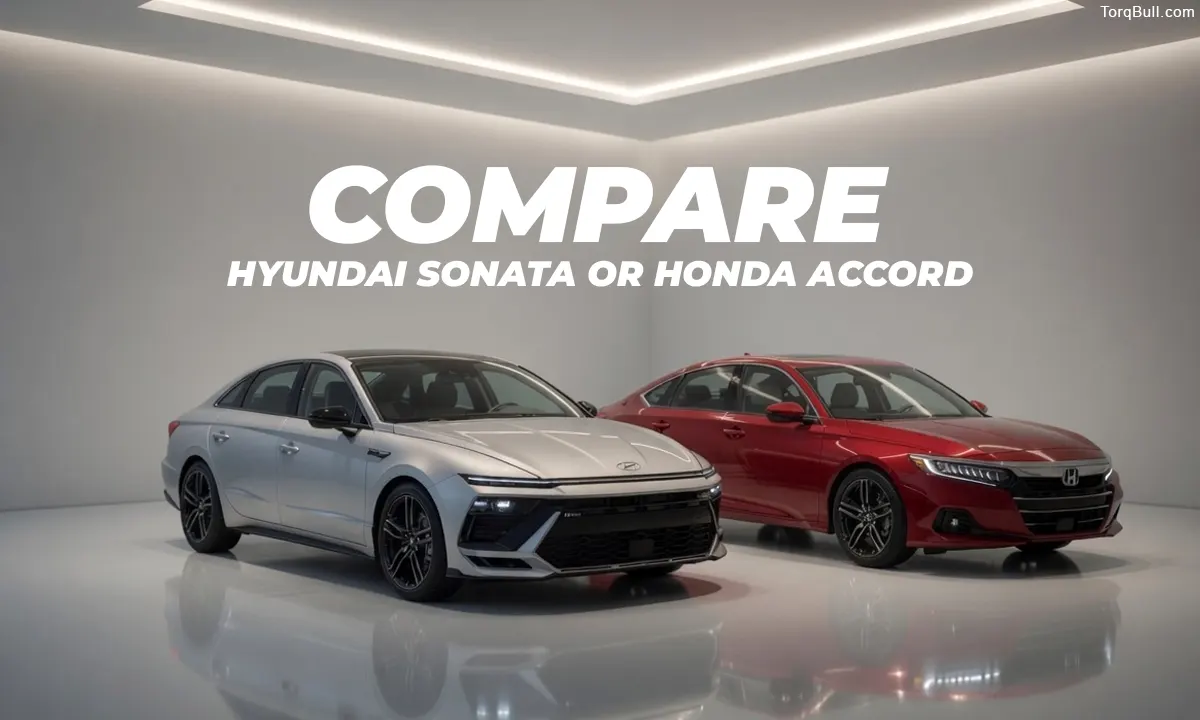
The Hyundai Sonata and Honda Accord are two of the last genuinely great midsize sedans in a market that has systematically abandoned the category — and the choice between them is the midsize sedan segment’s most consequential purchase decision in 2026. Both offer gas and hybrid powertrains. Both provide genuine daily family practicality. Both achieve strong safety ratings. Both cost between $27,000 and $38,000 fully equipped. But they go about their duties in distinctly different ways that produce meaningfully different ownership experiences — the Accord with more interior space, an established reliability reputation and the most balanced performance across its full lineup, the Sonata with bolder styling, a more affordable starting price, available AWD that the Accord lacks in any configuration, a 10-year powertrain warranty that nothing in this segment approaches and the segment’s most powerful mainstream variant in the 290-horsepower N Line. This guide resolves the comparison for every buyer type.
Price: Sonata Leads at Entry, Accord Competes on Value
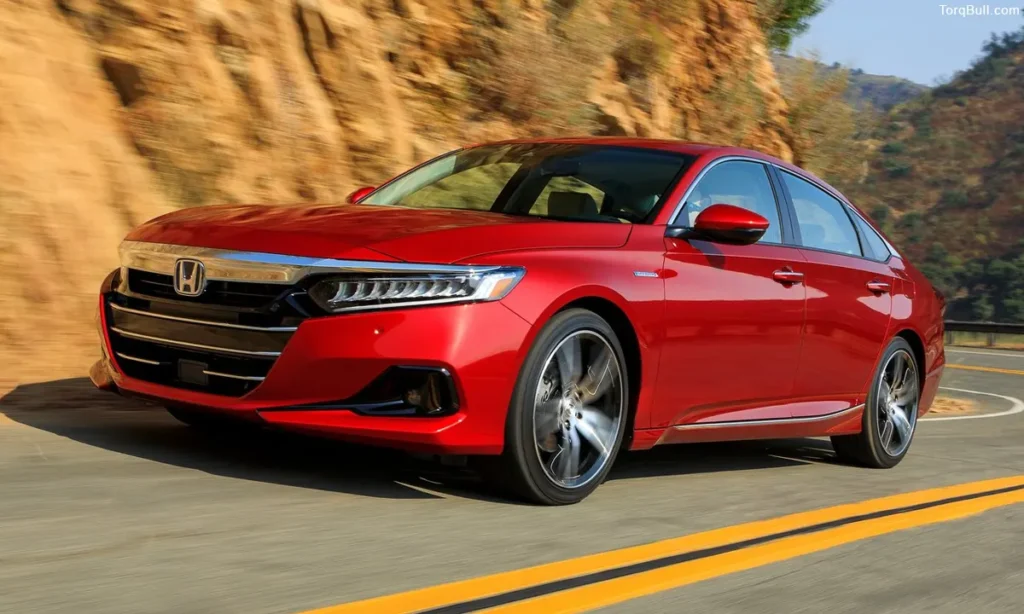
The 2026 Hyundai Sonata SE starts at $26,900 — approximately $1,800 less than the Honda Accord LX at $28,700 for the base configuration. This $1,800 entry price advantage is consistent across most equivalent trim comparisons, with the Sonata providing a lower starting price at virtually every configuration level in the mainstream lineup.
At the performance end, the comparison reverses for specific trims. The Sonata N Line’s 290-horsepower turbocharged performance configuration at approximately $37,000 competes with the Accord Sport and Sport-L Hybrid at equivalent pricing — though no Accord configuration reaches the N Line’s horsepower figure. The Accord’s upper Touring and Touring Hybrid trims at comparable prices emphasise interior luxury and hybrid efficiency rather than performance output.
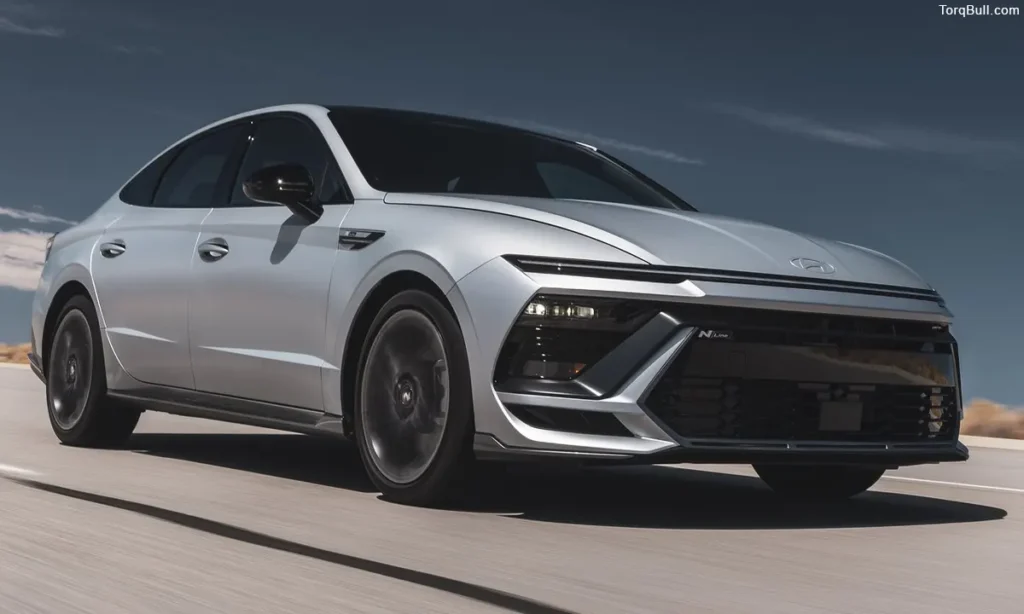
The value calculation requires considering the full ownership cost rather than just the sticker price. The Sonata’s 10-year, 100,000-mile powertrain warranty and three-year, 36,000-mile complimentary maintenance substantially reduce the effective first-three-years ownership cost. The Accord’s reliable reputation and strong resale value retention reduce the effective cost of ownership over a five-year horizon through better residual value at trade-in. Both arguments are financially valid and favour different ownership horizons and priorities.
Interior Space: Accord’s Most Decisive Competitive Advantage
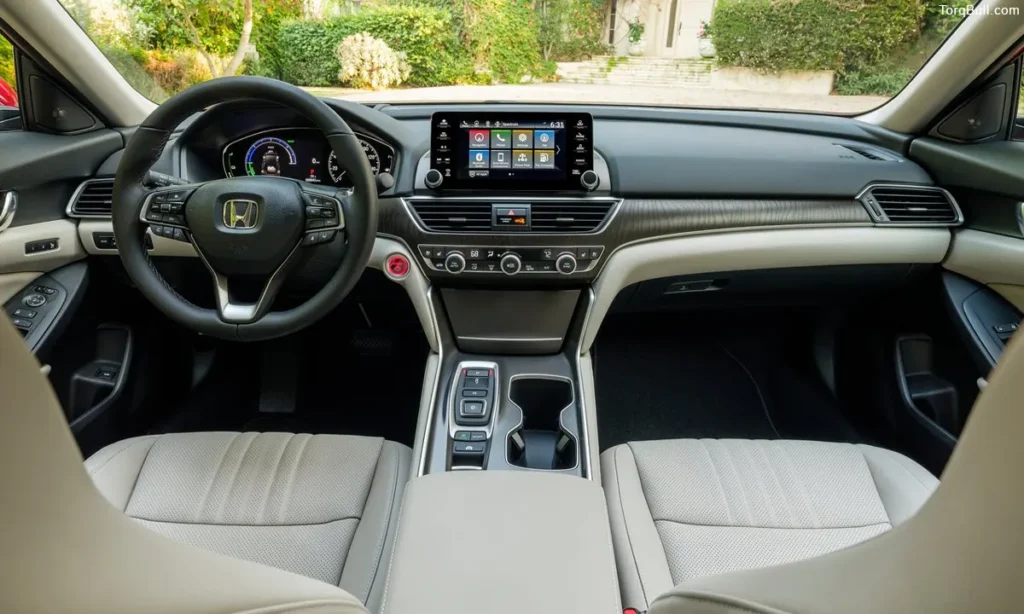
The interior space comparison between these two sedans is where the Accord holds its most consistently documented and most practically meaningful advantage — and the specific dimension that most directly affects daily family ownership is rear seat legroom.
The 2026 Honda Accord provides 40.8 inches of rear legroom — described across multiple evaluations as SUV-like in its generosity and exceptional for the class. Taller rear passengers can get comfortable in the Accord in a way that sedans with more modest rear dimensions cannot reliably accommodate. The 2026 Hyundai Sonata provides 34.8 inches of rear legroom — 6 inches less than the Accord. This 6-inch gap is not a specification footnote — it is the difference between an adult who fits comfortably and one who feels constrained during an hour-long drive.
Trunk space follows the same pattern. The Accord provides more cargo volume than the Sonata, and the Accord’s available rear-fold seats allow accommodating longer items when rear passengers are absent. For buyers who regularly carry adult passengers in the rear seat and who make long-distance journeys with family members in both rows, the Accord’s interior advantage is a daily functional benefit that the Sonata’s lower price does not neutralise.
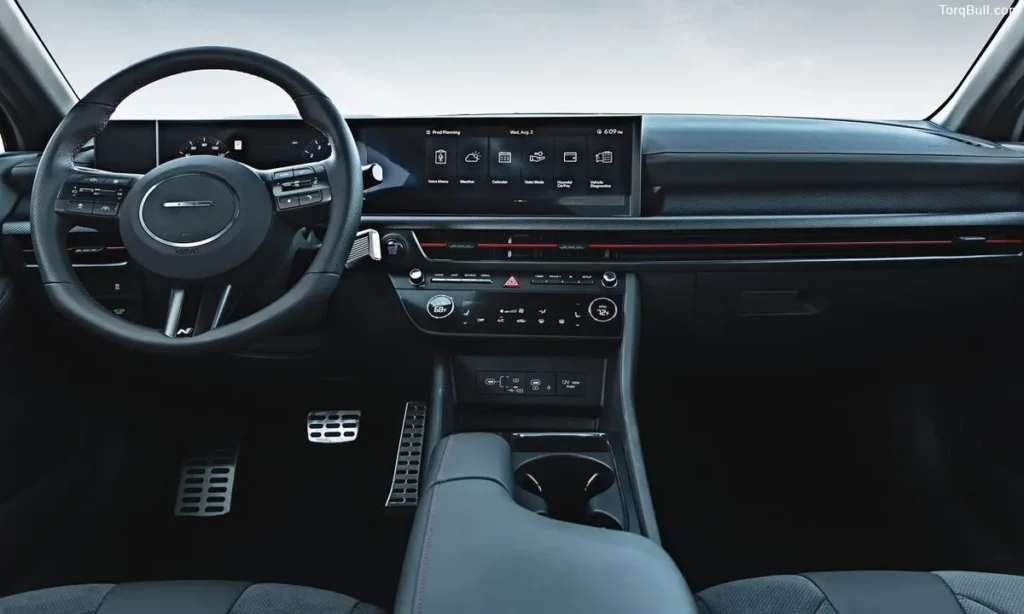
The Sonata counter-argument on space is front legroom — available data suggests the Sonata provides more front legroom for tall drivers who would feel cramped in the standard Accord front seats. This front legroom advantage specifically benefits tall drivers who spend most of their time in the driver’s seat and who find 40.8 inches of rear passenger accommodation irrelevant to their solo commuting.
Read: Hyundai Sonata Fuel Economy City vs Highway. Real World Efficiency Breakdown
Technology: Sonata Leads on Standard Screen Size and Features
Technology content is the category where the Sonata provides the most comprehensively documented competitive advantage over the Accord at equivalent price points — and the standard screen size difference at entry level is the most visible manifestation of this advantage.
The 2026 Hyundai Sonata includes a standard 12.3-inch touchscreen across its lineup — the largest standard infotainment display in the midsize sedan class at the entry level. The 2026 Honda Accord provides a standard touchscreen that is smaller at the base trim level, requiring buyers to step up to higher configurations to access a larger display comparable to the Sonata’s standard specification. Wireless Apple CarPlay and Android Auto are standard on both vehicles, but the screen size advantage at comparable prices consistently favours the Sonata.
The Sonata additionally includes rear seat air vents in all models — a specific family comfort feature that benefits rear passengers in summer heat without requiring upper trim selection. Premium audio availability and ambient interior lighting at lower trim levels than the Accord are additional technology access points where the Sonata’s feature distribution across its lineup favours value-oriented buyers who want comprehensive content without paying for the highest trim.
The Accord’s technology counter-argument is Honda Sensing — the comprehensive driver assistance suite that is standard across every Accord trim including the base LX. Honda Sensing provides adaptive cruise control, lane keeping assist, collision mitigation braking, road departure mitigation and traffic sign recognition at the Accord’s entry price. The Accord’s IIHS Top Safety Pick Plus designation and NHTSA five-star overall rating validate both the passive and active safety technology as producing genuinely outstanding real-world safety outcomes.
Performance and Powertrain: Sonata Leads on Breadth, Accord on Balance
Professional evaluations consistently describe the Accord as delivering more balanced performance across its full lineup than the Sonata, while the Sonata offers more extreme options at both ends of the performance spectrum.
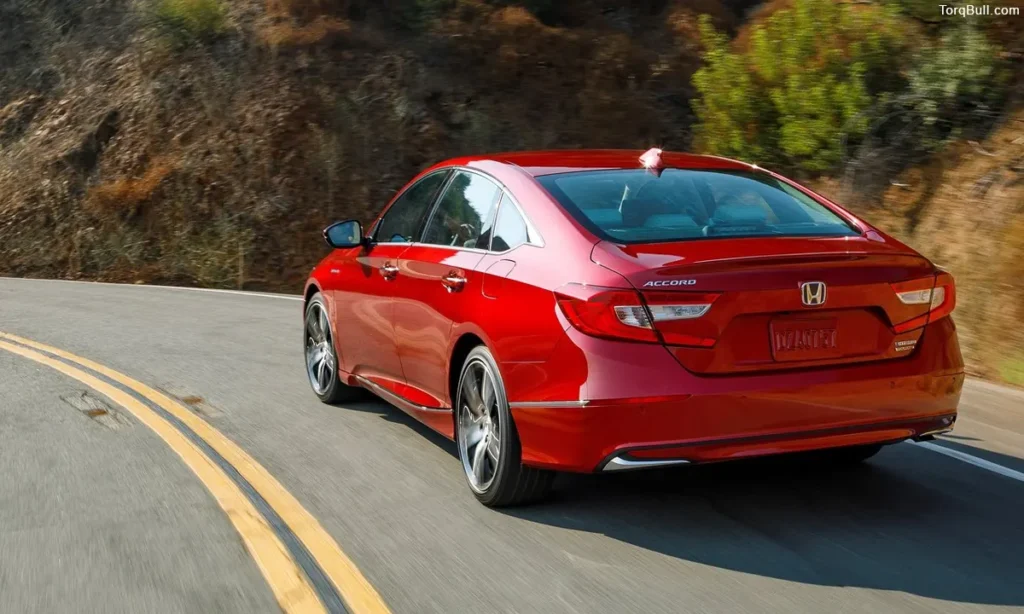
The 2026 Honda Accord’s gas models produce 192 horsepower from the 1.5-litre turbocharged four-cylinder, with the hybrid producing 204 combined horsepower from its two-motor system at approximately 44 to 46 MPG combined. The gas Accord achieves approximately 30 MPG city and 38 MPG highway. The gas-powered Accord uses a CVT transmission that some evaluations describe as occasionally coarse-sounding under hard acceleration but that provides seamless and efficient gear management in typical daily driving. The hybrid Accord’s electric motor heavy driving character produces a quieter and more refined experience than the gas model.
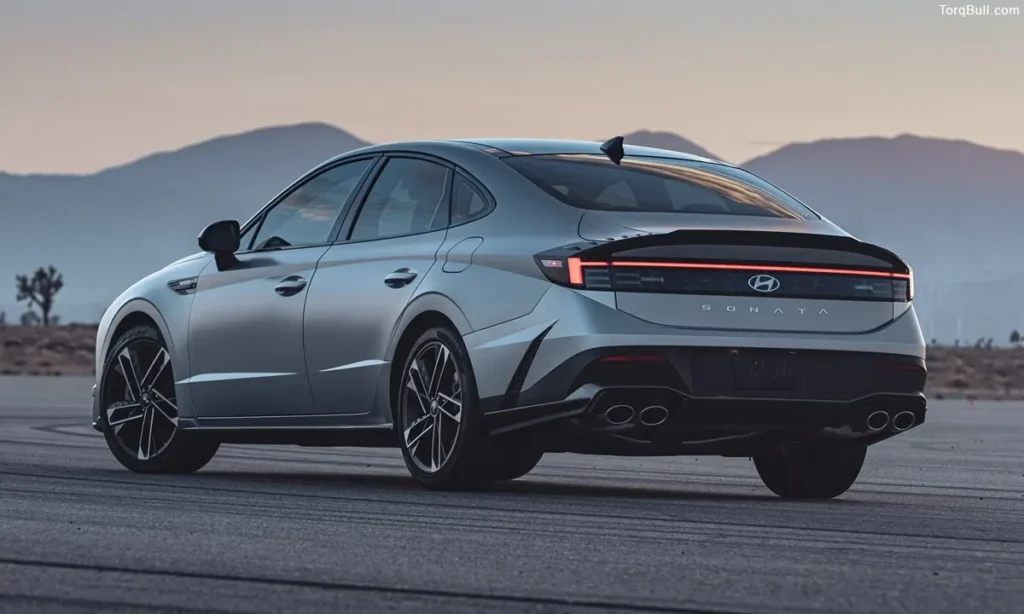
The 2026 Hyundai Sonata’s base 2.5-litre engine produces 191 horsepower through a conventional eight-speed automatic transmission — a smoother and more conventional character than the Accord’s CVT that some buyers specifically prefer. The Sonata Hybrid at up to 51 MPG combined leads both vehicles on efficiency in its most economical Blue trim configuration. The Sonata N Line’s 290 horsepower turbocharged 2.5-litre through an eight-speed wet dual-clutch produces a performance character unavailable in any Accord configuration — making the Sonata the only midsize sedan below $40,000 with genuine performance-sedan credentials in 2026.
Available AWD on the Sonata — absent from every Accord configuration — is the powertrain feature that most specifically differentiates these vehicles for buyers in northern states where all-wheel drive provides meaningful winter traction. No Accord, gas or hybrid, offers AWD. The Sonata SE AWD and SEL AWD configurations provide this capability at prices the Accord cannot match.
Read: Hyundai Sonata Hybrid Real World Fuel Economy
Reliability and Warranty: Honda Leads on Track Record, Hyundai on Coverage
Reliability is the category where the Honda Accord holds its most historically validated competitive advantage — and where the Hyundai Sonata counters with financial protection rather than historical precedent.
The Honda Accord’s reliability reputation is built on decades of consistently documented durability data. Multiple independent reliability studies place Honda consistently in the top tier of manufacturer reliability rankings, and the Accord specifically has earned consumer satisfaction and reliability recognition across multiple consecutive model year evaluations. Car and Driver’s 2026 10 Best Cars list inclusion reflects the Accord’s comprehensive excellence rather than any single exceptional attribute.
The Hyundai Sonata’s 10-year, 100,000-mile powertrain warranty and 5-year, 60,000-mile basic warranty provide the most comprehensive coverage in the midsize sedan class — double the Honda Accord’s 5-year, 60,000-mile powertrain and 3-year, 36,000-mile basic coverage. For buyers who value financial protection against unexpected powertrain events across the full first decade of ownership, the Sonata’s warranty superiority provides a financial safety net that the Accord’s reliability reputation alone cannot replicate.
Honda Accord vs Hyundai Sonata 2026 — Complete Comparison Chart
| Category | Honda Accord (2026) | Hyundai Sonata (2026) | Winner |
| Starting Price | $28,700 (LX) | $26,900 (SE) | Sonata ($1,800 less) |
| Rear Legroom | 40.8 inches | 34.8 inches | Accord (6 inches more) |
| Trunk Space | More | Less | Accord |
| AWD Availability | No | Yes (SE and SEL) | Sonata |
| Base Engine Power | 192 hp, 192 lb ft | 191 hp, 181 lb ft | Accord (slight) |
| Max Gas Engine Power | 192 hp | 290 hp (N Line turbo) | Sonata |
| Hybrid Combined MPG | 44 to 46 MPG | Up to 51 MPG (Blue) | Sonata |
| Gas Transmission | CVT | 8-speed automatic | Sonata (more conventional) |
| Standard Screen Size (base) | Smaller | 12.3-inch standard | Sonata |
| IIHS Safety Rating | Top Safety Pick Plus | Top Safety Pick | Accord |
| NHTSA Rating | 5-star overall | 5-star overall | Tie |
| Reliability History | Excellent; decades of data | Good; improving trajectory | Accord |
| Powertrain Warranty | 5 yr / 60,000 mi | 10 yr / 100,000 mi | Sonata |
| Basic Warranty | 3 yr / 36,000 mi | 5 yr / 60,000 mi | Sonata |
| Complimentary Maintenance | Not standard | 3 yr / 36,000 mi | Sonata |
| 10 Best Cars Recognition | Yes (Car and Driver 2026) | No | Accord |
Read: Hyundai Sonata vs Toyota Camry Which Is Better in 2026?
The Honest Verdict: Which Should You Buy?
The Honda Accord is the right choice for buyers who specifically need the most generous rear seat space in the midsize sedan class — the 40.8 inches of rear legroom is genuinely exceptional and determines whether adult rear passengers are comfortable or constrained on longer journeys. It is also the right choice for buyers who prioritise Honda’s most extensively documented reliability track record, the IIHS Top Safety Pick Plus safety distinction and the most balanced, comprehensively excellent performance across the full lineup rather than extreme specialisation at any single configuration.
The Hyundai Sonata is the right choice for buyers who want AWD for northern state winter driving — a capability the Accord simply cannot provide. It is the right choice for buyers who want the most powerful non luxury midsize sedan available at its price through the N Line’s 290-horsepower configuration. It is the right choice for buyers who value the most comprehensive warranty coverage in the class and for whom the 10-year financial protection against powertrain failure provides more peace of mind than Honda’s reliability reputation. And it is the right choice for buyers whose budget benefits from the $1,800 lower starting price combined with three years of complimentary maintenance that reduces first-ownership-period out-of-pocket expenses.
Both are genuinely excellent vehicles that serve different buyer priorities. The Accord earns its Car and Driver 10 Best designation through comprehensive excellence. The Sonata earns its recommendation through value, powertrain breadth and warranty superiority. The decision resolves to which specific strengths matter most in your specific daily life.