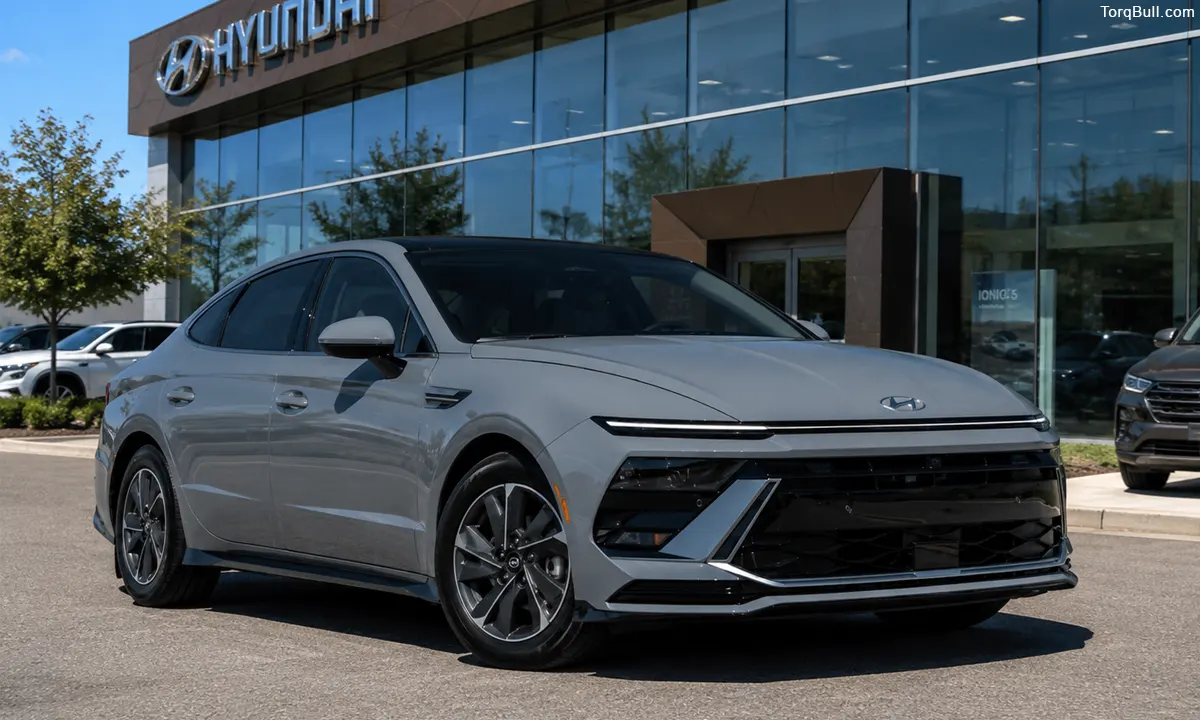
- The 2026 Hyundai Sonata SE delivers up to 28 MPG city and 38 MPG highway.
- The Sonata Hybrid Blue achieves class-leading efficiency with up to 47 MPG city and 56 MPG highway.
- The performance-focused Sonata N Line returns 23 MPG city and 32 MPG highway.
The 2026 Hyundai Sonata’s fuel economy story is one of the most interesting in the midsize sedan segment because it spans one of the widest efficiency ranges available within a single nameplate — from the 23 MPG combined N Line turbocharged performance variant through the 51 MPG combined Hybrid Blue at the efficiency peak. Understanding not just the combined number but how each powertrain behaves specifically in city versus highway conditions reveals which Sonata configuration best matches any specific driver’s daily mileage profile and minimises annual fuel cost most effectively. This complete guide provides every figure for every configuration in the 2026 lineup.
The Gas Powertrain: City vs Highway Profile
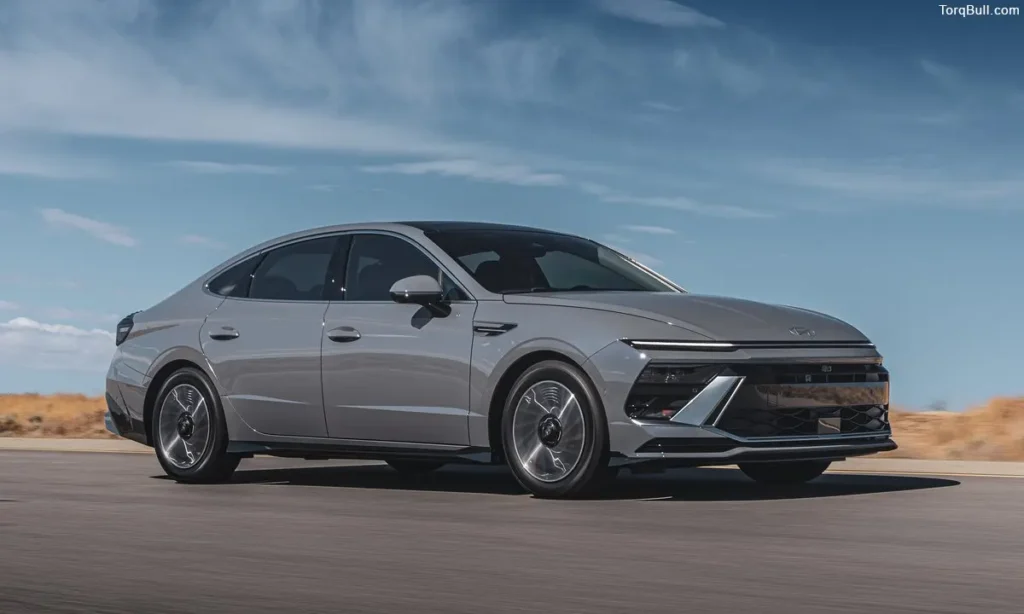
The standard 2026 Hyundai Sonata gas lineup uses a 2.5 litre naturally aspirated four cylinder engine producing 191 horsepower across the SE, SEL and SEL Plus trims — a powertrain that follows the conventional gasoline engine pattern of better fuel economy on the highway than in city driving.
The SE trim achieves 28 MPG city, 38 MPG highway and 32 MPG combined in front wheel drive configuration — the best fuel economy figures in the non hybrid, non N Line Sonata lineup. The 10 MPG gap between the city and highway figures reflects the standard gasoline engine characteristic: more efficient at sustained highway speeds where the engine operates in its optimal efficiency range with minimal stop and go waste, and less efficient in city traffic where frequent deceleration and re acceleration consume energy that the hybrid system would recover through regenerative braking.
The SEL and SEL Plus gas trims produce 25 MPG city, 36 MPG highway and 29 MPG combined with front wheel drive. The AWD configuration on the SEL reduces efficiency to 25 MPG city and 34 MPG highway. The 3 to 4 MPG gap between the SE and SEL gas trims reflects the additional weight and standard equipment of the upper configurations.
Read: Hyundai Sonata Hybrid Real World Fuel Economy
The N Line Turbo: Performance at an Efficiency Cost
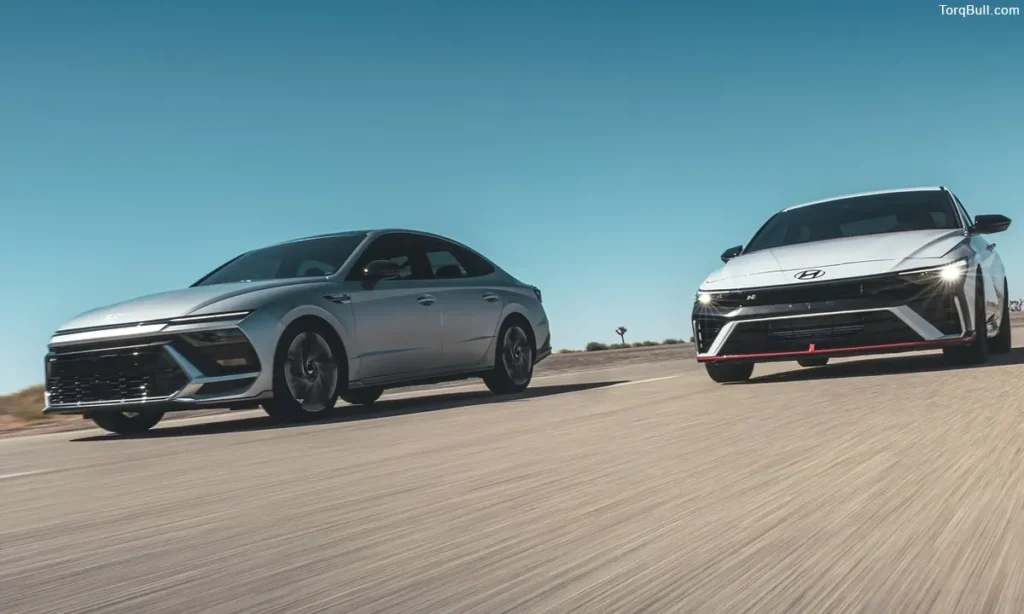
The 2026 Sonata N Line uses a turbocharged 2.5 litre engine producing 290 horsepower — 99 horsepower more than the base gas engine — delivering the most engaging driving character in the non hybrid Sonata lineup at a measurable efficiency cost relative to the naturally aspirated alternatives.
The N Line achieves 23 MPG city, 32 MPG highway and 27 MPG combined. The 9 MPG highway gap between the N Line and the base SE reflects both the turbocharger’s boost pressure demand and the performance oriented driving style the N Line’s character encourages. For buyers whose primary ownership priority is fuel economy, the N Line’s 27 MPG combined is 5 MPG below the base SE — an annual fuel cost difference of approximately $340 at 15,000 annual miles and $3.08 per gallon. For buyers who value the performance character that 290 horsepower and 311 pound feet of torque through an eight speed wet dual clutch provides, this efficiency cost is the accepted price of the driving experience.
The Hybrid Lineup: Where City Efficiency Reverses the Pattern
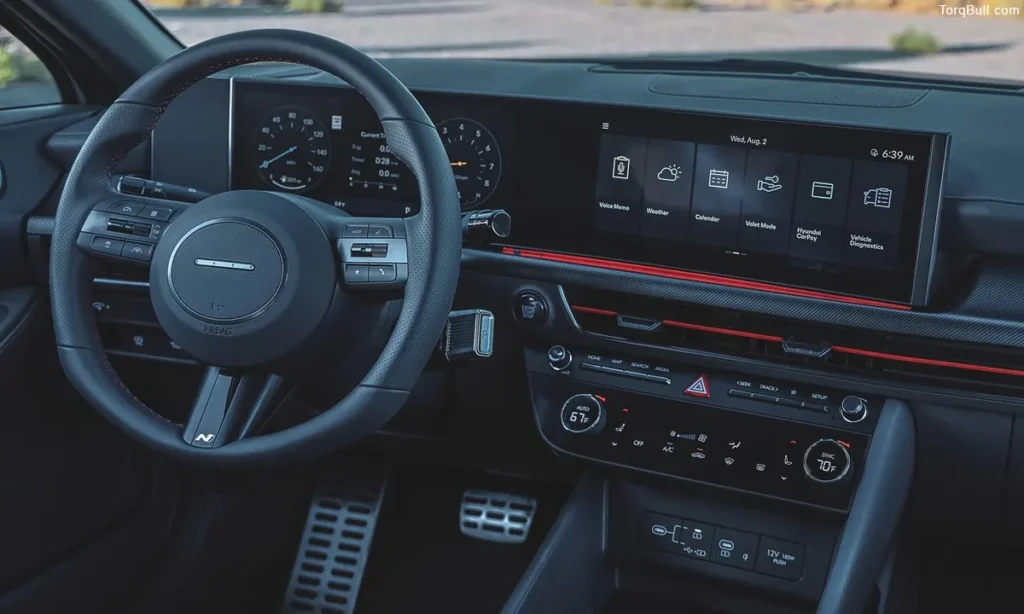

The 2026 Sonata Hybrid’s city versus highway profile inverts the conventional gasoline pattern — and this inversion is the single most practically significant aspect of the hybrid powertrain for buyers whose daily mileage is primarily urban.
The Hybrid Blue achieves 47 MPG city and 56 MPG highway — producing a combined figure of 51 MPG that leads the hybrid Sonata lineup. The 9 MPG gap favours the highway, confirming that the hybrid system is efficient in both environments. The 47 MPG city figure is the most relevant number for urban commuters — confirming that stop and go driving produces strong efficiency results as regenerative braking recovers energy that the gasoline engine would otherwise lose entirely as brake heat.
The SEL Hybrid and Limited Hybrid produce 44 MPG city and 51 MPG highway for a combined 47 MPG figure — modestly below the Blue trim’s 51 MPG combined due to additional equipment weight in the upper configuration. Both figures represent extraordinary efficiency for a full size midsize sedan with 192 combined horsepower.
The 15.9 gallon fuel tank of non hybrid models produces an estimated highway range of approximately 572 miles at the SE’s 38 MPG highway figure. The hybrid’s 13.2 gallon tank produces an estimated 680 miles of total range based on its efficient fuel consumption — confirming that despite the smaller tank, the hybrid’s efficiency advantage produces greater real world range between fuel stops than the larger non hybrid tank.
Read: Hyundai Sonata vs Toyota Camry Which Is Better in 2026?
Hyundai Sonata 2026 Fuel Economy — Complete City vs Highway Chart
| Trim and Powertrain | EPA City MPG | EPA Highway MPG | EPA Combined MPG | Annual Fuel Cost* | Driving Range |
| SE (2.5L NA gas, FWD) | 28 MPG | 38 MPG | 32 MPG | approximately $1,444 | up to 572 miles (hwy) |
| SEL (2.5L NA gas, FWD) | 25 MPG | 36 MPG | 29 MPG | approximately $1,593 | up to 572 miles (hwy) |
| SEL (2.5L NA gas, AWD) | 25 MPG | 34 MPG | 28 MPG | approximately $1,650 | approximately 540 miles (hwy) |
| N Line (2.5L Turbo, FWD) | 23 MPG | 32 MPG | 27 MPG | approximately $1,711 | approximately 509 miles (hwy) |
| Hybrid Blue (2.0L Hybrid, FWD) | 47 MPG | 56 MPG | 51 MPG | approximately $906 | approximately 740 miles (hwy) |
| SEL Hybrid (2.0L Hybrid, FWD) | 44 MPG | 51 MPG | 47 MPG | approximately $983 | approximately 673 miles (hwy) |
| Limited Hybrid (2.0L Hybrid, FWD) | 44 MPG | 51 MPG | 47 MPG | approximately $983 | approximately 673 miles (hwy) |
Annual fuel cost calculated at $3.08 per gallon and 15,000 annual miles using respective EPA combined figures.
Read: Hyundai Sonata Turbo Engine Real-World Test. Is It Truly Impressive?
Which Sonata Powertrain Saves the Most Money Annually
The annual fuel cost gap between the least efficient Sonata in daily use and the most efficient represents one of the largest within any midsize sedan lineup — and for high mileage drivers, this gap is financially decisive.
A driver covering 15,000 annual miles in the SE gas model at 32 MPG combined pays approximately $1,444 per year in fuel at $3.08 per gallon. The same driver in the Hybrid Blue at 51 MPG combined pays approximately $906 per year — a saving of approximately $538 annually. Over five years, this saving accumulates to approximately $2,690 — a meaningful financial return that contributes toward offsetting the Hybrid’s higher purchase price relative to the gas SE.
Against the N Line’s 27 MPG combined, the Hybrid Blue produces an annual saving of approximately $805 — confirming that the efficiency gap between the performance and efficiency extremes within the Sonata family is large enough to matter significantly in any honest total cost of ownership calculation.