
- The 2026 Kia Sorento Plug-In Hybrid starts at approximately $48,290 and may qualify for up to $7,500 in federal tax incentives for eligible buyers.
- Potential incentives can reduce the effective purchase price to around $40,790.
- Regular home charging can significantly lower five-year fuel costs compared with non-hybrid Sorento models.
The 2026 Kia Sorento Plug-In Hybrid is one of the most financially complex vehicle purchases in the midsize three-row SUV segment — complex because the full cost picture involves not just the purchase price and fuel costs that most buyers focus on, but a federal tax credit that may dramatically reduce the effective purchase price, electricity costs that replace gasoline costs during electric operation, extended brake service intervals from regenerative braking and a 10-year, 100,000-mile powertrain warranty that covers the most expensive potential ownership events for a full decade. Understanding every component of this ownership cost picture — not just the sticker price — is the financial knowledge that determines whether the PHEV’s higher purchase price relative to the standard Sorento is a premium worth paying or a cost that ownership economics justify and then some. This guide provides the complete financial breakdown every PHEV buyer needs.
Purchase Price and Federal Tax Credit: The Starting Point

The 2026 Kia Sorento Plug-In Hybrid starts at approximately $48,290 for the base PHEV configuration — representing an approximately $10,000 to $15,000 premium over the base non-PHEV Sorento at $33,885 and an approximately $8,000 to $10,000 premium over the non-plug-in Hybrid configuration.
This purchase price premium is the most common reason buyers dismiss the PHEV before completing the analysis — and it is the reason the federal EV tax credit is the most important number in the complete PHEV ownership cost calculation.
The 2026 Kia Sorento Plug-In Hybrid may qualify for a federal EV tax credit of up to $7,500 under the Inflation Reduction Act, subject to buyer income limits, vehicle MSRP caps and sourcing requirements for battery components and critical minerals. For eligible buyers who meet the income thresholds — modified adjusted gross income below $150,000 for single filers, $225,000 for head of household and $300,000 for joint filers — the tax credit directly reduces federal tax liability dollar for dollar in the tax year of purchase. This is not a deduction that reduces taxable income — it is a credit that reduces the tax owed. A buyer with $10,000 in federal tax liability who qualifies for the $7,500 credit pays $2,500 in federal taxes rather than $10,000.
The effective purchase price after the maximum credit for qualified buyers is approximately $40,790 — reducing the PHEV’s premium over the non-PHEV base Sorento to approximately $6,905 and substantially changing the payback calculation for the premium. Buyers should confirm current eligibility requirements with a tax professional, as income limits, vehicle sourcing requirements and credit availability change with federal regulation updates.
Read: Kia Sorento Turbo Engine Real World Test. Is This Turbocharged SUV as Quick as It Claims?
Fuel Cost: The Biggest Annual Variable in PHEV Ownership
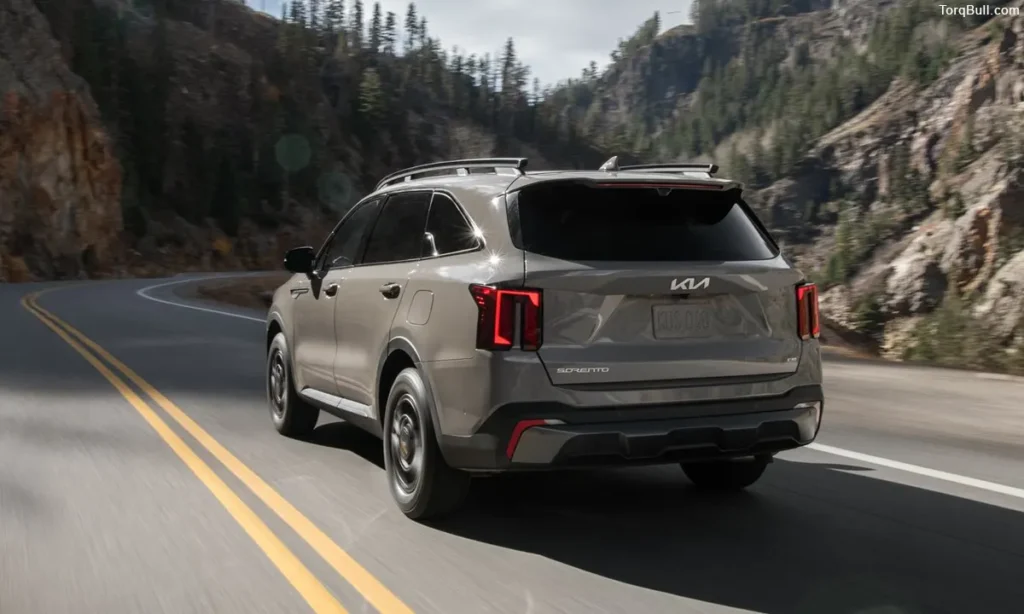
The 2026 Sorento PHEV’s fuel cost calculation is the most variable and most buyer-specific component of the ownership cost analysis — because it depends entirely on how the vehicle is actually used, whether home charging is available and how many annual miles fall within the 31-mile electric range.
For buyers who charge daily at home and whose daily commute falls within 31 miles: the majority of weekday driving occurs entirely on electricity. At a home electricity rate of $0.17 per kilowatt-hour and the Sorento PHEV’s 14 kWh battery capacity, a full charge costs approximately $2.38. If the vehicle covers 25 miles on that charge before returning home to recharge, the effective electricity cost per mile is approximately $0.095 — compared to approximately $0.125 per mile at 24 MPG and $3.08 per gallon gasoline cost. Over 12,000 electric miles annually at home charging rates, electricity cost is approximately $1,140 versus approximately $1,540 in equivalent gasoline cost — an annual electric cost saving of approximately $400 on the electric portion of driving alone.
For road trips and driving beyond the 31-mile electric range, the PHEV switches to hybrid operation using the gasoline engine with electric motor assist, achieving 33 MPG combined in gas-hybrid mode. Annual gasoline cost for the non-electric portion of driving depends on how many miles are covered beyond the battery’s range — a highly commute-dependent figure that no universal calculation can accurately represent.
The specific five-year ownership data from verified cost analysis of the standard Sorento gas model places five-year fuel costs at approximately $5,720. The PHEV’s five-year fuel cost would be substantially lower for charging-enabled daily commuters — potentially $2,000 to $3,000 less over five years for buyers who maximise electric operation — but meaningfully similar for buyers who cannot charge at home and depend primarily on gasoline hybrid operation.
Maintenance Costs: Where the PHEV Saves Compared to Gas Models
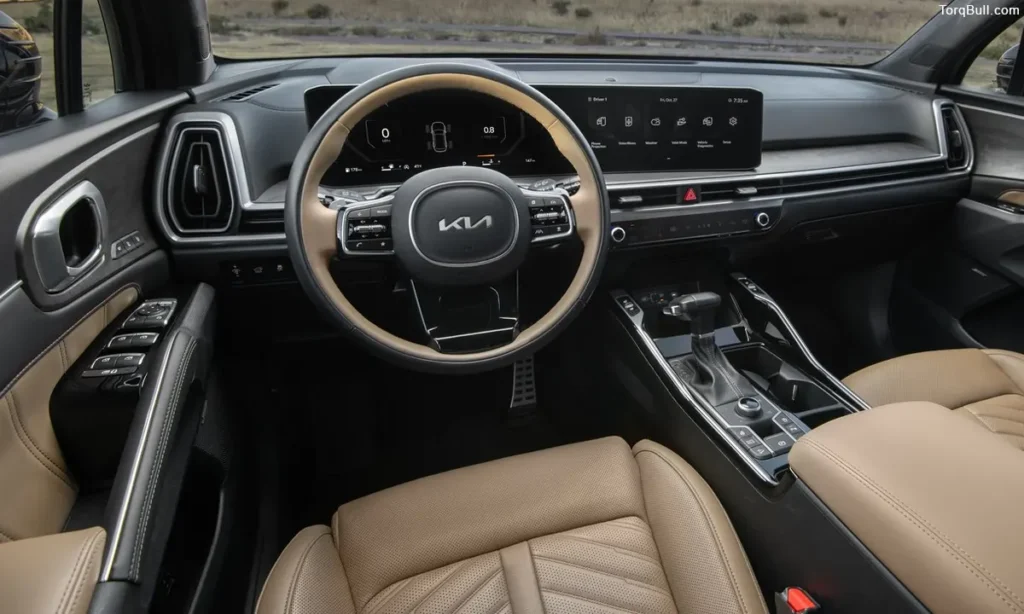

The Kia Sorento PHEV’s maintenance cost profile carries specific advantages over the standard gasoline Sorento that contribute meaningfully to the total ownership cost comparison.
Regenerative braking is the most financially significant maintenance advantage. The PHEV’s electric motor recovers energy during deceleration rather than dissipating it as brake heat, substantially reducing the frequency of friction brake pad and rotor contact. Brake pad replacement on standard gasoline Sorento owners typically occurs at 35,000 to 45,000 miles — PHEV owners in mixed driving conditions typically extend this to 60,000 to 80,000 miles. At approximately $450 to $750 per complete brake service, this extended interval saves approximately $450 to $750 across the first 80,000 miles — a specific ongoing maintenance cost advantage.
The 10-year, 100,000-mile powertrain warranty specifically covers the PHEV’s battery and electric motor components alongside the conventional powertrain. For the most financially significant potential ownership event — hybrid battery replacement at a cost of approximately $3,000 to $5,000 out of warranty — the warranty coverage eliminates financial risk within the first decade of typical family ownership. This coverage is the most valuable financial protection the PHEV’s warranty structure provides.
Verified five-year cost analysis for the gas Sorento places five-year maintenance costs at approximately $4,561 to $8,151 depending on the scope of coverage. The PHEV’s maintenance profile is broadly similar with the brake service interval advantage reducing the annualised brake cost contribution relative to the gas model across the first 80,000 miles.
Read: Kia Sorento Maintenance Cost Per Year in 2026. Affordable Family SUV or Hidden Expense?
Insurance: The PHEV’s Cost Increase Over the Gas Model

Insurance cost is the ownership category where the PHEV’s higher purchase price most directly produces a higher ongoing expense compared to the base gas Sorento — because insurance premiums are partly calculated against the vehicle’s replacement value, and the PHEV’s higher purchase price produces higher replacement value and therefore higher premiums.
Verified five-year insurance cost data places the standard Sorento gas model’s five-year insurance total at approximately $12,875. The Sorento Hybrid’s five-year insurance is documented at approximately $14,805 — a difference of approximately $1,930 over five years reflecting the hybrid system’s higher vehicle value. The PHEV’s insurance cost would be expected to fall between the hybrid and a higher figure reflecting the additional PHEV system value, estimated at approximately $13,500 to $15,000 over five years depending on the buyer’s specific insurance market, location and coverage configuration.
For buyers who compare the PHEV to the standard gas Sorento, the insurance cost premium of approximately $1,600 to $2,100 over five years is a real and ongoing ownership cost that partially offsets fuel savings. Shopping for competitive insurance quotes is specifically important for PHEV buyers to minimise this premium — the difference between the most and least expensive comparable insurance policies for the same vehicle is often larger than the premium between gas and PHEV coverage.
Depreciation: The Largest Single Ownership Cost Component
Depreciation — the loss in vehicle value from purchase date to sale date — is consistently the largest single component of total vehicle ownership cost, typically exceeding fuel, insurance, maintenance and repairs combined across a five-year ownership horizon.
Five-year depreciation data for the standard Kia Sorento documents a loss of approximately $17,843 to $19,023 depending on the model year. Five-year depreciation for the Sorento Hybrid is documented at approximately $24,260 — higher in absolute dollar terms reflecting the higher purchase price from which depreciation is calculated, though the percentage depreciation rate of approximately 57 percent is consistent with the gas model.
The PHEV’s depreciation calculation is the most buyer-specific element of the ownership cost analysis because it depends on whether the vehicle was purchased at full MSRP or after applying the federal tax credit. A buyer who paid $48,290 and received the $7,500 credit effectively paid $40,790 — and if the vehicle depreciates to $22,000 after five years, the effective depreciation loss from the credit-adjusted cost basis is $18,790 rather than the $26,290 loss calculated from the full MSRP. The tax credit’s impact on the depreciation-adjusted cost of ownership is a genuine financial calculation benefit that makes the PHEV’s total ownership cost more competitive with the gas model than the sticker price comparison alone suggests.
Read: Kia Sorento Pros and Cons. Family SUV or Compromise Machine?
Kia Sorento PHEV Ownership Cost — Complete Five Year Breakdown
| Cost Category | Est. Annual Cost | Est. 5-Year Total | Notes |
| Purchase Price (before credit) | N/A | approximately $48,290 | Starting MSRP for PHEV |
| Federal Tax Credit (eligible buyers) | N/A | up to ($7,500) | Subject to income and sourcing rules |
| Effective Purchase (after credit) | N/A | approximately $40,790 | For fully eligible buyers |
| Fuel and Electricity (daily charging) | approximately $1,800 to $2,200 | approximately $9,000 to $11,000 | Lower for commuters charging daily |
| Maintenance (scheduled and unscheduled) | approximately $900 to $1,600 | approximately $4,500 to $8,000 | Brake savings vs gas model |
| Insurance | approximately $2,700 to $3,000 | approximately $13,500 to $15,000 | Varies by location and coverage |
| Repairs (minor and unscheduled) | approximately $130 to $200 | approximately $650 to $1,000 | Covered by warranty within 10 yr window |
| Financing Interest (at 7% on $41K) | approximately $1,400 to $1,800 | approximately $7,000 to $9,000 | Depends on rate and term |
| State Fees and Registration | approximately $500 to $700 | approximately $2,500 to $3,500 | Varies significantly by state |
| 5-Year Depreciation | approximately $4,600 to $5,800 per year | approximately $23,000 to $29,000 | Higher from MSRP; lower from credit-adjusted basis |
| Total 5-Year Ownership Cost | approximately $60,000 to $75,000 | Includes depreciation; varies by credit eligibility and use pattern |
The Honest Financial Verdict: Who Benefits Most From the PHEV
The Kia Sorento PHEV delivers its strongest financial case for three specific buyer profiles whose ownership conditions maximise the cost savings that make the PHEV’s premium pay back most quickly.
The most financially rewarding PHEV buyer is the daily home charger whose round-trip commute falls within 31 miles — covering the majority of weekday miles on electricity at approximately $0.095 per mile versus $0.125 per mile in gasoline. Combined with the federal tax credit reducing the effective purchase price to approximately $40,790, this buyer’s five-year ownership cost approaches parity with the gas Sorento at approximately 33,000 to 40,000 electric commuting miles.
The second most advantaged buyer is the eligible credit receiver who plans three or more years of ownership and applies the full $7,500 credit in the purchase year — the credit’s value spread across years of ownership represents an approximately $1,500 per year reduction in effective annual ownership cost.
The least advantaged buyer is one without home charging access who covers primarily highway miles beyond the battery’s range — this buyer pays the PHEV premium and insurance difference while capturing minimal fuel savings from electric operation. For this buyer, the standard Sorento Hybrid at a lower purchase price with 36 MPG combined is the more financially appropriate alternative.