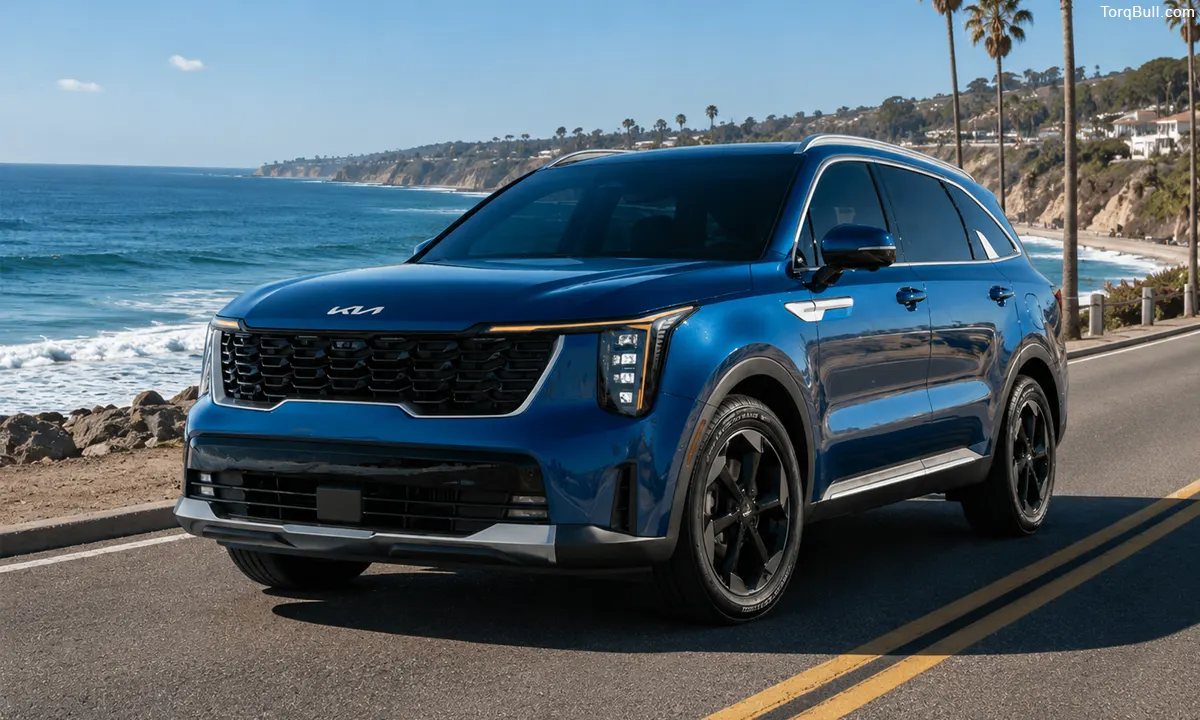
- The 2026 Kia Sorento’s turbocharged 2.5-liter engine produces 281 horsepower and 311 pound-feet of torque.
- Real-world testing showed the X-Pro averaging around 23 MPG in mixed driving conditions.
- Reviewers praised the turbo engine for its strong everyday performance and confident power delivery with passengers and cargo.
The 2026 Kia Sorento’s turbocharged 2.5 litre engine is the powertrain that most buyers who select above the base LX and S trims receive — and it is the engine configuration that transforms the Sorento from adequate daily transportation into a genuinely satisfying family SUV. At 281 horsepower and 311 pound feet of torque through an eight speed dual clutch transmission, the turbo Sorento produces performance credentials that exceed most direct competitors while retaining above average fuel economy for the class. Professional evaluators who drove the turbo Sorento across real world conditions describe the performance gain as significant for day to day drivability rather than merely a specification upgrade — a characterisation that reflects how meaningfully the turbocharged four cylinder changes the vehicle’s character relative to the base engine. This complete review examines every dimension of the turbo Sorento’s real world performance.
The Engine Specification: What 281 Horsepower and 311 Pound Feet Delivers
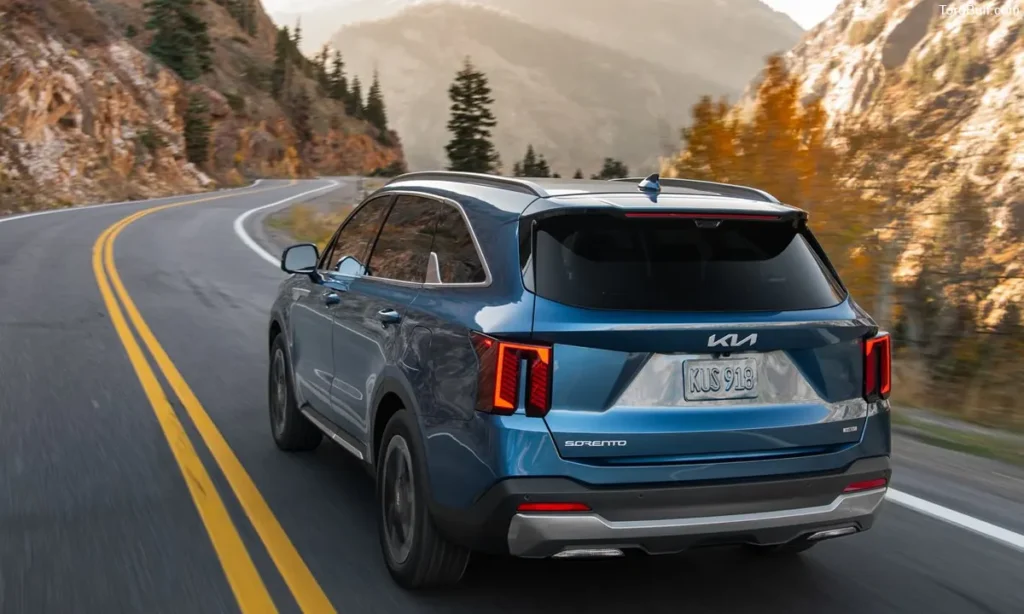
The 2026 Kia Sorento’s optional 2.5 litre turbocharged four cylinder engine is available from the EX trim upward — becoming the standard powertrain for buyers who step above the base LX and S configurations that use the naturally aspirated 2.5 litre unit producing 191 horsepower and 182 pound feet of torque. The torque differential between the base and turbo engines — 311 versus 182 pound feet, a gap of 129 pound feet — is the single most practically significant performance difference between these two powertrains, because torque is what the driver feels in the first 0 to 40 MPH range that defines the majority of real world driving acceleration events.
The turbocharged engine pairs exclusively with an eight speed dual clutch automatic transmission — a different gearbox from the eight speed conventional automatic that backs the base naturally aspirated engine. Dual clutch transmissions provide faster, more decisive gear changes than conventional torque converter automatics under acceleration, contributing to the turbo Sorento’s more engaging character during spirited driving. The transmission’s behaviour in everyday driving — light throttle urban commuting and highway cruising — is smooth and unobtrusive, with the dual clutch’s character most apparent during moderate to hard acceleration events where the shift speed advantage is most measurable.
Front wheel drive is standard on the turbo equipped trims below the X Line SX Prestige. All wheel drive is optional across most turbo trims and standard on the X Line SX Prestige — providing the traction management that makes the 311 pound feet of torque through the front axle fully manageable on slippery surfaces where front wheel drive would produce torque steer or wheelspin under hard acceleration.
Read: Kia Sorento Maintenance Cost Per Year in 2026. Affordable Family SUV or Hidden Expense?
Real World Driving Character: What the Numbers Feel Like
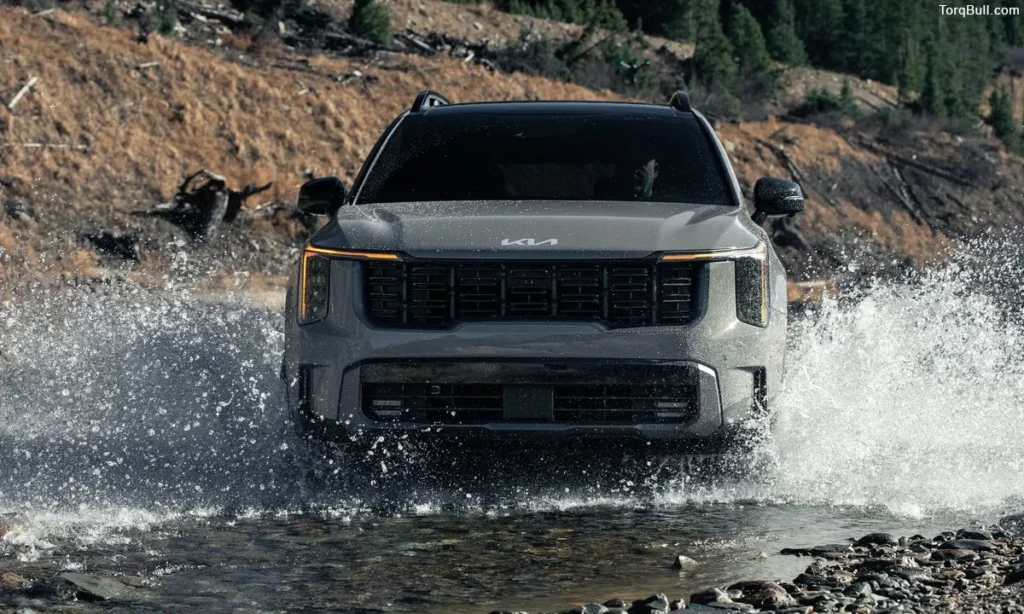
The turbo Sorento’s real world driving character consistently impresses evaluators who compare it against both the base engine and against the broader competitive set at comparable prices. One owner who specifically selected the X Line SX Prestige for the turbo engine and all wheel drive combination describes the experience as smooth with great power — specifically highlighting the 311 pound feet of torque as the characteristic that makes the vehicle feel both elegant and capable across different driving scenarios.
Professional evaluation drives across varied real world conditions confirm the turbo engine’s specific strength in the scenarios that family SUV owners encounter most frequently: highway on ramp merging, sustained highway passing at 65 to 75 MPH and urban acceleration from traffic signals to 40 MPH. The engine provides responsive power delivery from low revs — the turbocharger’s contribution beginning at moderate throttle inputs rather than requiring full pedal application to access meaningful torque. This low end torque availability is the attribute that makes the turbocharged Sorento feel meaningfully more capable than the naturally aspirated version in everyday driving where the engine operates below its peak output range for the majority of the time.
Full passenger loads do not significantly diminish the turbo Sorento’s performance character. While a full load of people and cargo renders the base naturally aspirated engine underpowered, the turbo remains relatively unphased — maintaining confident acceleration character regardless of loading. This specific attribute — maintaining performance composure under maximum family loading — is where the turbo engine’s advantage over the base unit is most practically significant for the three row family SUV use case.
Real World Fuel Economy: The X Pro’s 23 MPG Confirmed
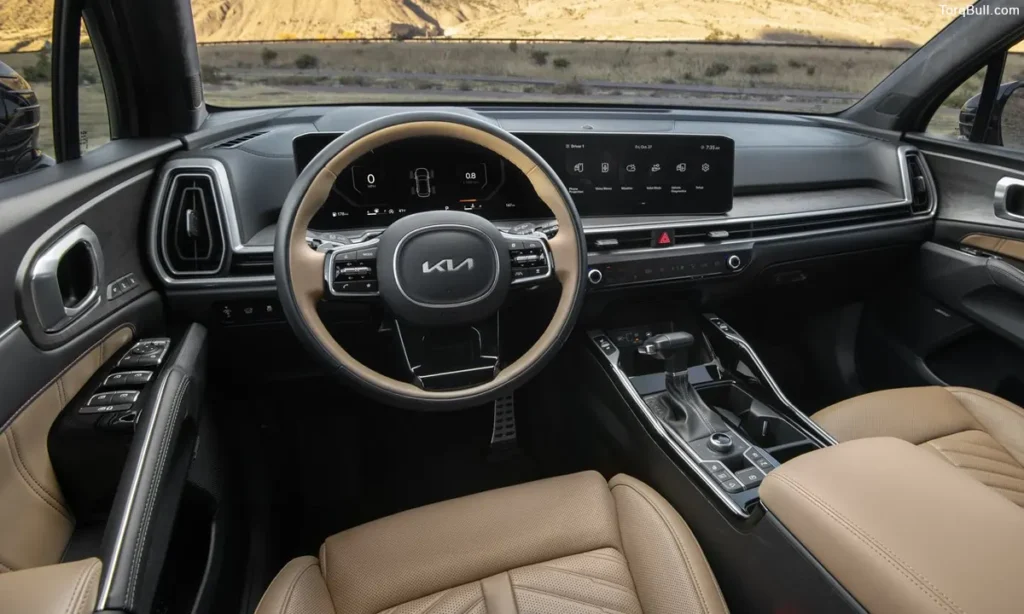
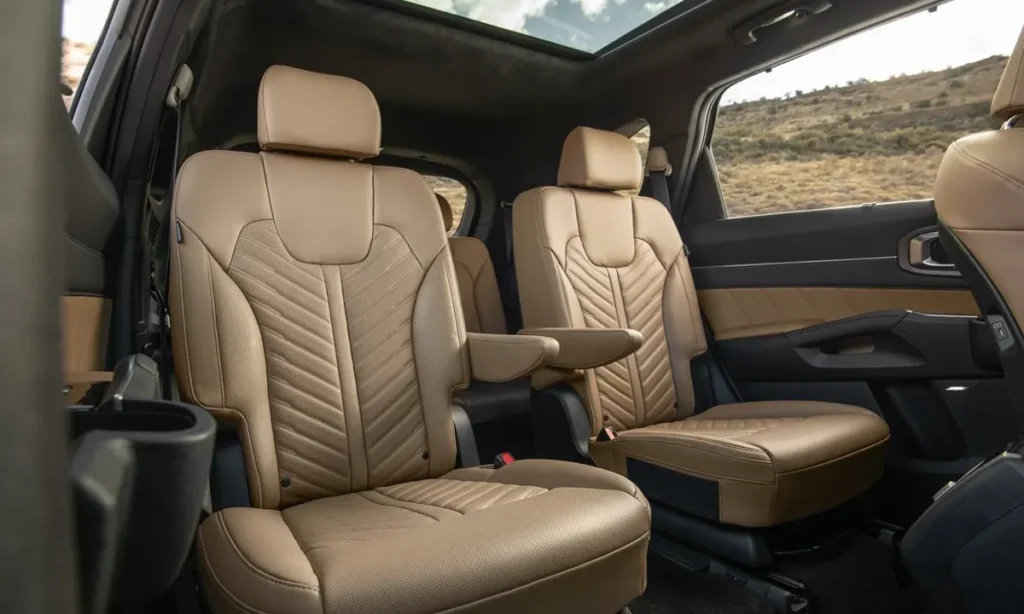
Real world fuel economy is the performance dimension that most directly affects annual ownership cost — and the turbo Sorento’s real world results confirm the EPA estimates as achievable in normal driving rather than optimistic calibrations.
During professional evaluation drives across mixed urban and highway conditions, the Sorento X Pro averaging around 23 MPG was specifically confirmed — matching the EPA combined figure for the turbocharged AWD configuration of 20 MPG city, 27 MPG highway and 23 MPG combined. This correlation between EPA estimates and real world professional testing results provides confidence that typical owners can approach the EPA figure in their own mixed driving conditions.
The EPA fuel economy figures for the turbo Sorento in all configurations are above average for an SUV of this size and capability. The front wheel drive turbo achieves 20 MPG city, 29 MPG highway and 23 MPG combined. The AWD turbo achieves 20 MPG city, 27 MPG highway and 23 MPG combined. The 2 MPG highway reduction from adding AWD reflects the transfer case and additional drivetrain weight rather than a fundamental efficiency change in the powertrain itself.
Comparing the turbo and naturally aspirated engines on fuel economy reveals a result that surprises many buyers: the turbo engine returns almost the same fuel economy as the base engine despite its dramatically higher output. The base FWD achieves 23 MPG city, 31 MPG highway and 26 MPG combined — only 3 MPG better combined than the turbo’s 23 MPG combined. This marginal fuel economy cost for 90 additional horsepower and 129 additional pound feet of torque is the specific value calculation that makes the turbo engine the enthusiast recommended choice.
Read: Kia Sorento Pros and Cons. Family SUV or Compromise Machine?
The Dual Clutch Transmission: Character and Considerations
The eight speed dual clutch transmission backing the turbo Sorento engine delivers the most directly relevant contribution to the driving character’s quality — but it also carries a specific ownership consideration that distinguishes it from the conventional automatic backing the base engine.
Under acceleration, the dual clutch provides sharp, rapid gear changes that make the turbo Sorento feel agile and responsive in a way that conventional automatics with their torque converter slip cannot fully replicate. Highway passing manoeuvres and freeway on ramp merges produce decisive kickdown responses and clean power delivery through the gears.
The ownership consideration is low speed behaviour in stop and go urban traffic. Dual clutch transmissions use clutch engagement rather than fluid coupling to manage low speed power delivery, which can produce a different feel at very low speeds compared to conventional automatics — requiring the driver to adapt to the transmission’s character in heavy urban stop and go conditions. Most owners adapt within the first weeks of ownership, and the transmission’s behaviour improves with familiarity. The 10 year, 100,000 mile powertrain warranty specifically covers the transmission against major failure events — providing financial protection for the full decade that most families consider a normal ownership period.
2026 Kia Sorento Turbo Engine — Complete Real World Performance Chart
| Specification | Base Engine (2.5L NA) | Turbo Engine (2.5L Turbo) | Hybrid (1.6L Turbo + Electric) |
| Horsepower | 191 hp | 281 hp | 227 hp |
| Torque | 182 lb ft | 311 lb ft | 258 lb ft |
| Transmission | 8 speed automatic | 8 speed dual clutch | 6 speed automatic |
| EPA Combined (FWD) | 26 MPG | 23 MPG | 36 MPG |
| EPA City (FWD) | 23 MPG | 20 MPG | 39 MPG |
| EPA Highway (FWD) | 31 MPG | 29 MPG | 35 MPG |
| EPA Combined (AWD) | 25 MPG | 23 MPG | 33 MPG |
| Real World Tested | Similar to EPA | Approx 23 MPG (X Pro AWD) | Strong correlation with EPA |
| Max Towing Capacity | 2,000 lbs | 4,000 lbs | 2,000 lbs |
| Best For | Efficiency focused buyers | Performance and towing | Best fuel economy overall |
Towing Capacity: The Turbo’s Practical Advantage
Beyond the performance and fuel economy story, the turbocharged Sorento carries a specific and practically significant towing capability advantage over both the base engine and the hybrid powertrain. The turbo engine’s 4,000 pound maximum towing capacity is double the base engine’s 2,000 pound rating — a difference meaningful enough to determine whether common recreational trailers, small boat trailers or cargo trailers fall within the Sorento’s safe operating parameters.
A small travel trailer, a pontoon boat, a pair of personal watercraft or a utility trailer loaded with landscaping materials typically weighs between 2,500 and 3,500 pounds — in the Sorento’s turbo towing range but above the base engine’s capacity. For families who occasionally tow recreational equipment without needing the 5,000 pound capacity of larger three row alternatives, the turbo Sorento’s 4,000 pound rating provides the specific capability that makes it a practical choice for this specific use case without requiring a full size truck or larger three row SUV.
Read: Kia Sorento Plug-In Hybrid Range and Charging Time In 2026. The Complete Guide
The Verdict: Is the Turbo Worth the Extra Cost?
The turbo engine is worth the additional cost for the majority of Sorento buyers above the LX and S base trims. The combination of 90 additional horsepower, 129 additional pound feet of torque, doubled towing capacity and an almost identical fuel economy figure at equivalent configurations produces a value calculation firmly in the turbo’s favour. The daily driving character improvement from naturally aspirated to turbocharged is described as significant rather than marginal — a meaningful daily ownership quality upgrade rather than a specification number improvement that is imperceptible in practice.
The one consideration worth noting is the dual clutch transmission’s low speed behaviour that requires brief owner adaptation, and the documented transmission reliability concerns from some 2024 and 2025 generation owners. The 10 year, 100,000 mile warranty provides comprehensive coverage against the most expensive potential failure events during the primary ownership period — the specific financial safety net that makes the turbo Sorento’s more complex dual clutch transmission a more confident long term ownership choice than it would be without this coverage depth.