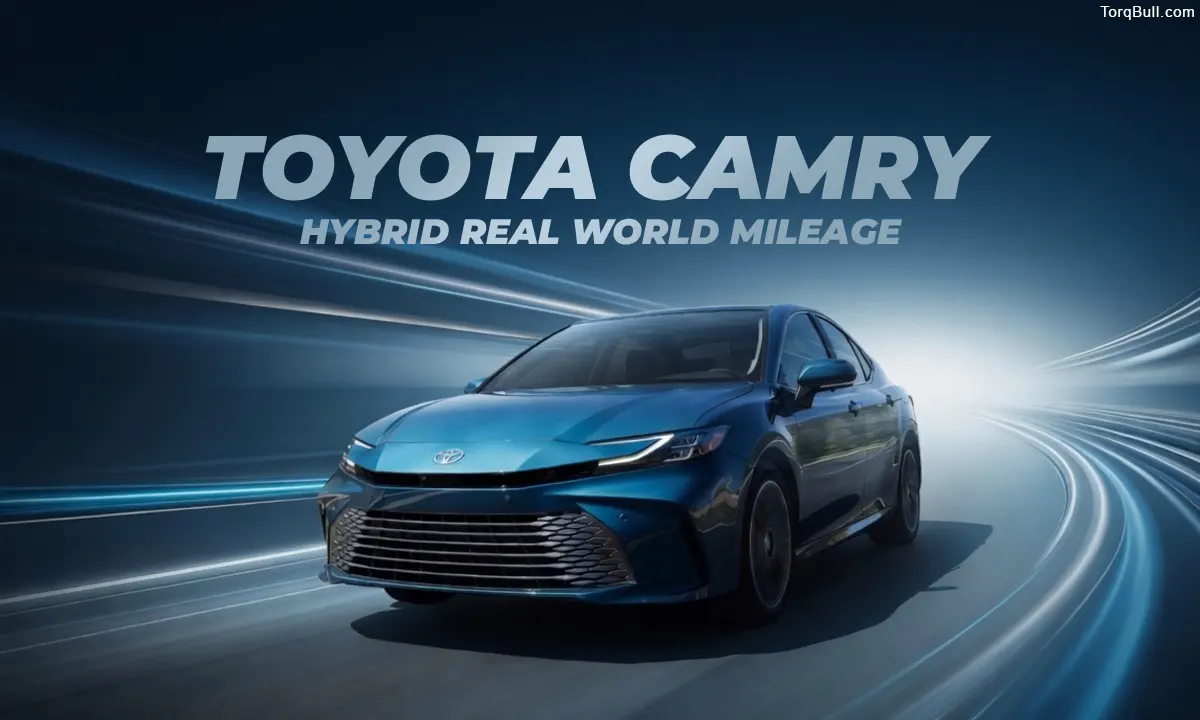
- The 2026 Toyota Camry LE FWD is EPA-rated at 53 MPG city and 50 MPG highway.
- Professional testing achieved 49.8 MPG combined, closely matching the EPA estimate.
- Real-world owners report around 45 MPG in the LE and 44 MPG in the XSE AWD, even with more aggressive driving styles.
The 2026 Toyota Camry’s transition to an exclusively hybrid lineup — the most significant powertrain decision Toyota has made for the Camry nameplate in its history — makes the real-world mileage question not just interesting but directly relevant to the purchase decision for every buyer. When every Camry sold is a hybrid, the fuel economy that real owners and professional testers achieve in everyday driving conditions becomes the single most important efficiency benchmark available. The EPA estimate is the starting point. The professional two-week test result, the six-month owner account, the 11,000-mile forum report and the cold weather owner experience collectively paint a complete and honest picture of what every Camry buyer should realistically expect at the pump. This guide assembles every available real-world mileage data point into the most comprehensive 2026 Camry Hybrid mileage assessment available.
The EPA Baseline: What Every Trim Is Rated to Achieve
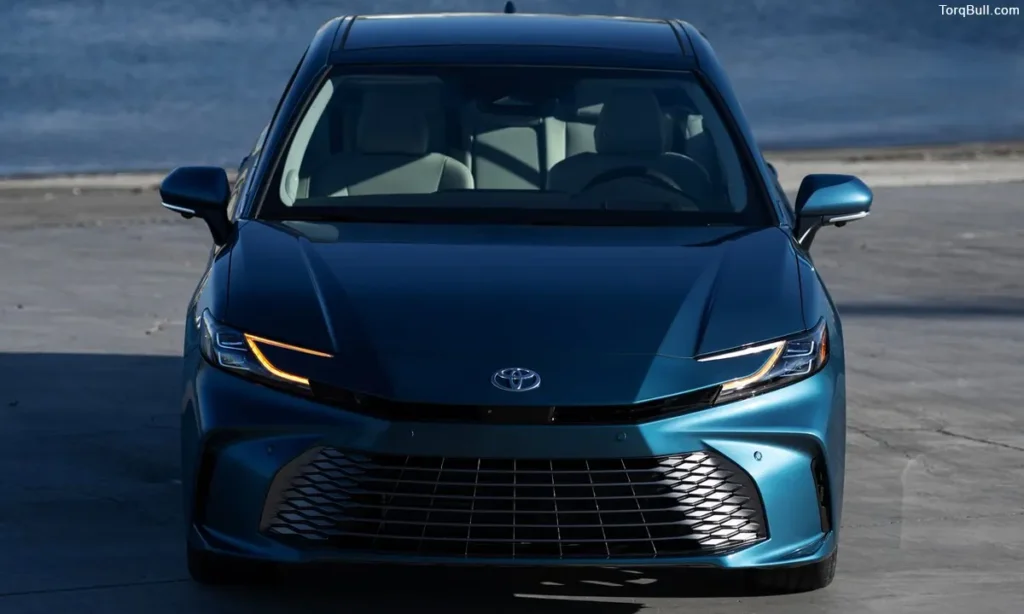
The 2026 Toyota Camry Hybrid’s EPA ratings span a meaningful range across its five trim levels and two drivetrain options — creating efficiency differences that directly affect the purchase decision for buyers who prioritise maximum fuel economy.
The LE trim with front-wheel drive achieves the highest fuel economy in the 2026 Camry lineup at 53 MPG city, 50 MPG highway and 51 MPG combined. This maximum efficiency result benefits from the LE’s lighter 16-inch wheels, which require less energy to rotate than the larger diameter alloys fitted to performance-oriented trims — a specific engineering advantage that produces a measurable fuel economy benefit without any other powertrain change. The LE’s comfort-tuned suspension also contributes marginally to its efficiency leadership by reducing road load compared to the sport-tuned suspension of the SE and XSE.
The LE AWD version delivers 51 MPG city, 49 MPG highway and 50 MPG combined — a very modest 1 MPG combined reduction from the FWD version, reflecting the electronic on-demand AWD system’s low mechanical overhead when the rear electric motor is not actively driving the rear wheels.
The SE, XLE and XSE FWD trims achieve 48 MPG city, 47 MPG highway and 47 MPG combined — reducing from the LE’s peak due to their larger wheel diameters and, on the SE and XSE, sport-tuned suspension calibration. The AWD versions of the SE and XLE achieve approximately 46 MPG combined. The XSE AWD achieves approximately 44 MPG combined — the lowest figure in the 2026 lineup, reflecting the combination of the largest wheel diameter, sport-tuned suspension and AWD drivetrain losses.
The difference between the LE FWD’s 51 MPG combined and the XSE AWD’s 44 MPG combined — 7 MPG combined — translates to approximately $268 in additional annual fuel cost at 15,000 annual miles and $3.08 per gallon. This trim-level efficiency difference is meaningful for high-mileage buyers and marginal for low-mileage buyers whose annual fuel savings are proportionally smaller.
Read: Hyundai Sonata vs Toyota Camry Which Is Better in 2026?
Professional Two-Week Test: 49.8 MPG Combined — Within 3 Percent of EPA
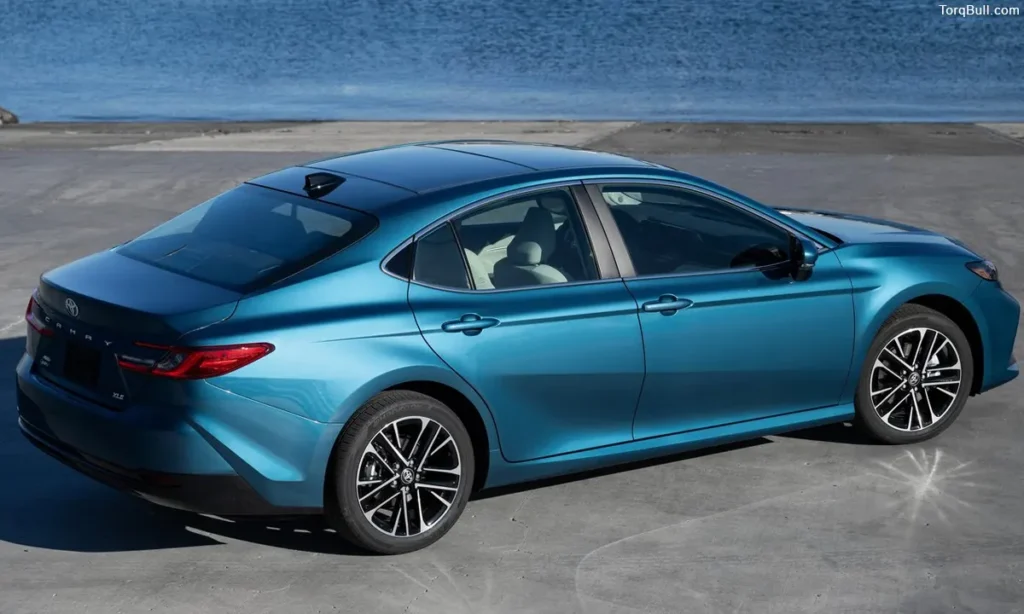
Professional extended testing of the 2026 Camry LE FWD over a two-week period covering city stops, suburban cruising and highway runs produced an average of 49.8 MPG combined — within 2 to 3 percent of the 51 MPG EPA combined estimate. This result is described as impressive for a midsize sedan and specifically noteworthy because it confirms the EPA estimate as achievable in real-world mixed driving rather than optimistic or unreachable in actual ownership conditions.
This professional result is the most practically useful single data point for prospective Camry LE buyers because it comes from an extended evaluation — two weeks across multiple driving environments — rather than a brief highway loop or a single fill-to-fill calculation. The 49.8 MPG combined result confirms that a buyer who drives moderately in a mix of city and highway conditions can realistically expect to approach or match the EPA combined figure across normal ownership use.
Six-Month Owner Experience: 45 MPG in Real Conditions
The most practically representative ownership data point comes from a verified owner who reported approximately 45 MPG after six months of real-world driving in a 2026 Camry SE — a result that the owner specifically described as achievable rather than exceptional, noting that Sport mode makes the 225 horsepower noticeable and that the hybrid system switches between battery and engine power seamlessly without drawing attention to itself.
The 45 MPG result for this specific owner is 6 MPG below the LE’s EPA combined estimate and 2 MPG below the SE’s 47 MPG EPA combined figure — a real-world gap that reflects the inevitable difference between standardised EPA test cycle conditions and six months of everyday driving with varying speed profiles, air conditioning use, seasonal temperature variation and individual acceleration habits. This 45 MPG result is genuinely excellent for a midsize sedan and represents the most realistic expectation for a buyer whose driving pattern is similar to this owner’s six-month sample.
Owner Forum Data: The Range Across Different Driving Styles
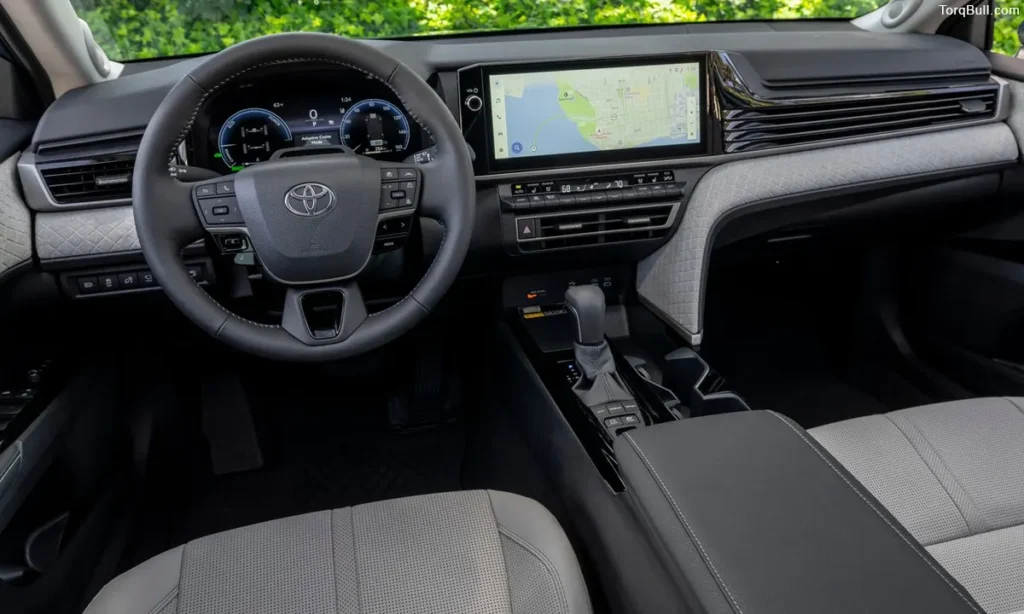
Owner forum discussions covering 2025 and 2026 Camry Hybrid ownership provide the most democratically representative mileage picture — capturing the full range of driving styles, climates and trip profiles across a diverse ownership population.
The most efficiency-focused owners in the forum community report their best tank results approaching and occasionally exceeding 60 MPG on highway-dominant trips with conservative speed management. One owner with 4,500 miles on a 2025 Camry Hybrid XSE reported an average of 40.2 MPG measured at the pump — with their worst individual segment at 36 MPG and their best at 44.1 MPG — against the XSE’s EPA combined figure of 47 MPG. This owner’s results are below EPA, reflecting either the break-in period at 4,500 miles where the powertrain has not yet reached its optimal efficiency calibration, or the specific driving patterns of that owner’s routes.
An owner with 11,000 miles on a 2025 Camry XSE AWD who self-identifies as a somewhat aggressive driver reports a lifetime average of 40.3 MPG — a result that this owner specifically accepts as consistent with their driving style rather than as a disappointing shortfall from the 44 MPG EPA combined figure for that configuration.
One owner with a new 2025 Camry XSE AWD at 1,532 miles expresses disappointment with early fuel economy results, noting that the dealer attributed the lower figures to the vehicle’s learning phase. This break-in period explanation is consistent with Toyota’s hybrid system architecture — the powertrain’s software calibrates to the individual driver’s patterns across the first few thousand miles, and fuel economy typically improves measurably between 2,000 and 5,000 miles as this calibration develops.
Cold Weather Impact: What Northern State Owners Experience

Hybrid fuel economy in cold weather conditions produces a specific and consistent reduction that prospective buyers in northern states, mountain regions and the Pacific Northwest should specifically understand and incorporate into their mileage expectations.
Cold temperatures affect Camry Hybrid mileage through three mechanisms. Battery charge acceptance reduces at low temperatures — below approximately 40 degrees Fahrenheit, the lithium-ion battery’s ability to accept and release charge at its maximum rate is reduced, limiting the electric motor’s contribution in conditions where it would otherwise operate most effectively. Engine warm-up time increases — a cold engine requires more fuel to maintain temperature until reaching operating temperature, consuming additional fuel during the initial portion of every cold weather trip that a warm engine would not require. Cabin heating loads — the climate system’s demand to warm a cold interior primarily from engine heat rather than from passive ventilation — consumes additional fuel that summer driving does not incur.
Real-world cold weather mileage for Camry Hybrid owners in northern states typically falls 10 to 15 percent below the warm weather figures that EPA estimates reflect — a 51 MPG combined Camry LE becoming approximately 43 to 46 MPG combined during sustained cold weather operation, and recovering to near-EPA figures when temperatures rise above 50 degrees Fahrenheit.
Read: Hyundai Sonata Hybrid Real World Fuel Economy
2026 Toyota Camry Hybrid Real World Mileage — Complete Reference Chart
| Configuration | EPA City | EPA Highway | EPA Combined | Professional Test | Six Month Owner | Forum Range |
| LE FWD | 53 MPG | 50 MPG | 51 MPG | 49.8 MPG (2-week test) | Approaching 51 MPG (conservative drivers) | 46 to 54 MPG |
| LE AWD | 51 MPG | 49 MPG | 50 MPG | Comparable to FWD | Comparable | 44 to 52 MPG |
| SE FWD | 48 MPG | 47 MPG | 47 MPG | Not specifically tested | Approx 45 MPG (6-month SE owner) | 42 to 50 MPG |
| XLE FWD | 48 MPG | 47 MPG | 47 MPG | Not specifically tested | Similar to SE | 42 to 49 MPG |
| SE AWD | Approx 46 MPG combined | 46 MPG | Not specifically tested | Varies | 41 to 48 MPG | |
| XSE FWD | 48 MPG | 47 MPG | 47 MPG | Not specifically tested | Varies | 41 to 48 MPG |
| XSE AWD | 44 MPG | 43 MPG | 44 MPG | Not specifically tested | 40.3 MPG (11K miles, aggressive) | 37 to 45 MPG |
All real-world figures are indicative. Individual results vary significantly by driving style, climate, terrain and trip length.
Annual Fuel Cost: What the Real World Numbers Mean at the Pump
Translating real-world mileage into annual fuel cost provides the most practically useful financial context for comparing Camry Hybrid configurations and understanding the vehicle’s ownership economics.
A buyer covering 15,000 annual miles in the LE FWD at the professional test average of 49.8 MPG combined pays approximately $928 per year in fuel at $3.08 per gallon — among the lowest annual fuel costs of any midsize sedan available in 2026. The six-month SE owner’s 45 MPG real-world average at the same mileage and fuel price produces approximately $1,027 per year. The XSE AWD at the forum-reported 40.3 MPG average produces approximately $1,147 per year.
Comparing these figures to a conventional 30 MPG gasoline midsize sedan at the same mileage: $1,540 per year. The LE FWD Camry saves approximately $612 annually over this gasoline baseline. The XSE AWD saves approximately $393 annually — both meaningful ongoing financial benefits that partially offset the hybrid powertrain’s contribution to the vehicle’s purchase price over a multi-year ownership horizon.