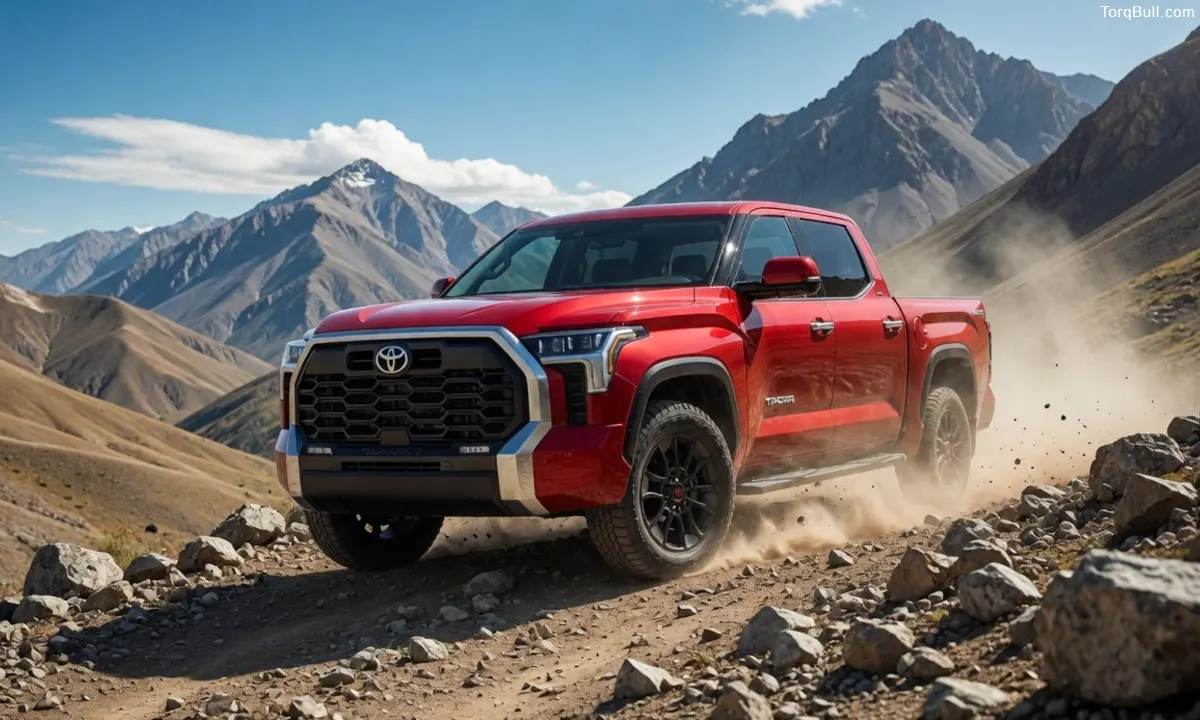
- The 2026 Toyota Tundra offers a maximum payload capacity of 1,940 pounds in select SR and SR5 Double Cab RWD configurations.
- Payload capacity drops to 1,631 pounds for i-Force MAX Hybrid models and around 1,875 pounds for most gas-powered CrewMax versions.
- The payload rating listed on the yellow door-jamb sticker is the only official capacity that applies to your specific truck.
Payload capacity is the truck specification most commonly misunderstood and most consequentially misapplied by truck buyers who confuse the maximum rating advertised in the marketing materials with the actual payload rating of the specific truck they drove home. The 2026 Toyota Tundra’s maximum payload of 1,940 pounds appears in Toyota’s specifications — but this maximum applies to only one specific configuration in the entire Tundra lineup. Every other configuration produces a different, lower payload rating that is printed on a yellow certification sticker inside the driver’s door jamb. That sticker number — specific to your vehicle’s exact combination of cab style, bed length, engine, drivetrain and options — is the legal payload limit for that truck. This guide examines every Tundra configuration’s payload rating, explains how the ratings are calculated and determined, and provides the real-world context that every Tundra buyer needs before loading the bed.
How Payload Capacity Is Calculated: The Fundamental Framework
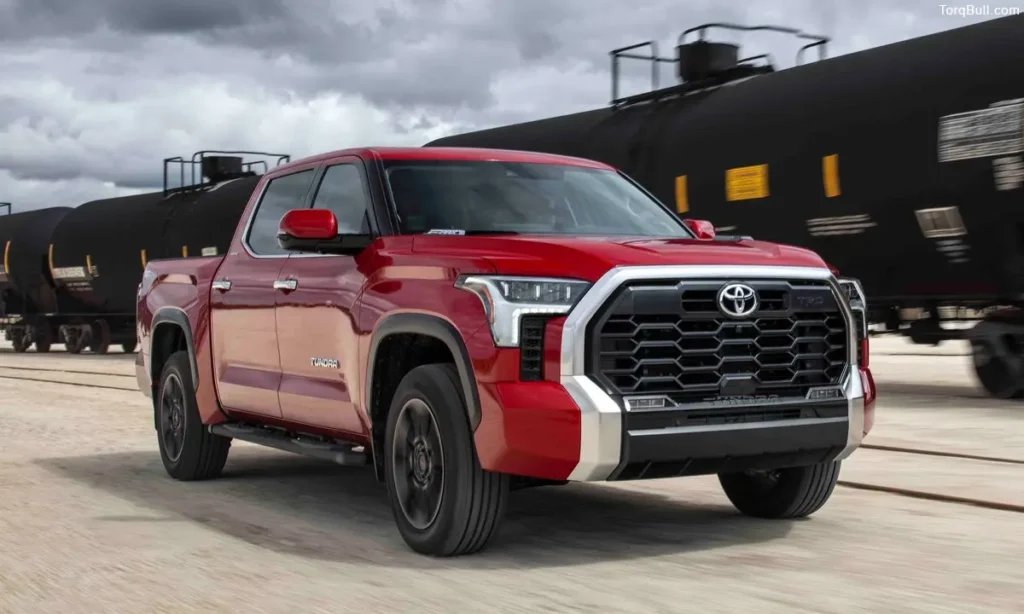
The Toyota Tundra’s payload capacity follows the same engineering calculation that all full-size truck manufacturers use — a calculation that begins with the Gross Vehicle Weight Rating and ends with the number printed on the door jamb sticker.
Gross Vehicle Weight Rating is the maximum allowable total weight of the fully loaded truck — including the vehicle itself, every passenger, every item in the cab, every item in the bed and a full fuel tank. This is Toyota’s engineering determination of the maximum weight the Tundra’s frame, suspension, brakes and axles can safely support in their designed operating state.
Kerb weight is the weight of the truck as delivered from the factory — with all standard fluids, a full fuel tank and all standard factory-installed equipment but without passengers or cargo. Every option added at the factory — a sunroof, rear entertainment system, upgraded audio, additional seats, heavier trim package — adds to the kerb weight and reduces the available payload.
Payload capacity is the mathematical difference between these two numbers. A Tundra SR Double Cab RWD with an 8.1-foot bed and the base i-Force engine might have a Gross Vehicle Weight Rating of 7,175 pounds and a kerb weight of 5,235 pounds — producing a payload of 1,940 pounds. The same engine in a CrewMax cab with 4WD and a heavier trim package might have the same GVWR but a kerb weight of 5,500 pounds — producing a payload of 1,675 pounds. The configuration changes the kerb weight, which directly changes the payload.
Read: Toyota Tacoma vs Toyota Hilux: The Ultimate Pickup Truck Showdown 2026
2026 Tundra Payload by Configuration: The Complete Breakdown
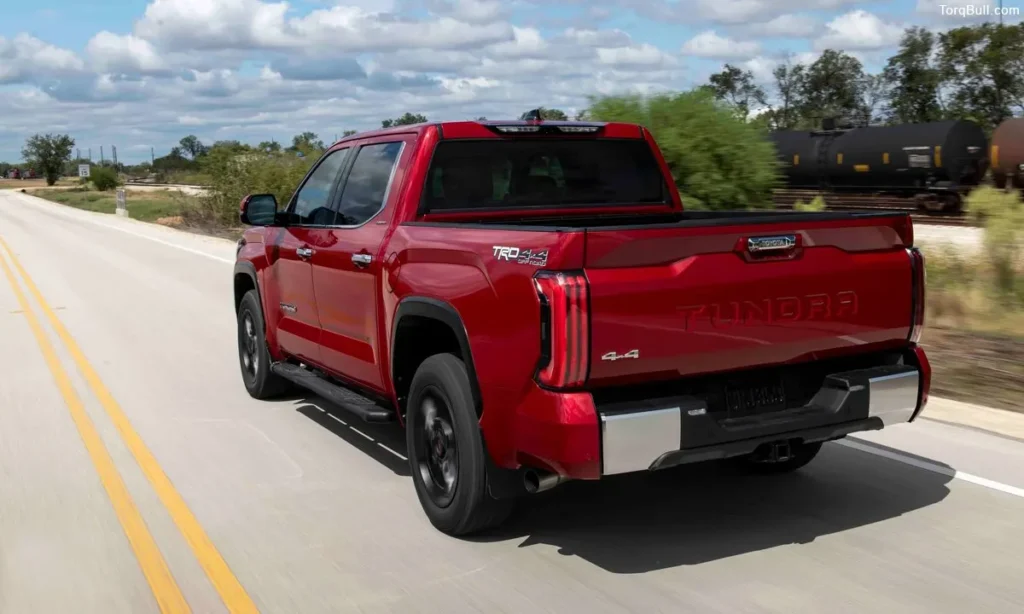
The 2026 Toyota Tundra’s payload ratings span a range from 1,940 pounds at the maximum capability configuration to 1,631 pounds for the i-Force MAX hybrid CrewMax in higher trims — a 309-pound difference across the lineup that reflects the accumulated weight of the hybrid battery, electric motor, 4WD transfer case, heavier cab and premium trim content.
Gas Engine Configurations
The 2026 Tundra with the standard i-Force 3.4-litre twin-turbocharged V6 producing 348 to 389 horsepower depending on the specific tune achieves payload ratings that vary most significantly by cab style and drivetrain choice.
The SR and SR5 Double Cab RWD configurations achieve the lineup maximum of 1,940 pounds — the rating that appears in Toyota’s headline payload specification for the 2026 model year. This maximum requires the Double Cab body style, rear-wheel drive and the non-upgraded engine specification, without the weight additions of 4WD transfer case, heavier CrewMax cab or premium options packages that add mass to the kerb weight.
Most gas-powered CrewMax configurations achieve payload ratings in the 1,875 to 1,940 pound range — the CrewMax cab’s additional rear passenger capacity adds weight relative to the Double Cab, reducing available payload by approximately 65 to 150 pounds depending on the specific trim content. Gas-powered 4WD configurations reduce payload further by approximately 200 to 350 pounds compared to equivalent RWD setups, reflecting the transfer case, front differential and additional drivetrain hardware’s contribution to kerb weight.
i-Force MAX Hybrid Configurations
The i-Force MAX hybrid powertrain — combining the 3.4-litre twin-turbocharged V6 with an electric motor for 437 horsepower and 583 pound-feet of torque — produces significantly more torque than the standard gas engine but carries the hybrid battery pack and electric motor system’s additional weight as a direct payload reduction consequence.
The i-Force MAX hybrid achieves maximum payload ratings of approximately 1,631 to 1,770 pounds depending on the specific configuration — substantially below the gas engine’s 1,940-pound maximum. The TRD Pro with i-Force MAX hybrid achieves 1,770 pounds of payload capacity. The Capstone with i-Force MAX hybrid reaches 1,786 pounds. These hybrid payload figures are specifically noted in Toyota’s official specifications and represent a real trade-off that buyers who need maximum payload capacity must weigh against the hybrid’s torque and efficiency advantages.
The 2026 Update That Changes Range Planning: Universal 32.2-Gallon Fuel Tank
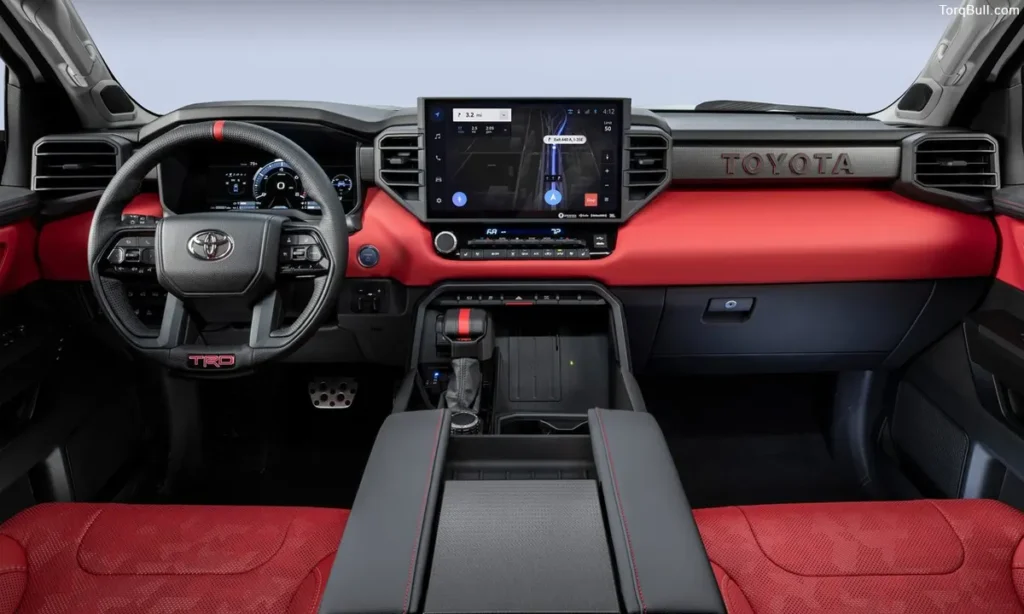
The most operationally significant 2026 Tundra change for owners who tow or haul regularly is the standardisation of the 32.2-gallon fuel tank across every 2026 configuration — a change from the 2025 model where only certain configurations included the larger tank.
The larger tank’s specific payload impact is direct and measurable: a full 32.2-gallon tank of regular grade fuel at approximately 6.3 pounds per gallon weighs approximately 203 pounds. This fuel weight is included in the kerb weight calculation used to determine payload, meaning the 2026 Tundra’s door jamb payload rating already accounts for a full tank — buyers do not need to subtract fuel weight from the sticker payload when planning loads.
For buyers who frequently tow trailers to remote locations or haul to job sites across long distances, the universal 32.2-gallon tank increases usable range between fuel stops by approximately 40 to 50 miles compared to the previous smaller tank configuration — reducing the frequency of stops that interrupt productive work time or recreational travel.
Read: Toyota Tacoma Off-Road Capability Explained 2026. The Ultimate Off-Road Midsize Truck?
The Composite Bed: Why the Tundra’s Payload Design Is Different
The 2026 Toyota Tundra uses an aluminum-reinforced Sheet-Molded Composite bed rather than the steel bed that competing full-size trucks use — a material choice whose structural implications directly affect how payload capacity is engineered and achieved.
Composite and aluminum construction reduces the bed’s own weight compared to a steel alternative — contributing to a lighter kerb weight and therefore a higher available payload for a given Gross Vehicle Weight Rating. This weight reduction approach is the same engineering logic that produces the Ford F-150’s aluminum body panels — accepting higher material cost and more specialised repair requirements in exchange for weight reduction that translates directly to payload capacity.
The composite construction provides specific durability advantages for payload applications — the bed surface resists dents from dropped tools and heavy materials that would dimple a steel bed’s surface. However, composite bed damage from impacts that exceed the material’s yield point requires replacement rather than the sheet metal repair that a damaged steel bed would accommodate — a distinction that matters for owners in construction or agricultural use where bed impact is common.
2026 Toyota Tundra Payload Capacity — Complete Configuration Chart
| Configuration | Engine | Drivetrain | Max Payload | Towing Capacity | Notes |
| SR Double Cab, 8.1-ft bed | i-Force V6 (348 hp) | RWD | 1,940 lbs | 8,300 lbs | Maximum payload in lineup |
| SR5 Double Cab | i-Force MAX V6 (389 hp) | RWD | 1,940 lbs | 12,000 lbs | Tow Package required for max tow |
| SR5 CrewMax | i-Force MAX V6 | RWD | 1,875 to 1,940 lbs | Up to 11,199 lbs | CrewMax cab adds weight |
| SR5 CrewMax | i-Force MAX V6 | 4WD | 1,785 to 1,875 lbs | Up to 10,600 lbs | 4WD adds transfer case weight |
| Limited CrewMax | i-Force MAX V6 | 4WD | approximately 1,875 lbs | Up to 10,600 lbs | Premium trim adds weight |
| TRD Pro CrewMax | i-Force MAX Hybrid (437 hp) | 4WD | 1,770 lbs | 11,175 lbs | Off-road hardware adds weight |
| Capstone CrewMax | i-Force MAX Hybrid | 4WD | 1,786 lbs | 10,340 lbs | Luxury trim; hybrid system |
| 1794 Edition CrewMax | i-Force MAX Hybrid | 4WD | approximately 1,760 to 1,800 lbs | Up to 11,170 lbs | i-Force MAX standard |
All figures are manufacturer rated. Individual vehicle payload is printed on door jamb certification label and supersedes all published maximums.
Read: Why Toyota Hilux Is The Toughest Pickup Truck In The World
The Yellow Door Jamb Sticker: The Only Number That Legally Matters
No published payload rating — not the specification on Toyota’s website, not the number in this article, not the figure the dealer recites — applies to any specific truck other than the one whose door jamb sticker produces that exact number.
Every Toyota Tundra delivered to every buyer has a certification label inside the driver’s door jamb that states the Gross Vehicle Weight Rating and the resulting payload capacity for that exact vehicle as assembled — with every factory-installed option, every trim piece, every added package included in the kerb weight calculation. This is the legally binding payload limit for that truck.
Exceeding the payload capacity printed on the door jamb certification sticker creates three specific risk categories. Safety risk: the suspension, brakes and steering that Toyota engineered for the rated load are operating beyond their designed parameters, reducing braking effectiveness and destabilising handling. Financial risk: vehicle insurance may deny coverage for accidents occurring while the truck is overloaded, because operation outside the vehicle’s certified parameters is a material violation of standard policy terms. Legal risk: in commercial applications, violation of payload ratings can create liability exposure and regulatory compliance failures under applicable state and federal commercial vehicle regulations.
The practical guidance for any Tundra buyer with regular high-payload use is to weigh actual loads before departure using commercial scales at truck stops, grain elevators, recycling centres and construction suppliers — confirming that the combination of passengers, in-cab cargo and bed cargo remains within the door jamb-specified payload limit before every heavy-load trip.