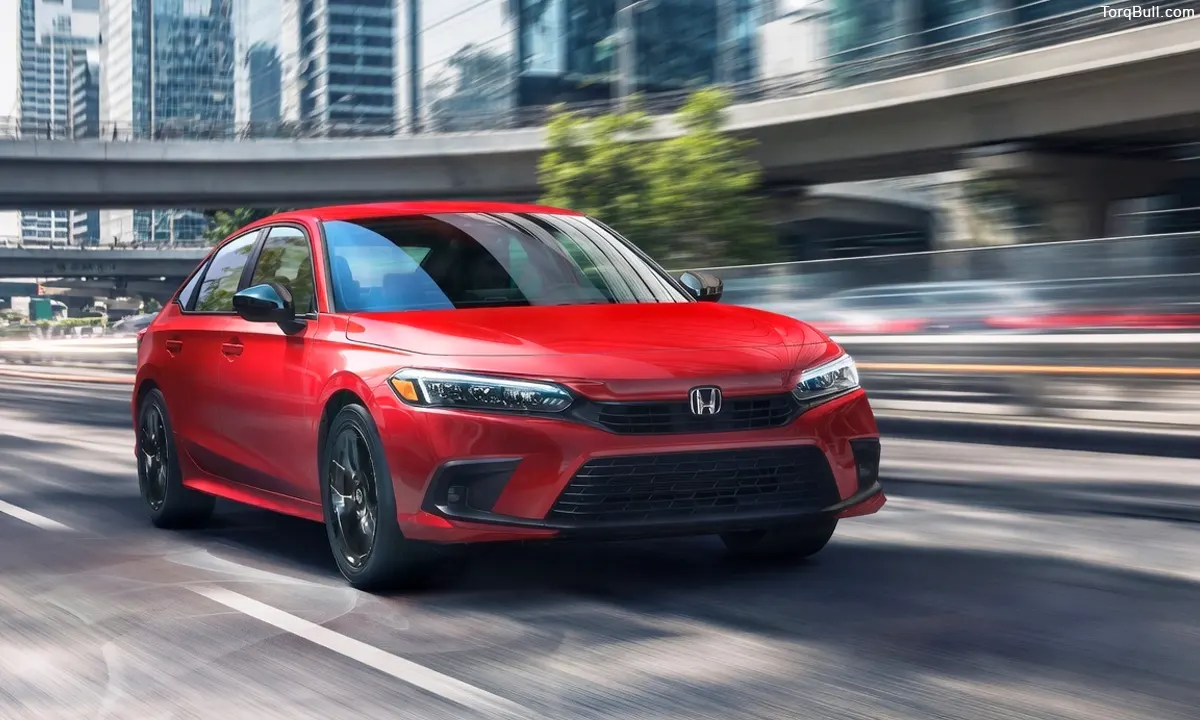
- The Honda Civic is known for long-term durability, with many owners exceeding 200,000 miles while keeping maintenance costs relatively low.
- Strong fuel economy, solid resale value and manageable depreciation help make ownership affordable over time.
- Despite occasional infotainment issues and some concerns with recent model years, the Civic remains a popular choice for its reliability, efficiency and everyday practicality.
Some cars earn their reputations in the first two years of ownership. The Honda Civic earns its reputation in years six, seven and eight, when comparable vehicles from other brands are beginning to accumulate the unexpected repair bills, persistent minor faults and accelerating mechanical decline that gradually erode confidence in a purchase that once seemed sensible. The Civic’s long term ownership story is not built on first impression showmanship — it is built on the unglamorous and deeply meaningful quality of simply refusing to become a problem. Over five decades and eleven generations, the Civic has established a pattern of behaviour that no marketing campaign could replicate because it is based entirely on documented owner experience: it runs reliably, it costs very little to maintain and it retains its value more effectively than almost any other compact car in the American market.
The eleventh generation Civic, launched for the 2022 model year and updated through 2025 and 2026, adds a new dimension to this established story with the reintroduction of the Civic Hybrid, a 200 horsepower two motor system producing combined fuel economy that places it among the most efficient non plug in sedans available. This complete long term ownership review covers what five to ten years of Civic ownership actually looks like across reliability, running costs, fuel economy, depreciation, known fault patterns and the honest balance of strengths and limitations that define the experience.
Reliability Score and Industry Recognition
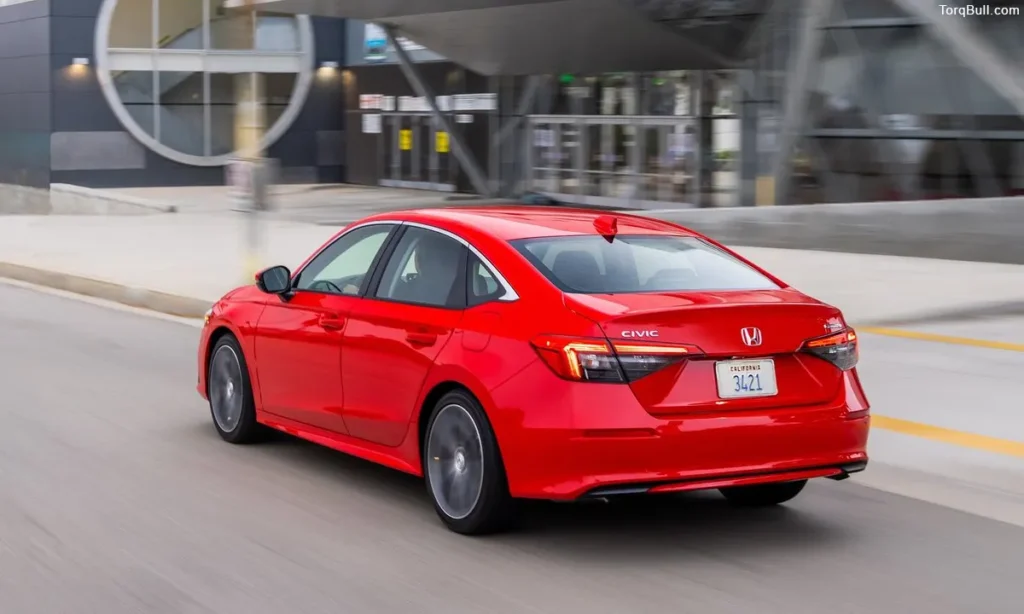
The Honda Civic’s reliability standing is among the most consistently documented in the compact car segment. Across the eleventh generation spanning 2022 through 2026, reliability scores have tracked as follows in independent assessments: the 2022 model year scored 66 out of 100 due to a concentrated pattern of steering gearbox complaints that generated a significant number of owner reports in the first two years of production; the 2023 model improved to 74 out of 100; the 2024 model reached 81 out of 100 rated Excellent; and the 2025 model achieved 84 out of 100 representing the highest reliability score of any Civic model year in the current generation.
The steering gearbox issue affecting 2022 through 2025 model years is the single most significant reliability qualification for buyers considering a used eleventh generation Civic. The steering gearbox assembly on affected vehicles was manufactured with incorrect worm gear spring tension, leading to excessive internal friction and reported difficulty steering. A national recall addressed this concern and dealers replaced the affected components at no cost to owners. Buyers purchasing used 2022 to 2024 Civic models should verify through the vehicle identification number whether the relevant recall repairs have been completed before purchase.
Beyond this specific issue, the Civic’s reliability profile is strongly positive across the generation. The base 2.0 litre naturally aspirated engine paired with the continuously variable transmission has demonstrated the durability pattern established by previous Civic generations, with timing chain construction replacing the timing belt arrangement used in earlier models, eliminating one of the traditional high mileage maintenance requirements entirely. Owners consistently report reaching 150,000 miles without powertrain intervention, and documented cases of 200,000 to 300,000 mile Civics with original engines are sufficiently common to be unremarkable within owner communities.
Read: Honda Civic Pros and Cons. Is It Still the Best Compact Car Choice?
Annual Maintenance and Repair Costs
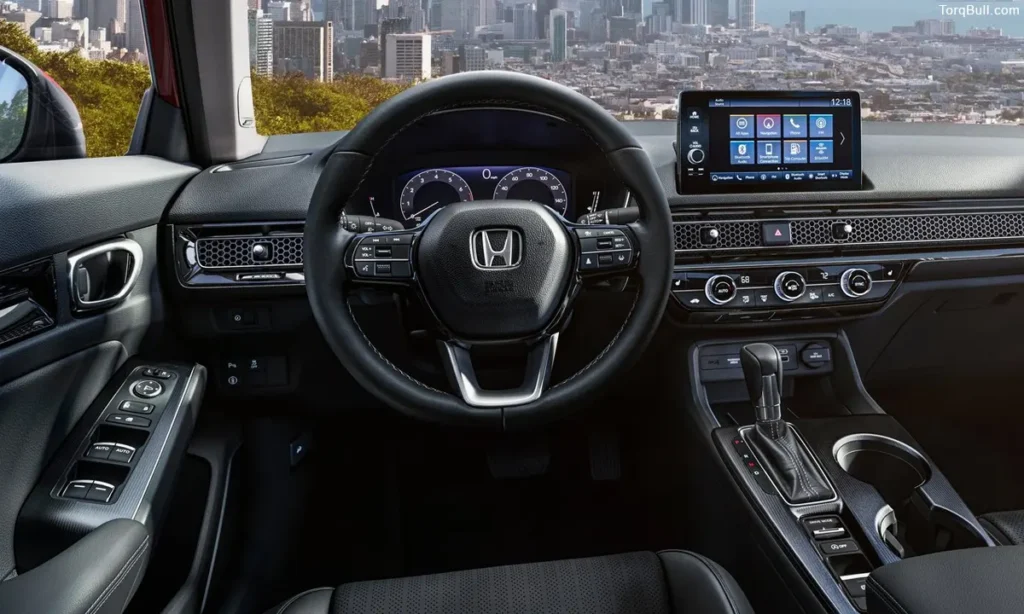
The Honda Civic’s average annual repair cost is approximately $368, a figure that places it significantly below the approximately $652 industry average for all vehicles and among the lowest maintenance cost profiles of any vehicle sold in the United States regardless of segment. This figure represents a combination of scheduled maintenance requirements and unscheduled repair frequency, weighted against the actual cost of parts and labour for each.
Scheduled maintenance for the standard gas Civic is straightforward and inexpensive in practice. Oil changes using full synthetic formulation are recommended every 7,500 to 10,000 miles depending on driving conditions, with Honda’s oil life monitoring system providing a personalised interval based on actual use rather than a fixed calendar recommendation. Continuously variable transmission fluid replacement is recommended at approximately 60,000 miles. Spark plugs are iridium long life type, with replacement intervals extending to 100,000 miles. Brake pad longevity is typically 50,000 to 70,000 miles under normal driving conditions, with disc rotor replacement generally needed at the second or third pad change. Air filter replacement at roughly 30,000 miles completes the primary scheduled maintenance cycle.
The Civic Hybrid’s maintenance profile differs in ways that primarily favour reduced cost rather than increased expense. Engine oil change intervals are extended because the electric motors handle a greater proportion of propulsion in low speed and light throttle conditions, meaning the combustion engine runs less frequently and accumulates less operational wear per unit of elapsed time. Brake pad longevity is significantly extended because regenerative braking handles a substantial proportion of deceleration duty, with many Civic Hybrid owners reporting brake pad life of 80,000 miles or beyond. The hybrid battery pack is liquid cooled for thermal management, and Honda’s hybrid battery technology has demonstrated strong durability in the Accord Hybrid and CR V Hybrid applications, with battery capacity decline typically remaining within acceptable limits for eight to ten years of ownership.
Five year total cost of ownership for the 2025 Civic including depreciation, fuel, insurance, maintenance, repairs and financing is estimated at approximately $40,578. Out of pocket operating expenses over five years are estimated at $28,008, placing the Civic in the top ten percent of all compact cars by five year cost efficiency.
Fuel Economy: Real World Performance
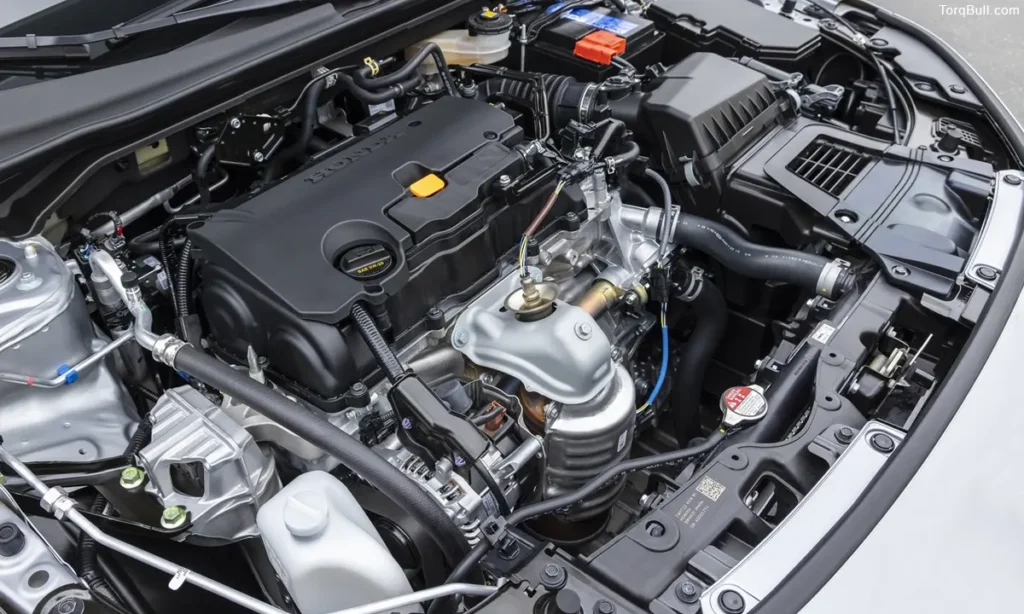
The standard 2.0 litre gas Civic achieves EPA ratings of 32 miles per gallon city and 41 miles per gallon highway, translating to approximately 36 miles per gallon combined in typical mixed driving. In real world conditions as reported by owners, the combined figure tends to fall between 33 and 38 miles per gallon depending on driving style, climate conditions and the proportion of city versus highway use. Annual fuel cost at 15,000 miles per year averages approximately $1,283 at current national average fuel prices, making the Civic among the least expensive compact cars to fuel in normal operation.
The 2025 and 2026 Civic Hybrid achieves EPA ratings of 50 miles per gallon city, 47 highway and 49 combined, with real world owner reports consistently placing fuel consumption in the 45 to 52 miles per gallon range depending on driving conditions. At these efficiency levels, annual fuel expenditure at 15,000 miles drops to approximately $850, representing a saving of over $400 annually compared to the standard gas model and a saving of over $700 annually compared to the average compact car. Over ten years of ownership, this fuel economy advantage accumulates into a substantive financial offset against the Civic Hybrid’s higher initial purchase price.
Read: Should I Buy Honda Civic or Toyota Corolla? Ultimate Comparison for 2026
Depreciation and Resale Value
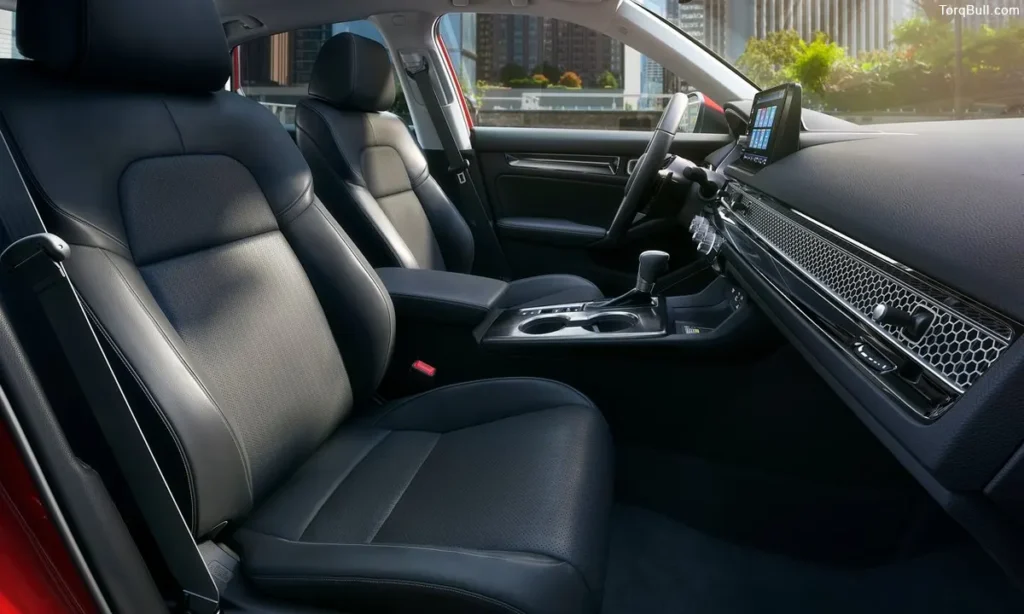
The Honda Civic’s depreciation profile is among the strongest in its segment and one of the clearest financial arguments for its purchase as a long term ownership vehicle. The 2025 model is estimated to depreciate 16 percent over five years, representing a loss of approximately $4,042 on a base LX starting price of $25,250. This figure compares extremely favourably against the industry average depreciation of approximately 49 percent over five years for compact cars broadly. In practical terms, a Civic purchased new today will retain close to 84 percent of its purchase price after five years of ownership at average mileage, while a comparable compact sedan from a less established brand may retain only 51 to 60 percent of its value over the same period.
The Kelley Blue Book five year cost to own data confirms this position, with depreciation accounting for only $12,570 of the estimated five year total cost for the 2025 Civic, and the residual value after five years estimated at $12,830 against a purchase price of approximately $25,400. For buyers who trade vehicles at the five to seven year mark, this retained value represents direct recoverable capital that offset the total ownership cost calculation significantly.
Known Issues and Owner Reported Concerns
Honest long term ownership assessment requires acknowledging the Civic’s documented fault patterns rather than presenting only its strengths. Several recurring themes appear consistently across owner reports for the eleventh generation.
Steering gearbox friction, addressed through recall on 2022 to 2025 model years, is the most significant and most widely documented concern. Infotainment connectivity is the second most frequently cited issue, with intermittent disconnection of wireless Apple CarPlay and Android Auto reported by a meaningful proportion of owners and occasional freezing of the central display requiring a system restart. Dashboard and interior rattles, particularly from the instrument panel area at certain temperature extremes, appear in owner surveys with above average frequency for a Honda product and represent the most common quality complaint that is not addressed by a recall or software update. Forward collision avoidance system false alerts are reported by some owners, particularly in low ambient light or certain precipitation conditions, triggering unnecessary brake application or warning activation.
None of these issues affect the powertrain, and none represent the kind of structural or mechanical concern that materially alters the Civic’s fundamental reliability profile. They are the minor irritations of modern vehicle ownership rather than the expensive interventions that define an unreliable car.
Read: Honda Civic Engine Performance. Every Powertrain Tested and Compared
Long Term Ownership by the Numbers
| Category | Detail |
| Average Annual Repair Cost | $368 (vs $652 industry average) |
| 10 Year Maintenance Estimate | $5,639 |
| Probability of Major Repair (10yr) | 16 percent |
| Gas Civic Fuel Economy (EPA) | 32 city / 41 highway / 36 combined mpg |
| Hybrid Civic Fuel Economy (EPA) | 50 city / 47 highway / 49 combined mpg |
| Annual Fuel Cost (Gas, 15k miles) | Approx. $1,283 |
| Annual Fuel Cost (Hybrid, 15k miles) | Approx. $850 |
| 5 Year Depreciation Rate | Approx. 16 percent |
| 5 Year Residual Value (LX Base) | Approx. $12,830 |
| 5 Year Total Cost of Ownership | Approx. $40,578 |
| Typical Powertrain Lifespan | 200,000 to 300,000 miles documented |
| Timing System | Timing chain (no replacement interval) |
| Spark Plug Replacement Interval | 100,000 miles (iridium long life) |
| CVT Fluid Replacement | Approx. 60,000 miles |
| Brake Pad Life (Gas) | 50,000 to 70,000 miles typical |
| Brake Pad Life (Hybrid) | 80,000 miles and beyond typical |
| Hybrid Battery Coverage | 8 years / 100,000 miles warranty |
| Reliability Score 2024 Model | 81 out of 100 rated Excellent |
| Reliability Score 2025 Model | 84 out of 100 rated Excellent |
| Known Issues to Check (Used) | Steering gearbox recall status on 2022 to 2024 |
| Infotainment Concerns | Wireless CarPlay or Android Auto disconnection |
| Warranty (Bumper to Bumper) | 3 years / 36,000 miles |
| Warranty (Powertrain) | 5 years / 60,000 miles |
| Complimentary Maintenance | 2 years / 24,000 miles |
The Long Term Verdict
The Honda Civic’s long term ownership case rests on a foundation that a decade of owner experience has made difficult to dispute: it costs very little to maintain, retains more of its value than almost any other compact car, achieves above average fuel economy in gas form and exceptional economy in hybrid form, and demonstrates powertrain durability that routinely extends well beyond 200,000 miles with nothing more demanding than consistent oil changes and basic scheduled service. Its 16 percent five year depreciation rate places it in a category of its own within the compact segment, and its average annual repair cost of $368 is one of the most compelling ownership economics available in any car category at any price point.
The infotainment connectivity quirks, occasional dashboard rattles and the steering recall affecting earlier eleventh generation examples represent the honest qualifications that prevent the Civic’s ownership story from being entirely uncomplicated. They are, in the context of what the car delivers across a decade of total ownership, minor footnotes to a fundamentally excellent narrative. For buyers whose priorities align around low running costs, proven durability, strong resale value and daily reliability over many years of ownership, the Honda Civic remains the compact car that most completely delivers on all four counts simultaneously, in 2026 as consistently as it has across each of the five preceding decades of its production history.