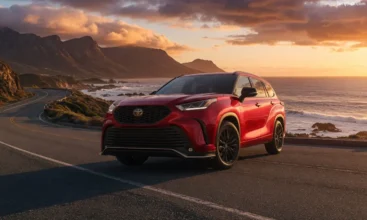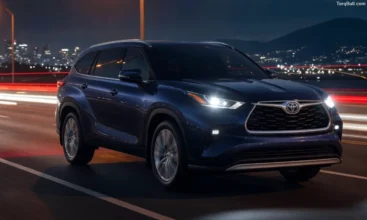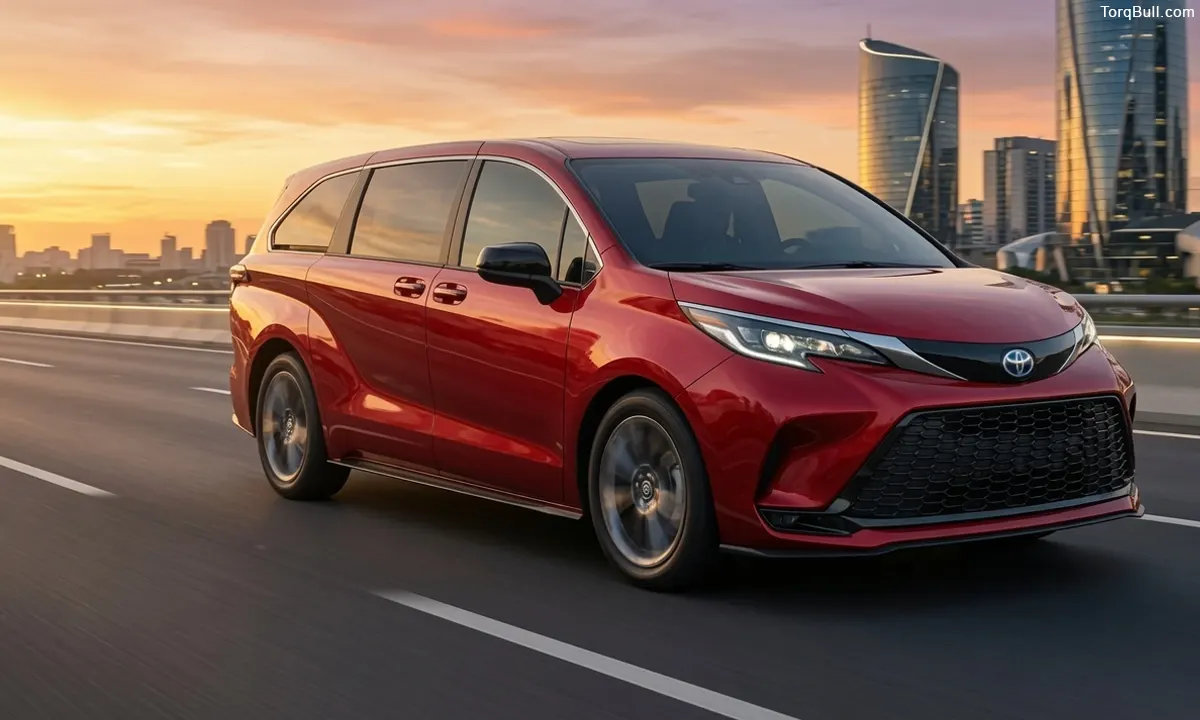
- The 2026 Toyota Sienna retains its value exceptionally well, with five-year depreciation estimated at about $19,885.
- A typically equipped Sienna is projected to retain a substantial portion of its original value after five years.
- Strong resale value and multiple Best Buy awards make the Sienna one of the most cost-effective minivans to own long term.
The Toyota Sienna’s resale value proposition is one of the strongest available in the minivan segment — built on the same Toyota reliability foundation that produces consistently above-average retention rates across the entire Toyota vehicle lineup. The third-generation Sienna’s transition to an exclusively hybrid powertrain in 2021 has strengthened its used-market positioning by adding fuel efficiency as an ongoing ownership benefit that sustains demand for used examples at higher prices than conventionally powered minivan alternatives command. For buyers evaluating the Sienna’s total cost of ownership — or for current owners planning to sell or trade — understanding how the depreciation curve unfolds year by year, which model year offers the best value for used buyers and how the Sienna’s retention rate compares against both minivan competitors and the broader vehicle market provides the most complete financial picture available. This guide delivers all of it.
The Five Year Depreciation: Two Different Perspectives on the Same Vehicle
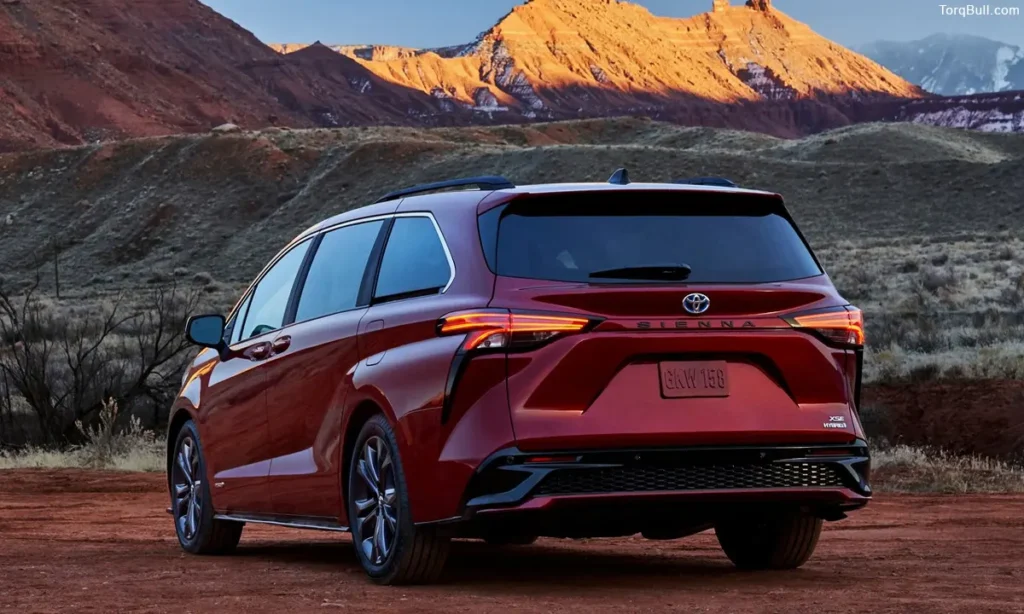
The Toyota Sienna’s five-year depreciation figure is best understood through two different datasets that each reflect a different aspect of the vehicle’s value retention — and both are worth examining for the complete picture.
The first perspective uses the 2026 Sienna’s purchase price basis, producing a five-year depreciation of $19,885 and a residual value of $22,030. This calculation starts from the 2026 model’s higher new purchase price and reflects the steeper absolute dollar loss that a more expensive starting point produces even when the percentage retention rate is strong.
The second perspective uses the average transaction price across all Sienna model years, producing a depreciation of $19,282 over five years from a typically equipped sale price of $51,254 — leaving a residual value of $31,972. This figure is more relevant for buyers who want to understand what a moderately configured Sienna purchased today will be worth in five years, and it reflects the broader market’s demand for used Sienna examples across all trims and configurations rather than the specific new purchase scenario of the highest current model year.
Both figures confirm the same fundamental financial reality: the Toyota Sienna loses approximately $19,000 to $20,000 in value over five years — a depreciation rate that is meaningfully better than most minivan alternatives and competitive with the Toyota brand’s broader vehicle lineup which averages 35 percent value loss over five years across all models.
Read: Toyota Sienna Common Problems. What Owners Need to Know Before Buying
The Year by Year Depreciation Curve: Where Value Is Lost Most Rapidly
Understanding how the Sienna’s depreciation unfolds year by year is more useful for ownership planning than the five-year total alone — because the depreciation is heavily front-loaded in the first two years, with the most rapid value decline occurring in the period when the vehicle transitions from new to used in the market’s perception.
The 2024 Sienna’s depreciation curve from verified market data shows a loss of approximately $6,110 in the first year — the largest single-year decline, driven by the transition from new vehicle to used vehicle status that removes the premium buyers pay for a factory-fresh vehicle with zero ownership history. The second year produces an additional loss of approximately $1,132, with subsequent years showing declining but consistent depreciation of approximately $1,000 to $1,250 per year through years three to five.
This front-loaded depreciation pattern has a specific and actionable financial implication for prospective Sienna buyers: purchasing a one or two year old used Sienna allows the buyer to avoid the largest portion of the depreciation curve — the first-year $6,110 decline — while acquiring a vehicle that retains the vast majority of its practical life and all of its Toyota reliability credentials. The 2024 Sienna is specifically identified as the top pick for best model year value — paying on average 92 percent of the original new price while retaining 92 percent of the vehicle’s useful life remaining, the specific value equation that makes a two-year-old example the most financially rational purchase in the Sienna lineup.
How the Sienna’s Resale Value Compares to Minivan Competitors
The Toyota Sienna’s resale value advantage over competing minivans reflects both the Toyota brand’s broader reliability reputation and the Sienna’s specific hybrid powertrain positioning that adds an efficiency argument to the used-market conversation.
The Chrysler Pacifica, the Sienna’s primary American market minivan competitor, carries significantly higher five-year depreciation — typically 45 to 55 percent of original value lost in five years versus the Sienna’s more competitive rate. This difference reflects the documented reliability gap between Toyota’s manufacturing platform and the Stellantis products that produce higher unscheduled repair frequency and lower consumer confidence in high-mileage examples.
The Honda Odyssey is the Sienna’s closest resale value competitor among minivans — carrying a five-year depreciation rate that is broadly similar to the Sienna’s, both benefiting from Japanese manufacturer reliability reputations that sustain used-market demand. The Odyssey’s lack of hybrid powertrain option does give the Sienna a growing advantage as fuel prices remain elevated and hybrid efficiency becomes increasingly valued in the used vehicle market.
The Kia Carnival carries a competitive purchase price against the Sienna but depreciates faster — reflecting the shorter track record of Kia’s reliability reputation in the minivan category and the lower used-market floor that less-established reliability records produce when buyers are evaluating high-mileage examples for purchase.
Read: How to Increase Your Car Resale Value in America
Toyota Sienna Five Year Resale Value and Depreciation — Complete Reference Chart
| Year of Ownership | Estimated Residual Value | Annual Depreciation Loss | Cumulative Depreciation | Remaining Value % |
| New purchase (2026) | $51,254 | N/A | N/A | 100% |
| After Year 1 | approximately $45,144 | approximately $6,110 | $6,110 | 88% |
| After Year 2 | approximately $44,012 | approximately $1,132 | $7,242 | 86% |
| After Year 3 | approximately $42,940 | approximately $1,072 | $8,314 | 84% |
| After Year 4 | approximately $41,683 | approximately $1,257 | $9,571 | 81% |
| After Year 5 | approximately $40,491 | approximately $1,192 | $10,763 | 79% |
| Retail market value after 5 years | $31,972 (average equipped) | Total $19,282 | 37.6% lost | 62.4% retained |
Retail market values represent private party sale prices. Trade-in and dealer auction values will be lower by approximately 10 to 20 percent. Values are for good condition examples at 13,500 annual miles.
Read: Why Toyota Cars Are Known for Bulletproof Reliability?
The Hybrid Advantage: How the Powertrain Supports Resale Value
The Toyota Sienna’s exclusively hybrid powertrain — introduced for the 2021 model year and continued through the 2026 model — provides a specific and increasingly valuable resale advantage over conventionally powered minivan alternatives as the used vehicle market’s perception of hybrid efficiency value continues to develop.
The Sienna’s hybrid system produces 245 combined horsepower and achieves 35 to 36 MPG combined — the most fuel-efficient minivan available in the American market by a substantial margin over the Chrysler Pacifica’s 21 MPG combined and the Honda Odyssey’s 22 MPG combined. At 15,000 annual miles and $3.08 per gallon, a used Sienna buyer saves approximately $700 to $800 per year in fuel costs compared to the most direct conventional minivan competitors. This ongoing annual saving is specifically valued by used vehicle buyers — and the market’s recognition of this value is reflected in the stronger residual values that Sienna examples command in the used market relative to conventionally powered alternatives.
The hybrid system’s mechanical simplicity relative to its efficiency output — Toyota’s well-established hybrid architecture operating on a mature and extensively documented reliability platform — also reduces the used-market anxiety about hybrid component longevity that some buyers apply to less-proven electrified systems. The Sienna’s hybrid battery warranty coverage of 10 years or 150,000 miles in California emissions states provides additional confidence to used buyers within the warranty window, further supporting transaction prices.
Best Model Year Sienna for Resale Value: The Buyer’s Guide
For buyers whose goal is maximising the Sienna ownership experience while minimising depreciation exposure, the model year selection matters more than any single other purchase decision.
The 2024 Toyota Sienna is the top pick for best model year value — offering 92 percent of the original new vehicle’s price at 92 percent of useful life remaining. This near-new value proposition is specifically compelling for buyers who want the newest possible Sienna with the lowest depreciation exposure. The 2025 and 2022 model years are also identified as attractive purchase options — both providing strong value relative to their age and remaining useful life.
The 2021 model year represents the best balance of price, depreciation absorption and hybrid reliability for buyers specifically seeking maximum value per dollar — this first-generation hybrid Sienna has absorbed the steepest depreciation years while the Toyota hybrid system’s documented multi-year reliability record is most extensively established in this model year’s real-world ownership data.