Do You Really Need a Lawyer After a Minor Car Accident? Here Is the Truth
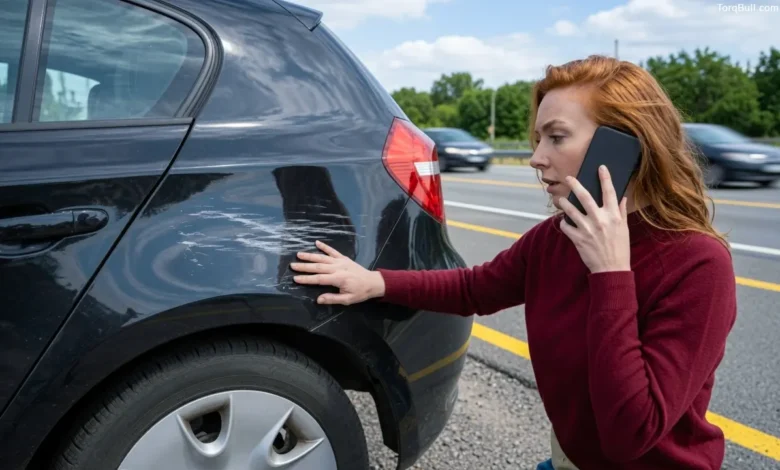
- Most minor accidents involving no injuries, minimal vehicle damage and clear fault can often be resolved without hiring an attorney.
- Hidden injuries, delayed symptoms and disputes over fault can quickly turn a seemingly minor accident into a significant legal and financial matter.
- Consulting an attorney becomes more important when injuries, insurance coverage issues or liability questions complicate the claim.
The question almost every accident victim asks in the hours after a minor collision is whether they need a lawyer — and the industry’s honest answer is that not every minor accident requires legal representation. Personal injury attorneys — who have every financial incentive to answer yes — are among the first to acknowledge that if you never suffered an injury, or your injury involved very minor discomfort that quickly resolved, you likely do not need to hire an attorney for a minor crash. That acknowledgment from the legal community itself is the most credible starting point for any honest answer to this question. But the same attorneys who give this honest answer are equally clear about the specific circumstances where what initially appeared to be a minor accident becomes a situation where legal representation is not just helpful but often financially essential. Understanding exactly which circumstances trigger that transition is the knowledge that protects accident victims from making the wrong decision in either direction.
When You Genuinely Do Not Need a Lawyer
The clearest cases where self-representation is appropriate share a specific combination of characteristics whose simultaneous presence defines the genuinely minor accident that insurance systems are specifically designed to resolve without legal involvement.
No physical injuries to any occupant of any involved vehicle is the first and most important characteristic. When no one was hurt, the claim consists entirely of documented property damage with specific and verifiable dollar values that are harder to systematically undervalue than injury claims involving medical costs, future treatment projections and non-economic damages. Property damage disputes are easier to document and easier to challenge independently than injury claims.
Minimal property damage — generally under $1,000 in total estimated repair cost — is the second characteristic. At this damage level, many states do not even require police notification, and the insurance claims process is structured for relatively efficient resolution without professional advocacy.
Clear, uncontested fault is the third characteristic. When the police report documents the other driver’s fault clearly, neither party contests the fault determination and the at-fault driver’s insurer accepts responsibility without dispute, the primary purpose of legal advocacy — establishing liability against a resistant opposing party — is largely eliminated.
Cooperative insurance company behaviour is the fourth characteristic. When the at-fault driver’s insurer responds promptly, communicates clearly, makes a reasonable settlement offer for the documented damages and does not pressure rapid settlement before injuries are assessed, the claims process can proceed appropriately without advocacy intervention.
When all four of these characteristics are simultaneously present — no injuries, minimal damage, clear fault, cooperative insurer — handling the claim independently is not only reasonable but appropriate. The contingency fee of 33 percent taken from any settlement in exchange for legal services would represent a large portion of a small recovery that is already straightforwardly achievable without professional help.
Read: How Evidence Like Dashcam Footage, Photos and Medical Reports Win Car Accident Cases
The Most Important Truth About Minor Accidents: Apparent and Actual Severity Are Different Things
The most significant error accident victims make when deciding they do not need a lawyer is confusing how an accident looks with what it actually caused — and this error has a specific and consistent source in how human physiology responds to trauma.
Adrenaline released during and immediately after an accident suppresses pain signals in a process that evolved to allow injured humans to function in emergencies. This suppression can last hours — masking the pain of whiplash, spinal compression, soft tissue damage and even more serious injuries during the exact window when accident victims most commonly make decisions about whether they need medical attention and legal assistance. A person who feels fine immediately after a rear-end collision and decides they have no injuries worth addressing may experience significant cervical spine pain, radiating nerve symptoms or persistent headaches within 24 to 72 hours as adrenaline fades and inflammation develops.
How a vehicle looks does not always reflect the damage done to the occupant inside. The physical mechanics of low-speed rear impact produce specific spinal loading patterns that vehicle crush zones are not designed to absorb — the energy that does not deform the vehicle transmits directly to the occupants. A vehicle with minimal visible damage from a low-speed rear impact may have fully protected itself structurally while transmitting significant biomechanical force to the vehicle’s occupants. This is why significant cervical and spinal injuries are documented from accidents that look entirely minor from a vehicle damage perspective.
The only people who consistently benefit from accident victims deciding quickly that their collision was minor with no injuries are the insurance companies that would otherwise be responsible for covering the injuries that develop over the following weeks. Adjusters are specifically trained to make early contact and secure quick settlements before delayed injury symptoms appear — exactly because those symptoms, if documented, would significantly increase the claim’s value.
The Circumstances That Transform a Minor Accident Into a Legal Matter
Several specific circumstances can transform what initially appears to be a minor accident into a situation where legal guidance changes the outcome significantly.
Injuries developing after the fact — even seemingly minor ones — change the claim calculation fundamentally. Once injury treatment begins, medical records connect the collision to the injury, medical costs establish the economic damage basis and the multiplier method produces a non-economic damage calculation from that basis. A whiplash injury with three weeks of physical therapy, a modest emergency room visit and temporary work limitations may produce a claim worth $8,000 to $15,000 that is negotiated very differently with professional advocacy than without it.
Disputed fault — including any suggestion by the other driver or their insurer that the victim shared any responsibility for the accident — creates a claim environment where professional advocacy specifically addresses the fault allocation methodology. In comparative negligence states, partial fault reduces recovery proportionally. In contributory negligence states, any fault eliminates recovery entirely. When fault is contested, the legal knowledge of how to document, present and defend fault allocation is the specific professional advantage that attorneys bring.
Coverage questions — discovering that the at-fault driver carries less insurance than the damage requires, or encountering initial insurer behaviour that suggests a bad faith approach to the claim — are the circumstances that most reliably indicate professional involvement would protect the victim’s financial interests.
Insurance company pressure to settle quickly — offers made within days of the accident, persistent adjuster calls requesting recorded statements and emotional pressure to close the claim while the situation remains unclear — are the specific tactics that personal injury attorneys describe as designed to secure settlements before delayed injury symptoms appear and before the victim has obtained professional advice about their claim’s full value.
Read: 10 Mistakes That Can Destroy Your Car Accident Claim According to Attorneys
The One Step That Protects Every Minor Accident Victim Regardless of Whether They Hire an Attorney
The single most protective action available to any minor accident victim — regardless of whether legal representation ultimately proves necessary — is complete scene documentation that preserves the evidence that determines every subsequent outcome.
Without a police report, without accident scene photographs, without witness information and without prompt medical evaluation even for apparently minor symptoms, what seemed straightforward becomes contested in the specific way that insurance companies are prepared to exploit. A police report creates an official, independent record of the collision. Scene photographs preserve evidence that disappears within hours. Witness contact information provides corroboration that becomes unavailable within days. Medical evaluation dated to the accident establishes the injury connection that delayed evaluation leaves open to challenge.
These documentation steps cost nothing, take 20 minutes and protect the victim’s interests regardless of whether the accident ultimately requires legal involvement. They are equally valuable whether the claim resolves simply through direct insurance negotiation or escalates to a situation where professional advocacy becomes necessary.
The Decision Framework: Minor Accident Legal Need Assessment
| Circumstance | Lawyer Needed? | Reason |
| No injuries, minimal damage under $1,000, clear fault, cooperative insurer | Generally no | Straightforward documented claim |
| No apparent injuries but accident involved significant impact | Consult first | Hidden injury risk; delayed symptom possibility |
| Any injury treatment, even brief | Consult at minimum | Medical costs plus multiplier creates real claim value |
| Fault disputed or partially allocated to you | Yes | Fault allocation determines recovery in most states |
| Insurance company contacts within hours requesting settlement or statement | Yes | Classic early contact tactic before injuries develop |
| At-fault driver’s insurer denying or delaying | Yes | Bad faith behaviour requires professional response |
| At-fault driver uninsured or underinsured | Yes | Claims shift to own insurer; dynamics change |
| Injuries develop days after accident | Yes | Late-appearing symptoms require documentation strategy |
| Property damage above $5,000 | Consult | Value sufficient to justify professional involvement |
| Accident involves commercial vehicle | Yes | Multi-party liability; federal regulations |
Read: Insurance Claim vs Lawsuit: Which One Is Right for Your Car Accident Case?
The Free Consultation: Why It Costs Nothing to Find Out
The most practical conclusion of the lawyer-or-not decision for any minor accident victim is that the consultation itself costs nothing. Personal injury attorneys handle car accident cases on contingency — no fee unless compensation is recovered, and no fee for the initial consultation that determines whether the case merits representation. Consulting an attorney costs nothing. Not consulting one when the situation warrants it costs the difference between what an insurance company pays an unrepresented claimant and what it pays a claimant with professional advocacy — a difference that is consistently and meaningfully in the attorney-represented claimant’s favour when injuries and contested circumstances are involved.