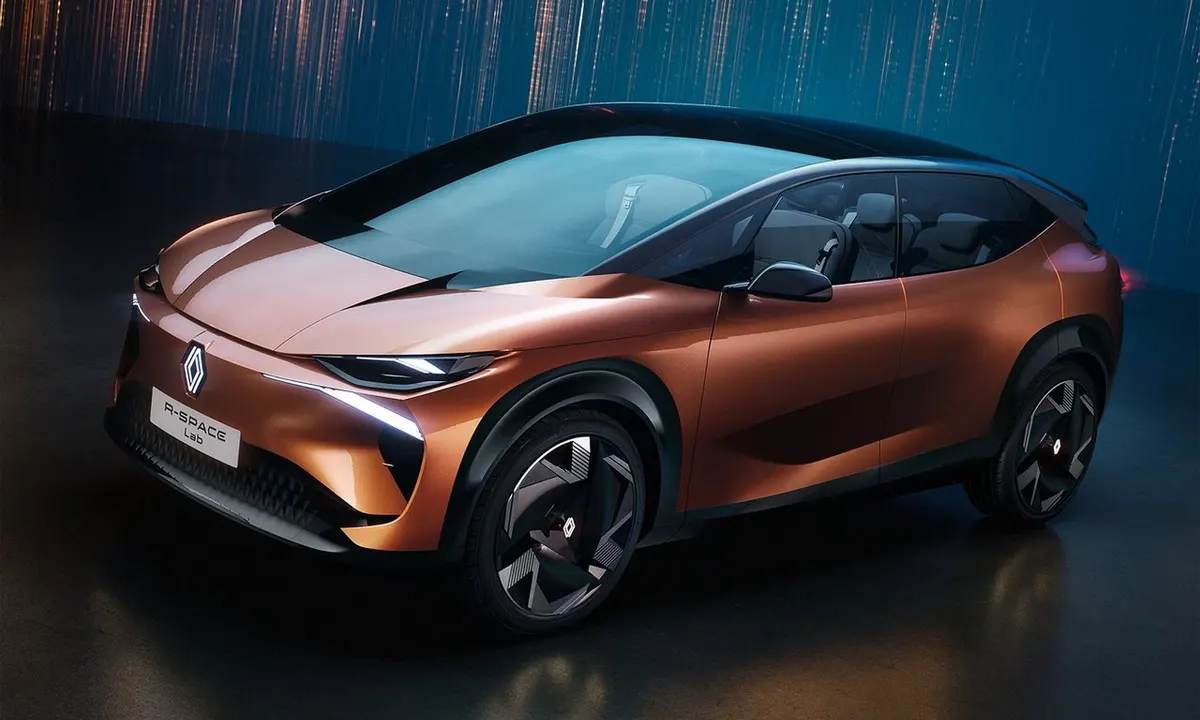
The Renault R-Space Lab Concept represents an ambitious vision of what the future of compact family vehicles could become. As automotive design continues to evolve alongside technological innovation, manufacturers are increasingly exploring new ways to combine practicality, efficiency, and digital connectivity. Renault has long been known for pushing boundaries through concept vehicles that challenge traditional ideas of vehicle design, and the R-Space Lab Concept stands as a perfect example of this philosophy.
Originally inspired by Renault’s earlier R-Space concept vehicle, the R-Space Lab Concept reimagines the compact multi-purpose vehicle for the modern era. It integrates cutting-edge digital technology, lightweight engineering, and sustainable materials into a vehicle that aims to provide maximum versatility within a compact footprint. Designed primarily for urban families and tech-focused drivers, the R-Space Lab Concept showcases how future vehicles could blend functionality with advanced innovation.
Gallery: Renault R-Space Lab Concept
The concept also reflects Renault’s broader commitment to sustainable mobility. As cities become more congested and environmental concerns continue to grow, automakers are developing vehicles that are more efficient, more adaptable, and better suited to modern lifestyles. The R-Space Lab Concept addresses these challenges by combining electrified powertrain options with intelligent interior design.
Rather than simply focusing on performance or aesthetics, Renault has used the R-Space Lab Concept to explore how vehicles can become integrated digital environments. The cabin is designed as a flexible living space where passengers can interact with advanced technology while enjoying comfort and convenience.
Although concept vehicles often represent experimental ideas, many of the technologies showcased in the Renault R-Space Lab Concept may eventually appear in future Renault production models. In this way, the vehicle offers a fascinating glimpse into the direction of Renault’s design and innovation strategy.
Exterior Design: Futuristic Styling with Aerodynamic Efficiency
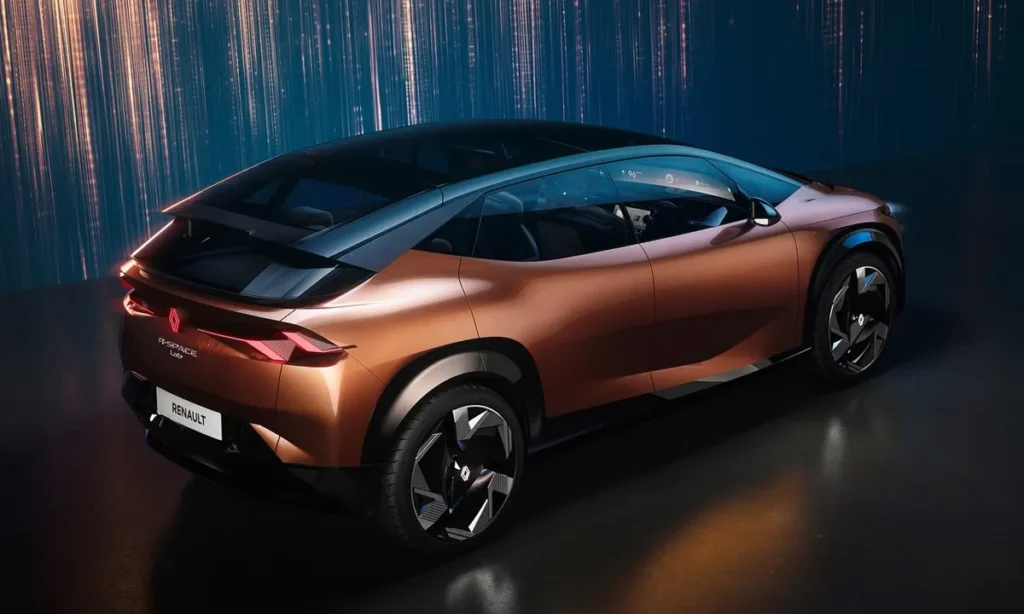
The exterior design of the Renault R-Space Lab Concept reflects Renault’s evolving design language while emphasizing aerodynamic efficiency and modern aesthetics. Designers have carefully balanced the practical proportions of a compact MPV with the sleek lines typically associated with futuristic concept vehicles.
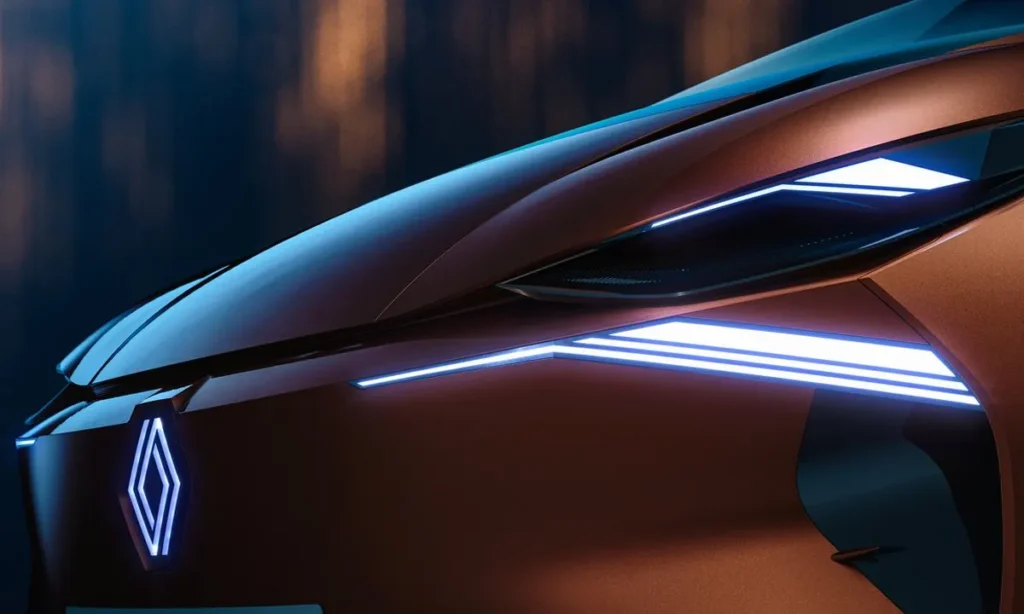
At the front, the R-Space Lab Concept features a distinctive illuminated Renault emblem positioned at the center of a smooth, closed grille. This design element highlights the vehicle’s electrified powertrain and contributes to improved aerodynamic performance. The grille area is framed by slim LED headlights that extend toward the sides of the vehicle, creating a continuous lighting signature.
The sculpted hood flows seamlessly into the front fenders, giving the vehicle a dynamic appearance. Integrated air channels within the front bumper help direct airflow around the body, reducing drag and improving overall efficiency.
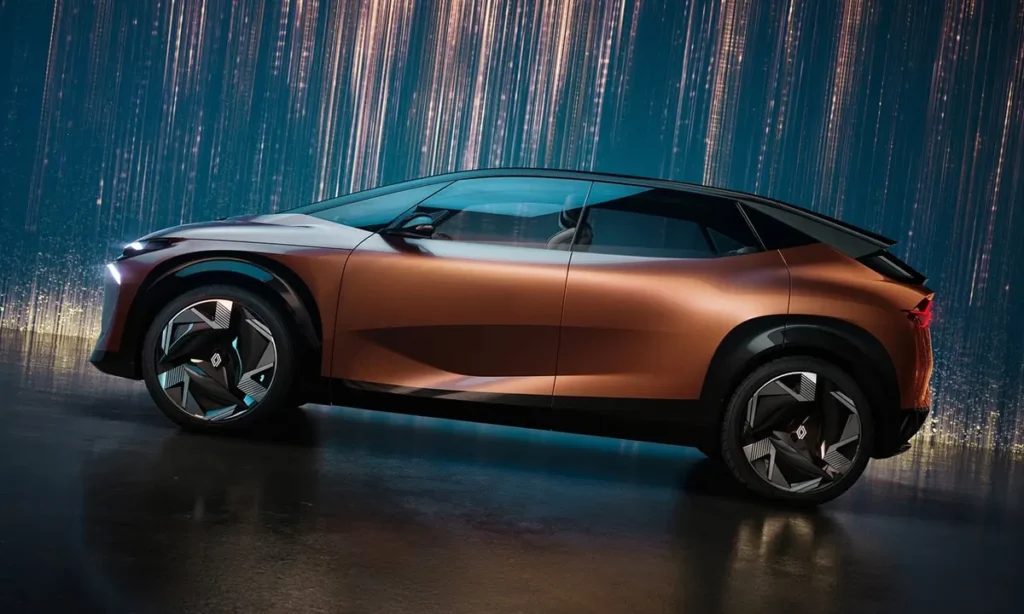
From the side, the R-Space Lab Concept maintains the tall roofline typical of multi-purpose vehicles while incorporating flowing body lines that create a sense of movement. The long wheelbase and short overhangs maximize interior space while maintaining balanced proportions.
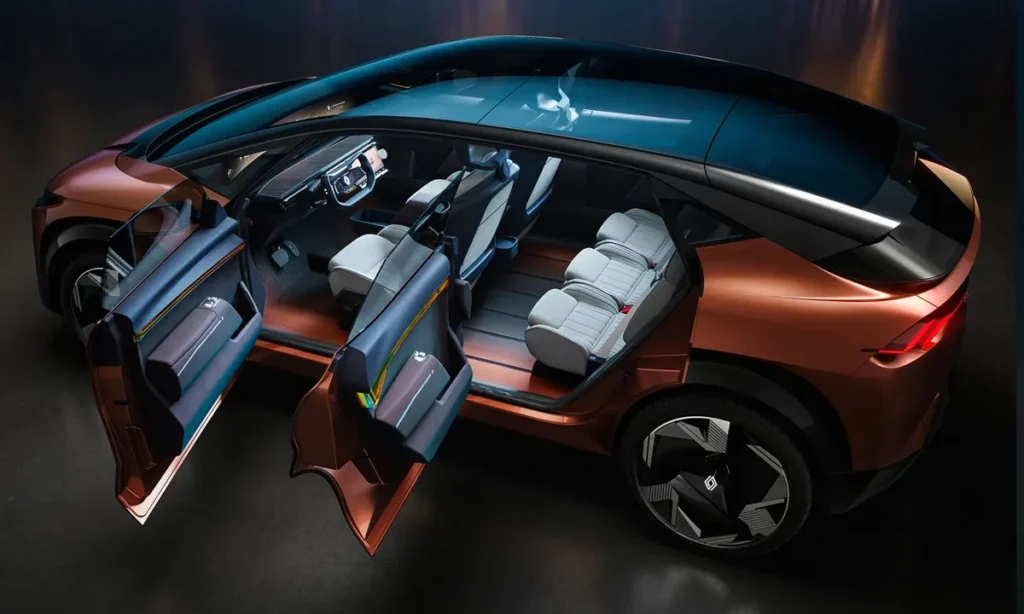
One of the most distinctive design elements is the vehicle’s large glass surfaces. The expansive windshield and panoramic roof allow natural light to flood the cabin, enhancing the sense of openness inside the vehicle.
Flush door handles and streamlined side mirrors contribute to the vehicle’s minimalist aesthetic while improving aerodynamic efficiency. Large alloy wheels with intricate geometric designs complete the futuristic look.
At the rear, the R-Space Lab Concept features a full-width LED light bar integrated into the tailgate. This lighting element provides a modern visual signature while improving visibility at night. The rear bumper incorporates subtle aerodynamic elements that help manage airflow beneath the vehicle.
Overall, the exterior design of the Renault R-Space Lab Concept combines practicality with futuristic styling, demonstrating how family vehicles can evolve to meet modern design expectations.
Powertrain and Electrification Strategy
The Renault R-Space Lab Concept has been designed to support advanced electrified powertrain technologies that align with Renault’s sustainability goals. While the concept may feature multiple powertrain options, the primary focus is on hybrid and fully electric configurations.
In its hybrid configuration, the vehicle combines a compact turbocharged gasoline engine with an electric motor and lithium-ion battery pack. This setup allows the vehicle to operate in electric-only mode for short distances, particularly in urban environments where zero-emission driving is most beneficial.
The electric motor also assists the gasoline engine during acceleration, improving fuel efficiency and reducing emissions. Regenerative braking technology captures energy during deceleration and stores it in the battery for later use.
A fully electric version of the R-Space Lab Concept could be equipped with a high-capacity battery pack capable of delivering a driving range of approximately 400 kilometers. This range would make the vehicle suitable for both city commuting and longer journeys.
Fast-charging capability ensures that the battery can be recharged quickly at compatible charging stations. Renault’s focus on efficient battery management systems also helps extend battery life and maintain consistent performance.
Interior Design: A Digital Living Space
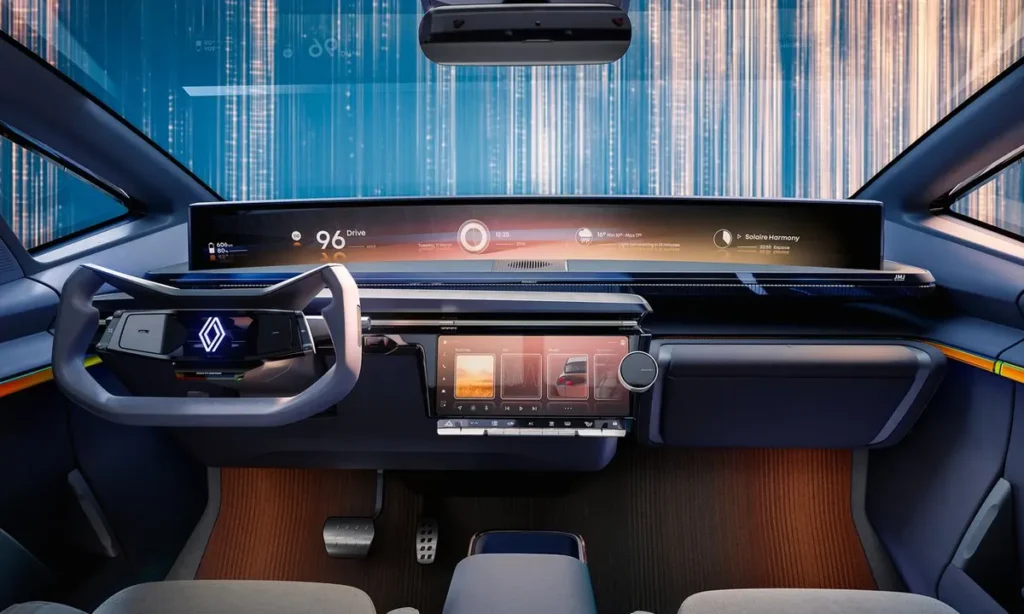
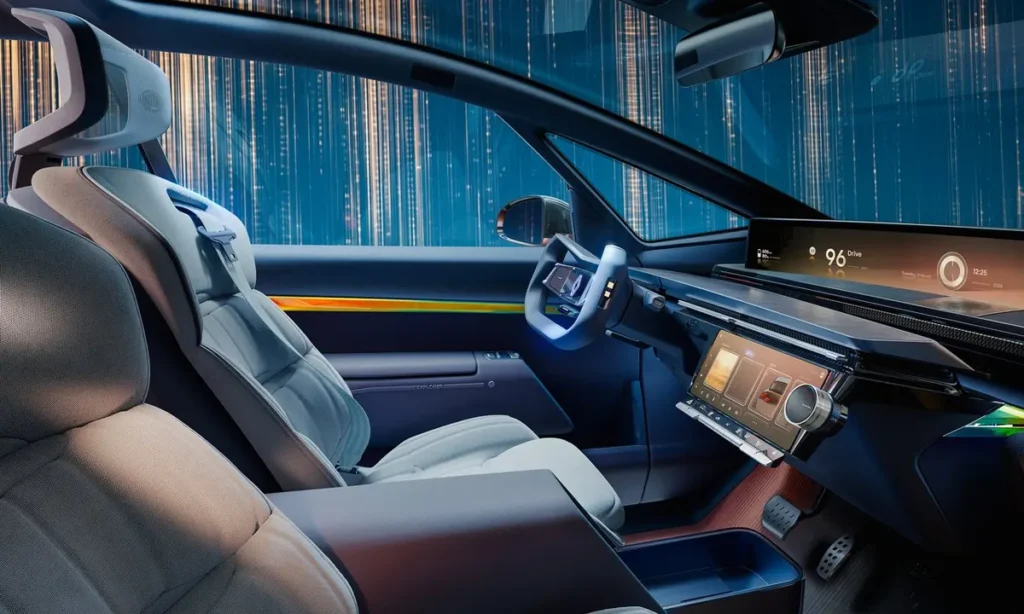
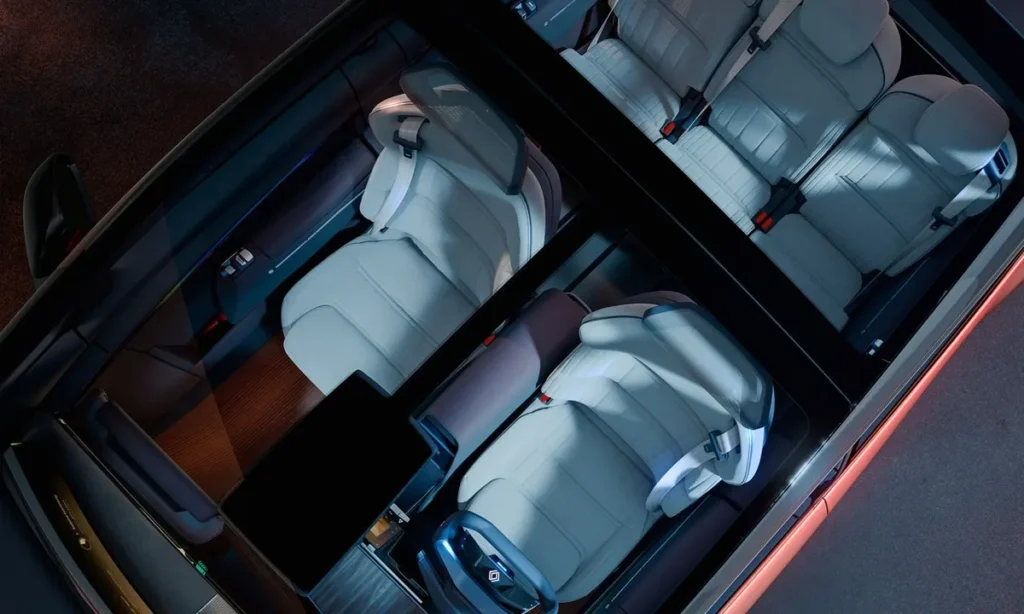
Inside the Renault R-Space Lab Concept, the cabin is designed to function as a flexible living space rather than a traditional car interior. Renault has incorporated advanced digital interfaces and modular seating arrangements to create a highly adaptable environment.
The dashboard features a wide digital display that integrates the instrument cluster and infotainment system. This display allows drivers to access navigation, vehicle settings, and entertainment features through an intuitive interface.
The interior design emphasizes openness and simplicity. Minimalist design elements reduce visual clutter, while high-quality materials create a comfortable and modern atmosphere.
Seating configurations can be adjusted to suit different needs. The concept may include modular seats that can be rotated or folded to create additional space for passengers or cargo.
Sustainable materials play an important role in the interior design. Renault has incorporated recycled fabrics, eco-friendly composites, and lightweight materials to reduce the vehicle’s environmental footprint.
Ambient lighting adds another dimension to the cabin experience by allowing occupants to customize the interior atmosphere with various color options.
Technology and Connectivity
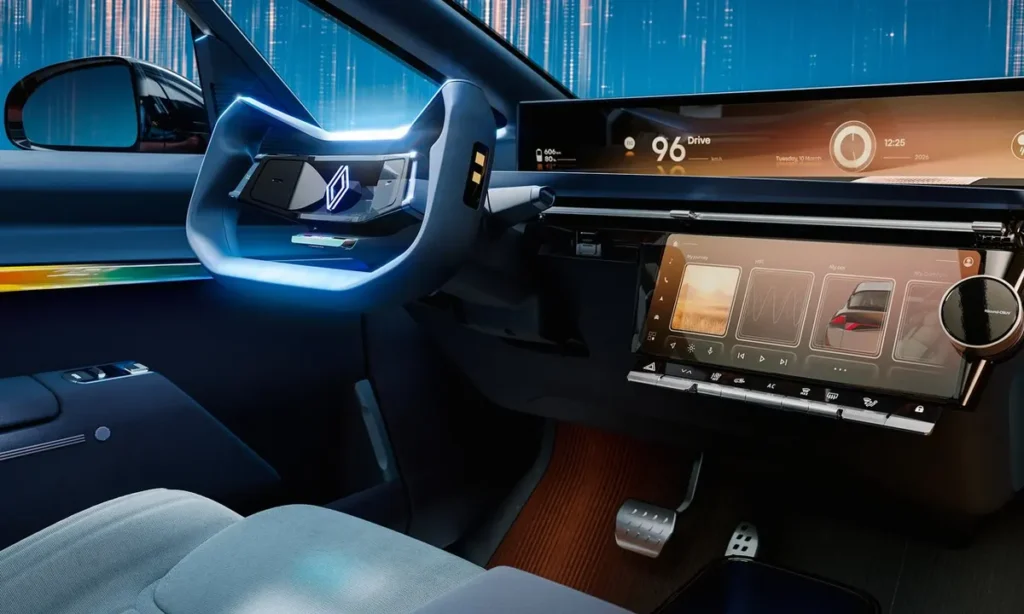
The Renault R-Space Lab Concept incorporates a wide range of advanced technologies designed to enhance connectivity and convenience. The infotainment system supports smartphone integration, enabling drivers to access navigation apps, music streaming services, and communication tools.
Voice recognition technology allows drivers to control various vehicle functions using natural speech commands. This feature improves safety by allowing drivers to keep their hands on the steering wheel.
The concept also includes advanced driver assistance systems such as adaptive cruise control, lane keeping assistance, and automated parking functions.
Over-the-air software updates ensure that the vehicle’s digital systems remain current with the latest features and improvements.
Driving Experience: Comfort and Efficiency
Driving the Renault R-Space Lab Concept is expected to provide a smooth and efficient experience. The electric powertrain delivers quiet operation and responsive acceleration, making the vehicle well suited for urban environments.
The suspension system is designed to provide a comfortable ride while maintaining stability during highway travel. Electric power steering ensures precise handling and easy maneuverability.
Regenerative braking technology helps improve efficiency by recovering energy during deceleration.
Renault’s Vision for Smart Urban Mobility
The Renault R-Space Lab Concept highlights Renault’s vision for the future of compact family vehicles. By combining electrified powertrains, digital connectivity, and flexible interior design, Renault aims to create vehicles that adapt to the needs of modern drivers.
As cities continue to grow and transportation demands evolve, vehicles like the R-Space Lab Concept demonstrate how innovative design and technology can improve everyday mobility.
Read: 2026 Toyota C-HR Reveals Bold Design and Advanced Hybrid Technology
Renault R-Space Lab Concept – Specifications Chart
| Category | Specification |
| Vehicle Type | Compact MPV Concept |
| Powertrain | Hybrid / Electric |
| Engine | Turbocharged Petrol + Electric Motor |
| Battery | Lithium-Ion Battery |
| Estimated Range | Up to 400 km (electric version) |
| Drivetrain | Front-Wheel Drive |
| Infotainment | Large Digital Touchscreen |
| Connectivity | Smartphone Integration |
| Seating Capacity | 5 passengers |
| Safety Systems | Advanced Driver Assistance |