The Most Powerful Audi Ever Built Runs Entirely on Electricity and It’s Breathtaking
912 Horsepower, Class-Leading 320 kW Charging, Revolutionary Active Suspension and Breathtaking Design Make the RS e-tron GT Performance the Definitive Statement in Electric Luxury Performance
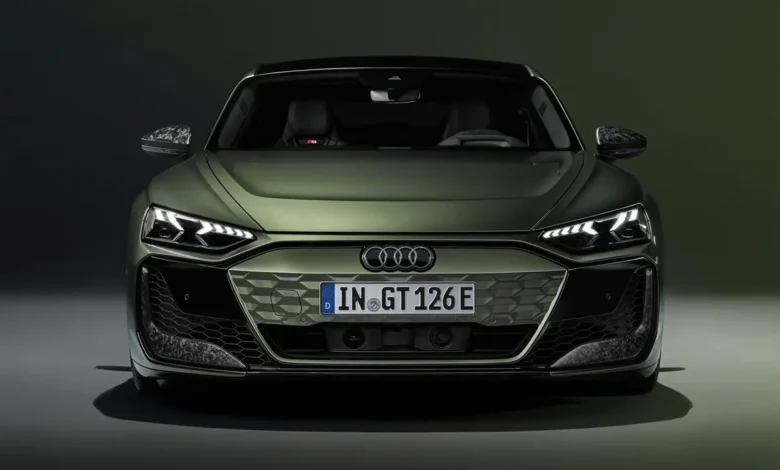
There is a version of Audi’s story in which the brand’s transition to electric performance was always going to be a cautious, incremental affair — a company more comfortable with precision engineering and understated excellence than with headline-grabbing drama. The 2025 Audi RS e-tron GT Performance has rendered that version of events entirely obsolete. With 912 horsepower on tap in launch control mode, a zero-to-sixty time of 2.4 seconds, a class-leading 320-kilowatt DC fast charging capability and a completely overhauled active suspension system that represents the most sophisticated chassis engineering Audi has ever brought to a road car, the RS e-tron GT Performance is not a cautious step forward. It is an emphatic, full-throttle declaration that electric performance, executed at the highest level, requires no apology and no qualification whatsoever.
Galery: Audi RS e-tron GT Performance
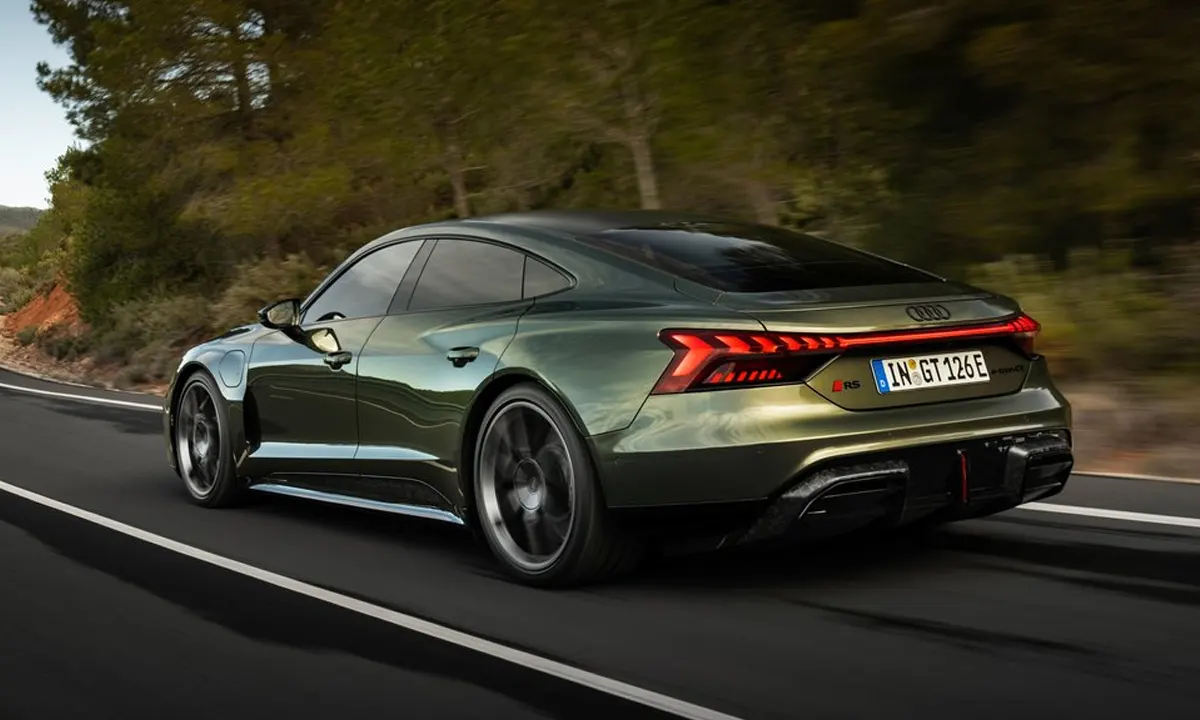
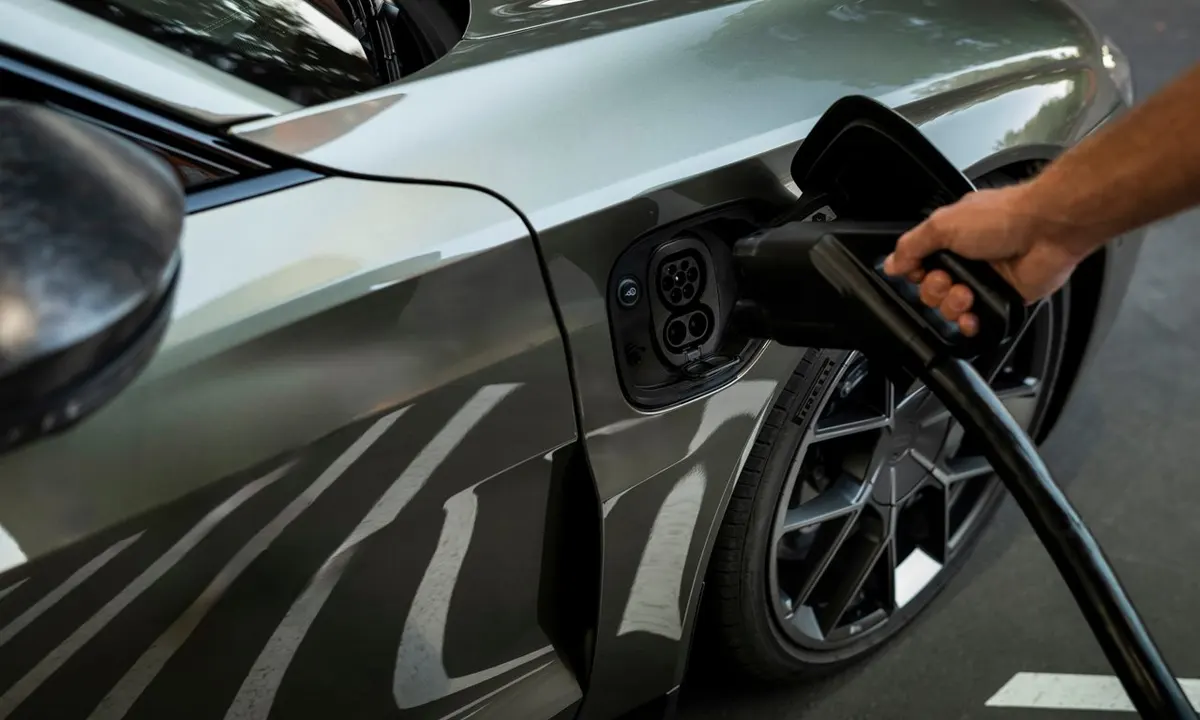
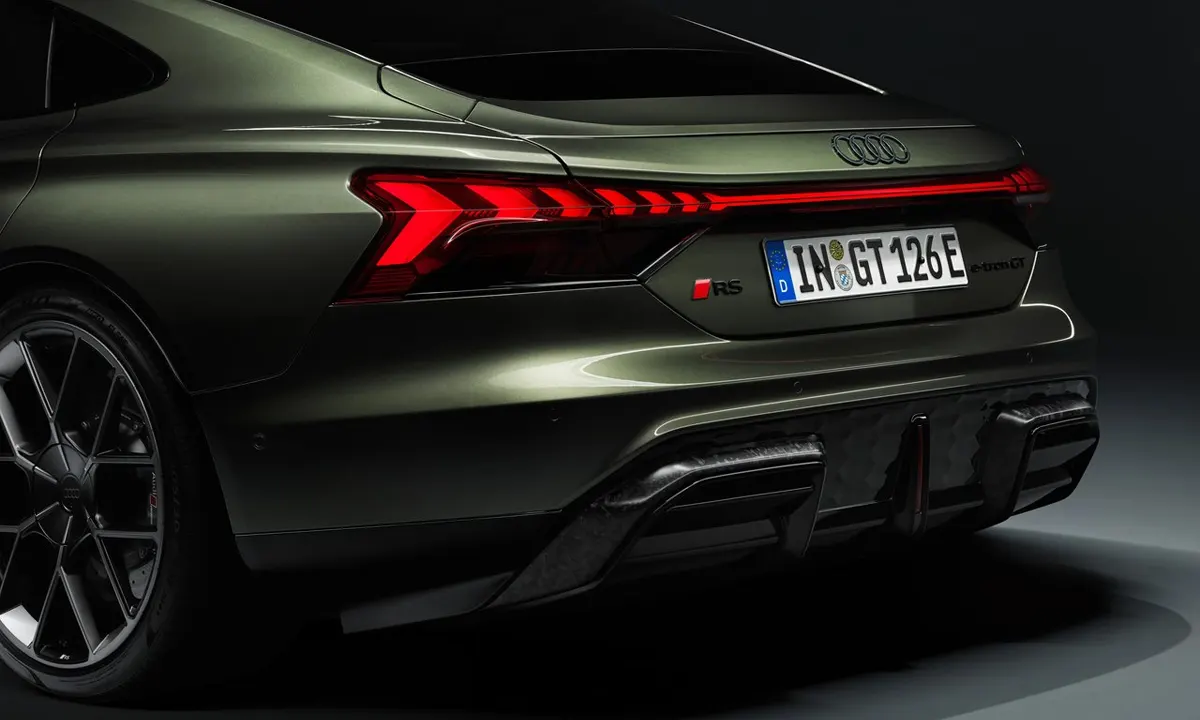
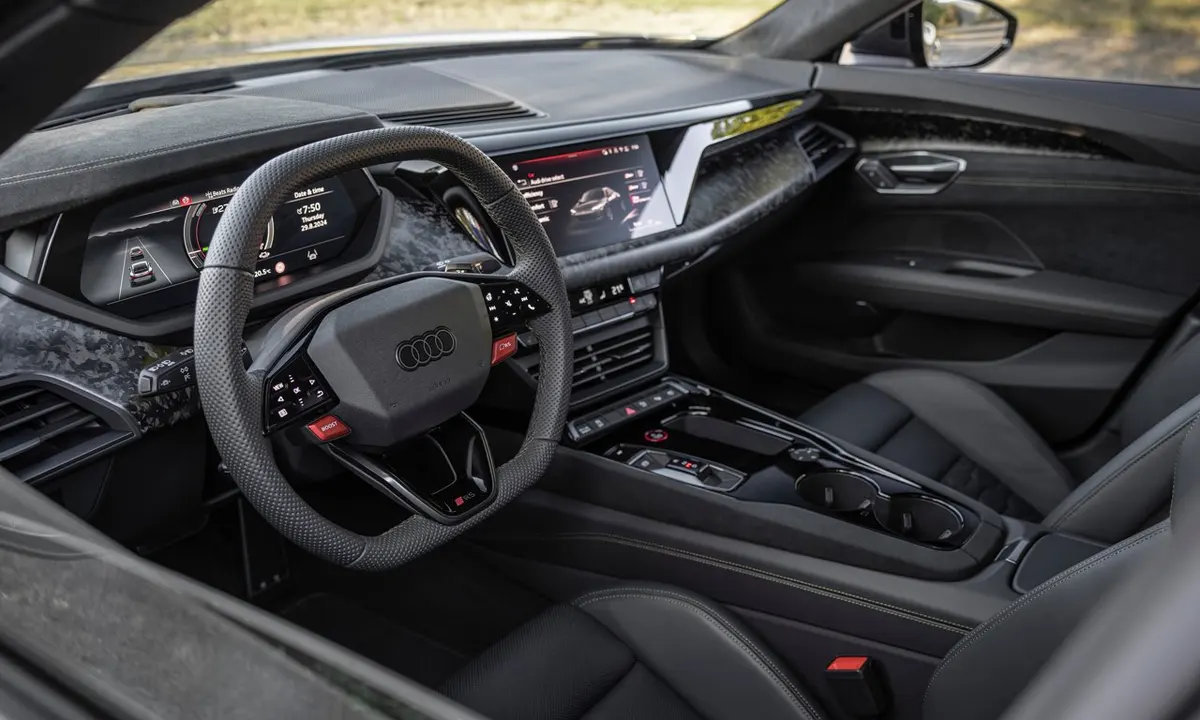
The 2025 model year represents the most significant update the e-tron GT has received since the nameplate’s introduction in 2021. Audi’s engineers addressed virtually every dimension of the car simultaneously — powertrain output, battery capacity, charging speed, suspension architecture, exterior design and interior technology — producing a result that feels less like a mid-cycle refresh and more like the car that was always intended. The RS e-tron GT Performance sits at the pinnacle of the e-tron GT range, above the 670-horsepower S e-tron GT, and carries a starting price of $168,295 in the United States market, positioning it firmly among the most exclusive and most capable electric performance sedans available anywhere in the world.
A Design That Earns Attention Without Demanding It
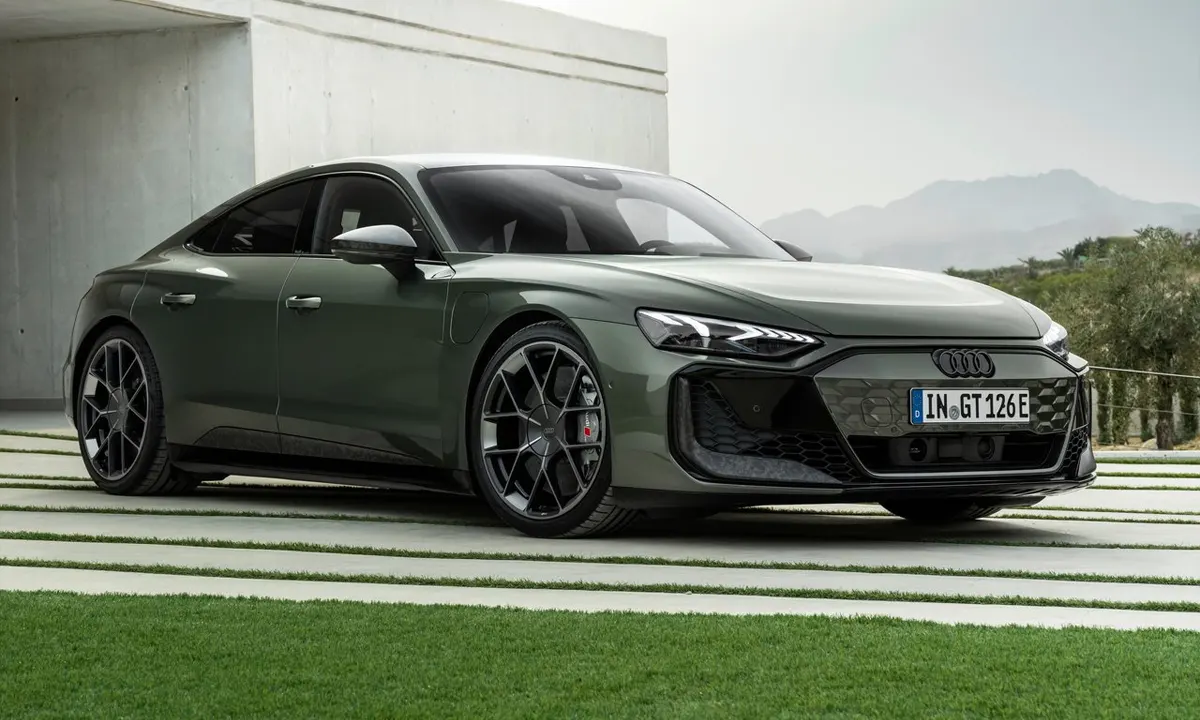
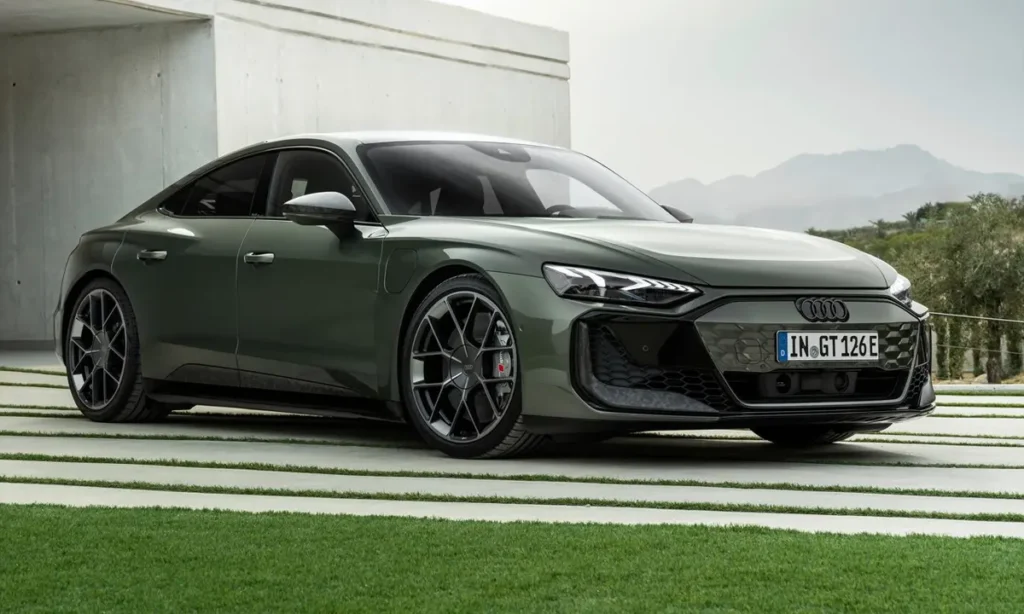
The e-tron GT’s silhouette has always been among the most arresting in the automotive landscape — a long, low, wide four-door gran turismo with a dramatically raked roofline, muscular haunches and the kind of proportional confidence that most concept cars never translate to production. For 2025, Audi refined rather than reinvented this visual identity, introducing a series of targeted updates that sharpen the car’s presence without disrupting the fundamental elegance that has made it so distinctive.
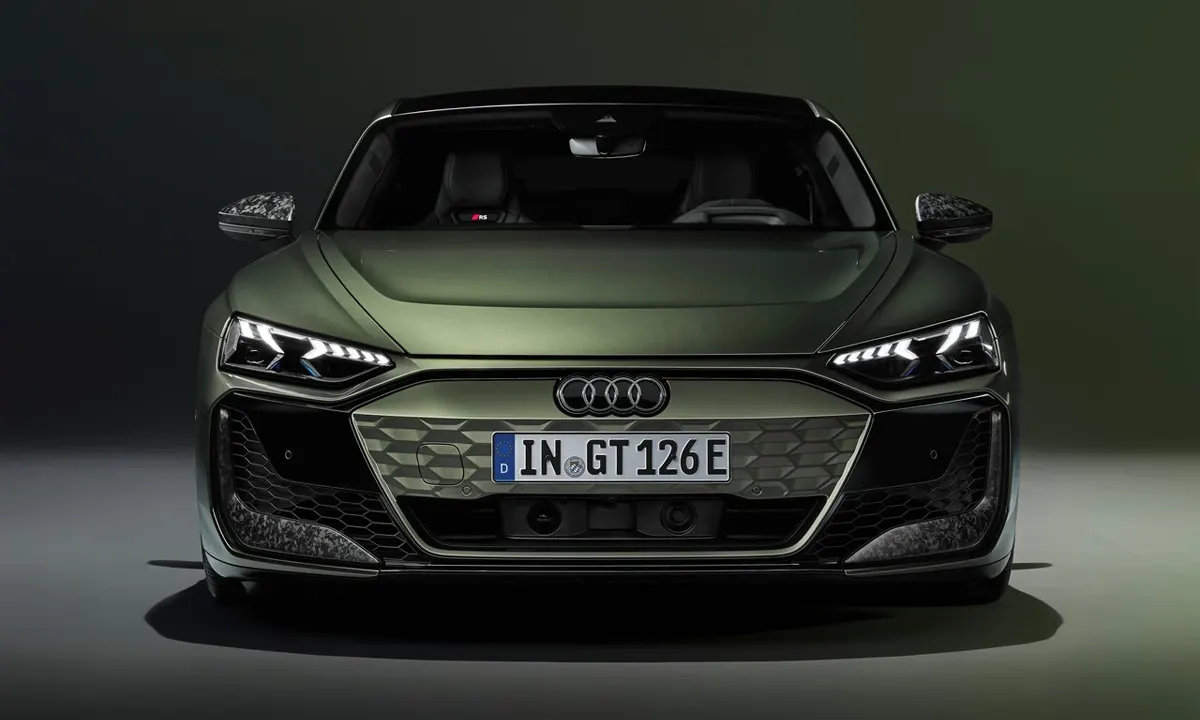
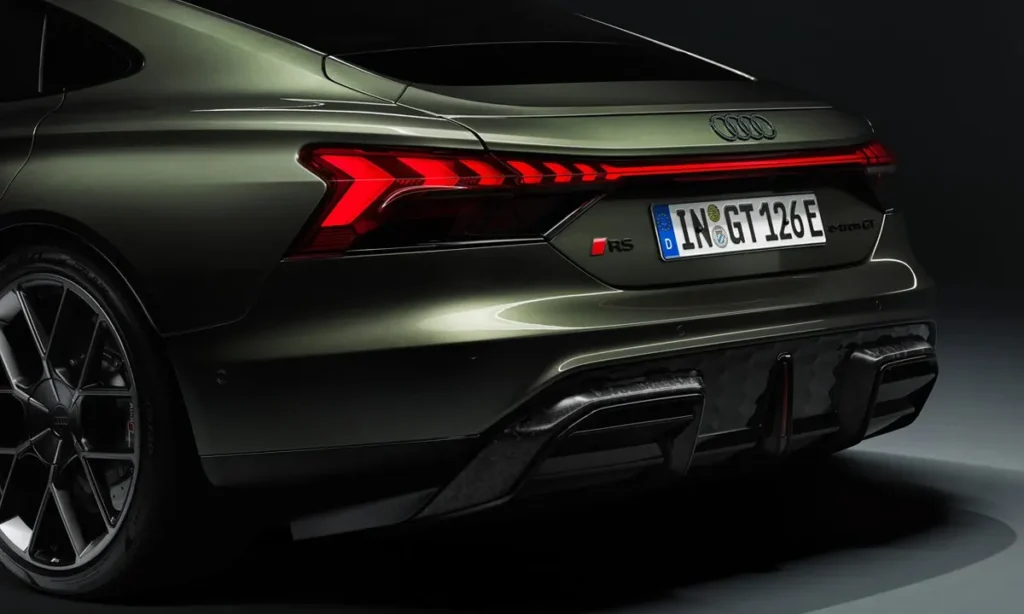
The front fascia receives a revised inverted Singleframe grille panel featuring an embossed three-dimensional honeycomb pattern, framed by a lower apron structure that makes the car appear visually wider and more planted than its predecessor. Functional L-shaped aero blades and more deeply defined air curtains contribute both to the aerodynamic efficiency of the design and to its overall sense of technical purpose. Audi’s new two-dimensional four-ring logo appears between the front apron and the grille panel, a subtle but meaningful modernization of the brand identity that will distinguish 2025 and later models from earlier production. At the rear, the RS e-tron GT Performance receives a revised diffuser incorporating a vertical reflector element — a new Audi Sport design signature that gives the back of the car a more purposeful, motorsport-influenced character.
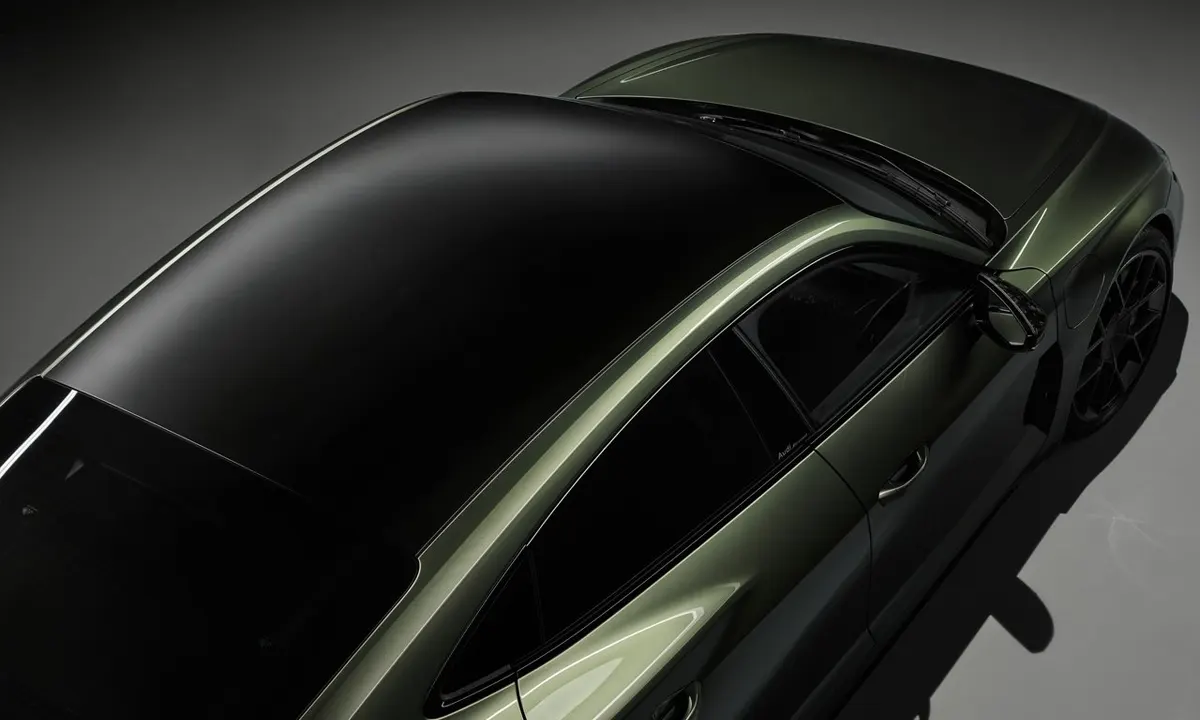
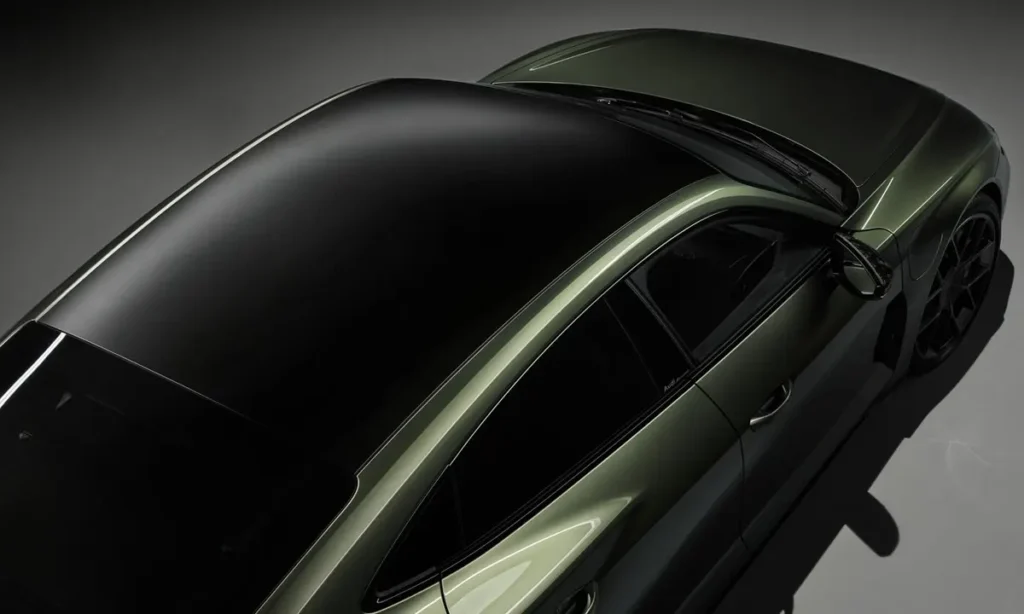
The RS e-tron GT Performance introduces several exclusive exterior details that distinguish it from the standard RS variant. Carbon-camouflage door trim, side mirrors and embossed bumper structures are available, alongside a darkened matte carbon roof option that dramatically alters the car’s character from elegant gran turismo toward something altogether more menacing. Nine exterior colors are offered for the 2025 model year, including Florett Silver, Mythos Black, Daytona Gray, Kemora Gray, Nimbus Gray, Progressive Red, Ascari Blue, Arkona White and Bedford Green Metallic — a palette that ranges from understated corporate to vibrantly expressive. New 21-inch wheel designs inspired by the iconic wheels of the 1991 Audi Avus quattro concept car are available, finished in dark matte on the Performance trim, and contribute handsomely to the car’s overall visual drama.
912 Horsepower and the Engineering That Makes It Possible
The headline achievement of the 2025 RS e-tron GT Performance is unambiguous: 912 horsepower in launch control mode, making it the most powerful production road car Audi has ever manufactured — a title that carries genuine weight from a brand with decades of high-performance heritage under the RS and quattro designations. This output is delivered through a dual-motor all-wheel-drive configuration, with a single permanent magnet synchronous motor on the front axle and a second, more powerful motor at the rear. The rear axle incorporates a two-speed automatic transmission — the first of its kind on a production electric vehicle when it debuted on the related Porsche Taycan platform — which provides maximum torque delivery for rapid acceleration from rest in first gear and optimised efficiency during high-speed cruising in second gear. The result is a powertrain that excels at both ends of the performance spectrum simultaneously.
The revised front motor has been recalibrated to match the rear motor’s current output of 600 amps, delivering a more balanced and instantaneous response from both axles. The rear motor itself has been engineered to shed 22 pounds compared to its predecessor, a weight saving that contributes to improved power-to-weight ratio and more responsive dynamic behavior. Regenerative braking capability has been elevated significantly, with the system now capable of recapturing up to 400 kilowatts of energy during deceleration — a figure that meaningfully extends real-world range and reduces brake wear during normal driving. In standard driving conditions, the system delivers 818 horsepower to all four wheels, with the full 912-horsepower figure available when launch control and Boost Mode are engaged simultaneously.
The 105-kilowatt-hour battery pack — of which 97 kilowatt-hours are usable — represents an increase of 11.6 kilowatt-hours over the previous generation, yet the pack is 9 kilograms lighter than its predecessor, an engineering achievement that reflects the maturation of Audi’s battery technology. EPA-rated range for the RS e-tron GT Performance stands at 278 miles, a gain of 29 miles over the previous generation, while the S e-tron GT achieves up to 300 miles on a full charge. The 800-volt architecture underpinning the entire e-tron GT range enables the industry-leading 320-kilowatt DC fast charging rate, which allows the battery to progress from 10 percent to 80 percent charge in a remarkable 18 minutes under optimal conditions — a figure that makes range anxiety a largely theoretical concern for owners with access to appropriate infrastructure.
A Suspension Revolution That Changes the Character of the Car
If the powertrain numbers are the RS e-tron GT Performance’s headline achievement, the completely redesigned active suspension system is its most transformative engineering development — and the one that most significantly advances the car’s dynamic capabilities beyond what raw horsepower figures alone can communicate. The new hydraulic active damper system replaces conventional anti-roll bars entirely, managing body roll through real-time modulation of compression forces at each individual corner rather than through mechanical interconnection between wheels. This approach allows the suspension to be far more nuanced and far more responsive than any passive or semi-active system, enabling the RS e-tron GT Performance to actively lean into corners, dip its nose under acceleration and raise it under braking — behaviors that communicate speed and dynamic intent in an entirely new way.
The system also incorporates an automatic ride-height adjustment feature that raises the car by two inches when a door is opened, making entry and exit substantially easier — a thoughtful quality-of-life detail that reflects Audi’s understanding of how a car that weighs over 5,100 pounds and sits exceptionally low must accommodate real-world usage patterns gracefully. Standard adaptive air suspension is fitted across all e-tron GT variants, with the active hydraulic damper system available as part of the Dynamic Package on the Performance trim. Four drive modes — Comfort, Auto, Dynamic and Individual — allow drivers to configure the suspension character alongside powertrain response and steering weight to suit their preference and the driving environment.
Despite its extraordinary performance capabilities, the RS e-tron GT Performance never sacrifices the comfort and refinement that define Audi’s brand character. The suspension tuning maintains meaningful compliance over imperfect surfaces, and the cabin insulation delivers a level of quietness appropriate to a car positioned firmly in the luxury grand touring segment. This balance between face-melting acceleration and genuine daily usability is one of the RS e-tron GT Performance’s most impressive and most practically important achievements.
Interior Technology: Luxury, Craftsmanship and Connectivity
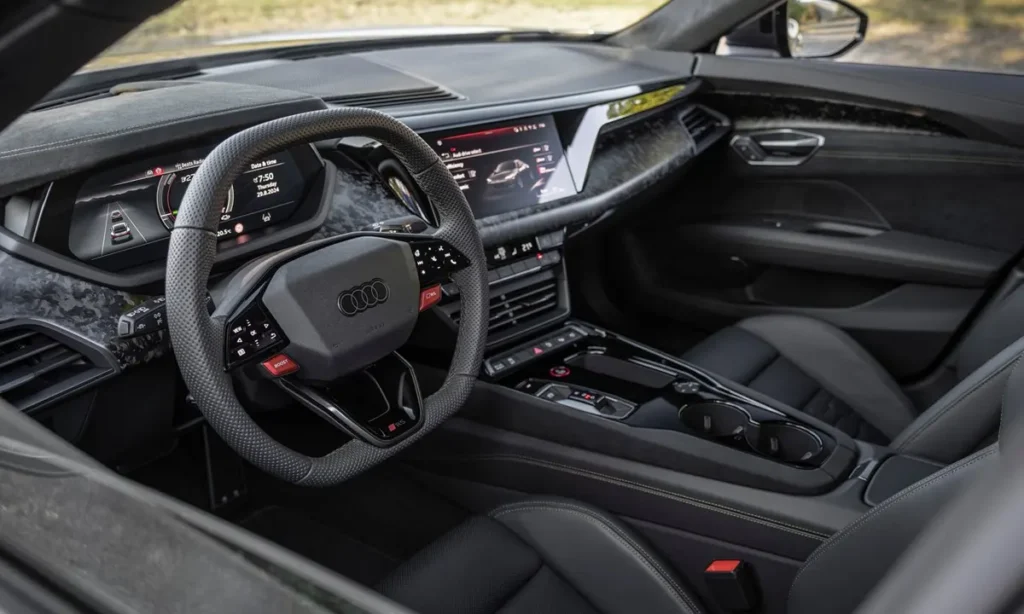
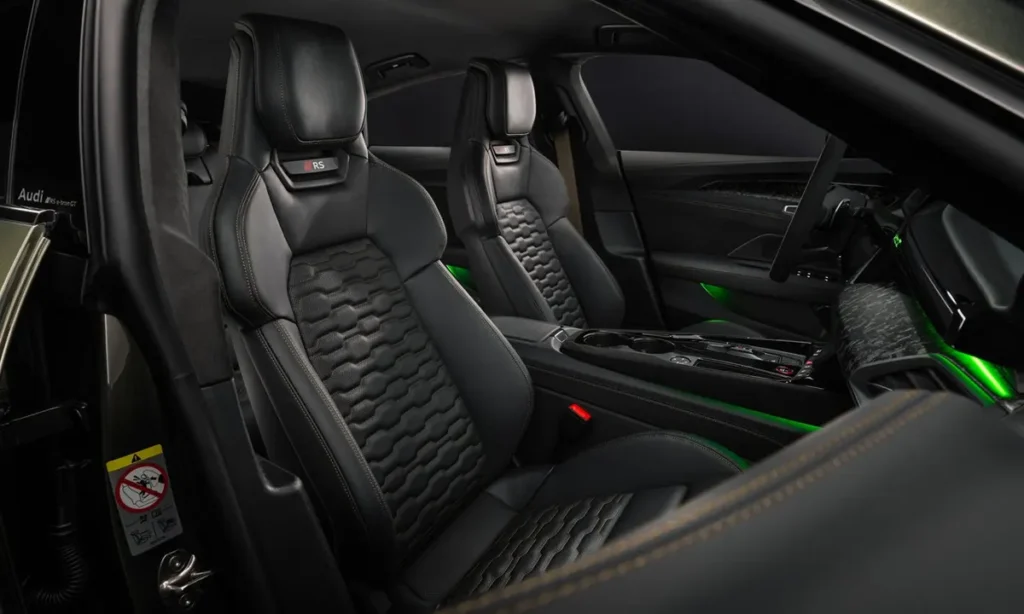
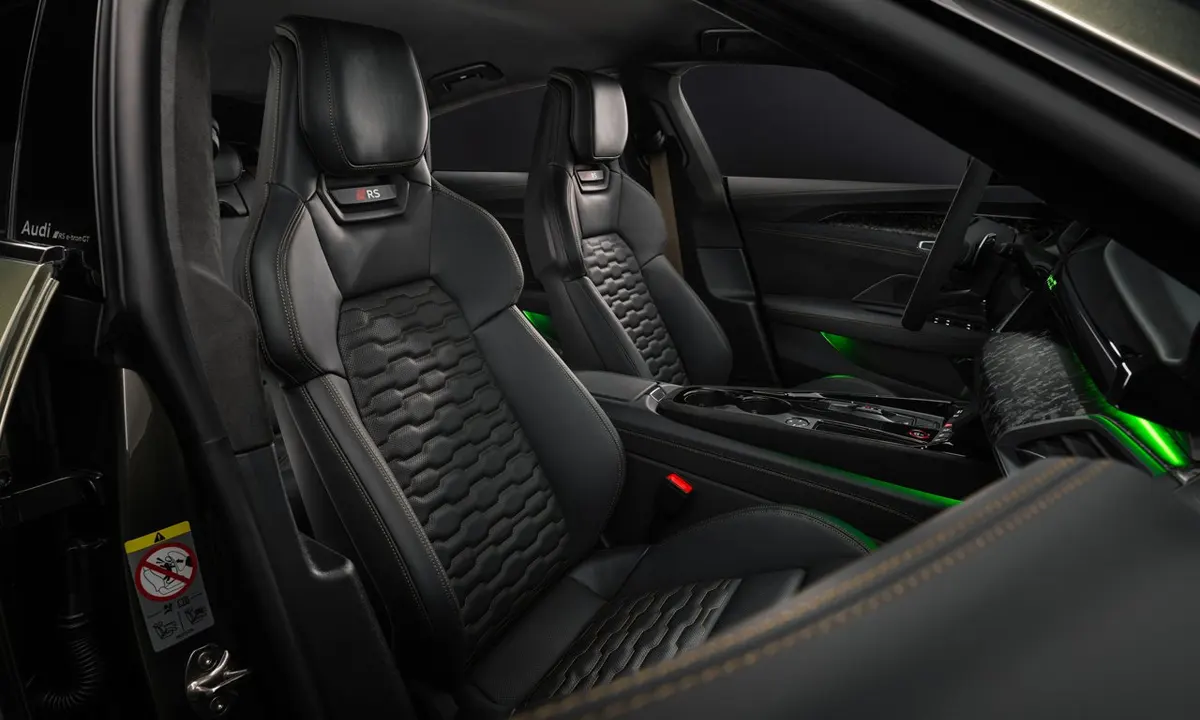
The interior of the 2025 Audi RS e-tron GT Performance is a deeply considered environment that prioritises material quality, driver focus and technological integration in equal measure. The dashboard layout maintains the low, wide, driver-oriented architecture that has always characterised the e-tron GT cabin, with a design language that feels purposeful and premium without resorting to the cold minimalism that some electric vehicle interiors employ. The driving position is intentionally low and enveloping — this is a car you wear rather than simply occupy, and every surface within reach reinforces that intimacy.
Material quality throughout the cabin is exceptional, with soft-touch surfaces, precisely finished trim elements and a range of upholstery options that include sustainable, leather-free alternatives alongside traditional leather and Alcantara combinations. Carbon fibre trim elements are available across the cabin, complementing the exterior’s available carbon appointments and reinforcing the Performance trim’s sport-focused identity. The heated flat-bottom, flat-top steering wheel with paddle shifters sits perfectly in the driver’s hands, and the power-adjustable front seats with memory function, heating and ventilation provide a personalised seating environment capable of maintaining comfort across a wide range of journey types.
The infotainment system, built on Audi’s Multi-Media Interface platform, integrates navigation, connectivity and vehicle settings into a centralised display that, while functional and familiar, represents the one area where the 2025 RS e-tron GT Performance’s technology lags behind some newer Audi models that have adopted the more advanced Android Automotive OS-based interface. The front driver-facing display is highly customisable, allowing drivers to configure the information presented according to their preferences. A Bang and Olufsen premium sound system is standard on the Performance trim, delivering audio performance commensurate with the car’s overall level of refinement.
Safety technology is comprehensive and standard across the range, encompassing Audi pre-sense 360, blind spot monitoring, active lane assist, adaptive cruise assist with lane guidance, forward pedestrian detection and prevention, rear cross-traffic alert, traffic sign recognition and a 360-degree camera system. Park assist with automated steering and multiple airbags complete the active and passive safety architecture, ensuring the RS e-tron GT Performance meets the expectations of buyers in this price segment in every measurable dimension of ownership.
Market Positioning and the Case for the RS e-tron GT Performance
The 2025 Audi RS e-tron GT Performance occupies a fascinating position in the electric performance sedan landscape. At $168,295 before options, it competes directly with the Porsche Taycan Turbo models — with which it shares a fundamental platform architecture — as well as the Lucid Air Grand Touring and, at a lower price point, the Tesla Model S Plaid. Against the Taycan, the Audi makes a compelling case through its distinct visual identity, somewhat more comfort-oriented chassis tuning and broadly equivalent performance credentials at a comparable price. Against the Lucid Air, it concedes range — the Air’s 446-mile range on premium trims is substantially greater — but offers a more emotionally involving driving experience and Audi’s considerable brand prestige. Against the Model S Plaid, which offers comparable acceleration at a significantly lower price, the RS e-tron GT Performance argues convincingly through material quality, interior craftsmanship, engineering sophistication and the status of its four-ring badge.
The RS e-tron GT Performance is not a car without limitations. The 278-mile EPA range, while adequate for a vehicle of this performance level, is modest relative to less powerful electric sedans in adjacent segments. Cargo space — 9.2 cubic feet at the rear and 1.8 cubic feet in the front trunk — prioritises experience over practicality, and rear headroom, while sufficient for two adults, becomes a constraint with three passengers. The absence of one-pedal driving, a feature that many electric vehicle owners have come to regard as standard, remains a notable omission.
Yet in the context of what the RS e-tron GT Performance genuinely is — an electric gran turismo of the very highest order — these considerations feel secondary to its overwhelming strengths. It is simultaneously comfortable enough to serve as a genuinely satisfying daily driver and violent enough in launch control to rival the acceleration of dedicated sports cars costing twice its price. That combination, delivered with Audi’s signature refinement and presented in one of the most beautiful four-door bodies in production today, makes the RS e-tron GT Performance one of the most compelling electric performance vehicles available at any price.
A Grand Tourer That Renders Gasoline Performance Obsolete
The 2025 Audi RS e-tron GT Performance does not simply demonstrate that electric technology can match combustion performance. It demonstrates, persuasively and repeatedly, that electric technology can surpass it — in acceleration, in refinement, in charging convenience and in the breadth of capability it delivers across the full range of driving situations that a grand touring car encounters across its working life. Audi has built the most powerful car the brand has ever produced, and it runs entirely without a drop of fuel. For those who have followed the four rings across decades of RS and quattro performance history, that is both a remarkable achievement and a genuinely thrilling promise of what the brand’s electric future holds.
Read: The Nissan Z NISMO Is the Most Complete and Compelling Japanese Sports Car You Can Buy Right Now
2025 Audi RS e-tron GT Performance – Specifications & Performance Chart
| Category | Specification |
| Vehicle Type | All-Electric Four-Door Gran Turismo (BEV) |
| Motor Configuration | Dual Motor – Front + Rear (Quattro AWD) |
| Standard System Power | 818 Horsepower |
| Launch Control / Boost Mode Power | 912 Horsepower |
| Rear Axle Transmission | 2-Speed Automatic |
| 0–60 mph | 2.4 Seconds (Launch Control) |
| Top Speed | 155 mph (electronically limited) |
| Battery Capacity | 105 kWh Gross / 97 kWh Usable |
| EPA Range (RS Performance) | 278 Miles |
| EPA Range (S e-tron GT) | 300 Miles |
| Max DC Fast Charging Rate | 320 kW |
| 10–80% Charge Time | 18 Minutes |
| Architecture | 800-Volt Platform |
| Regenerative Braking | Up to 400 kW Recuperation |
| Suspension | Adaptive Air Suspension (Standard) / Active Hydraulic Dampers (Optional) |
| Rear-Wheel Steering | Available |
| Curb Weight | Approx. 5,137 lbs |
| Cargo Volume (Rear) | 9.2 cu ft |
| Cargo Volume (Front Trunk) | 1.8 cu ft |
| Seating Capacity | 5 Passengers (4 Recommended) |
| Infotainment | Audi MMI with Customisable Driver Display |
| Audio System | Bang & Olufsen Premium (Standard on RS Performance) |
| Starting MSRP (US) | $168,295 |
| Powertrain Warranty | 4-Year / 50,000-Mile Bumper-to-Bumper |
| Battery Warranty | 8-Year / 100,000-Mile |
| Assembly | Heilbronn, Germany |