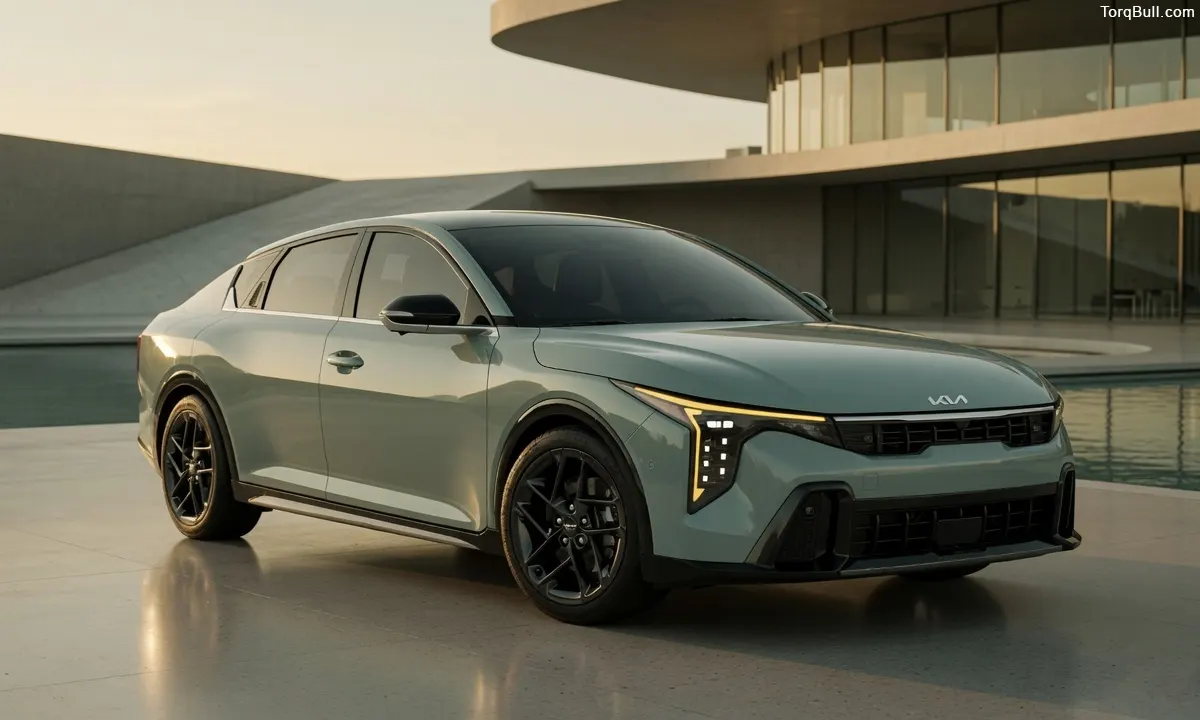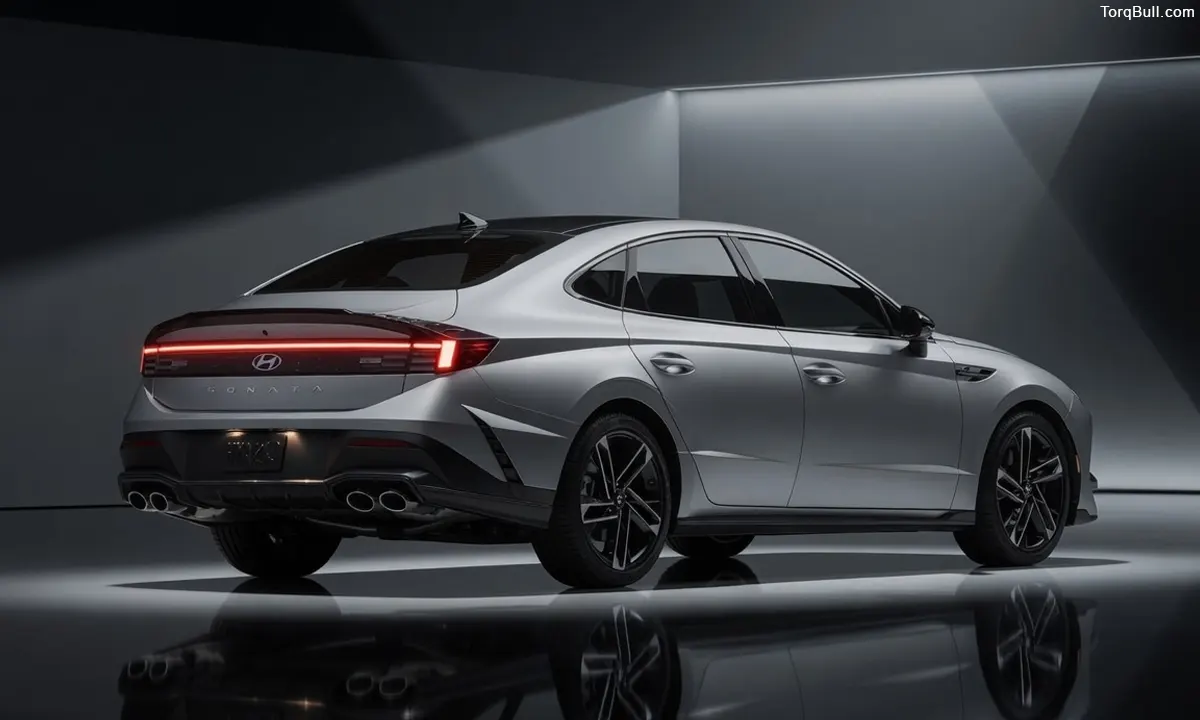
- 2026 Hyundai Sonata N Line delivers 290 hp and 311 lb-ft via a turbo 2.5L engine with an 8-speed wet DCT
- Real-world efficiency drops to ~22.4 MPG vs 27 MPG EPA combined, highlighting performance trade-offs
- Quick acceleration (~7.3s 0–60) and a more responsive DCT vs rival CVTs define its sporty character
The Hyundai Sonata N Line’s turbocharged 2.5-litre engine is the most powerful mainstream midsize sedan powertrain available in the American market in 2026 — a fact that becomes more remarkable when you consider that the Camry TRD has been discontinued and the Accord no longer offers anything approaching 290 horsepower in a non-hybrid form. For buyers who want genuine performance from a family sedan at a price that does not require a luxury brand premium, the Sonata N Line’s turbocharged engine is essentially the only game in town. Understanding exactly what that engine delivers in real-world testing — not just EPA estimates but actual measured acceleration, observed fuel economy and the driving character nuances that professional evaluators document — is the most practically useful knowledge available to any Sonata N Line buyer.
The Engine: Specifications and Hardware
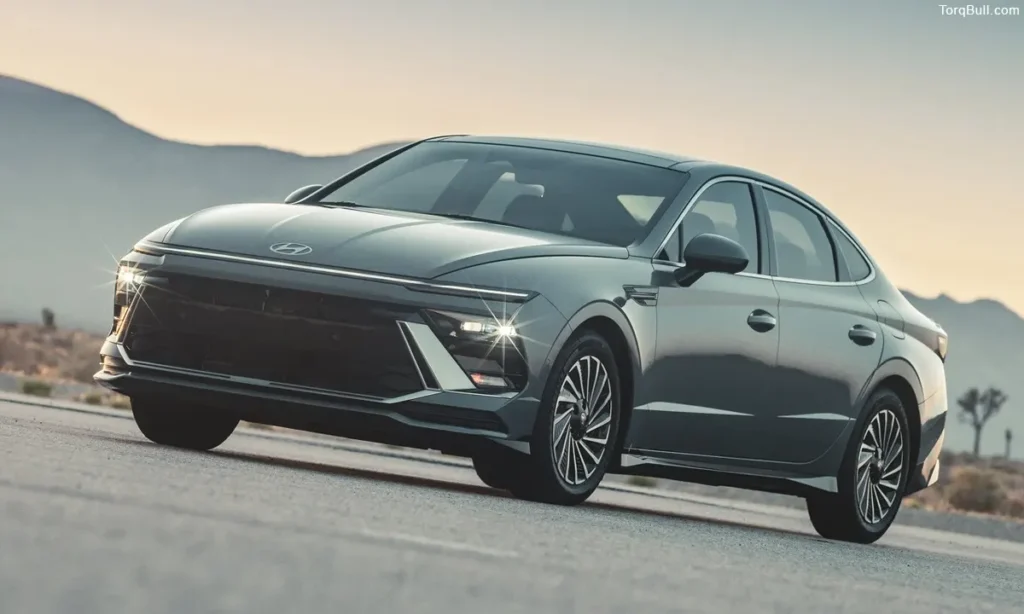
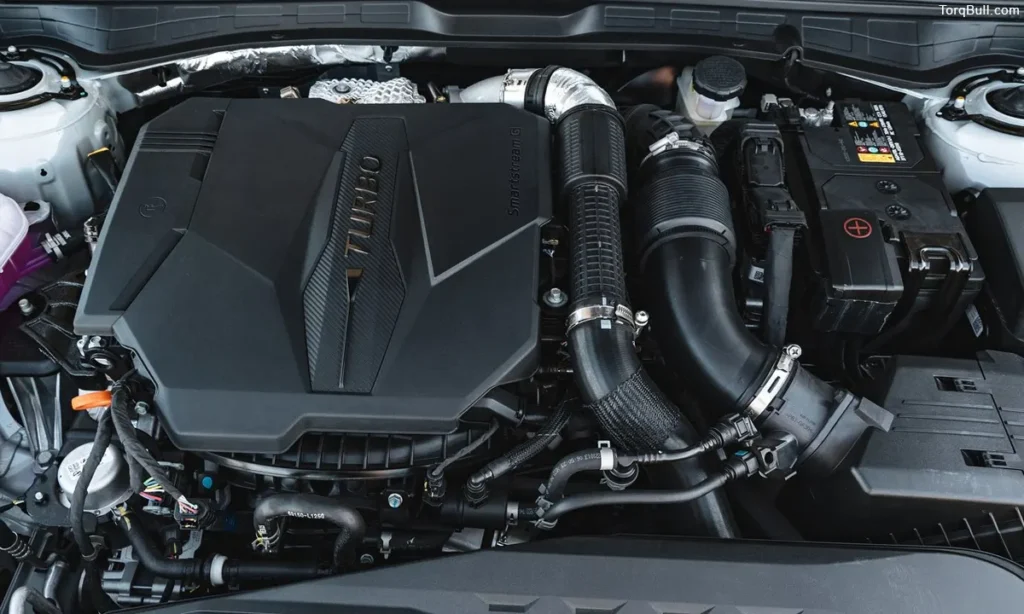
The 2026 Sonata N Line’s turbocharged 2.5-litre four-cylinder engine produces 290 horsepower and 311 pound-feet of torque at the crankshaft. All power routes exclusively through an eight-speed wet dual-clutch automatic transmission to the front wheels — no all-wheel drive option is available on the N Line, a limitation that Capital One’s review specifically flags as an opportunity missed given the torque steer that 311 pound-feet through front wheels can generate during hard acceleration.
The wet dual-clutch designation distinguishes this transmission from the dry DCT used in some competing applications. Wet DCTs use transmission fluid for cooling and lubrication of the clutch packs, providing greater thermal capacity for sustained performance use — a more durable configuration for a 290-horsepower application than an air-cooled dry clutch alternative would provide. The eight-speed configuration performs over 500 calculations per second to determine optimal shift timing based on throttle position, vehicle speed and selected driving mode.
Hyundai equips the N Line with upgraded brakes, rack-mounted electrically assisted steering for improved road feel and quicker steering response, a sport-tuned suspension and 19-inch wheels with 245/40 Pirelli P Zero all-season tyres. An exclusive Drive Mode Select system provides Normal, Custom, Sport and Sport+ settings that adjust throttle mapping, steering weight and transmission shift aggression.
Real-World Acceleration: What Professional Tests Measured
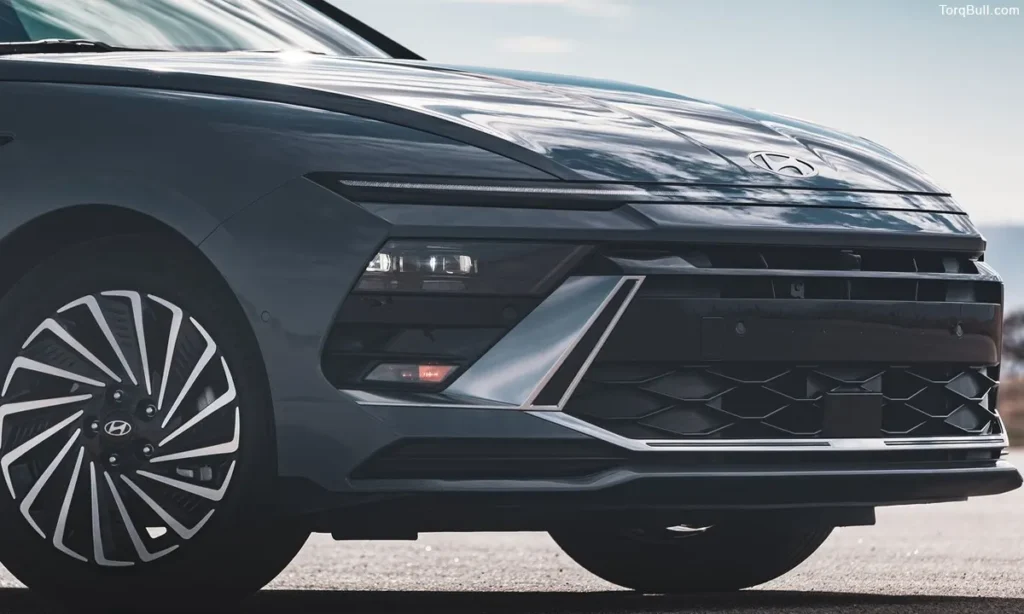
The most direct and most useful performance data for the Sonata N Line’s turbocharged engine comes from instrumented professional testing that translates the specification sheet into measured outcomes.
U.S. News’ testing of a Sonata with the turbocharged 1.6-litre engine — the previous-generation specification — returned a 0-60 MPH time of 7.3 seconds, which U.S. News described as allowing the Sonata to edge out similarly powered family sedans. The 2026 N Line’s 290-horsepower 2.5-litre unit is substantially more powerful than this previous test vehicle — meaning the current N Line’s real-world 0-60 is notably better than this benchmark. Car and Driver’s estimated figure for the 2.5-litre N Line application places 0-60 in the mid-five-second range, consistent with the approximately 5.5-second estimate documented in the Sonata N Line full review earlier in this series.
JD Power’s 2025 N Line evaluation provides the most qualitative real-world performance description. The reviewer confirmed a turbo lag characteristic — a brief delay before boost pressure builds from a standstill — followed by strong acceleration once the turbocharger is fully engaged. The reviewer’s exact language: the delay is not too annoying, and the boost once the turbo kicks in is definitely worth the wait. The car really accelerates strongly, making it a pleasure to weave through traffic or twisty roads. In Sport and Sport+ modes, the throttle mapping becomes more aggressive, reducing the lag perception and summoning the power surge more immediately at the cost of a slightly more demanding daily driving character.
U.S. News also evaluated the eight-speed DCT’s contribution to the real-world performance experience, specifically calling it far more responsive and refined than any of the equivalent competitors’ continuously variable automatic transmissions — a direct comparison to the CVT-equipped Accord and Camry alternatives that validates the DCT’s performance advantage as real rather than merely specified.
Read: Hyundai Sonata N Line Full Review 2026. The Last Affordable Performance Sedan Standing
Real-World Fuel Economy: The Mountain Test Result
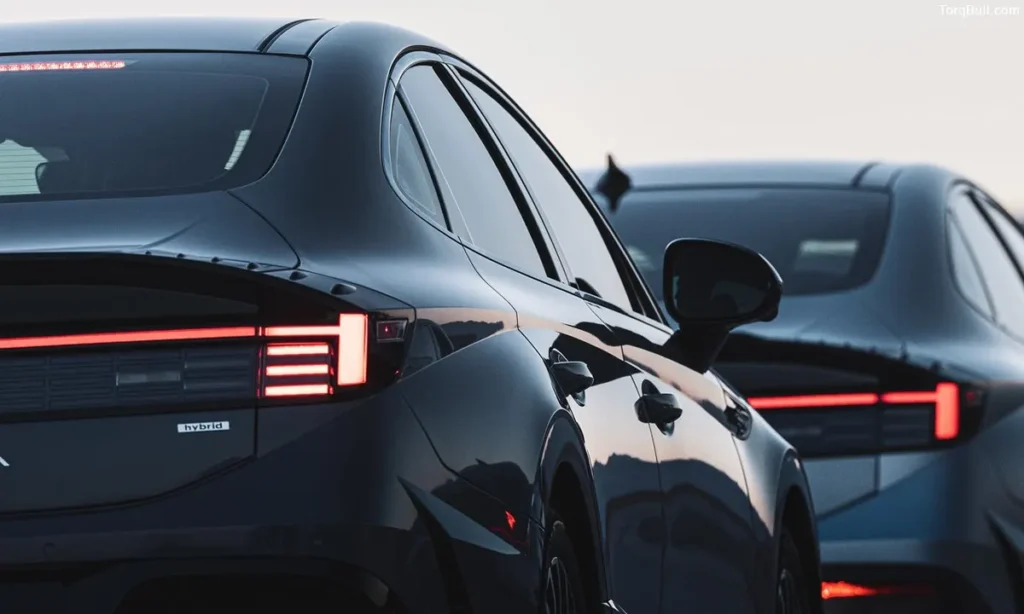
Capital One’s reviewer specifically tested the 2026 Sonata N Line’s real-world fuel economy on a mountainous Southern California test loop — a more demanding route than the EPA’s test cycle and a more realistic representation of spirited driving use than steady-state highway cruising.
The result was 22.4 MPG across the mountainous test route — approximately 4.6 MPG below the EPA’s 27 MPG combined estimate. The 17 percent shortfall from the EPA figure is consistent with what aggressive driving on elevation-changing routes typically produces, and the 22.4 MPG figure is not a failure — it represents a 290-horsepower family sedan achieving reasonable real-world efficiency in genuinely demanding driving conditions. On flatter terrain with more moderate driving, real-world results approaching the EPA combined estimate of 27 MPG are achievable, as the EPA city rating of 23 MPG and highway rating of 32 MPG encompass a wide range of driving scenarios. One KBB owner of a similarly turbocharged Sonata reports regularly achieving 40-plus MPG on long freeway trips — a testament to how driving style dominates real-world fuel economy outcomes for any turbocharged application.
Real-World Driving Character: What the Numbers Cannot Capture
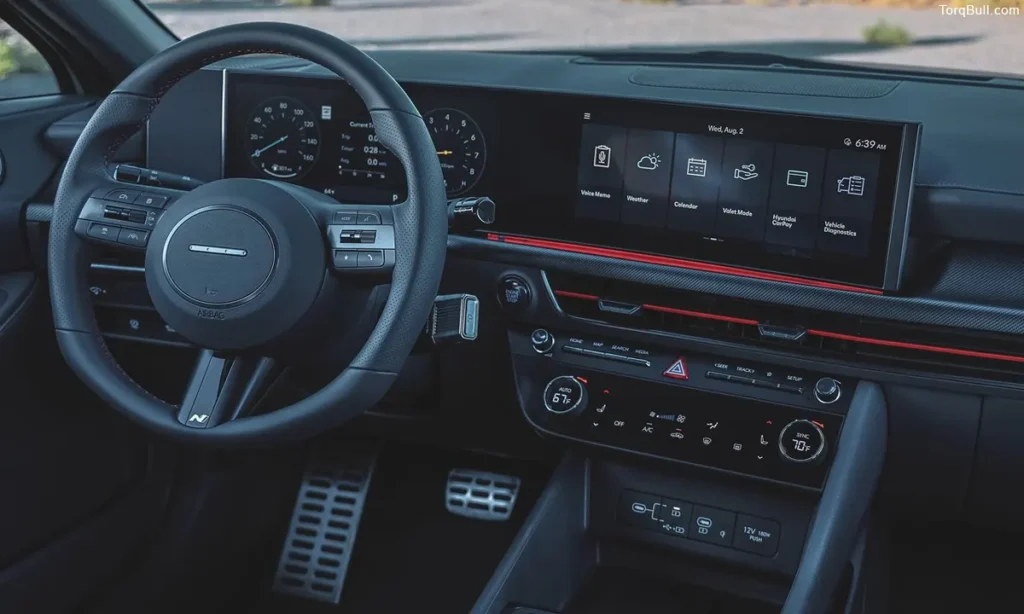
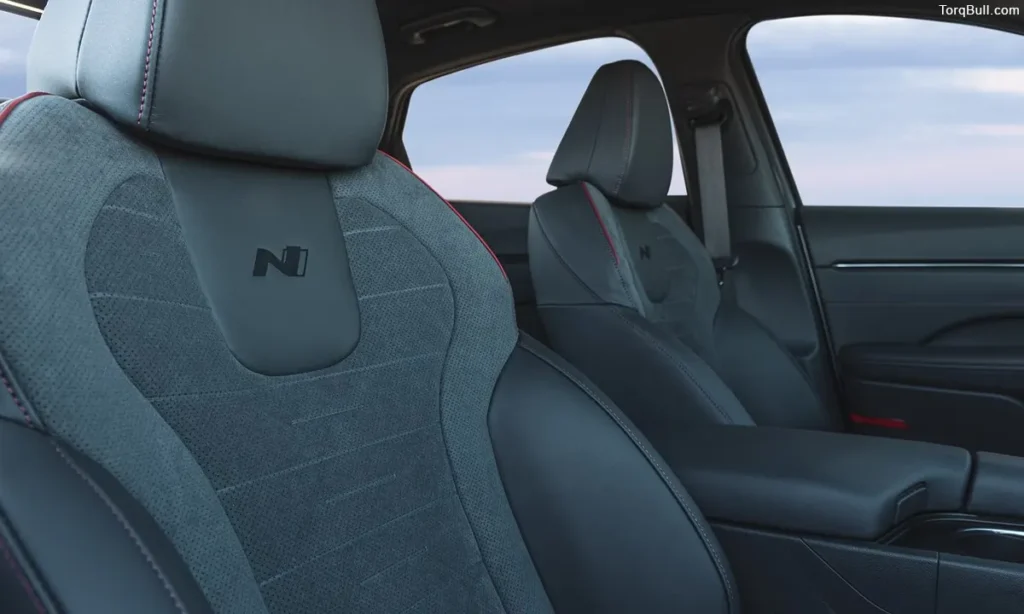
Performance testing numbers are only part of the real-world engine assessment story. Capital One’s comprehensive evaluation provides the most candid qualitative description of what the N Line’s turbocharged engine actually feels like to drive daily.
The reviewer confirms that the N Line is significantly more rewarding to drive than a standard Sonata or a Sonata Hybrid, but notes that it lacks overall dynamic cohesion — it never feels like an extension of your nervous system in the manner of the best driver’s cars. Instead, the reviewer describes a driving experience where the driver coaxes and cajoles the vehicle into the desired behaviour rather than intuitively feeling connected to it. Torque steer — the vehicle pulling left or right under hard acceleration — is identified as an issue specifically in urban and suburban situations during hard acceleration from low speed, where the 311 pound-feet of torque through front-wheel drive creates a directional pull that is most pronounced below 30 MPH. A torque-vectoring AWD system would work wonders in this vehicle is Capital One’s specific recommendation — one that Hyundai has not yet implemented on the N Line.
The Pirelli P Zero all-season tyres are noted as a specific limitation, tending to squeal around curves during spirited cornering — a characteristic that summer performance tyres would address but that Hyundai replaced the previous summer rubber with for the current generation.
Read: Honda Civic vs Hyundai Elantra: Which Compact Sedan Is Actually Better in 2026?
Hyundai Sonata Turbo Engine: Complete Real-World Performance Chart
| Test Category | Result | Source | Context |
| Engine displacement | 2.5L turbocharged 4-cyl | Hyundai / U.S. News | N Line exclusive |
| Horsepower | 290 hp | Hyundai official | At 5,800 RPM |
| Torque | 311 lb-ft | Hyundai official | At 1,700–4,000 RPM |
| Transmission | 8-speed wet DCT | Hyundai official | Wet clutch for thermal capacity |
| 0-60 MPH (estimated) | ~5.5 seconds | Car and Driver est. | Based on similar N Line applications |
| Previous turbo 0-60 (7.3 sec) | 7.3 sec | U.S. News tested | Previous 1.6L N Line benchmark |
| EPA City / Highway / Combined | 23 / 32 / 27 MPG | EPA | Official estimates |
| Real-world (mountain route) | 22.4 MPG | Capital One tested | Spirited driving, elevation gain |
| Turbo lag character | Noticeable below 2,000 RPM | JD Power | Boost arrives aggressively after lag |
| Torque steer | Present under hard acceleration | Capital One | AWD unavailable |
| Transmission feel | Better than CVT competitors | U.S. News | Specific comparative assessment |
Read: Hyundai Elantra IVT vs Manual Transmission Performance Comparison
The Verdict: Who Should Choose the Turbocharged N Line
The Sonata N Line’s turbocharged 2.5-litre engine is the right choice for buyers who want the closest available approximation to a genuine performance midsize sedan at a non-luxury price — and who can accept the front-wheel drive torque steer limitation as the price of accessing 290 horsepower below $40,000 in a practical family sedan package. U.S. News positions the Sonata N Line as offering more power than any Honda Accord sport trim, and at a lower price than comparable German performance alternatives.
It is the wrong choice for buyers who want the most engaging, most connected driver’s car experience in the segment — where the Elantra N’s more focused hardware, electronic LSD and superior chassis communication provide a qualitatively more rewarding performance experience. And for buyers whose primary concern is fuel economy, the base 2.5-litre naturally aspirated engine with its 35 MPG combined EPA rating is the more rational selection.
The turbocharged N Line occupies the specific space between these extremes: more power than a standard family sedan, more practical than a dedicated performance car, and uniquely positioned as the last affordable performance midsize sedan standing in a market that has largely abandoned the category.