10 Quickest Four-Cylinder Cars Ever Made: That Rewrote the Rules of Performance
From a 311-Pound British Lightweight to a 671-Horsepower AMG Hybrid Monster, These Ten Four-Cylinder Production Cars Shattered Expectations, Embarrassed V8s and Permanently Changed What the World Believes a Four-Cylinder Engine Can Accomplish
There was a time, not so long ago, when the phrase “four-cylinder cars” was treated in automotive circles as something approaching a contradiction in terms. Four cylinders were the domain of the economical family hatchback, the sensible commuter vehicle, the practical tool rather than the thrilling instrument. Six cylinders were serious. Eight cylinders were exciting. Four cylinders were forgiven. That assumption has been dismantled with increasing conviction across the past two decades, and today — through the combined forces of turbocharging technology, hybrid electrification, radical lightweighting and the kind of engineering ambition that refuses to accept the limitations implied by a displacement figure — the four-cylinder engine has become one of the most potent, most versatile and most technically interesting performance architectures in the entire automotive world.
The ten cars on this list are the most compelling evidence of that transformation. They range from a British track weapon weighing less than 1,200 pounds to a technology-saturated German sports sedan generating more than 670 combined horsepower from a 2.0-litre engine and an electric motor. Some were celebrated as revolutionary upon their introduction. Others were met with outrage from enthusiasts loyal to the cylinders they replaced. All of them, without exception, were faster than almost anyone expected — and several of them were faster than most six and eight-cylinder cars of their respective eras. These are the ten quickest four-cylinder production cars ever made, ranked and assessed with the rigour and respect their engineering achievements genuinely deserve.
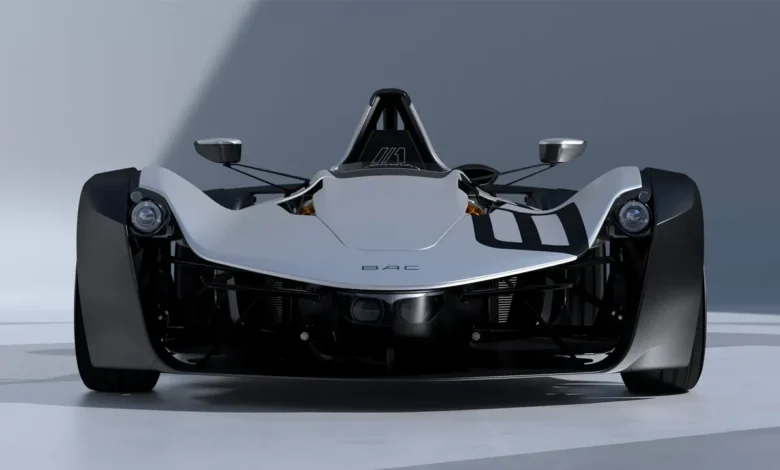
1. BAC Mono – The Most Focused Four-Cylinder on the Planet
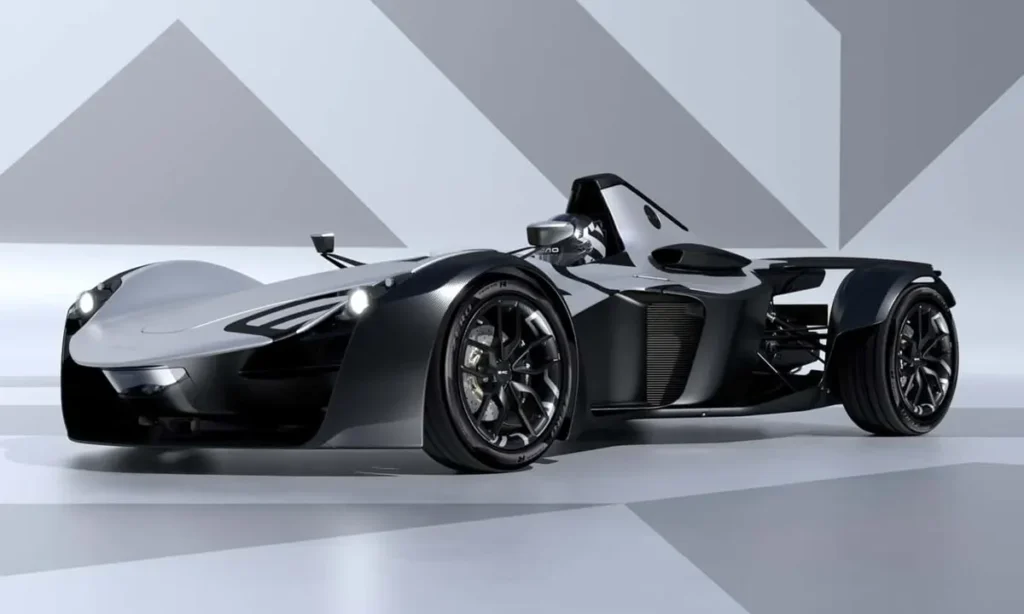
Engine: 2.3-Litre Turbocharged Four-Cylinder | Power: 340 hp | 0–60 mph: 2.7 Seconds
The BAC Mono occupies a category of automotive achievement that is almost impossible to reach through conventional engineering thinking. Built by Briggs Automotive Company in Liverpool, England, and available in the United States market, the Mono is a single-seat, road-registered racing machine in which every design and engineering decision is subordinated entirely to the pursuit of the fastest possible dynamic experience. The car’s turbocharged 2.3-litre four-cylinder engine produces 340 horsepower and drives an aluminium multi-link suspension chassis that weighs approximately 565 kilograms — a figure so low that the power-to-weight ratio it creates is genuinely hypercar-grade. The 0-60 miles per hour time of 2.7 seconds is achieved not through computational trickery but through the sheer physical reality of exceptional power meeting almost no mass — an achievement that no amount of cylinders or displacement can substitute for. The BAC Mono is not merely the quickest four-cylinder car ever made. It is one of the quickest production road cars ever made by any standard, and it achieves that status with an engine that could theoretically power a family hatchback.
2. Caterham Seven 620R – British Simplicity at Its Most Terrifying
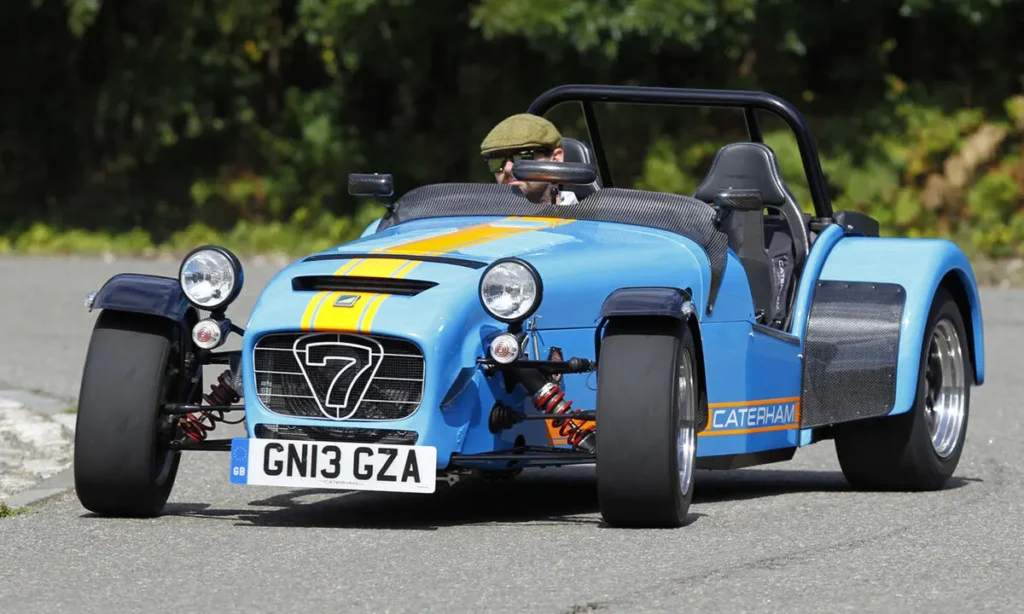
Engine: 2.0-Litre Supercharged Four-Cylinder (Ford-Derived) | Power: 311 hp | 0–60 mph: 2.79 Seconds
To drive a Caterham Seven 620R is to understand, viscerally and immediately, that performance is fundamentally a function of weight rather than power. The 620R carries a claimed 0-60 time of 2.79 seconds — Caterham’s specificity on this figure being itself a statement of how seriously the company takes the measurement — from a 311-horsepower supercharged four-cylinder engine mounted in a car that tips the scales at just 1,201 pounds in race trim. The mathematical relationship between that power output and that mass produces a power-to-weight ratio that eclipses cars costing five or ten times its price, and the physical experience of the 620R translating that ratio into acceleration is among the most intense and most pure available from any road-registered vehicle. There is no electronic performance management softening the delivery, no assistive technology diluting the communication between driver and road. It is simply a four-cylinder engine, a lightweight spaceframe, four wheels and an unimpeded connection between the driver’s right foot and the forces of physics. The result is deeply thrilling and entirely unforgettable.
3. Mercedes-AMG C63 S E Performance – 671 Horsepower From a 2.0-Litre Engine
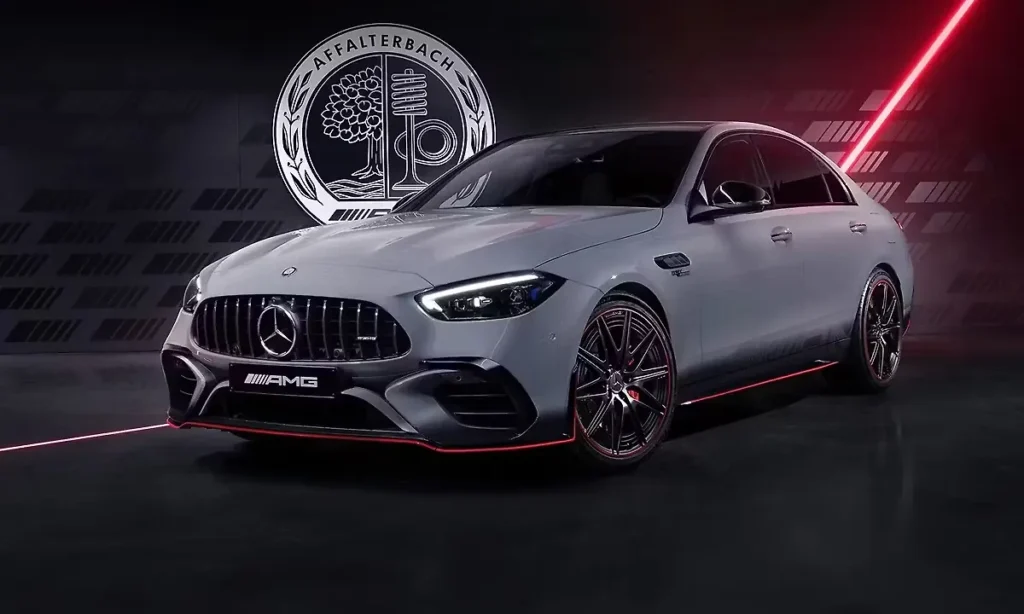
Engine: 2.0-Litre Turbocharged Four-Cylinder + Electric Motor | Combined Power: 671 hp | 0–60 mph: 2.9 Seconds (Tested)
When Mercedes-AMG announced that it was replacing the legendary twin-turbocharged V8 of the C63 AMG with a 2.0-litre four-cylinder hybrid system, the reaction from the enthusiast community ranged from disbelief to fury. The engineering reality of the result has, to a significant degree, quietened that fury. The 2024 and 2025 Mercedes-AMG C63 S E Performance pairs a 469-horsepower turbocharged four-cylinder — equipped with an electrically powered turbocharger developed in direct collaboration with the Mercedes-AMG Petronas Formula 1 team, which eliminates turbo lag by spinning the compressor wheel with an electric motor before combustion pressure can do so — with a 201-horsepower permanently excited synchronous electric motor on the rear axle. The combined system output of 671 horsepower and 752 pound-feet of torque is channelled through a nine-speed multi-clutch transmission and 4MATIC+ all-wheel-drive to deliver a tested 0-60 time of 2.9 seconds — measurably quicker than the beloved V8 it replaced, regardless of how emotionally complex that achievement may feel. The AMG faithful may still mourn the eight-cylinder, but the performance figures are beyond reasonable dispute.
4. Mercedes-AMG A45 S – The World’s Most Powerful Production Four-Cylinder in a Hot Hatch
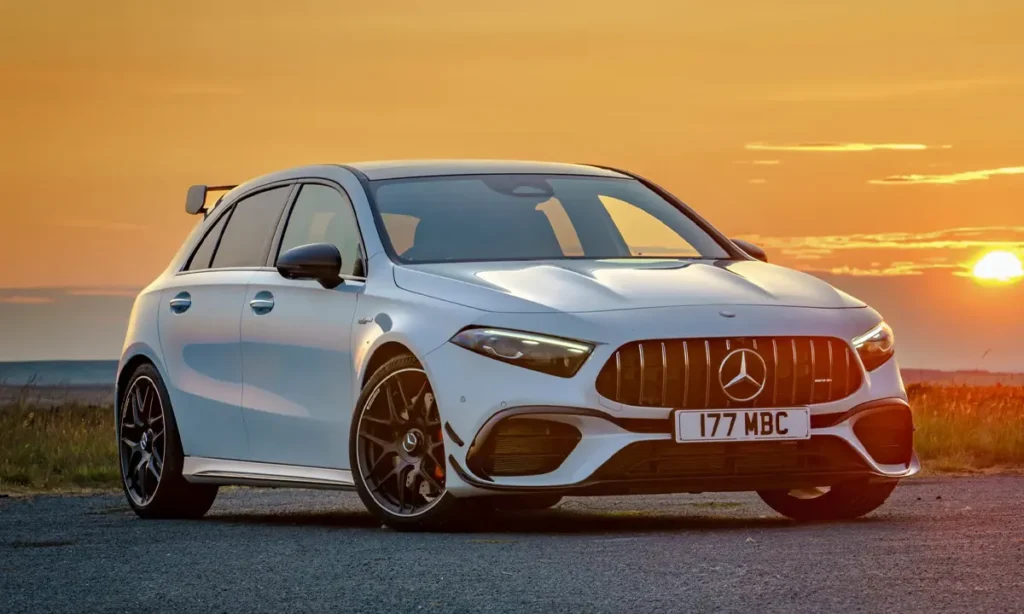
Engine: 2.0-Litre Turbocharged Four-Cylinder (M139) | Power: 421 hp | 0–60 mph: 3.9 Seconds
The Mercedes-AMG A45 S is the most extreme expression of the hot hatchback formula ever brought to production, and the engine that powers it is the single most powerful production four-cylinder combustion engine — without electric assistance — ever placed in a series production vehicle. The hand-built AMG M139 2.0-litre turbocharged unit produces 421 horsepower at 6,750 rpm, a specific output of 210 horsepower per litre that surpasses every naturally aspirated and forced-induction four-cylinder road car engine of any displacement. Channelled through AMG’s dual-clutch transmission and 4MATIC+ all-wheel-drive system, the A45 S covers zero to 60 miles per hour in 3.9 seconds — a time that would have been supercar-grade within living memory and that remains comfortably faster than many six and eight-cylinder sports cars on sale today. In the Drift mode that the car offers, the rear axle can be completely decoupled from the front to enable driver-controlled power slides — behaviour that is as unexpected from a compact family hatchback as the 421-horsepower engine that enables it. The A45 S is, without qualification, the maddest, most technically extraordinary hot hatch ever produced.
5. Porsche 718 Cayman GT4 RS – Naturally Aspirated Four-Cylinder at 9,000 RPM
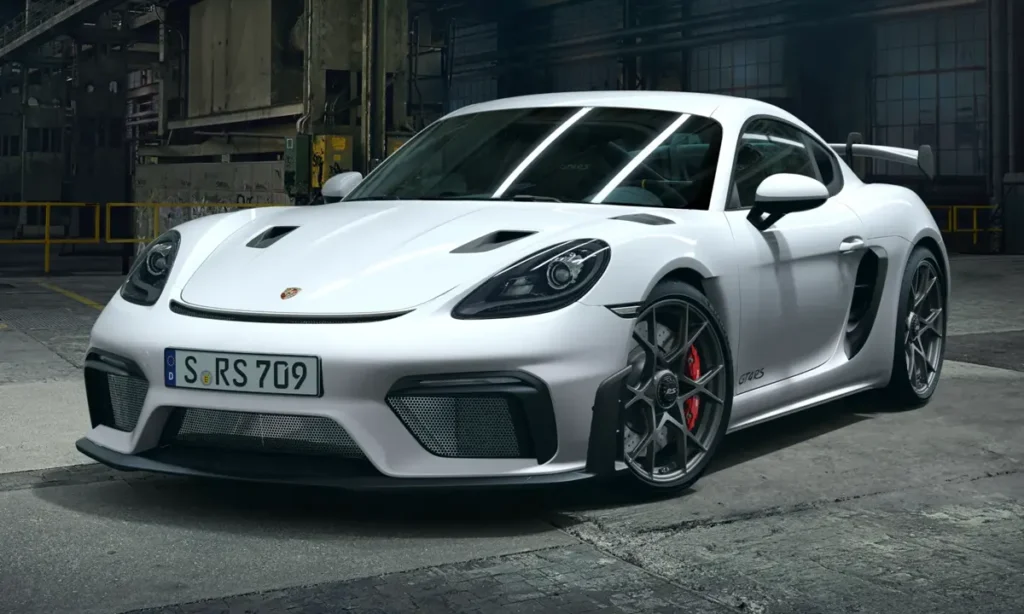
Engine: 4.0-Litre Naturally Aspirated Flat-Four (Motorsport-Derived) | Power: 500 hp | 0–60 mph: 3.2 Seconds
The Porsche 718 Cayman GT4 RS is a unique and extraordinary entry on this list for a specific reason that distinguishes it from every other car discussed here — its 4.0-litre flat-four engine is naturally aspirated, producing 500 horsepower without any turbocharger or electric motor assistance purely through the mechanical purity of exceptional engine architecture and the willingness to rev to 9,000 rpm. This engine is derived directly from the unit used in the 911 GT3 and the 911 RSR endurance racing car, adapted to the flat-four configuration of the Cayman’s chassis layout, and the result is an engine of astonishing character — instantaneously responsive to throttle inputs, linear and continuous in its power delivery from idle to the 9,000 rpm ceiling, and accompanied by one of the finest mechanical soundscapes available from any production road car at any price. The 0-60 time of 3.2 seconds is achieved through raw engine output and the exceptional grip of Michelin Pilot Sport Cup 2R tyres, with no launch control intervention required to achieve the figure consistently. The GT4 RS is the ultimate proof that naturally aspirated four-cylinder engines, executed with sufficient ambition and sophistication, can produce performance and character that embarrasses turbocharged rivals of greater displacement.
6. Lotus Emira I4 First Edition – 400 Horsepower and 181 MPH From Lotus’s Last Combustion Car
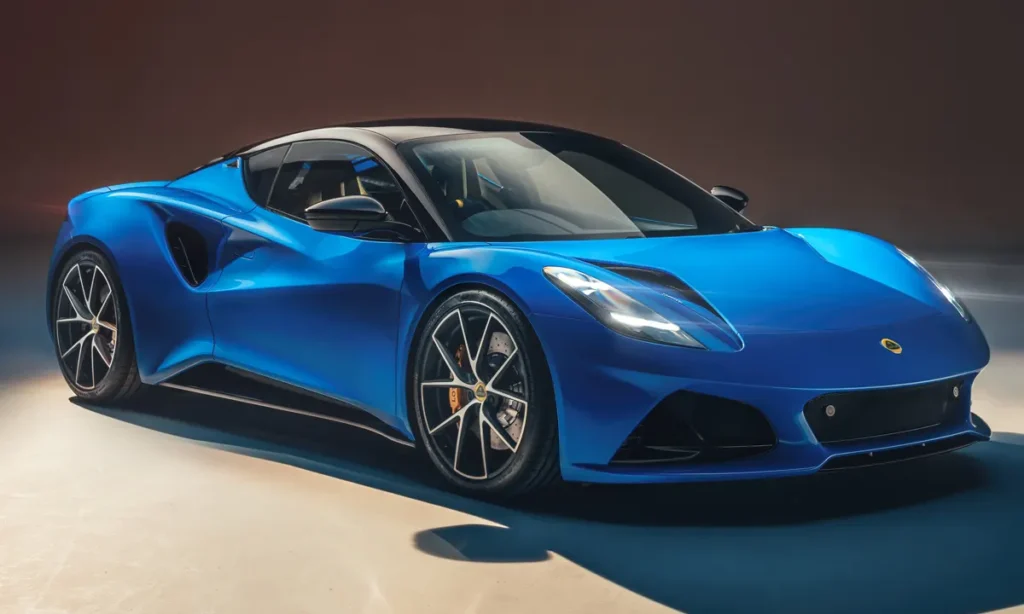
Engine: 2.0-Litre Turbocharged Four-Cylinder (AMG M139) | Power: 400 hp | 0–60 mph: 4.0 Seconds | Top Speed: 181 mph
The Lotus Emira I4 occupies a place of genuine historical significance in the story of the four-cylinder performance car. It is the final internal combustion vehicle that Lotus will ever produce — a last hurrah for an engineering philosophy of lightness, driver connection and aerodynamic efficiency that Lotus has pursued since Colin Chapman first applied it to racing car design in the 1950s. The Emira’s 2.0-litre turbocharged AMG M139 engine, paired with a Mercedes-AMG eight-speed dual-clutch transmission, produces 400 horsepower — channelled to the rear wheels through the Emira’s bonded aluminium chassis in a configuration that maximises the four-cylinder’s effectiveness through low mass rather than attempting to overwhelm it with technology. The 0-60 time of 4.0 seconds is delivered with the tactile, communicative character that Lotus’s engineering culture demands, and the 181 miles per hour top speed makes the Emira I4 the fastest production four-cylinder car in the world by maximum velocity. It is the fitting conclusion to an extraordinary chapter in British performance car history, and it deserves to be remembered as the definitive expression of what the AMG four-cylinder engine can achieve in an application that prioritises weight and dynamics over mass and technology.
7. Honda Civic Type R (FL5) – The Front-Wheel-Drive King of the Nürburgring
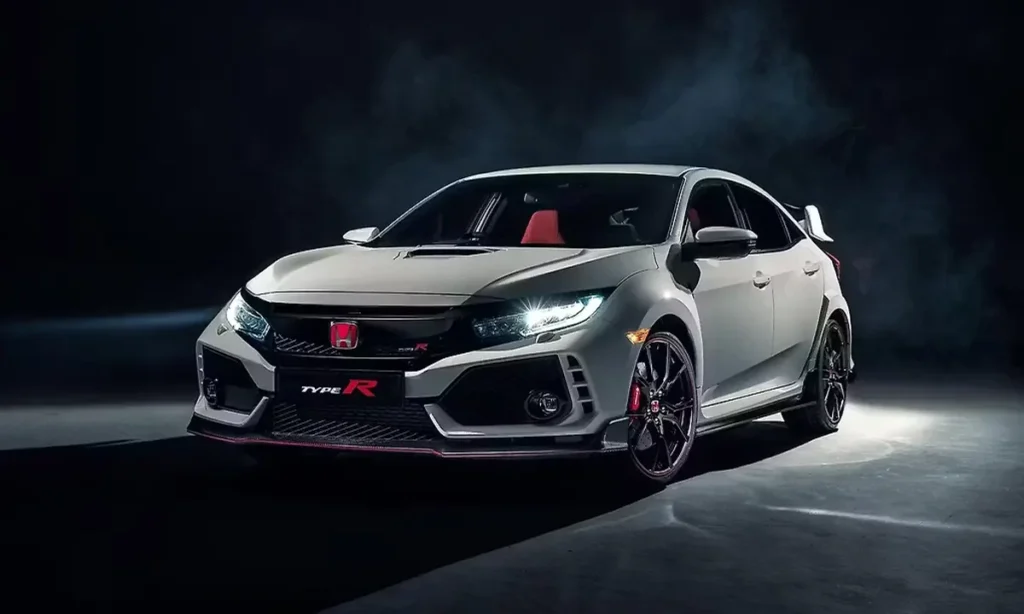
Engine: 2.0-Litre Turbocharged Four-Cylinder (K20C) | Power: 315 hp | 0–60 mph: 4.9 Seconds | Nürburgring FWD Record: 7:44.881
The Honda Civic Type R FL5 makes this list not because its 0-60 time is the most spectacular figure in the ranking — at 4.9 seconds, it is among the more modest numbers presented here — but because its broader performance achievement represents arguably the most significant accomplishment in the history of the front-wheel-drive performance car. In 2023, the FL5 Civic Type R set a Nürburgring Nordschleife front-wheel-drive production car lap record of 7 minutes and 44.881 seconds — a time that is faster around the world’s most demanding and most respected circuit than many rear-wheel-drive sports cars of far greater power, displacement and price. This achievement is founded on Honda’s K20C 2.0-litre turbocharged VTEC engine producing 315 horsepower and 310 pound-feet of torque, channelled to the front wheels through a six-speed manual transmission with a limited-slip differential and a chassis of exceptional balance and precision. It is the most powerful production Honda ever sold in the American market, and its combination of front-wheel-drive engineering excellence, daily usability and genuine circuit performance represents a four-cylinder achievement that no other car manufacturer has surpassed in its chosen performance domain.
8. Mercedes-AMG CLA 45 S – The World’s Most Powerful Compact Sedan Four-Cylinder
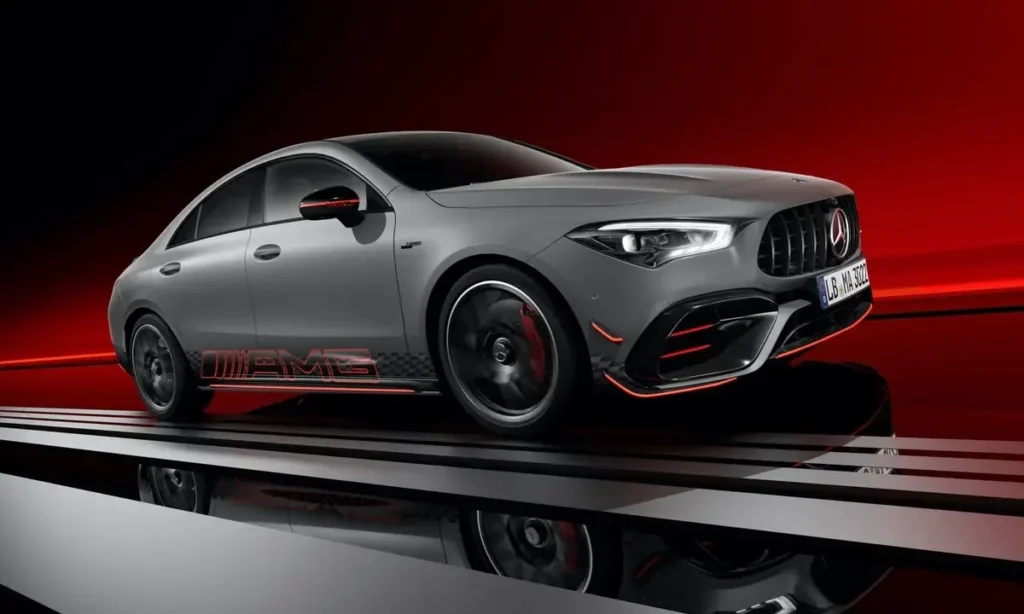
Engine: 2.0-Litre Turbocharged Four-Cylinder (M139) | Power: 416 hp | 0–60 mph: 3.9 Seconds
Sharing its M139 engine family with the A45 S discussed above, the Mercedes-AMG CLA 45 S delivers essentially identical performance credentials in a sleek four-door coupe body that expands the practical appeal of the world’s most powerful production four-cylinder combustion engine to buyers who need functional rear seating alongside their supercar-grade acceleration. The CLA 45 S covers zero to 60 in 3.9 seconds through the same combination of AMG-developed dual-clutch transmission and 4MATIC+ all-wheel-drive, reaching a top speed of 168 miles per hour and occupying a unique market position as the fastest production four-door compact sedan powered exclusively by a four-cylinder combustion engine. Where the A45 S makes its case through the intensity and extremity of the hot hatch experience, the CLA 45 S presents the same mechanical achievement in a format that more buyers can integrate into their daily lives — a distinction that has made it one of the most consistently praised and most frequently purchased four-cylinder performance cars of the modern era.
9. Alfa Romeo 4C – The Mid-Engine Four-Cylinder Purist
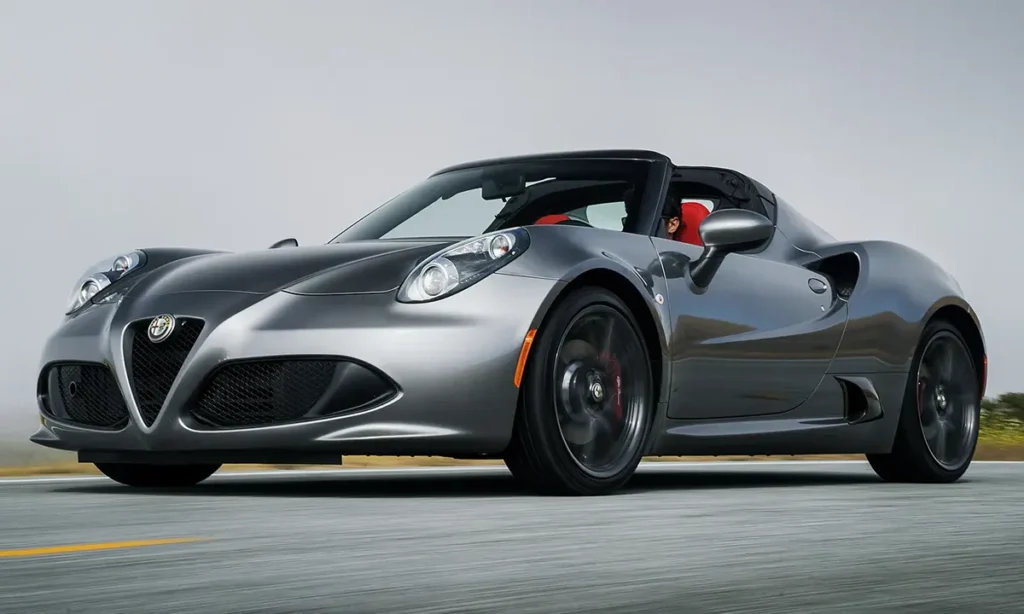
Engine: 1.75-Litre Turbocharged Four-Cylinder | Power: 237 hp | 0–60 mph: 4.1 Seconds | Weight: Approx. 2,300 lbs
The Alfa Romeo 4C is the car that most completely captures the philosophical argument at the heart of the four-cylinder performance case — that a small, light, well-engineered car with a modest power output can deliver a driving experience of greater richness, greater communication and greater emotional satisfaction than a heavier, more powerful car with twice the displacement. The 4C’s mid-mounted 1.75-litre turbocharged four-cylinder produces 237 horsepower — a number that sounds entirely unremarkable until it is placed in the context of the car’s approximately 2,300-pound kerb weight, achieved through a carbon fibre reinforced polymer tub construction that was, at the time of the 4C’s introduction, unprecedented for a production car at its price point. The result is a power-to-weight ratio that translates into a 4.1-second 0-60 time and a driving experience of extraordinary directness — no power steering, no driver assistance systems, no electronic dilution of the communication between road and driver — that has made the 4C one of the most celebrated and most memorable driving machines of the modern era despite its modest power output. It is the four-cylinder car that most honestly and most completely embodies the Colin Chapman philosophy that Lotus articulated and that every lightweight performance machine since has aspired to match.
10. Porsche 718 Cayman S / Boxster S – The Four-Cylinder That Replaced a Legend and Proved Its Critics Wrong
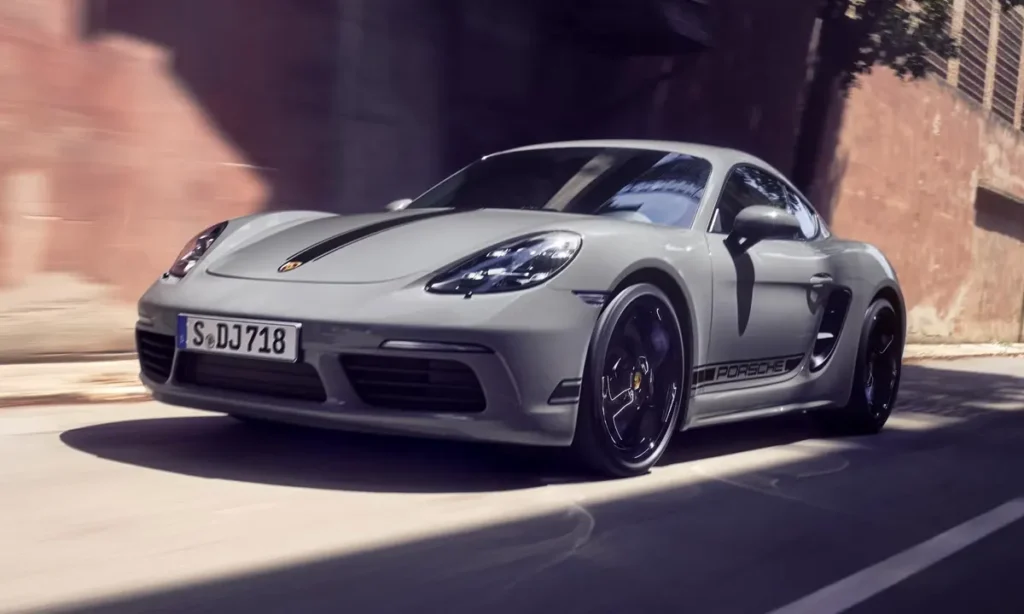
Engine: 2.5-Litre Turbocharged Flat-Four | Power: 350 hp | 0–60 mph: 4.0 Seconds
The 2017 introduction of the turbocharged flat-four engine into the Porsche 718 Cayman and Boxster generated more controversy, more online debate and more earnest petition-signing from the Porsche enthusiast community than any powertrain decision the brand had made since adopting water cooling for the 911 in 1999. The six-cylinder engines of the previous Cayman and Boxster were widely regarded as among the finest naturally aspirated units in production, and the prospect of their replacement with a turbocharged four-cylinder unit was genuinely distressing to drivers who had built their appreciation of the 718’s predecessor around the character of that engine. The engineering reality of the new flat-four proved considerably more compelling than its critics had predicted. The 2.5-litre turbocharged unit in the Cayman S produces 350 horsepower — more than the six-cylinder it replaced — and accelerates from zero to 60 in 4.0 seconds with the optional Sport Chrono package, matching and in some cases bettering the six-cylinder’s performance. The chassis balance remained exceptional. The handling remained among the finest available from any production sports car at any price. The engine never matched the sonic character of the six-cylinder it succeeded — and that remains a legitimate criticism that Porsche has since addressed with the GTS 4.0 and GT4 RS six-cylinder variants — but as a performance achievement, the 2.5 flat-four proved unambiguously that four cylinders could carry the Porsche sporting mission forward with full credibility and full capability.
Read: Corvette Z06 Redefines American Supercars with Flat-Plane V8 Power
The 10 Quickest Four-Cylinder Cars Ever Made – Performance Chart
| Rank | Car | Engine | Power | 0–60 mph | Notable Achievement |
| 1 | BAC Mono | 2.3L Turbo Four | 340 hp | 2.7 sec | Lightest Production Road Car – 565 kg |
| 2 | Caterham Seven 620R | 2.0L Supercharged Four | 311 hp | 2.79 sec | 1,201 lbs Race Weight |
| 3 | Mercedes-AMG C63 S E Performance | 2.0L Turbo + Electric | 671 hp | 2.9 sec | World’s Most Powerful C-Class Ever |
| 4 | Mercedes-AMG A45 S | 2.0L Turbo (M139) | 421 hp | 3.9 sec | Most Powerful NA 4-Cyl Production Engine |
| 5 | Porsche 718 Cayman GT4 RS | 4.0L NA Flat-Four | 500 hp | 3.2 sec | 9,000 RPM / Motorsport-Derived Unit |
| 6 | Lotus Emira I4 First Edition | 2.0L Turbo (AMG) | 400 hp | 4.0 sec | Fastest Four-Cyl Car – 181 mph Top Speed |
| 7 | Honda Civic Type R FL5 | 2.0L Turbo VTEC | 315 hp | 4.9 sec | Nürburgring FWD Record – 7:44.881 |
| 8 | Mercedes-AMG CLA 45 S | 2.0L Turbo (M139) | 416 hp | 3.9 sec | World’s Quickest Four-Cyl Compact Sedan |
| 9 | Alfa Romeo 4C | 1.75L Turbo Four | 237 hp | 4.1 sec | Carbon Fibre Tub / No Power Steering |
| 10 | Porsche 718 Cayman S (982) | 2.5L Turbo Flat-Four | 350 hp | 4.0 sec | Replaced Six-Cyl and Matched Its Performance |
The Four-Cylinder Has Already Won
The evidence assembled across these ten extraordinary automobiles makes a persuasive and largely unanswerable case. The four-cylinder engine, in the hands of engineers with sufficient ambition, sufficient technology and a willingness to discard the assumptions of the past, is no longer a compromise chosen in the absence of something better. It is, increasingly, the deliberate choice of engineers who understand that displacement is a tool rather than a destination — and that the destination, now as always, is the most rewarding driving experience that engineering skill and creative thinking can produce. These ten cars are the proof of that principle, and they deserve to be celebrated as the four-cylinder hall of fame that permanently and irrevocably changed what the world believes an engine with four cylinders can do.