5 Toyota Cars That Last Forever! Myth or Reality?
From a 39.1 Percent Chance of Reaching 250,000 Miles in the Sequoia to Documented Corollas and Priuses Surpassing 500,000 Miles — The Data From 174 Million Vehicles Answers the Question That Every Toyota Buyer Asks and Every Sceptic Doubts
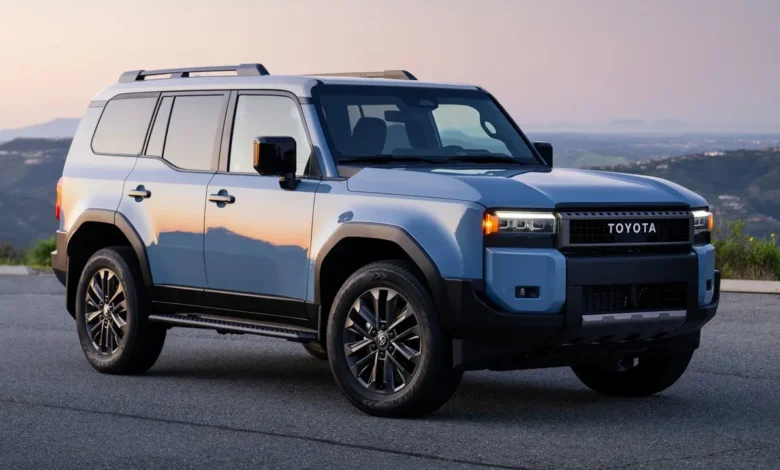
Every automotive brand carries a reputation. Some are earned gradually through decades of consistent product quality. Some are manufactured through marketing investment and carefully curated brand associations. And some — rarest of all — are so thoroughly validated by independent data, owner testimony and the accumulated experience of millions of real-world drivers across multiple generations of products that the reputation has effectively become an empirical fact rather than a perception. Toyota’s reputation for building cars that last far longer than almost anything produced by any rival manufacturer belongs in that third category. The brand’s vehicles do not merely have a reputation for exceptional longevity. They have the statistical evidence, the third-party research data and the documented real-world mileage records to prove it.
The 2025 iSeeCars Longest-Lasting Cars Study — which analysed data from over 174 million vehicles to determine which models are statistically most likely to reach 250,000 miles in operation — placed Toyota in 10 of the top 25 positions, more than any other manufacturer in the world. The industry average probability of a vehicle reaching 250,000 miles is 4.8 percent. The Toyota Sequoia, which leads the study’s overall rankings, achieves a 39.1 percent probability of reaching that milestone — more than eight times the industry average. These are not anecdotes from enthusiastic owners who maintain their vehicles with exceptional discipline. They are statistical outcomes derived from the largest dataset of vehicle longevity ever assembled. The question this article asks — are Toyota cars that last forever a myth or a reality — has a clear answer from that data. The reality is that five specific Toyota models stand so far above both the industry average and every reasonable expectation of vehicle longevity that the word myth applies to the scepticism rather than to the reputation.
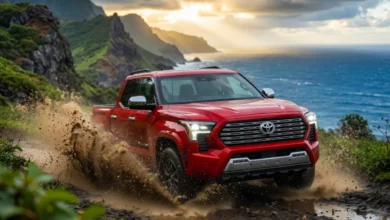
Toyota Sequoia: The Statistical Champion of Long-Term Durability
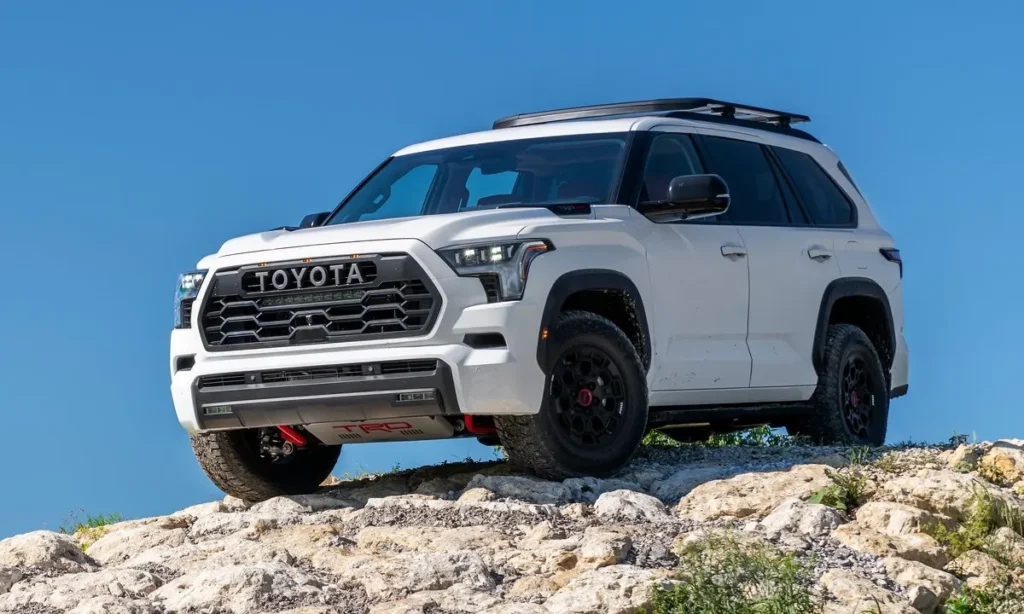
The Toyota Sequoia’s position at the top of iSeeCars’ 2025 longest-lasting vehicle study represents more than a single year’s strong performance from a specific full-size SUV. It represents the culmination of a design and engineering philosophy that Toyota’s full-size SUV lineup has pursued consistently across multiple generations — prioritising structural robustness, mechanical simplicity and long-term component durability over the kind of feature-driven novelty that often introduces complexity and failure modes into large vehicles.
The Sequoia’s 39.1 percent probability of reaching 250,000 miles — derived from analysis of data covering more than 174 million vehicles — makes it not merely the most durable Toyota in the study but the most durable vehicle of any brand in any category included in the research. This figure means that for every ten Sequoias produced, nearly four will surpass the quarter-million-mile threshold that most vehicles in the broader market fail to reach even once in a thousand examples. The Toyota Tundra full-size pickup — the Sequoia’s truck counterpart sharing many powertrain components — follows with a 36.6 percent probability of reaching 250,000 miles, the highest figure among all production trucks in the study and a figure that is more than seven times the industry average.
The engineering rationale behind the Sequoia’s longevity record is well-established and reflects the same conservative philosophy that underpins Toyota’s brand-level reliability advantage. Large-displacement naturally aspirated engines operating well within their thermal and mechanical stress limits, robust automatic transmission architectures designed for high torque loads across extended service lives, and structural engineering that prioritises durability over kerb weight reduction all contribute to a platform that sustains its mechanical integrity across mileage accumulation rates that most rival manufacturers’ products cannot match. The current-generation Sequoia’s hybrid powertrain — standard across all trim levels since 2023 — adds the additional benefit of the regenerative braking system’s load reduction on the conventional brake components, with multiple independent assessments suggesting that the hybrid system’s complexity concerns are outweighed by its contributions to reduced mechanical wear on the powertrain components that most directly affect long-term ownership cost.
Toyota Corolla: The 500,000-Mile Compact That Changed Expectations
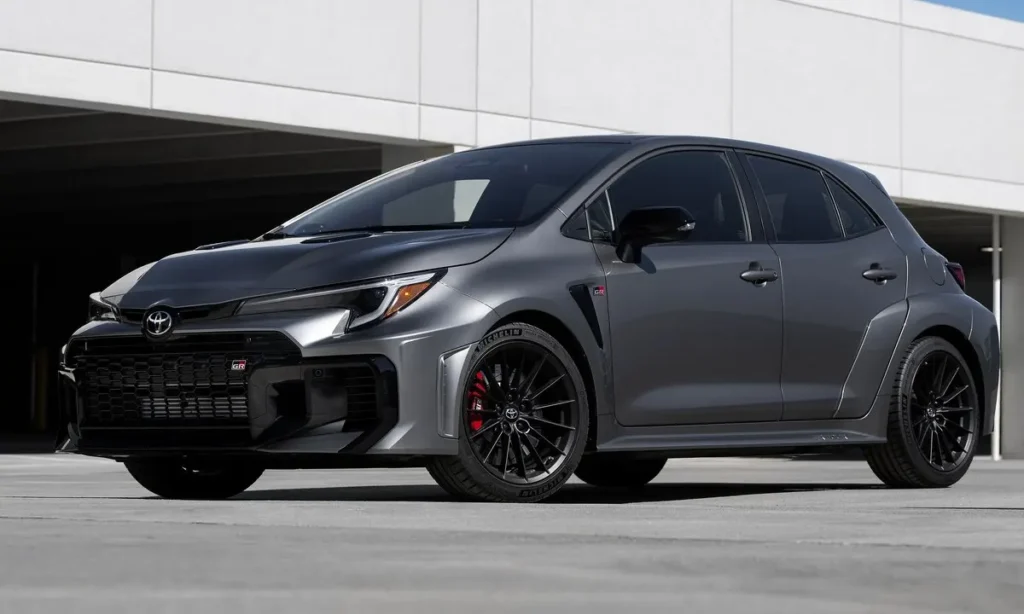
The Toyota Corolla occupies a specific and significant position in the broader story of Toyota’s longevity reputation because it provides something that large SUV durability data alone cannot offer: proof that Toyota’s engineering discipline produces exceptional durability at the most accessible and most widely distributed price point in the lineup. The Sequoia and Land Cruiser can sustain an argument, however unfair, that expensive vehicles with high-quality components naturally last longer than affordable ones. The Corolla — the world’s best-selling automobile across its production history, available for under $25,000 in its current generation — eliminates that argument with the most democratic and most comprehensive longevity record in the compact car segment.
Consumer Reports’ 2025 rankings of models expected to last to 200,000 miles placed the Corolla among the eight Toyota models that dominated the top twelve positions — a result that draws from the organisation’s survey of hundreds of thousands of vehicle owners rather than from dealership-reported warranty data that might undercount real-world reliability issues. The documented real-world evidence extends further than the statistical average: well-maintained Corollas surpassing 500,000 miles have been reported across multiple countries and climates, with multiple examples documented in North America, Australia and Japan where owners following consistent maintenance schedules — regular oil changes, timing belt replacement at manufacturer-specified intervals, coolant and transmission fluid maintenance — have extended their vehicles’ operational lives into territory that stretches the limits of what most buyers consider possible.
The specific engineering elements that make the Corolla’s exceptional longevity achievable are not exotic. The engine specifications prioritise reliability margins over power density — the bore-to-stroke ratios, compression ratios and valve train designs that Toyota selects for the Corolla family are chosen for low thermal and mechanical stress at typical operating loads rather than for maximum specific output figures. The result is an engine that operates significantly below its mechanical limits during the everyday driving cycles that represent the overwhelming majority of a Corolla’s operational life, accumulating mileage with the kind of mechanical ease that extends component life naturally and predictably.
Toyota Tacoma: The Pickup That Refuses to Age
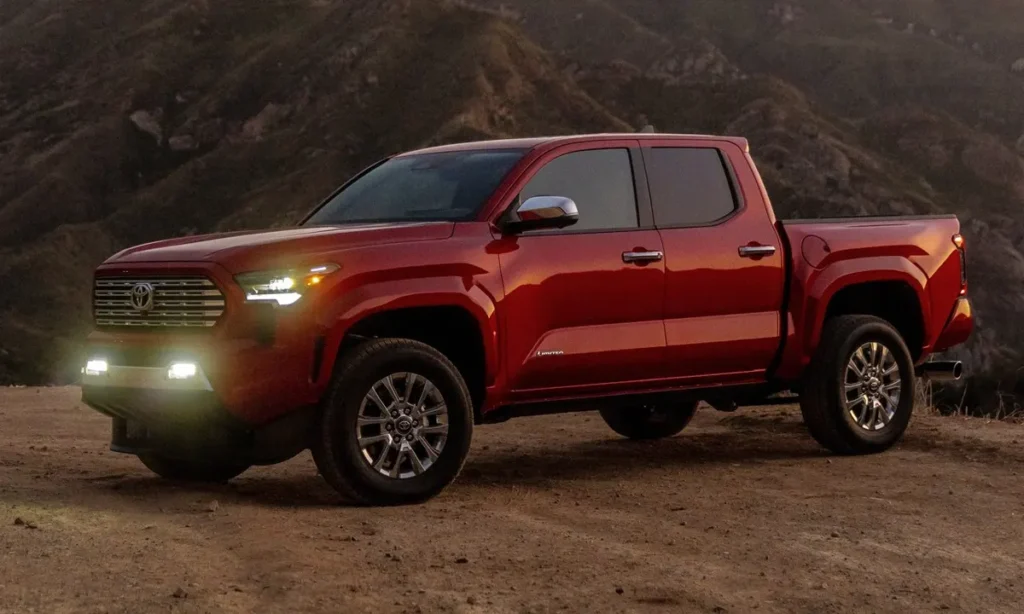
The Toyota Tacoma’s durability reputation has achieved a specific cultural status in the American market that no other midsize pickup truck — and arguably no other vehicle in any category — has replicated. The Tacoma is the midsize truck that truck buyers trust when they need certainty about long-term ownership costs, when they operate in environments where breakdown consequences are severe, and when they plan to keep their vehicle for a decade or more rather than trading at three or four years. That trust is not purely cultural — it is grounded in data that consistently places the Tacoma above every midsize pickup alternative in every major longevity and reliability study conducted across the last decade.
Consumer Reports placed the 2025 Tacoma in seventh position in its list of the twelve models most likely to last to 200,000 miles — an above-average reliability rating that reflects owner survey data rather than manufacturer-supplied information. The most remarkable individual documentation of Tacoma longevity is a 2008 model that accumulated 1.6 million miles on the original odometer — a figure that requires consistent, disciplined maintenance to achieve but that demonstrates the fundamental mechanical robustness of the platform under conditions that remove all doubt about its capability. At 1.6 million miles, the question of whether Toyota trucks last forever becomes less a matter of interpretation and more a matter of documentary record.
The Tacoma’s 2024 redesign — which introduced a new turbocharged 2.4-litre four-cylinder engine family replacing the previous 3.5-litre V6 — represents the kind of powertrain transition that creates genuine questions about whether the new generation will replicate the old generation’s longevity record or whether the introduction of forced induction will introduce failure modes that the naturally aspirated V6 avoided. Early owner reports and independent reliability assessments are cautiously positive, but the turbocharged engine’s long-term durability record will require additional years and additional mileage accumulation before it can be assessed with the statistical confidence that the previous generation’s data provides. Buyers who specifically prioritise the longest possible documentation of platform-level longevity may find that the most recent pre-redesign Tacoma examples offer the highest initial confidence.
Toyota Land Cruiser: The Legend That Earns Every Story About It
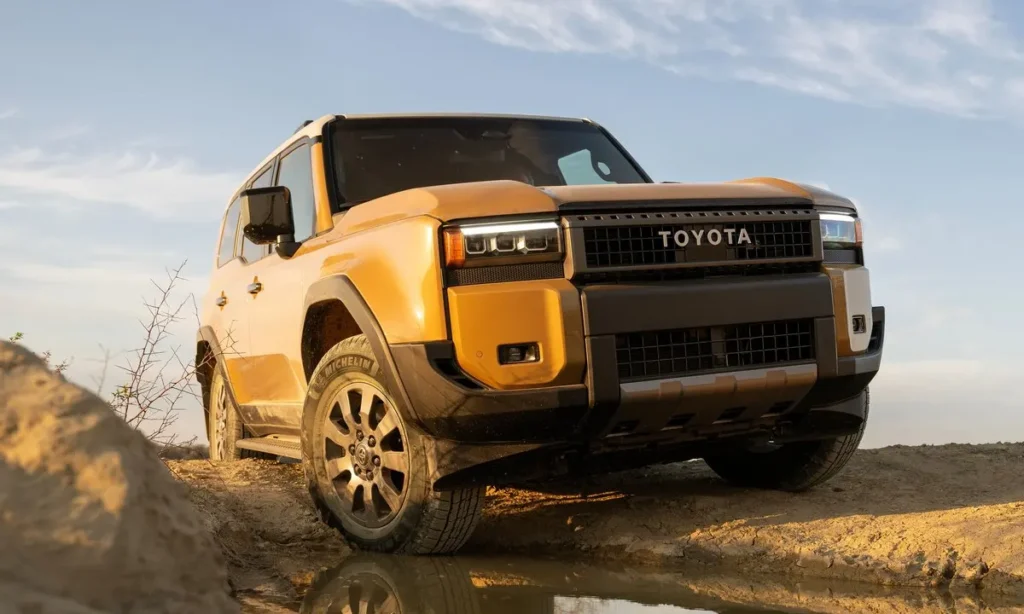
There are vehicles whose reputations are primarily products of marketing investment, and there are vehicles whose reputations are products of their documented performance in conditions that marketing investment cannot manufacture or sustain. The Toyota Land Cruiser is the second kind of vehicle. Its reputation as one of the most durable and most capable vehicles ever produced for human beings to operate in the world’s most hostile environments is not a luxury brand narrative constructed by an advertising agency. It is the accumulated testimony of United Nations aid agencies, military organisations, international expedition teams, Australian outback operators and African safari operators who have operated Land Cruisers in conditions where vehicle failure has consequences measured in human lives — and who return to the Land Cruiser generation after generation because no alternative has provided the same combination of mechanical resilience, parts availability in remote locations and long-term structural integrity.
In iSeeCars’ longevity data, the Land Cruiser demonstrates a potential lifespan of over 280,000 miles in average use conditions — a figure derived from the statistical analysis of actual vehicles rather than manufacturer claims or survey responses. Individual documented examples regularly exceed 400,000 miles, and in commercial fleet applications where maintenance discipline is highest and operating conditions are most demanding, Land Cruisers with 500,000 miles or more of continuous service have been documented across multiple continents. The specific engineering decisions that contribute to this record — solid front and rear axle options, transfer case architectures designed for sustained four-wheel-drive operation, body-on-frame construction that provides structural isolation between the chassis and body and simplifies individual component replacement — reflect an engineering brief that explicitly prioritises long-term durability over short-term comfort, fuel economy or technology sophistication.
Toyota Prius: Proving That Hybrid Complexity and Longevity Are Not Mutually Exclusive
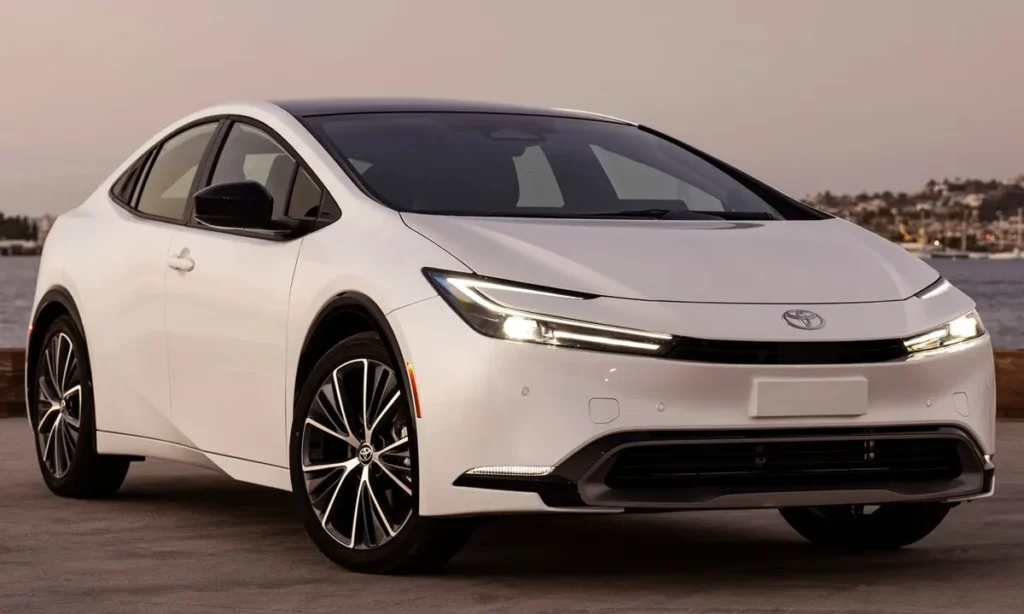
The Toyota Prius occupies a unique and historically important position in the Toyota longevity story because it dismantles, with the authority of documented evidence, one of the most persistent objections to hybrid vehicle ownership: the concern that the additional complexity of the hybrid drivetrain — the battery, the motor-generators, the power control unit, the regenerative braking integration — must inevitably introduce additional failure modes and reduce long-term reliability relative to a simpler conventional powertrain. The Prius’s longevity record, accumulated across nearly three decades of production and millions of examples in operation worldwide, proves that objection wrong with a completeness and a statistical robustness that no amount of theoretical engineering argument can override.
The 2025 iSeeCars data places the Prius among the top vehicles most likely to reach 250,000 miles, with a potential average lifespan exceeding 250,601 miles derived from the same 174-million-vehicle dataset that identifies the Sequoia at the top of the rankings. Individual documented examples substantially exceed this average: second-generation and fourth-generation Priuses with over 500,000 miles in verified operation have been reported across multiple markets, including well-publicised examples in North America that attracted media coverage precisely because the mileage accumulated had exceeded the expectations of even the most generous assessments of hybrid powertrain longevity. Consumer Reports placed the fifth-generation 2025 Prius in fourth position in its list of models most likely to reach 200,000 miles — an above-average reliability rating that reflects the current generation’s continuity with the proven engineering traditions of its predecessors.
The Prius’s battery longevity data is the element of the car’s reliability story that most directly addresses the most frequently asked question about hybrid ownership. Toyota’s hybrid battery warranty covers ten years or 150,000 miles — itself a statement of manufacturer confidence. But the real-world evidence from high-mileage Prius owners consistently shows that the nickel-metal hydride battery packs used in earlier generations, and the lithium-ion packs used in the current fifth generation, routinely outlast their warranty periods by significant margins when the car is operated within its normal intended use parameters. First-generation Prius batteries from the early 2000s have been documented still performing within acceptable parameters at 20 or more years of age in low-mileage applications, providing a real-world durability baseline that the engineering community regards as compelling evidence of the hybrid system’s long-term integrity.
The Myth, the Reality and the Verdict
The question this article set out to answer — whether the idea that these five Toyota vehicles last forever is myth or reality — can now be answered with the directness the data supports. Forever is a word that applies to very few things in engineering, and Toyota vehicles are not immortal machines. They require maintenance, they accumulate wear, and their components eventually reach the end of service life regardless of how conservatively they were designed and how carefully they were maintained. The specific claim of forever is, in its most literal interpretation, a myth.
But the broader claim that these five Toyota vehicles — the Sequoia, Corolla, Tacoma, Land Cruiser and Prius — last dramatically, demonstrably and statistically significantly longer than almost every comparable vehicle from any rival manufacturer is not a myth. It is validated by the iSeeCars analysis of 174 million vehicles, by Consumer Reports’ survey of hundreds of thousands of owners, by J.D. Power’s 162 problems per 100 vehicles figure, by the 39.1 percent Sequoia probability and the 1.6 million-mile Tacoma and the 500,000-mile Prius. The reality is that these vehicles provide a longevity that, when measured against the 4.8 percent industry average probability of reaching 250,000 miles, makes the word forever feel like the closest approximation available to the statistical truth.
Read: 2026 Toyota Highlander: The Next Generation of Family SUV Innovation and Hybrid Efficiency
5 Toyota Cars That Last Forever — Longevity Data Chart
| Model | iSeeCars 250K Mile Probability | Industry Average | Documented Max Mileage | Consumer Reports Rating (2025) | Average Annual Repair Cost | 5-Year Resale Value |
| Toyota Sequoia | 39.1% — No. 1 Overall | 4.8% | 296,509 miles (Average Max) | Above Average | ~$441 (Brand Avg) | ~68% |
| Toyota Tacoma | Above Average (Top 7 CR List) | 4.8% | 1.6 Million Miles (Documented) | Well Above Average | ~$441 (Brand Avg) | Highest in Midsize Trucks |
| Toyota Land Cruiser | 280,236+ Miles (Average Max) | 4.8% | 400,000–500,000+ (Commercial Use) | Above Average | ~$441 (Brand Avg) | Among Highest of Any Vehicle |
| Toyota Corolla | Top 8 of 12 in CR Longest-Lasting | 4.8% | 500,000+ (Documented Multiple Cases) | Above Average | ~$441 (Brand Avg) | Strong Compact Segment Leader |
| Toyota Prius | 250,601+ Miles (Average Max) | 4.8% | 500,000+ (Documented Multiple Cases) | 4th — CR Longest-Lasting 2025 | ~$441 (Brand Avg) | Above-Average Hybrid Segment |
| Toyota Tundra | 36.6% — Highest Among All Trucks | 4.8% | 256,022+ (Average Max) | Above Average | ~$441 (Brand Avg) | Strong Full-Size Truck Segment |
| Industry Average Vehicle | 4.8% | 4.8% | — | — | ~$936 Per Year | ~50% After 5 Years |
| Toyota Brand — iSeeCars 2025 Top 25 | 10 of Top 25 Positions | — | — | — | — | — |
| iSeeCars Study Sample Size | 174 Million+ Vehicles Analysed | — | — | — | — | — |
| J.D. Power Dependability (2025) | 162 Problems Per 100 Vehicles | 202 Industry Average | — | — | — | — |
| Toyota 10-Year Repair Savings vs Average | ~$2,786 Less Than Industry | — | — | — | — | — |
| Average Toyota Vehicle Lifespan | 200,000–300,000+ Miles (Maintained) | ~150,000 miles (Industry) | — | — | — | — |