Electric vs Hybrid vs Gas Car Complete Comparison Every Buyer Needs In 2026
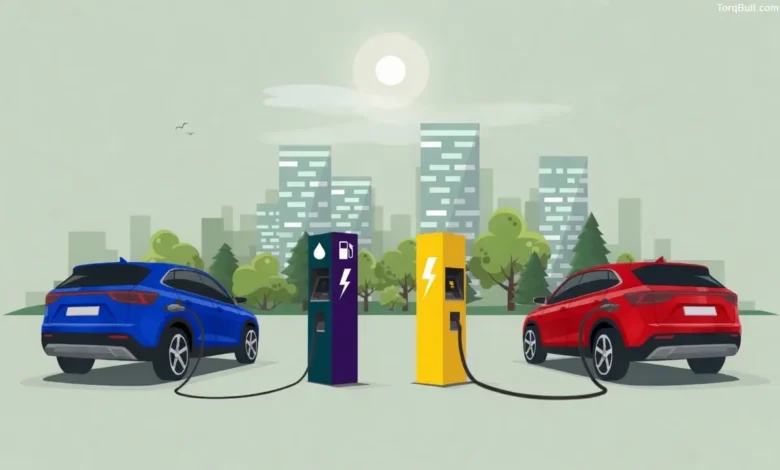
- Annual fuel cost: EV ~$550, Hybrid ~$965, Gas ~$1,320
- Lower running costs for EVs vs hybrids and ICE cars
- Higher upfront price for EVs affects total ownership
- Insurance, depreciation and charging access impact costs
- True cost depends on usage, location and ownership profile
Electric vs Hybrid vs Gas Car: The question of whether to buy an electric vehicle, a hybrid or a conventional gasoline car is one that millions of American buyers will face in 2026 — and it is a question that attracts more confident but incomplete answers than almost any other in the automotive market. EV advocates cite lower running costs and ignore higher purchase prices. Gas car proponents cite lower sticker prices and ignore multi-year fuel cost accumulation. Hybrid enthusiasts claim the middle ground without always acknowledging that the middle ground is genuinely the most complicated financial proposition of the three. This article cuts through all of it. Every category — purchase price, fuel cost, maintenance, insurance, depreciation and total five-year ownership — is examined with specific numbers from the most current authoritative sources, and the conclusion is honestly context-dependent: each powertrain wins for a specific buyer profile, and identifying your profile is the most important decision in the entire comparison.
How Each Powertrain Works: The Foundation of Every Cost Difference
Understanding why the three powertrains produce different ownership costs requires a brief explanation of how each functions mechanically.
A gasoline car uses an internal combustion engine as its sole power source, driving the wheels through a transmission. Every mile requires burning petrol. The engine contains hundreds of moving components — pistons, valves, camshafts, timing chains, an exhaust system and a catalytic converter — each subject to wear and requiring periodic service. Oil must be changed at regular intervals because combustion contaminates it. Spark plugs fire thousands of times per mile and wear out. The complexity of this system is directly proportional to its maintenance cost.
A hybrid car combines a gasoline engine with one or more electric motors and a battery pack. The electric motor assists the engine during acceleration and powers the car at low speeds, reducing how much work the engine must do and therefore how rapidly it wears. Regenerative braking recovers energy that gasoline cars dissipate as heat, extending brake pad life two to three times longer than conventional friction braking. The battery in a standard non-plug-in hybrid charges itself through the engine and regenerative braking — no external charging is ever required.
A battery electric vehicle eliminates the internal combustion engine entirely, replacing it with one or more electric motors powered by a large battery pack charged from an external source. No oil changes. No spark plugs. No exhaust system. No timing belt. The drivetrain contains a small fraction of the moving parts in a gasoline engine, producing maintenance costs that are structurally lower than any alternative and fuel costs per mile that are significantly below both gasoline and hybrid options when charged at home.
Purchase Price: Where Gas Cars Win on Day One
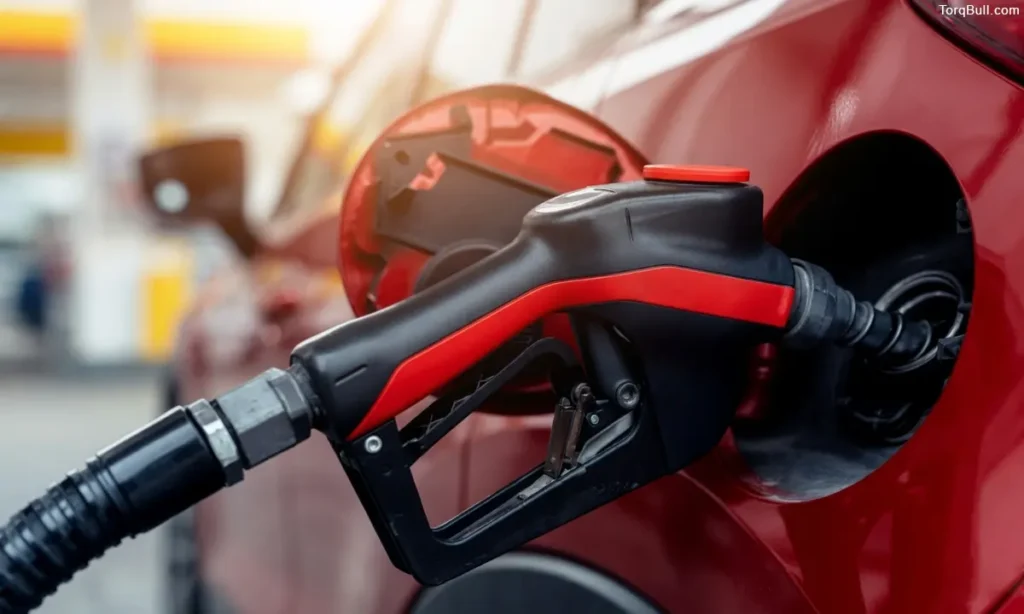
The gasoline car’s most compelling financial advantage is the simplest one: it costs less to buy. The average transaction price of a new conventional gasoline car in the American market is approximately $49,740 according to Cox Automotive’s 2026 market data. The average new hybrid carries a premium of approximately $2,000 to $5,000 over a comparable gasoline model — though this premium is shrinking as hybrid systems become more commoditised across major manufacturers. The average new electric vehicle sits at approximately $55,300, representing an $5,560 premium over the average gasoline equivalent before any federal incentives are applied.
Federal tax incentives significantly reshape this comparison for qualifying buyers. The Clean Vehicle Tax Credit of up to $7,500 — applicable at the point of sale as a direct price reduction at the dealership for qualifying new EVs — narrows the effective purchase price gap substantially. However, the eligibility requirements in 2026 include MSRP caps of $55,000 for cars and $80,000 for SUVs and trucks, domestic battery component requirements and buyer income limits, meaning not every buyer and not every EV qualifies. For buyers whose vehicle and income qualify for the full credit, the EV’s effective purchase price falls to within $1,000 to $2,000 of a comparable gasoline model — transforming the purchase price category from a clear gas victory to a near-tie.
Fuel and Energy Cost: The Electric Car’s Structural Advantage
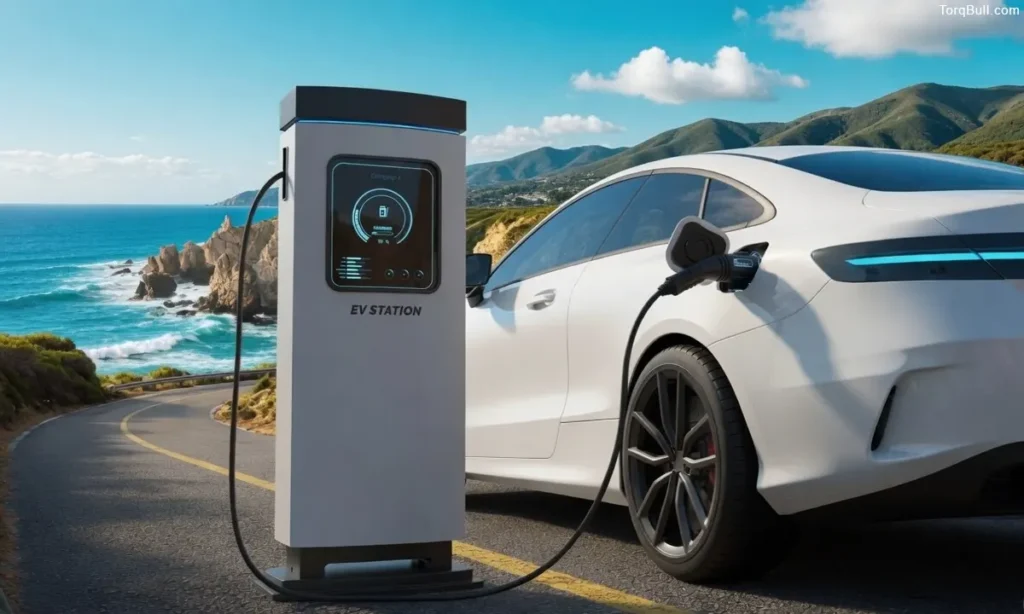
The energy cost per mile of an electric vehicle charged at home is the most consistent competitive advantage EVs hold across all use cases and all ownership durations, and the data supporting it is unambiguous. At the national average residential electricity rate of approximately $0.15 to $0.16 per kilowatt-hour and an EV efficiency of approximately 3.5 miles per kilowatt-hour, the cost of home-charging an EV is approximately 4.5 to 5 cents per mile. At the national average gasoline price of $3.32 to $3.50 per gallon and a fuel economy of 30 miles per gallon for a comparable gasoline car, the fuel cost is approximately 11 to 12 cents per mile — more than double the EV’s home-charging cost.
Across 11,000 miles annually — the average American’s driving distance — this produces annual energy costs of approximately $550 for a home-charging EV, $965 for a Toyota Prius Hybrid (at 54 MPG), and $1,320 for a gasoline car averaging 26 MPG combined. Over five years, the EV’s fuel cost advantage over the gasoline car accumulates to approximately $3,850 at 11,000 miles annually — and scales upward in direct proportion to annual mileage.
The critical caveat is public charging. Public DC fast charging at $0.40 to $0.56 per kilowatt-hour eliminates most of the EV’s fuel cost advantage over a 30 MPG gasoline car. For buyers without access to home or workplace charging, the EV’s energy cost advantage narrows substantially — which is the most important single factor in determining whether an EV makes financial sense for a specific buyer’s situation.
Read: Real Cost of Owning an Electric Car for 5 Years
Maintenance: The Category EVs Win Most Convincingly
Electric vehicle maintenance costs are structurally and consistently lower than both gasoline and hybrid equivalents, and the advantage compounds across every year of ownership. AAA’s 2025 Your Driving Costs study places EVs as the second-lowest maintenance cost category of all vehicle types — with hybrids ranking first due to both reduced engine load and regenerative braking benefits. The Department of Energy estimates EV maintenance at approximately $0.06 per mile compared to $0.10 per mile for gasoline vehicles — a 40 percent reduction that translates to approximately $550 in annual savings at 11,000 miles.
Over a five-year ownership period, the EV maintenance advantage produces cumulative savings of approximately $2,750 to $7,000 compared to a gasoline vehicle depending on the specific models compared and the services required. Hybrid vehicles achieve maintenance costs approximately 20 to 30 percent below equivalent gasoline vehicles through brake longevity and reduced engine wear, without achieving the full savings available from an EV’s complete absence of engine-related service requirements.
The single maintenance wildcard that exists for EVs beyond gasoline’s advantage is battery replacement. If an EV’s battery pack requires replacement beyond its federal eight-year, 100,000-mile warranty minimum, the cost — ranging from $5,000 to $20,000 or more depending on vehicle — represents a significant expense that gasoline and hybrid owners do not face. Real-world data from high-mileage EV fleets indicates that battery replacement rates within typical ownership periods are low, but the financial exposure is real and should factor into long-term ownership planning.
Insurance and Depreciation: Where Gas Cars Regain Ground
Electric vehicles typically cost 15 to 25 percent more to insure than equivalent gasoline vehicles, reflecting higher repair costs for specialised components, higher vehicle purchase prices and limited repair network coverage in some markets. At an average full-coverage insurance cost of approximately $3,613 per year for EVs compared to approximately $2,356 for the broader vehicle market, the insurance premium differential adds approximately $1,250 or more over a five-year ownership period compared to an equivalent gasoline vehicle.
Depreciation is the largest single cost of vehicle ownership and the category that most consistently disadvantages EVs in total cost of ownership analyses. EVs depreciate at approximately 55 to 60 percent over five years — significantly faster than gasoline vehicles at 45 to 50 percent — driven by rapid technology improvement making older EV models appear dated and consumer uncertainty about long-term battery health. On a $55,000 EV, a 5 percentage point additional depreciation rate represents approximately $2,750 in additional value lost compared to an equivalent gasoline vehicle, partially offsetting the fuel and maintenance savings accumulated across the same period.
Read: EV Battery Swapping vs Fast Charging: Which Technology Will Power the Future of Electric Vehicles?
Electric vs Hybrid vs Gas — Complete Cost Comparison Chart
| Cost Category | Electric Vehicle | Hybrid Car | Gasoline Car |
| Average New Car Price | ~$55,300 | ~$32,000–$45,000 | ~$49,740 |
| Federal Tax Credit | Up to $7,500 (if qualifying) | None (standard) | None |
| Annual Fuel/Energy Cost (11K mi) | ~$550 (home charging) | ~$965 (54 MPG hybrid) | ~$1,320 (26 MPG) |
| Annual Maintenance Cost | ~$150–$400 | ~$400–$700 | ~$900–$1,800 |
| 5-Year Maintenance Saving vs Gas | $2,750–$7,000 | $1,250–$2,800 | Baseline |
| Annual Insurance Premium | ~$3,613 | ~$2,500–$3,000 | ~$2,356 |
| 5-Year Depreciation Rate | 55–60% | 45–55% | 45–50% |
| Charging Infrastructure Needed | Yes — home charger ideal | No | No |
| Oil Changes Required | Never | Reduced intervals | Every 5,000–10,000 mi |
| Brake Service Interval | 2–3× longer (regen braking) | 2× longer (regen braking) | Standard |
| Cold Weather Range Impact | Moderate (10–30% reduction) | Minimal | None |
| Long-Distance Road Trip Ease | Planning required | Identical to gas | Maximum flexibility |
| Best For (Primary Use Case) | High-mileage home chargers | All-purpose, no charging needed | Low mileage, tight budget upfront |
The Five-Year Ownership Verdict by Driver Profile
The total five-year ownership calculation — combining purchase price, fuel, maintenance, insurance and depreciation — produces three distinct outcomes depending on which buyer profile is being evaluated.
The high-mileage home charger who drives 15,000 or more miles annually, qualifies for the federal tax credit and charges primarily at home will find the EV costs approximately $4,000 to $11,000 less over five years than a comparable gasoline car, despite a higher initial purchase price. Fuel savings of $770 or more per year at this mileage, maintenance savings of $500 to $1,400 annually and the credit’s effective purchase price reduction combine to overcome the depreciation and insurance disadvantage.
The moderate-mileage driver without reliable home charging — apartment dwellers, urban renters and buyers in markets with limited public charging infrastructure — will typically find the hybrid the most financially sound choice. No charging infrastructure is required, fuel savings of 30 to 50 percent versus a gasoline car accumulate meaningfully over five years, maintenance costs are lower than gasoline without requiring any behaviour change, and the purchase premium over a gasoline equivalent is typically $2,000 to $4,000 rather than the $5,000 to $6,000 gap for many EVs.
The low-mileage buyer who drives fewer than 8,000 miles annually and plans a shorter ownership period will typically find the conventional gasoline car the most financially defensible choice — lower purchase price, lower insurance, better depreciation and fuel savings that never accumulate sufficiently to recover the EV or hybrid premium. At 8,000 miles per year, the EV’s annual fuel saving over a gasoline car is approximately $560 — a figure that cannot overcome a $5,000 purchase price premium, higher insurance and steeper depreciation within five years.
The honest summary is that neither powertrain wins universally. The EV wins for high-mileage drivers with home charging and long ownership horizons. The hybrid wins for the largest category of American drivers — those who want meaningful fuel savings without the infrastructure dependency or the depreciation risk that an EV introduces. The gasoline car wins for buyers who prioritise the lowest upfront cost, the greatest road-trip flexibility and the most predictable total ownership cost across a short to medium ownership period.