Hybrid Battery Replacement Cost In 2026. The Cost Nobody Mentions at the Showroom
- Real-world battery replacement costs from Toyota, Honda and Ford owners
- Warranty coverage determining out-of-pocket expenses
- Refurbished and remanufactured battery options lowering costs
- When hybrid battery replacement becomes necessary
- Actual ownership costs of hybrid batteries in 2026
The hybrid vehicle purchase decision is made with reference to fuel economy figures, purchase price comparisons and the running cost projections that the manufacturer’s marketing materials present in the most favourable available light. The battery replacement cost — whose eventual arrival in the ownership timeline is as predictable as tyre wear but whose financial magnitude is considerably more significant — receives considerably less prominent treatment in the pre-purchase information environment despite representing the single largest unscheduled maintenance cost that hybrid ownership involves across a realistic ten to fifteen-year ownership period.
The honest guide to hybrid battery replacement cost in 2026 requires examining four dimensions that the simple per-unit cost figure cannot capture alone — the warranty coverage whose duration and terms determine whether the replacement cost is the manufacturer’s or the owner’s financial responsibility, the degradation timeline whose real-world evidence across the accumulated high-mileage hybrid fleet provides the cost planning information that purchase-decision-stage buyers deserve, the replacement market’s evolution whose refurbished and remanufactured battery options have transformed the economics that dealer-only replacement previously imposed and the specific cost figures across the hybrid models whose market presence makes their replacement economics most commercially significant.
Warranty Coverage: When the Manufacturer Pays
The hybrid battery warranty is the financial boundary that determines whether the replacement cost discussion is theoretical or immediately practical for any specific owner — and whose terms vary between manufacturers, markets and model years with sufficient complexity that the simple “8 years or 100,000 miles” summary that headline comparisons use conceals meaningful differences in what the warranty actually covers.
In the United States market, federal emissions warranty requirements mandate that hybrid and plug-in hybrid battery packs are covered for a minimum of 8 years or 100,000 miles — a baseline that California and states following California’s emissions standards extend to 10 years or 150,000 miles for vehicles sold in those markets. This federal minimum applies to the battery pack’s capacity degradation below a specified threshold — typically 70 percent of original capacity — as well as outright failure, meaning that a battery retaining 75 percent capacity after 9 years technically falls outside the warranty’s degradation coverage despite delivering meaningfully reduced range relative to the vehicle’s original specification.
Toyota’s hybrid battery warranty — whose terms have remained among the industry’s most generous — provides 10 years or 150,000 miles of coverage in California-emissions states and 8 years or 100,000 miles in federal-emissions states, with coverage extending to the battery’s capacity declining below 70 percent of original specification. The practical consequence of this warranty structure for Toyota hybrid owners is that the majority of battery-related issues arising within the typical first ownership period fall within the warranty’s financial protection — contributing directly to the Toyota hybrid’s total cost of ownership advantage over non-hybrid alternatives whose fuel savings the warranty protection amplifies by removing the replacement cost risk.
Honda’s Accord Hybrid and CR-V Hybrid battery warranty matches the federal and California-emissions state standards, as does Ford’s coverage across the Escape Hybrid and Maverick Hybrid lineup. Hyundai and Kia’s lifetime battery warranty — available to the original owner of Ioniq 5, Ioniq 6 and EV6 vehicles — represents the most generous coverage available for plug-in vehicles and establishes the warranty benchmark that encourages competitor review.
Real-World Replacement Costs: Dealer vs Independent
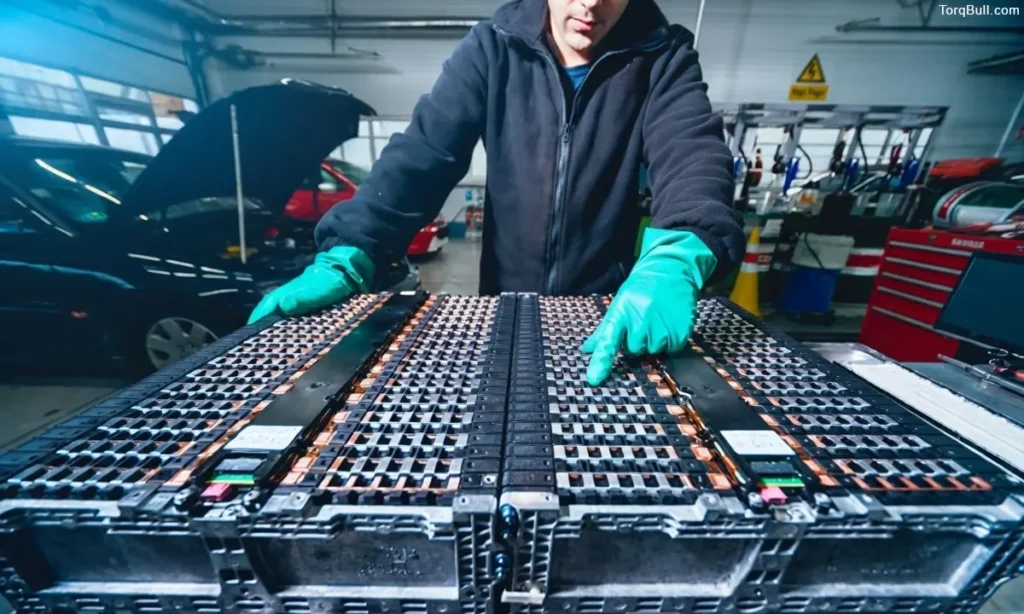
The dealer-quoted hybrid battery replacement cost — whose figure represents the manufacturer’s OEM battery pack combined with the labour for removal, installation and the system recalibration that replacement requires — establishes the replacement cost ceiling that the independent service market and the refurbished battery market both undercut with meaningful margin across most hybrid platforms.
Toyota Prius battery replacement at an authorised Toyota dealer — the most frequently quoted hybrid replacement cost benchmark given the Prius’s market presence and ownership longevity — ranges from $2,500 to $4,500 depending on the model year, the specific battery configuration and the regional labour rate that the dealer’s location imposes. The most recent Prius generations’ more capable battery packs command the higher end of this range, while older generation Prius battery replacements benefit from the supply and refurbishment volume that fifteen-plus years of market presence has enabled.
Toyota Camry Hybrid and RAV4 Hybrid battery replacement at dealer rates ranges from $3,500 to $6,000 — reflecting the larger battery capacity that the SUV and mid-size sedan applications require relative to the compact Prius and the proportionally higher cost of the larger pack’s manufacture and the additional labour that the larger vehicle’s battery access requires.
Honda Accord Hybrid and CR-V Hybrid battery replacement at Honda dealer rates ranges from $3,000 to $5,500 — broadly comparable to the Toyota equivalents at similar vehicle size and battery capacity levels, reflecting the similar manufacturing cost basis that the two manufacturers’ competing hybrid systems share despite their architectural differences.
Ford Escape Hybrid and Maverick Hybrid battery replacement represents the American manufacturer hybrid comparison point — with dealer-quoted replacement costs ranging from $3,000 to $5,000 that are broadly consistent with the Japanese hybrid equivalents and that reflect the competitive battery supply relationships that the Ford hybrid program’s Toyota technology licensing origins historically established.
The Refurbished Battery Market: Transforming the Economics
The most significant development in hybrid battery replacement economics across the past five years is the maturation of the refurbished and remanufactured battery market — whose existence transforms the replacement decision from a dealer-only expense into a competitive market transaction whose price competition has reduced effective replacement costs by 40 to 60 percent relative to the OEM dealer alternative.
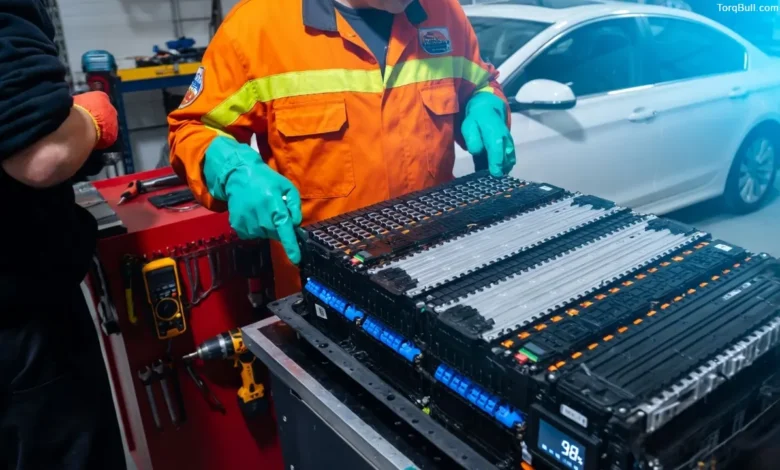
Refurbished hybrid batteries — whose production involves disassembling the original pack, testing individual cell modules to identify degraded units, replacing failed or low-capacity modules with matched used cells from salvaged hybrid packs and reassembling the pack to restored capacity specification — are available for the Toyota Prius at $1,200 to $2,000 installed through the independent hybrid specialist network whose geographic coverage in the United States has expanded proportionally with the Prius’s ownership population and the economic opportunity that the OEM dealer’s high replacement cost creates.
The refurbished battery market’s warranty offering — whose 1 to 3-year coverage on refurbished packs provides meaningful financial protection against the failure that the cell-level restoration process’s quality variation creates as a risk above the OEM pack’s equivalent — provides the confidence that the cost saving requires to constitute a genuinely attractive alternative rather than merely a cheaper option whose reliability uncertainty offsets the financial benefit.
Remanufactured batteries — whose production involves completely disassembling the original pack, replacing all cells with new aftermarket cells whose specification matches or exceeds the OEM original and reassembling with new thermal management components — represent the highest-quality independent alternative whose cost of $2,000 to $3,500 installed provides a middle ground between the OEM dealer’s premium and the refurbished alternative’s lower cost with improved longevity confidence.
Read: Hybrid vs Plug-In Hybrid: Everything You Need to Know Before You Buy
When Does Hybrid Battery Replacement Become Necessary?
The degradation timeline that determines when hybrid battery replacement becomes functionally necessary rather than merely economically advisable varies between platforms, operating climates and the thermal management quality that each manufacturer’s system provides across the ownership period.
Toyota’s nickel-metal hydride batteries in the first and second generation Prius — whose chemistry demonstrates superior longevity relative to the lithium-ion alternatives in high-temperature climates — have produced documented examples exceeding 300,000 miles on original packs with capacity retention that owners report as adequate for continued normal driving. The NiMH chemistry’s tolerance for the partial-state-of-charge operation that Toyota’s hybrid management system employs — never fully charging or deeply discharging the pack, maintaining the mid-range operation that maximises cycle life — has proven more durable in real-world ownership than the original pessimistic projections suggested.
Toyota’s newer lithium-ion hybrid batteries and Honda’s equivalent lithium-ion packs demonstrate strong capacity retention through 150,000 miles under normal operating conditions — with the thermal management active systems that recent hybrid platforms integrate providing the temperature management that the chemistry requires for extended cycle life.
The practical replacement necessity threshold for most hybrid owners occurs when the battery’s capacity degradation produces the fuel economy reduction and the hybrid system warning indicators that make continued operation either economically disadvantageous or mechanically unreliable — typically at 150,000 to 200,000 miles on well-maintained vehicles in moderate climates.
Read: Charge While You Drive! Wireless EV Charging Roads – How It Works?
Hybrid Battery Replacement Cost — 2026 Guide
| Vehicle | OEM Dealer Cost | Refurbished Cost | Remanufactured Cost | Warranty (Federal / CA) |
| Toyota Prius (Gen 3/4) | $2,500–$4,500 | $1,200–$2,000 | $2,000–$3,000 | 8yr/100K / 10yr/150K |
| Toyota Camry Hybrid | $3,500–$5,500 | $2,000–$3,000 | $2,500–$3,500 | 8yr/100K / 10yr/150K |
| Toyota RAV4 Hybrid | $4,000–$6,000 | $2,500–$3,500 | $3,000–$4,500 | 8yr/100K / 10yr/150K |
| Honda Accord Hybrid | $3,000–$5,500 | $1,800–$2,800 | $2,500–$3,500 | 8yr/100K / 10yr/150K |
| Honda CR-V Hybrid | $3,500–$5,500 | $2,000–$3,000 | $2,500–$3,800 | 8yr/100K / 10yr/150K |
| Ford Escape Hybrid | $3,000–$5,000 | $1,800–$2,800 | $2,200–$3,200 | 8yr/100K / 10yr/150K |
| Ford Maverick Hybrid | $3,500–$5,500 | $2,000–$3,000 | $2,500–$3,500 | 8yr/100K / 10yr/150K |
| Hyundai Ioniq Hybrid | $3,000–$5,000 | $1,800–$2,800 | $2,200–$3,200 | 10yr/100K (Original Owner) |