Solid-State Battery vs Lithium-Ion: When Should You Wait to Buy a Car?
- Solid-state batteries promise 500+ mile range and faster charging
- Expected first premium models around 2027–2028
- Mass-market adoption likely closer to 2030
- Current lithium-ion EVs already highly capable
- Decision depends on budget, urgency and tech expectations
Solid-State Battery vs Lithium-Ion: The question of whether to buy an electric vehicle now or wait for solid-state battery technology is one of the most frequently debated topics in automotive media in 2026 — and it deserves a more precise answer than the vague “the technology is coming soon” that dominates most coverage. Solid-state batteries are genuinely transformative technology that will change the EV ownership experience in ways that matter to real drivers. But “coming soon” is doing significant work in most articles, obscuring a timeline that places true mass-market solid-state vehicles firmly in the 2030 to 2032 window at the earliest. The buyer deciding whether to purchase a Tesla Model 3, Hyundai Ioniq 6 or Toyota bZ4X today is not choosing between today’s lithium-ion and tomorrow’s solid-state technology — they are choosing between today’s lithium-ion and a future that is four to six years away from mainstream availability, at prices that will initially be 10 to 20 percent higher than equivalent lithium-ion vehicles. This guide provides the complete technical comparison, the honest production timeline and the specific decision framework that turns the abstract question into a concrete answer for each buyer scenario.
What Solid-State Batteries Actually Are and Why They Matter
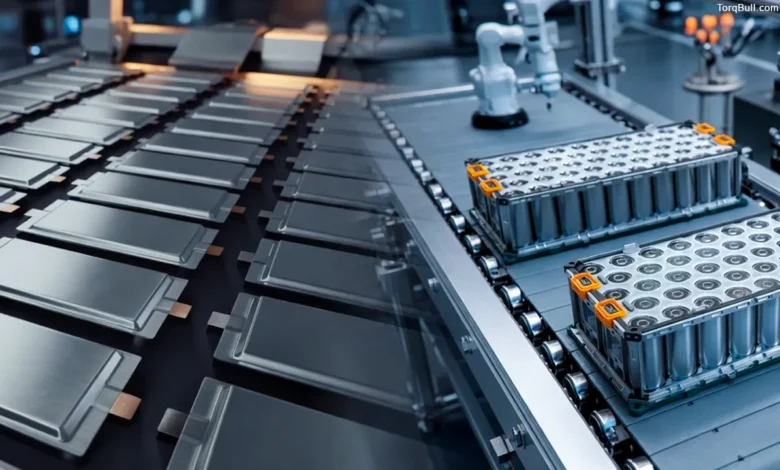
The distinction between solid-state and lithium-ion batteries is fundamentally about one component: the electrolyte. In a conventional lithium-ion battery — the technology that currently powers every mainstream EV from the Tesla Model 3 to the Chevrolet Bolt — the electrolyte is a liquid solution of lithium salt dissolved in an organic solvent. This liquid facilitates the movement of lithium ions between the positive cathode and the negative anode during charge and discharge cycles, enabling the storage and release of electrical energy.
The liquid electrolyte is simultaneously essential to the battery’s function and responsible for its primary limitations. It is flammable — the organic solvent can ignite at temperatures above approximately 90 degrees Celsius, creating the thermal runaway risk that has produced the EV battery fires that receive significant media attention. It degrades over time as the liquid interacts chemically with the electrodes. It limits the use of lithium metal anodes — which would dramatically increase energy density — because lithium metal reacts violently with liquid electrolytes and forms dangerous metallic whiskers called dendrites that can pierce separators and cause short circuits.
A solid-state battery replaces the liquid electrolyte with a solid material — typically a ceramic oxide, a sulfide compound or a polymer. The solid electrolyte is non-flammable, with thermal runaway events in solid-state systems beginning at approximately 247 degrees Celsius versus 90 degrees Celsius for conventional lithium-ion. It enables the use of lithium metal anodes, which roughly double the energy density achievable with graphite anodes. And it eliminates the electrolyte degradation that progressively reduces lithium-ion battery capacity over years of cycling.
The theoretical performance advantage is substantial. Today’s best lithium-ion batteries achieve 200 to 300 watt-hours per kilogram of energy density. Solid-state batteries are targeting 400 to 500 watt-hours per kilogram commercially by the end of the decade, with some research demonstrating 500 to 600 watt-hours per kilogram in laboratory conditions. Applied to a vehicle, this energy density advantage translates to either significantly longer range from the same battery weight, or equivalent range from a significantly lighter and smaller battery pack. Toyota’s planned solid-state EV — its most ambitious generation — is projected to deliver approximately 1,000 kilometres of range with 10-minute charging from 10 to 80 percent state of charge, against the 800-kilometre range of its planned 2026 lithium-ion Performance battery.
The Honest Solid-State Production Timeline: What Is Actually Happening
The gap between the technology’s theoretical promise and its commercial availability is where most popular coverage fails buyers. The timeline below represents the most accurate synthesis of confirmed manufacturer announcements and independent industry analysis as of April 2026.
2025 to 2026 — Pilot Production and Semi-Solid Demonstration Vehicles
Several manufacturers and battery suppliers have reached pilot production of semi-solid-state cells — designs that use a reduced quantity of liquid electrolyte alongside solid components rather than fully eliminating liquid. ProLogium unveiled a 100 kilowatt-hour semi-solid pack at IAA Mobility 2025 capable of charging from 10 to 80 percent in six and a half minutes, with cells delivering 260 watt-hours per kilogram — better than the best lithium-ion but below solid-state’s theoretical ceiling. BYD announced commercial production of a semi-solid battery for 2026, targeting over 620 miles of range. China is establishing a national solid-state battery standard targeted for July 2026 to define performance and safety requirements for commercial deployment.
Recharged’s analysis of the industry characterises this phase accurately: Chinese manufacturers and cell suppliers are in “sprint stage” for semi-solid technology, with some demonstration vehicles appearing in 2026 for specific high-end models. These are not mass-market vehicles. They are technology demonstration platforms and limited-production premium products at prices that reflect the current cost of solid-state cells — estimated at $400 to $800 per kilowatt-hour in 2026, against approximately $115 per kilowatt-hour for advanced lithium-ion.
2027 to 2028 — First True Solid-State Production Vehicles in Premium Segment
Toyota has the most concrete and most scrutinised solid-state production timeline. Its first solid-state battery vehicle is confirmed for 2027 to 2028 deployment — a small-batch, premium-segment model providing approximately 20 percent more range than its 2026 lithium-ion Performance battery, with 10-minute charging capability. QuantumScape has confirmed its near-production B-sample solid-state lithium-metal cells will be ready by the end of 2027 for validation testing, on a roadmap toward commercial volume supply to Volkswagen through PowerCo near the end of the decade. Samsung SDI has demonstrated solid-state cells at 500 watt-hours per kilogram energy density and 900 watt-hours per litre volumetric density.
Stellantis and Massachusetts-based Factorial have validated semi-solid-state cells at 375 watt-hours per kilogram energy density, claiming 15-to-90 percent charging in 18 minutes. Stellantis plans fleet demonstration testing on Charger Daytona EV platforms. Volkswagen’s Rimac Technology and ProLogium plan performance hybrid applications from approximately 2028, with a ProLogium gigafactory in Dunkirk, France targeted for 2028 opening.
2030 and Beyond — Mass-Market Availability
Recharged’s definitive conclusion from its solid-state timeline analysis is the most useful for buying decisions: solid-state cells are moving into a handful of expensive, low-volume EVs around 2027 to 2028, with meaningful mass-market adoption around 2030 and beyond. Toyota vows solid-state EVs by 2028 and BYD by 2030. Industry projections suggest solid-state could account for up to 40 percent of all EV batteries produced worldwide by 2030 — but 40 percent does not mean the average consumer will have easy access to an affordable solid-state vehicle in 2030. It means that solid-state will be a meaningful presence in premium and performance segments while lithium-ion continues to dominate mainstream markets.
Solid-state battery costs are projected to fall from $400 to $800 per kilowatt-hour in 2026 to $150 to $200 per kilowatt-hour by 2030 and potentially to $80 to $100 per kilowatt-hour by 2035 — at which point they become cost-competitive with advanced lithium-ion. That $80 to $100 per kilowatt-hour figure in 2035 is when solid-state technology becomes the rational choice for the mainstream market buyer. For the 2026 to 2029 window, the technology will remain a premium product at premium prices.
Read: Charge While You Drive! Wireless EV Charging Roads – How It Works?
Solid-State vs Lithium-Ion: Technical Comparison Chart
| Feature | Current Lithium-Ion (2026) | Semi-Solid (2026–2028) | Full Solid-State (2028–2030+) |
| Energy Density | 200–300 Wh/kg | 260–375 Wh/kg | 400–500 Wh/kg |
| Typical Range (mainstream) | 250–380 miles EPA | 400–500 miles est. | 500–700+ miles est. |
| Charge Time (10–80%) | 18–45 minutes (DC fast) | 10–18 minutes | 10–15 minutes |
| Battery Cost Per kWh | ~$115/kWh | ~$250–400/kWh | ~$400–800/kWh (2026) |
| Thermal Runaway Threshold | ~90°C | ~150°C est. | ~247°C |
| Cycle Life | 500–2,000 cycles | 1,000–3,000 est. | 2,000–10,000 cycles |
| Commercial Vehicle Availability | All mainstream EVs now | Limited premium 2026–2028 | Small-batch premium 2027–2028 |
| Mass Market Availability | Available now | 2028–2030 est. | 2030–2032 est. |
| Vehicle Price Premium | Baseline | +10–20% est. | +15–25% initially |
The Manufacturing Challenges That Explain Why Waiting Is Risky
The solid-state battery’s technical promise is not disputed — the challenge that has prevented earlier commercialisation is manufacturing, and it deserves honest explanation because it is the primary reason the technology’s timeline keeps extending.
Producing solid electrolyte materials at the quality consistency required for automotive battery cells — where any microscopic defect in the electrolyte layer can cause a short circuit — at the volume required for high-volume vehicle production is an engineering challenge that has defeated multiple well-funded companies’ earlier timelines. The solid-solid interface between the electrolyte and the electrode materials creates internal resistance challenges that liquid electrolytes automatically resolve by wetting all available surfaces. Dendrite formation — metallic lithium whiskers that can penetrate even solid electrolytes under certain conditions — remains an active research problem even for the leading developers closest to production.
The industry collectively refers to this challenge as “production hell” — a reference to the well-documented difficulties Tesla experienced scaling Model 3 production in 2017 to 2018 and to the earlier difficulties the lithium-ion battery industry experienced scaling from laptop batteries to EV-scale production. Every technology goes through this phase. Solid-state’s version is underway now, and it is the reason that every manufacturer’s timeline estimate should be treated with healthy scepticism and a 12 to 24-month buffer.
Read: Hybrid Battery Replacement Cost In 2026. The Cost Nobody Mentions at the Showroom
When Should You Wait? The Buyer Decision Framework
The decision to wait for solid-state technology or buy a current lithium-ion EV comes down to three specific variables: the buyer’s timeline, their driving requirements and their price sensitivity.
Buyers who should buy now: Anyone who needs a vehicle in 2026 or 2027, whose annual mileage and daily driving patterns are well-served by the 250 to 380 miles of EPA range that current lithium-ion EVs deliver, and who values the proven 8-year battery warranty that all current American market EVs carry. A Tesla Model 3 Long Range purchased today will retain excellent capability through 2031 to 2032 — a period during which solid-state technology will be entering premium markets at premium prices without threatening the ownership value of a well-maintained current-generation lithium-ion EV. The 2026 lithium-ion EV is not a compromise technology — it is an excellent product that will continue to improve through over-the-air software updates and whose battery degradation has proven slower than early industry assumptions.
Buyers who should consider waiting: Anyone planning a 2029 to 2031 purchase who prioritises maximum range and the fastest charging technology available, and who can accept that waiting will produce a vehicle at a higher initial purchase price than equivalent lithium-ion vehicles cost today. The first mass-market solid-state vehicles available in the 2030 window will likely carry a 15 to 25 percent price premium over equivalent lithium-ion vehicles, partially offset by the longer warranty life and reduced degradation that solid-state enables.
Buyers who should definitely not wait: Anyone whose current vehicle is failing, anyone leasing who needs a replacement at lease end and anyone who would delay an EV purchase by four to six years on the assumption that solid-state technology will be affordable and widely available in 2030. The technology will exist in 2030 — but widespread mainstream affordability is a 2032 to 2035 scenario, not a 2030 scenario.
The honest answer to the waiting question is that Recharged’s analysis captures it most accurately: if you’re shopping for an EV in the 2026 to 2030 window, you are almost certainly buying a lithium-ion car with a long and useful life ahead of it. That is not a consolation prize — it is the right product at the right price for the right time.