- Honda Civic insurance costs typically range from about $1,900 to $2,500 per year for full coverage, though some drivers may see rates significantly above or below that range.
- One factor pushing premiums higher is the Civic’s long-standing popularity with thieves, which increases insurer risk calculations.
- Your final rate depends heavily on factors such as age, location, driving history, coverage limits and the specific Civic model year you insure.
Let’s get one thing straight right away. If you have been Googling Honda Civic insurance costs and feeling like you are getting a different answer every single time, you are not losing your mind. You are simply running into one of the most data inconsistent corners of the entire car insurance world. Some sources will tell you full coverage on a Civic averages around 1,480 dollars a year. Others will confidently tell you it is over 3,000 dollars. Both numbers are technically real, just pulled from very different driver profiles, locations and methodologies. So instead of throwing one misleading number at you and calling it a day, we are going to walk through the full range, explain why the Civic specifically tends to run a bit pricier than you might expect, and arm you with the exact strategies that will get your number as close to the bottom of that range as possible.
The Big Number Everyone Wants: What Does Full Coverage Actually Cost
Let’s start with the headline figures, because that is what most people care about first.
On the higher end of the spectrum, one major analysis puts the average annual cost to insure a Honda Civic at 3,051 dollars for full coverage in 2026, which is just 14 dollars more than the nationwide average of 3,037 dollars for all vehicles. That same analysis names Erie Insurance as the cheapest option they found for Civic drivers.
A different comparison puts the average annual cost much closer to 2,479 dollars, or about 207 dollars a month, based on a clean record 30 year old driver. That source also notes USAA offers the cheapest rate for the latest Civic at 142 dollars a month, or 850 dollars for a six month policy.
Then there is a third estimate that lands considerably lower, pegging the 2026 Civic at roughly 1,480 dollars annually, with Hastings Mutual coming in as the cheapest provider at around 1,065 dollars a year. A fourth source splits the difference, citing 1,911 dollars annually for full coverage and 990 dollars for minimum coverage, with GEICO named as the most affordable option overall at around 180 dollars a month.
So what is the real number? Honestly, for most drivers with decent credit and a clean record, somewhere in the 1,900 to 2,500 dollar range per year is the most realistic expectation, with the 3,000 dollar figure representing a higher cost driver profile and the sub 1,500 dollar figure representing the best case scenario with a discount heavy, top tier insurer.
Read: Honda Civic Daily Driver Review. Is It The Perfect Car for Everyday Use?
Why the Civic Costs a Little More Than You Might Expect
Here is the part that genuinely surprises a lot of Civic shoppers. Despite being a sensible, practical, fuel sipping commuter car, the Civic is not actually one of the cheapest cars to insure, and there is a very specific reason why.
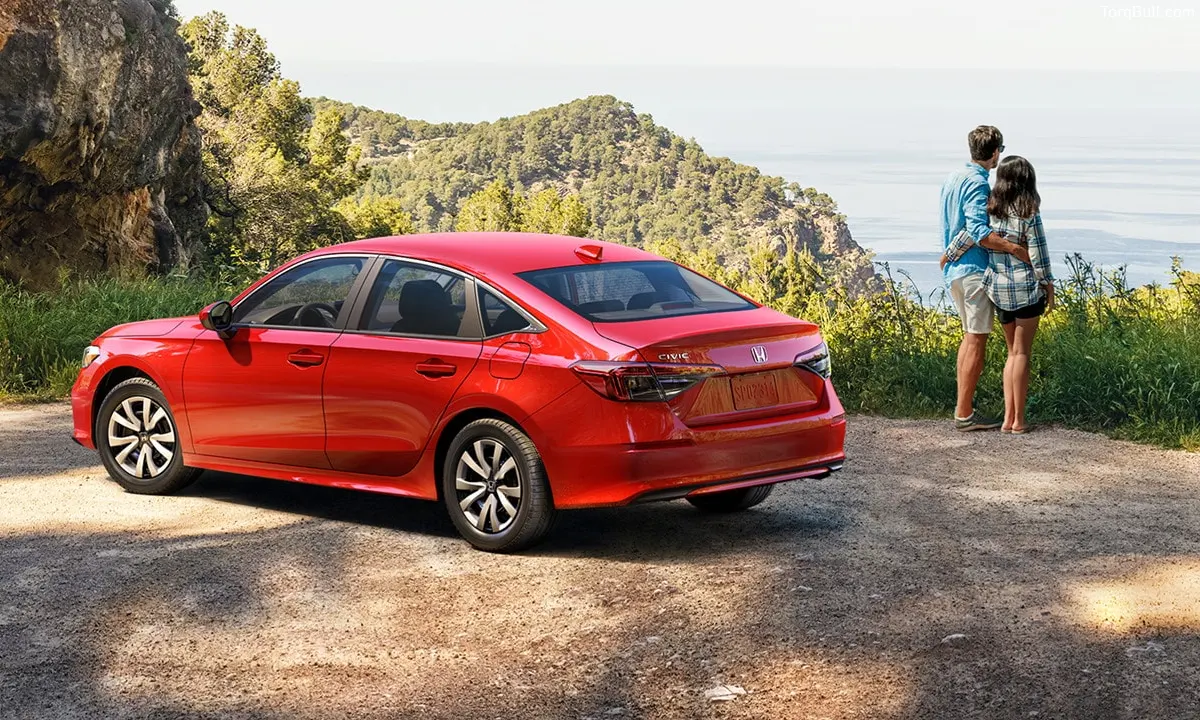
The Honda Civic is one of the most stolen cars in America. Insurers absolutely factor this into your premium, treating that high theft rate as a higher risk factor when calculating your comprehensive coverage cost. In fact, when one comparison looked across Honda’s entire lineup, the Civic came out as the most expensive Honda model to insure of those compared, landing at around 1,708 dollars per year, or roughly 142 dollars a month for full coverage, specifically because of this theft risk profile.
This is also reflected in how the Civic stacks up against the broader market. Liability only coverage for the Civic averages around 106 dollars a month, compared to a national average of 105 dollars across all vehicles. Full coverage averages around 200 dollars a month for the Civic versus 196 dollars nationally. It is a small gap, but it consistently tilts in the wrong direction for Civic owners.
The silver lining? The Civic still beats the average sedan overall. One analysis found Civic owners pay around 160 dollars a month compared to 203 dollars a month for typical sedans, meaning that even with the theft penalty baked in, the Civic remains a relatively affordable choice once you start comparing it against the broader sedan field rather than against the absolute cheapest cars on the road.
Does Your Trim Level Actually Matter
Short answer, yes, but maybe not as much as you would think.
Civic insurance costs vary widely by trim, with the entry level DX Hatchback starting around 63 dollars a month for minimum coverage, while the high performance Civic Type R tops out at a hefty 338 dollars a month for full coverage. That is a massive spread, but it is driven almost entirely by the extremes. Performance specs, rarity and market value account for most of that gap.
For the vast majority of Civic shoppers moving between the base trims and the more popular mid range options, trim level turns out to be a relatively minor factor in your final insurance number. The bigger drivers of your premium are going to be your age, your driving history, where you live and which insurer you choose, not whether you picked the Sport over the EX.
Read: Honda Civic Hidden Features That Make Everyday Driving Easier 2026
How Much Does Your Civic’s Model Year Matter
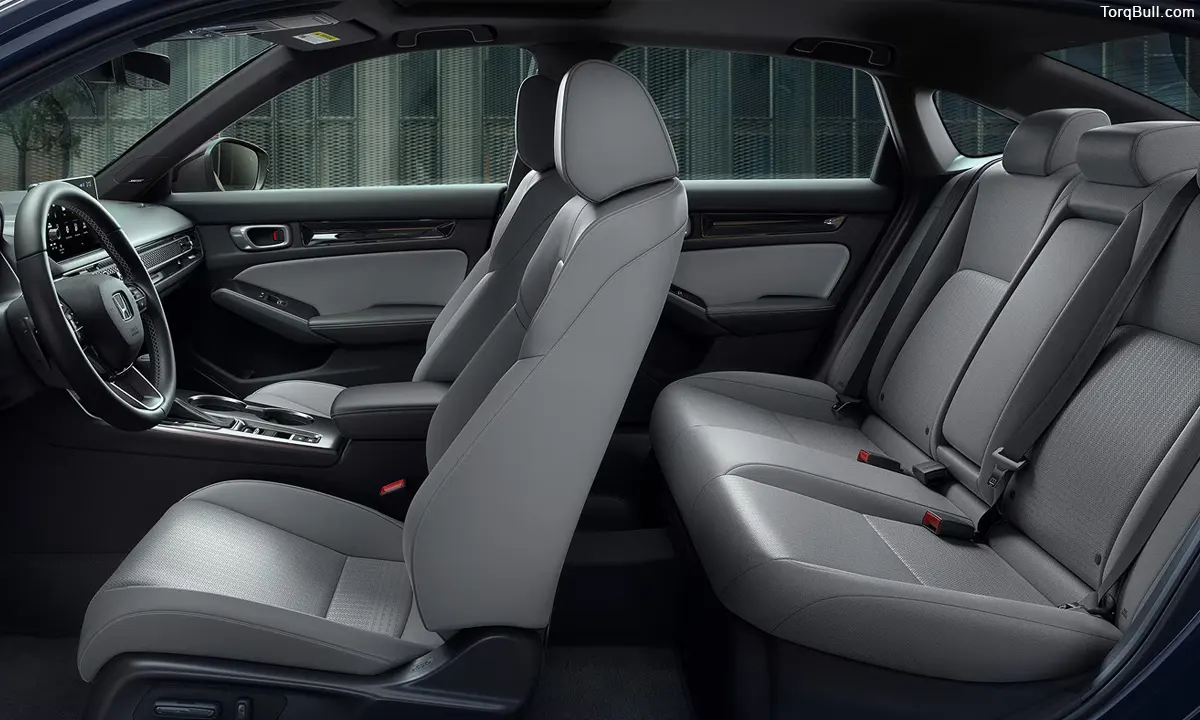
This one is pretty intuitive but worth spelling out with real numbers. Newer cars cost more to insure because they cost more to repair and replace.
A 35 to 55 year old driver pays around 170 dollars monthly for full coverage on a 2016 Civic, compared to 273 dollars for a 2025 model. That is over 100 dollars a month difference just from the age of the car, even with the exact same driver profile.
This pattern holds up across other data sets too. The 2025 Civic averages around 1,330 dollars annually, with USAA undercutting that at around 1,000 dollars for eligible members. The 2024 Civic comes in even lower at an average of 994 dollars annually, with Safeco reportedly offering rates as low as 343 dollars a year for some drivers, though that kind of outlier number likely reflects a very specific, very favorable driver profile rather than something everyone should expect.
If you are shopping for a used Civic specifically to save on insurance, going back even a few model years can meaningfully lower your premium without sacrificing much in the way of features or reliability.
Honda Civic Insurance Cost — Quick Reference Chart
| Category | Estimated Cost | Notes |
| Full Coverage, Higher Estimate | $3,051 per year | Just 14 dollars above the national average for all vehicles |
| Full Coverage, Mid Estimate | $2,479 per year ($207/mo) | Based on a clean record 30 year old driver |
| Full Coverage, Lower Estimate | $1,480 per year | 2026 projection, Hastings Mutual cheapest at $1,065/yr |
| Full Coverage, Another Mid Estimate | $1,911 per year | GEICO cited as most affordable at around $180/mo |
| Minimum Coverage Average | $990 per year | Roughly $63/mo for base trims |
| 2025 Model Year Average | $1,330 per year | USAA as low as $1,000/yr |
| 2024 Model Year Average | $994 per year | Safeco as low as $343/yr in some cases |
| 2016 vs 2025 (Full Coverage) | $170/mo vs $273/mo | For a 35 to 55 year old driver |
| Civic Type R (Full Coverage) | Up to $338/mo | Highest trim, highest premium |
| DX Hatchback (Minimum) | Around $63/mo | Lowest cost entry point |
| Cheapest Insurers Mentioned | USAA, GEICO, Erie, Hastings Mutual | Varies by source and eligibility |
Read: Honda Civic Sport vs EX: Which Trim Offers the Better Value for Your Money?
How to Actually Lower Your Civic Insurance Bill
Now for the fun part, because no matter where your starting quote lands within that wide range, there are real, proven ways to push it lower.
Shop around aggressively. With numbers this spread out depending on the insurer, getting quotes from at least four or five companies is not optional, it is essential. The difference between the cheapest and most expensive quote for the exact same Civic and the exact same driver can be hundreds of dollars a year, sometimes more.
Lean into your safety ratings. The 2024 and 2025 Civic models earned Top Safety Pick recognition from the Insurance Institute for Highway Safety, and many insurers offer discounts tied to advanced safety features. Make sure your insurer knows about every safety feature your specific trim includes.
Consider an older model year if budget is tight. That gap between a 2016 and a 2025 Civic for the same driver was over 100 dollars a month. If insurance cost is a major factor in your decision, a slightly older Civic could free up real money every single month.
Ask about anti theft discounts specifically. Since theft risk is one of the specific factors pushing Civic premiums higher than you might expect, any aftermarket anti theft device, tracking system or steering wheel lock could directly offset that penalty.
Bundle, bundle, bundle. If you have renters, home or life insurance, bundling your Civic policy with the same carrier almost always unlocks a discount that standalone policies simply do not get.
The Bottom Line on Civic Insurance
The Honda Civic remains a smart, practical, generally affordable car to own and drive. Insurance is the one area where it quietly punches a little above its weight, mostly thanks to its unfortunate popularity with car thieves. But even with that theft premium baked in, the Civic still beats out the average sedan on cost, and with some smart shopping, the right trim, the right model year and a few well placed discounts, most drivers should be able to land comfortably in that 1,500 to 2,000 dollar annual range rather than flirting with the 3,000 dollar ceiling. Do your homework, get multiple quotes, and do not let any single scary number scare you off a car that, overall, remains one of the smartest buys on the market.