
- The 2026 Honda CR-V offers an exceptionally spacious rear seat, with 41 inches of legroom that ranks among the best in the compact SUV segment.
- Rear passengers benefit from reclining seatbacks, generous headroom and a seating position that remains comfortable even for taller adults.
- Wide-opening doors and an accessible seat height make entering and exiting the vehicle especially easy for families, older passengers and anyone taking frequent trips.
The Honda CR-V’s rear seat is consistently cited as one of its most compelling competitive advantages in the compact SUV segment — and the 2026 model continues a multi-generation tradition of specifically engineering the rear row for genuine adult comfort rather than nominal five-passenger accommodation. At 41 inches of rear legroom, the CR-V’s rear seat occupies a class-leading position among compact SUVs regardless of segment — a measurement that professional evaluation describes as feeling like more than the official figure and that produces the specific outcome of a 6-foot-4 passenger sitting comfortably behind a 6-foot driver without knee contact with the seat ahead. This complete review examines every dimension of the CR-V’s rear seat experience — from the physical specifications that define the comfort envelope through the access experience, the seating surface quality across trims and the practical amenities that road trips and family daily use require.
The Legroom: 41 Inches and What That Actually Means
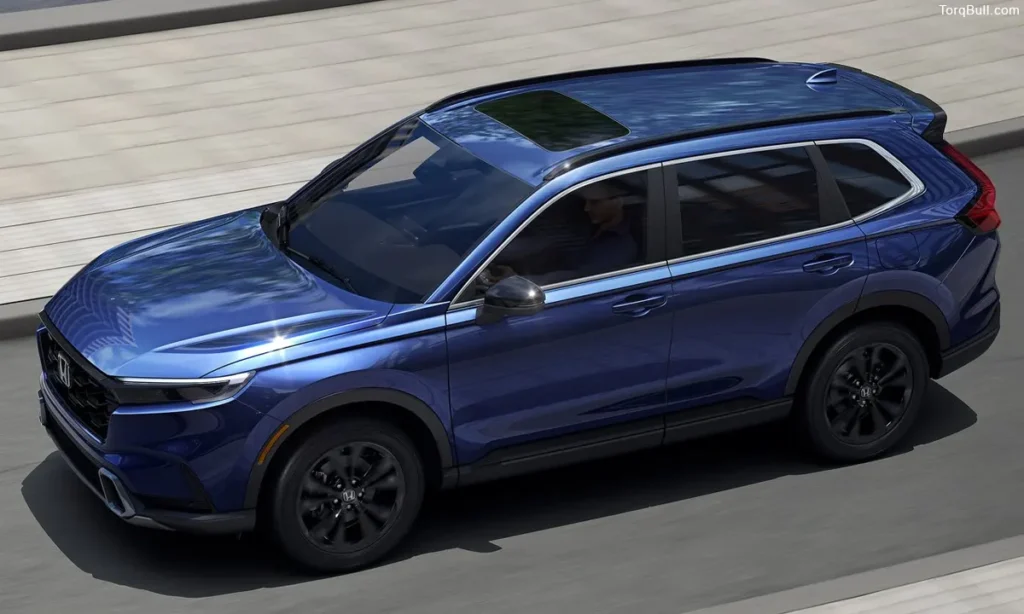
The 2026 Honda CR-V’s 41 inches of rear legroom is the specification that most directly separates it from competing compact SUVs — and understanding what this figure actually means in human terms is more practically useful than the number alone communicates.
Professional evaluation confirmed by a reviewer who is 6 feet 4 inches tall that the rear seat provides comfortable accommodation behind a 6-foot-plus driver — the specific adult-to-adult seating confirmation that validates the 41-inch measurement as genuinely generous rather than only nominally adequate. The official 41 inches of rear legroom feels like more — a specific experiential qualification that professional evaluators consistently add to the formal measurement, suggesting that the seat geometry, seat cushion depth and floor height combine to produce a perceived spaciousness that exceeds what the legroom measurement alone predicts.
For families whose regular passenger configuration includes adults in both rows — the carpooling, extended family trip and friend transport scenarios that daily family life regularly produces — the CR-V’s rear seat provides genuine adult accommodation across these use cases rather than the cramped, knees-against-seatback experience that more limited compact alternatives deliver.
Read: Honda CR-V Fuel Cost Per Year. Is This Compact SUV More Affordable Than You Think?
The Seatback Recline: Eight Position Adjustment for Genuine Comfort
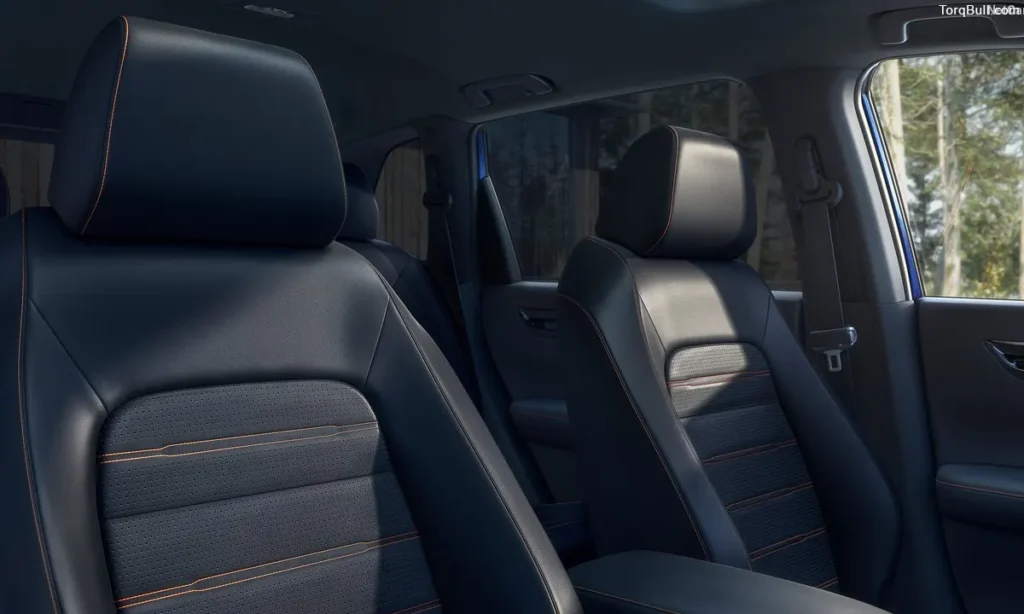
The 2026 CR-V’s rear seatback reclines across eight distinct positions — an adjustment capability that specifically addresses the fatigue that sustained upright seatback contact produces during highway driving.
This recline capability is the comfort feature that most directly improves the rear passenger experience on road trips and extended drives, because the upright seatback position that fixed rear seats maintain is the posture that most rapidly accumulates fatigue in lower back and hip contact areas. The eight-position adjustment range allows rear passengers to find the specific angle that most reduces lumbar pressure and hip contact point stress for their individual body proportions — the personalised ergonomic positioning that fixed rear seats cannot provide.
One owner who specifically purchased the CR-V credits the reclining rear seats as a thoughtful feature that would have been particularly appreciated during trips when children were younger — confirming that the recline capability serves family use across multiple life stages rather than being an abstract comfort specification without practical application. For families whose rear seat passengers include young children who sleep during drives, the recline capability allows the children to rest in a more natural sleeping posture rather than the upright position that non-reclining rear seats force.
The Access Experience: Big Doors, Right Height and Easy Entry

The CR-V has big door openings and all seats are positioned at the right height for adults to slide right in without much effort — the professional evaluation characterisation that specifically addresses the entry and exit quality that the legroom measurement alone cannot describe.
Wide door openings are the access characteristic that most directly affects the ease of loading and unloading rear passengers — particularly elderly passengers, passengers with mobility limitations and young children being assisted into child seats. The CR-V’s big door opening provides the unobstructed access path that allows adults to enter and exit without the torso rotation and head ducking that narrower door openings or lower roof lines require.
The seat height positioning that allows adults to slide right in directly — rather than lowering themselves into the seat from a standing position — is the ergonomic feature that elderly passengers and tall adults specifically appreciate. A seat positioned at approximately standing hip height allows the entry motion to be a lateral slide rather than a controlled downward descent, significantly reducing the physical demand of entry and exit and making the CR-V accessible to a wider range of passenger ages and mobility levels.
The rear seat is also described as excellent for installing child safety seats — the LATCH anchor accessibility and rear door opening that Honda specifically engineered for ease of installation providing the practical benefit that families with young children use at every boarding and alighting event.
Read: Is the Honda CR-V Worth Buying in 2026? A Complete Buyer’s Guide
Rear Seat Materials: From Cloth Through Premium Leather

The 2026 CR-V’s rear seat upholstery varies by trim level in a specific hierarchy that affects both the material quality experience and the durability characteristics that family daily use demands.
LX and EX trim rear seats use a high-quality cloth that Honda describes as both durable and soft to the touch — the honest dual-priority characterisation for a family vehicle’s primary use environment where durability against spills and regular contact must accompany the comfort quality that passengers experience. The cloth upholstery’s specific quality is described as genuinely good rather than the scratchy, low-grade fabric that some compact alternatives use at equivalent trim levels.
EX-L, Sport-L Hybrid and Sport Touring Hybrid rear seats use high-grade perforated leather — the premium material upgrade that provides the wipeable surface families with children specifically value for cleaning, the temperature regulation that perforations facilitate by allowing air circulation and the premium aesthetic that upper-trim CR-V buyers expect from their material specification. The Sport-L Hybrid and Sport Touring Hybrid add orange stitching accents to the leather — the colour contrast that gives these trims a distinctive interior identity within the CR-V lineup.
Rear Seat Amenities: What Passengers Actually Receive
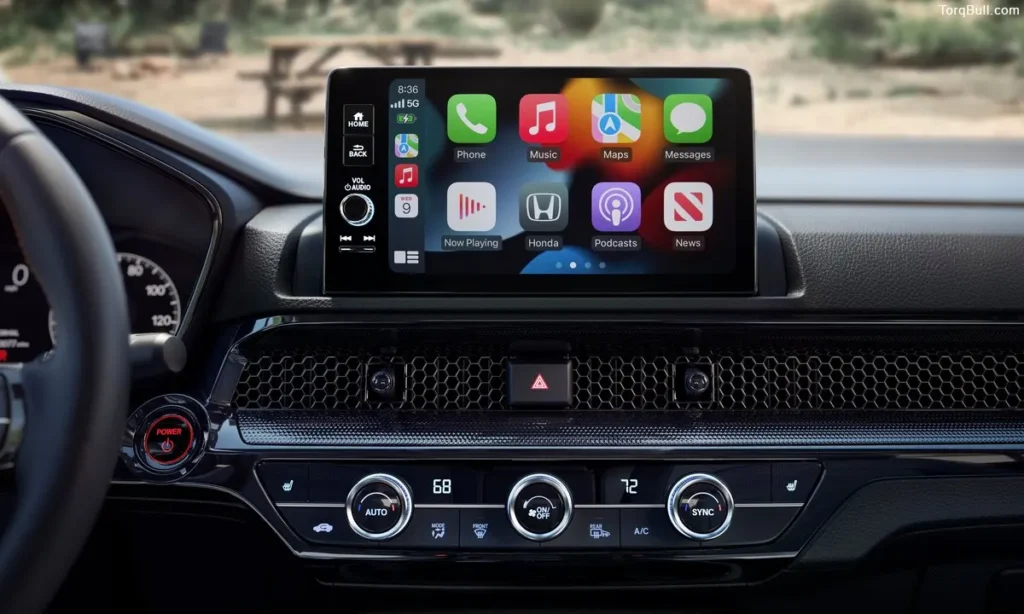
Beyond the space and seating surface, the CR-V’s rear seat provides specific amenities that address the daily practical needs of rear passengers — connectivity, climate and organisation.
The 2026 CR-V’s USB ports are distributed to include rear passenger access — providing device charging that tablets, smartphones and gaming devices that rear passengers carry during family travel specifically require. The high-capacity climate system includes rear vents that provide airflow to second-row passengers from a dedicated outlet rather than relying entirely on front-zone airflow reaching the rear — the specific climate comfort provision that makes summer and winter temperature management effective for all occupants simultaneously.
The 60/40 split-folding rear seatback provides the cargo flexibility that families transitioning between full passenger capacity and extended cargo transport require. One section can be folded to carry long items — skis, lumber, furniture — while the other section maintains rear passenger accommodation, a flexible configuration that the fixed rear seats of van-style vehicles cannot replicate.
Read: Honda CR-V Hybrid Battery Life. What Owners Can Expect After Years of Use
Honda CR-V 2026 Rear Seat Specifications — Complete Reference Chart
| Rear Seat Dimension | Measurement | Segment Context | Professional Assessment |
| Rear legroom | 41 inches | Class-leading among compact SUVs | Feels like more than official measurement |
| Rear headroom | 38.2 to 39.2 inches | Competitive | Most passengers have ample clearance |
| Rear shoulder room | 55.9 inches | Generous | Three adults can sit without significant contact |
| Rear hip room | 52.6 inches | Competitive | Comfortable for three occupants |
| Seatback recline positions | 8 positions | Uncommon in compact SUVs | Specifically praised for road trip comfort |
| Door opening width | Large | Above segment average | Easy adult and elderly entry confirmed |
| Seat entry height | Appropriate for sliding | Above segment average | Adults slide in without lowering motion |
| Child seat installation | Excellent LATCH access | Among best in class | Consistently cited as easy to install |
| LX and EX seating material | High-quality cloth | Premium cloth quality | Soft and durable characterisation confirmed |
| EX-L and above seating | Perforated leather | Premium | Wipeable, ventilated, premium appearance |
| Rear USB ports | Yes | Standard on most trims | Device charging for rear passengers |
| 60/40 split-fold | Standard | Standard in segment | Flexible passenger and cargo configuration |
| Reclining seat owner assessment | Highly praised | Not universal in segment | Appreciated across multiple ownership accounts |
The Competitive Context: Where CR-V Rear Seat Stands in the Segment
The 2026 CR-V’s class-leading 41-inch rear legroom positions it specifically above the Toyota RAV4’s 37.8-inch rear legroom and the Nissan Rogue’s 38.5-inch rear legroom — the most directly competitive compact crossover alternatives whose rear seat measurements most clearly illustrate the CR-V’s specific advantage.
For families whose purchase decision specifically involves regular adult rear passenger accommodation — the carpool, the visiting extended family member, the teenage child who has outgrown the legroom tolerance of more constrained alternatives — this legroom advantage is the most practically significant dimension of the CR-V’s competitive positioning. A family that regularly transports adult rear passengers will notice the 3 to 4-inch legroom advantage the CR-V provides over the RAV4 on every single trip.
The professional evaluation summary that captures the CR-V rear seat most completely is the limousine-like description — not in the luxury appointment sense but in the proportional adequacy sense that allows adults across a wide size range to accommodate themselves comfortably without the accommodations and adjustments that more constrained rear seats require. For a compact SUV to earn this characterisation from professional evaluation is the specific achievement that the CR-V’s rear seat dimensions and design have specifically earned.