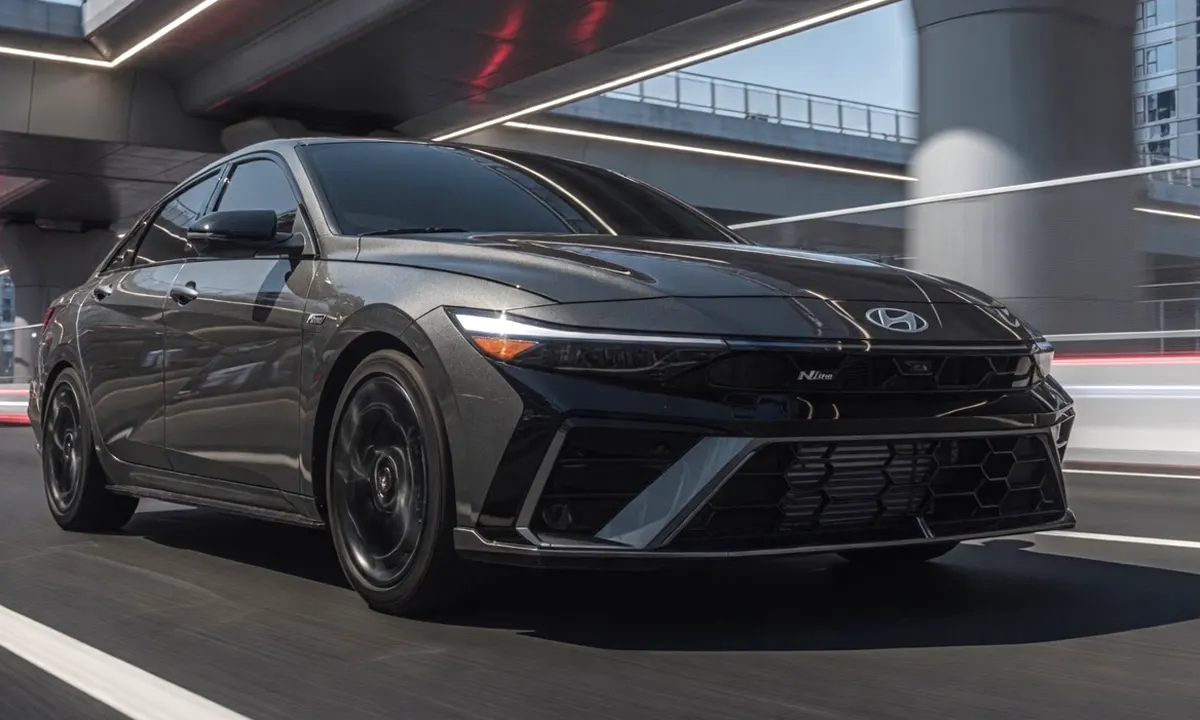
- Base 2.0L with IVT: 35 MPG, ~8.1s 0–60
- N Line 1.6T manual: 201 hp, lower efficiency (~21 MPG city)
- Elantra N manual: 276 hp, mid-5s 0–60 performance
- IVT prioritizes efficiency; manuals focus on performance
- Choice depends on economy vs driving engagement
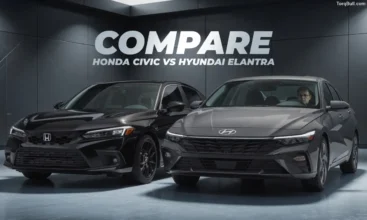
The Hyundai Elantra’s transmission lineup in 2026 spans a wider performance range than most compact sedans dare to offer — from the efficiency-optimised Smartstream Intelligent Variable Transmission paired with the naturally aspirated 2.0-litre base engine, through the seven-speed dual-clutch of the N Line, to the six-speed manual and eight-speed wet dual-clutch options of the full-performance Elantra N. Understanding exactly how each transmission configuration affects real-world performance, fuel economy and the daily driving experience is the most important specification knowledge available to any Elantra buyer — because Hyundai’s commitment to transmission variety means choosing an Elantra is simultaneously choosing a fundamentally different performance character. This guide compares every Elantra transmission configuration across the dimensions that actually matter in ownership: acceleration, fuel efficiency, driver engagement and daily usability.
The IVT: What It Is and How It Differs From a Conventional CVT
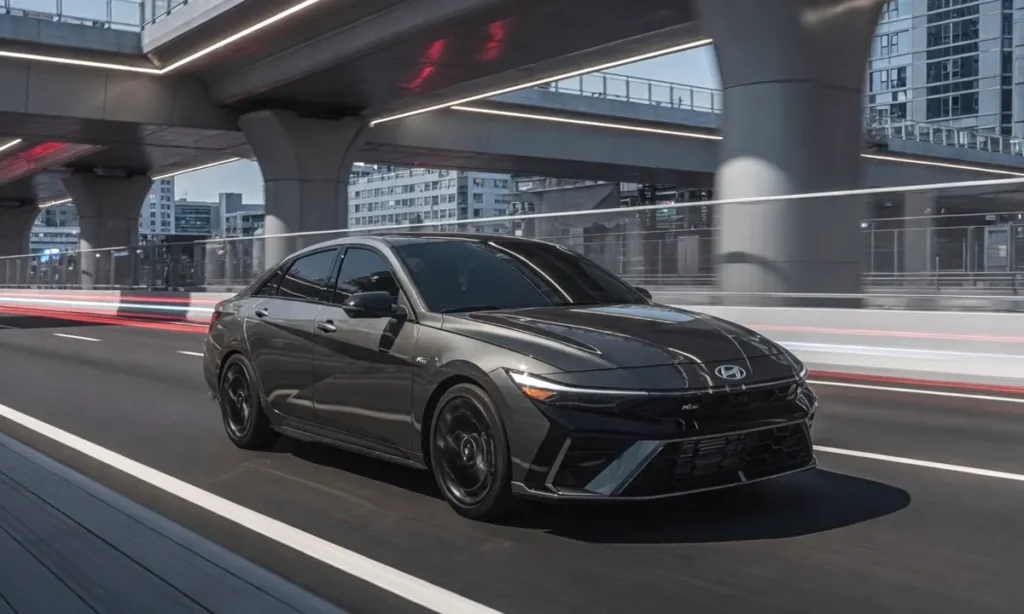
The Smartstream Intelligent Variable Transmission in the base and mainstream Elantra trims is one of the most significant engineering departures from the conventional CVT that its name category implies. Most continuously variable transmissions use a push-belt pulley system that can produce the characteristic rubber-band sensation — where engine RPM climbs independently of vehicle speed during acceleration, creating a disconnected, uninvolving driving experience. Hyundai’s IVT specifically addresses this limitation through a chain-belt driven system rather than a push-belt design, making it the first Hyundai compact car to use this more durable and efficient drivetrain configuration.
The chain-belt design is paired with eight simulated gear steps — electronically programmed shift points that provide the sensation of a stepped automatic transmission rather than the infinite-ratio variation of a traditional CVT. The ratio spread of 6.58:1 is wider than most traditional automatics, allowing the engine to operate closer to its most efficient RPM across a broader range of vehicle speeds. Adaptive shift logic monitors driving patterns and conditions, progressively accommodating more aggressive or more conservative driving styles. The system weighs approximately 70 kilograms — lighter than traditional automatic transmissions — and handles a maximum torque input of 210 Newton-metres, matched to the naturally aspirated 2.0-litre engine’s 132 pound-feet of output.
The practical result for everyday driving is a transmission that avoids the worst CVT characteristics without fully replicating the engagement of a stepped automatic or manual. At steady highway speeds and moderate urban acceleration, the IVT’s smooth operation and efficiency optimisation produce the fuel economy numbers that make the base Elantra one of the segment’s fuel economy leaders. Under hard acceleration from a standstill, the simulated gear steps prevent the sustained high-RPM wail that conventional CVTs produce, making the 2.0-litre Elantra’s acceleration feel more natural than its compact car price point would suggest.
Read: 2026 Hyundai Boulder Concept Signals a Bold Entry into Hardcore Off-Road Territory
IVT Performance: Fuel Economy and Acceleration Data
The 2026 Hyundai Elantra with the 2.0-litre naturally aspirated engine and IVT delivers EPA-rated fuel economy of 31 MPG city, 40 MPG highway and 35 MPG combined for the SE trim — figures that represent the most fuel-efficient non-hybrid configuration in the mainstream compact sedan segment for buyers choosing the Elantra specifically. This 35 MPG combined rating yields an estimated driving range of approximately 422 to 446 miles per 14.2-gallon tank depending on trim specification.
Car and Driver’s instrumented testing of the base Elantra with this powertrain recorded a 0-60 MPH time of 8.1 seconds and a quarter-mile time of 16.5 seconds at 85 MPH. These figures position the base Elantra IVT exactly where its engineering priorities indicate: at the efficiency end of the compact sedan performance spectrum, adequate for daily commuting and confident highway merging but not seeking the segment’s performance leadership. For the buyer whose primary concern is predictable commuting costs and strong highway fuel economy, the IVT’s 8.1-second 0-60 represents a sufficient rather than inspiring performance profile.
The IVT’s most practically relevant performance advantage over a conventional manual transmission is its everyday convenience profile. Stop-and-go urban commuting — the driving environment where manual transmissions require the most operator effort and where clutch wear accumulates most rapidly — is where the IVT delivers its most tangible ownership advantage. Traffic congestion requires no additional driver workload, and the transmission’s efficiency optimisation means idling and low-speed fuel consumption are well-managed.
Read: Toyota vs Hyundai vs Honda: Which Brand Is Better in 2026 in the US?
The Six-Speed Manual: Where Driver Engagement Enters the Picture
The six-speed manual transmission available in the Elantra N Line and required-choice or optional in the full Elantra N represents a fundamentally different performance philosophy from the IVT — one where driver engagement, mechanical directness and the satisfaction of active participation in the vehicle’s operation are the primary design priorities.
In the N Line, the six-speed manual is paired with the 1.6-litre turbocharged four-cylinder producing 201 horsepower and 195 pound-feet of torque — a dramatically more powerful powertrain than the base IVT’s 147-horsepower naturally aspirated unit. The dual-mass flywheel used specifically in the N Line’s manual application — 2.6 kilograms heavier than the single-mass unit in the Essential trim — provides smoother engagement and reduced drivetrain vibration from the turbocharged engine’s uneven firing pulses. This is a detail that reflects genuine engineering investment in the manual transmission experience rather than a base-spec unit being retained primarily for cost savings.
The 2026 Elantra N Line with the six-speed manual achieves EPA ratings of 21 city, 29 highway and 24 MPG combined — an 11 MPG combined reduction from the IVT’s 35 MPG combined figure that directly reflects the turbocharged engine’s power output and the manual transmission’s operation at higher-performance driving styles. The real-world fuel economy of the N Line manual in conservative driving — moderate acceleration, highway cruise at 65 MPH — will approach the higher end of the real-world range, while spirited driving in the manner the N Line’s character invites will produce the lower end figures closer to the city estimate.
The driving engagement difference between the IVT and the six-speed manual is substantial and qualitative rather than merely quantitative. The manual provides direct mechanical connection between the driver’s inputs and the drivetrain response — the clutch pedal’s resistance, the gearshift’s mechanical precision, the ability to hold gears through corners for engine braking and power-on exits — that the IVT’s electronically managed operation cannot replicate regardless of how well-calibrated its shift programming becomes.
The Elantra N: Full Performance Manual Application
The full Elantra N brings the six-speed manual to its most capable application in the Elantra lineup — paired with a 2.0-litre turbocharged four-cylinder producing 276 horsepower in standard operation and 286 horsepower when the N Grin Shift overboost function is activated for up to 20 seconds. The torque output is 289 pound-feet — more than double the IVT-equipped base model’s 132 pound-feet.
The Elantra N’s six-speed manual includes specific engineering for its performance application that distinguishes it from the N Line’s unit. Rev-matching capability — where the transmission’s computer automatically blips the throttle during downshifts to match engine speed to the incoming gear — allows smooth aggressive downshifts without the driver needing to perform the technique manually. This electronic assistance means the performance capability of the manual transmission is accessible to a broader range of driver skill levels rather than requiring years of manual driving experience to use effectively.
Fuel economy with the Elantra N’s six-speed manual matches the N Line figures at 21 MPG city, 29 MPG highway and 24 MPG combined — a testament to the efficiency calibration Hyundai achieves even from this high-output turbocharged application. The 285-mile driving range per tank is modest but appropriate for a vehicle whose primary purpose is performance engagement rather than long-distance economy.
Read: Hyundai Palisade Sets New Standards for Comfort in Three-Row SUVs
IVT vs Manual: Complete Performance Comparison Chart
| Specification | Base Elantra IVT (2.0L NA) | N Line 7-spd DCT (1.6T) | N Line 6-spd Manual (1.6T) | Elantra N 6-spd Manual (2.0T) | Elantra N 8-spd Wet DCT (2.0T) |
| Engine | 2.0L Naturally Aspirated | 1.6L Turbo | 1.6L Turbo | 2.0L Turbo | 2.0L Turbo |
| Horsepower | 147 hp | 201 hp | 201 hp | 276 hp (286 w/NGS) | 276 hp (286 w/NGS) |
| Torque | 132 lb-ft | 195 lb-ft | 195 lb-ft | 289 lb-ft | 289 lb-ft |
| 0-60 MPH | ~8.1 sec | ~6.7 sec est. | ~7.0 sec est. | ~5.4 sec est. | ~5.1 sec est. |
| EPA Combined | 35 MPG | 23 MPG | 24 MPG | 24 MPG | 23 MPG |
| EPA City | 31 MPG | 20 MPG | 21 MPG | 21 MPG | 20 MPG |
| EPA Highway | 40 MPG | 27 MPG | 29 MPG | 29 MPG | 27 MPG |
| Driving Range | ~422–446 miles | ~285 miles | ~285 miles | ~285 miles | ~285 miles |
| Driver Engagement | Low | High | Highest | Highest | Very High |
| Daily Convenience | Highest | High | Moderate | Moderate | High |
| Transmission Weight | ~70 kg | ~68 kg (DCT) | Higher (flywheel) | Higher (flywheel) | Wet DCT |
| Best For | Commuting, economy | Performance + convenience | Maximum engagement | Track + engagement | Track + convenience |
Fuel Economy: Where the IVT’s Advantage Is Decisive
The fuel economy gap between the IVT and manual transmission configurations in the Elantra lineup is the largest single performance dimension separating these options — and it is a gap that translates directly to annual operating cost differences meaningful enough to factor into a purchase decision.
At 35 MPG combined, the IVT-equipped base Elantra costs approximately $1,321 per year in fuel at 15,000 annual miles and $3.08 per gallon. At 24 MPG combined, the N Line or Elantra N manual costs approximately $1,925 per year for the same mileage — a difference of approximately $604 annually. Over five years, this $3,020 cumulative fuel cost difference offsets a meaningful portion of the N Line’s approximately $8,000 to $10,000 higher purchase price versus a base IVT Elantra. For buyers who commute high mileage annually, the IVT’s fuel savings accumulate faster and the payback calculation for the performance upgrade becomes less compelling on pure financial grounds.
Conversely, the manual’s 24 MPG combined — versus the N Line’s DCT-equipped 23 MPG combined — confirms that manual transmission typically delivers marginally better fuel economy than DCT alternatives in the same powertrain application. The 2026 N Line specifications confirm this precisely: the manual achieves 21 city and 29 highway versus the DCT’s 20 city and 27 highway — consistent with the manual’s lower drivetrain losses during coasting and steady-state cruise where the driver selects and holds the most efficient gear.
Which Transmission Is Right for Which Buyer?
The IVT-equipped Elantra is unambiguously the correct choice for buyers who prioritise maximum fuel economy, daily commuting convenience, lowest maintenance cost over a multi-year ownership period and the lowest-stress ownership experience. Its 35 MPG combined is the segment’s best among standard gasoline non-hybrid compacts, its automatic operation eliminates all clutch wear as a maintenance consideration and its adequate 0-60 time serves every daily driving scenario without drama. It is the transmission for buyers who want a reliable, efficient tool for daily transportation.
The six-speed manual — whether in the N Line’s 201-horsepower turbo application or the Elantra N’s 276-horsepower full-performance configuration — is the correct choice for buyers who value the active participation of manual driving as a core component of the ownership experience, who accept the fuel economy reduction as a reasonable price for engagement and who have the daily driving environment — low-traffic commutes or suburban routes — where the manual’s additional workload is pleasurable rather than fatiguing. The Elantra N specifically makes the six-speed manual the choice for buyers whose ownership includes track days and spirited driving events, where the rev-matching manual’s mechanical directness and driver feedback is the defining advantage.