- Lexus ranks first in long-term dependability studies, with fewer reported problems than the industry average.
- The Lexus RZ is expected to have lower maintenance and repair costs than many luxury SUV competitors.
- Five-year maintenance costs are projected at approximately $3,090 to $5,099, with a below-average risk of major repairs.
As Lexus’s first dedicated electric vehicle, the RZ occupies an interesting position when it comes to maintenance costs. On one hand, it benefits from the brand’s reputation for reliability and lower than average ownership costs. On the other hand, as an electric vehicle, it eliminates many of the traditional maintenance items that gas powered Lexus models require, while introducing its own set of cost considerations. This guide breaks down exactly what RZ owners can expect to spend on maintenance, how those costs compare to the broader Lexus lineup and the luxury SUV segment, and what factors influence the numbers over a typical five year ownership period.
The Lexus Brand Reliability Advantage
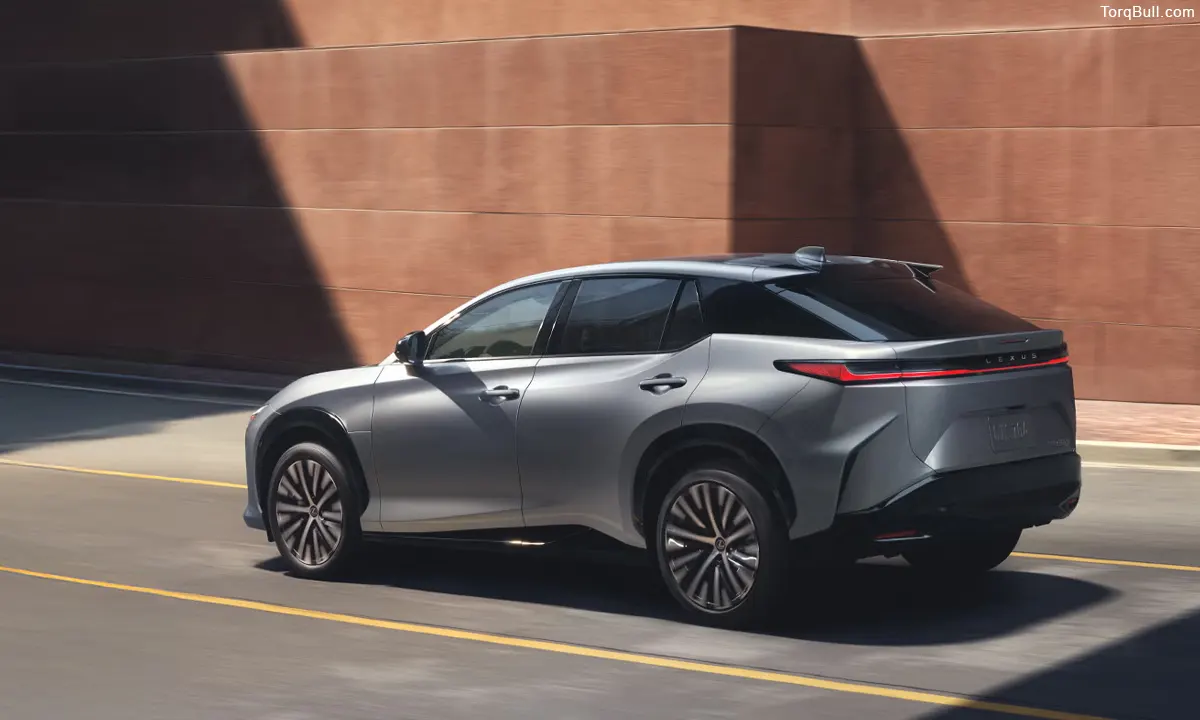
Before looking at RZ specific numbers, it helps to understand the broader context of Lexus reliability, since this directly influences expectations for any model in the lineup, including the RZ.
Lexus vehicles ranked number 1 in a recent U.S. Vehicle Dependability Study, finishing ahead of brands like Buick, Mazda and Toyota. The study measured an average of just 140 problems per 100 vehicles after three years of ownership for Lexus models, compared to a study wide average of 202 problems per 100 vehicles across all other brands evaluated. This gap represents a substantial difference in how often owners experience issues that require attention.
On the cost side, the average Lexus driver spends approximately 551 dollars per year on maintenance and repairs, which is meaningfully lower than the broader industry average of 652 dollars per year. For context, other Asian luxury brands tend to have comparable maintenance costs, while American and European luxury brands typically cost considerably more to maintain over time. One long time Lexus owner described their purchase as the best they had made in 40 years of buying experiences, specifically citing low maintenance as a major factor in their satisfaction.
Read: Lexus RZ Resale Value. The Truth About Long-Term Ownership Costs
What Makes the RZ Different as an Electric Vehicle
The RZ’s electric powertrain fundamentally changes the maintenance equation compared to a traditional gas powered Lexus, and understanding these differences is key to setting realistic expectations.
Electric vehicles eliminate several routine maintenance items entirely. There is no engine oil to change, no oil filter to replace, no spark plugs, no traditional transmission fluid, and no exhaust system components that can fail over time. This removes a significant portion of what typically drives maintenance costs on gas powered vehicles, particularly in the early years of ownership.
What remains for RZ owners includes tire rotations and replacements, brake fluid checks, cabin air filter replacements, windshield wiper replacements, and periodic inspections of the battery cooling system and high voltage components. Regenerative braking on electric vehicles also tends to reduce wear on brake pads and rotors compared to gas vehicles, since the electric motor handles much of the deceleration duty, which can extend the life of brake components considerably.
The Major Repair Risk Numbers
One of the most useful data points for evaluating long term ownership costs is the likelihood that a vehicle will require a major repair within a specific timeframe, and the RZ performs notably well in this regard.
The RZ carries a 21.14 percent chance of requiring a major repair during its first five years of ownership. When compared to similar vehicles in the luxury SUV segment, this figure represents an improvement of 17.37 percent, meaning the RZ is considerably less likely to need a significant repair than its competitors during this period. A related figure places the RZ’s overall cost of maintenance and repair in the first five years as 3,904 dollars lower than the industry average for luxury SUV models, and notes the RZ is 18 percent better than similar vehicles in this segment for the likelihood of needing a major repair within that same five year window.
These figures reinforce the broader pattern seen across the Lexus lineup, where the brand’s reputation for building dependable vehicles appears to extend to its first electric model as well, despite the RZ being a relatively new addition to the lineup without the multi decade track record that some gas powered Lexus models have built.
Read: Lexus RZ vs BMW iX: The Complete 2026 Luxury EV Comparison
Year by Year Maintenance Cost Breakdown
Looking at detailed cost to own projections provides a clearer picture of how maintenance expenses are expected to unfold across a five year ownership period, and these figures reveal an interesting pattern.
For the 2026 model year, projected maintenance costs are not evenly distributed across the five years. Instead, certain years carry noticeably higher costs than others, reflecting the timing of more involved scheduled services. The total five year maintenance projection for the 2026 RZ comes to approximately 3,090 dollars, while the 2025 model year shows a higher total of approximately 5,099 dollars over the same period. Repair costs, which are separate from scheduled maintenance, are projected at approximately 1,263 dollars over five years for both model years, with these repair costs concentrated in years four and five rather than appearing earlier in ownership.
This pattern, where early years carry relatively low costs and certain milestone years carry higher costs due to more comprehensive scheduled services, is fairly typical across many vehicles and reflects the difference between routine inspections and more involved service intervals that occur less frequently.
Lexus RZ Maintenance Cost Reference Chart
| Cost Category | 2025 Model Year (5 Year Total) | 2026 Model Year (5 Year Total) | Notes |
| Scheduled Maintenance | Approximately 5,099 dollars | Approximately 3,090 dollars | Costs vary by year, with certain years higher |
| Repairs | Approximately 1,263 dollars | Approximately 1,263 dollars | Concentrated in years four and five |
| Major Repair Probability (5 yr) | 21.14 percent | 21.14 percent | 17.37 percent better than segment average |
| Comparison to Segment Average | 3,904 dollars lower (5 yr) | 3,904 dollars lower (5 yr) | Based on luxury SUV segment comparison |
| Brand Average Annual Maintenance | 551 dollars | 551 dollars | Across all Lexus models, lower than 652 industry average |
| Reliability Ranking | Number 1 (Vehicle Dependability Study) | Number 1 (Vehicle Dependability Study) | 140 problems per 100 vehicles vs 202 study average |
Factors That Influence Your Actual RZ Maintenance Costs
While the figures above provide useful benchmarks, several factors can shift what any individual owner actually pays for maintenance over time.
Following the factory recommended maintenance schedule, which calls for some form of service every six months or 5,000 miles, helps avoid the larger expenses that can result from deferred maintenance catching up all at once. Owners who skip routine inspections may face higher costs later when smaller issues develop into larger ones.
Where you live and drive also matters. Owners in regions with extreme temperatures, either very hot or very cold, may experience different battery degradation patterns and may need more frequent attention to climate control and battery thermal management systems compared to owners in more moderate climates.
Driving style affects brake component longevity significantly for electric vehicles. Owners who rely heavily on regenerative braking by anticipating stops and easing off the accelerator early will extend the life of their physical brake components considerably compared to owners who frequently use hard braking, which bypasses regenerative recovery and engages the traditional friction brakes more often.
Finally, extended warranties and prepaid maintenance plans, while an additional upfront cost, can help smooth out and predict maintenance expenses over time, and may be worth considering for owners who prefer budget certainty over the potential for slightly lower costs by paying as needed.
Read: Lexus RZ vs Tesla Model Y Range. The Ultimate Electric SUV Comparison for 2026
How the RZ Compares Within the Luxury SUV Segment
When placed alongside other luxury compact SUVs and crossovers, the RZ’s cost profile positions it favorably overall. The vehicle is described as falling in the top 11 to 25 percent for cost to own among all luxury compact SUVs and crossovers, a strong showing that reflects the combination of below average maintenance costs, a lower than average major repair probability, and the inherent maintenance savings that come from an electric powertrain compared to gas powered competitors in the same segment.
For buyers comparing the RZ against gas powered luxury SUVs from other manufacturers, the maintenance cost advantage becomes even more pronounced, since those vehicles carry the full suite of traditional maintenance items including oil changes, transmission services, and the more complex engine systems that the RZ simply does not have.
What This Means for Prospective and Current RZ Owners
For buyers considering the RZ, the maintenance cost picture is genuinely encouraging. The combination of Lexus’s brand wide reliability reputation, the inherent simplicity of an electric powertrain, and specific data showing the RZ performs better than its segment average for major repair likelihood all point toward a vehicle that should be relatively predictable and affordable to maintain compared to many luxury SUV alternatives.
For current owners, the practical takeaway is to stay on top of the recommended service schedule, pay attention to brake component wear given the benefits of regenerative braking, and recognize that certain years in the ownership cycle may carry higher scheduled maintenance costs than others. Budgeting with this uneven distribution in mind, rather than assuming a flat annual cost, will give a more accurate picture of what to expect financially across a full five year ownership period.