The Final Analogue Statement. 5 Reasons the Lotus Emira Is the Last True Driver’s Car
A Supercharged Toyota V6 or AMG-Sourced Turbocharged Four-Cylinder, a Chassis Tuned by Engineers Whose Careers Were Built on the Principle That a Car Should Communicate Everything to Its Driver Rather Than Filter Anything Away, the Last Internal Combustion Engine Lotus Will Ever Build and the Concentrated Expression of Seven Decades of Lightweight Performance Philosophy in a Production Car Whose Significance the Automotive World Has Not Yet Fully Appreciated
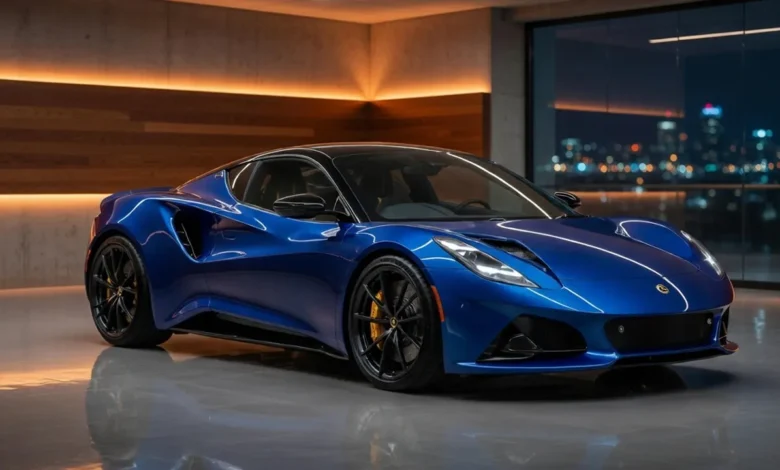
There are cars that transport people and cars that transform them — machines whose interaction with the driver produces something beyond the sum of their mechanical specifications and whose memory persists long after the journey concludes. The distinction between the two categories is not primarily one of performance, price or technology — it is one of philosophy, of what the engineers who created the vehicle believed their fundamental obligation to the person behind the wheel actually was. Lotus has held the same answer to that question since Colin Chapman first articulated it in a Norfolk garage in the early 1950s — that the driver deserves to feel everything the car is doing, that weight is the enemy of every dynamic virtue worth pursuing and that the most sophisticated automotive engineering is the engineering that achieves maximum effect with minimum mass and complexity.
The Lotus Emira is the last car this philosophy will ever produce at Lotus. The company has committed fully to electrification — the Evija hypercar and the forthcoming electric model lineup confirm that the internal combustion Lotus is a chapter whose final sentence the Emira writes. Understanding what the Emira represents, what it delivers and why its five most significant qualities make it the last true driver’s car requires examining it not merely as a product but as a philosophical conclusion — the final argument in a seven-decade conversation about what a car should be.
Reason 1: The Chassis That Communicates Everything
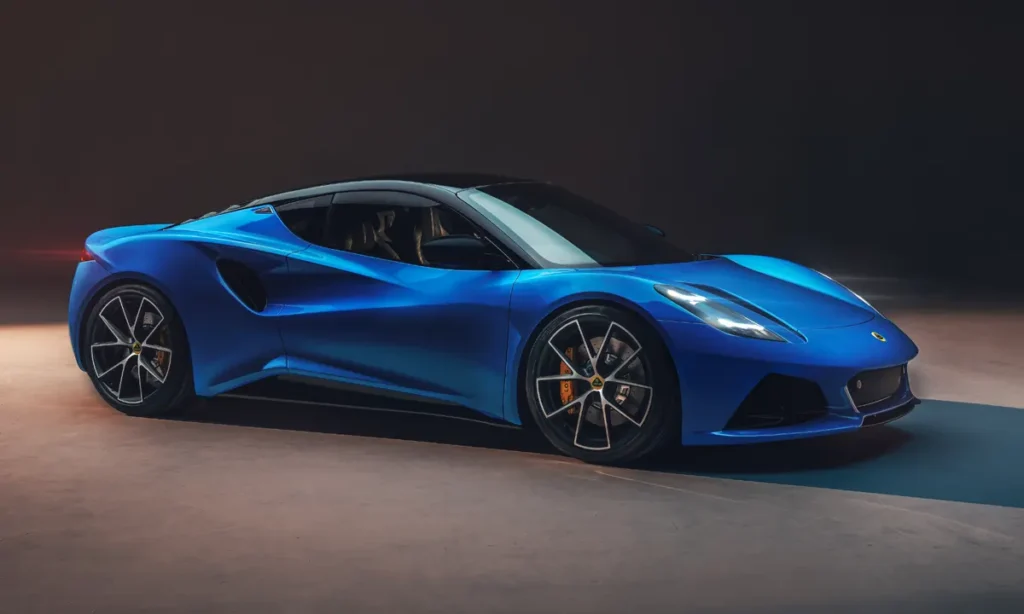
The Lotus Emira’s aluminium bonded and riveted chassis — developed on the platform that the Evora established and refined through the engineering investment that the Emira’s role as Lotus’s final combustion statement demanded — communicates road surface information, lateral loading and tyre behaviour to the driver with a transparency that no contemporary sports car at any price achieves with equivalent clarity. The steering — hydraulically assisted rather than electrically assisted, a specification decision whose cost and complexity penalty Lotus accepted because the feedback quality that hydraulic assistance preserves and electric assistance diminishes was non-negotiable for a car whose communicative philosophy defines its identity — provides the tactile connection between driver and road that has made every great Lotus the benchmark for steering feel against which other manufacturers’ efforts are measured.
The Emira’s chassis communicates not merely the presence of grip limit approaches but the gradual, progressive nature of the transition between grip and its absence — providing the driver with sufficient warning and sufficient time to respond that the car’s dynamic limits become exploitable rather than intimidating. This progressive limit behaviour — whose achievement requires chassis geometry precision, suspension compliance balance and tyre selection whose interaction produces the intended result only when all three are optimised simultaneously — is the Lotus engineering team’s most significant achievement in the Emira and the quality that most directly validates the car’s claim to driver’s car status above every other characteristic.
Reason 2: Two Engine Options, One Driving Philosophy
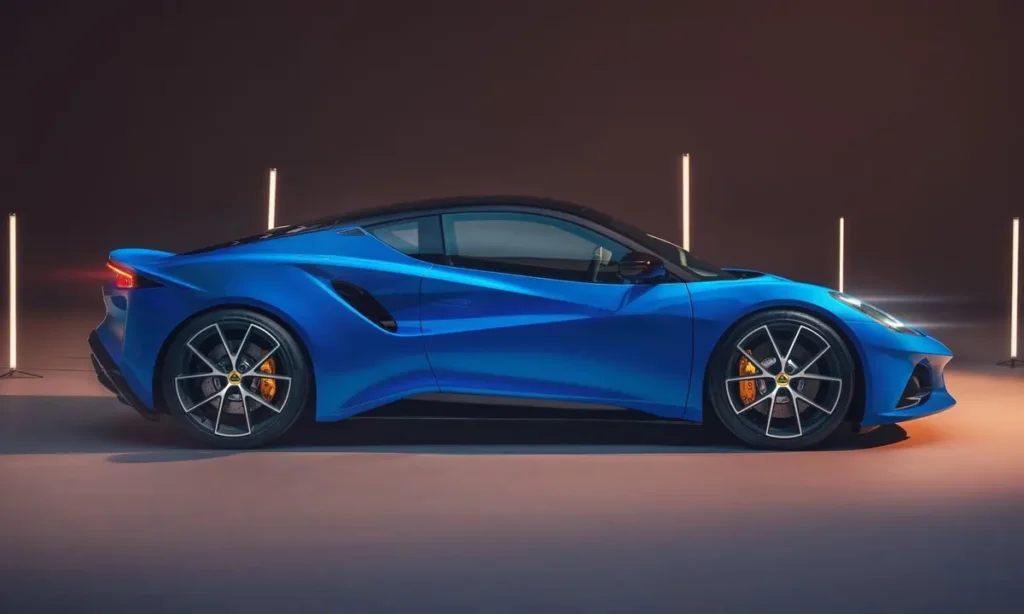
The Lotus Emira’s powertrain diversity — offering both a Toyota-sourced 3.5-litre supercharged V6 producing 400 horsepower and an AMG-sourced 2.0-litre turbocharged four-cylinder producing 360 horsepower — reflects a deliberate decision to provide buyers with engine character choices rather than merely output choices, acknowledging that the engine a driver’s car uses is not merely a performance specification but a fundamental dimension of the driving experience whose character shapes the entire ownership relationship.
The Toyota V6’s supercharged character — whose linear, immediate power delivery without turbocharger lag and whose naturally aspirated-adjacent throttle response provide the direct connection between driver input and vehicle response that the Emira’s communicative chassis philosophy demands as its powertrain complement — makes it the purist’s choice among the two options. The supercharger’s instant boost delivery eliminates the throttle-to-power delay that turbocharging imposes, producing a power delivery character whose honesty matches the chassis’s own commitment to unmediated communication.
The AMG four-cylinder’s turbocharged character provides a different but equally valid driving experience — with stronger mid-range torque delivery and a more modern acoustic signature that appeals to buyers whose experience base is the contemporary performance car landscape rather than the naturally aspirated sports car tradition. Both engines serve the Emira’s driving philosophy — the choice between them is one of character preference rather than quality differential.
Reason 3: The Weight That Was Never Added
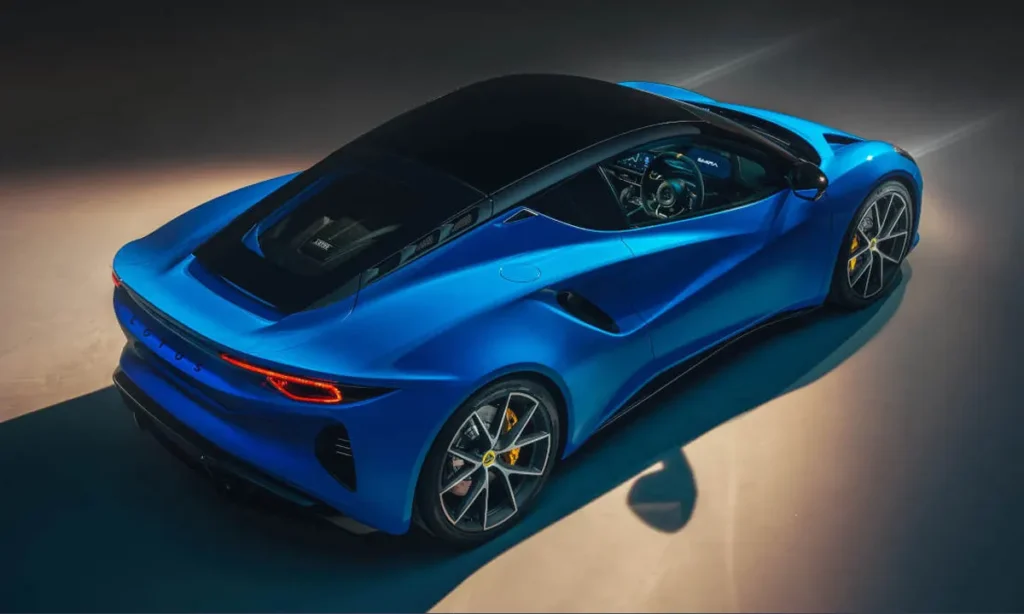
The Lotus Emira’s approximately 1,405-kilogram kerb weight — achieved in a car whose specification includes air conditioning, a premium sound system, comfortable leather interior and the technology content that contemporary buyers consider baseline — represents the most direct expression of Colin Chapman’s founding philosophy in a modern production context. The weight figure is not remarkable by the standards of a stripped track car or a purpose-built lightweight roadster. It is remarkable as the kerb weight of a fully equipped, genuinely comfortable, daily-usable GT car whose competitors — the Porsche 718 Cayman, the Alpine A110, the BMW M2 — carry between 100 and 300 kilograms more mass in comparable specification.
Every kilogram not present in the Emira is a kilogram that does not need to be accelerated, decelerated, steered or managed through a corner — a compound benefit whose cumulative effect on every dynamic interaction between car and driver produces the sensation of effortlessness that lightweight engineering uniquely enables. The Emira does not feel fast because it is powerful. It feels fast because it is light — and the distinction between these two sources of the fast sensation is precisely the distinction between a driver’s car and a performance car.
Reason 4: No Autonomous Assistance Layers Between Driver and Road
The Lotus Emira’s electronic assistance philosophy — whose stability control, traction management and ABS systems are present and functional but whose calibration prioritises driver involvement over driver substitution — reflects the same fundamental conviction that has always distinguished Lotus’s approach to vehicle dynamics from the approach of manufacturers whose electronic systems are designed to compensate for the gap between the car’s dynamic capability and the average driver’s skill level.
The Emira’s stability control system can be fully disabled — providing the driver with unmediated access to the chassis’s dynamic behaviour in a manner that most contemporary performance cars’ electronic systems, whose complete disengagement is either impossible or requires sequences whose complexity reflects the manufacturer’s ambivalence about the decision, do not permit with equivalent simplicity. When the systems are engaged, their calibration allows a degree of dynamic freedom whose generosity reflects Lotus’s assessment that the appropriate role of electronic assistance is to prevent genuine accidents rather than to prevent the controlled slides, rotation management and limit driving that skilled drivers seek and that the Emira’s chassis is designed to reward.
Reason 5: The Last Internal Combustion Lotus — Historical Significance as a Driver’s Car Dimension
The Lotus Emira’s status as the final internal combustion engine vehicle that Lotus will produce is not merely a historical footnote to a product that would be significant without it — it is a dimension of the ownership experience that transforms every drive into a conscious engagement with automotive history and every gear change into a gesture whose significance extends beyond the immediate journey.
Driving the last Lotus with a combustion engine is driving the conclusion of a philosophical lineage that began with the Seven, continued through the Elan, the Esprit, the Elise and the Evora and whose consistent thread — lighter, more communicative, more honest in its relationship between driver and machine than any competitor at any price — has produced more driver’s car benchmark moments than any other manufacturer of comparable production volume in the industry’s history. The Emira carries that lineage’s weight alongside its 1,405 kilograms of physical mass — and the awareness of that weight makes the experience of driving it richer, more resonant and more worthy of the attention that the last example of any great tradition deserves.
Future Lotus products will be extraordinary in their own ways. None of them will be this — and the drivers who understand what this is will ensure the Emira’s significance is remembered long after its production concludes.
Read: The Best Daily Driver Supercars for Reliability in 2026. Performance You Can Live With Every Day
Lotus Emira Key Specifications
| Category | V6 Supercharged | Four-Cylinder Turbo |
| Engine Source | Toyota 3.5L V6 | Mercedes-AMG 2.0L I4 |
| Power Output | 400 hp | 360 hp |
| Induction | Supercharged | Turbocharged |
| Transmission | 6-Speed Auto (Toyota) | 6-Speed DCT (AMG) |
| Kerb Weight | Approx. 1,405 kg | Approx. 1,395 kg |
| 0–60 mph | Approx. 4.2 sec | Approx. 4.3 sec |
| Top Speed | 180 mph | 177 mph |
| Chassis | Aluminium Bonded / Riveted | Aluminium Bonded / Riveted |
| Steering | Hydraulic Assisted | Hydraulic Assisted |
| Platform | Lotus Evora-Derived | Lotus Evora-Derived |
| Last ICE Lotus | Yes | Yes |
| Starting MSRP (US) | Approx. $96,000 | Approx. $82,000 |