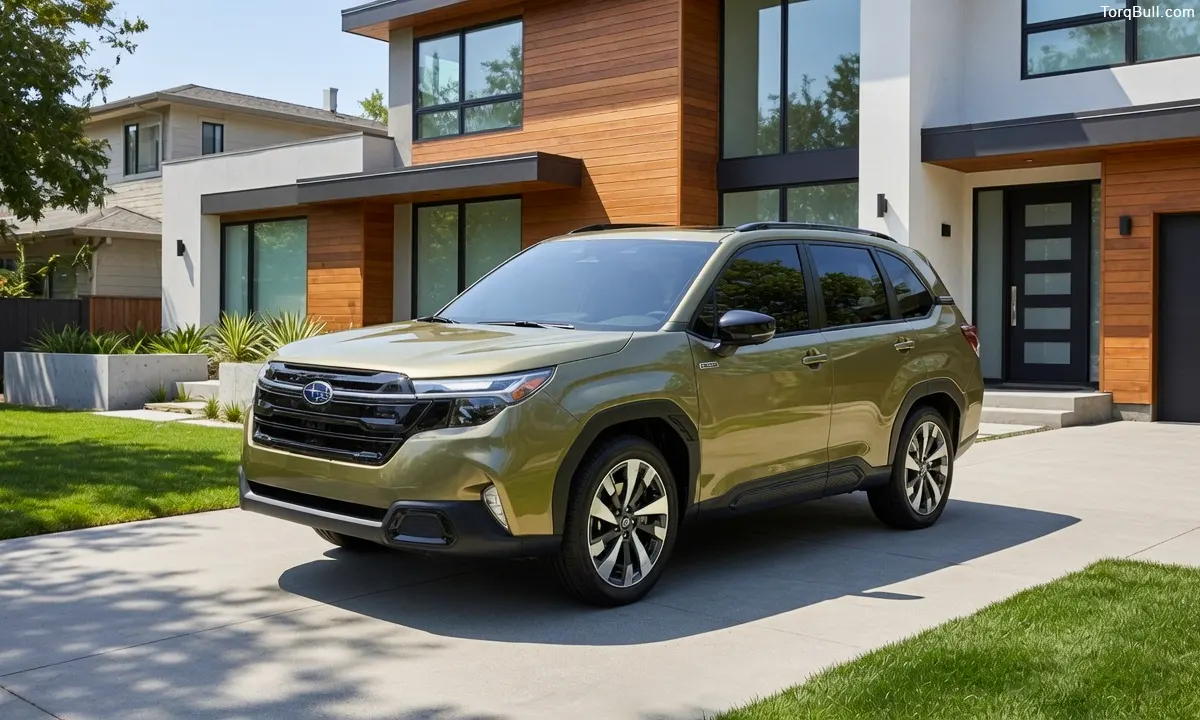
- The Subaru Forester delivers stronger-than-average resale value, with projected five-year depreciation of about 35%, outperforming many compact SUV rivals.
- Real-world market data shows recent Forester models retaining value exceptionally well, with the 2022 model holding roughly 76% of its original value after three years.
- For used-car shoppers, the 2024 Forester represents a particularly attractive value proposition, offering most of the vehicle’s useful life while avoiding the steepest portion of new-car depreciation.
The Subaru Forester’s resale value story is one of consistent, steady performance rather than dramatic outperformance — a vehicle whose value declines slowly and steadily rather than sharply in the first year before levelling off, the pattern that makes the Forester a genuinely sensible purchase for buyers who plan to own the vehicle for three to five years and then sell or trade. Independent professional evaluation confirms the Forester’s resale value as above average for the segment, and the five-year cost to own ranking in the top 10 percent among all compact SUV/crossovers confirms that the resale value advantage is real and practically meaningful for total ownership cost calculation. This complete guide examines the specific depreciation numbers, the best model year for used buyers, the competitor comparison and the factors that most protect Forester resale value across the ownership period.
The Five-Year Depreciation Number: 35 Percent and What It Means
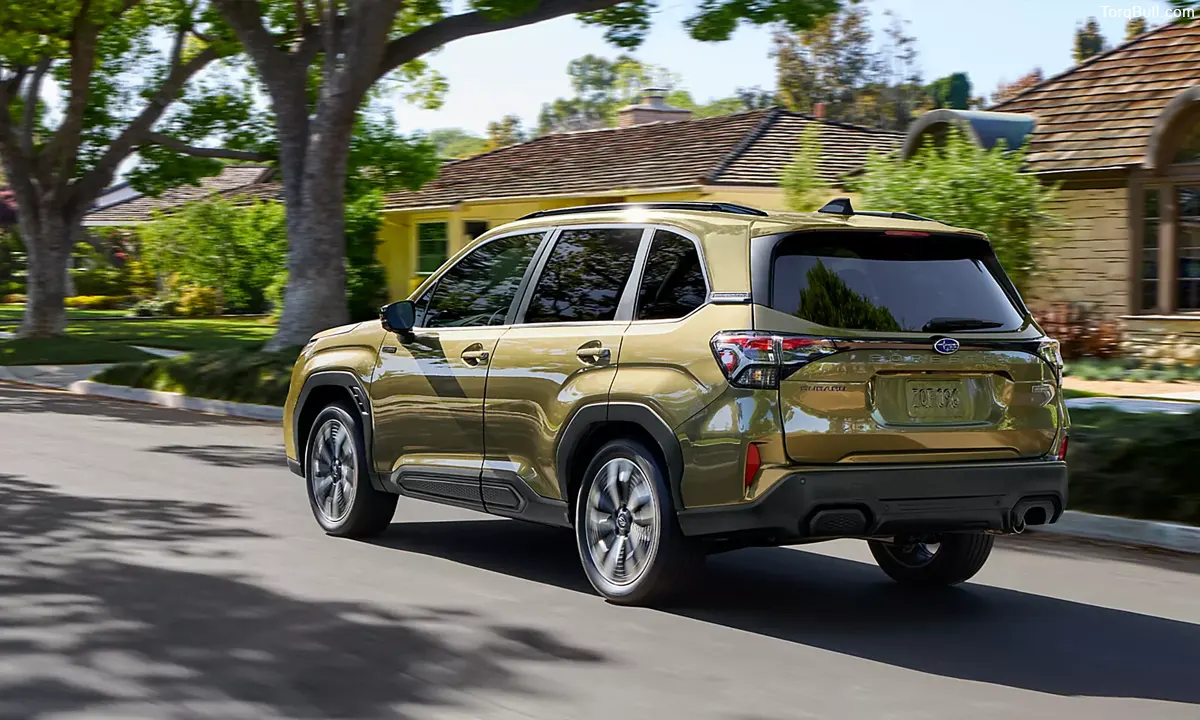
The Subaru Forester depreciates approximately 35 percent after five years of typical ownership, leaving an estimated five-year residual value of $25,269 from an original purchase price in the $31,000 to $38,000 range depending on trim level and configuration.
The 2025 Subaru Forester specifically depreciates $12,889 over five years, leaving a five-year residual value of $18,526 from its $31,415 MSRP starting point. This $12,889 five-year depreciation figure represents the total value loss that original buyers absorb and that used buyers avoid by purchasing at various points along this depreciation curve. The five-year cost to own of $47,838 for the 2025 Forester — which includes fuel, insurance, maintenance, repairs, financing and state fees alongside the $12,889 depreciation — places the Forester in the top 10 percent for cost to own among all compact SUV/crossovers in the segment.
This top-10-percent cost-to-own ranking is the most practically useful single resale value metric because it contextualises the Forester’s depreciation within the total ownership cost framework that most accurately represents the financial experience of five years of Forester ownership. A vehicle can have modest resale value but low maintenance costs, or strong resale value but high insurance and fuel costs — the total cost to own calculation combines all of these dimensions into the most complete financial picture.
The broader Subaru brand averages 39 percent depreciation after five years, placing the Forester’s 35 percent at a slightly better-than-brand-average position — confirming that the Forester performs above the Subaru average for value retention, though both the BRZ at 23.9 percent loss and the Crosstrek at 28.8 percent loss outperform the Forester within the Subaru lineup.
Read: Best Subaru Forester Trim to Buy 2026. Best Trim for Most SUV Shoppers
The Three-Year Depreciation Picture: Where the Forester Stands Out
The Subaru Forester’s most impressive value retention data comes from the three-year depreciation analysis, where the vehicle’s slow-and-steady value retention pattern most clearly distinguishes it from the average compact SUV that drops sharply in year one and two before levelling off.
The 2022 Subaru Forester depreciated approximately 24 to 28 percent over three years, retaining approximately 72 to 76 percent of its value — placing it in the top 10 percent for depreciation among SUVs in its class. This three-year retention figure is the specific data point that confirms the Forester’s value retention advantage at the medium-term ownership horizon where many family buyers make their vehicle transition decisions.
Subaru vehicles have an average depreciation of 30 percent in the first three years from new. The Forester at 24 to 28 percent three-year depreciation performs noticeably better than the brand’s three-year average, confirming that the Forester specifically benefits from the combination of factors — standard AWD, strong brand loyalty, outdoor lifestyle credibility and practical family appeal — that sustain used-market demand above what the broader Subaru average produces.
Unlike most vehicles whose value falls fast when new and then levels off, the Forester’s declining value is described as slow and steady, with no obvious entry points on what is a particularly good model year to buy. This steady depreciation pattern has specific financial implications: buyers cannot dramatically time the used market to catch a sharp depreciation event, but owners also experience less dramatic first-year value loss than vehicles with more front-loaded depreciation curves.
The Best Used Value Model Year: 2024 Forester
The 2024 Subaru Forester is the top-ranked model year for best value among Forester purchasers — paying only 83 percent of the original new price while retaining 92 percent of the vehicle’s useful life remaining. The 2023 and 2021 model years are also identified as attractive alternatives that provide relatively good value within the Forester used market.
The 2024 Forester’s specific value proposition — paying 83 cents for 92 cents of remaining value — represents the optimal balance of first-year depreciation absorbed and useful life remaining that independent depreciation analysis identifies as the most financially efficient used vehicle purchase point for the Forester specifically. The first-year new-to-used transition loss that original buyers absorb is captured in this 17 percent of original price already paid by the first owner, leaving the used buyer to acquire 92 percent of the vehicle’s practical service life at 83 percent of new cost.
This used value advantage of the 2024 Forester is most relevant for buyers who are specifically considering whether to purchase new or used and who are prioritising maximum value per dollar spent over the ownership of the most current model year’s feature set.
Read: Subaru Forester Real World MPG 2026. Does It Live Up to EPA Estimates?
Subaru Forester Resale Value — Complete Depreciation Reference Chart
| Specification | Data Point | Notes |
| Five-year depreciation rate | 35 percent | Better than Subaru brand average of 39 percent |
| 2025 Forester five-year depreciation | $12,889 | From $31,415 starting MSRP |
| 2025 Forester five-year residual value | $18,526 | Estimated at average mileage |
| Five-year cost to own (2025 Forester) | $47,838 | Top 10 percent among compact SUV/crossovers |
| Three-year depreciation (2022 Forester) | 24 to 28 percent | Top 10 percent among SUVs in class |
| Three-year value retained (2022 Forester) | 72 to 76 percent | Above segment average |
| Subaru brand three-year average depreciation | 30 percent | Forester outperforms brand average |
| Best used model year value | 2024 Forester | 83 percent of new price, 92 percent life remaining |
| Second best used value options | 2023 and 2021 | Also identified as good value choices |
| Forester depreciation pattern | Slow and steady | No sharp first-year drop like many competitors |
| Forester resale value professional assessment | Above average for segment | Confirmed in independent professional evaluation |
| Subaru brand best resale overall | BRZ at 76.1 percent retained | Forester strong but not top within Subaru lineup |
Read: Subaru Forester Long Term Ownership Review 2026. Why It Remains a Favorite Among SUV Buyers
Why the Forester Holds Its Value: The Factors Behind the Performance
The Subaru Forester’s above-average resale value is not accidental but reflects a specific combination of vehicle characteristics and brand attributes that together sustain used-market demand at prices above what competing compact SUVs command at equivalent age and mileage.
Standard all-wheel drive is the most immediately differentiating value factor. Every Forester across every trim and every model year includes Subaru’s Symmetrical All-Wheel Drive as standard equipment without additional cost. In the used market, buyers who specifically need AWD for winter traction, rural road access or outdoor lifestyle applications seek Forester examples knowing that AWD is guaranteed regardless of trim or specification — eliminating the research uncertainty that buyers of competing vehicles face when verifying whether any specific used example includes the AWD option or was purchased without it. This guaranteed AWD standard specifically widens the pool of motivated used buyers who will pay a premium for the confidence it provides.
Subaru’s strong safety features, AWD and brand loyalty help maintain value better than many competitors. The safety reputation — confirmed by strong IIHS and NHTSA ratings across recent Forester generations — provides specific reassurance to used buyers who are purchasing family vehicles for children and family safety. Safety-conscious used buyers specifically seek vehicles with documented strong safety credentials, and the Forester’s consistent safety performance across generations sustains this dimension of used-market demand.
The outdoor lifestyle and adventure-oriented brand identity that Subaru has cultivated across decades of consistent marketing and genuine off-road capable product design creates loyal repeat buyers who specifically seek used Subaru examples when upgrading. This brand loyalty reduces the price sensitivity that buyers without specific brand affinity would bring to the transaction, sustaining used transaction prices above what equivalent competing alternatives achieve.