It is six inches longer than the standard bZ. It has 375 horsepower and 396 pound-feet of torque from dual electric motors. It hits 60 miles per hour in 4.4 seconds. It offers 74 cubic feet of cargo space with the rear seats folded. It comes with standard all-wheel drive, roof rails, 8.4 inches of ground clearance, and an available all-terrain tire option. And it starts at $46,750 with heated seats, a surround-view camera, a 14-inch touchscreen, and dual wireless charging pads already included. The 2026 Toyota bZ Woodland is the electric wagon nobody knew Toyota was building, and it might just be the most useful new EV of the year.
I want to be upfront about something. The words rugged and electric wagon are not a combination that existed in any mainstream automotive product conversation eighteen months ago. The rugged part belonged to trucks and body-on-frame SUVs. The wagon part belonged to the nostalgic memory of station wagons that disappeared from American showrooms decades ago. And the electric part was supposed to belong to smooth, futuristic, aerodynamic things with nothing to do with off-road hardware or cargo practicality.
The bZ Woodland decided not to care about any of those category rules. And the result is genuinely interesting.
What the bZ Woodland Actually Is

Toyota describes the bZ Woodland as a separate, unique body style rather than simply a trim level of the standard bZ. That distinction matters, because the Woodland is not just a bZ with extra plastic cladding and a different badge. It is a physically different vehicle.
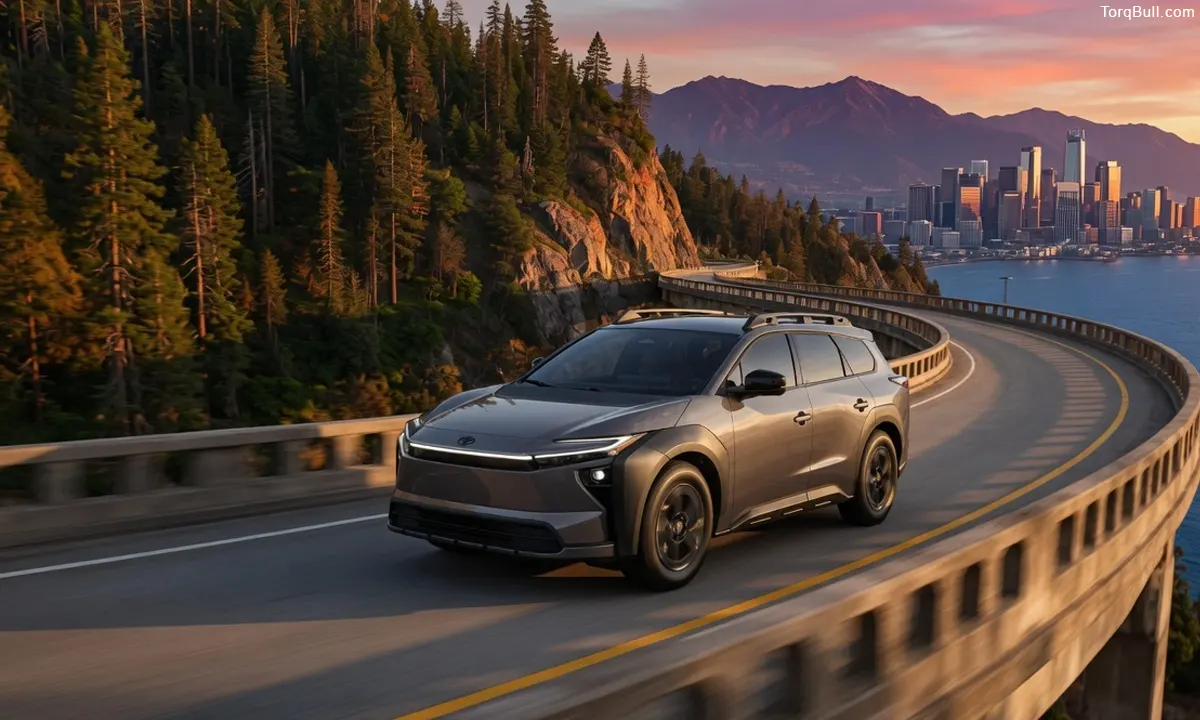
The bZ Woodland shares its 112.2-inch wheelbase with the standard bZ but adds 5.6 inches of length behind the rear wheels. All of that additional length goes directly into cargo space. The roofline extends and straightens in a way that eliminates the raked, tapering rear end of the standard bZ and replaces it with the squared-off, more vertical tail that station wagon buyers specifically value because it creates a taller, more accessible cargo opening.
The effect on cargo volume is dramatic. Where the standard bZ offers 28 cubic feet behind the second row, the Woodland delivers 34 cubic feet, six more than its sibling. Fold the rear seats flat and the difference grows further, with the Woodland providing 74 cubic feet of flat-floor cargo space compared to approximately 68 cubic feet in the standard model. For families who need to move bikes, camping gear, sports equipment, kayaks, or any other combination of outdoor lifestyle cargo that compact SUVs struggle to accommodate, this difference is immediately and practically meaningful.
The exterior visual identity reinforces the adventure utility positioning. A chunkier front bumper, black plastic wheel arch cladding, roof rails, a unique full-width taillight design at the rear, and an off-road-inspired lower bumper collectively give the Woodland a distinctively capable visual presence that is more restrained and confident than the flashy aesthetic some competitors use. One professional reviewer described it accurately as inconspicuous confidence.
375 Horsepower in a Family Wagon

Here is where the bZ Woodland makes its most surprising argument, because 375 horsepower is not a number you typically associate with a practical, cargo-focused family vehicle starting at $46,750.
The dual-motor all-wheel-drive system uses identically sized electric motors on each axle, a configuration that produces 375 horsepower and 396 pound-feet of torque from the same 74.7-kilowatt-hour battery pack found in the standard bZ and the bZ C-HR. The peak output figure is actually 37 horsepower more than either sibling because the Woodland’s motor configuration extracts more total output from the same battery architecture.
The result is a zero to 60 time of 4.4 seconds, approximately half a second quicker than either the standard bZ or the C-HR. In a vehicle that weighs approximately 4,545 pounds and is primarily designed for family utility, 4.4 seconds to 60 miles per hour is startling. Professional testers who drove the bZ Woodland on roads around Ojai, California, used the phrase potent powertrain and spacious cabin in the same sentence, confirming that the power delivery matches what the numbers promise rather than merely existing on paper.
Standard all-wheel drive across every configuration is a specific decision that differentiates the Woodland from the standard bZ, which offers front-wheel-drive variants. This means every single bZ Woodland buyer gets both axles engaged, the full 375-horsepower output, and the traction benefits that the adventure positioning demands.
The Honest Range Conversation
Here is where I owe you complete transparency, because range is the most important practical metric in any EV conversation and the bZ Woodland’s numbers require honest context.
With the standard all-season tires, the bZ Woodland is rated at 281 miles of EPA-estimated range. This is genuinely competitive for a dual-motor AWD vehicle in this price range and cargo class.
Choose the optional Dunlop Grandtrek all-terrain tires, the ones that give the Woodland its most adventurous capability and visual presence, and that range drops to 260 miles. The 21-mile penalty is the straightforward physics consequence of the additional rolling resistance that all-terrain rubber creates relative to optimized highway all-season tires.
For the practical majority of daily and weekly use scenarios, 260 to 281 miles covers American driving habits with comfortable margin. The average American drives fewer than 40 miles daily, meaning even the lower-range all-terrain equipped Woodland provides more than six days of typical driving on a single charge. For weekend adventures to campsites, trailheads, or parks within 100 to 130 miles, the bZ Woodland handles the round trip without requiring an intermediate charge.
Compared to some long-range competitors at similar price points, the bZ Woodland concedes ground. Buyers for whom maximum range is the single most important specification will find alternatives that offer more. Buyers for whom the combination of cargo space, all-wheel-drive traction, off-road capability and standard equipment value represents the most relevant package will find the 260 to 281-mile range entirely adequate.
The Interior That Comes Fully Equipped


The bZ Woodland makes a specific value argument through its standard equipment package, and it is worth spelling out exactly what is included at each price point.
The base bZ Woodland at $46,750 comes standard with SofTex trimmed seats, heated front and rear outboard seats, a heated steering wheel, dual wireless phone chargers, a 14-inch touchscreen, a digital instrument cluster, four USB-C charging ports throughout the cabin, a surround-view camera system, and Toyota Safety Sense 3.0 with automatic emergency braking, adaptive cruise control, lane departure alert and automatic high beams.
Toyota also includes a 120-volt and 240-volt dual-voltage charging cable and a NACS to CCS charging adapter as standard equipment, meaning the Woodland arrives ready to charge at home and at public stations without requiring the buyer to purchase or locate separate accessories.
The Premium trim at $48,850 adds additional features above this already comprehensive baseline.
The 14-inch touchscreen interface retains physical buttons for crucial frequently-adjusted functions including temperature and volume control, a decision that respects the legitimate criticism that touchscreen-only interfaces create during driving. Climate adjustment and audio volume should be operable by feel without looking at a screen, and the bZ Woodland keeps this tactile capability while still delivering the large modern display that buyers in this segment expect.
Read: Why the 2026 Toyota C-HR Is the Ultimate Electric Commuter
2026 Toyota bZ Woodland Complete Specification Chart
| Specification | Standard bZ Woodland | Premium Trim | Notes |
| Starting Price | $46,750 | $48,850 | Standard equipment is comprehensive at both |
| Powertrain | Dual electric motor AWD | Dual electric motor AWD | AWD standard on all configurations |
| Peak Horsepower | 375 hp | 375 hp | 37 hp more than standard bZ and C-HR |
| Peak Torque | 396 lb-ft | 396 lb-ft | |
| Zero to 60 MPH | 4.4 seconds | 4.4 seconds | Approximately 0.5 sec quicker than standard bZ |
| Battery Capacity | 74.7 kWh | 74.7 kWh | Same pack as standard bZ and C-HR |
| Range with all-season tires | 281 miles EPA estimated | 281 miles EPA estimated | |
| Range with all-terrain tires | 260 miles EPA estimated | 260 miles EPA estimated | 21-mile penalty vs all-season |
| All-terrain tire option | No additional cost | No additional cost | Dunlop Grandtrek rubber |
| Ground Clearance | 8.4 inches | 8.4 inches | Slightly higher than standard bZ |
| Overall Length | 190.2 inches | 190.2 inches | 5.6 inches longer than standard bZ |
| Shared Wheelbase | 112.2 inches | 112.2 inches | Same as standard bZ |
| Cargo behind second row | 34 cubic feet | 34 cubic feet | 6 more than standard bZ |
| Cargo maximum (folded) | 74 cubic feet | 74 cubic feet | Flat-floor configuration |
| Curb Weight | Approximately 4,545 lbs | Approximately 4,545 lbs | |
| Charging Port | NACS standard | NACS standard | Toyota Supercharger network access |
| Charging Cable | 120V and 240V dual-voltage included | 120V and 240V dual-voltage included | Included at no additional cost |
| Heated Seats | Front and rear outboard, standard | Front and rear outboard, standard | Rear standard is segment differentiator |
| Heated Steering Wheel | Standard | Standard | |
| Wireless Chargers | Dual pads, center console | Dual pads, center console | |
| Touchscreen | 14 inches | 14 inches | Physical buttons for temp and volume retained |
| Safety Suite | Toyota Safety Sense 3.0 | Toyota Safety Sense 3.0 | Full suite, standard |
Where the bZ Woodland Fits in Your Life
Professional reviewers who drove the bZ Woodland on both pavement and clay trails near Ojai, California, came back with a consistent characterization that captures the vehicle’s identity better than any specification list can. It is fast without spectacle. Capable without cosplay. Useful without sacrificing functionality for vanity.
That characterization is a specific compliment aimed at a specific problem in the current EV market, which is full of vehicles that perform well on promotional videos and controlled test routes but create cognitive dissonance when you actually try to load a mountain bike into one or navigate a gravel forest service road without worrying about the low-hanging fascia.
The bZ Woodland is for the family that does actual outdoor things, not family that performs outdoor identity. It carries bikes. It navigates dirt roads confidently. It washes out easily after a muddy weekend because the cargo floor is flat and the interior materials are practical. And it gets you to the trailhead and back at 4.4 seconds to 60 miles per hour in a vehicle that starts at $46,750 with heated rear seats already included.
The range is not class-leading. The design is not polarizing or dramatic. But the package, taken as a complete answer to the specific question of what should an adventurous family EV be, is genuinely persuasive.