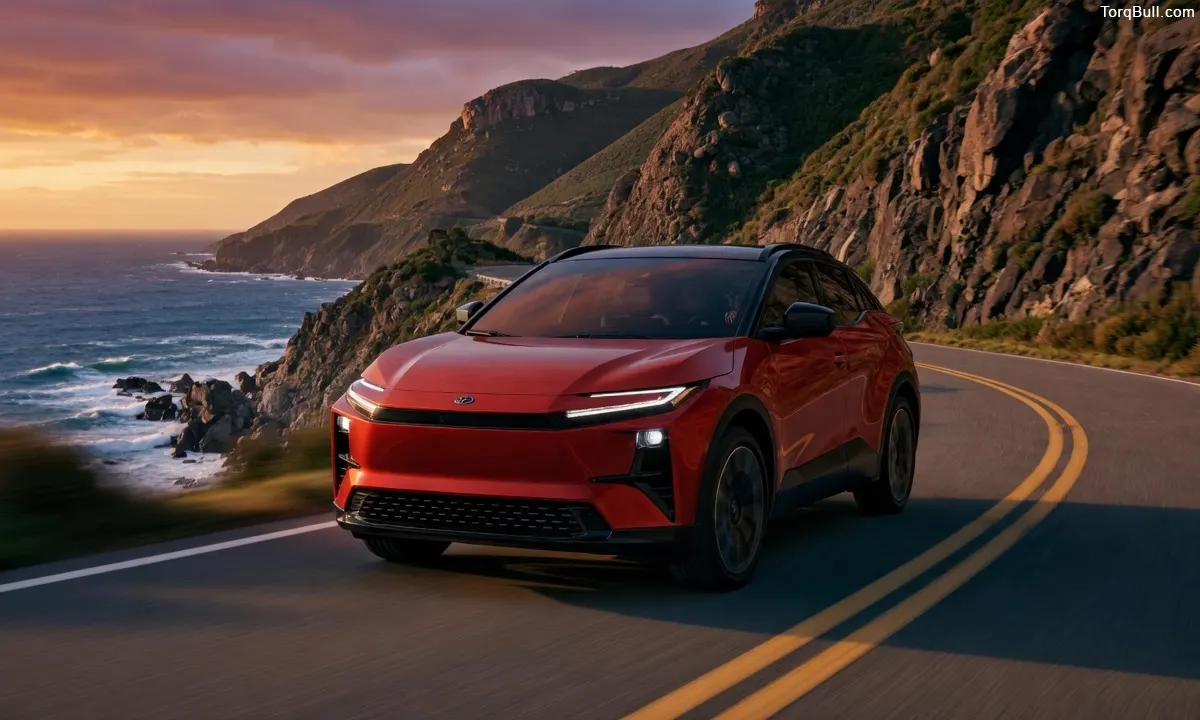
- The 2026 Toyota C-HR EV is far more than a revival of the original model, delivering 338 horsepower, standard AWD and up to 290 miles of range.
- Toyota has transformed the C-HR from a style-focused crossover into a genuinely competitive electric vehicle.
- Features like a 14-inch touchscreen and Tesla Supercharger access make the new C-HR much more compelling than its predecessor.
Let Me Be Completely Honest With You. When Toyota First Killed the C-HR After 2021, I Was Not Exactly Heartbroken. The Original Was a Quirky Little Car That Prioritized Style Over Substance, and Most of the Automotive World Shrugged and Moved On. So When Toyota Announced It Was Bringing the C-HR Back as a Full Electric Vehicle for 2026, I Expected More of the Same. What I Got Instead Was 338 Horsepower, Standard All Wheel Drive, Up to 290 Miles of Range, a 14-Inch Touchscreen, Heated Seats and Steering Wheel, and Access to the Tesla Supercharger Network. That Shrug Turned Into a Very Different Reaction Entirely
I have driven a lot of electric vehicles over the past few years. Some impressed me with range. Some impressed me with technology. Some impressed me with their ability to feel genuinely fun rather than just responsible. The 2026 Toyota C-HR is one of the first EVs I can think of that manages to check all three of those boxes at a price that starts at 38,450 dollars, sitting below the base all wheel drive Tesla Model Y. If you are a daily commuter who has been waiting for an EV that is quick, practical, good looking, and actually easy to charge without planning your life around it, your wait is over. Let me walk you through exactly why.
The Performance That Nobody Saw Coming
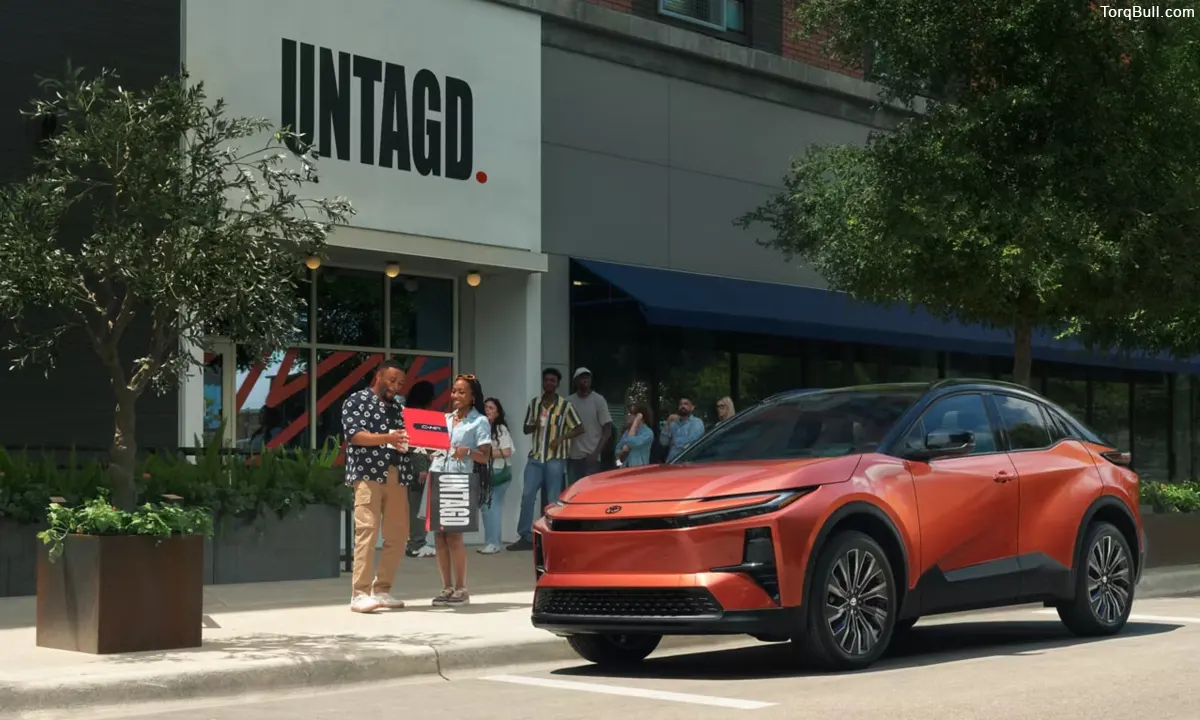
Here is what the original C-HR produced. A 2.0-litre naturally aspirated four cylinder. A CVT. About 144 horsepower. It got you where you were going, slowly and without much drama.
The 2026 C-HR produces 338 combined horsepower and 323 pound-feet of torque from dual electric motors, one on each axle, for standard all wheel drive on every single trim level. Zero to 60 miles per hour takes 4.9 seconds, with some tests recording it closer to 4.8 seconds. For context, that is quicker than a lot of sports cars that cost significantly more than this compact crossover.
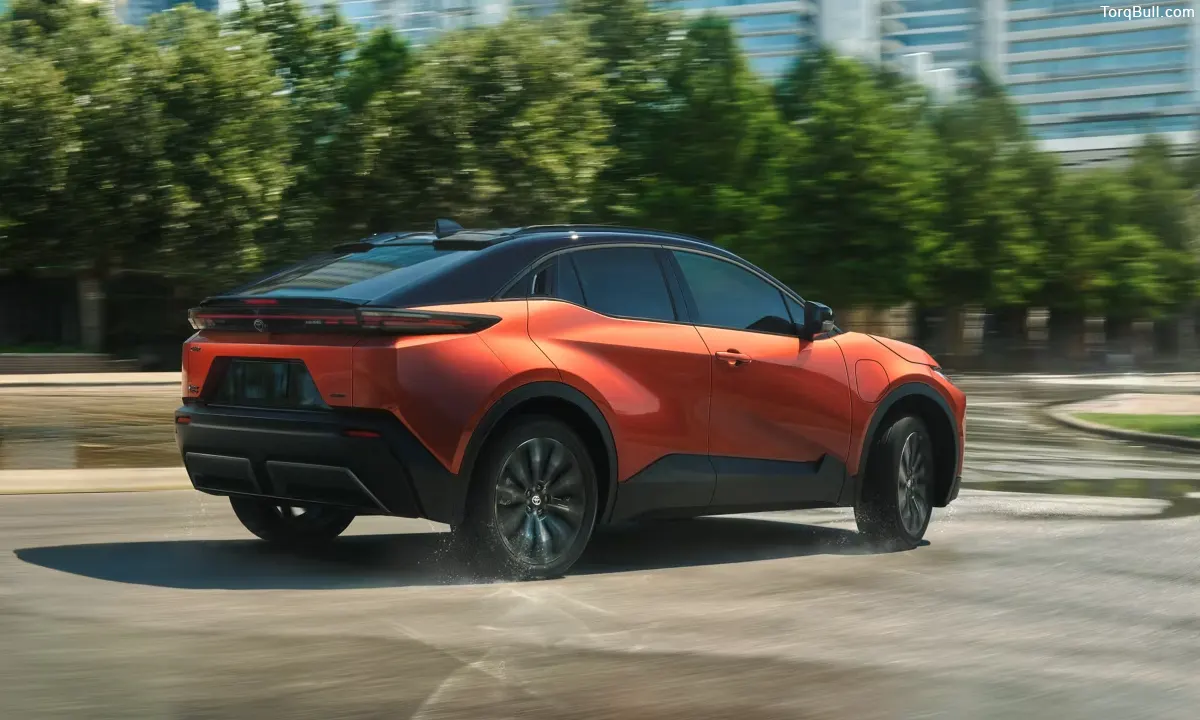
The low center of gravity from the underfloor mounted battery pack, combined with suspension that was specifically tuned for this platform including spring and damper performance and anti-roll bar stiffness, produces a car that reviewers are specifically calling out for its sharp cornering abilities and ride comfort in the same sentence. That combination is not easy to achieve, and Toyota nailed it.
Paddle shifters let you dial in the level of regenerative braking, choosing from four selectable modes to match the style of driving or the road conditions. For city commuters who want to maximize regeneration through stop-and-go traffic, this level of control is genuinely useful rather than a feature that lives forever untouched in a menu.
Read: How Xiaomi’s 1,900 HP Vision GT Rewrites the Rules of Hypercar Aerodynamics
The Range That Actually Works for Real Life
One of the things that frustrates me most about the way EVs are marketed is the gap between the headline range number and what people actually experience in daily life. Winter temperatures, highway speeds, and running the heater or air conditioning can all chip away at an advertised range in ways that leave new EV owners feeling misled.
So let me be straight with you about where the C-HR sits. The SE trim is rated at 287 miles, and the XSE comes in at 273 miles, likely reflecting the larger 20-inch wheels that increase rolling resistance slightly. Both are powered by a 74.7 kilowatt-hour battery with an 11-kilowatt onboard AC charger.
That range of 287 miles is, in practical terms, enough for most Americans to commute for an entire week on a single charge. The average American commutes roughly 30 miles per day round trip, meaning a fully charged C-HR could theoretically handle nearly 10 days of commuting before needing a plug. Even accounting for real-world range that falls 10 to 15 percent below the EPA figure in cold weather, you are still looking at a vehicle that most commuters would plug in every few days at most.
And when you do need to charge away from home? The NACS charging port gives the C-HR immediate access to over 12,000 Tesla Supercharger locations across North America, the most reliable fast charging network in the country. Under ideal conditions, a 10 to 80 percent charge takes around 30 minutes on a 150-kilowatt DC fast charger. No separate adapter, no hunting for working charging stations, no dealing with multiple apps and payment systems. You just pull up and plug in.
The Interior That Took Everyone By Surprise
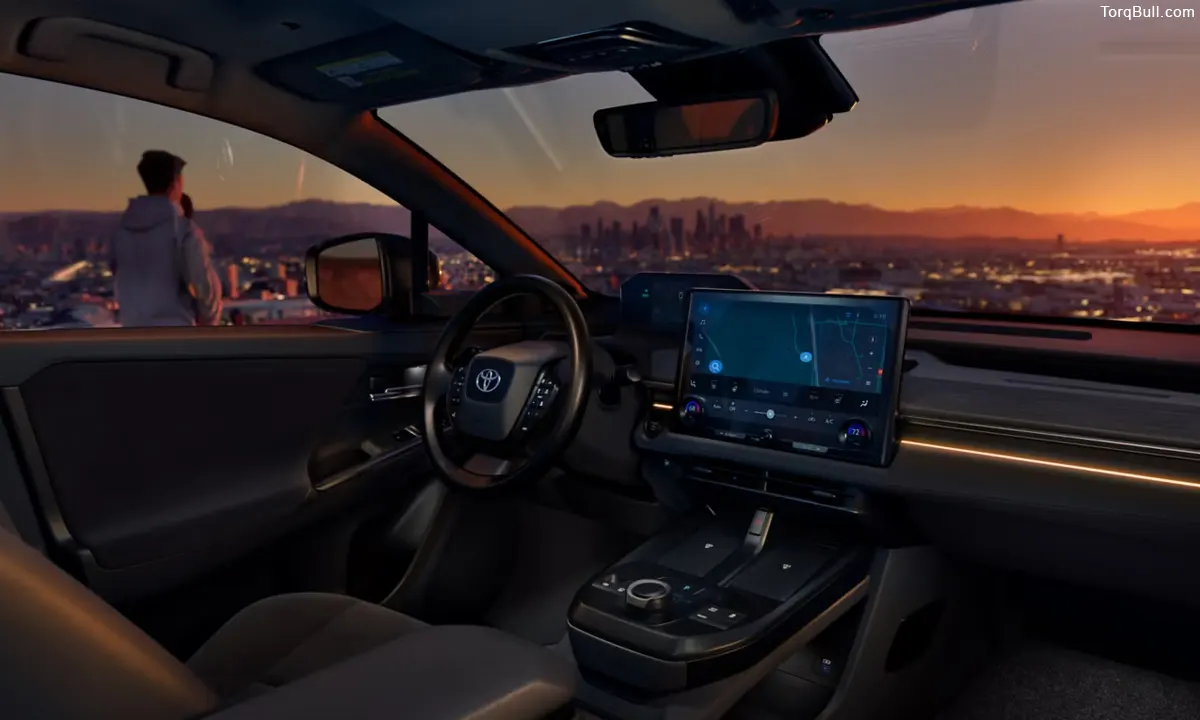
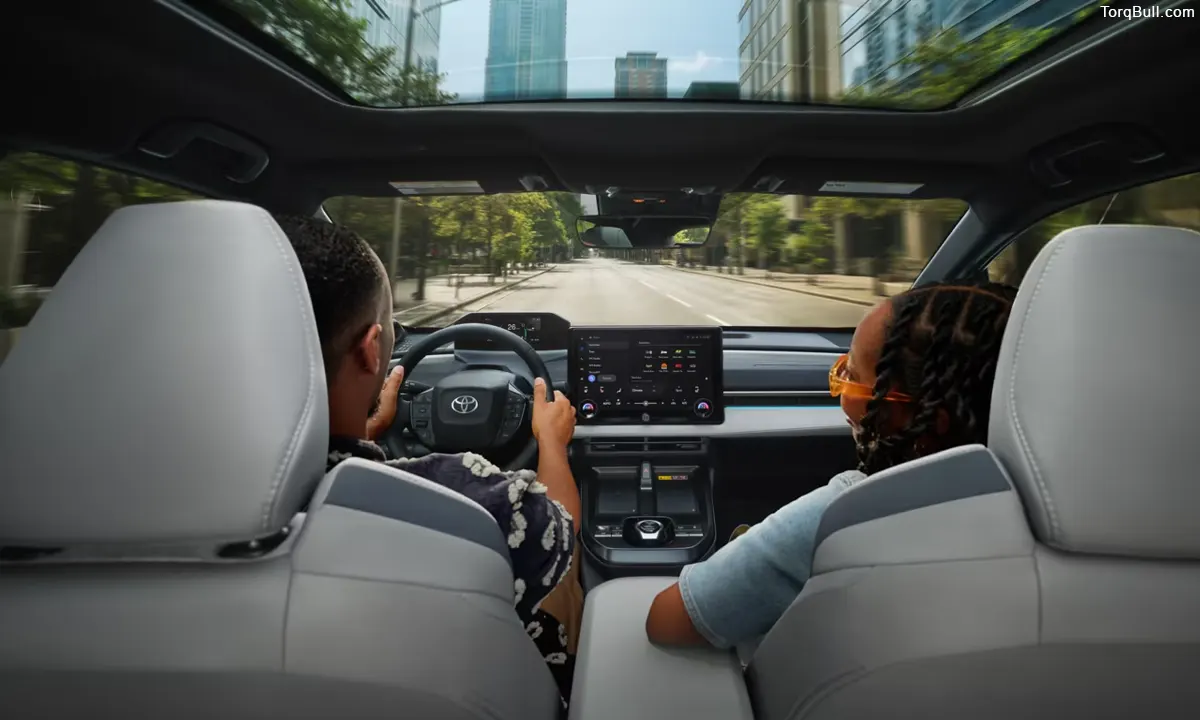
I want to spend some real time here, because the interior is where a lot of people’s expectations will be exceeded the most dramatically.
The original C-HR had a cabin that one reviewer memorably described as emphasizing style over function, with heavy plastic use that felt like an afterthought. The 2026 version is a completely different story.
Standard SE equipment includes a massive 14-inch center touchscreen running Toyota’s Audio Multimedia system, a fully digital gauge cluster directly in front of the driver, dual wireless Qi charging pads in the center console, heated front seats and a heated steering wheel, 64-color ambient lighting, SofTex upholstery, a large glass roof panel that creates a light and airy feel, three USB-C ports throughout the cabin, and Toyota Safety Sense 3.0, which covers automatic emergency braking with pedestrian detection, adaptive cruise control, lane departure alert, and automatic high beams. All of that is the base trim.
Step up to the XSE and you add SofTex with synthetic suede seat surfaces, a driver memory seat with 8-way power for both front occupants, 20-inch gun metal finished wheels, a digital rearview mirror with HomeLink, and additional driver assistance systems. You can also add a JBL premium audio system with six speakers and a panoramic view monitor depending on configuration.
For a vehicle starting at 38,450 dollars, this is genuinely impressive. When reviewers note that the C-HR is priced lower than the base all wheel drive Model Y while delivering a compelling blend of style and abilities with sharp cornering and ride comfort, that is not just enthusiasm. That is a specific value proposition that is hard to argue with on a spreadsheet.
2026 Toyota C-HR Key Specifications and Equipment Chart
| Category | SE Trim | XSE Trim | Notes |
| Starting Price | $38,450 including destination | $40,450 including destination | Both below base AWD Model Y |
| Horsepower | 338 combined hp | 338 combined hp | Dual electric motor setup |
| Torque | 323 pound-feet | 323 pound-feet | One motor per axle |
| 0 to 60 MPH | 4.9 seconds | 4.9 seconds | Some tests show 4.8 sec |
| Battery Capacity | 74.7 kWh | 74.7 kWh | Lithium-ion underfloor mounted |
| Range (EPA Estimated) | 287 miles | 273 miles | XSE uses larger 20-inch wheels |
| Charging Port | NACS standard | NACS standard | Tesla Supercharger access |
| DC Fast Charging | 150 kW | 150 kW | 10 to 80% in approx 30 minutes |
| AC Onboard Charger | 11 kW | 11 kW | Dual-voltage AC cable included |
| Drivetrain | Standard AWD | Standard AWD | Every trim, no FWD option |
| Touchscreen | 14 inches | 14 inches | Extends outward for access |
| Safety Suite | Toyota Safety Sense 3.0 | Toyota Safety Sense 3.0 | Standard across both trims |
| Heated Seats and Wheel | Standard | Standard | Even on base SE |
| Wireless Chargers | Two front Qi pads | Two front Qi pads | Dual charging standard |
| Seat Material | Fabric and SofTex | SofTex and synthetic suede | XSE upgrade |
| Driver Seat Power | 8-way power | 8-way power plus memory | XSE adds memory function |
| Cargo Space | 25.4 cubic feet | 25.4 cubic feet | 60/40 fold-flat rear seats |
The One Honest Limitation Worth Mentioning
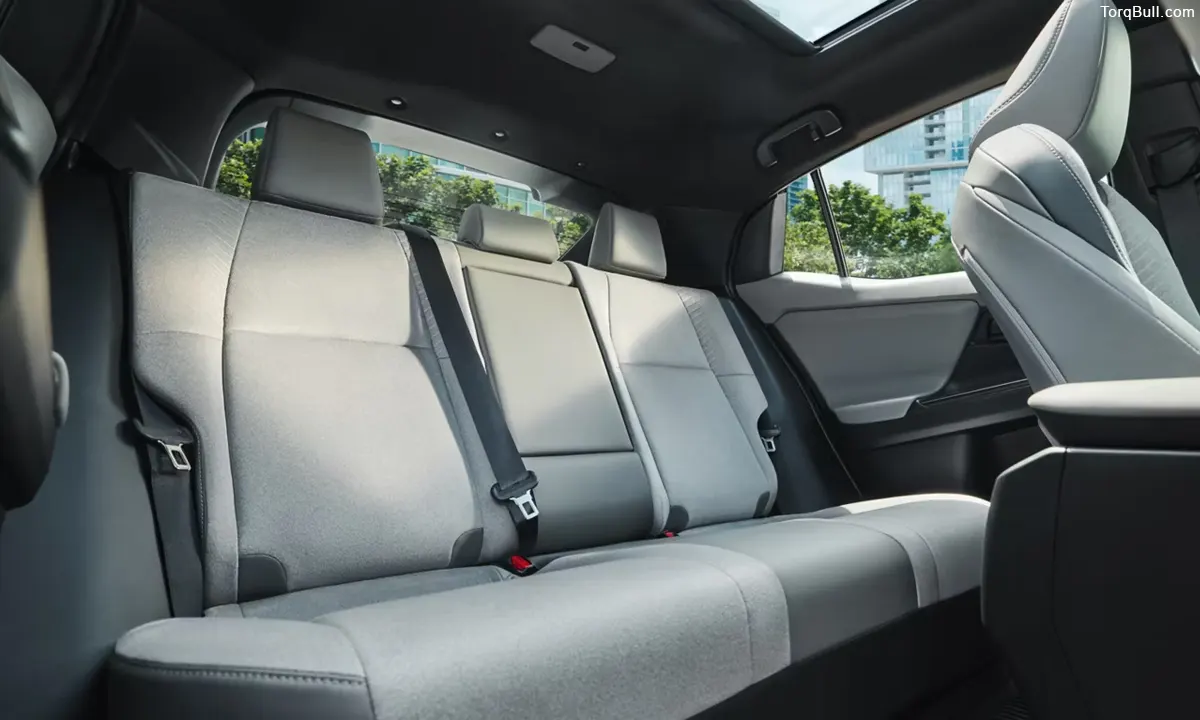
I always think it is important to be upfront about the things that are not perfect, because a review that only tells you the good stuff is not actually doing you any favors.
The rear seat is where the C-HR asks for some compromise. Multiple professional reviewers specifically called out the rather confined rear seat as the vehicle’s one notable limitation, and this is consistent with the compact dimensions of the crossover body style. If you regularly carry adults in the back seat on longer trips, you might find the rear accommodation a bit tight. For most daily commuter scenarios, this will rarely matter, since most people driving to and from work are not shuttling adults in the back. But if you have a family and the rear seat will see real, regular adult use, it is worth sitting in the back yourself before you commit.
Everything else about this vehicle, from the performance to the range to the charging convenience to the interior quality, punches meaningfully above its weight class and its price point.
The Bottom Line
Here is where I land after spending time with everything the 2026 C-HR brings to the table. This is not a compliance EV. It is not a vehicle that Toyota built because it had to. The 2026 C-HR is a vehicle that clearly had an actual brief, a set of goals to achieve and a specific buyer in mind, and it delivered on all of them.
For the American commuter who wants to stop visiting gas stations, wants a car that is genuinely fun to drive on the weekend, wants the peace of mind of Toyota reliability and the safety net of the most expansive fast charging network in the country, and wants all of that without crossing the 40,000 dollar line, the 2026 C-HR is the answer. The original deserved its lukewarm reception. This one deserves your full attention.