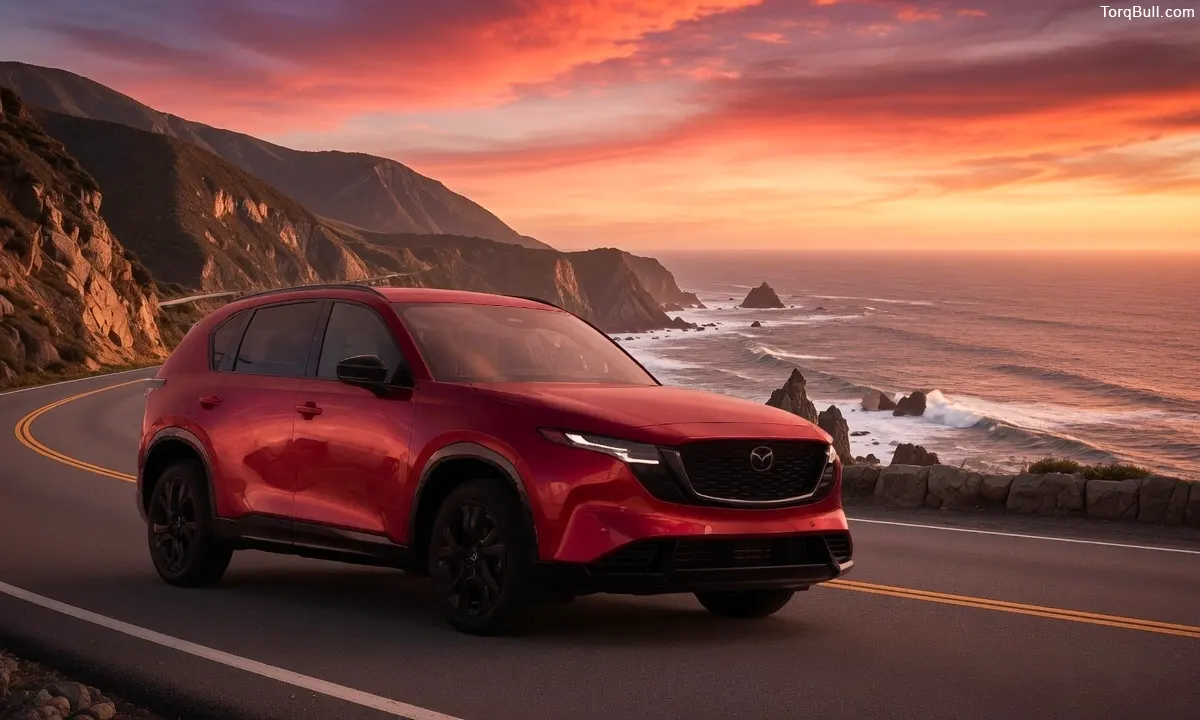
If you have driven a recent Mazda, you know the dial. That rotary knob on the center console, the one you twisted and clicked to navigate the screen because Mazda stubbornly refused to let you just reach up and touch it. Mazda swore it was safer, less distracting, more BMW like. A lot of drivers loved the purity. A lot of others wanted to fling that knob into a lake.
Well, pour one out, because the 2026 CX-5 just killed it.
This is a completely redesigned third generation of Mazda’s best selling vehicle, and the headline is a total philosophical reversal. The rotary commander is gone. In its place sits a huge touchscreen running Google. For a brand that built its identity on resisting exactly this, it is a genuinely seismic shift. And honestly? It was overdue. Let me walk you through what changed, because this is a much bigger deal than a typical refresh.
The Screen That Changes Everything
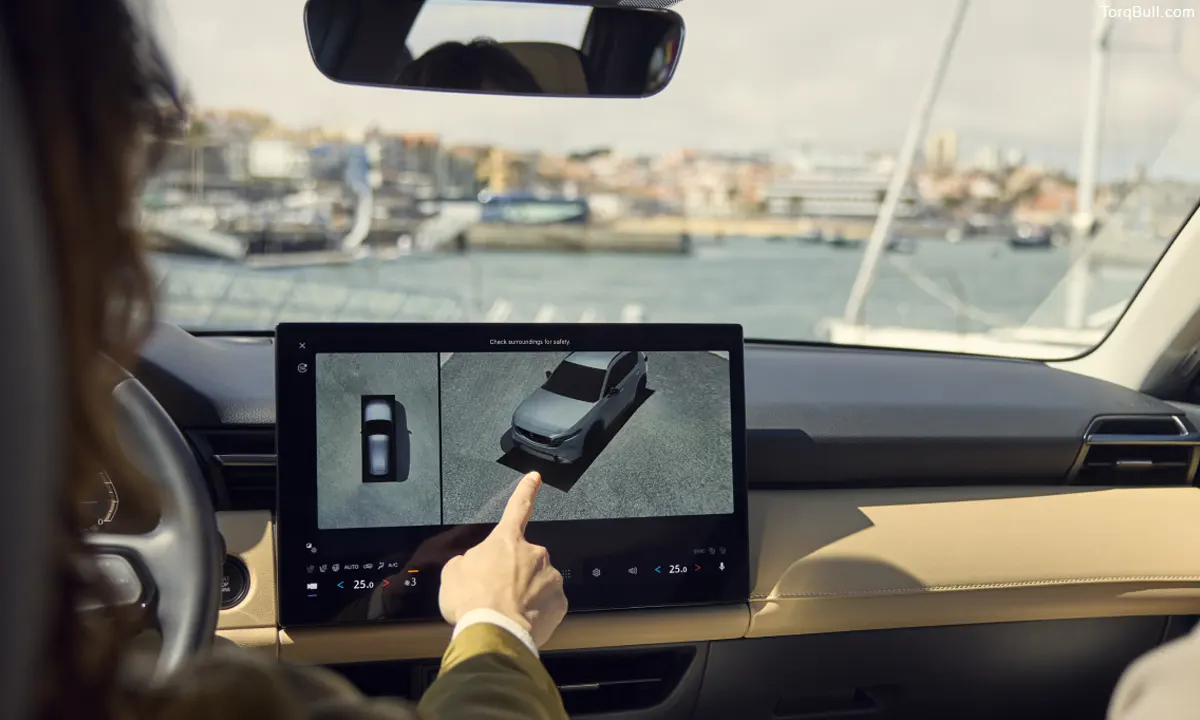
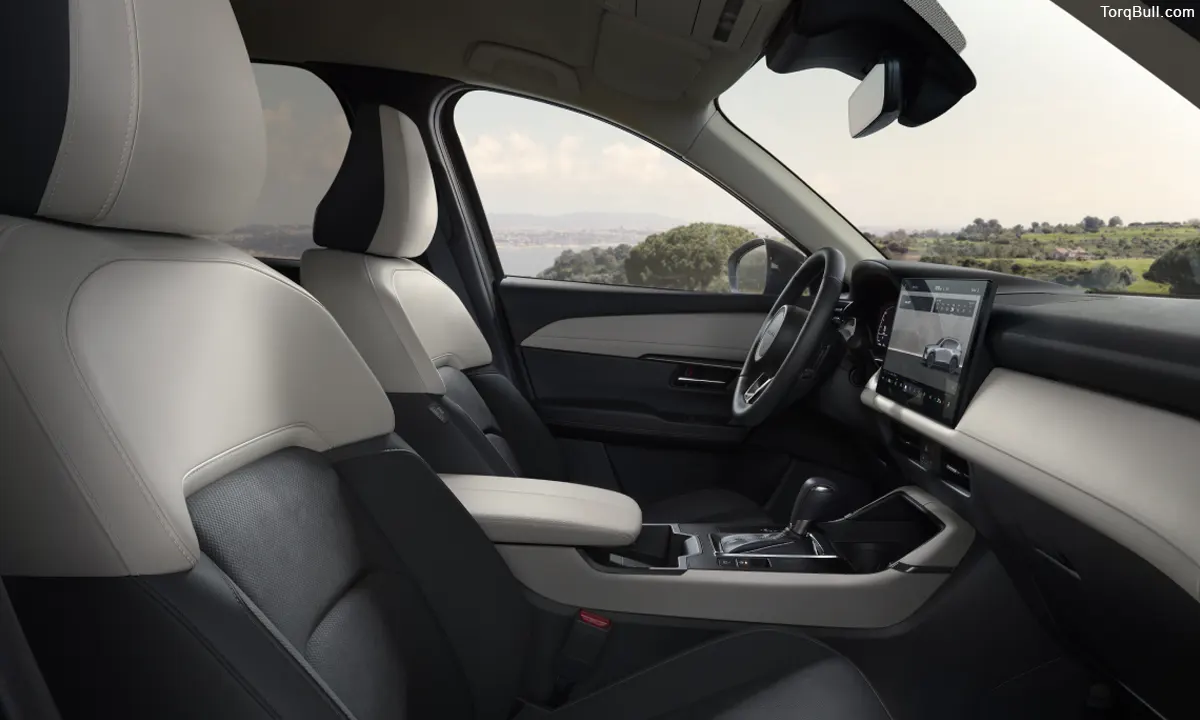
Let’s start with the centerpiece, because it is enormous. Most trims get a 12.9 inch touchscreen that is much bigger than the old screen, with simple menus and large icons, while top trims get a huge 15.6 inch touchscreen, making it the largest display ever used in a Mazda.
For context on how big a leap this is, consider what it replaces. The new screens swap out the smaller 10.25 inch display and the console mounted rotary controller from the previous generation. So you are going from a modest non touch screen you poked at with a knob, to a tablet sized display you actually touch. Night and day.
But the size is not even the best part. The brains are. The system integrates Google built in, giving drivers seamless access to Google Maps, the Play Store, and the Gemini AI Assistant, while still supporting smartphone connectivity. That means native Google Maps right on the dash, no phone tethering required, plus app downloads and a real voice assistant. Improved graphics and quicker software make the interface feel more like a modern tablet than a basic car touchscreen. Mazda’s old system always felt a generation behind. This one vaults it to the front of the class.
Voice Control That Actually Works
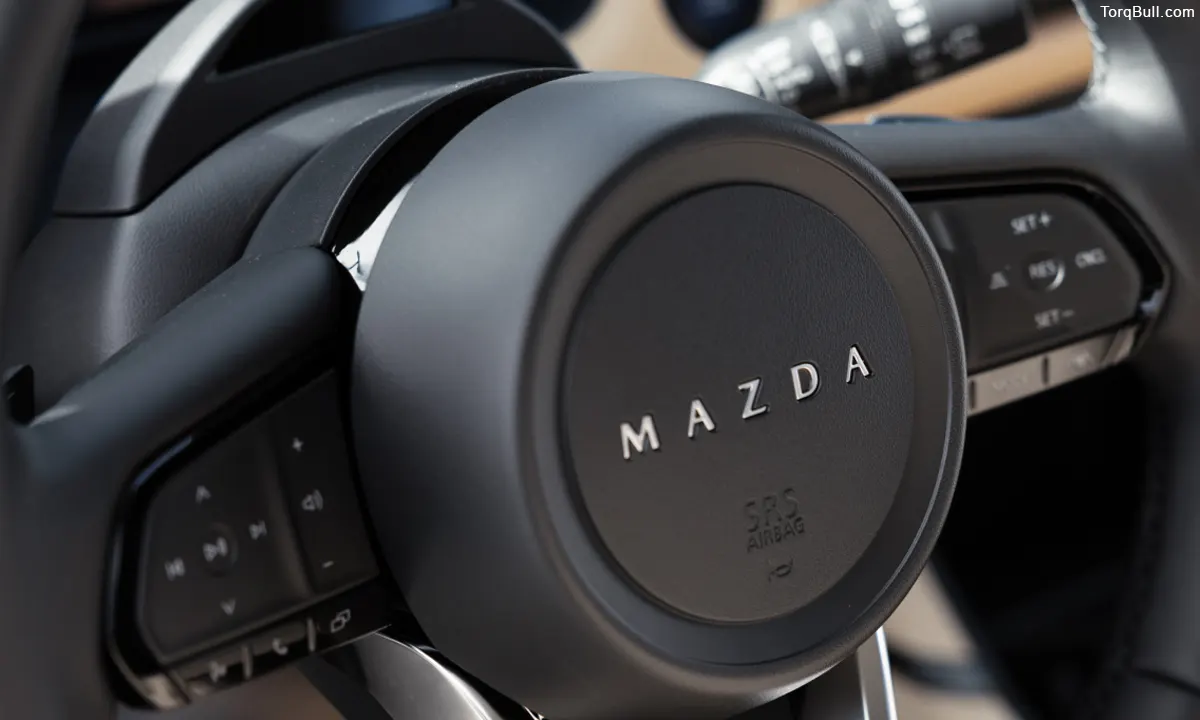
Here is the part that won me over. With the dial gone and physical buttons reduced, Mazda needed the voice control to be genuinely good, and by the early accounts, it is.
Mazda added voice control for many frequently used in car functions, letting drivers adjust the climate temperature, including the auto setting, the audio volume, and other common controls just by asking. You can even lob it the dumb little questions that used to require a fumble through menus. Drivers can ask the assistant things like which side of the vehicle the gas cap is on and get a quick response, and it worked well during testing.
There is also smart thinking in where they put the screen. The display is mounted right of center to improve driver visibility and reduce distractions. Little touches like that tell me Mazda did not just bolt on a big screen and call it a day. It actually thought about how you use the thing.
Wait, Should We Mourn the Buttons?
Now, real talk, because I promised you my honest opinion and this part is genuinely divided.
Going touchscreen first means giving up physical controls, and not everyone is thrilled. Many drivers complained about the removal of physical knobs and buttons for frequently used settings, but Mazda kept its design without them, saying it developed a more intuitive interface to make settings easier to use.
I am torn on this. On one hand, the Google system is so much better than the old setup that the upgrade is undeniable. On the other hand, I will forever believe that adjusting your climate temperature should not require taking your eyes off the road to hunt for an on screen slider. The best interiors keep a few real knobs for the stuff you adjust constantly. Mazda is betting its voice control is good enough to bridge that gap. Based on early impressions it might be, but I would have loved a physical volume and temperature knob to stay. Call me old fashioned.
It Got Bigger and Plusher Too
The tech is the headline, but the overhaul goes deeper. The new CX-5 grew in every dimension that matters. The redesign brings a 4.5 inch increase in overall length, a 4.6 inch bump in wheelbase, and a notable 2.3 inch increase in rear seat knee room, plus more cargo length and height with an easier lift in.
And Mazda doubled down on the thing it already did better than almost anyone in this class. Mazda has long been known for interiors that punch above their weight, and that continues with a clean, modern cabin full of soft touch materials, tight stitching, and tasteful two tone upholstery in upper trims. Add a panoramic sunroof and ambient lighting with seven colors and the CX-5 genuinely feels a class above its price. The top trim even borrows a slick feature from the flagship. It comes with Mazda’s Driver Personalization System, which debuted on the CX-90 and lets multiple drivers store custom profiles for seat, mirror, and head up display settings.
Read: 2027 Chrysler Pacifica Gets A Fresh Face, But Kills The Hybrid
How the New Tech Stacks Up
Here is the old versus new at a glance, plus where it lands against the segment.
| Feature | 2025 CX-5 | 2026 CX-5 |
| Main display | 10.25 in, non touch | Up to 15.6 in touchscreen |
| Controls | Rotary commander knob | Touch plus voice |
| Software | Basic Mazda Connect | Google built in, Gemini AI |
| Updates | Dealer visits | Over the air |
| Charging | Older pad | Redesigned wireless pad, faster USB-C |
That over the air capability matters more than it sounds. A redesigned wireless charging pad, faster USB-C ports, an upgraded Wi-Fi hotspot, and over the air software updates round out the tech upgrades. Your car can now get smarter while it sits in the driveway, something the old CX-5 could never dream of.
The Good News: The Soul Survived
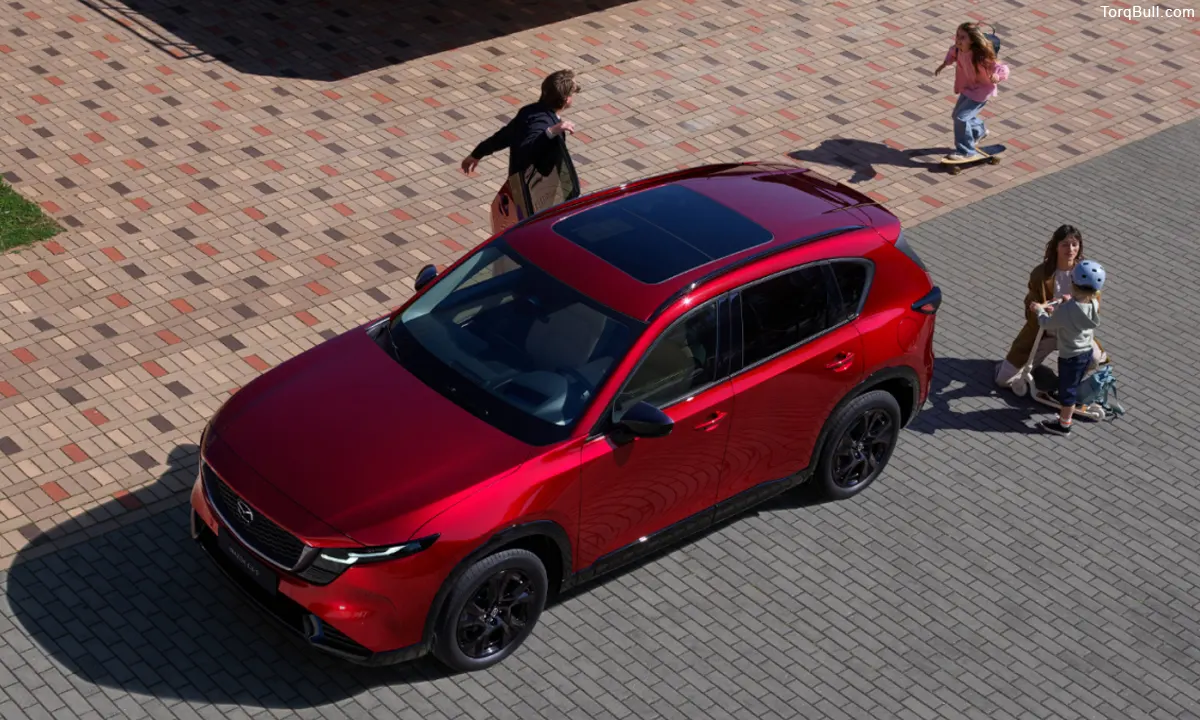
Here is what genuinely relieved me. Mazda did not sacrifice the driving fun on the altar of touchscreens. Under the hood, the familiar 2.5 liter SkyActiv-G four cylinder makes 187 horsepower and 186 pound feet, and crucially, Mazda keeps a 6 speed geared automatic while many rivals move to CVTs, for a more engaging drive. Standard all wheel drive stays too, with selectable Normal, Sport, and Off road modes.
That is the Mazda I love. While everyone else numbs out their compact SUVs with rubber band transmissions, Mazda keeps a real geared automatic because it cares how the thing feels. And a hybrid is on the way for 2027 for the efficiency crowd.
The value holds up nicely as well. Pricing starts at $29,990 for the base S trim and tops out at $39,990 for the S Premium Plus, before a $1,495 destination fee. That is a lot of premium feeling SUV, and now a lot of premium tech, for compact SUV money.
Verdict: A Reinvention That Mostly Nails It
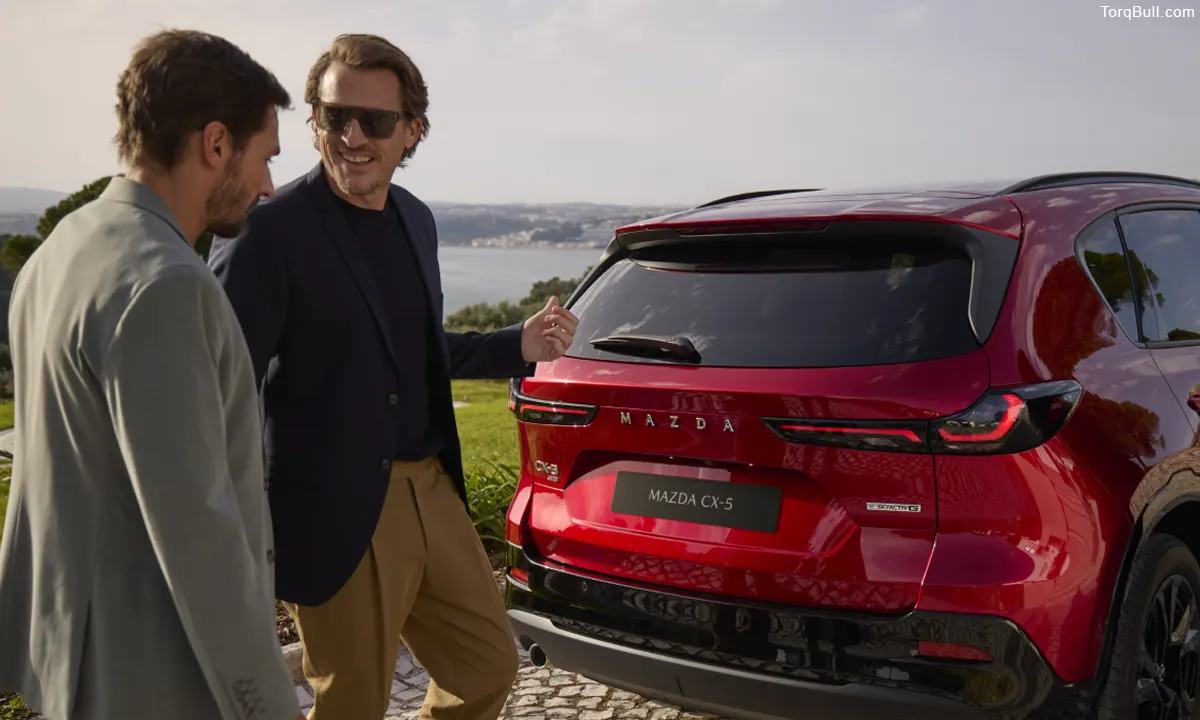
So how do I feel about Mazda finally saying goodbye to the dial? Mostly thrilled, with one small reservation.
The tech leap here is massive and genuinely overdue. The giant touchscreen, Google built in, real voice control, over the air updates, all of it drags the CX-5 from behind the curve to the front of the pack in one generation. Pair that with a bigger, plusher cabin and the driving engagement Mazda refuses to give up, and you have what might be the most complete compact SUV in the class. These improvements make the new CX-5 fully competitive with popular alternatives like the Honda CR-V, Hyundai Tucson, Nissan Rogue, and Toyota RAV4.
My only gripe is the same one a lot of you will have. I wish a couple of physical knobs had survived the purge, because no voice assistant fully replaces the muscle memory of grabbing a temperature dial without looking. But that is a quibble against a redesign that gets the big stuff overwhelmingly right.
Mazda spent years being the stubborn brand that made you twist a knob. With the 2026 CX-5, it finally let go, embraced the screen, and did it with the same craftsmanship and driving care that made the CX-5 special in the first place. The dial is dead. Long live the CX-5. Go sit in one, talk to it, and try not to be impressed. I dare you.