Best Mileage Motorcycles for Highway Touring. Miles Without Sacrifice!
- Real-world highway fuel economy and cost per mile
- Tank range and fuel stop planning
- Touring bikes ranked by long-distance efficiency
- Wind protection and comfort for highway travel
- Rider aids enhancing extended touring experience
Mileage Motorcycles for Highway Touring: Highway touring on a motorcycle is among the most rewarding travel experiences available to any rider — a freedom of movement, environmental engagement and pace of discovery that no enclosed vehicle replicates and whose sustained quality across hundreds of daily miles depends as much on the motorcycle’s fuel efficiency as on its comfort, stability and power delivery. The rider calculating their touring budget quickly discovers that fuel economy differences between motorcycles that appear modest in the specification comparison produce meaningful real-world cost differentials across the multi-thousand-mile itineraries that dedicated touring riders execute annually — a 10 miles-per-gallon difference between two touring motorcycles produces a fuel cost saving of approximately $200 per 3,000 miles at current average American fuel prices, compounding across multiple annual tours into a financial advantage whose significance the specification sheet comparison rarely captures with adequate weight.
The best mileage touring motorcycles for highway use in 2026 are not merely the most fuel-efficient motorcycles available — they are the machines whose fuel efficiency is delivered within the complete touring package that sustained high-mileage riding demands. A 150 miles-per-gallon scooter is irrelevant to the rider whose interstate touring involves sustained 75 mph cruise, six-hour daily saddle time and the luggage, electronic rider aid and wind protection requirements that long-distance touring imposes as baseline necessities. The motorcycles on this list deliver their efficiency within the complete touring context — wind protection, comfort, range, reliability and the highway cruise refinement whose quality determines whether the miles accumulate as reward or ordeal.
1. Honda Gold Wing: The Touring Efficiency Champion
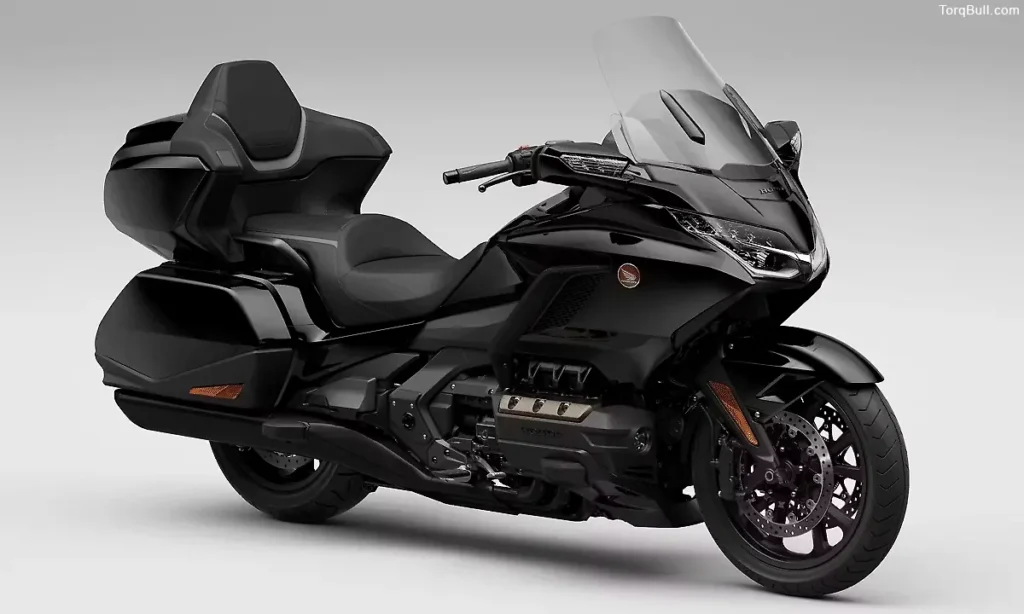
The Honda Gold Wing’s horizontally opposed six-cylinder engine — whose unique configuration minimises mechanical vibration through perfect primary balance while producing the smooth, linear power delivery that highway cruising rewards — achieves real-world highway fuel economy of approximately 40 to 45 miles per gallon at sustained 70 to 75 mph cruise speeds in conditions that represent the genuine touring experience rather than the optimised testing conditions whose figures the manufacturer’s official data presents.
The Gold Wing’s six-cylinder efficiency advantage over V-twin touring alternatives reflects the horizontally opposed engine’s inherent efficiency at the partial throttle settings that highway cruise involves — whose thermodynamic efficiency at constant moderate load benefits from the six-cylinder’s smaller individual combustion chamber volumes and the more complete combustion that the smaller bore’s reduced quench area enables relative to the large-bore V-twin’s equivalent partial-load operation. The real-world consequence for the touring rider is a 21-litre fuel tank whose highway range of approximately 190 to 210 miles per tank provides the fuel stop planning frequency that accommodates the rest stops that 400-mile daily touring stages require without the anxiety of range management that lower-efficiency alternatives impose.
The Gold Wing’s dual-clutch transmission option — whose seamless gear changes at highway cruise speeds eliminate the mechanical interruption that manual shifting imposes on the sustained riding flow that long-distance touring rewards — provides the efficiency management that the electronic transmission’s optimal ratio selection delivers more consistently than the manual rider’s gear selection judgement across the variable grade, headwind and load conditions that touring routes traverse.
2. BMW R 1300 GS: Adventure Touring Efficiency
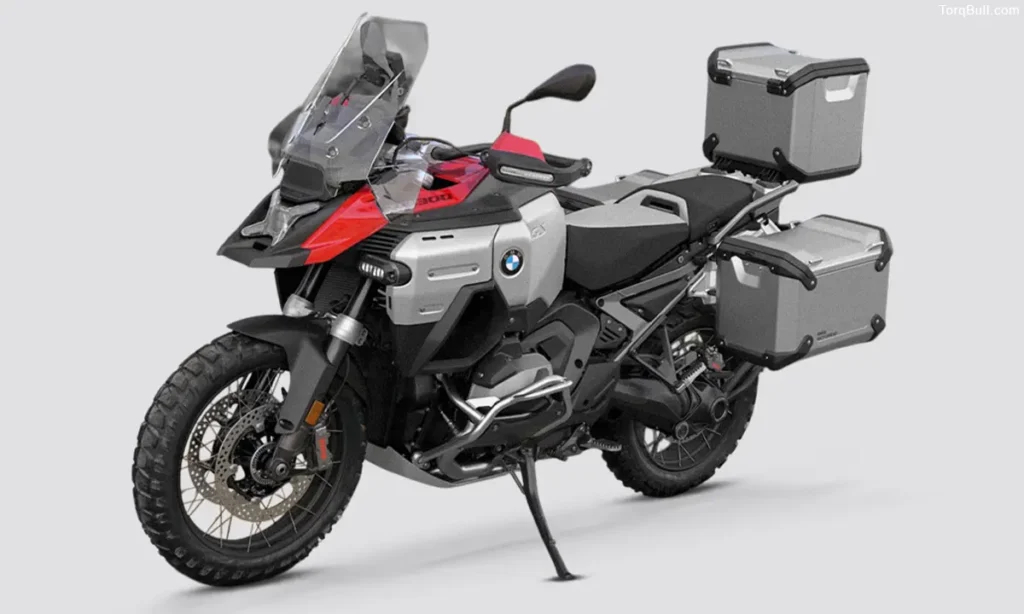
The BMW R 1300 GS’s boxer twin engine — whose 1,300cc displacement and the ShiftCam variable valve timing technology whose adoption across the current generation reflects BMW Motorrad’s investment in maximising both performance and efficiency from the horizontally opposed twin architecture — achieves real-world highway touring fuel economy of approximately 45 to 52 miles per gallon at sustained interstate speeds, providing the efficiency leadership in the adventure touring category that the R 1300 GS’s segment dominance requires alongside the off-road capability that the nameplate’s identity demands.
The R 1300 GS’s 19-litre fuel tank provides a highway touring range of approximately 240 to 280 miles per fill — the longest practical range between fuel stops of any motorcycle on this list and a figure whose practical consequence for the touring rider planning routes through the American West’s sparse service station distribution is the genuine freedom to choose routes whose appeal is determined by scenery and experience rather than fuel availability anxiety. The shaft drive’s elimination of chain maintenance requirements reduces the routine service demands that chain-driven touring motorcycles impose on the long-distance rider whose touring schedule makes regular chain adjustment and lubrication inconvenient.
3. Kawasaki Versys 1000 SE: Sport Touring Efficiency
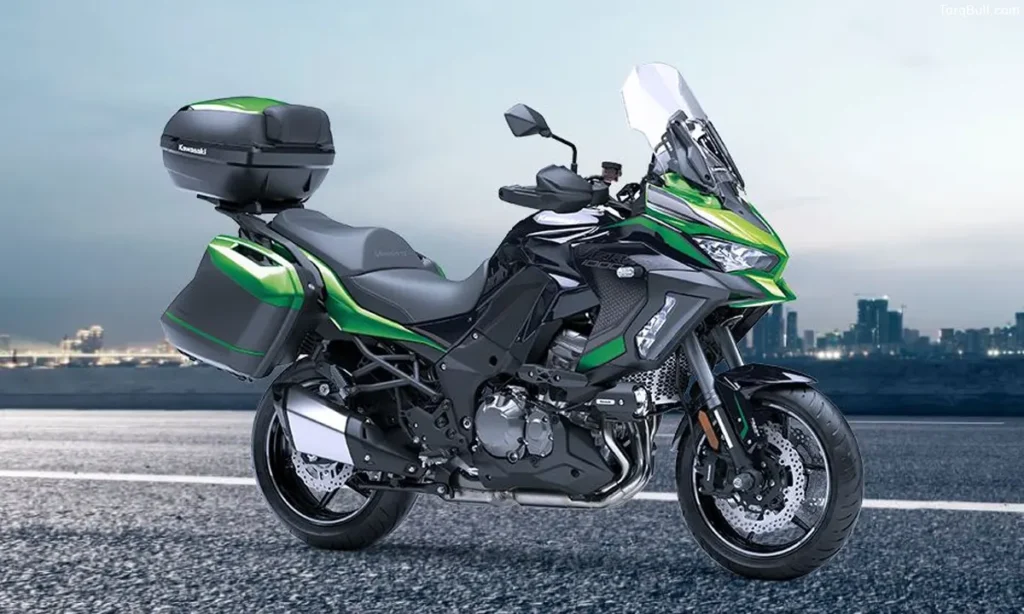
The Kawasaki Versys 1000 SE’s 1,043cc inline-four engine — whose parallel four configuration produces 120 horsepower at the performance end of the sport touring category while achieving real-world highway fuel economy of approximately 45 to 50 miles per gallon — delivers the efficiency and performance combination that sport touring riders whose highway mileage requirements include the occasional spirited secondary road find more satisfying than the pure touring alternative’s comfort-first calibration.
The Versys 1000 SE’s electronically controlled suspension — whose KECS Kawasaki Electronic Control Suspension adjusts damping continuously based on road surface inputs, rider weight and riding mode selection — provides the ride quality management that sustained highway touring demands without the manual adjustment stops that mechanically adjusted alternatives require when the rider transitions between motorway smoothness and the rougher secondary roads that touring itineraries include alongside the interstate portions.
4. Yamaha FJR1300: The Long-Distance Specialist
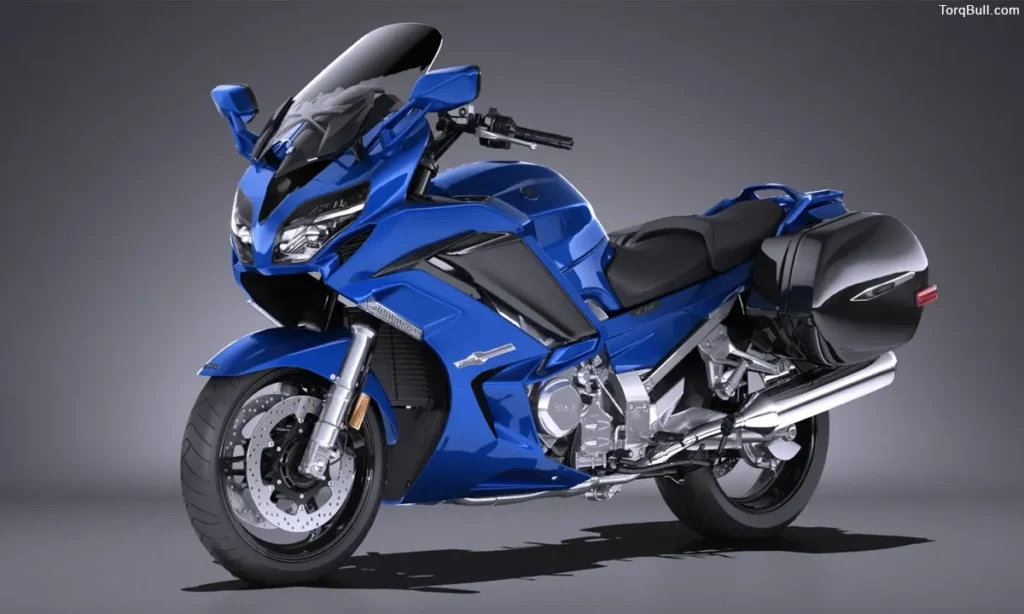
The Yamaha FJR1300’s 1,298cc inline-four — whose specific state of tune reflects a long-distance touring priority rather than the performance maximisation that the displacement could support — achieves real-world highway fuel economy of approximately 42 to 48 miles per gallon while providing the wind protection, luggage integration and rider ergonomics that touring-specific design produces in a package whose coherence reflects decades of dedicated development for exactly the use case that its owners apply it to most demanding.
The FJR1300’s 25-litre fuel tank — the largest capacity of any motorcycle on this list — provides a highway touring range of approximately 280 to 330 miles per fill whose practical consequence is the longest possible interval between mandatory fuel stops of any production touring motorcycle available. For the rider whose touring philosophy prioritises sustained distance accumulation with minimum interruption, the FJR1300’s tank range transforms the daily stage planning calculation more completely than any other single specification advantage the motorcycle provides.
5. Honda NC750X: The Accessible Efficiency Champion
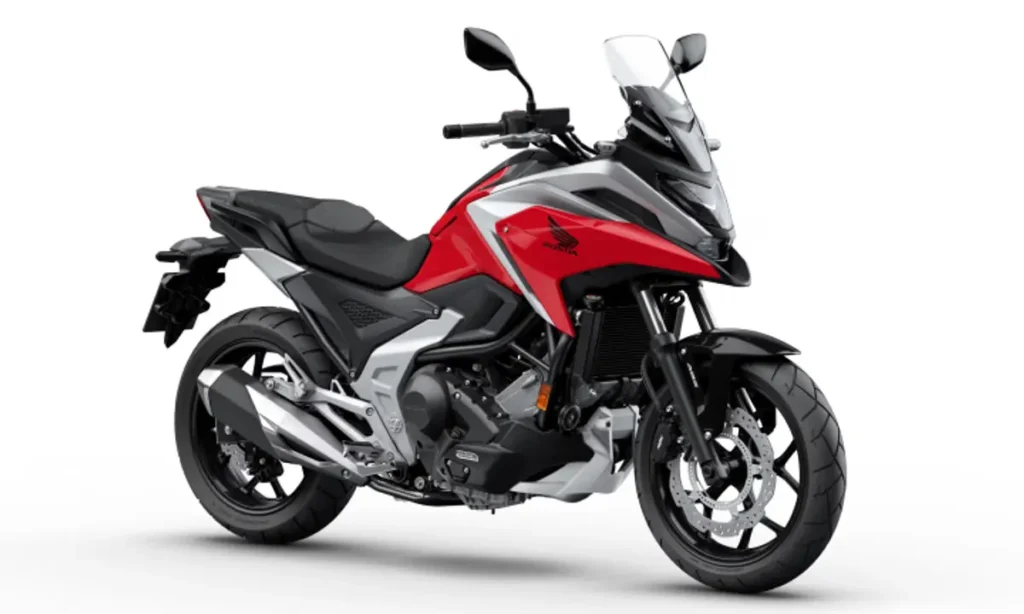
The Honda NC750X’s 745cc parallel twin — whose unique low-compression, low-revving engine architecture reflects Honda’s specific design brief for maximum real-world fuel efficiency rather than maximum performance — achieves real-world highway fuel economy of approximately 60 to 70 miles per gallon at sustained highway speeds, the highest real-world highway efficiency figure of any motorcycle on this list whose capability and specification serve genuine touring requirements rather than urban commuting demands.
The NC750X’s under-seat storage compartment — whose 22-litre capacity provides the practical luggage solution that the touring rider’s daily requirements demand without the accessory top box addition that most sport touring motorcycles require — adds the practical touring utility that the efficient powertrain’s per-mile cost advantage must be accompanied by to constitute a genuine touring proposition rather than a commuting exercise on longer roads.
Read: Best Alternatives To The Ducati Scrambler 800 You Should Consider
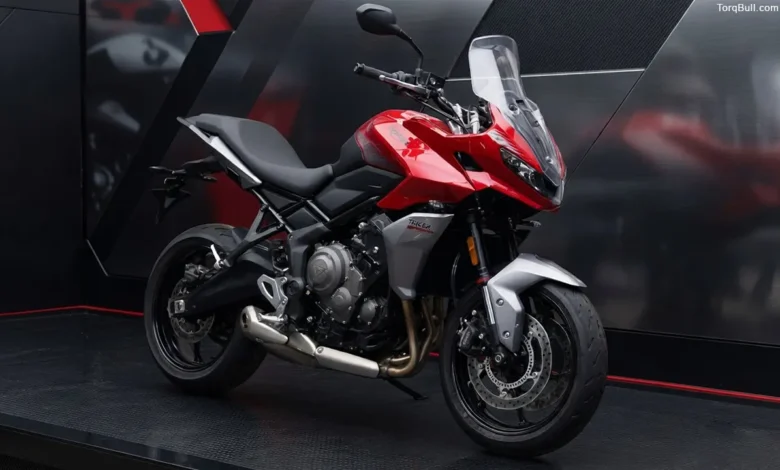
6. Triumph Tiger Sport 660: Mid-Displacement Touring Value
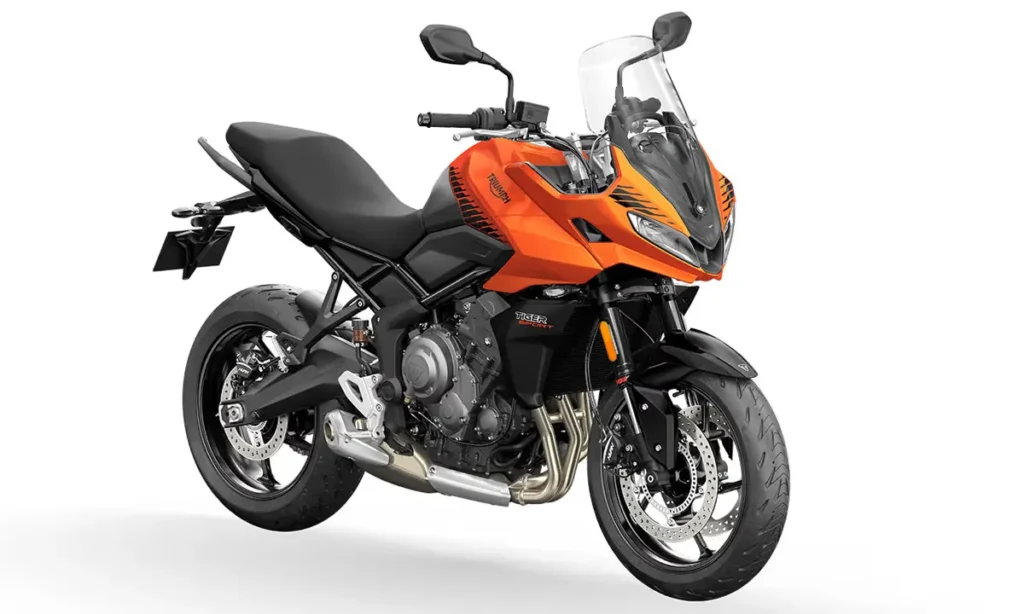
The Triumph Tiger Sport 660’s 660cc inline-three — whose triple cylinder character provides the specific combination of low-end torque, mid-range smoothness and the harmonic refinement that Triumph’s inline-three architecture is specifically celebrated for — achieves real-world highway fuel economy of approximately 55 to 62 miles per gallon while providing the sport touring specification whose wind protection, luggage mounting points and rider ergonomics suit sustained highway touring more completely than the naked motorcycle alternatives at equivalent displacement.
The Tiger Sport 660’s accessible purchase price — whose starting point below $9,000 represents the best value proposition in the sport touring highway efficiency category — combined with the fuel economy whose per-mile cost advantage compounds meaningfully across the annual mileage that dedicated touring riders accumulate creates a total ownership cost argument whose financial strength the premium touring alternatives’ higher specification cannot consistently overcome for the value-motivated touring buyer.
Read: Top 10 Cheapest Motorcycles With Cruise Control
Best Mileage Touring Motorcycles 2026 — Highway Fuel Economy Comparison
| Model | Engine | Highway MPG | Tank Size | Highway Range | Starting Price |
| Honda Gold Wing | 1,833cc Flat-Six | 40–45 mpg | 21 litres | 190–210 miles | ~$28,300 |
| BMW R 1300 GS | 1,300cc Boxer Twin | 45–52 mpg | 19 litres | 240–280 miles | ~$17,995 |
| Kawasaki Versys 1000 SE | 1,043cc Inline-Four | 45–50 mpg | 21 litres | 220–250 miles | ~$16,499 |
| Yamaha FJR1300 | 1,298cc Inline-Four | 42–48 mpg | 25 litres | 280–330 miles | ~$15,999 |
| Honda NC750X | 745cc Parallel Twin | 60–70 mpg | 14.1 litres | 195–220 miles | ~$8,699 |
| Triumph Tiger Sport 660 | 660cc Inline-Three | 55–62 mpg | 17 litres | 220–250 miles | ~$8,995 |