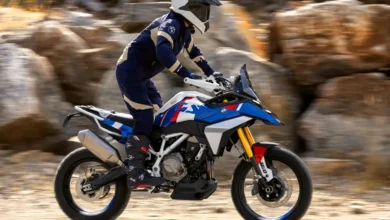
Why The BMW F 900 GS Adventure Is the Smartest Adventure Motorcycle In The Lineup
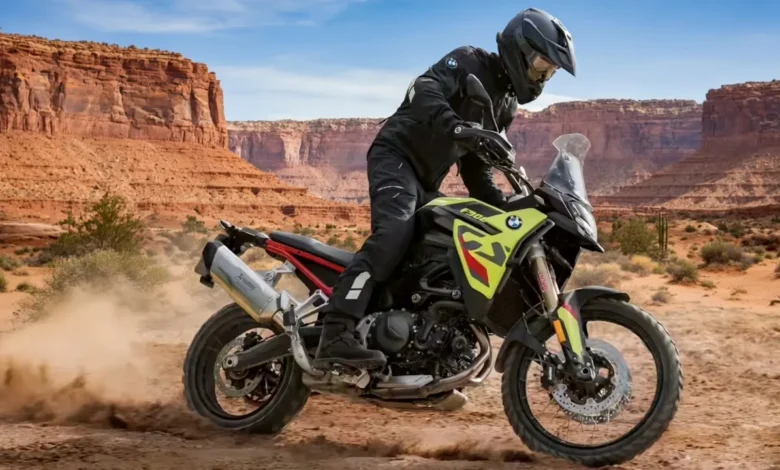
- 895cc parallel-twin producing 105 hp tuned for adventure touring
- Massive 30-litre fuel tank enabling long-range exploration
- Dynamic ESA suspension adapting seamlessly to road and off-road
- Balanced performance focused on practicality over outright speed
- More accessible and versatile alternative to heavier, costlier GS models
BMW F 900 GS Adventure: There is a version of adventure motorcycling that the R 1300 GS’s marketing materials describe but that the motorcycle itself makes increasingly difficult to execute as its specification advances — the version that involves genuinely remote roads, genuinely challenging terrain and the genuine uncertainty of mechanical self-sufficiency far from the nearest authorised BMW Motorrad service centre. The R 1300 GS is an extraordinary motorcycle whose engineering sophistication, electronic system depth and on-road performance are unmatched in the adventure touring category. It is also a 237-kilogram motorcycle whose complexity, weight and purchase price create barriers to the specific version of adventure riding whose demands the F 900 GS Adventure addresses with more direct and more honest competence.
The F 900 GS Adventure is BMW Motorrad’s acknowledgement that the adventure motorcycle category’s most commercially important and most experientially authentic application is not the long-distance highway grand touring that the R 1300 GS excels at but the mixed-terrain, variable-surface, genuine exploration touring that a lighter, simpler and more financially accessible machine serves with greater practical confidence. At 229 kilograms fully fuelled — still not a lightweight by absolute standards but meaningfully more manageable than the R 1300 GS in the specific conditions that adventure touring’s name implies — and with a parallel twin engine whose character, service accessibility and fuel efficiency suit the long-distance off-the-beaten-path application that the GS Adventure name promises, the F 900 GS Adventure is the motorcycle that makes the adventure touring concept’s most authentic version most broadly accessible.
The Engine: Parallel Twin Practicality With GS Character
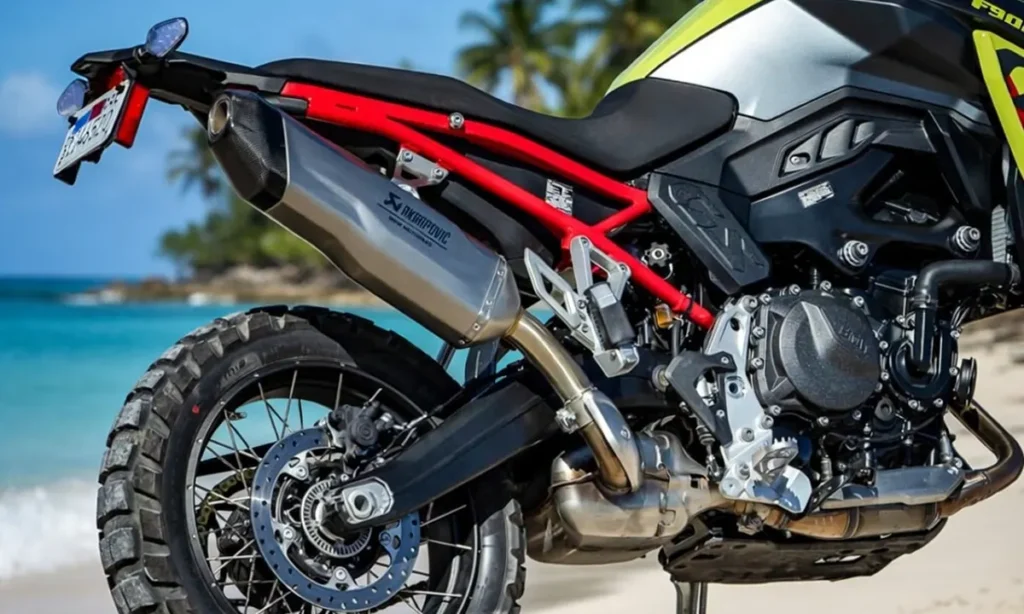
The F 900 GS Adventure’s 895cc parallel twin engine — producing 105 horsepower at 8,750 rpm and 93 Newton-metres of torque at 6,750 rpm — delivers its performance through a character calibration that BMW Motorrad’s engineers have developed specifically for the adventure touring application rather than the sport riding context where peak power and peak torque figures carry most significance.
The parallel twin’s torque delivery — broad, accessible and progressive across the rev range rather than concentrated in a narrow peak that demands constant gear selection to maintain — provides the sustained mid-range availability that long-distance touring across variable terrain requires. The ability to pull cleanly from low revs in any gear, to manage technical off-road sections at walking pace without the clutch slipping that insufficient low-speed torque would demand and to cruise at motorway speeds without the high-rev stress that a smaller displacement engine would impose are the practical expressions of the engine’s character that adventure touring rewards on every journey beyond the first hundred kilometres.
The 105-horsepower output provides the highway performance that long-distance touring demands — comfortable two-up cruising with luggage, confident overtaking at any legal speed and the motorway reserve that the F 900 GS Adventure’s touring mission requires across the extended daily distances that serious adventure touring involves. The power figure does not reach the R 1300 GS’s 145 horsepower — a gap whose practical significance on unpaved adventure roads is minimal and whose significance on tarmac motorways is real but rarely the determining factor in the touring experience’s quality.
The Euro 5 compliant fuel injection system’s calibration — whose smoothness across the throttle opening range reflects BMW Motorrad’s development investment in the adventure touring application’s specific demands — provides the precise throttle control that loose surface riding requires and the consistent fuelling that altitude variations encountered during mountain touring impose on carburetion-era alternatives. The engine’s oil service interval of 10,000 kilometres reflects engineering confidence in the powertrain’s lubrication system whose practical consequence is reduced service frequency during extended touring itineraries.
The 30-Litre Tank: Range as Freedom
The F 900 GS Adventure’s 30-litre fuel tank is the specification detail that most directly distinguishes it from the standard F 900 GS and the detail whose practical significance for genuine adventure touring most completely justifies the Adventure designation’s use rather than its abuse. At the F 900 GS Adventure’s real-world fuel consumption of approximately 5 to 6 litres per 100 kilometres under mixed road conditions, the 30-litre tank provides a theoretical range of 500 to 600 kilometres between refuelling stops.
The practical significance of this range figure transforms the adventure touring planning equation in regions where petrol station spacing reflects population density rather than tourist convenience. In the outback territories of Australia, the remote regions of Central Asia, the desert crossings of North Africa and the mountain passes of Central America that constitute the geographic imagination of the adventure touring community’s most ambitious itineraries, the difference between a 20-litre tank’s 350-kilometre range and a 30-litre tank’s 500-plus kilometre range is the difference between a route that is logistically possible and one that requires the jerry can contingency planning whose addition to an already loaded adventure motorcycle creates the compromise between carrying capacity and range that the larger tank eliminates entirely.
The tank’s structural integration into the F 900 GS Adventure’s overall design — whose fuel weight distribution reflects BMW Motorrad’s engineering attention to mass centralisation — positions the significant fuel mass close to the motorcycle’s centre of gravity, minimising the handling change as the tank empties that a less carefully integrated tank design produces across the journey from full to reserve.
Dynamic ESA: Electronic Suspension for Every Surface
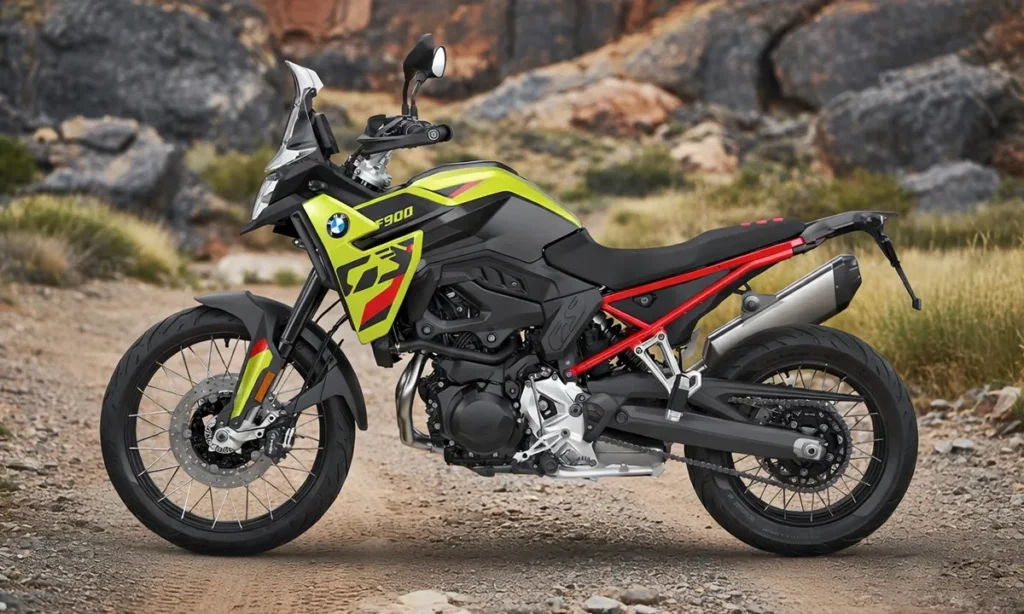
The F 900 GS Adventure’s Dynamic ESA — Electronic Suspension Adjustment — system provides the suspension adaptability that mixed-terrain adventure touring demands without the manual adjustment stops that mechanically adjusted alternatives impose on riders whose daily itineraries transition between tarmac highways, gravel roads and technical trail sections within single riding days.
The system’s ability to adjust damping characteristics between Road, Enduro and Enduro Pro modes in response to rider selection — without stopping, without tools and without the physical access to suspension adjustment points that packed luggage frequently obscures — provides the practical convenience that the adventure touring application’s varied conditions make genuinely valuable rather than merely technically impressive. The Road mode’s calibration for paved surface comfort and stability, the Enduro mode’s softer damping for gravel and packed dirt surfaces and the Enduro Pro mode’s most compliant setting for technical off-road riding represent the suspension range that genuine mixed-terrain adventure touring requires and that static suspension settings whose compromise serves all conditions moderately well cannot approach in any specific condition.
The Paralever rear suspension and Telelever front suspension — whose adoption on the F 900 GS Adventure reflects BMW Motorrad’s assessment that the R-series GS’s proven suspension architectures provide ride quality and off-road capability advantages that the conventional fork alternatives carry on most competing adventure motorcycles — provide the specific wheel control characteristics that BMW’s adventure touring development experience considers optimal for the loaded, long-distance application.
Off-Road Capability: Genuine or Marketing
The F 900 GS Adventure’s off-road capability is more honest than the adventure motorcycle category’s marketing conventions have trained buyers to expect — a genuine capability for gravel roads, forest tracks and moderate technical terrain that the motorcycle’s 21-inch front wheel, 230 millimetres of suspension travel at each end and the Enduro Pro riding mode’s electronic calibration collectively enable with a competence that the R 1300 GS’s greater weight limits at equivalent technical levels.
The 21-inch front wheel — whose larger diameter provides the obstacle clearance, the steering precision over loose surfaces and the tyre profile options that adventure touring’s off-road component demands — is the most fundamental off-road capability specification and the one whose absence from street-oriented adventure motorcycles most directly limits their unpaved surface competence. Combined with the 18-inch rear wheel’s tyre choice breadth and the 230-millimetre suspension travel’s capacity to absorb the surface irregularities that adventure roads impose on wheels and chassis, the F 900 GS Adventure’s geometry provides genuine off-road capability that its weight and engine character suit better than the heavier, more powerful R 1300 GS in the technical terrain where weight management determines capability more than power output does.
The standard fitment of spoked wheels — tubeless compatible on current specifications — provides the puncture repair flexibility that tube-and-rim construction enables in remote locations where tyre plug repairs represent the difference between continuing the journey and waiting for assistance that may be days distant.
Technology and Rider Aids: Appropriate Sophistication
The F 900 GS Adventure’s technology suite represents BMW Motorrad’s assessment of the appropriate sophistication level for a motorcycle whose price positioning and touring application call for the electronic intelligence that modern adventure riding rewards without the complexity depth whose maintenance demands and failure mode implications create the reliability concerns that a genuinely remote-area touring machine cannot afford.
The 6.5-inch TFT colour display provides the navigation connectivity, riding mode display and trip computer information that long-distance touring uses throughout every riding day — with Bluetooth connectivity enabling smartphone integration for navigation guidance without the dedicated GPS hardware whose mounting, power supply and weather protection add complexity and cost to the adventure setup. The riding mode selection between Rain, Road, Enduro and Enduro Pro — whose calibration across throttle response, ABS intervention threshold and traction control sensitivity reflects BMW Motorrad’s accumulated adventure touring development experience — provides the electronic adaptation range that mixed-terrain touring requires without the bewildering option depth that the R 1300 GS’s more extensive mode matrix imposes on the rider whose preference is capability rather than configurability.
Read: Forty Years of Dominance. The Suzuki GSX-R1000 The Superbike That Changed Everything
How the F 900 GS Adventure Compares
The F 900 GS Adventure’s competitive position within the adventure motorcycle segment sits between the accessible middleweight machines and the flagship heavyweights — a deliberate positioning whose dual advantages of managing the R 1300 GS’s weight and complexity while exceeding the smaller adventure bikes’ range and touring capability create the specific appeal that BMW Motorrad has developed the model to address.
Against the Triumph Tiger 900 Rally Pro — the most directly comparable European alternative — the F 900 GS Adventure offers the BMW brand’s established adventure touring heritage, the Telelever and Paralever suspension architecture’s distinctive character and the larger fuel tank whose range advantage is meaningful for the most remote adventure touring applications. Against the Honda Africa Twin — whose reliability reputation and trail-capable character provide the strongest Japanese market alternative argument — the F 900 GS Adventure offers BMW Motorrad’s electronic system sophistication, the Dynamic ESA’s practical suspension adaptability and the brand’s adventure touring development depth whose real-world evidence includes the GS Trophy competition whose F-series participants consistently demonstrate capability that the specification figures alone do not fully convey.
Read: The Lightest Panigale Ever Built. The 2025 Ducati Panigale V2 S Fully Explained
BMW F 900 GS Adventure Full Specifications
| Category | Specification |
| Engine | 895cc Parallel Twin |
| Power Output | 105 hp @ 8,750 rpm |
| Torque | 93 Nm @ 6,750 rpm |
| Transmission | 6-Speed |
| Fuel Tank Capacity | 30 Litres |
| Real-World Range | 500–600 km |
| Fuel Consumption | ~5–6 L/100km |
| Front Suspension | Telelever (230mm Travel) |
| Rear Suspension | Paralever / ESA (220mm Travel) |
| Front Wheel | 21-Inch Spoked (Tubeless) |
| Rear Wheel | 18-Inch Spoked (Tubeless) |
| ABS | Standard (Off-Road ABS Pro Available) |
| Traction Control | Standard |
| Riding Modes | Rain / Road / Enduro / Enduro Pro |
| Display | 6.5-Inch TFT Colour |
| Seat Height | 850mm / 870mm (Adjustable) |
| Kerb Weight | 229 kg (Fully Fuelled) |
| Wind Protection | Adjustable Screen |
| Starting MSRP (Europe) | Approx. €14,650 |
| Starting MSRP (USA) | Approx. $16,995 |