The Lightest Panigale Ever Built. The 2025 Ducati Panigale V2 S Fully Explained
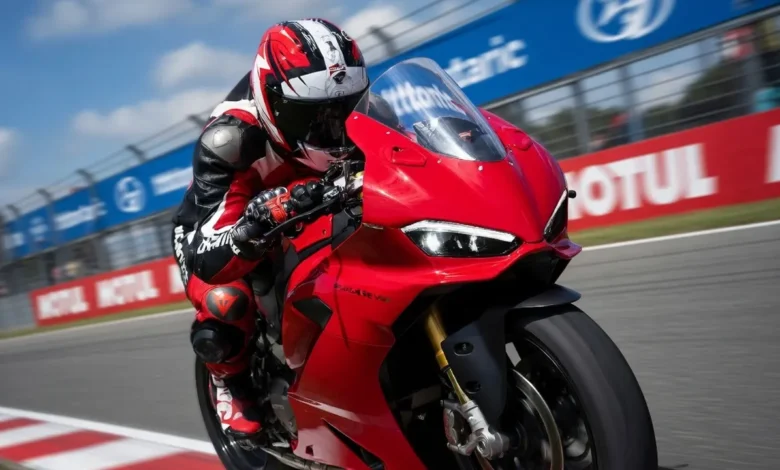
- New 890cc V-twin engine with variable valve timing
- All-new monocoque chassis unique to this Panigale
- Öhlins suspension setup front and rear
- Brembo M50 monobloc brake calipers
- 37-pound weight reduction redefining middleweight performance
Ducati Panigale V2 S: There is a particular kind of courage required to build a new motorcycle by making it less powerful than the model it replaces. In an industry whose marketing language revolves almost entirely around more — more horsepower, more technology, more displacement — the decision to deliberately reduce output, shrink capacity and abandon the mechanical signature that defined an entire lineage for seven decades demands a conviction in the engineering logic that goes well beyond corporate confidence. Ducati made exactly that decision for the 2025 Panigale V2 S, and the result has not merely silenced the skeptics who questioned the direction. It has produced what every serious riding journalist who has taken the new V2 S to a circuit has described in near-identical terms: the most accessible, most satisfying and most complete middleweight Ducati ever built.
This is not an evolution of the motorcycle that bore the Panigale V2 name before it. It is a ground-up redesign whose engine, chassis, ergonomics and electronic architecture share nothing of substance with the previous generation — a complete reinvention that the engineers at Borgo Panigale have described, without apparent hesitation, as the first Panigale V-twin ever designed entirely as its own machine rather than as a scaled-down derivative of a larger superbike.
The New V2 Engine: Less Displacement, More Intelligence
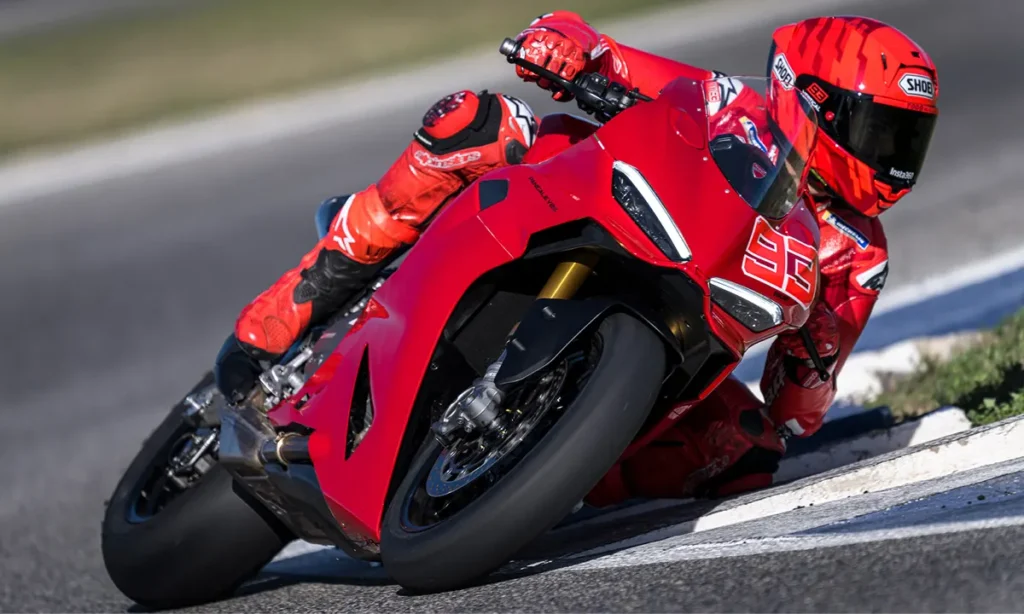
The previous Panigale V2’s 955cc Superquadro L-twin was a celebrated engine whose credentials extended to WorldSSP competition victories — but whose real-world characteristics on public roads were less straightforwardly positive. It ran hot, it concentrated its power in the upper register of the rev range and it demanded the kind of physical and mental commitment that made extended road riding an exercise in management rather than enjoyment. Ducati’s engineers did not try to fix the Superquadro. They replaced it entirely.
The new engine is an 890cc 90-degree V-twin that shares a design lineage with the Granturismo powerplant used in the Multistrada V2 but retuned specifically for the Panigale V2’s sportier application. It produces 120 horsepower at 10,750 rpm and 69 lb-ft of torque at 8,250 rpm — figures that represent a reduction of 35 horsepower from the outgoing model. That number has attracted the predictable internet commentary. What those commentators have not yet absorbed is what Ducati’s engineers exchanged for it.
The new engine delivers 70 percent of its peak torque from as low as 3,000 rpm — a characteristic that transforms real-world rideability more fundamentally than headline horsepower ever could. Variable Valve Timing on the intake side, operating across a 52-degree range of crankshaft rotation, optimises combustion efficiency and power delivery across the entire rev range rather than concentrating performance at the top end. The desmodromic valve actuation system — Ducati’s mechanical signature since Fabio Taglioni introduced it in 1956 — is absent from the V2 engine, replaced by conventional spring-return valves with intake variable timing. The practical consequence is a significant reduction in mechanical complexity and a meaningful improvement in thermal management. Ducati has been direct about this: the 2025 Panigale V2 no longer punishes its rider’s legs with the exhaust heat that made the previous generation uncomfortable on summer road rides.
The engine also weighs 120 pounds — an impressive figure for a 90-degree V-twin — and the unit functions as a fully stressed member of the new chassis, contributing directly to the V2’s structural rigidity.
An Entirely New Chassis: Built for the Panigale V2 Alone
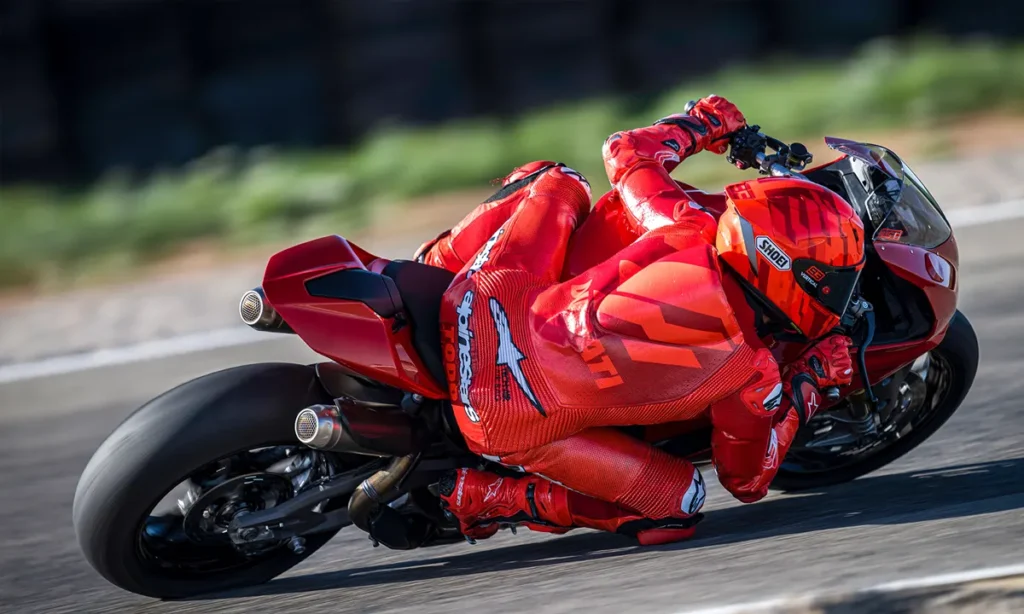
For the first time in the three-decade history of Ducati’s middleweight supersport line — from the 748 of 1995 through the 899, 959 and previous Panigale V2 — the 2025 model rides on a chassis that was designed specifically for it rather than adapted from an existing platform. The result is an aluminium monocoque construction comprising three primary cast branches: a forward section that reaches to the fork assembly, a rear subframe supporting the seat and tail section, and a double-sided swingarm that attaches to the rear of the engine. The double-sided configuration — previously associated with the brand’s 899 and 959 — returns here because it provides superior rigidity and allows Ducati’s suspension engineers to optimise the chassis dynamics without the weight penalty that a single-sided arrangement requires.
The total weight reduction against the previous Panigale V2 is 37 pounds, making the 2025 model the lightest Panigale in the nameplate’s history. The V2 S specifically, equipped with its lithium-ion battery, comes in at 388 pounds without fuel — a figure that positions it meaningfully lighter than the Panigale V4 S and provides the real-world handling agility that all first-ride reviews have consistently praised.
V2 S Specification: Öhlins, Brembo M50s and Launch Control
The S variant represents the focused, track-capable specification of the new Panigale V2 range — the motorcycle whose component choices and electronic equipment transform it from an excellent road sportsbike into a machine capable of serious circuit performance. At $18,995 in the United States, it commands a $3,000 premium over the base V2 that is fully justified by what that money purchases.
The suspension is Öhlins throughout — the NIX 30 fork at the front and an Öhlins monoshock at the rear — both fully adjustable for preload, compression and rebound. These are the same suspension components that Ducati fits to its higher-specification machines, and their ability to transform the V2 S’s behaviour between road and track configurations is both immediate and dramatic. The base V2 uses a Marzocchi fork and KYB shock — entirely competent for road use, but lacking the adjustment range and damping consistency that the Öhlins units provide at circuit speeds.
Brembo M50 monobloc calipers clamp 320mm discs at the front — the same specification found on full superbikes whose pricing is considerably higher — connected via a Brembo radial master cylinder. The result is stopping power that the most demanding track rider would consider entirely adequate and that inspires genuine confidence in road braking situations that reward progressive, consistent input over the panic modulation that inferior brakes invite.
The S model’s electronics suite is built around a six-axis IMU that enables lean-sensitive traction control, wheelie control, cornering ABS and engine brake control — systems that adjust their intervention thresholds in response to lean angle rather than simply monitoring wheel speed. Four riding modes — Race, Sport, Road and Wet — configure all parameters simultaneously for their respective use environments. Ducati Power Launch and a pit lane limiter are standard on the V2 S. The 5-inch TFT display offers three interface layouts — Road, Road Pro and Track — each emphasising the information most relevant to the riding context.
The exhaust exits through twin high-mounted cans inspired by the Panigale V4’s race-derived layout — an arrangement that addresses the severe thigh-roasting of the previous generation’s underslung pipe while producing an acoustic character that reviewers across every publication have described with the same word: scintillating.
Read: Why the Honda Rebel Is the Ideal First Bike for New Riders in 2026. The Perfect Starting Point
2025 Ducati Panigale V2 S — Full Specifications
| Category | Specification |
| Engine | 890cc 90-Degree V-Twin, Liquid-Cooled |
| Valve System | DOHC — Variable Intake Valve Timing (VVT), No Desmo |
| Power Output | 120 hp @ 10,750 rpm |
| Peak Torque | 69 lb-ft @ 8,250 rpm |
| Torque Availability | 70% of Peak from 3,000 rpm |
| Redline | 11,000 rpm |
| Frame | Aluminium Monocoque — Engine as Stressed Member |
| Swingarm | Double-Sided Aluminium |
| Front Suspension (V2 S) | Öhlins NIX 30 Fork — Fully Adjustable |
| Rear Suspension (V2 S) | Öhlins Monoshock — Fully Adjustable |
| Front Suspension (Base V2) | Marzocchi Fork |
| Rear Suspension (Base V2) | KYB Shock |
| Front Brakes | Brembo M50 Monobloc, 320mm Dual Discs |
| Rear Brake | Brembo Single Piston, 245mm Disc |
| Dry Weight | 388 lbs / ~176 kg (V2 S with Lithium Battery) |
| Weight Reduction vs. Previous | 37 lbs / 17 kg |
| Seat Height | 837mm / 32.9 inches |
| Fuel Capacity | 15 litres / ~4 gallons |
| Tyres | Pirelli Diablo Rosso IV (OEM) |
| Wheels | 17-inch 6-Spoke Alloy |
| Display | 5-inch TFT — Road / Road Pro / Track Modes |
| Riding Modes | Race, Sport, Road, Wet |
| Electronics | 6-Axis IMU, Cornering ABS, DTC, DWC, EBC |
| Launch Control | Standard (V2 S) |
| Pit Lane Limiter | Standard (V2 S) |
| Battery (V2 S) | Lithium-Ion |
| Seat Configuration | Monoposto (Pillion Seat Optional) |
| Exhaust | Twin High-Mounted Cans — Euro 5+ Compliant |
| Starting MSRP (USA) | $18,995 (V2 S) / $15,995 (Base V2) |
| Time Attack Package (Optional) | $6,885 — Termignoni Exhaust, Öhlins Damper, Clip-ons, Rearsets |
Why the 2025 V2 S Matters Beyond Its Numbers
The 2025 Ducati Panigale V2 S is important not because it is the most powerful middleweight sportsbike available — it is not — but because it represents the clearest possible statement of what the supersport class is becoming. The era of the uncompromising, thermally aggressive, peak-power-obsessed middleweight motorcycle that demanded its rider’s complete physical and emotional submission is giving way to a generation of machines that deliver genuine Ducati performance within the boundaries of what most riders can actually use on public roads and real circuit sessions. The V2 S is lighter than the bike it replaces, more tractable at the speeds where riders actually spend their time, more comfortable over distances that matter and equally capable at the limit of any circuit where the majority of owners will ever push it. At $18,995 it is priced at a premium, but everything about the experience it delivers confirms that the money goes directly into the motorcycle.

3 Comments