Every so often a car company does something so delightfully unexpected that I have to read the press release twice to make sure I am not hallucinating. This is one of those times.
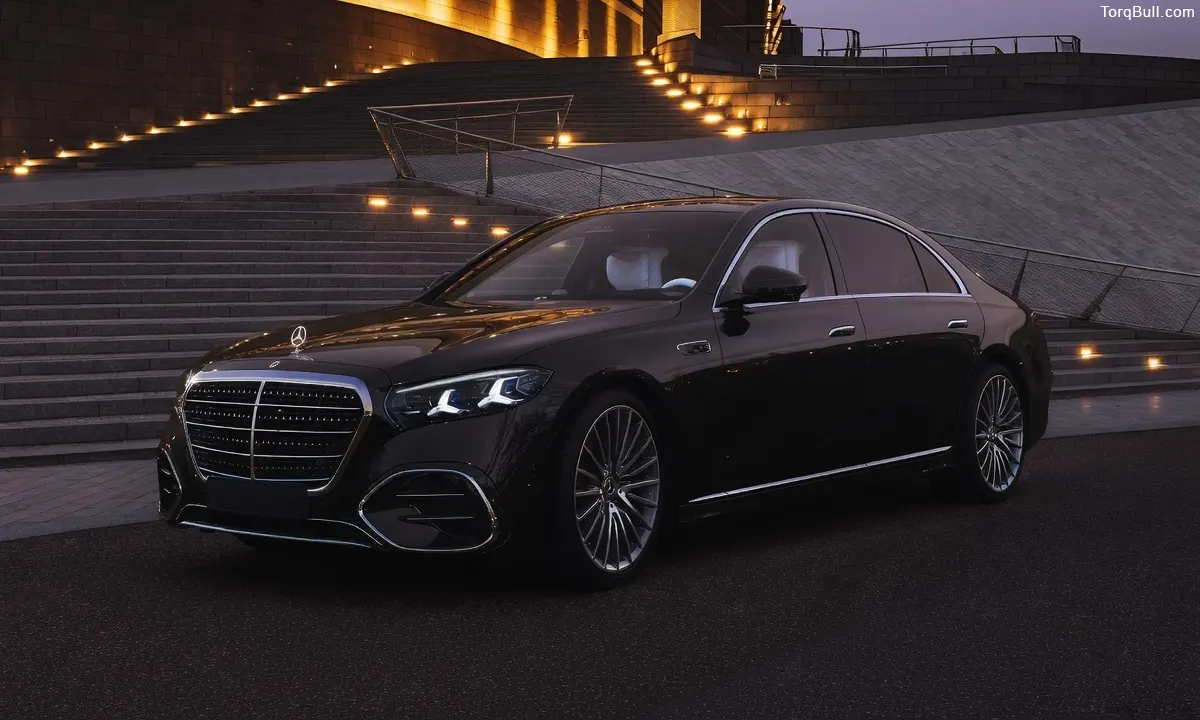
The 2027 Mercedes-Benz S-Class, the default chariot of CEOs, heads of state, and people who have very nice driveways, just got a new top engine. Fine, S-Class gets a new engine, big deal. Except this is not a normal engine. Under the hood is a flat-plane V8, a configuration almost always exclusive to supercars and, for most of automotive history, limited to ultra high end sports cars.
A flat-plane V8. The kind of crank you find in a Ferrari or a McLaren or a track ready Mustang. In an S-Class. And here is the part that made me grin like an idiot: this is not the AMG version. This is Mercedes-Benz’s non AMG, non Maybach S-Class lineup getting a new top range motor. The regular luxury liner now packs an exotic engine. Let me explain why this is so wonderfully strange.
Wait, What’s the Big Deal About a Flat-Plane V8?
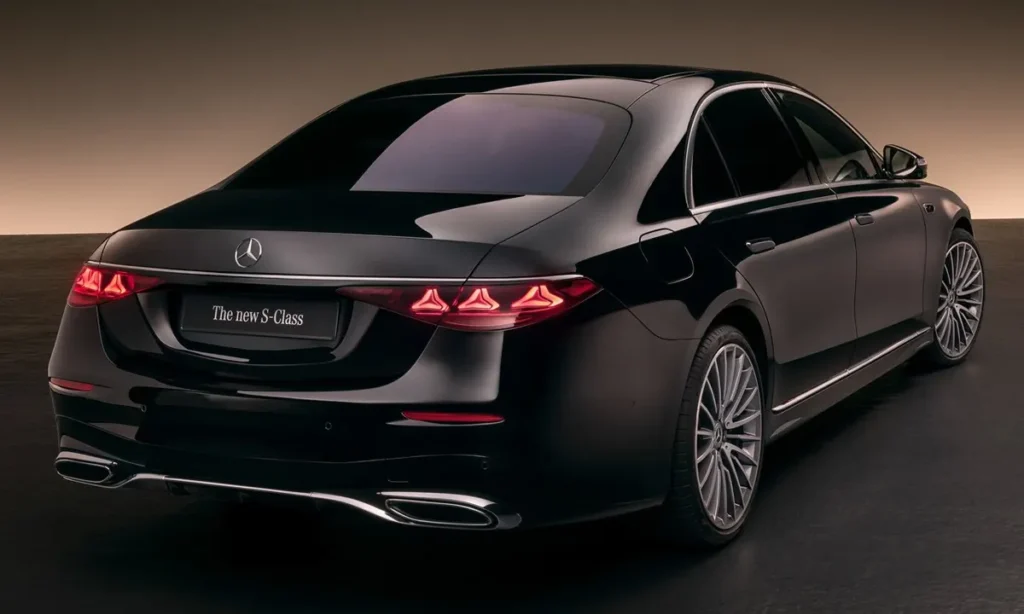
Quick nerd primer, because this is the whole story. Almost every V8 you have ever heard, the burble of a muscle car, the rumble of a pickup, uses a cross plane crankshaft. That is the classic American V8 soundtrack. Flat-plane V8s are a different animal entirely. They rev higher, sound raspier and more exotic, and they are the signature of high strung sports cars.
They also have a catch, which is exactly why you never see them in luxury cars. A flat-plane crank is technically simpler to make, but it requires engineering compromises, primarily related to vibration, something you really do not want in a luxury sedan. Vibration is the enemy of the S-Class. This car’s entire reason for existing is to waft you along in silent, serene isolation. Putting a buzzy supercar crank in it is, on paper, completely backward.
And yet Mercedes did it anyway, promising it engineered around the downsides. The company did not say exactly why it went flat-plane, but it promised the engine has exceptional smoothness, and it is possible all future Mercedes V8s go this route as a byproduct of manufacturing consolidation. So we may be looking at the future of every Benz V8. A flat-plane G-Wagen, anyone? I am genuinely here for it.
The Numbers Are Seriously Good
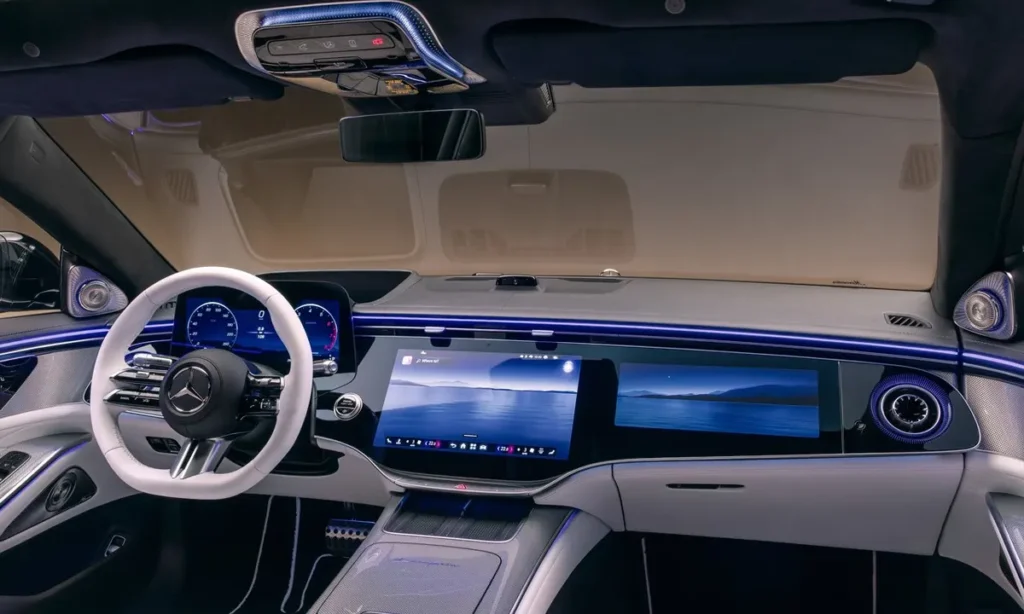
This is no novelty for novelty’s sake, either. The new engine brings real muscle. The new M177 Evo powering the S580 4Matic yields 530 horsepower and 553 pound feet of torque, thanks to refinements to its injection and breathing along with an enhanced mild hybrid system.
And it moves. The new V8 makes the most impressive statement with a claimed 0 to 60 time of just 3.9 seconds, around 0.4 seconds quicker than the old V8. A sub four second luxury sedan that is not even wearing an AMG badge. That is genuinely quick for a car this size and this plush.
There is a fun bit of backstory here too. This V8 is not built from scratch. It is a reworked version of the M177 that has powered AMG’s 63 models for years, now featuring a flat-plane design and running the Miller Cycle to meet stricter Euro 7 emissions standards. So the standard S-Class is essentially borrowing the AMG family’s V8. One outlet had the perfect read on this. Sticking this engine in the standard S-Class is perhaps Mercedes’ way of atoning for the four cylinder C63. After AMG spent years annoying enthusiasts with four cylinders, the regular S-Class gets a proper V8. The irony is delicious.
You Don’t Have to Get the V8 (And You Might Not Need To)
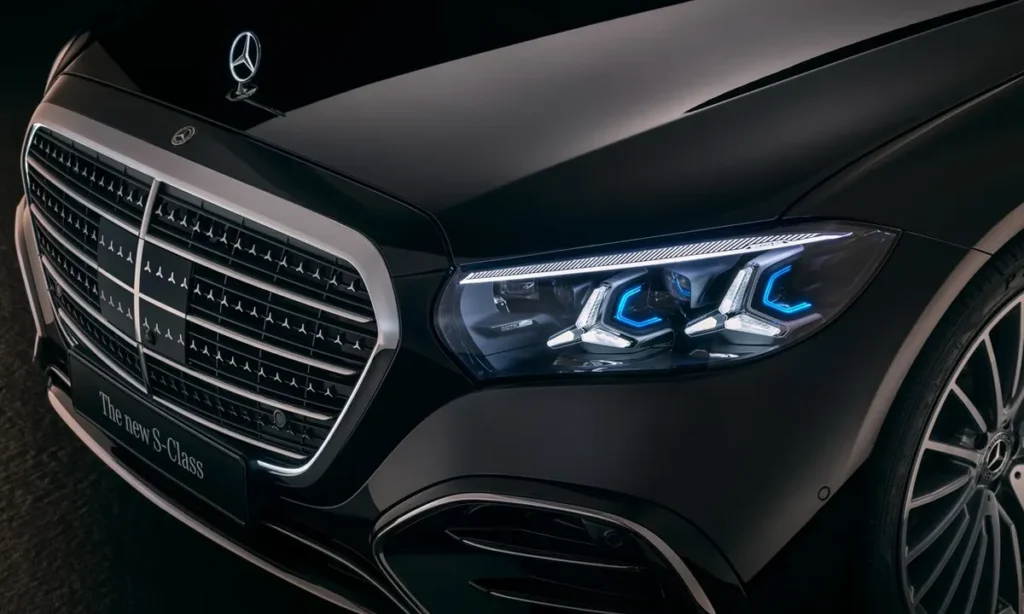
Here is an honest wrinkle worth knowing before you start dreaming of that flat-plane soundtrack. The S-Class lineup is a genuine choose your own adventure, and the other engines are seriously good too.
The 2027 S-Class offers three powertrains in the US, all with standard 4Matic all wheel drive: the twin turbo 3.0 liter inline six S500, the inline six plug in hybrid S580e, and the twin turbo V8 S580. And the spread between them is fascinating. The PHEV is actually the most powerful at 576 horsepower, yet posts the slowest 0 to 60 at 4.4 seconds, while the inline six S500 makes 442 horsepower and does the sprint in 4.3 seconds.
Now for the reality check that made me chuckle. After driving all three, the reviewer found they do not feel vastly different, all so smooth you have to glare at the tachometer to know they are running, and the S500 felt remarkably similar to the others rather than like a lame duck. So the exotic V8 may not transform the experience as much as your inner enthusiast hopes. The S-Class smooths everything into the same velvet glove. Still, the V8 has the grunt and the pedigree, and for some buyers that is the whole point.
Read: AMG Listened! The 2027 Mercedes-AMG GLC53 Coupe Brings Back the 6-Cylinder
How It Stacks Up
Here is how the three flavors of 2027 S-Class compare.
| Variant | Engine | Power | 0 to 60 | Notable Trait |
| S500 4Matic | 3.0L inline-six | 442 hp | 4.3 sec | The smart base pick |
| S580e 4Matic | Inline-six PHEV | 576 hp | 4.4 sec | Most powerful, electric range |
| S580 4Matic | 4.0L flat-plane V8 | 530 hp | 3.9 sec | Quickest, exotic crank |
The takeaway is liberating, honestly. Choosing the base S500 does not mean forfeiting power, performance, luxury, or refinement, so it is really a question of whether you want the grunt and pedigree of the V8 or the inline six would do just fine. They are all spectacular. But only one has a supercar’s heart, and you know which one I would pick.
The Rest of the Refresh: Flashier Than Ever
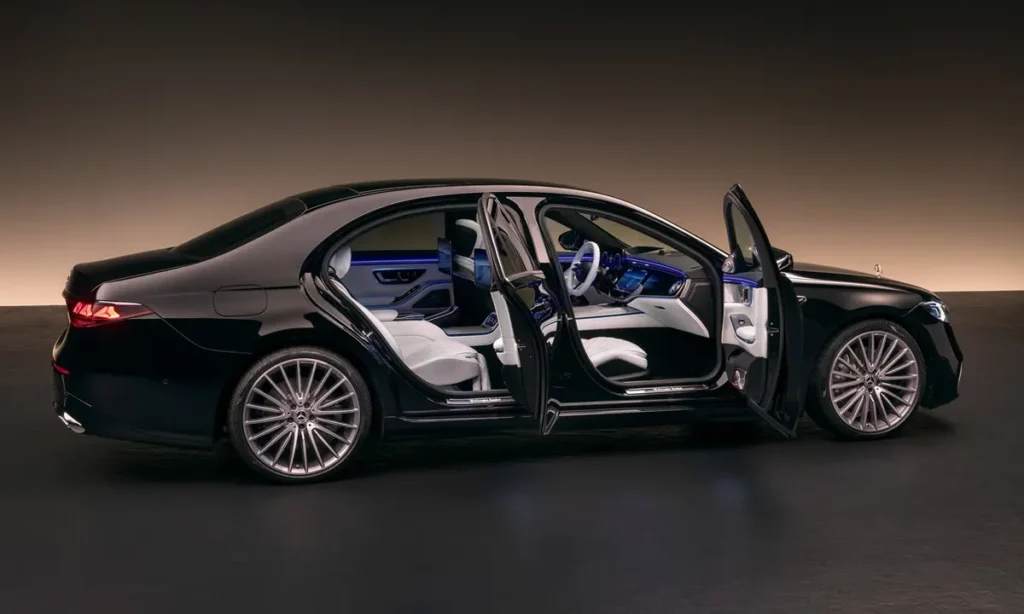
The engine is the headline, but this is a big mid-cycle update. Mercedes loaded it with tech. There is a new Airmatic suspension that uses cloud based technology, continuously downloading car to x data so other Mercedes vehicles share real time road condition info to help the S-Class anticipate potholes, plus next gen Digital Light headlights with micro LED tech offering adaptive partial high beam for the first time in the US. A car that crowdsources pothole locations from other Benzes. We truly live in the future.
The styling, though, is where I have to raise an eyebrow. The S-Class ditches the previous understated looks for bits of flash like the illuminated hood ornament, star shaped front running lights and taillights, and a larger grille with rows of tiny chromed three pointed stars. And not every reviewer is sold. One noted the once reserved S-Class now aims to emulate the 7 Series and its look at me brand of buyer, calling the details a bit much. The S-Class used to win by being the classy, restrained choice. This one wants attention. I have mixed feelings, but in a bold color it does have real presence.
My Verdict: Weird in the Best Possible Way
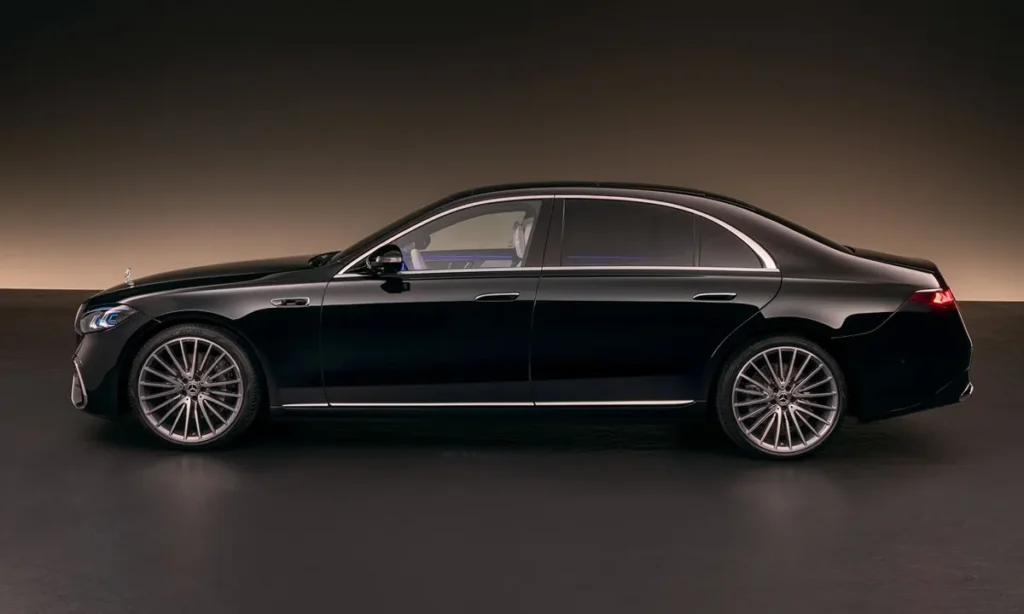
So where do I land on the flat-plane, non AMG, atoning for its sins S-Class? Absolutely delighted, with a couple of honest reservations.
I love that this exists. In an era where everything is being smoothed and electrified and homogenized, Mercedes made the gleeful decision to drop a raspy supercar crankshaft into its most comfortable car, and not even the sporty version of it. It is genuinely neat that we live in a reality where an S-Class has a flat-plane V8. That is the kind of weird, joyful engineering flex that makes car culture fun.
Are there caveats? Sure. The styling traded restraint for flash and may not be for everyone. Some interior material choices reportedly miss the mark for a flagship. And because the S-Class refines every engine into the same silken serenity, you may not feel the V8’s exotic character as vividly as you would in an actual sports car. If pure driving thrills are your goal, this is still a wafting luxury liner first and foremost.
But none of that dampens my enthusiasm, because Mercedes did not have to do this. It could have fitted another sensible, forgettable V8 and nobody would have blinked. Instead it gave the regular S-Class a flat-plane heart straight out of the supercar playbook. That is a choice made by people who still care about engines, about character, about giving buyers something special. If you want the most fascinating luxury sedan of 2027, the one with a genuinely surprising story under the hood, the S580 is calling. It is not an AMG. It might just be more interesting because of it.